
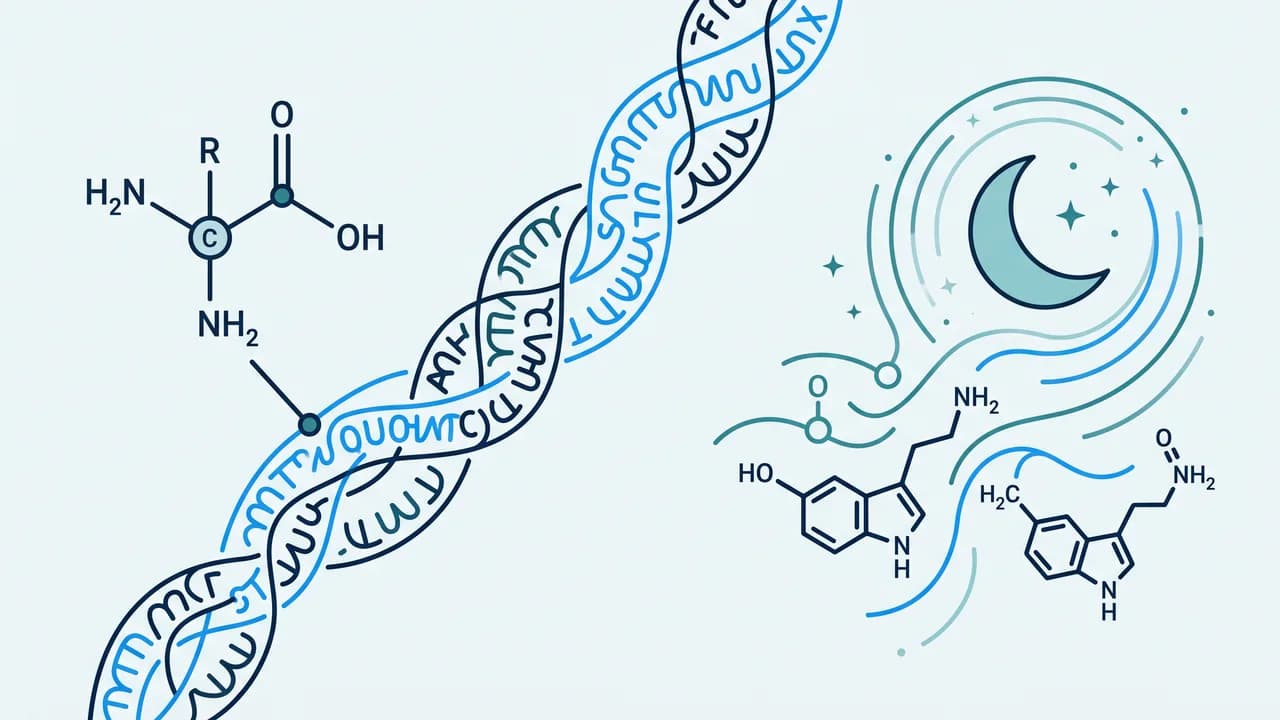
Glycine
Amino acids and derivatives. A research review published by South Beach Longevity.
Evidence is labelled by study type in the sentence that reports it. In vitro means a cell or a reconstituted system. Animal names the species. Human means people. A quantity appears only as it was studied, with the population and duration attached. Rodent lifespan is not a human outcome. GlyNAC is not glycine. Collagen hydrolysate is not the free monomer.
Findings are graded in place as established, strongly supported, emerging, plausible, or speculative. Conflict is presented as conflict. No human use, dose, route or schedule is recommended anywhere in this document.
Abstract
Glycine (aminoacetic acid) is the smallest proteinogenic amino acid and the only one that is not chiral at the α-carbon. Humans make it mainly from serine by serine hydroxymethyltransferase, with additional input from choline, hydroxyproline, and, less certainly, threonine; they degrade it through the glycine cleavage system and through the reverse of the same hydroxymethyltransferase reaction (Wang and Wu, 2013). The carbon skeleton feeds collagen, glutathione, heme, purines, creatine, and bile-acid conjugation. In the central nervous system the same molecule is a strychnine-sensitive inhibitory transmitter at glycine receptors and an obligatory co-agonist at the GluN1 site of NMDA receptors (Johnson and Ascher, 1987; Breitinger and Becker, 1998).
Conditional indispensability is real in named high-demand states. Indicator amino-acid oxidation shows glycine to be conditionally indispensable in late human pregnancy (Rasmussen et al., 2021). Pregnant adolescents cannot maintain glycine flux in the third trimester as adult pregnant women do (Hsu et al., 2016). Jackson’s 5-oxoproline work showed that glycine can be driven limiting by benzoate or by catch-up growth after malnutrition (Jackson et al., 1987; Persaud et al., 1996). Those findings do not establish that ordinary adult omnivory is glycine-deficient. Adults switched to 0.75 g protein kg−1 d−1 maintained glycine flux even as whole-body turnover fell (Gibson et al., 2002). Meléndez-Hevia’s stoichiometric argument that biosynthetic capacity cannot meet collagen demand is a model, not a clinical survey (Meléndez-Hevia et al., 2009).
Human free-glycine trials are small. Three grams at bedtime reduced next-day fatigue after acute sleep restriction in one randomized study from the Bannai group (Bannai et al., 2012b). A 2024 systematic review judged the healthy-adult sleep evidence small and at high risk of bias (Soh et al., 2024). Five grams daily for three months lowered HbA1c versus placebo in type 2 diabetes (Cruz et al., 2008); fifteen grams daily for three months lowered TBARS and systolic pressure in metabolic syndrome (Díaz-Flores et al., 2013). Low plasma glycine tracks insulin resistance (Adeva-Andany et al., 2018); that association is not a demonstrated causal deficit, and glycine supplementation worsened glucose intolerance in diet-induced obese mice by increasing gluconeogenesis (Alves et al., 2022).
The glutathione-aging literature that is spent as “glycine” is mostly glycine plus a cysteine donor. Two-week cysteine-plus-glycine restored erythrocyte glutathione synthesis in elderly adults and in uncontrolled type 2 diabetes (Sekhar et al., 2011a, 2011b). Later GlyNAC open-label and randomized work from the same laboratory reports broad aging-related improvements (Kumar et al., 2023). An independent randomized trial of 7.2 g GlyNAC in healthy older adults did not meet its primary glutathione-redox endpoints (Lizzo et al., 2022). The NIA Interventions Testing Program found that an 8% glycine diet extended UM-HET3 mouse lifespan by 4–6% in both sexes (Miller et al., 2019). That is a real animal result. It is not a human longevity trial, and it is not GlyNAC.
| red-team question | Disposition (preview) |
|---|---|
| Conditionally limiting in normal humans? | Named high-demand states only; not ordinary adult eating |
| Sleep replicated and clinically meaningful? | Small same-lab series; modest next-day function |
| Rodent longevity translate? | ITP 4–6% is real in mice; not a human claim |
| GSH effects independent of NAC? | No, in the load-bearing human trials |
| Met/Gly arguments overstated as human outcomes? | Yes; GNMT/ITP remain animal chemistry |
Table. Five interrogations this article is written to answer. Full resolutions are in Part Six; the grades are not slogans.
01 The smallest proteinogenic amino acid
Glycine is aminoacetic acid, C2H5NO2, molecular weight 75.07. The side chain is a hydrogen atom. That is why glycine is the only proteinogenic amino acid that is not chiral at the α-carbon, why it packs into collagen’s every-third-residue slot, and why it is a poor steric obstruction in enzymes and channels. Nutrition inherits that chemistry. It does not get to treat glycine as a vague “calming amino acid” first and a metabolite second.
At physiological pH the molecule is a zwitterion. It is transported by several systems, including the GlyT1 and GlyT2 glycine transporters that dominate synaptic control (Zafra et al., 2017) and by more general amino-acid carriers in gut and kidney. Free glycine in plasma is not the glycine in collagen, and it is not the glycine residue inside glutathione. Those three pools are chemically the same monomer only after hydrolysis. Until then they are different experiments.
02 Synthesis and the serine junction
The principal biosynthetic route in mammals is the reversible conversion of serine to glycine by serine hydroxymethyltransferase (SHMT), transferring a one-carbon unit to tetrahydrofolate to yield 5,10-methylene-THF (Wang and Wu, 2013). Cytosolic SHMT1 and mitochondrial SHMT2 are not interchangeable; the mitochondrion is a major site of glycine and one-carbon production. Additional carbon can enter from choline (via sarcosine) and from hydroxyproline derived from collagen turnover. Threonine has been proposed as a source; its quantitative contribution in adult humans remains less secure than the serine route (Wang and Wu, 2013; Holeček, 2025).
Degradation is not a single waste pipe. The glycine cleavage system (GCS) oxidatively decarboxylates glycine to CO2 and NH3 while charging methylene-THF. SHMT running in reverse consumes glycine to make serine. Peroxisomal D-amino acid oxidase can form glyoxylate. GCS is the dominant degradative path in animals (Wang and Wu, 2013). Non-ketotic hyperglycinemia, a GCS defect, is a disease of too much glycine in the brain, not a model of oral supplementation. It is mentioned here only to forbid using a catastrophic inborn error as evidence that more glycine is generally desirable.
03 One-carbon metabolism
Every glycine made from serine is a one-carbon unit made as well. Every glycine cleaved by GCS is a one-carbon unit made from glycine itself. The molecule is therefore both a product and a substrate of the folate cycle. That coupling is established biochemistry. It is also the first place popular writing over-promises. Folate, B12, B6, and methionine cycle activity set the fate of those one-carbon units. Giving glycine does not, by itself, “turn on methylation” in a direction that a longevity brochure can name.
Glycine N-methyltransferase (GNMT) methylates glycine to sarcosine, clearing S-adenosylmethionine. Johnson, Cuellar, and Miller (2023), reviewing glycine and aging, argue that GNMT — methionine disposal — is a more coherent gerontology reading of glycine than collagen or glutathione slogans. In flies, Gnmt is required for some dietary-restriction and insulin-signalling longevity effects; overexpression can extend life. That is animal genetics, recorded as a competing mechanism, not as a human aging endpoint.
04 Collagen, glutathione, heme, purines, creatine
Collagen is about one-third glycine by residue. The triple helix cannot pack if that slot is occupied by a larger side chain. Li and Wu (2018) review dietary glycine, proline, and hydroxyproline as collagen substrates in animals and argue that food protein may not supply enough glycine for maximal collagen synthesis in growing animals. That is a nutrition-of-production argument, strongest in poultry and livestock. de Paz-Lugo, Lupiáñez and Meléndez-Hevia (2018) reported that high glycine concentrations increased collagen synthesis by articular chondrocytes in vitro and inferred that acute glycine deficiency could be an important cause of osteoarthritis. That inference is in vitro plus a leap. It is not a randomized demonstration that free glycine treats human osteoarthritis.
Glutathione is γ-glutamyl-cysteinyl-glycine. γ-Glutamylcysteine ligase makes the first peptide bond; glutathione synthetase adds glycine. Cysteine availability is the textbook limitation on GSH synthesis. Glycine can co-limit when cysteine is supplied, which is why the Sekhar designs always include a cysteine donor. McCarty, O’Keefe and DiNicolantonio (2018) argued that dietary glycine is rate-limiting for glutathione and may have broad health potential. That article is a hypothesis piece, cited here as a claim-source, not as a trial.
Heme biosynthesis begins with glycine and succinyl-CoA, condensed by 5-aminolevulinate synthase. The purine ring takes C4, C5 and N7 from glycine. Creatine begins with arginine:glycine amidinotransferase (AGAT); AGAT deficiency is a treatable creatine-synthesis disorder, which proves the pathway’s necessity and does not prove that extra oral glycine raises creatine in AGAT-sufficient adults. These fates are established. They are not interchangeable with sleep scores, HbA1c, or lifespan.
Glycine is the non-chiral proteinogenic monomer; SHMT and GCS couple it to one-carbon metabolism; collagen, GSH, heme, purines and creatine use it as a precursor; GlyR and NMDA use it as a transmitter or co-agonist. None of those facts is a human supplementation outcome.
| Fate | Reaction / role | What this article will not do with it |
|---|---|---|
| Collagen | Every third residue Gly | Treat hydrolysate RCTs as free-Gly RCTs |
| GSH | GS adds Gly to γ-Glu-Cys | Attribute Cys+Gly or GlyNAC results to Gly alone |
| One-carbon | SHMT / GCS / GNMT | Call oral Gly a methylation drug |
| Heme | ALAS: Gly + succinyl-CoA | Invent an anemia indication |
| Purines | C4, C5, N7 of the ring | Invent a nucleic-acid longevity claim |
| Creatine | AGAT then GAMT | Equate Gly pills with creatine monohydrate trials |
| GlyR | Inhibitory Cl− channel | Read 3 g bedtime trials as spinal GlyR assays |
| NMDA | GluN1 co-agonist | Assume oral Gly saturates every synapse |
Table. Metabolism/pathway ledger. Chemistry is established; the right-hand column is the standing forbid for later parts.
05 Metabolic regulation is not a slogan
Plasma glycine is low in obesity and type 2 diabetes, and higher glycine at baseline associates with lower incident diabetes risk in prospective series (Adeva-Andany et al., 2018; Alves et al., 2019). Branched-chain amino acids move in the opposite direction. Alves and Morio (2023) argue that glycine metabolism now has to be read together with BCAA metabolism, and that strategies which lower BCAAs may restore glycine more coherently than glycine pills. That is a metabolic-network claim, strongly supported as association, not a demonstrated causal hole that oral glycine fills.
Gannon, Nuttall and Nuttall (2002) gave healthy adults 1 mmol glycine per kilogram lean body mass, 25 g glucose, both, or water. Glycine and glucagon rose after glycine, as expected; insulin rose slightly after glycine alone. The study asked whether glycine explained gelatin’s insulinotropic effect in diabetes. It is an acute nine-person experiment, not a metabolic-syndrome outcome trial. It does show that ingested free glycine is metabolically visible within two hours.
06 Protein glycine is not free glycine
Dietary glycine arrives mostly inside proteins. Collagen and gelatin are glycine-rich; muscle proteins are not. A collagen hydrolysate delivers di- and tripeptides (often Pro-Hyp, Hyp-Gly) whose receptors, clearance, and trial literature are distinct from the monomer (Li and Wu, 2018). This article does not spend skin or joint hydrolysate trials as free-glycine evidence. The reverse error is equally forbidden: a free-glycine sleep trial is not evidence that bone broth is a hypnotic.
Endogenous production is large. Wang and Wu (2013) review inter-organ synthesis involving liver and kidney and conclude that under ordinary feeding glycine is not always made in amounts that meet all demands in animals, especially when growth or disease raises collagen and GSH use. Holeček (2025) restates glycine as conditionally essential relative to serine. Conditional language is doing real work in those papers. It is not a diagnosis of the healthy adult supermarket shopper.
07 When glycine is conditionally limiting in humans
Jackson, Badaloo, Forrester, Hibbert and Persaud (1987) gave 4–10 g sodium benzoate to six healthy adults to deplete the glycine pool by hippurate formation. Urinary 5-oxoproline rose within three hours in five of six. The finding is that glycine can be driven limiting in normal people by a conjugation load, and that 5-oxoproline is an index of that squeeze. It is not a finding that habitual diets fail.
During recovery from severe childhood malnutrition, 5-oxoproline excretion rose with rapid weight gain and fell when glycine was supplemented in children gaining less than 17 g kg−1 d−1 (Persaud et al., 1996). That is catch-up growth, a collagen- and GSH-intensive state. Pregnant adolescent girls could not maintain glycine flux in late pregnancy because synthesis from serine fell; birth length associated with third-trimester flux (Hsu et al., 2016). Rasmussen and colleagues (2021), using indicator amino-acid oxidation in healthy women, found no statistically significant glycine-intake response at mid-gestation but a late-gestation pattern consistent with conditional indispensability: lower glycine intakes raised indicator oxidation. Strongly supported: late pregnancy, adolescence in pregnancy, malnutrition recovery, and experimental benzoate load.
Healthy adults are a different experiment. Gibson, Jahoor, Ware and Jackson (2002) reduced protein from 1.13 to 0.75 g kg−1 d−1. Nitrogen balance recovered after two days; whole-body turnover fell; glycine and tyrosine fluxes were maintained despite less amino acid coming from proteolysis. Jackson, Gibson, Lu and Jahoor (2004), in the same intake range, found that erythrocyte glutathione fractional synthesis fell on days 3 and 10 of the “safe” protein intake, with 5-oxoproline up, even though GSH concentration recovered by day 10. The two papers are not a contradiction if they are read as different readouts: glycine flux can be defended while GSH synthesis is strained. Neither paper is a free-glycine pill trial in protein-replete omnivores.
08 The stoichiometric insufficiency claim
Meléndez-Hevia and de Paz-Lugo (2008) and Meléndez-Hevia, de Paz-Lugo, Cornish-Bowden and Cárdenas (2009) argued that SHMT stoichiometry ties glycine production to one-carbon disposal, creating a “weak link”: the organism cannot make glycine without making methylene-THF that must be used elsewhere, so biosynthetic capacity may not meet collagen demand. The 2009 paper states that metabolic capacity for glycine biosynthesis does not satisfy the need for collagen synthesis. That is a theoretical accounting plus kinetic argument. de Paz-Lugo et al. (2018) then showed that raising glycine in chondrocyte culture increased collagen output.
The article grades the biochemistry as plausible and the human-deficiency conclusion as speculative. A weak-link model can be true in a flux-balance sense and still fail as a description of free-living adults who recycle collagen glycine, eat mixed protein, and adapt synthesis as Gibson et al. (2002) observed. Johnson et al. (2023) offer a different mechanistic centre of gravity — GNMT and methionine clearance — which would make glycine a methyl-sink rather than a collagen shortfall. Both mechanisms can operate. Neither has been converted into a human aging endpoint by a glycine-only trial.
Is glycine conditionally limiting in normal humans? It can be made limiting (benzoate; catch-up growth; late pregnancy). It is not established as a general feature of healthy adult eating. Gibson et al. (2002) is the load-bearing contrary human tracer study; Rasmussen et al. (2021) is the load-bearing pregnancy study. Meléndez-Hevia does not overrule either.
09 Inhibitory glycine receptors
The strychnine-sensitive glycine receptor is a pentameric chloride channel concentrated in spinal cord and brainstem. It is the receptor of inhibitory glycinergic synapses, not the GluN1 co-agonist site. Breitinger and Becker (1998) reviewed it as a “therapeutic orphan”: rich pharmacology, few licensed drugs. Oral glycine at a few grams is a poor way to target that channel in a regionally specific manner, because plasma and CSF glycine are under transporter control (Zafra et al., 2017). This article therefore does not read bedtime glycine trials as spinal GlyR experiments.
10 NMDA co-agonism
Johnson and Ascher (1987) showed that glycine potentiates NMDA currents in cultured mouse neurons at concentrations as low as 10 nM, through a strychnine-insensitive site, as an increase in NMDA-channel opening frequency. In 1992 they estimated an apparent KD near 150 nM (about 130 nM after correction for contaminating glycine) and kinetics consistent with a single glycine site (association ~1.2×10⁷ M−1 s−1; dissociation ~1 s−1). The site is obligatory: without a co-agonist the NMDA receptor does not open. D-serine shares the site in many forebrain synapses.
Whether the site is saturated in vivo is an old argument (Wood, 1995). Nanomolar KD in a dish does not mean every synapse sits in a saturating bath. GlyT1 locally depletes glycine around NMDA receptors (Zafra et al., 2017). High-dose glycine and GlyT1 inhibitors have been tried in schizophrenia as NMDA co-agonist strategies; that literature is a psychiatric pharmacology experiment, not a sleep or longevity experiment, and Soh et al. (2024) note that longer-term glycine in psychiatric populations is where nervous-system signals were strongest — a different population and usually a different dose band from 3 g bedtime. D’Souza et al. (2000) measured plasma and CSF amino acids after intravenous glycine and oral D-cycloserine in healthy humans; those data belong to occupancy and safety discussion, not to a consumer sleep claim.
Established: glycine is an NMDA co-agonist. Speculative: ordinary oral glycine saturates GluN1 sites throughout the human brain in a way that explains longevity or cognition slogans.
11 Sleep
Bannai and Kawai (2012a), reviewing their own work, reported that glycine ingestion before bedtime improved subjective sleep quality in people with insomniac tendencies, and that in rats oral glycine raised plasma and CSF glycine, increased cutaneous blood flow, and lowered core temperature. Bannai, Kawai, Ono, Nakahara and Murakami (2012b) then restricted healthy volunteers to 25% less than usual sleep for three nights and gave 3 g glycine or placebo at bedtime. Visual-analogue fatigue fell; sleepiness trended down; psychomotor vigilance improved. Plasma melatonin and SCN clock-gene expression in a parallel rat experiment were not significantly shifted; some SCN neuropeptides were. The human trial is randomized and placebo-controlled. It is also acute, small, and from the same laboratory that owns the sleep narrative.
Kawai et al. (2015) dissected mechanism in rats. Oral glycine induced NREM sleep and shortened NREM latency while lowering core temperature. Cutaneous blood-flow increases were blocked by NMDA antagonists, not by strychnine. SCN microinjection of glycine or D-serine raised blood flow; SCN ablation abolished the sleep and hypothermic effects. Animal mechanism, strongly supported in the rat: NMDA receptors in the SCN shell, peripheral vasodilatation, heat loss. Not a human receptor occupancy study.
Soh, Cheah and Stout (2024) reviewed glycine administration across eleven physiological systems in adult humans. In healthy people, interventions lasted up to 14 days; sleep was among the reported positives, but those healthy sleep studies were judged small and at high risk of bias. The review asked for larger, longer, better-designed trials before glycine can be treated as a geroprotective sleep intervention. That is the right epistemic class: emerging, modest, incompletely independently replicated.
| Study | Design | n / state | Intervention | Main result | Grade |
|---|---|---|---|---|---|
| Bannai and Kawai 2012a | Narrative of own series | Insomniac tendencies | Bedtime Gly (series 3 g) | Subjective sleep quality improved (authors) | Claim-source, not independent RCT |
| Bannai et al. 2012b | RCT, restriction | Healthy; 3 nights −25% sleep | 3 g vs placebo | Fatigue ↓; PVT ↑ | Emerging |
| Kawai et al. 2015 | Rat pharmacology | Rats | Oral / SCN Gly | NREM via SCN NMDA | Animal mechanism |
| Soh et al. 2024 | Systematic review | Adult humans | Glycine administration | Sleep subset small, high bias | Independent caution |
Table. Sleep trial matrix. Clinical meaning is modest next-day function after restriction, not hypnotic-drug equivalence.
Are sleep effects replicated and clinically meaningful? Replicated inside a small, short, mostly same-lab series, with an independent systematic review that flags bias. Meaningful as a modest next-day fatigue/PVT signal after experimental restriction. Not shown as a chronic insomnia therapy and not a glutathione or longevity finding.
12 Cognition
Cognition appears in this corpus mainly as a GlyNAC secondary endpoint (Kumar et al., 2020, 2021, 2023) or as an NMDA-psychiatry question. Those are not free-glycine cognition trials in healthy aging. Kumar, Osahon and Sekhar (2023) reported that GlyNAC reversed age-associated cognitive decline in old mice with parallel brain GSH and mitochondrial measures. Animal, combination precursor. Human cognition claims for glycine alone remain speculative in this article. Schizophrenia high-dose glycine is a separate literature and is not converted here into a consumer nootropic claim.
13 Glycemia, inflammation, cardiometabolic markers
Cruz et al. (2008) randomized 74 people with type 2 diabetes (mean fasting glucose 175.5 mg/dl, HbA1c 8%) to 5 g/day glycine or 5 g/day placebo for three months. HbA1c was significantly lower after glycine than after placebo; TNF-receptor I fell. The paper’s title also reports an interferon-γ increase; cytokine packages in a single trial should be read as exploratory. The result is emerging: a real randomized marker change, not a microvascular or event outcome, and not replicated at scale in this corpus.
Díaz-Flores et al. (2013) gave 15 g/day glycine or placebo for three months to 60 volunteers with metabolic syndrome. TBARS fell about 25% versus placebo; superoxide-dismutase specific activity fell about 20%; systolic blood pressure decreased. Oxidative-stress markers and clinic blood pressure are not coronary events. Grade: emerging for those markers.
Low circulating glycine in insulin resistance is strongly supported as association (Adeva-Andany et al., 2018; Alves et al., 2019). Alves et al. (2022) then did the experiment popular writing skips: glycine in drinking water (300 mg/kg during the last six weeks of a high-fat, high-sucrose diet) did not repair liver mitochondria-associated membrane integrity in mice and worsened fasting glycemia and the response to pyruvate, with a higher hepatic oxaloacetate/acetyl-CoA ratio — a gluconeogenic signature. In hepatocytes, 5 mM glycine had supported MAM integrity; the intact obese mouse did not follow the dish. Animal contradiction to a simple repletion story.
Rom et al. (2020, 2022) reported glycine-based treatments that improved NAFLD and atherosclerosis readouts in mice, with glutathione and microbiome involvement. Those are animal disease models, not human event trials. They are listed so the mechanistic literature is not hidden. They are not spent as human cardioprotection.
| Study | Population | Intervention | Duration | Moved | Did not establish |
|---|---|---|---|---|---|
| Gannon 2002 | 9 healthy | 1 mmol/kg LBM Gly ± glucose | 2 h | Glucagon; slight insulin | Chronic metabolic benefit |
| Cruz 2008 | 74 T2D | 5 g/d vs placebo | 3 mo | HbA1c; TNF-RI | Events; replication |
| Díaz-Flores 2013 | 60 MetS | 15 g/d vs placebo | 3 mo | TBARS; SBP | Events |
| Sekhar 2011 DC | 12 T2D / 12 controls | Cys + Gly | 2 wk | GSH synthesis | Glycine-only effect |
| Alves 2022 | DIO mice | Gly in water | 6 wk | Worse glucose intolerance | Human harm (animal) |
Table. Metabolic trial matrix. Marker trials remain marker trials.
14 Glutathione-related claims, with the cysteine donor attached
Sekhar et al. (2011a) compared eight elderly and eight younger adults with [ 2H2]glycine infusions. Elderly RBC glycine was 218 versus 487 μmol/L; cysteine 19.8 versus 26.2 μmol/L; glutathione 1.12 versus 2.08 mmol/L RBCs; fractional synthesis 45.8 versus 83.1%/day. Two weeks of cysteine plus glycine in the elderly raised glutathione concentration 94.6%, fractional synthesis 78.8%, and absolute synthesis 230.9%, and lowered oxidative-stress markers. Sekhar et al. (2011b) found a parallel GSH synthesis defect in uncontrolled type 2 diabetes (GSH 1.65 versus 6.75 μmol/g Hb) that likewise responded to cysteine plus glycine. Nguyen, Hsu, Jahoor and Sekhar (2014) reported improved mitochondrial fuel oxidation and insulin sensitivity in older GSH-deficient HIV-infected men after the same dual precursors.
These studies are strongly supported as dual-precursor GSH restoration in the states tested. They are not glycine-only trials. McCarty et al. (2018) and Razak et al. (2017) are the reviews that blur that line. This article does not.
Are glutathione effects independent of NAC? Not in the human experiments that carry the aging-GSH claim. Cysteine or NAC is co-administered. Lizzo et al. (2022), an independent GlyNAC RCT, did not meet primary GSH-redox endpoints. A glycine-only GSH kinetic trial at those doses in older adults remains an open gap.
15 Oxidative stress and inflammation as endpoints
TBARS, F2-isoprostanes, TNF-RI, and “reactive oxygen metabolites” appear throughout this literature. They are not clinical events. Cruz and Díaz-Flores moved some of them with free glycine. Sekhar moved some of them with two precursors. Inflammation in HIV after cysteine plus glycine is a letter-scale report (Sekhar, Liu and Rice, 2015). The article treats oxidative and inflammatory marker movement as emerging when randomized, and as not interchangeable with disease outcomes in every case.
16 Collagen biology versus collagen products
Li and Wu (2018) remain the load-bearing nutrition review for glycine, proline, and hydroxyproline in collagen synthesis and animal growth. Human collagen-hydrolysate trials — skin elasticity, joint pain — exist outside this core set and are not imported. Free glycine might, in principle, raise substrate for collagen; de Paz-Lugo et al. (2018) saw that in chondrocytes. A human demonstration that grams of the monomer reproduce hydrolysate endpoints has not been presented in the records cited here. Forbidden leap: collagen peptides = free glycine.
17 The ITP glycine result
Miller et al. (2019), in the NIA Interventions Testing Program, fed genetically heterogeneous UM-HET3 mice a diet with 8% glycine. Lifespan rose a small but statistically significant 4–6% in both males (p = 0.002) and females (p < 0.001), with an increase in maximum lifespan. Pooled across sex, the increase was present at each of three sites (p = 0.01, 0.053, 0.03). Females were lighter; males were not. End-of-life necropsy suggested fewer pulmonary adenocarcinoma deaths (p = 0.03). No incidental pathology of 40 varieties was significantly increased. In the same cohort, TM5441, inulin, and two aspirin doses did not help. The paper frames glycine as support for the idea that modulating dietary amino acids can extend healthy mouse life, against a background in which methionine restriction is the older, larger effect.
That is established as a mouse ITP finding. The diet is 8% glycine by weight, a pharmacological food, not a 3 g capsule. The effect size is modest next to classic methionine restriction. Site p = 0.053 is the honest middle of a three-site replication, not a hidden failure.
18 Methionine, glycine, and the overstated mechanism
Diets low in methionine extend rodent life. Glycine can mitigate methionine toxicity; a small older rat study had suggested glycine itself might extend life, which is why ITP tested it (Miller et al., 2019). Johnson et al. (2023) put GNMT at the centre: glycine as a methyl acceptor that clears SAM and lowers methionine, with sarcosine as the product. That reading makes glycine a methionine-restriction mimic by chemistry, not a collagen pill. It is a coherent plausible mechanism. It is also untested as a human longevity intervention. No randomized glycine or methionine-restriction trial in people has a hard aging endpoint in this corpus.
Maternal low-protein diets in rats raise offspring blood pressure; glycine supplementation of the dam reverses that rise, unlike alanine or urea nitrogen (Jackson et al., 2002). Brawley et al. (2004) found glycine repletion improved maternal mesenteric endothelial function in the same model. Those are developmental-programming experiments, not adult longevity trials, and not human pregnancy-supplementation prescriptions.
Does rodent longevity translate? Not as a human claim. The ITP 4–6% finding is real in UM-HET3 mice and small. Are mechanistic methionine/glycine arguments overstated? They are overstated when spent as human outcomes. GNMT and Met-restriction chemistry are plausible. Meléndez-Hevia collagen stoichiometry is a model. Neither overrules the absence of a human hard endpoint.
19 GlyNAC is a different title
Kumar, Liu, Hsu, Chacko, Minard, Jahoor and Sekhar (2021) gave GlyNAC for 24 weeks to eight older adults in an open-label design; benefits receded after withdrawal. Kumar et al. (2023), NCT01870193, randomized 24 older adults to GlyNAC or isonitrogenous alanine for 16 weeks (n = 12 each); 12 young adults received GlyNAC for two weeks as a reference. The paper reports that GlyNAC, not placebo, improved GSH deficiency, oxidative stress, mitochondrial function, inflammation, insulin resistance, physical function, and aging hallmarks. Sample size is small; endpoints are many; the intervention is two molecules.
Lizzo et al. (2022) randomized healthy older adults to GlyNAC (7.2 g) or placebo. Primary endpoints were the reduced-to-oxidized glutathione ratio and total glutathione. End-of-study GSH-F:GSSG was 12.65 versus 12.49 (p = 0.739); GSH-T 959.6 versus 903.5 mg/L (p = 0.278). Older adults were more oxidized at baseline than a young reference group, so the redox problem the trial aimed at was real. The combination did not move the primary GSH measures. Post-hoc subsets with high MDA and low baseline GSH were reported as more responsive. A failed primary endpoint in an independent RCT is not erased by an in-lab RCT with broader positive secondaries.
Kumar, Osahon and Sekhar (2022) reported that GlyNAC-supplemented C57BL/6J mice lived 24% longer than controls, with improved GSH and mitochondrial indices. Cieslik et al. (2018) found that old-mouse diastolic function improved on NAC+glycine, not on NAC alone. Combination biology can be real. It still is not glycine.
Sekhar (2021, 2022) reviews and a T2D GlyNAC pilot belong to the sibling article SBL-41/SP-GLYNAC. They appear here only as a boundary: this title will not inherit their benefits.
20 Aging claims that remain after the cuts
What survives for free glycine and aging is modest. A heterogeneous-mouse ITP diet study with a 4–6% lifespan increment. A set of dual-precursor human GSH studies that should not be cited as glycine. An independent GlyNAC RCT that missed its GSH primary. Marker trials in diabetes and metabolic syndrome. A sleep series that is not an aging trial. Razak et al. (2017) listed multifarious benefits; listing is not grading. Johnson et al. (2023) is the most careful recent mechanistic review and still does not convert glycine into a human geroprotector.
| Model | Intervention | Aging readout | Translation |
|---|---|---|---|
| UM-HET3 mice, NIA ITP | 8% Gly diet (Miller 2019) | +4–6% lifespan both sexes | Real mouse result; not a human RCT |
| C57BL/6J mice | GlyNAC (Kumar 2022) | Authors report +24% lifespan | GlyNAC, not Gly |
| Old mice | NAC vs NAC+Gly (Cieslik 2018) | Diastolic function only with both | Combination required |
| Old mice, brain | GlyNAC 8 wk (Kumar 2023) | Cognitive tests improved | GlyNAC; animal |
| Human, Gly only | — | No lifespan RCT | Gap |
| Human, GlyNAC | Kumar 2023 RCT, n=12/arm | GSH, function, “hallmarks” | Combination; sibling title |
| Human, GlyNAC | Lizzo 2022, 7.2 g | Primary GSH redox null | Independent miss |
Table. Aging / species matrix. Species, precursor, and endpoint stay named. The 24% mouse figure is not an ITP glycine result.
21 The distinction that the rest of the document exists to keep
| Claim often heard | What was tested | Independent of NAC? | Rule |
|---|---|---|---|
| Glycine restores GSH in aging | Sekhar 2011 AJCN: Cys + Gly, 2 wk, n=8 elderly | No | Dual precursors |
| GlyNAC reverses aging hallmarks | Kumar 2023 RCT n=12/arm; earlier open-label n=8 | No | Send to SP-GLYNAC |
| Glycine extends mouse life | Miller 2019 ITP, 8% Gly diet, +4–6% | Yes | Mouse ITP only |
| GlyNAC extends mouse life 24% | Kumar 2022 C57BL/6J | No | Not glycine |
| Bedtime glycine is GSH therapy | Bannai 3 g sleep designs | GSH not primary | Unstack |
| Collagen peptides are glycine | Hydrolysate literature | N/A | Unstack |
| Stoichiometry proves deficiency | Meléndez-Hevia models; chondrocytes | N/A | Model ≠ survey |
Table. Glycine / GlyNAC distinction ledger. Lizzo et al. (2022) is the independent GlyNAC RCT that missed primary GSH endpoints.
22 Adversarial resolutions
Q1. Conditionally limiting in normal humans? Limiting in named high-demand or experimentally depleted states (benzoate, malnutrition catch-up, late pregnancy, pregnant adolescents). Not established for ordinary adult eating. Gibson et al. (2002) maintained glycine flux on 0.75 g protein kg−1 d−1. Jackson et al. (2004) showed GSH synthesis can still strain on that intake. Those are compatible if the readout is named. Grade for general adult conditional deficiency: speculative.
Q2. Sleep replicated and clinically meaningful? Replicated inside a small same-lab series; Soh et al. (2024) flag bias and size. Meaningful as modest next-day fatigue and vigilance after restriction. Not a hypnotic, not an insomnia-disease trial. Grade: emerging, modest.
Q3. Rodent longevity translate? ITP glycine is a real 4–6% UM-HET3 result. Translation to human lifespan is speculative and presently untested. GlyNAC mouse +24% is out of scope as a glycine result.
Q4. Glutathione independent of NAC? Not in the human aging-GSH experiments that dominate the claim. Lizzo et al. (2022) further weakens a simple GlyNAC-GSH slogan. Open gap: glycine-only GSH kinetics in older adults at Sekhar doses.
Q5. Methionine/glycine arguments overstated? Overstated as human outcomes. Not overstated as rodent chemistry (GNMT, Met restriction, ITP). Meléndez-Hevia is overstated when rewritten as a demonstration that shoppers are collagen-deficient.
23 What this title is not
It is not the GlyNAC article (SBL-41/SP-GLYNAC), not the glutathione article, not a collagen-hydrolysate review, not creatine monohydrate, not a schizophrenia glycine-augmentation manual, and not medical advice. Amino-acid nutrition as a class is covered in SBL-41/SP-AMINO-ACID-NUTRITION; glycine is the monomer that that title flagged as an open quantitative question. Project 06 was searched read-only and was not used as a scientific authority. Peptide News 07 hits were discovery noise (often the word glycine inside unrelated peptides) and are not cited.
Glycine is chemically and metabolically central. The human supplementation literature does not license a longevity claim, does not isolate glycine from N-acetylcysteine in the glutathione-aging trials that dominate popular discussion, and has replicated sleep effects only in small, short trials whose clinical meaning is modest. Conditional insufficiency is real in pregnancy, malnutrition, and some catabolic states. It is not established as a general feature of healthy adult eating.
24 Evidence that would change the grades
An adequately powered, independently conducted RCT of bedtime glycine for chronic insomnia with polysomnography and daytime function would move Q2. A glycine-only (no cysteine donor) GSH kinetic study in older adults would move Q4. A human methionine-restriction or high-glycine diet trial with a pre-specified hard aging or cardiometabolic event endpoint would move Q3 and Q5. A clinical survey that measures collagen synthesis against glycine intake, rather than a stoichiometric model, would move Q1. Until those exist, the grades above stand.
25 Evidence handling
Peer-reviewed identifiers were taken from NCBI records retrieved on 20 August 2026. In-prose citations are author–year. The numbered list is sorted by first-author surname. Study type is named in the reporting sentence. Animal and cell findings are not rewritten as human outcomes. GlyNAC is labelled a two-precursor experiment wherever it appears. Project 06 and 07 Peptide News were searched as read-only discovery layers; they are not cited as scientific authorities. HOUSE_STYLE section 8a (peptide bioregulators) does not apply.
26 Scope relative to sibling articles
This title is the free-glycine article in the SBL-41 series. It is not SBL-41/SP-GLYNAC, which owns the combination of glycine plus N-acetylcysteine. It is not the glutathione article, not a collagen-hydrolysate review, not creatine monohydrate, and not the amino-acid nutrition framework article, which orients the larger class. Schizophrenia high-dose glycine and GlyT1-inhibitor trials are mentioned only to forbid their use as sleep or longevity evidence.
27 References
Fifty peer-reviewed records below were verified against NCBI. In-prose citations use author–year; two 2011 Sekhar papers and two 2012 Bannai papers are distinguished in the text by journal.
- Adeva-Andany M, Souto-Adeva G, Ameneiros-Rodríguez E, Fernández-Fernández C, Donapetry-García C, Domínguez-Montero A. Insulin resistance and glycine metabolism in humans. Amino Acids. 2018;50(1):11-27. PMID 29094215 · doi:10.1007/s00726-017-2508-0
- Alves A, Bassot A, Bulteau AL, Pirola L, Morio B. Glycine Metabolism and Its Alterations in Obesity and Metabolic Diseases. Nutrients. 2019;11(6). PMID 31208147 · doi:10.3390/nu11061356 · PMC6627940
- Alves A, Lamarche F, Lefebvre R, Drevet Mulard E, Bassot A, Chanon S et al.. Glycine Supplementation in Obesity Worsens Glucose Intolerance through Enhanced Liver Gluconeogenesis. Nutrients. 2022;15(1). PMID 36615754 · doi:10.3390/nu15010096 · PMC9823780
- Alves A, Morio B. Alterations in glycine metabolism in obesity and chronic metabolic diseases - an update on new advances. Curr Opin Clin Nutr Metab Care. 2023;26(1):50-54. PMID 36542534 · doi:10.1097/MCO.0000000000000883
- Bannai M, Kawai N, Nagao K, Nakano S, Matsuzawa D, Shimizu E. Oral administration of glycine increases extracellular serotonin but not dopamine in the prefrontal cortex of rats. Psychiatry Clin Neurosci. 2011;65(2):142-9. PMID 21414089 · doi:10.1111/j.1440-1819.2010.02181.x
- Bannai M, Kawai N. New therapeutic strategy for amino acid medicine: glycine improves the quality of sleep. J Pharmacol Sci. 2012;118(2):145-8. PMID 22293292 · doi:10.1254/jphs.11r04fm
- Bannai M, Kawai N, Ono K, Nakahara K, Murakami N. The effects of glycine on subjective daytime performance in partially sleep-restricted healthy volunteers. Front Neurol. 2012;3:61. PMID 22529837 · doi:10.3389/fneur.2012.00061 · PMC3328957
- Breitinger HG, Becker CM. The inhibitory glycine receptor: prospects for a therapeutic orphan? Curr Pharm Des. 1998;4(4):315-34. PMID 10197046
- Cieslik KA, Sekhar RV, Granillo A, Reddy A, Medrano G, Heredia CP et al.. Improved Cardiovascular Function in Old Mice After N-Acetyl Cysteine and Glycine Supplemented Diet: Inflammation and Mitochondrial Factors. J Gerontol A Biol Sci Med Sci. 2018;73(9):1167-1177. PMID 29538624 · doi:10.1093/gerona/gly034 · PMC6093357
- Cruz M, Maldonado-Bernal C, Mondragón-Gonzalez R, Sanchez-Barrera R, Wacher NH, Carvajal-Sandoval G et al.. Glycine treatment decreases proinflammatory cytokines and increases interferon-gamma in patients with type 2 diabetes. J Endocrinol Invest. 2008;31(8):694-9. PMID 18852529 · doi:10.1007/BF03346417
- D'Souza DC, Gil R, Cassello K, Morrissey K, Abi-Saab D, White J et al.. IV glycine and oral D-cycloserine effects on plasma and CSF amino acids in healthy humans. Biol Psychiatry. 2000;47(5):450-62. PMID 10704956 · doi:10.1016/s0006-3223(99)00133-x
- de Paz-Lugo P, Lupiáñez JA, Meléndez-Hevia E. High glycine concentration increases collagen synthesis by articular chondrocytes in vitro: acute glycine deficiency could be an important cause of osteoarthritis. Amino Acids. 2018;50(10):1357-1365. PMID 30006659 · doi:10.1007/s00726-018-2611-x · PMC6153947
- Díaz-Flores M, Cruz M, Duran-Reyes G, Munguia-Miranda C, Loza-Rodríguez H, Pulido-Casas E et al.. Oral supplementation with glycine reduces oxidative stress in patients with metabolic syndrome, improving their systolic blood pressure. Can J Physiol Pharmacol. 2013;91(10):855-60. PMID 24144057 · doi:10.1139/cjpp-2012-0341
- Gannon MC, Nuttall JA, Nuttall FQ. The metabolic response to ingested glycine. Am J Clin Nutr. 2002;76(6):1302-7. PMID 12450897 · doi:10.1093/ajcn/76.6.1302
- Gibson NR, Jahoor F, Ware L, Jackson AA. Endogenous glycine and tyrosine production is maintained in adults consuming a marginal-protein diet. Am J Clin Nutr. 2002;75(3):511-8. PMID 11864857 · doi:10.1093/ajcn/75.3.511
- Holeček M. Glycine as a conditionally essential amino acid and its relationship to l-serine. Metabolism. 2025;170:156330. PMID 40527450 · doi:10.1016/j.metabol.2025.156330
- Hsu JW, Thame MM, Gibson R, Baker TM, Tang GJ, Chacko SK et al.. Unlike pregnant adult women, pregnant adolescent girls cannot maintain glycine flux during late pregnancy because of decreased synthesis from serine. Br J Nutr. 2016;115(5):759-63. PMID 26785702 · doi:10.1017/S0007114515005279
- Jackson AA, Badaloo AV, Forrester T, Hibbert JM, Persaud C. Urinary excretion of 5-oxoproline (pyroglutamic aciduria) as an index of glycine insufficiency in normal man. Br J Nutr. 1987;58(2):207-14. PMID 3676243 · doi:10.1079/bjn19870088
- Jackson AA. The glycine story. Eur J Clin Nutr. 1991;45(2):59-65. PMID 2050089
- Jackson AA, Dunn RL, Marchand MC, Langley-Evans SC. Increased systolic blood pressure in rats induced by a maternal low-protein diet is reversed by dietary supplementation with glycine. Clin Sci (Lond). 2002;103(6):633-9. PMID 12444916 · doi:10.1042/cs1030633
- Jackson AA, Gibson NR, Lu Y, Jahoor F. Synthesis of erythrocyte glutathione in healthy adults consuming the safe amount of dietary protein. Am J Clin Nutr. 2004;80(1):101-7. PMID 15213035 · doi:10.1093/ajcn/80.1.101
- Johnson JW, Ascher P. Glycine potentiates the NMDA response in cultured mouse brain neurons. Nature. 1987;325(6104):529-31. PMID 2433595 · doi:10.1038/325529a0
- Johnson JW, Ascher P. Equilibrium and kinetic study of glycine action on the N-methyl-D-aspartate receptor in cultured mouse brain neurons. J Physiol. 1992;455:339-65. PMID 1484357 · doi:10.1113/jphysiol.1992.sp019305 · PMC1175648
- Johnson AA, Cuellar TL. Glycine and aging: Evidence and mechanisms. Ageing Res Rev. 2023;87:101922. PMID 37004845 · doi:10.1016/j.arr.2023.101922
- Kawai N, Sakai N, Okuro M, Karakawa S, Tsuneyoshi Y, Kawasaki N et al.. The sleep-promoting and hypothermic effects of glycine are mediated by NMDA receptors in the suprachiasmatic nucleus. Neuropsychopharmacology. 2015;40(6):1405-16. PMID 25533534 · doi:10.1038/npp.2014.326 · PMC4397399
- Kumar P, Liu C, Suliburk JW, Minard CG, Muthupillai R, Chacko S et al.. Supplementing Glycine and N-acetylcysteine (GlyNAC) in Aging HIV Patients Improves Oxidative Stress, Mitochondrial Dysfunction, Inflammation, Endothelial Dysfunction, Insulin Resistance, Genotoxicity, Strength, and Cognition: Results of an Open-Label Clinical Trial. Biomedicines. 2020;8(10). PMID 33007928 · doi:10.3390/biomedicines8100390 · PMC7601820
- Kumar P, Liu C, Hsu JW, Chacko S, Minard C, Jahoor F et al.. Glycine and N-acetylcysteine (GlyNAC) supplementation in older adults improves glutathione deficiency, oxidative stress, mitochondrial dysfunction, inflammation, insulin resistance, endothelial dysfunction, genotoxicity, muscle strength, and cognition: Results of a pilot clinical trial. Clin Transl Med. 2021;11(3):e372. PMID 33783984 · doi:10.1002/ctm2.372 · PMC8002905
- Kumar P, Osahon OW, Sekhar RV. GlyNAC (Glycine and N-Acetylcysteine) Supplementation in Mice Increases Length of Life by Correcting Glutathione Deficiency, Oxidative Stress, Mitochondrial Dysfunction, Abnormalities in Mitophagy and Nutrient Sensing, and Genomic Damage. Nutrients. 2022;14(5). PMID 35268089 · doi:10.3390/nu14051114 · PMC8912885
- Kumar P, Osahon OW, Sekhar RV. GlyNAC (Glycine and N-Acetylcysteine) Supplementation in Old Mice Improves Brain Glutathione Deficiency, Oxidative Stress, Glucose Uptake, Mitochondrial Dysfunction, Genomic Damage, Inflammation and Neurotrophic Factors to Reverse Age-Associated Cognitive Decline: Implications for Improving Brain Health in Aging. Antioxidants (Basel). 2023;12(5). PMID 37237908 · doi:10.3390/antiox12051042 · PMC10215265
- Kumar P, Liu C, Suliburk J, Hsu JW, Muthupillai R, Jahoor F et al.. Supplementing Glycine and N-Acetylcysteine (GlyNAC) in Older Adults Improves Glutathione Deficiency, Oxidative Stress, Mitochondrial Dysfunction, Inflammation, Physical Function, and Aging Hallmarks: A Randomized Clinical Trial. J Gerontol A Biol Sci Med Sci. 2023;78(1):75-89. PMID 35975308 · doi:10.1093/gerona/glac135 · PMC9879756
- Li P, Wu G. Roles of dietary glycine, proline, and hydroxyproline in collagen synthesis and animal growth. Amino Acids. 2018;50(1):29-38. PMID 28929384 · doi:10.1007/s00726-017-2490-6
- Lizzo G, Migliavacca E, Lamers D, Frézal A, Corthesy J, Vinyes-Parès G et al.. A Randomized Controlled Clinical Trial in Healthy Older Adults to Determine Efficacy of Glycine and N-Acetylcysteine Supplementation on Glutathione Redox Status and Oxidative Damage. Front Aging. 2022;3:852569. PMID 35821844 · doi:10.3389/fragi.2022.852569 · PMC9261343
- McCarty MF, O'Keefe JH, DiNicolantonio JJ. Dietary Glycine Is Rate-Limiting for Glutathione Synthesis and May Have Broad Potential for Health Protection. Ochsner J. 2018;18(1):81-87. PMID 29559876 · PMC5855430
- Melendez-Hevia E, Paz-Lugo PD. Branch-point stoichiometry can generate weak links in metabolism: the case of glycine biosynthesis. J Biosci. 2008;33(5):771-80. PMID 19179765 · doi:10.1007/s12038-008-0097-5
- Meléndez-Hevia E, De Paz-Lugo P, Cornish-Bowden A, Cárdenas ML. A weak link in metabolism: the metabolic capacity for glycine biosynthesis does not satisfy the need for collagen synthesis. J Biosci. 2009;34(6):853-72. PMID 20093739 · doi:10.1007/s12038-009-0100-9
- Miller RA, Harrison DE, Astle CM, Bogue MA, Brind J, Fernandez E et al.. Glycine supplementation extends lifespan of male and female mice. Aging Cell. 2019;18(3):e12953. PMID 30916479 · doi:10.1111/acel.12953 · PMC6516426
- Nguyen D, Hsu JW, Jahoor F, Sekhar RV. Effect of increasing glutathione with cysteine and glycine supplementation on mitochondrial fuel oxidation, insulin sensitivity, and body composition in older HIV-infected patients. J Clin Endocrinol Metab. 2014;99(1):169-77. PMID 24081740 · doi:10.1210/jc.2013-2376 · PMC3879663
- Persaud C, Forrester T, Jackson AA. Urinary excretion of 5-L-oxoproline (pyroglutamic acid) is increased during recovery from severe childhood malnutrition and responds to supplemental glycine. J Nutr. 1996;126(11):2823-30. PMID 8914954 · doi:10.1093/jn/126.11.2823
- Rasmussen BF, Ennis MA, Dyer RA, Lim K, Elango R. Glycine, a Dispensable Amino Acid, Is Conditionally Indispensable in Late Stages of Human Pregnancy. J Nutr. 2021;151(2):361-369. PMID 32939556 · doi:10.1093/jn/nxaa263 · PMC7850138
- Razak MA, Begum PS, Viswanath B, Rajagopal S. Multifarious Beneficial Effect of Nonessential Amino Acid, Glycine: A Review. Oxid Med Cell Longev. 2017;2017:1716701. PMID 28337245 · doi:10.1155/2017/1716701 · PMC5350494
- Rom O, Liu Y, Liu Z, Zhao Y, Wu J, Ghrayeb A et al.. Glycine-based treatment ameliorates NAFLD by modulating fatty acid oxidation, glutathione synthesis, and the gut microbiome. Sci Transl Med. 2020;12(572). PMID 33268508 · doi:10.1126/scitranslmed.aaz2841 · PMC7982985
- Rom O, Liu Y, Finney AC, Ghrayeb A, Zhao Y, Shukha Y et al.. Induction of glutathione biosynthesis by glycine-based treatment mitigates atherosclerosis. Redox Biol. 2022;52:102313. PMID 35447412 · doi:10.1016/j.redox.2022.102313 · PMC9044008
- Sekhar RV, Patel SG, Guthikonda AP, Reid M, Balasubramanyam A, Taffet GE et al.. Deficient synthesis of glutathione underlies oxidative stress in aging and can be corrected by dietary cysteine and glycine supplementation. Am J Clin Nutr. 2011;94(3):847-53. PMID 21795440 · doi:10.3945/ajcn.110.003483 · PMC3155927
- Sekhar RV, McKay SV, Patel SG, Guthikonda AP, Reddy VT, Balasubramanyam A et al.. Glutathione synthesis is diminished in patients with uncontrolled diabetes and restored by dietary supplementation with cysteine and glycine. Diabetes Care. 2011;34(1):162-7. PMID 20929994 · doi:10.2337/dc10-1006 · PMC3005481
- Sekhar RV. GlyNAC Supplementation Improves Glutathione Deficiency, Oxidative Stress, Mitochondrial Dysfunction, Inflammation, Aging Hallmarks, Metabolic Defects, Muscle Strength, Cognitive Decline, and Body Composition: Implications for Healthy Aging. J Nutr. 2021;151(12):3606-3616. PMID 34587244 · doi:10.1093/jn/nxab309
- Sekhar RV. GlyNAC (Glycine and N-Acetylcysteine) Supplementation Improves Impaired Mitochondrial Fuel Oxidation and Lowers Insulin Resistance in Patients with Type 2 Diabetes: Results of a Pilot Study. Antioxidants (Basel). 2022;11(1). PMID 35052658 · doi:10.3390/antiox11010154 · PMC8773349
- Soh J, Raventhiran S, Lee JH, Lim ZX, Goh J, Kennedy BK et al.. The effect of glycine administration on the characteristics of physiological systems in human adults: A systematic review. Geroscience. 2024;46(1):219-239. PMID 37851316 · doi:10.1007/s11357-023-00970-8 · PMC10828290
- Wang W, Wu Z, Dai Z, Yang Y, Wang J, Wu G. Glycine metabolism in animals and humans: implications for nutrition and health. Amino Acids. 2013;45(3):463-77. PMID 23615880 · doi:10.1007/s00726-013-1493-1
- Wood PL. The co-agonist concept: is the NMDA-associated glycine receptor saturated in vivo? Life Sci. 1995;57(4):301-10. PMID 7603302 · doi:10.1016/0024-3205(95)00288-h
- Zafra F, Ibáñez I, Bartolomé-Martín D, Piniella D, Arribas-Blázquez M, Giménez C. Glycine Transporters and Its Coupling with NMDA Receptors. Adv Neurobiol. 2017;16:55-83. PMID 28828606 · doi:10.1007/978-3-319-55769-4_4
Continue reading