
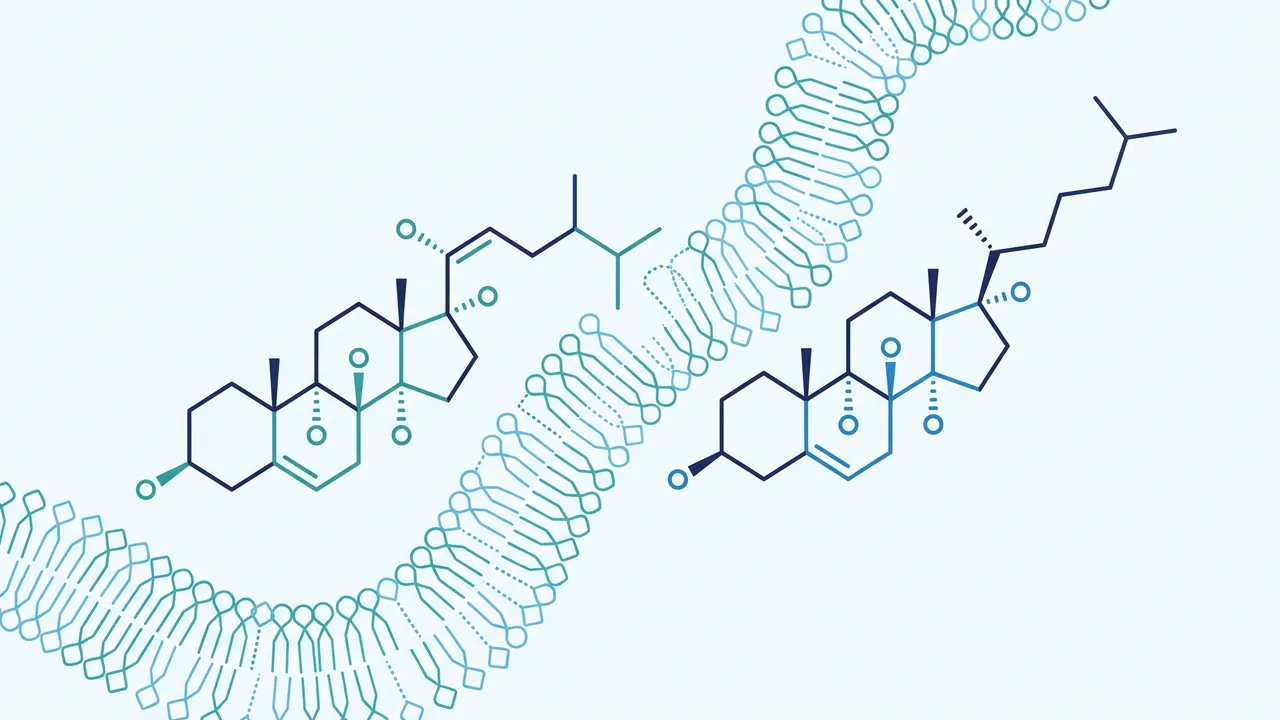
Phytosterols
Other lipid preparations. A research review published by South Beach Longevity.
Evidence is labelled by study type in the sentence that reports it. In vitro and animal findings are never phrased as human outcomes. Human randomized means people under allocation. A meta-analysis is named as such. A guideline is a recommendation, not a trial. Genetic association and Mendelian randomization are not randomized diet trials.
LDL-C change is a surrogate. A coronary event is a clinical outcome. The two are not interchangeable in this document. Findings are graded in place as established, strongly supported, emerging, plausible, or speculative. Conflict is presented as conflict. No diet, supplement, product, or individualized regimen is recommended.
Abstract
Phytosterols are C28 and C29 sterols of plant origin and their 5α-saturated stanol analogues. The principal dietary species are β-sitosterol, campesterol and stigmasterol; the principal stanols are sitostanol and campestanol. A typical Western diet supplies a few hundred milligrams per day (Lee et al., 2001). Fortified foods and supplements are formulated at gram intakes. Intestinal absorption of phytosterols in people without sitosterolemia is of the order of one percent or less, against roughly half of dietary cholesterol (Lee et al., 2001). NPC1L1 is required for uptake of both cholesterol and phytosterols into the enterocyte (Altmann et al., 2004; Davis et al., 2004). ABCG5/ABCG8 return sterols to the lumen and into bile; biallelic loss of either half-transporter causes sitosterolemia, with phytosterol accumulation, xanthomas and premature atherosclerosis (Berge et al., 2000).
Randomized trials and successive meta-analyses establish an LDL-C reduction of about 8–12 percent at intakes near 2 g/day, with a flattening dose–response above that range (Katan et al., 2003; Demonty et al., 2009; Ras et al., 2014). Sterols and stanols are similar at usual intakes; food vehicle and dosing schedule matter (Abumweis et al., 2008). Capsules can match food matrices in short trials (Amir Shaghaghi et al., 2013). The 2023 SPORT trial found no significant LDL-C change versus placebo for a plant-sterol supplement at 28 days (Laffin et al., 2023); that result does not erase the fortified-food meta-analyses, but it limits casual generalization from margarine trials to every retail capsule.
No adequately powered randomized trial has shown that phytosterol-induced LDL-C lowering reduces myocardial infarction, stroke or cardiovascular death. The 2014 EAS consensus stated that absence explicitly (Gylling et al., 2014). The 2025 ESC/EAS focused update restated it: phytosterols can lower LDL-C by about 10 percent at up to 2 g/day, and “there are no studies showing benefit of phytosterols on CV outcomes” (Mach et al., 2025). FDA 21 CFR 101.83 and EFSA Article 14 opinions authorize CHD-risk language that is tethered to the cholesterol-lowering surrogate (EFSA NDA Panel, 2012). Circulating phytosterols have been associated with coronary disease in some observational series (Glueck et al., 1991; Sudhop et al., 2002) and not in a 17-study meta-analysis (Genser et al., 2012). Rare ABCG5/ABCG8 variants raise both non-HDL cholesterol and phytosterols and confer more CAD risk than other non-HDL instruments predicting the same cholesterol increment (Helgadottir et al., 2020). That genetic result is not a randomized verdict on fortified margarine. Sitosterolemia is a disease of failed exclusion, not a scaled-up serving of plant sterols. Hydrocarbon carotenoids fall modestly after sterol/stanol intake; tocopherols, when cholesterol-standardized, and retinol and vitamin D, do not (Baumgartner et al., 2017). The concentrations remain within ordinary ranges. Industry funded a large fraction of the lipid trials. The evidence is sufficient for a lipid claim. It is not sufficient for an outcome claim.
01 What a phytosterol is
Cholesterol is a C27 sterol. Plant sterols are its C28 and C29 analogues: an extra methyl or ethyl at C-24, and, in stigmasterol, a double bond in the side chain. Plant stanols are the 5α-saturated counterparts. The word phytosterol is used in two ways in the literature. Narrowly it means the unsaturated plant sterols. Broadly — and in this article unless a contrast is being drawn — it covers sterols and stanols together. The contrast matters for absorption, plasma levels, and a contested dose–response at high intake. It does not create two unrelated nutrients.
The principal food sterols are β-sitosterol (24-ethylcholest-5-en-3β-ol), campesterol (24-methylcholest-5-en-3β-ol), and stigmasterol (24-ethylcholesta-5,22-dien-3β-ol). The principal stanols are sitostanol and campestanol. Minor species (brassicasterol, avenasterol, Δ7-sterols) appear in particular oils and grains. Commercial “plant sterol esters” are typically fatty-acid esters of a sitosterol-rich mix from soybean, rapeseed, tall oil or pine; stanol esters are hydrogenated and then esterified. Esterification is a formulation choice for solubility in fat spreads. The intestine hydrolyses the ester. The free sterol or stanol is what enters the micelle.
These molecules are not vitamins. They are not essential. Humans neither require them nor synthesize them. They arrive in the diet because plants use them as membrane sterols. The human problem they create is one of recognition: the enterocyte and the hepatocyte must absorb cholesterol and exclude, or rapidly re-excrete, the plant analogues. Sitosterolemia is what happens when that recognition fails (Berge et al., 2000; Lee et al., 2001).
02 Dietary occurrence
Vegetable oils, nuts, seeds, whole grains, and legumes are the ordinary sources. Corn oil is unusually rich; Ostlund and colleagues showed that the phytosterols already present in commercial corn oil measurably reduce cholesterol absorption in single-meal human tests when those phytosterols are removed (Ostlund et al., 2002). A typical mixed Western diet has been estimated at roughly 200–400 mg/day of non-cholesterol sterols, against 250–500 mg of dietary cholesterol (Lee et al., 2001). Vegetarian and plant-forward patterns sit higher. None of those food-pattern intakes is the 1.5–3 g/day range used in fortified-food trials.
That gap is the first evidence-architecture fact in the article. Epidemiology of “people who eat nuts and oils” is not a trial of sitostanol-ester margarine, and a trial of sitostanol-ester margarine is not a trial of a handful of almonds. Food-matrix phytosterols travel with unsaturated fat, fibre, and the rest of a plant food. Isolated or esterified gram doses do not.
03 Fortified foods and supplements
The modern literature begins in earnest with sitostanol-ester margarine. Miettinen, Puska, Gylling and colleagues randomized 153 mildly hypercholesterolemic adults for one year: 102 to margarine providing 1.8 or 2.6 g sitostanol/day, 51 to control margarine. Mean LDL-C fell 14.1 percent in the sitostanol group and 1.1 percent in controls; the between-group difference was −21 mg/dL (95% CI −14 to −29) (Miettinen et al., 1995). Serum campesterol, used as an absorption marker, fell 36 percent. HDL-C and triglycerides did not move. That trial is a lipid trial. It is not an outcome trial.
Subsequent products included yellow-fat spreads, yoghurts, milks, salad dressings and, later, capsules and tablets. Abumweis, Barake and Jones, in a 59-trial meta-analysis, found larger LDL-C reductions in fat spreads, mayonnaise, dressings, milk and yoghurt than in muffins, juices, cereal bars or chocolate, and no significant effect from a single morning dose (Abumweis et al., 2008). Judd and colleagues showed that salad dressing can carry sterol esters (Judd et al., 2002). Trautwein and colleagues later catalogued the formulation variables — ester versus free, fat versus non-fat, frequency — that still explain heterogeneity after dose is fixed (Trautwein et al., 2018).
Capsule and tablet meta-analysis, eight trials of 4–6 weeks at 1.0–3.0 g/day taken with meals, reported an LDL-C reduction of 0.31 mmol/L, statistically indistinguishable from food enrichment in that comparison (Amir Shaghaghi et al., 2013). The 2023 SPORT trial is the important contrary human experiment: adults without ASCVD, LDL-C 70–189 mg/dL, randomized for 28 days to rosuvastatin 5 mg, placebo, or one of six supplements including plant sterols. Rosuvastatin lowered LDL-C more than every supplement; no supplement, plant sterols included, differed significantly from placebo (Laffin et al., 2023). SPORT is short, single-centre, and not a 2 g/day meal-timed fortified-food protocol. It is nonetheless the trial a reader will meet when the question is “does the bottle on the shelf do what the margarine trials did?” The honest answer is that SPORT does not show that it does.
Plant sterols and stanols are chemically defined, non-essential dietary sterols. Gram-dose fortified foods, especially fat-based vehicles taken with meals, lower LDL-C in randomized trials. Ordinary food-pattern intakes are an order of magnitude lower. A retail capsule is not automatically a replicate of a sitostanol-ester margarine trial (Miettinen et al., 1995; Abumweis et al., 2008; Laffin et al., 2023).
04 Cholesterol absorption as the comparison
A healthy adult absorbs something like half of dietary cholesterol and less than one percent of dietary plant sterols (Lee et al., 2001). Both classes enter mixed micelles with bile salts and fatty acids. Both can occupy the micelle; that occupancy is the first, non-transporter mechanism of LDL-C lowering. Phytosterols displace cholesterol from the micelle. Less cholesterol is presented to the brush border. Hepatic cholesterol synthesis rises in compensation — visible as precursor-sterol increases in the sitostanol-margarine children’s crossover (Gylling et al., 1995) — but the net LDL-C movement is still down.
Micellar competition is not the whole story. Uptake into the enterocyte and excretion back to the lumen are protein-mediated. The two proteins that organize the rest of this part are NPC1L1 and the ABCG5/ABCG8 heterodimer.
05 NPC1L1
Altmann and colleagues identified Niemann-Pick C1-like 1 as essential for intestinal cholesterol absorption in the mouse. NPC1L1-null animals absorbed little cholesterol; ezetimibe, which had been developed as an absorption inhibitor, had no further effect in those animals (Altmann et al., 2004). Davis and colleagues then showed that NPC1L1-null mice also take up less sitosterol and have dramatically lower plasma phytosterols, and that they resist diet-induced hypercholesterolemia much as ezetimibe-treated wild-type mice do (Davis et al., 2004). Ge and colleagues later showed, in cells, that cholesterol promotes clathrin/AP2-dependent internalization of NPC1L1 and that ezetimibe blocks that internalization (Ge et al., 2008).
Those are animal and cell results. They are labelled as such. The human inference they support is mechanistic, not clinical: phytosterols and cholesterol share an entry path; a drug that blocks NPC1L1 (ezetimibe) and a food component that competes in the micelle are not the same intervention. IMPROVE-IT later showed that ezetimibe added to simvastatin reduced events. That trial is an ezetimibe trial. It is not a phytosterol trial, and this article does not spend it as one.
06 ABCG5 and ABCG8
Berge, Hobbs and colleagues mapped sitosterolemia to two adjacent, oppositely oriented ABC half-transporter genes, ABCG5 and ABCG8, expressed at high levels in liver and intestine (Berge et al., 2000). The heterodimer exports sterols from enterocyte to lumen and from hepatocyte to bile. Yu and colleagues showed that disruption of both genes in the mouse collapses biliary cholesterol secretion (Yu et al., 2002). Tissue-specific knockouts later separated the jobs: hepatic G5G8 dominates biliary secretion; intestinal G5G8 dominates exclusion of absorbed plant sterols; both contribute to fecal sterol loss (Wang et al., 2015). Patel, Graf and Temel reviewed the locus as more than a xenosterol defence: common variation associates with lipids, gallstones and atherosclerotic disease (Patel et al., 2018).
The physiological point for a nutrition article is simple. The reason plasma phytosterols stay low in ordinary people is not that plants are absent from the diet. It is that ABCG5/ABCG8, after NPC1L1 has admitted a little sterol, throw most of it back. Raise the oral load into the gram range and plasma sitosterol and campesterol still rise — Clifton and colleagues recorded +45 percent sitosterol and +105 percent campesterol at 6.6 g/day (Clifton et al., 2004) — but they remain orders of magnitude below cholesterol. Sitosterolemia is the state in which that throw-back fails.
07 Plasma phytosterols and genetic variability
In people without sitosterolemia, plasma campesterol and sitosterol are measurable in micrograms per millilitre. Glueck and colleagues, in 595 hypercholesterolemic adults, reported mean total phytosterols of 6.79 ± 3.66 μg/mL and correlations with serum cholesterol; high campesterol and stigmasterol tracked a personal or family history of premature CHD (Glueck et al., 1991). Rajaratnam, Gylling and Miettinen found an independent association of absorption markers, including sitosterol, with angiographic CAD in postmenopausal women (Rajaratnam et al., 2000). Sudhop, Gottwald and von Bergmann reported higher campesterol and sitosterol in men admitted for bypass grafting (Sudhop et al., 2002).
Those are observational associations. They have three non-exclusive readings. First, circulating phytosterols might themselves be atherogenic. Second, they might mark high cholesterol absorption (and low synthesis), a metabolic posture that Silbernagel and colleagues linked to more severe angiographic CAD in LURIC, while concluding that an atherogenic role for the plant sterols themselves was unlikely in the absence of sitosterolemia (Silbernagel et al., 2009). Third, they might mark diet, statin use, or residual confounding. Genser and colleagues’ systematic review of 17 studies and 11,182 participants did not find an association between serum sitosterol or campesterol and CVD; funnel plots suggested unpublished small nulls (Genser et al., 2012). The observational file is therefore conflicted. It is not a verdict of harm from food fortification, and it is not a clearance.
Common and rare variation at ABCG5/ABCG8 moves both sterol absorption and disease risk. Helgadottir and colleagues, using sequence variants as instruments in Iceland, Denmark and UK Biobank (105,490 CAD cases), found that rare coding variants raise phytosterols and non-HDL cholesterol and that an ABCG5/8 score predicting a 1 mmol/L rise in non-HDL cholesterol associated with a two-fold CAD increase (OR 2.01), against OR 1.54 for other non-HDL instruments with the same predicted cholesterol increment (Helgadottir et al., 2020). The authors concluded that both dietary cholesterol and phytosterols contribute directly to atherogenesis. That is a genetic inference about transporter function and lifetime exposure. It is strongly supported as genetics. It is not a randomized demonstration that a two-gram sterol spread causes events. The opposite reading — that the excess risk is entirely the non-HDL cholesterol the variants also raise — remains a live alternative, which is why the paper tested the difference and why this article reports both the finding and its inferential step.
NPC1L1 and ABCG5/ABCG8 explain why phytosterols are poorly absorbed and why sitosterolemia looks like premature atherosclerosis (Berge et al., 2000; Altmann et al., 2004; Davis et al., 2004). Plasma phytosterols in the general population are an inconsistent CAD marker (Genser et al., 2012 versus Sudhop et al., 2002). ABCG5/8 variation associates with CAD beyond a simple non-HDL instrument (Helgadottir et al., 2020). None of that is a randomized outcome trial of fortified food.
08 The established lipid effect
Katan and 31 other experts, pooling 41 trials, reported that 2 g/day of stanols or sterols reduced LDL-C by 10 percent, with little further gain above that intake; effects were additive with diet and with statins (Katan et al., 2003). Demonty, Ras and colleagues fitted a continuous dose–response to 84 trials (141 arms). The pooled reduction at a mean 2.15 g/day was 0.34 mmol/L (95% CI −0.36 to −0.31), or 8.8 percent (95% CI −9.4 to −8.3). Higher baseline LDL-C gave larger absolute reductions. Sterol versus stanol curves did not differ. Solid foods beat liquids only above 2 g/day. A single daily intake tended to be slightly less effective (Demonty et al., 2009). Ras, Geleijnse and Trautwein later classified 124 studies (201 strata) by dose: 0.6–3.3 g/day produced average LDL-C reductions of 6–12 percent, continuing up to about 3 g/day and an average 12 percent; sterol and stanol strata were comparable when analysed separately (Ras et al., 2014).
Schoeneck and Iggman, reviewing foods rather than pills, graded foods with added plant sterols/stanols as causing at least a moderate (0.20–0.40 mmol/L) LDL-C reduction with high evidence (Schoeneck and Iggman, 2021). That is the right epistemic class: established lipid lowering in randomized food trials.
09 Sterol versus stanol
At the intakes that dominate the food-trial literature, sterols and stanols look alike (Katan et al., 2003; Demonty et al., 2009; Ras et al., 2014; EFSA NDA Panel, 2012). Musa-Veloso and colleagues fitted separate first-order curves and reported a higher maximal LDL-C reduction for stanols than for sterols (16.4 versus 8.3 percent), arguing that intakes above 2 g/day still pay for stanols (Musa-Veloso et al., 2011). A subsequent comment from the Demonty group contested that comparison. The article treats sterol–stanol equivalence at ~2 g/day as strongly supported and additional high-dose stanol superiority as emerging and disputed. Plasma phytosterols rise more after sterol than after stanol intake; that is a biochemical difference, not by itself an outcome difference.
10 Vehicles, frequency, and the capsule problem
Abumweis et al. (2008) is the load-bearing paper on vehicle and timing: fat-based and fermented-dairy carriers outperform several other foods; a single morning dose failed. Clifton et al. (2004) showed that pushing intake to 6.6 g/day did not produce extra LDL-C lowering beyond the 1.6–3.2 g range, while carotenoid suppression and plasma phytosterol rise continued. Amir Shaghaghi et al. (2013) support capsules when they are taken with meals at gram doses for a few weeks. Laffin et al. (2023) show that a 28-day plant-sterol supplement arm in SPORT did not beat placebo. The synthesis is unromantic. Established for meal-timed, gram-dose, usually fat-based foods. Vehicle-dependent for everything else. Not interchangeable with “phytosterols work.”
11 Added to a statin
Scholle and colleagues meta-analysed eight randomized trials (n = 306) of sterols/stanols on background statin therapy. Additional reductions were 14.01 mg/dL in total cholesterol and 13.26 mg/dL in LDL-C; HDL-C and triglycerides did not move. They noted the absence of morbidity and mortality trials of the combination (Scholle et al., 2009). Katan et al. (2003) had already remarked that adding sterols or stanols to a statin outperforms doubling the statin dose as a lipid manoeuvre. Doubling a statin is a lipid comparison, not an outcome comparison. The CTT collaboration later quantified event reduction per mmol/L of LDL-C for statins. That calibration is a statin calibration. Using it to project phytosterol events is an inference, labelled as such in Part Four.
12 Guidelines and regulator language
The 2014 EAS consensus recommended considering functional foods with 2 g/day plant sterols/stanols in intermediate- or low-risk hypercholesterolemia not qualifying for drugs, as an adjunct when LDL-C targets are missed or statins are not tolerated, and in FH from age six — and then stated that there are no randomized hard-endpoint data (Gylling et al., 2014). The 2019 ESC/EAS dyslipidaemia guideline included functional foods enriched with phytosterols among lifestyle options (Mach et al., 2020). The 2025 focused update, after SPORT and a broader look at supplements, stated that phytosterols at up to 2 g/day can reduce LDL-C by about 10 percent without reported adverse events, that there are no CV-outcome studies, and that the update does not support dietary supplements or vitamins without documented safety and significant LDL-C-lowering efficacy for lowering ASCVD risk (Mach et al., 2025). Those two ESC documents must be read together. The 2019 lifestyle line was not withdrawn by name; the 2025 supplement table is new and cooler.
The 2018 AHA/ACC cholesterol guideline is a statin-first, risk-based document; plant sterols/stanols are not a Class I event-prevention therapy in that executive summary (Grundy et al., 2019). FDA 21 CFR 101.83 permits a CHD-risk health claim for specified intakes of plant sterol esters (at least 1.3 g/day) or plant stanol esters (at least 3.4 g/day) as part of a diet low in saturated fat and cholesterol, on the evidential ground that the esters lower total and LDL cholesterol, which are CHD risk factors. EFSA’s 2012 Article 19 opinion concluded that 1.5–3.0 g/day in approved matrices lower LDL-C similarly for sterols and stanols, and that 3 g/day (range 2.6–3.4) lowers LDL-C by 11.3 percent (95% CI 10.0–12.5), with two to three weeks to maximum effect (EFSA NDA Panel, 2012). Regulator health claims in this area are surrogate claims with CHD-risk wording. They are not event trials.
| Source | Year | What is said | What is not said |
|---|---|---|---|
| Katan expert meta-analysis | 2003 | ~10% LDL-C at 2 g/day | Event reduction |
| Demonty dose–response | 2009 | −8.8% at 2.15 g/day | Event reduction |
| Ras dose-range meta-analysis | 2014 | 6–12% over 0.6–3.3 g/day | Event reduction |
| EAS consensus | 2014 | May be considered for LDL-C | Hard-endpoint RCT exists |
| EFSA NDA | 2012 | 11.3% LDL-C at ~3 g/day | Measured CHD events |
| FDA 21 CFR 101.83 | 2000– | May reduce CHD risk via lipids | An outcome trial |
| ESC/EAS guideline | 2019 | Functional foods as lifestyle | Proven MACE reduction |
| ESC/EAS focused update | 2025 | ~10% LDL-C; no CV-outcome studies | A new phytosterol mandate |
| SPORT | 2023 | 28-day supplement arm null vs placebo | A refutation of all food trials |
Table. Guideline and evidence-summary positions. Every row was checked against the named primary. LDL-C effects are not rewritten as event effects.
13 The surrogate is not the outcome
LDL-C is a causal risk factor for atherosclerotic disease in a large genetic and pharmacologic literature. That sentence is true and insufficient. Causality of LDL-C does not make every method of lowering LDL-C outcome-equivalent. Hormone replacement lowered LDL-C and did not reduce events in the way the lipid hypothesis had been used to promise. CETP inhibitors have taught the same lesson more than once. Ezetimibe did get an outcome trial. Phytosterols have not.
Law, in 2000, estimated that 2 g/day of plant sterol or stanol esters would reduce heart-disease risk by about 25 percent, by applying cholesterol-to-event relationships from other settings to the lipid effect of the margarines (Law, 2000). That is a projection. Katan et al. (2003) stayed inside the lipid file. Gylling et al. (2014) said the quiet part: no randomized hard-endpoint data. Cabral and Klein (2017) reviewed the same gap and noted studies suggesting increased atherosclerosis risk with higher serum phytosterols. Mach et al. (2025) wrote, after two more decades of food trials, “There are no studies showing benefit of phytosterols on CV outcomes.” The article adopts that sentence as the controlling negative finding. It is not an argument from silence. It is a documented absence in the documents that would have cited a positive trial if one existed.
Using the statin CTT slope (~22 percent event reduction per 1 mmol/L LDL-C) on a 0.34 mmol/L phytosterol effect yields a projected few-percent relative risk reduction. The arithmetic is easy and the leap is illegitimate for a claim of demonstrated benefit. Off-target effects, plasma phytosterol rise, carotenoid movement, industry-dominated short trials, and the SPORT null on a supplement arm are all reasons the projection could be wrong in either direction. The correct grade for event reduction is untested in an adequate randomized design.
14 Opposing-evidence review: cardiovascular safety
The case that phytosterols might be atherogenic, or that their lipid benefit might be offset, has several independent strands. None is dismissed here for being inconvenient.
Sitosterolemia as existence proof. Biallelic ABCG5 or ABCG8 loss produces xanthomas, hemolysis, macrothrombocytopenia, and premature coronary disease (Berge et al., 2000; Lee et al., 2001; Ajagbe et al., 2015; Tada et al., 2021). That is established human pathology of phytosterol accumulation. Tada and colleagues have argued that the LDL-C elevation in sitosterolemia, not sitosterol per se, may be the dominant atherogenic driver (Tada et al., 2018). Both readings can be true in part. The disease still shows that the body’s ordinary exclusion of plant sterols is not a cosmetic preference.
Observational plasma sterols. Glueck et al. (1991), Rajaratnam et al. (2000) and Sudhop et al. (2002) associated higher circulating plant sterols with coronary disease. Genser et al. (2012) did not confirm a relationship across 17 studies. Publication bias toward positive small studies is a real threat in that file. The correct statement is conflict, not exoneration.
Animal vascular work. Weingärtner and colleagues reported that 2 percent plant-sterol-ester supplementation in wild-type mice impaired endothelium-dependent vasorelaxation and enlarged cerebral infarcts, that ApoE-null mice on sterol esters developed larger plaques than ezetimibe-treated animals despite lipid lowering, and that ten patients who ate sterol-ester margarine had five-fold higher sterol concentrations in aortic-valve tissue (Weingärtner et al., 2008). Those are animal endpoints plus a tiny human tissue series. They are emerging adverse signals, not a human outcome trial. They are also not nothing. Plat and Mensink had reported lesion retardation with sterol or stanol esters in LDL-receptor-deficient mice (cited in the 2008 debate). Animal atherosclerosis is bidirectional in this literature. It cannot be cited as a clean human reassurance.
Genetics beyond sitosterolemia. Helgadottir et al. (2020) is the strongest modern reason not to treat circulating phytosterols as a harmless tracer. If ABCG5/8 variants confer more CAD than other instruments of the same non-HDL increment, something in the absorption/excretion axis is not fully captured by the cholesterol number. The competing explanation is residual cholesterol-particle risk or horizontal pleiotropy. Weingärtner, Teupser and Patel reviewed the atherogenicity question from genetics through trials and concluded that the endpoint-benefit file was poor and that caution was warranted (Weingärtner et al., 2015). Patel et al. (2018) left lifetime low-level xenosterol exposure in polymorphic humans as largely unexplored.
What this review does not conclude. It does not conclude that fortified-food users are being poisoned. It does not conclude that sitosterolemia is a miniature of a yoghurt drink. It does not discard the LDL-C trials. It concludes that cardiovascular safety of gram-dose phytosterols, defined as net effect on events, is unestablished, and that the opposing file is strong enough that “LDL went down, therefore events will follow” is an advertising inference rather than a scientific one.
15 Sitosterolemia
Sitosterolemia (phytosterolemia) is an autosomal recessive disease of ABCG5 or ABCG8 (Berge et al., 2000; Lee et al., 2001). Affected people hyperabsorb and retain plant and shellfish sterols; plasma sitosterol is orders of magnitude above the ordinary range; tendon and tuberous xanthomas appear; atherosclerosis can be infantile or juvenile (Lee et al., 2001; Tada et al., 2021). Hematologic abnormalities are part of the phenotype (Ajagbe et al., 2015). Prevalence estimates have risen as sequencing has spread; Tada et al. (2018) suggested deleterious alleles may be commoner than the classical “extremely rare” framing. Diagnosis is biochemical (plant-sterol quantification) plus genetics. Plant-sterol-fortified foods are contraindicated in this disease in every serious review. Ezetimibe, which blocks NPC1L1, is the usual pharmacologic discussion in the specialist literature (Ajagbe et al., 2015; Tada et al., 2021). This article does not prescribe it. Heterozygotes are a separate, thinner file: they are not sitosterolemia, and they are not a license to ignore Helgadottir.
16 Mendelian interpretation, used correctly
Three mistakes recur. First, treating sitosterolemia as proof that a 2 g food is atherogenic. The exposures differ by orders of magnitude and the genotype is not the food. Second, treating Genser’s null meta-analysis as proof that plasma phytosterols are irrelevant. Absence of association in heterogeneous observational designs is not absence of biology. Third, treating Helgadottir as if it randomized people to margarine. Instruments at ABCG5/8 move cholesterol absorption, phytosterol retention, biliary sterol secretion and gallstone risk together (Helgadottir et al., 2020; Patel et al., 2018). The excess CAD per unit non-HDL is a reason to keep the atherogenicity hypothesis open. It is not a point estimate of the hazard ratio of a yoghurt.
Demonstrated: gram-dose plant sterols/stanols lower LDL-C in randomized trials, especially in meal-timed food vehicles. Not demonstrated: fewer cardiovascular events. Not demonstrated: harm from ordinary fortification. Open: whether circulating phytosterols contribute to atherosclerosis independently of LDL-C, as sitosterolemia and some genetic instruments suggest and as Genser’s meta-analysis does not confirm.
17 Long-term safety as it has actually been studied
The one-year sitostanol-margarine trial is still one of the longer randomized human exposures (Miettinen et al., 1995). Most lipid trials last weeks to a few months. Katan et al. (2003) judged the sterols and stanols safe at the intakes used for LDL-C lowering. Gylling et al. (2014) reported no adverse health signal at 2 g/day in long-term human studies then available. Mach et al. (2025) repeated “without reported adverse events” for the LDL-C effect. Those statements are about the observed file. They are not a 10-year event trial. Gastrointestinal tolerance is generally good in the margarine studies. The safety question that matters for this article is not dyspepsia. It is net cardiovascular effect plus nutrient interactions plus sitosterolemia.
18 Carotenoids and fat-soluble vitamins
Judd et al. (2002) found a 9.6 percent fall in total plasma carotenoids with 3.6 g/day sterol esters in salad dressing; β-carotene, α-carotene and (in women) β-cryptoxanthin fell after lipid adjustment; values stayed within normal ranges. Clifton et al. (2004) at 6.6 g/day saw cholesterol-adjusted α- and β-carotene down 19–23 percent, lutein 14 percent, lycopene 11 percent, partially reversed by extra fruit and vegetables. Baumgartner, Ras, Trautwein, Mensink and Plat meta-analysed 41 randomized trials (3,306 subjects) at a mean 2.5 g/day. Non-standardized and total-cholesterol-standardized β-carotene fell 16.3 and 10.1 percent; α-carotene 14.4 and 7.8 percent; lycopene 12.3 and 6.3 percent. Tocopherols fell in raw plasma and not after cholesterol standardization. Retinol and vitamin D were unaffected. Observed concentrations remained within normal ranges (Baumgartner et al., 2017).
Are those reductions clinically meaningful? In the published trials they have not been linked to a vitamin-deficiency syndrome. They are also not zero. Hydrocarbon carotenoids ride on the same lipid-absorption machinery the sterols disturb. People with low fruit and vegetable intake, children, and pregnant women are the groups in which a 10 percent standardized β-carotene fall is least trivial. The article grades clinical harm from these shifts as not demonstrated and the biochemical effect as established. Extra fruit and vegetables moved some carotenoids back up in Clifton’s high-dose protocol. That is an observation, not a prescription.
19 Special populations
Children with FH. Gylling, Siimes and Miettinen, in a six-week double-blind crossover of 3 g/day sitostanol ester in 14 heterozygous and one homozygous child, reported LDL-C down 15 percent and good compliance (Gylling et al., 1995). Barkas et al. (2020), in an FH diet meta-analysis, found additional total and LDL-C lowering when plant sterols or stanols were added to a cholesterol-lowering diet, and no trial that measured cardiovascular incidence or mortality. Pediatric lipid lowering is not pediatric event prevention in this file.
Pregnancy and lactation. The randomized lipid literature is not a pregnancy literature. Fat-soluble-nutrient movement is a reason this article does not treat pregnancy as a studied indication. Absence of data is reported as absence.
Sitosterolemia and unexplained xanthomas. Fortified sterol/stanol products are inappropriate. The diagnostic trap is treating childhood xanthomas as heterozygous FH without measuring plant sterols (Tada et al., 2021).
Statin-treated adults. Additive LDL-C lowering is established in small trials (Scholle et al., 2009). Outcome additivity is not.
People buying supplements rather than foods. SPORT is the reminder that the capsule is a different experiment (Laffin et al., 2023).
20 Industry sponsorship and generalizability
Unilever (sterol esters; EFSA applicant in 2012), Raisio (stanol esters; Benecol), and McNeil appear throughout the trial file and the original FDA petitions. Demonty, Ras and Trautwein have been affiliated with Unilever on the dose–response papers that every later writer cites (Demonty et al., 2009; Ras et al., 2014). That does not falsify the chemistry or the LDL-C effect. Independent replications exist (Miettinen et al., 1995 began as a Finnish public-health collaboration; SPORT was not a sterol-company trial and was null for the supplement). It does mean the evidence base was built, in large part, to support a food-technology claim. Trials were short, often in mildly hypercholesterolemic European adults eating controlled spreads, and they measured lipids. They were not built to detect a 5 percent event difference or a late safety signal. Weighting them as if they were CTT-style statin trials is a category error. Weighting them at zero because a company paid is a different error. The article keeps the LDL-C effect and discounts the unspoken outcome inference.
Fortified-food trials are also not generalizable to every supermarket object labelled “plant sterols.” Dose, ester versus free, fat matrix, intake with meals, and adherence are the variables Abumweis and Trautwein documented. A 28-day capsule in SPORT is a fair test of that bottle. It is a poor test of a year of sitostanol-ester margarine eaten with meals.
21 What the evidence justifies
It justifies a precise lipid sentence: meal-timed gram doses of plant sterols or stanols, usually in fat-based foods, lower LDL-C by roughly a tenth in randomized trials, with a flattening dose–response and a modest, usually subclinical, fall in hydrocarbon carotenoids. It justifies a precise disease sentence: sitosterolemia is a contraindication and a genetic lesson about exclusion. It justifies a precise humility sentence: cardiovascular event reduction has not been shown, circulating phytosterols have not been cleared as irrelevant, and genetic instruments at ABCG5/8 keep an independent-atherogenicity hypothesis alive. It does not justify a wellness sentence that phytosterols “protect the heart.” It does not justify a scare sentence that a sterol spread is sitosterolemia. Those two sentences are the marketing pair this article was written not to repeat.
This document describes published research. It is not medical advice and it is not a diet, product, or supplement recommendation. It does not recommend any individualized regimen and it does not provide medical nutrition therapy. Clinical decisions belong to a qualified professional and the person who asked for them.
22 Evidence handling
Peer-reviewed identifiers were taken from NCBI records retrieved on 20 August 2026. In-prose citations are author–year. The numbered list is sorted by first-author surname. Study type is named in the reporting sentence. Animal and cell findings are not rewritten as human outcomes. LDL-C is labelled a surrogate wherever it is used to talk about disease. Guideline text is quoted as recommendation language, not as trial evidence. Industry affiliation is noted where it bears on the weight of a lipid meta-analysis. Project 06 and 07 Peptide News were searched as read-only discovery layers; they are not cited as scientific authorities. HOUSE_STYLE section 8a (peptide bioregulators) does not apply.
23 Scope relative to sibling articles
This title is the plant-sterol/stanol article in the SBL-41 series. It is not the phytonutrients framework article, which orients the larger class of plant bioactives. It is not a statin article, an ezetimibe article, or a sitosterolemia clinical manual. IMPROVE-IT is mentioned only to forbid its use as phytosterol-outcome evidence. Dietary pattern epidemiology of nuts and oils is mentioned only to forbid its use as fortified-food evidence.
24 References
Forty-four peer-reviewed or agency records below were verified against NCBI or the named instrument. FDA 21 CFR 101.83 (electronic Code of Federal Regulations, retrieved 20 August 2026) is an additional institutional source for the US health claim and is not a PubMed article.
- Abumweis SS, Barake R, Jones PJ. Plant sterols/stanols as cholesterol lowering agents: A meta-analysis of randomized controlled trials. Food Nutr Res. 2008;52. PMID 19109655 · doi:10.3402/fnr.v52i0.1811 · PMC2596710
- Ajagbe BO, Othman RA, Myrie SB. Plant Sterols, Stanols, and Sitosterolemia. J AOAC Int. 2015;98(3):716-723. PMID 25941971 · doi:10.5740/jaoacint.SGEAjagbe
- Altmann SW, Davis HR, Zhu LJ, Yao X, Hoos LM, Tetzloff G et al. Niemann-Pick C1 Like 1 protein is critical for intestinal cholesterol absorption. Science. 2004;303(5661):1201-4. PMID 14976318 · doi:10.1126/science.1093131
- Amir Shaghaghi M, Abumweis SS, Jones PJH. Cholesterol-lowering efficacy of plant sterols/stanols provided in capsule and tablet formats: results of a systematic review and meta-analysis. J Acad Nutr Diet. 2013;113(11):1494-1503. PMID 24144075
- Barkas F, Nomikos T, Liberopoulos E, Panagiotakos D. Diet and Cardiovascular Disease Risk Among Individuals with Familial Hypercholesterolemia: Systematic Review and Meta-Analysis. Nutrients. 2020;12(8). PMID 32823643
- Baumgartner S, Ras RT, Trautwein EA, Mensink RP, Plat J. Plasma fat-soluble vitamin and carotenoid concentrations after plant sterol and plant stanol consumption: a meta-analysis of randomized controlled trials. Eur J Nutr. 2017;56(3):909-923. PMID 27591863
- Berge KE, Tian H, Graf GA, Yu L, Grishin NV, Schultz J et al. Accumulation of dietary cholesterol in sitosterolemia caused by mutations in adjacent ABC transporters. Science. 2000;290(5497):1771-5. PMID 11099417
- Cabral CE, Klein MRST. Phytosterols in the Treatment of Hypercholesterolemia and Prevention of Cardiovascular Diseases. Arq Bras Cardiol. 2017;109(5):475-482. PMID 29267628
- Clifton PM, Noakes M, Ross D, Fassoulakis A, Cehun M, Nestel P. High dietary intake of phytosterol esters decreases carotenoids and increases plasma plant sterol levels with no additional cholesterol lowering. J Lipid Res. 2004;45(8):1493-9. PMID 15145979
- Davis HR, Zhu LJ, Hoos LM, Tetzloff G, Maguire M, Liu J et al. Niemann-Pick C1 Like 1 (NPC1L1) is the intestinal phytosterol and cholesterol transporter and a key modulator of whole-body cholesterol homeostasis. J Biol Chem. 2004;279(32):33586-92. PMID 15173162
- Demonty I, Ras RT, van der Knaap HC, Duchateau GS, Meijer L, Zock PL et al. Continuous dose-response relationship of the LDL-cholesterol-lowering effect of phytosterol intake. J Nutr. 2009;139(2):271-84. PMID 19091798
- EFSA Panel on Dietetic Products, Nutrition and Allergies (NDA). Scientific Opinion on the substantiation of a health claim related to 3 g/day plant sterols/stanols and lowering blood LDL-cholesterol and reduced risk of (coronary) heart disease. EFSA J. 2012;10(5):2693. PMID 42112199
- Ge L, Wang J, Qi W, Miao HH, Cao J, Qu YX et al. The cholesterol absorption inhibitor ezetimibe acts by blocking the sterol-induced internalization of NPC1L1. Cell Metab. 2008;7(6):508-19. PMID 18522832
- Genser B, Silbernagel G, De Backer G, Bruckert E, Carmena R, Chapman MJ et al. Plant sterols and cardiovascular disease: a systematic review and meta-analysis. Eur Heart J. 2012;33(4):444-51. PMID 22334625
- Glueck CJ, Speirs J, Tracy T, Streicher P, Illig E, Vandegrift J. Relationships of serum plant sterols (phytosterols) and cholesterol in 595 hypercholesterolemic subjects. Metabolism. 1991;40(8):842-8. PMID 1650421
- Grundy SM, Stone NJ, Bailey AL, Beam C, Birtcher KK, Blumenthal RS et al. 2018 AHA/ACC Guideline on the Management of Blood Cholesterol: Executive Summary. Circulation. 2019;139(25):e1046-e1081. PMID 30565953
- Gylling H, Siimes MA, Miettinen TA. Sitostanol ester margarine in dietary treatment of children with familial hypercholesterolemia. J Lipid Res. 1995;36(8):1807-12. PMID 7595101
- Gylling H, Plat J, Turley S, Ginsberg HN, Ellegård L, Jessup W et al. Plant sterols and plant stanols in the management of dyslipidaemia and prevention of cardiovascular disease. Atherosclerosis. 2014;232(2):346-60. PMID 24468148
- Helgadottir A, Thorleifsson G, Alexandersson KF, Tragante V, Thorsteinsdottir M, Eiriksson FF et al. Genetic variability in the absorption of dietary sterols affects the risk of coronary artery disease. Eur Heart J. 2020;41(28):2618-2628. PMID 32702746
- Judd JT, Baer DJ, Chen SC, Clevidence BA, Muesing RA, Kramer M et al. Plant sterol esters lower plasma lipids and most carotenoids in mildly hypercholesterolemic adults. Lipids. 2002;37(1):33-42. PMID 11876261
- Katan MB, Grundy SM, Jones P, Law M, Miettinen T, Paoletti R et al. Efficacy and safety of plant stanols and sterols in the management of blood cholesterol levels. Mayo Clin Proc. 2003;78(8):965-78. PMID 12911045
- Laffin LJ, Bruemmer D, Garcia M, Brennan DM, McErlean E, Jacoby DS et al. Comparative Effects of Low-Dose Rosuvastatin, Placebo, and Dietary Supplements on Lipids and Inflammatory Biomarkers. J Am Coll Cardiol. 2023;81(1):1-12. PMID 36351465
- Law M. Plant sterol and stanol margarines and health. BMJ. 2000;320(7238):861-4. PMID 10731187
- Lee MH, Lu K, Patel SB. Genetic basis of sitosterolemia. Curr Opin Lipidol. 2001;12(2):141-9. PMID 11264985
- Mach F, Baigent C, Catapano AL, Koskinas KC, Casula M, Badimon L et al. 2019 ESC/EAS Guidelines for the management of dyslipidaemias. Eur Heart J. 2020;41(1):111-188. PMID 31504418
- Mach F, Koskinas KC, Roeters van Lennep JE, Tokgözoğlu L, Badimon L, Baigent C et al. 2025 Focused Update of the 2019 ESC/EAS Guidelines for the management of dyslipidaemias. Eur Heart J. 2025;46(42):4359-4378. PMID 40878289
- Miettinen TA, Puska P, Gylling H, Vanhanen H, Vartiainen E. Reduction of serum cholesterol with sitostanol-ester margarine in a mildly hypercholesterolemic population. N Engl J Med. 1995;333(20):1308-12. PMID 7566021
- Musa-Veloso K, Poon TH, Elliot JA, Chung C. A comparison of the LDL-cholesterol lowering efficacy of plant stanols and plant sterols over a continuous dose range. Prostaglandins Leukot Essent Fatty Acids. 2011;85(1):9-28. PMID 21345662
- Ostlund RE, Racette SB, Okeke A, Stenson WF. Phytosterols that are naturally present in commercial corn oil significantly reduce cholesterol absorption in humans. Am J Clin Nutr. 2002;75(6):1000-4. PMID 12036805
- Patel SB, Graf GA, Temel RE. ABCG5 and ABCG8: more than a defense against xenosterols. J Lipid Res. 2018;59(7):1103-1113. PMID 29728459
- Plat J, Baumgartner S, Vanmierlo T, Lütjohann D, Calkins KL, Burrin DG et al. Plant-based sterols and stanols in health and disease. Prog Lipid Res. 2019;74:87-102. PMID 30822462
- Rajaratnam RA, Gylling H, Miettinen TA. Independent association of serum squalene and noncholesterol sterols with coronary artery disease in postmenopausal women. J Am Coll Cardiol. 2000;35(5):1185-91. PMID 10758959
- Ras RT, Geleijnse JM, Trautwein EA. LDL-cholesterol-lowering effect of plant sterols and stanols across different dose ranges: a meta-analysis of randomised controlled studies. Br J Nutr. 2014;112(2):214-9. PMID 24780090
- Schoeneck M, Iggman D. The effects of foods on LDL cholesterol levels: a systematic review of systematic reviews and meta-analyses of randomized controlled trials. Nutr Metab Cardiovasc Dis. 2021;31(5):1325-1338. PMID 33762150
- Scholle JM, Baker WL, Talati R, Coleman CI. The effect of adding plant sterols or stanols to statin therapy in hypercholesterolemic patients: systematic review and meta-analysis. J Am Coll Nutr. 2009;28(5):517-24. PMID 20439548
- Silbernagel G, Fauler G, Renner W, Landl EM, Hoffmann MM, Winkelmann BR et al. The relationships of cholesterol metabolism and plasma plant sterols with the severity of coronary artery disease. J Lipid Res. 2009;50(2):334-41. PMID 18769018
- Sudhop T, Gottwald BM, von Bergmann K. Serum plant sterols as a potential risk factor for coronary heart disease. Metabolism. 2002;51(12):1519-21. PMID 12489060
- Tada H, Nohara A, Inazu A, Sakuma N, Mabuchi H, Kawashiri MA. Sitosterolemia, Hypercholesterolemia, and Coronary Artery Disease. J Atheroscler Thromb. 2018;25(9):783-789. PMID 30033951
- Tada H, Nomura A, Ogura M, Ikewaki K, Ishigaki Y, Inagaki K et al. Diagnosis and Management of Sitosterolemia 2021. J Atheroscler Thromb. 2021;28(8):791-801. PMID 33907061
- Trautwein EA, Vermeer MA, Hiemstra H, Ras RT. LDL-Cholesterol Lowering of Plant Sterols and Stanols-Which Factors Influence Their Efficacy? Nutrients. 2018;10(9). PMID 30205492
- Wang J, Mitsche MA, Lütjohann D, Cohen JC, Xie XS, Hobbs HH. Relative roles of ABCG5/ABCG8 in liver and intestine. J Lipid Res. 2015;56(2):319-30. PMID 25378657
- Weingärtner O, Lütjohann D, Ji S, Weisshoff N, List F, Sudhop T et al. Vascular effects of diet supplementation with plant sterols. J Am Coll Cardiol. 2008;51(16):1553-61. PMID 18420097
- Weingärtner O, Teupser D, Patel SB. The Atherogenicity of Plant Sterols: The Evidence from Genetics to Clinical Trials. J AOAC Int. 2015;98(3):742-749. PMID 25942705
- Yu L, Hammer RE, Li-Hawkins J, Von Bergmann K, Lutjohann D, Cohen JC et al. Disruption of Abcg5 and Abcg8 in mice reveals their crucial role in biliary cholesterol secretion. Proc Natl Acad Sci U S A. 2002;99(25):16237-42. PMID 12444248
Continue reading