
Creatine HCl, Buffered Creatine and Alternative Creatine Forms
Metabolic cofactors and energy intermediates. A research review published by South Beach Longevity.
Creatine HCl, Buffered Creatine and Alternative Creatine Forms
Creatine monohydrate as the evidence benchmark, and what the other salts, esters, chelates, and buffered products have actually shown in peopleCreatine monohydrate is the form that loaded human muscle in the biopsy studies that created this market. Everything else is a commercial variation on that molecule: a salt, an ester, a chelate, a buffer, a liquid, a smaller scoop. This article asks whether any of those variations has a human record that beats the monohydrate on muscle creatine, performance, hypertrophy, gut comfort, safety, or value. Solubility in a glass is not that record.
Compiled by South Beach Longevity · 20 August 2026 Copyright 2026 Series SBL-41 / SP-ALTERNATIVE-CREATINE-FORMS · Register A scientific article Sources peer-reviewed human trials, consensus statements, physicochemical studies, and labelled in-vitro work · verified NCBI records Constraint This document describes published research. It is not medical advice. No human use, dose, route or schedule is recommended anywhere in this document.
How to read this document Every finding is labelled, in the sentence that reports it, by the kind of study that produced it. A saturation pH in a beaker is not a vastus lateralis biopsy. A plasma creatine curve is not muscle phosphocreatine. A manufacturer-recommended scoop is not a creatine-equivalent dose. Amounts and durations appear only as reported experimental parameters, always with the population attached. Nothing here is a recommendation.
Three layers are kept apart throughout: chemical property, delivery into plasma or tissue, and human outcome. Findings are graded in place as established, strongly supported, supported, emerging, plausible, or speculative, and where a claim fails on its own evidence, as refuted. Two further labels mark careful absences rather than verdicts: not established, where the evidence is too thin to place a claim on the ladder at all — untested or insufficient, an absence of proof rather than disproof; and not supported, where the weight of evidence leans against a claim but stops short of a formal refutation. Those grades are not shopping stars.
01 What this comparison is, and is not
The sibling Sports Nutrition article treats creatine as one established aid among fueling constraints. The sibling Ergogenic Aids article grades creatine monohydrate as a legal performance intervention. This title is the comparison problem those two documents refuse to reopen: whether the salts, esters, chelates, and buffered powders sold as upgrades are upgrades.
They are not. Not on the human file that exists in August 2026. That is a conclusion, not a prejudice. It can be overturned by a matched-dose biopsy trial. It cannot be overturned by a solubility table.
Two substitutions wreck the comparison. First, a mixing property is treated as a physiological property. Creatine hydrochloride dissolves more readily in water than creatine monohydrate under selected laboratory conditions (Gufford et al., 2010). That is chemistry. It is not muscle creatine. Second, a smaller labelled dose is treated as an equivalent dose. A 1.5 g serving of a buffered product is not 10–15 g of monohydrate because a patent says so (Jagim et al., 2012). Equivalence is a measurement.
This document does not review creatine as a medical therapy, does not recommend a scoop, and does not treat Project 05 peptide catalogues as evidence. Dietary creatine is a food-derived guanidine. It is not a steroid and it is not a research-chemical peptide.
02 Creatine monohydrate: chemistry, loading, muscle saturation
Creatine (N-methylguanidinoacetic acid) is synthesized from arginine, glycine, and methionine, stored mostly in skeletal muscle as free creatine and phosphocreatine, and degraded non-enzymatically to creatinine at about 1–2% of the intramuscular pool per day (Wyss and Kaddurah-Daouk, 2000; Persky and Brazeau, 2001). The dietary and supplemental form that built the human record is creatine monohydrate (CrM): creatine with one water of crystallization, about 87.9% creatine by weight (Jäger et al., 2011; Kreider et al., 2022).
Harris, Söderlund, and Hultman showed, in human vastus lateralis biopsies, that oral creatine raised muscle creatine in resting and exercised muscle (Harris, Söderlund, and Hultman, 1992). Hultman and colleagues then mapped protocol: 4 × 5 g/day for 6 days raised muscle free creatine about 33%; the same load followed by 2 g/day for 28 days held a 36% increase; 3 g/day for 35 days produced a slower 16.7% rise (Hultman et al., 1996). Greenhaff, Bodin, Söderlund, and Hultman reported faster phosphocreatine resynthesis after oral creatine in people whose muscle creatine had actually risen (Greenhaff et al., 1994). Those three papers are the benchmark. Later salts are asked to meet them, not to replace the citation.
Intestinal absorption of creatine monohydrate is already close to 100% (Jäger et al., 2007, citing Deldicque; Kreider et al., 2022). A 5 g oral dose of CrM produced peak plasma creatine around 800 µmol/L and kept plasma elevated for hours; repeating 5 g several times daily for two days raised muscle creatine about 35% (Harris et al., 1992; Kreider et al., 2022). Tissue uptake uses the creatine transporter SLC6A8. Saturation, not dissolution rate in a shaker bottle, is the limiter.
The International Society of Sports Nutrition 2007 and 2017 position stands, and the 2021 common-questions paper, treat creatine monohydrate as the evidenced legal source for high-intensity work and lean-mass support, with a large healthy-population safety literature (Buford et al., 2007; Kreider et al., 2017; Antonio et al., 2021). Branch’s meta-analysis reported effects on body composition and performance consistent with phosphocreatine-dependent work (Branch, 2003). Kreider’s 2003 training-adaptation review is the early performance map (Kreider, 2003). Mechanism: ESTABLISHED. Muscle loading: ESTABLISHED. Repeated high-intensity performance: ESTABLISHED. Endurance-economy gift: NOT SUPPORTED.
03 Solubility, stability, and the creatinine reaction
Creatine monohydrate powder is stable for years even at elevated storage temperature; creatinine stays below quantification for more than three years at 40 °C (Jäger et al., 2011). In solution the molecule cyclizes to creatinine. Rate rises as pH falls and temperature rises — until pH is very low. Harris and coworkers, as summarized by Jäger and by Kreider, found creatine relatively stable for days near neutral pH, with faster conversion as pH dropped toward 3.5; at gastric pH below about 2.5 the amide is protonated and intramolecular cyclization is hindered, so less than 1% of ingested CrM becomes creatinine during digestion (Jäger et al., 2011; Antonio et al., 2021; Kreider et al., 2022). Almost all of an oral CrM dose is taken up by tissue or appears in urine (Persky and Brazeau, 2001; Jagim et al., 2012).
Solubility of CrM in water is modest: about 14 g/L at 20 °C, pH near 7 (Jäger et al., 2011). Heat, acid beverages, and carbohydrate or protein co-ingestion improve suspension. Solubility has no demonstrated influence on tissue uptake once a creatine-equivalent oral dose is swallowed (Antonio et al., 2021; Kreider et al., 2022). That sentence is the chemical premise of every “more soluble, therefore better” claim, and it fails.
Creatine salts lower solution pH and therefore dissolve more creatine per litre. Tricreatine citrate: about 29 g/L at pH 3.2. Creatine pyruvate: about 54 g/L at pH 2.6. Normalized to creatine mass, those are roughly 1.55-fold and 2.63-fold the dissolved creatine of monohydrate at 20 °C (Jäger et al., 2011). Creatine HCl is more soluble still under the conditions Gufford used (section 05). None of those numbers is a biopsy.
04 How to test a “novel form”
Kreider, Jäger, and Purpura set the bar that a new source must clear (Kreider et al., 2022; Jäger et al., 2011). It is used here without softening.
- Identity. The product contains a creatine molecule, and the creatine fraction by weight is stated. Salts contain less creatine than CrM per gram of powder (HCl about 78%; citrate much less; pyruvate about 60%).
- Plasma. An oral dose raises plasma creatine into the band associated with tissue uptake (hundreds of µmol/L, large AUC over 4–5 h), not a wiggle around the 25 µmol/L fasting baseline.
- Tissue. Muscle creatine rises 20–40% on a protocol comparable to Hultman, measured by biopsy or MRS. Plasma alone is not proof: a form that sits in blood because muscle will not take it up can look “more bioavailable” on a concentration curve (Jäger et al., 2007).
- Outcome. Strength, repeated-sprint, or lean-mass tests move after creatine-equivalent dosing, against CrM, not only against placebo.
- Safety. Creatinine, GI events, and clinical chemistries are reported at the marketed dose and at the creatine-equivalent dose.
A claim that 1–2 g of a “more bioavailable” salt matches a 5–20 g CrM protocol fails step 3 unless muscle data say otherwise (Kreider et al., 2022). Sprinkling 25–250 mg into a beverage fails before step 2.
Grades used below
| Grade | Meaning in this title |
|---|---|
| ESTABLISHED | Repeated human muscle or performance evidence with consensus backing; direction not in dispute |
| STRONGLY SUPPORTED | Repeated human muscle or performance evidence, stable direction, protocol named |
| SUPPORTED | Consistent human signal, limited by sample, unmatched dose, or overlapping labs |
| EMERGING | Human data exist and lean one way; replication is thin |
| NOT SUPPORTED | Adequate tests exist and do not show the marketed advantage, or the claim is chemistry without a human outcome |
05 Creatine hydrochloride
Chemistry. Creatine hydrochloride is a simple salt: creatine plus HCl. Molecular creatine content is about 78% versus 87.9% for CrM, so about 1.11 g of HCl salt is needed to match 1 g of CrM on creatine mass (Kreider et al., 2022). Adding HCl lowers pH and raises aqueous solubility. That is the entire physicochemical story.
Solubility claim. Gufford and colleagues characterized several N-methylguanidinium salts. Cr-HCl was reported 37.9 times more soluble than CrM at 25 °C (Gufford et al., 2010). Kreider, Jäger, and Purpura note the comparison is not like-for-like: CrM was assessed at a saturation pH of 8.6 and Cr-HCl at 0.3 (Kreider et al., 2022). Marketing then converted “37.9 times more soluble” into “38 times more bioavailable” (Kreider et al., 2022, citing a commercial blog as the claim source). Those are different words.
Absorption and tissue. Alraddadi and colleagues measured labelled creatine monohydrate in rats and modelled how HCl might behave from solubility; they did not compare Cr-HCl to CrM on plasma or muscle in that paper (Alraddadi et al., 2018). Species differences in creatine handling are documented (Kreider, 2003, species comment as cited in the 2022 review). A rat model is not a Hultman protocol.
As of the 2022 critical review, PubMed-indexed articles had not shown Cr-HCl superior — or even measured — on human muscle creatine versus CrM (Kreider et al., 2022). Non-indexed Brazilian work is cited in marketing. França / de França and colleagues compared 1.5 g/day Cr-HCl, 5 g/day Cr-HCl, and 5 g/day CrM over four weeks of lifting in recreational weightlifters, using skinfolds for composition; fat-free mass increments were similar at the 5 g doses and the 1.5 g HCl arm tracked controls (summarized in Kreider et al., 2022). A follow-up in Brazilian Olympic-level athletes used 5 g/day CrM versus 1.5 g/day Cr-HCl plus resistant starch; both groups gained skinfold-estimated fat-free mass, while bioimpedance total body water rose more with CrM (+1.81 L versus +0.24 L) — expected if creatine mass delivered over 30 days was about 35 g versus 132 g (Kreider et al., 2022). Tayebi and Arazi compared 3 g/day Cr-HCl, 3 g/day CrM, 20 g/day CrM, and placebo for 7 days on anaerobic power and hormones; 3 g/day HCl was not superior to 3 or 20 g/day CrM (Tayebi and Arazi, 2020, as read through Kreider et al., 2022). Those papers are not indexed in the NCBI harvest used for this bibliography; they are secondary reports of a critical review, not independent replications.
A later PubMed-indexed RCT, CONCRET-MENOPA, assigned perimenopausal and menopausal women to creatine hydrochloride or creatine ethyl ester for eight weeks and reported cognition, clinical outcomes, and brain creatine (Korovljev et al., 2026). That is a different question from muscle saturation in athletes against matched CrM. It does not close the biopsy gap.
Performance, hypertrophy, GI, dose. No strong head-to-head shows a smaller HCl scoop saturating muscle like a CrM load. GI comfort is the remaining commercial argument: a smaller, more soluble serving might bother the gut less. Ostojic and Ahmetovic found GI distress after creatine supplementation was dose-dependent in athletes (Ostojic and Ahmetovic, 2008). Splitting a CrM dose is the evidenced response to that finding, not a new salt. Solubility: STRONGLY SUPPORTED as chemistry. Muscle superiority: NOT SUPPORTED. Small-dose equivalence: NOT SUPPORTED. GI advantage: EMERGING and unproven against split CrM.
06 Buffered creatine / Kre-Alkalyn-type
Chemistry and claim. “Buffered” or “pH-correct” creatine is creatine (usually monohydrate) mixed with alkaline powder — soda ash, magnesium glycerol phosphate, bicarbonate — to push pH toward 7–14 (Jagim et al., 2012, citing the patent). The manufacturer claimed the product stays 100% stable to the muscle, that 1.5 g equals about 10–15 g of ordinary creatine, and that bloating and cramping disappear (quoted and tested in Jagim et al., 2012). The gastric-pH chemistry in section 03 already contradicts the premise: very low pH protects creatine from cyclization; alkalinizing a powder does not obviously improve an already-efficient digestion.
An ISSN 2007 conference abstract reported that conversion of CrM to creatinine at pH 1.0 and 37 °C was less than 1% at 5, 30, and 120 minutes, while the buffered product had 35% greater conversion under the same conditions (cited in Jagim et al., 2012). That is the opposite of the brochure.
The human trial. Jagim, Oliver, Sanchez, and colleagues randomly assigned 36 resistance-trained people, double-blind, to CrM at 4 × 5 g/day for 7 days then 5 g/day for 21 days; Kre-Alkalyn at the labelled 1.5 g/day for 28 days (KA-L); or Kre-Alkalyn at the same loading and maintenance gram amounts as CrM (KA-H). Muscle free creatine, composition, 1RM, anaerobic capacity, chemistries, and side effects were measured. The study was funded by AlzChem, a CrM manufacturer; that is a conflict and is stated here as one (Jagim et al., 2012).
Muscle creatine rose over time. Pairwise, the change tended to favour CrM over KA-L (CrM +11.2 ± 4.3 versus KA-L −1.1 ± 4.3 mmol/kg dry weight at the reported comparison, p = 0.053). Day-28 deltas: KA-L +4.71 ± 27.0; KA-H +9.07 ± 23.2; CrM +22.3 ± 21.0 mmol/kg DW. KA-H, creatine-matched, did not beat CrM. Strength and anaerobic outcomes were not greater with either KA dose. Serum creatinine rose in all groups, more at higher creatine intakes, remaining within ordinary values for trained men; KA did not abolish creatinine appearance. Side effects were not fewer with the buffered product (Jagim et al., 2012).
Verdict. Labelled 1.5 g/day is not equivalent to a CrM load. Buffering did not improve muscle creatine, training adaptations, or tolerability versus CrM. Independent replication of this exact three-arm design is thin; the biochemistry of gastric pH does not predict a benefit that this trial then missed. Buffered superiority: NOT SUPPORTED. Manufacturer dose equivalence: NOT SUPPORTED.
07 Creatine citrate and creatine pyruvate
Chemistry. These are salts. Tricreatine citrate carries about 65–66% creatine; creatine pyruvate about 60% (Jäger et al., 2007, 2011). They dissolve more completely than CrM because they acidify water. They contain less creatine per gram of powder.
Plasma. Jäger, Harris, Purpura, and colleagues gave six people isomolar creatine (4.4 g) as 5 g CrM, 6.7 g tricreatine citrate, or 7.3 g creatine pyruvate. Peak plasma creatine was 751, 837, and 968 µmol/L; AUC 2384, 2627, and 2985 mmol·h (units as tabulated). Absorption rate constants did not differ. The authors judged bioavailability differences unlikely because CrM absorption is already near 100%, and the kinetic differences unlikely to change muscle loading (Jäger et al., 2007). Higher plasma can mean slower clearance into muscle, not a better salt.
Performance. Jäger, Metzger, Lautmann, and colleagues then gave 5 g/day of creatine pyruvate or creatine citrate (about 3 g/day creatine) for 28 days versus placebo and reported increased mean power on intermittent handgrip relative to placebo (Jäger et al., 2008). That is a placebo comparison, not a CrM comparison, at a slow-load creatine dose Hultman already mapped. Van Schuylenbergh, Van Leemputte, and Hespel found oral creatine-pyruvate unimpressive for cycling performance (Van Schuylenbergh et al., 2003). Eckerson’s citrate work, summarized by Jäger, used high-dose short-term citrate without a CrM arm (Jäger et al., 2011).
Verdict. Salts can match CrM if the creatine grams match. They have not been shown to beat CrM. Plasma appearance: SUPPORTED, small kinetic differences. Muscle superiority: NOT SUPPORTED. Placebo-level performance: EMERGING to SUPPORTED.
08 Creatine nitrate
Chemistry. Creatine nitrate is a salt of creatine and nitric acid (or related synthesis). It delivers two marketed actives: creatine and nitrate. Nitrate has its own ergogenic literature as beetroot and inorganic nitrate; that literature is not a creatine-loading literature (see the sibling Ergogenic Aids article).
Muscle creatine. Galvan, Walker, Simbo, and colleagues ran dose-dependent CrN versus CrM and placebo with biopsies. Acute 1.5 g and 3 g CrN did not raise muscle creatine as much as CrM. Twenty-eight days of CrN during training (6 or 12 g/day for 7 days, then 1.5 or 3 g/day) did not raise muscle creatine to the same degree as CrM (Galvan et al., 2016). The no-load marketing claim is contradicted by those biopsies: “These findings contrast claims that there is no need to load when taking CrN due to greater solubility and retention” (Galvan et al., 2016).
Performance and safety. Joy and colleagues reported 1–2 g/day CrN for 28 days apparently safe in healthy people (Joy et al., 2014). Dalton, Sowinski, Grubic, and colleagues found 3 g and 6 g CrN for 6 days hemodynamically quiet, with some resistance-exercise benefit they attributed more to nitrate than to muscle creatine, given their prior biopsy result that 6 g/day CrN for 7 days did not move muscle creatine (Dalton et al., 2017). Ostojic tested creatine nitrate plus creatinine versus CrM and reported a higher serum-creatine AUC and a larger 5-day muscle-creatine increment for the blend than for 3 g CrM — a 2.1% CrM rise that is a weak CrM comparator, not a Hultman load (Ostojic, 2019). Read that trial as a formulation experiment, not as a demolition of CrM.
Several of these papers share a laboratory lineage with Kreider. That is not automatic invalidation. It is also not independent replication.
Verdict. CrN can be a nitrate source. It is not a demonstrated superior creatine source. Nitrate effects: SUPPORTED and separable. Muscle creatine versus CrM: inferior or unmatched. No-load claim: NOT SUPPORTED.
09 Magnesium creatine chelate
Chemistry. Magnesium creatine chelate (MgCr-C, Creatine MagnaPower-type) is sold on the dual claim that magnesium is an ATP cofactor and that the chelate is more bioavailable, with labelled doses around 1 g per 40 lb body weight (Kreider et al., 2022). Creatine fraction is about 84% by weight if the chelate dissociates. Kreider, Jäger, and Purpura found no data that MgCr-C raises blood or muscle creatine more than CrM (Kreider et al., 2022).
Performance. Brilla, Giroux, Taylor, and Knutzen compared 5 g CrM plus magnesium oxide versus magnesium plus 5 g MgCr-C versus placebo for two weeks: torque and power rose similarly with both creatine conditions; body water rose with the chelate (Brilla et al., 2003). Selsby, DiSilvestro, and Devor compared 2.5 g/day CrM, MgCr-C, or placebo for 10 days; both creatine arms improved performance with no difference between forms (Selsby et al., 2004). Zajac, Golas, Chycki, and colleagues reported 5.5 g/day MgCr-C for 16 weeks improved repeated-sprint ability in elite soccer players versus placebo, with a large creatinine rise; there was no CrM arm (Zajac et al., 2020).
Verdict. When CrM is the comparator, the chelate has not won. When placebo is the comparator, creatine is creatine. Additive magnesium magic: NOT SUPPORTED. Equivalence at matched grams: EMERGING.
10 Creatine ethyl ester
Chemistry. Creatine ethyl ester (CEE) is not creatine. An ethyl group sits on the carboxyl; a proton is missing from a nitrogen. For CEE to act as creatine it must be de-esterified almost completely (Kreider et al., 2022). Marketing said the ester is more lipophilic, bypasses the creatine transporter, needs no load, and avoids water retention.
In vitro. Giese and Lecher showed non-enzymatic cyclization of CEE to creatinine; in human plasma the species detected after incubation was creatinine, not creatine (Giese and Lecher, 2009a, 2009b). Katseres, Reading, Shayya, DiCesare, and Purser reported non-enzymatic hydrolysis consistent with rapid breakdown (Katseres et al., 2009). Gufford, Sohly, and colleagues mapped pH-dependent CEE stability: degradation in simulated intestinal fluid tracked aqueous buffers; the ester is a poor way to deliver creatine through the gut (Gufford et al., 2013). Child and Tallon, as summarized by Jäger, found CEE less acid-stable than CrM (Jäger et al., 2011).
Human trial. Spillane, Schoch, Cooke, and colleagues randomized 30 untrained men to dextrose, CrM, or CEE at 0.30 g/kg fat-free mass per day for five days (about 20 g/day) then 0.075 g/kg (about 5 g/day) for 42 days, with heavy resistance training. Independent NMR showed the CEE capsules were CEE hydrochloride, not CrM. Serum creatine was higher with CrM than with CEE. Total muscle creatine rose versus placebo in both creatine groups, but CrM rose at day 6 and 27 while CEE rose only at day 27. Serum creatinine in the CEE group roughly tripled after loading (baseline 0.95 ± 0.18 to 2.68 ± 1.53 mg/dL) and stayed high; CrM creatinine stayed in the ordinary 0.8–1.3 mg/dL band. Strength, power, and composition were not better with CEE. Water retention claims were unfounded (Spillane et al., 2009). Velema and de Ronde reported elevated plasma creatinine from CEE use in a clinical note (Velema and de Ronde, 2011).
Verdict. CEE is a creatinine generator with a weaker or slower muscle-creatine signal than CrM at the same nominal grams. Transporter-bypass claim: NOT SUPPORTED. Superiority: NOT SUPPORTED. Creatinine signal: STRONGLY SUPPORTED and adverse to the marketing story.
11 PEG-creatine, creatine serum, malate, and the rest
Polyethylene-glycosylated creatine. Herda, Beck, Ryan, and colleagues compared CrM with PEG-creatine on strength, endurance, and power; PEG-creatine did not outperform CrM (Herda et al., 2009). Camic, Hendrix, Housh, and colleagues tested PEG-creatine on strength and power (2010) and on anaerobic performance and composition (2014); these are PEG-versus-placebo or limited-comparator designs, not a replacement file for Hultman (Camic et al., 2010, 2014).
Creatine serum / liquid. Gill, Hall, and Blazevich found creatine serum not as effective as creatine powder for cycle sprint performance in team-sport men (Gill et al., 2004). Astorino, Rohmann, and Firth asked whether running performance improved with creatine serum; it did not carry the powder literature (Astorino et al., 2005). Muscle studies summarized by Jäger showed liquid creatine, even at seven times the labelled amount, failing to match CrM on muscle creatine (Jäger et al., 2011). Stability in solution is the chemical reason (section 03).
Creatine malate. Tyka, Chwastowski, Czuba, and colleagues reported creatine malate effects on performance and hormones in sprinters and long-distance athletes without establishing superiority to CrM (Tyka et al., 2015). Dicreatine malate and creatine α-ketoglutarate lack a biopsy-grade head-to-head.
Micro-dosed beverages. Twenty-five to fifty milligrams of creatine in a drink is not a loading protocol (Kreider et al., 2022).
12 Pharmacokinetics
The usable plasma file is small and is already enough to refuse the marketing leap.
| Form | Human plasma / PK evidence | Muscle evidence | Note |
|---|---|---|---|
| CrM | Peak ~800 µmol/L after 5 g; near-complete absorption | Biopsy load 15–40% | Benchmark (Harris et al., 1992; Hultman et al., 1996) |
| Citrate / pyruvate | Isomolar 4.4 g creatine: slightly higher Cmax for pyruvate | No superior biopsy vs CrM | Kinetic wiggle, not a new bioavailability class (Jäger et al., 2007) |
| Nitrate | Serum creatine rises; Ostojic blend AUC > 3 g CrM | Galvan: less muscle Cr than CrM | Unmatched CrM comparator in Ostojic 2019 |
| CEE | Lower serum creatine than CrM at matched g/kg | Slower / weaker muscle rise | Creatinine triples (Spillane et al., 2009) |
| Buffered | Not a distinct PK entity (it is CrM plus alkali) | Jagim biopsies: not better | Gastric-stability claim fails |
| HCl | No indexed matched PK vs CrM in the reviewed record | No indexed superior biopsy | Solubility ≠ AUC |
| Mg chelate | No persuasive plasma-creatine superiority | No biopsy superiority | Performance ≈ CrM when grams match |
| Serum / liquid | Poor retention vs powder | Poor muscle vs CrM | Solution instability |
A higher plasma curve is not a win. Jäger’s pyruvate arm had the highest Cmax and the authors still refused to call it more bioavailable (Jäger et al., 2007).
13 Muscle creatine, performance, hypertrophy
Muscle creatine is the primary efficacy marker. Performance and hypertrophy are downstream and noisy. Where both exist, they agree: no alternative form has a replicated, creatine-equivalent advantage over CrM.
CrM raises muscle creatine and supports repeated high-intensity work and training volume; lean-mass increments in mixed samples are modest and partly water, partly training quality (Harris et al., 1992; Hultman et al., 1996; Branch, 2003; Kreider et al., 2017). Buffered creatine at 1.5 g/day did not match a CrM load; creatine-matched buffered creatine still did not exceed CrM (Jagim et al., 2012). CEE did not beat CrM on composition or strength and lost on creatinine (Spillane et al., 2009). CrN did not match CrM on muscle creatine; performance signals, when present, are more coherently nitrate’s (Galvan et al., 2016; Dalton et al., 2017). PEG-creatine and serum failed the powder comparison (Herda et al., 2009; Gill et al., 2004). HCl’s better-indexed human work is not a muscle-saturation victory; CONCRET-MENOPA is a brain-and-cognition trial in a different population (Korovljev et al., 2026).
Hypertrophy claims for “better creatine” are training claims wearing a salt.
14 GI tolerability and safety
Ostojic and Ahmetovic: GI distress after creatine in athletes tracked dose (Ostojic and Ahmetovic, 2008). Large single boluses are the problem. The ISSN safety review did not find a kidney-damage signal in healthy people studied at ordinary experimental intakes (Kreider et al., 2017; Antonio et al., 2021). Poortmans’ short-term and longer-term renal papers, and Gualano’s randomized renal-function trials, including in type 2 diabetes, are the healthy-kidney file (Poortmans and Francaux, 1999; Poortmans et al., 1997; Gualano et al., 2008, 2011). Blood creatinine can rise because creatine intake rose; that is not automatically a fall in GFR (Antonio et al., 2021). CEE is the form that drove creatinine into a frankly abnormal range in Spillane’s trial (Spillane et al., 2009). Williamson and colleagues described supplement-related creatinine elevation without underlying kidney pathology (Williamson and New, 2014).
Buffered creatine did not reduce side effects versus CrM (Jagim et al., 2012). HCl’s GI advantage remains a hypothesis about serving size. Nitrate salts add nitrate’s blood-pressure and beeturia issues at high nitrate doses; Dalton did not see hypotension at 3–6 g CrN (Dalton et al., 2017).
Kidney harm in healthy trial populations: NOT SUPPORTED for CrM. CEE creatinine spike: STRONGLY SUPPORTED. Buffered GI superiority: NOT SUPPORTED. HCl GI superiority: EMERGING.
15 Price and value
Retail prices move. This section does not quote a shop. It states the arithmetic that any shop must still obey.
CrM is a bulk chemical with a 30-year evidence pile. Alternative forms sell as specialties. They contain less creatine per gram (HCl ~78%, citrate ~40–66%, pyruvate ~60%) except anhydrous creatine, which is not the usual scoop. If the list price per gram of powder is higher and the creatine fraction is lower, cost per gram of creatine is worse. If the labelled serving is 0.75–1.5 g because of a solubility story, and muscle data do not show that serving saturates like 3–5 g CrM, cost per effective dose is worse still: one has bought a mixing convenience, or a belief.
Jäger’s 2011 review already called newer forms typically more expensive and often marketed with unsubstantiated bioavailability claims (Jäger et al., 2011). Kreider’s 2022 review, whose senior author chairs an AlzChem scientific advisory board — a conflict, stated — still matches the independent chemistry: CrM remains the only source with substantial evidence for bioavailability, efficacy, and safety (Kreider et al., 2022). Discount that authorship and the Jagim, Spillane, Galvan, Jäger, Giese, and Gufford papers remain. They do not purchase a premium.
Illustrative relative index, not a price list: set CrM effective dose = 1. A salt at 2× price per gram of powder and 0.78 creatine fraction is about 2.6× cost per creatine gram. A 1.5 g labelled serving sold as equal to 10 g CrM, if the biopsy says it is not, is a several-fold premium for a smaller effect. Higher price, demonstrated advantage: NOT SUPPORTED.
16 Adversarial resolutions
Is any alternative form demonstrably superior to monohydrate? No. Not on replicated human muscle creatine, and not on performance or hypertrophy after creatine mass is aligned. Some forms equal CrM when grams of creatine are equal (citrate/pyruvate as salts; Mg chelate in Selsby). Equal is not superior. CEE and labelled-dose buffered products and low-dose CrN are worse at being creatine.
Are smaller marketed doses actually equivalent? No. Jagim’s 1.5 g/day buffered arm did not match a CrM load. Galvan’s low CrN doses did not match CrM on muscle. HCl 1.5 g/day versus 5 g CrM delivers a fraction of the creatine mass; the Brazilian non-indexed work does not repair that (Kreider et al., 2022). Equivalence is a biopsy, not a serving-size graphic.
Are claims based on chemistry rather than human outcomes? Yes, as a pattern. Gufford’s 37.9-fold solubility is the HCl flagship. Alkaline pH is the buffered flagship. Ester lipophilicity is the CEE flagship. Nitrate solubility is the CrN no-load flagship. Each flagship fails when the next layer is measured.
Does buffering meaningfully affect degradation in vivo? Not in a direction that helps the product. Gastric pH already limits cyclization; CrM conversion during digestion is <1% (Jäger et al., 2011; Kreider et al., 2022). Jagim’s trial found creatinine in the buffered arms and no muscle or side-effect advantage. A 2007 conference comparison even favoured CrM stability at pH 1 (Jagim et al., 2012).
Are manufacturer-sponsored trials independently replicated? Partly, and the pattern is not “the sponsor always wins.” Jagim was AlzChem-funded and CrM won — or at least buffered creatine did not. Spillane’s CEE was brand-donated and CEE lost. Galvan/Dalton share a lab that also sells the CrM story. HCl’s friendliest data sit outside MEDLINE. Independent replication of a creatine-equivalent HCl biopsy versus CrM is the hole that still matters.
Is GI tolerability meaningfully different? Not as a proven class effect. Dose size and splitting explain more than salt identity (Ostojic and Ahmetovic, 2008). Buffered creatine did not reduce side effects (Jagim et al., 2012). HCl might be easier to mix; that is not a GI RCT against split CrM.
Does higher price purchase any demonstrated advantage? No demonstrated muscle or performance advantage. Mixing convenience and smaller tubs are not the same claim.
17 What would change the conclusion
A pre-registered, creatine-equivalent, biopsy or 1H/31P MRS trial in humans, independently replicated, showing a novel form raises muscle creatine more than CrM, with a performance or hypertrophy advantage that survives matched creatine content and honest GI accounting. Until that paper exists, the aisle is selling chemistry.
Standing constraint This document describes published research. It is not medical advice. No human use, dose, route or schedule is recommended anywhere in this document.
Head-to-head trial matrix
| Form vs CrM | Design (as published) | Muscle creatine | Performance / composition | Independent replication |
|---|---|---|---|---|
| Buffered KA-L 1.5 g/d vs CrM load | RCT, n=36 trained, 28 d (Jagim et al., 2012) | CrM tended greater | No KA advantage | Thin |
| Buffered KA-H vs CrM, matched g | Same trial | CrM numerically larger Δ | No KA advantage | Thin |
| CEE vs CrM, ~20 g then ~5 g | RCT, n=30 untrained, 47 d (Spillane et al., 2009) | CrM earlier / cleaner rise | CEE not better; creatinine 3× | Chemistry replicated (Giese, Katseres, Gufford) |
| CrN 1.5–3 g vs CrM 5 g | RCT with biopsy (Galvan et al., 2016) | CrN less | No-load claim fails | Same-lab follow-ups (Dalton, Joy) |
| Citrate / pyruvate vs CrM, isomolar Cr | Crossover PK, n=6 (Jäger et al., 2007) | Not biopsied | — | PK only |
| Citrate / pyruvate 5 g salt/d vs placebo | RCT 28 d (Jäger et al., 2008) | Not vs CrM | Mean power vs placebo | Not a CrM test |
| Mg chelate vs CrM 2.5 g/d | 10 d (Selsby et al., 2004) | Not biopsied | Similar vs each other | Brilla 2003 similar |
| PEG-creatine vs CrM | RCT (Herda et al., 2009) | Not the Hultman file | Not superior | Camic PEG vs limited comparators |
| Serum vs powder | RCT sprint (Gill et al., 2004) | Liquid inferior in Jäger map | Serum weaker | Astorino 2005 |
| HCl vs CrM | Non-indexed / unmatched; CONCRET-MENOPA ≠ athlete biopsy | Gap | No indexed superiority | Missing |
Pharmacokinetic comparison
See section 12. Load-bearing numbers: CrM 5 g → ~800 µmol/L plasma (Harris et al., 1992; Kreider et al., 2022); isomolar salts Cmax CrM 751 / citrate 837 / pyruvate 968 µmol/L (Jäger et al., 2007); CEE lower serum creatine than CrM at matched g/kg (Spillane et al., 2009).
Solubility-versus-outcome table
| Form | Aqueous solubility vs CrM | Human muscle / performance vs CrM |
|---|---|---|
| CrM | 14 g/L at 20 °C (Jäger et al., 2011) | Benchmark |
| HCl | ~38× under Gufford’s unmatched pH (Gufford et al., 2010) | No indexed muscle superiority |
| Citrate | ~1.55× creatine-normalized (Jäger et al., 2011) | PK similar; no muscle win |
| Pyruvate | ~2.63× creatine-normalized | Highest Cmax, not called more bioavailable |
| Nitrate | Marketed as highly soluble | Muscle Cr ≤ CrM (Galvan et al., 2016) |
| CEE | Ester sold as more permeable | Worse creatinine; not better muscle |
| Buffered | Alkaline powder, not a solubility class | Not better muscle (Jagim et al., 2012) |
| Liquid serum | Fully dissolved | Worse than powder |
Adverse-effect comparison
| Form | GI | Creatinine / renal markers | Other |
|---|---|---|---|
| CrM | Dose-dependent GI (Ostojic and Ahmetovic, 2008) | Transient creatinine; healthy-kidney RCTs quiet (Gualano et al., 2008) | Water in muscle |
| Buffered | Not fewer than CrM (Jagim et al., 2012) | Rises with dose, ordinary range | — |
| HCl | Unproven vs split CrM | Ordinary creatine pattern expected | Thin indexed AE file |
| CEE | Not the selling point | 3-fold serum creatinine (Spillane et al., 2009) | Clinical notes (Velema and de Ronde, 2011) |
| CrN | Nitrate GI possible | Safety at studied g (Joy et al., 2014; Dalton et al., 2017) | Nitrate, not creatine, is the extra pharmacology |
| Mg chelate | Not distinctive | Zajac reported large creatinine rise vs placebo (Zajac et al., 2020) | Magnesium load |
| Serum | Not an advantage | — | Ineffective creatine delivery |
Cost-per-effective-dose table
Relative only. CrM creatine-equivalent load or 3 g/day slow load = index 1.
| Form | Creatine fraction | Typical commercial move | Index if list price/g powder = 2× CrM |
|---|---|---|---|
| CrM | 87.9% | Bulk | 1 |
| HCl | ~78% | Smaller scoop, premium tub | >2 unless price/g falls; much worse if 1.5 g is sold as a load |
| Citrate | ~40–66% | “Better mix” | 3–5× per creatine gram at 2× powder price |
| Pyruvate | ~60% | Endurance story | ~3× |
| Buffered | CrM plus alkali | 1.5 g = 10–15 g claim | Several-fold if the claim is false (Jagim et al., 2012) |
| CEE | ~82% before gut loss | “No bloat” | High after creatinine loss |
| CrN | Partial creatine | Pre-workout | Paying for nitrate; not for extra muscle Cr |
| Chelate | ~84% if dissociated | Low labelled g | High if 3.8 g is sold as a full load |
Marketing claim / evidence ledger
| Claim | Source type | Human outcome | Grade |
|---|---|---|---|
| HCl is 38× more bioavailable | Solubility at unmatched pH (Gufford et al., 2010) plus marketing | No | NOT SUPPORTED |
| 1.5 g buffered = 10–15 g CrM | Manufacturer / patent | Jagim 2012 fails it | NOT SUPPORTED |
| Buffering stops stomach creatinine | Brochure vs gastric chemistry | Creatinine still rose (Jagim et al., 2012) | NOT SUPPORTED |
| CEE bypasses the transporter | Brochure | Lower serum Cr, high creatinine (Spillane et al., 2009) | NOT SUPPORTED |
| CrN needs no load because it is soluble | Brochure | Biopsy no (Galvan et al., 2016) | NOT SUPPORTED |
| Liquid creatine is more bioavailable | Brochure | Serum < powder (Gill et al., 2004; Jäger et al., 2011) | NOT SUPPORTED |
| Mg chelate is more bioavailable | Patent / label | Selsby: similar to CrM | NOT SUPPORTED as superiority |
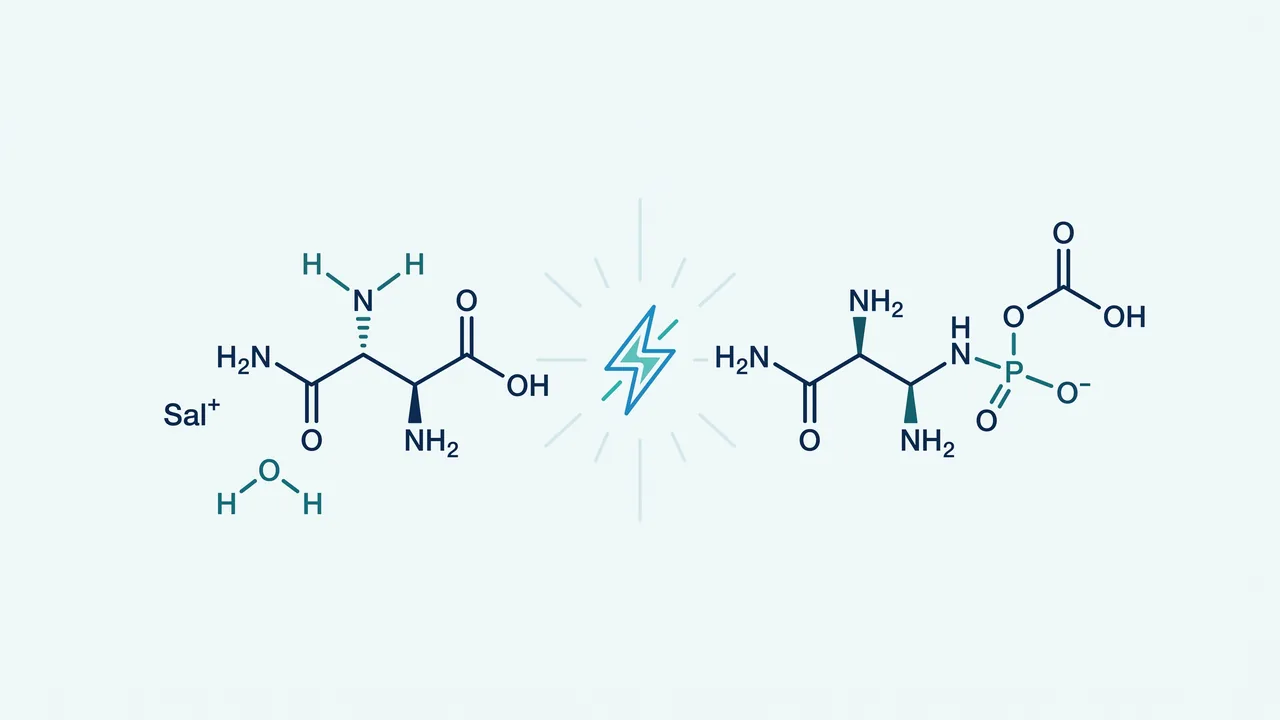
| Soluble salt = better muscle | Category error | Figure 1 | NOT SUPPORTED |
| CrM loads muscle and helps high-intensity work | Harris, Hultman, ISSN | Yes | ESTABLISHED |
Evidence handling
Study type is named in the reporting sentence. Animal or modelled PK (Alraddadi et al., 2018) is labelled as such. Non-indexed HCl trials are reported as they appear in Kreider et al. (2022), not as MEDLINE-verified records. Conflicts: Kreider 2022 discloses AlzChem advisory role; Jagim 2012 was AlzChem-funded; Spillane received CEE from a brand. Adversarial reading does not require pretending those papers did not measure what they measured. It requires not letting a solubility coefficient outrun a biopsy.
Sibling titles: Sports Nutrition (fueling); Ergogenic Aids (legal aids graded); Strength Training (loading). This title is the form-comparison.
References
Generated from verified NCBI records at build.
Continue reading