
Injectable Glutathione
Amino acids and derivatives. A research review published by South Beach Longevity.
Injectable Glutathione
Intravenous, intramuscular and other parenteral administration: plasma exposure is not tissue biologyInjecting glutathione raises circulating glutathione for minutes. That is not the same as raising intracellular glutathione in a target tissue, and it is not the same as a clinical benefit. This article grades that gap. It is not a protocol.
Compiled by South Beach Longevity · 22 August 2026 Copyright 2026 Series SBL-41 / SP-INJECTABLE-GLUTATHIONE · Register A scientific article Sources peer-reviewed human trials, pharmacokinetic studies, regulator documents, and labelled animal or in-vitro work Constraint This document describes published research. It is not medical advice. No human use, dose, route or schedule is recommended anywhere in this document.
How to read this document Every finding is labelled, in the sentence that reports it, by the kind of study that produced it. In vitro means a cell or a reconstituted system. Animal names the species. Human means people. A plasma concentration is not an intracellular store. A store is not a clinical outcome. Historical hospital use is not a modern indication. Clinic marketing is not evidence. Amounts and infusion times appear only as reported experimental parameters, always with the system attached. Nothing here is a recommendation. Findings are graded in place as established, strongly supported, emerging, plausible, inconsistent, or not supported. Formal evidence classes used in the matrices are defined in the Apparatus.
01 The controlling question
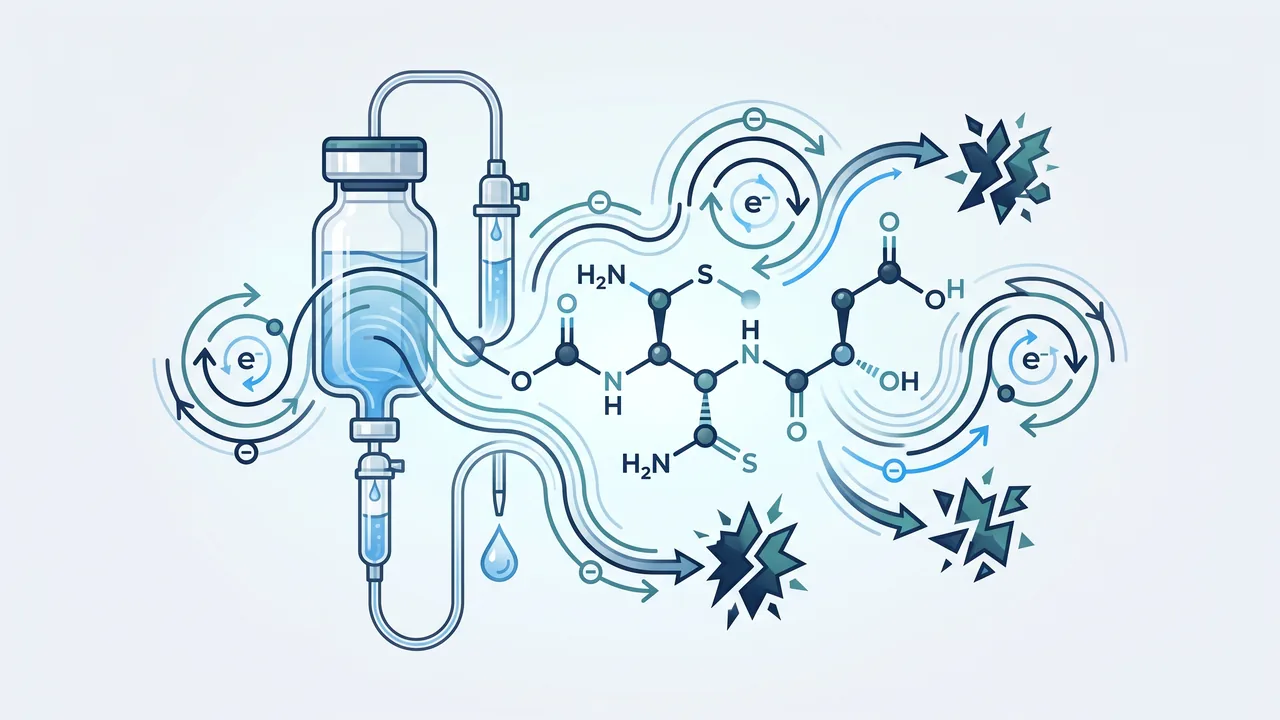
The market sentence is simple: glutathione is the body’s master antioxidant; disease and ageing deplete it; an intravenous drip therefore restores what oral products cannot. The laboratory sentence is longer. Glutathione is the tripeptide γ-L-glutamyl-L-cysteinyl-glycine. Most of it lives inside cells. The plasma pool is small. Extracellular γ-glutamyltransferase hydrolyses the unusual γ-glutamyl bond. An injected pulse can raise plasma glutathione for minutes and raise cysteine as the peptide is broken (Aebi, Assereto, and Lauterburg, 1991). That is pharmacokinetics. It is not a demonstration that substantia nigra, hepatocyte mitochondria, or melanocytes have taken up intact glutathione, and it is not a demonstration that any named human outcome has improved.
This article asks three questions and refuses to let them collapse. First: what is established about glutathione chemistry, synthesis, compartmentation, and redox signalling? Second: what does parenteral administration actually do in human blood and tissue? Third: for which clinical, historical, wellness, or cosmetic claims does human evidence exist, and of what design?
The sibling title on oral and liposomal glutathione covers intestinal delivery and chronic supplementation. This title is the parenteral cut. The GlyNAC and N-acetylcysteine titles cover precursor strategies. Those results do not transfer here.
02 Chemistry of the redox couple
Reduced glutathione (GSH) is a thiol. Oxidised glutathione (GSSG) is the disulfide dimer. The couple is not a slogan. It is a quantitative redox buffer whose midpoint potential depends on the GSH/GSSG ratio and on the absolute GSH concentration, because two GSH molecules are consumed to make one GSSG (Schafer and Buettner, 2001). Meister’s 1983 review remains the compact statement of the molecule’s metabolism (Meister, 1983). Wu, Fang, Yang, Lupton, and Turner summarised the same biochemistry for health literature: synthesis from glutamate, cysteine and glycine; peroxidase and S-transferase work; inter-organ transport of the components, not of a stable circulating “store” (Wu et al., 2004).
The γ-glutamyl bond is the chemical fact that makes glutathione both stable inside cells and vulnerable outside them. Ordinary peptidases do not cut that bond. γ-Glutamyltransferase does. That is why oral glutathione can fail to raise free plasma GSH after a single large dose (Witschi, Reddy, Stofer, and Lauterburg, 1992) and why an intravenous pulse is accompanied by a rise in cyst(e)ine (Aebi et al., 1991). The same enzyme that protects the intracellular pool announces the extracellular peptide to catabolism.
GSH is not interchangeable with GSSG as a drug substance. The only FDA-approved product that contains a glutathione species as a listed ingredient in routine US labelling is BSS PLUS, an intraocular irrigating solution whose Part II concentrate includes glutathione disulfide (oxidised glutathione). The indication is irrigation of the eye during intraocular surgery. The label attaches no systemic efficacy claim to the disulfide (DailyMed / NDA 018469). That fact is routinely quoted as “FDA-approved glutathione.” It licenses none of the IV-drip claims in this document.
03 Synthesis and the γ-glutamyl cycle
Cells make glutathione in two ATP-dependent steps. Glutamate-cysteine ligase (GCL; formerly γ-glutamylcysteine synthetase) joins glutamate to cysteine. Glutathione synthetase adds glycine (Meister, 1983; Lu, 2009; Lu, 2013). Cysteine availability is the usual kinetic limit. That is the biochemical reason N-acetylcysteine and glycine-plus-NAC (GlyNAC) are not “glutathione by another name,” but they are the interventions that actually feed the rate-limiting step. Lu’s reviews record the transcriptional and post-translational control of GCL, the hepatic emphasis of the pathway, and the diseases of synthesis — glutathione synthetase deficiency among them (Lu, 2009; Lu, 2013; Ristoff and Larsson, 2007).
The γ-glutamyl cycle of Meister is the salvage and transport logic: extracellular GSH is cleaved by GGT; the amino acids re-enter; intracellular GSH is rebuilt. Injecting GSH therefore offers the circulation a substrate for GGT as much as it offers tissues a finished antioxidant. Aebi’s human kinetic study is the empirical version of that sentence: high-dose intravenous GSH raised plasma GSH and then disappeared while cyst(e)ine rose in plasma and urine (Aebi et al., 1991). The authors’ title names both facts. Wellness language names only the first.
Inborn errors prove necessity without proving that supplementation of the finished peptide is a therapy for ordinary ageing. Ristoff and Larsson reviewed glutathione synthetase deficiency as a rare metabolic disease with haemolytic anaemia, metabolic acidosis, and, in severe forms, neurologic injury (Ristoff and Larsson, 2007). Njalsson and colleagues described long-term outcome in that deficiency (Njalsson et al., 2001). Those papers are established as descriptions of a biosynthetic lesion. They are not a rationale for elective IV glutathione in people with intact GCL and glutathione synthetase.
04 Compartments that must not collapse
Most glutathione is intracellular. Erythrocytes hold the bulk of whole-blood GSH; plasma GSH is a thin extracellular film. Richie and colleagues, in a human oral-GSH trial that is otherwise a sibling-title document, stated that plasma concentrations were less than one percent of whole-blood levels (Richie et al., 2015). The point survives the route change. An infusion that doubles or multiplies plasma GSH can still be a rounding error relative to the red-cell and tissue pools.
Mitochondrial glutathione is a separate inventory, not a spillover from cytosol. Go and Jones reviewed redox compartmentalization: cytosol, mitochondrion, nucleus, and endoplasmic reticulum do not share one GSH/GSSG potential (Go and Jones, 2008; Go and Jones, 2010; Go and Jones, 2013). Hepatic sinusoidal efflux and extrahepatic GGT create an inter-organ circuit of components. Plasma GSH is a transit form, not a tank.
This is why “we measured glutathione” is not a result until the matrix is named: plasma free, plasma protein-bound, erythrocyte, lymphocyte, buccal cell, cerebrospinal fluid, or tissue homogenate. Park and colleagues showed, in humans after oral GSH, that free deproteinised plasma GSH did not rise while the protein-bound plasma fraction did (Park et al., 2014). Witschi’s null finding and Park’s bound-fraction finding are the same molecule in different assays. An IV clinic that reports “glutathione went up” without naming the fraction is repeating the oldest measurement error in this literature.
05 Enzymes that carry the name
Four enzyme families wear the molecule as a prefix: glutathione peroxidases, glutathione reductase, glutathione S-transferases, and the synthetases. A paper about GPX4 ferroptosis or a GST polymorphism is not a paper about injected GSH. Forman, Zhang, and Rinna reviewed glutathione’s protective roles, measurement, and biosynthesis without collapsing those enzymes into a supplement (Forman, Zhang, and Rinna, 2009).
Glutathione peroxidases reduce hydrogen peroxide and lipid hydroperoxides, using GSH as the reductant. Glutathione reductase returns GSSG to GSH at the expense of NADPH. Glutathione S-transferases conjugate GSH to electrophiles. Those are established cell-biology jobs. They do not imply that raising extracellular GSH for fifteen minutes increases peroxidase flux in a target organ. Peroxidase flux is limited by peroxide supply, enzyme amount, and the local GSH/GSSG potential — not by the height of a venous spike.
06 The sentence this document refuses
“Glutathione is the body’s master antioxidant, therefore more injected glutathione is necessarily beneficial.” The first clause is advertising. The second is a non sequitur.
Sies’s later oxidative-stress papers distinguish eustress from distress: reactive species are signals as well as damage (the eustress literature is cited here as the conceptual brake, not as a glutathione trial). Schafer and Buettner’s couple is a potential, not a vitamin. Forman and colleagues treated glutathione as a controlled metabolite (Forman et al., 2009). A network that uses GSH to signal can be disturbed by flooding an extracellular compartment as easily as it can be “supported.”
Three empirical brakes follow and will be enforced for the rest of the document. First, human IV GSH is short-lived in plasma and is accompanied by cysteine appearance (Aebi et al., 1991). Second, the largest independently funded IV GSH randomised trial located — Alliance N08CA / Leal 2014 — was null on its primary neuropathy endpoint and favoured placebo on two secondary analyses (Leal et al., 2014). Third, FDA’s 2022 Pharmacy Compounding Advisory Committee review of glutathione across twenty-four nominated uses concluded that evidence of effectiveness was insufficient; the committee then voted 8–5–1 to include the substance on the 503A bulks list on access and stability grounds, not because new efficacy had appeared (FDA PCAC minutes, 8 June 2022, re-read 20 August 2026).
07 Routes that must not be pooled
Intravenous, intramuscular, subcutaneous, oral, liposomal, inhaled, and intranasal glutathione are different interventions. So are N-acetylcysteine and GlyNAC. This document reports each on its own evidence. A positive oral store study does not rescue an IV wellness claim. A negative IV neuropathy trial does not refute an inhaled cystic-fibrosis Cochrane analysis. Precursor trials do not become glutathione-injection trials by metabolic courtesy.
| Domain | IV GSH | IM / other parenteral | Oral GSH | Liposomal GSH | Precursors (NAC, GlyNAC) |
|---|---|---|---|---|---|
| Acute plasma GSH | Rises, minutes (Aebi 1991) | Sparse human PK | Often no free-plasma rise (Witschi 1992) | Limited, open-label | NAC raises cysteine, not identity-equivalent |
| Tissue GSH | Not shown for wellness targets | Insufficient | Contested; industry-funded positives | Open-label n=12 (Sinha 2018) | GlyNAC small RCTs, separate title |
| Best-controlled human outcome | Leal 2014 null (CIPN) | Insufficient | Split RCTs (Allen vs Richie) | No adequate RCT | NAC: approved antidote; GlyNAC: emerging, small |
| Administration | Medical, invasive | Medical, invasive | Non-invasive | Non-invasive | Oral or approved IV NAC |
| US drug approval (systemic GSH) | None | None | Dietary supplement, not a drug | Supplement | NAC has labelled drug uses |
| Quality / sterility burden | High | High | Ordinary supplement | Ordinary supplement | Drug-grade NAC exists |
Highest plasma exposure is the IV column. It is not the best-supported outcome column.
08 Intravenous pharmacokinetics
Aebi, Assereto, and Lauterburg gave healthy humans high-dose intravenous glutathione and measured plasma and urine sulfur amino acids (Aebi et al., 1991). The paper’s result, as named in its title, is dual: pharmacokinetics and effects on cyst(e)ine. Plasma GSH rose and fell rapidly. Cyst(e)ine rose. The pattern is hydrolysis and renal handling of fragments, not distribution of a stable circulating drug into a tissue reservoir. Apparent plasma half-life in this and later secondary summaries sits on the order of ten to fifteen minutes, with the pulse largely gone by half an hour. Those minutes are the entire pharmacokinetic case for the drip industry.
This session’s NCBI search for a second paper often cited as “Hong 2005 IV glutathione PK” returned Hong et al. on high-dose intravenous N-acetylcysteine and plasma sulfur amino acids (Hong et al., 2005). That is a precursor study. It is not used here as glutathione pharmacokinetics. FDA’s 2022 review materials cited short IV GSH half-life; the primary human GSH experiment remains Aebi 1991.
Renal handling follows from the same chemistry. Filtered GSH and its fragments appear in urine. Hepatic GGT and sinusoidal efflux already traffic glutathione components under physiologic conditions (Lu, 2009). An exogenous pulse joins that traffic. It does not rewrite it.
09 The tissue-uptake question
Does transiently increasing circulating glutathione increase intracellular glutathione in a named target tissue? For intravenous GSH and the organs that wellness clinics name — brain, skin, “mitochondria,” “immune system” — the honest answer is not demonstrated.
Cells take up cysteine, cystine, and γ-glutamyl amino acids more readily than intact GSH. That is the point of the γ-glutamyl cycle. Some experimental systems can take up intact GSH; they are not a human IV-drip pharmacodynamic package. Mischley and colleagues showed, in humans with Parkinson disease, that a single 200 mg intranasal GSH dose raised brain GSH on magnetic resonance spectroscopy for at least an hour (Mischley et al., 2016). That is a delivery-route finding for the nose, not for a vein, and it measured a metabolite peak, not a clinical outcome. The later phase IIb intranasal trial was not superior to placebo on UPDRS (Mischley et al., 2017).
The inference chain is therefore: IV GSH → plasma GSH (yes) → tissue GSH (unshown for IV wellness targets) → outcome (not shown, and contradicted where adequately tested). Passing the first gate is what infusion clinics sell. It is the cheapest gate in the chain.
10 Intramuscular and subcutaneous administration
Human evidence for intramuscular or subcutaneous glutathione as a characterised pharmaceutical intervention is thin. NCBI searches for intramuscular glutathione human trials return mixed, often off-target, or combination-product records. This document does not inherit IV or oral results into those routes. Where IM glutathione appears in international cosmetic or compounding practice, it is compounded/off-label practice, not an evidence class. The sterility, particulate, and endotoxin burdens of any parenteral product still apply.
11 Oral, liposomal, and precursor comparators
Witschi et al. gave seven healthy humans a single oral GSH dose of 0.15 mmol/kg (the paper states a 3 g example) and found no significant rise in plasma GSH, cysteine, or glutamate over 270 minutes (Witschi et al., 1992). Allen and Bradley’s human RCT of oral GSH 1,000 mg/day for four weeks found no change in urinary F2-isoprostanes, 8-OHdG, or GSH status (Allen and Bradley, 2011). Richie et al.’s six-month human RCT reported increased body-store GSH at 250 and 1,000 mg/day; the product was Setria, supplied by Kyowa Hakko, which also funded the work (Richie et al., 2015). Those three papers are the spine of the oral debate. They live in the sibling title. They are here only to stop the sentence “oral does not work, therefore inject.”
Sinha et al.’s liposomal GSH study was an open-label human pilot, twelve people, no placebo, product supplied by Researched Nutritionals (Sinha et al., 2018). Schmitt et al. compared sublingual GSH, oral GSH, and NAC in twenty people with metabolic syndrome; two authors were affiliated with the sublingual manufacturer (Schmitt et al., 2015). Neither paper is a parenteral GSH trial.
N-acetylcysteine is a labelled drug for acetaminophen poisoning and a mucolytic. GlyNAC is glycine plus NAC, studied in small human ageing and HIV pilots and one 24-person RCT (Kumar et al., 2020; Kumar et al., 2021; Kumar et al., 2023). Those results are precursor results. They answer a different question: can supporting endogenous synthesis change GSH-related biomarkers and function? They do not show that injecting the finished tripeptide is superior. They show that the biosynthetic route is the one with a modern, if still small, trial programme.
12 How indications are classified
| Class | Meaning in this document |
|---|---|
| Established | Adequately designed human evidence, internally consistent, not overturned |
| Reasonably supported | Human controlled evidence with residual limits of power, endpoint, or generality |
| Investigational | Human data exist but cannot carry a clinical claim |
| Inconsistent | Controlled human results disagree across trials or eras |
| Unsupported | Tested and negative, or widely claimed with no adequate human test |
Formal matrix grades (STRONG through INSUFFICIENT EVIDENCE) are defined in the Apparatus. Commercial prevalence never raises a grade.
13 Parkinson disease
The biochemical rationale is real and old. Sofic, Lange, Jellinger, and Riederer measured reduced and oxidised glutathione in human post-mortem substantia nigra and found nigral GSH low in Parkinson disease (Sofic et al., 1992). Sian, Dexter, Lees, Daniel, Agid, Javoy-Agid, Jenner, and Marsden reported the same directional finding across basal-ganglia disorders, with the GSH loss in PD substantia nigra a leading quantitative change (Sian et al., 1994). Those papers are strongly supported as tissue biochemistry. They are not a treatment result. A low nigral inventory does not imply that venous GSH crosses the blood–brain barrier as intact tripeptide in useful amount.
Sechi et al. gave nine untreated humans with early Parkinson disease intravenous GSH 600 mg twice daily for thirty days, open-label, with no placebo and no blinding (Sechi et al., 1996). They reported a 42 percent decline in disability and a persistence of effect after stopping. That number is the most-quoted figure in the IV-glutathione Parkinson literature. It is an uncontrolled observation in a disease with a documented placebo response.
Hauser, Lyons, McClain, Carter, and Perlmutter ran the direct blinded test: twenty-one humans, randomised, double-blind, placebo-controlled, IV glutathione 1,400 mg three times weekly for four weeks plus eight weeks of follow-up (Hauser et al., 2009). UPDRS changes were not significant. The point estimate favoured glutathione by 2.8 units during treatment (P = 0.32) and favoured placebo by 3.5 units afterward (P = 0.54). The authors allowed a “possibility of a mild symptomatic effect” to be tested later. A larger confirmatory IV trial was not located. The 42 percent open-label figure did not survive blinding. Classification: inconsistent if Sechi is kept in the ledger; not supported if the blinded trial is preferred, as it should be.
Intranasal glutathione is not intravenous glutathione. It is in this section because it is the only modern parenteral-adjacent PD programme with a controlled sequence. Mischley 2015 (n=30, 3 months) was a safety/tolerability RCT and found no substantial AE differences (Mischley et al., 2015). Mischley 2016 (n=15) showed CNS GSH uptake on MRS after 200 mg intranasal GSH (Mischley et al., 2016). Mischley 2017 (n=45, phase IIb) found that all cohorts improved, including placebo, and “neither treatment group was superior to placebo” (Mischley et al., 2017). One participant in the high-dose arm developed cardiomyopathy; causality was not established. The authors noted that the placebo improvement was more robust than in previous PD studies. That sentence is the methodological moral of the entire PD glutathione file: unblinded or within-group improvements are the wrong currency.
Current clinical consensus, as read from the controlled trials rather than from clinic brochures, is that IV glutathione is not an established Parkinson therapy. The biochemical lesion remains interesting. The therapeutic inference does not follow.
14 Oncology and platinum chemotherapy
The historical medical use is cisplatin support: nephroprotection, neuroprotection, and the hope of giving planned platinum without losing tumour response. The adversarial question is the same in every antioxidant-chemotherapy argument: could redox manipulation protect the host and the tumour? This document does not assume either direction. It reports the trials.
Cascinu, Cordella, Del Ferro, Fronzoni, and Catalano randomised humans with advanced gastric cancer on weekly cisplatin to reduced glutathione or placebo in a double-blind trial and reported neuroprotection without an obvious loss of activity (Cascinu et al., 1995). Smyth, Bowman, Perren, Wilkinson, Prescott, Quinn, and Tedeschi randomised women with ovarian cancer on cisplatin 100 mg/m² with or without glutathione 3 g/m² and reported reduced toxicity, better quality of life, more completed cycles, and similar antitumour activity (Smyth et al., 1997). Colombo and colleagues randomised weekly cisplatin 50 mg/m² with or without 2.5 g GSH in thirty-three humans with relapsed ovarian carcinoma and reported a neuroprotection trend, higher delivered cisplatin dose intensity, and similar response rates (Colombo et al., 1995). Parnis et al. ran a randomised, double-blind, placebo-controlled trial of glutathione with escalating cisplatin in advanced ovarian cancer (Parnis et al., 1995). Schmidinger et al. randomised twenty humans with head-and-neck or non-small-cell lung cancer to 5 g GSH before cisplatin 80 mg/m² versus intensive hydration and reported less haematologic toxicity without a statistical difference in response or survival (Schmidinger et al., 2000). Locatelli et al. reported an uncontrolled phase II of cisplatin plus cyclophosphamide plus GSH in twenty women with advanced ovarian carcinoma (Locatelli et al., 1993). Böhm and colleagues described platinum dose intensification with glutathione protection as induction chemotherapy for advanced ovarian carcinoma in an uncontrolled human series (Böhm et al., 1999). Milla et al. studied reduced glutathione with FOLFOX4, reporting on oxaliplatin pharmacokinetics, platinum-DNA adducts, and neurotoxicity (Milla et al., 2009). Those papers are investigational-to-inconsistent historical evidence: some randomised, some not; endpoints mixed; modern confirmatory programmes thin.
Leal, Qin, Atherton, Haluska, Behrens, Tiber, Watanaboonyakhet, Weiss, Adams, Dockter, and Loprinzi ran Alliance N08CA: a phase 3, randomised, double-blind, placebo-controlled, multicentre human trial of IV glutathione 1.5 g/m² over fifteen minutes immediately before each paclitaxel-plus-carboplatin cycle (Leal et al., 2014; NCT02311907; PMC4047184). One hundred eighty-five patients were accrued (placebo 91, glutathione 94). The primary sensory neuropathy endpoint was not significant (EORTC-QLQ-CIPN20 P = 0.21; CTCAE grade ≥2 P = 0.449). Time to grade ≥2 neuropathy favoured placebo (P = 0.039). Paclitaxel acute pain syndrome in weekly-paclitaxel patients favoured placebo (P = 0.002). Time to progression did not differ (P = 0.63). Apparent toxicities did not differ. No subgroup benefited. Funding was NIH extramural. The authors concluded that the results do not support glutathione for prevention of paclitaxel/carboplatin-induced CIPN.
Leal is the fairest modern answer to “does IV glutathione protect patients from platinum-taxane neuropathy?” It is not supported. It does not erase Cascinu or Smyth. It does change the weight. Those earlier trials used different platinum schedules, different diseases, and, in Smyth, a glutathione amount of 3 g/m² with a manufacturer-affiliated author. They are reasonably supported as historical randomised signals and inconsistent as a class claim once N08CA is in the file.
On the tumour-protection question, Leal found no difference in time to progression. That is not a proof of safety for every tumour and every redox intervention. It is the best available statement that, in that regimen, glutathione did not obviously accelerate progression or help neuropathy. Smyth and Cascinu likewise reported similar response rates. None of these trials was powered as a superiority study of anticancer efficacy. Classification of “IV GSH improves cancer outcomes” is not supported. Classification of “IV GSH does not harm tumour response” is insufficient evidence beyond the limited endpoints above.
Philippines FDA has been cited as approving injectable glutathione as an adjunct in cisplatin chemotherapy while warning against cosmetic IV use. That national labelling fact, where it holds, is a regulatory status, not a replication of Leal. Historical approval and modern negative phase 3 evidence can coexist. This document records both.
15 Other investigational medical contexts
Honda et al. studied oral glutathione in an open-label, single-arm, multicentre pilot in nonalcoholic fatty liver disease (Honda et al., 2017). That is not an IV trial. Ciofu, Smith, and Lykkesfeldt’s Cochrane review of antioxidant supplementation in cystic fibrosis is the best-quantified glutathione-adjacent lung evidence and concerns inhaled GSH: a small FEV1 gain at three months that was no longer significant at six, without effects on quality of life, BMI, or exacerbations (Ciofu et al., 2019). Corti and colleagues reported that rising sputum γ-glutamyltransferase identified CF patients who did not benefit from inhaled GSH and raised a pro-oxidant-product concern (Corti et al., 2017). Those papers are inhaled, not injected.
Human IV glutathione evidence in critical illness, vascular disease, metabolic disease, and male fertility was not located at a grade above investigational or insufficient. Association studies that measure GSH as an oxidative-stress readout are not intervention trials. They are excluded from the efficacy ledger.
16 Wellness and longevity claims
IV infusion clinics, longevity practices, and aesthetic medical spas advertise injectable glutathione for detoxification, energy, immunity, recovery, oxidative stress, anti-ageing, skin appearance, hangover recovery, athletic recovery, and general wellness. Widespread commercial use is not evidence. Each claim is graded against the parenteral human literature.
| Public claim | What would count | What exists | Grade |
|---|---|---|---|
| Detoxification | Controlled human outcome on a named toxicant, not a metaphor | No adequate IV GSH toxin-clearance programme for elective use; NAC remains the labelled acetaminophen antidote | NOT SUPPORTED as a drip slogan |
| Energy | Randomised fatigue or performance endpoint | Not located for IV GSH | INSUFFICIENT / NOT SUPPORTED |
| Immunity | Infection or vaccine-response endpoint | Liposomal/open-label immune-marker papers are not IV trials | NOT SUPPORTED for injection |
| Recovery / hangover / athletic | Controlled functional endpoints | Marketing and anecdote | NOT SUPPORTED |
| Oxidative stress | Specified assay, pre-registered, not a panel of 20 markers | Plasma GSH rises then falls (Aebi 1991); that is exposure, not eustress | LIMITED as PK; NOT SUPPORTED as benefit |
| Anti-ageing / longevity | Human ageing outcome or a validated surrogate in an adequate trial | None for IV GSH; GlyNAC is a different intervention | NOT SUPPORTED |
| General wellness | Anything falsifiable | Placebo, ritual, and expectation are uncontrolled in drip settings | NOT SUPPORTED |
Placebo is not a footnote here. An intravenous ritual with a visible yellow-green bag, a long appointment, and a promised cleanse is a high-expectation setting. Mischley 2017 showed how large a PD placebo improvement can be when the intervention is a sensory, repeated, clinic-based act (Mischley et al., 2017). Wellness IV is that design without the blinding.
The risk/benefit calculation changes because administration is invasive. Even a pharmacologically bland solute carries infection, infiltration, anaphylactoid reaction, and compounding-error risk once it is in a vein. A claim that does not meet a controlled-outcome standard does not justify that risk in a scientific reference. That is a weighing, not a regulation.
17 Skin lightening and brightening
Injectable glutathione has been marketed internationally as a skin-whitening agent. The mechanistic story is tyrosinase interference and a shift from eumelanin toward pheomelanin. Mechanistic plausibility is not a human cosmetic indication.
Arjinpathana and Asawanonda’s human RCT was oral GSH 500 mg/day (Arjinpathana and Asawanonda, 2012). Watanabe et al. tested topical oxidised glutathione (Watanabe et al., 2014). Weschawalit et al. tested oral GSH and GSSG (Weschawalit et al., 2017). Handog et al. reported an open-label lozenge in Filipino women (Handog et al., 2016). Wahab et al. combined topical and oral GSH (Wahab et al., 2021). Dilokthornsakul, Dhippayom, and Dilokthornsakul’s systematic review called the skin-whitening evidence inconclusive (Dilokthornsakul et al., 2019). Sarkar et al.’s 2025 systematic review stated that IV glutathione is contraindicated for lack of efficacy and side effects, and that the only placebo-controlled IV study missed significance (Sarkar et al., 2025). Sonthalia, Daulatabad, and Sarkar wrote that IV injections were popular and unevidenced, and recorded the Philippine FDA warning (Sonthalia et al., 2016).
The only placebo-controlled IV skin-lightening study repeatedly cited (Zubair et al., 2016, as summarised in FDA’s 2022 PCAC materials and in Sarkar 2025) used a multi-ingredient infusion (“GSH Detox forte”: glutathione 1,200 mg plus ascorbic acid and hydrolysed collagen). The reported lightening comparison was 6/16 (37.5%) versus 3/18.7% at p = 0.054. The effect was gone within six months in 24 of 25 patients in the FDA summary. Three fatal problems for attribution: multi-ingredient active arm; missed significance; transient effect. FDA’s 2022 assessment: insufficient data; effect dissipates; no studies of chronic IV glutathione safety for skin lightening.
This document does not normalise unapproved cosmetic injection. Philippine advisories (2018–2019, including Advisory 2019-182 as cited in the peer-reviewed secondary literature and in FDA materials) warn against IV glutathione for skin whitening, note the absence of published clinical trials for that use, and separately discuss infection risk when non-medical practitioners inject. Ethical and public-health context includes colourism, unregulated clinic practice, and the substitution of a cosmetic demand for a drug evaluation. Classification: unsupported as an injectable cosmetic indication.
18 Safety
Three risk families must be kept apart.
Inherent to glutathione as a solute. FDA’s 2022 review recorded FAERS/CAERS signals: IV anaphylaxis (one recurring on re-challenge), a hepatotoxicity case with AST 1,040 IU/L and ALT 890 IU/L after 1,200 mg weekly that resolved in two months, and eight discontinuations for deranged liver tests across five IV studies (1996–2018). FDA stated significant safety concerns particularly for IV and inhalation formulations, despite rapid systemic elimination. Of 195 CAERS reports in that review, 194 were confounded by co-ingredients; one implicated glutathione alone. No glutathione-attributed death was found in that review. Secondary sources that quote “77 hospitalisations / 13 life-threatening” without FDA’s confounding caveat are misreading the file.
Inherent to parenteral administration. Infection, air embolism, extravasation, and sepsis are properties of needles and bags. Philippines Advisory 2019-182, as cited by Sonthalia and by FDA, ties HIV and hepatitis transmission warnings to non-sterile practice, not to glutathione pharmacology. Those events must not be listed as “glutathione side effects.”
Arising from compounded or poor-quality products. Endotoxin, non-sterility, particulates, potency failure, oxidation to GSSG, pH drift, and wrong-excipient reactions are manufacturing failures. They are the dominant plausible risk in a 503A/503B world where no approved systemic injectable GSH product sets a labelled standard. That class of risk is no longer only theoretical. On 5 August 2026, Victory Medical Center Pharmacy (Austin) voluntarily recalled certain lots of compounded glutathione 200 mg/mL multi-dose vials (lots 1980571, 1981940, 1984345; brand VMC) after pharmacy testing found elevated bacterial endotoxin. The product had been distributed in Texas, Florida, and New York. FDA posted the announcement the same day. The agency’s risk statement: a reasonable probability that injectable products with elevated endotoxin could cause fever, hypotension, inflammatory reactions, anaphylactic shock, and death. Adverse events already reported to the pharmacy included fever, chills, severe headache, nausea, vomiting, tachycardia, blood-pressure change, body aches, and injection-site reactions (FDA recall notice, 5 August 2026). Those events are endotoxin and sterile-product failures, not a demonstration that reduced glutathione is intrinsically pyrogenic. One named recall is not a census of all compounders. Absence of a public assay on an unnamed clinic bag is not a finding of failure.
Trial-level safety: Leal 2014 reported no difference in “apparent toxicities” but a worse paclitaxel acute pain signal on glutathione in weekly-paclitaxel patients (P = 0.002 favouring placebo) (Leal et al., 2014). Hauser 2009 reported similar AEs and no AE withdrawals (Hauser et al., 2009). Mischley 2017 reported one cardiomyopathy in the high-dose intranasal arm (Mischley et al., 2017). Billet et al. described Stevens–Johnson syndrome after an IV vitamin infusion containing glutathione, vitamin C, and vitamin D in a 33-year-old woman, and linked the case to unregulated US IV hydration clinics (Billet et al., 2025). Causality cannot be assigned to glutathione alone in a multi-ingredient bag.
A widely repeated figure of “liver dysfunction in nearly 32%” of an IV glutathione study was not sourced to a primary paper in the reference dossier. FDA’s eight LFT discontinuations across five studies are the sourced number. This document does not print the 32% figure.
19 Compounding and product quality
There is, as of the 22 August 2026 re-check, no FDA-approved injectable reduced-glutathione drug product for systemic use. BSS PLUS remains an intraocular irrigant containing oxidised glutathione as a formulation component (NDA 018469). Reduced glutathione for injection in US practice is a compounded article. The Victory 5 August 2026 endotoxin recall is the current named example of what that fact costs: a multi-dose vial labelled as glutathione, tested by the pharmacy, posted by FDA, and withdrawn to the patient level. Independent third-party potency and oxidation-state tables for branded wellness drips were still not located. That gap and the Victory event can sit in the same paragraph. One is missing data. The other is a regulator-posted quality failure.
FDA’s 503A Category 1 list — “Bulk Drug Substances Under Evaluation” — still names Glutathione, with no route restriction of the kind attached to GHK-Cu on the same 14 May 2026 list (fda.gov/media/94155, fetched 20 August 2026). Category 1 is an interim enforcement-discretion class, not the final 503A Bulks List and not an approval. The 8 June 2022 PCAC vote asked: FDA proposed that glutathione not be included; should it be placed on the list? Yes 8, No 5, Abstain 1 (fda.gov/media/161293, re-read 20 August 2026). Yes voters cited patient access and chemical stability. No voters cited lack of effectiveness evidence across the nominated uses. The vote is advisory. FDA has not, on the May 2026 list, moved glutathione onto a final bulks list.
Nominated 503A dosage forms in the 2022 review included oral, nasal, sublingual, inhalation, topical, rectal, and injection (IV and IM). Nominated uses numbered twenty-four, from skin lightening and Parkinson disease to septic shock and acetaminophen toxicity. FDA’s scientific review found insufficient effectiveness evidence for those uses.
This document does not provide a compounding formula, pH recipe, or manufacturing method. The quality-science points that a reader needs are different. GSH oxidises. Solutions are not automatically the labelled reduced species at the labelled potency after storage. Sterility, bacterial endotoxin, and particulate matter are USP sterile-product expectations for any injectable, whether 503A or 503B. 503B outsourcing facilities are the industrial-sterile counterpart; they do not convert a Category 1 substance into an approved drug. Independent third-party potency, oxidation-state, and sterility data on branded wellness “GSH drips” were not located at a scale that would support a product-quality league table. Absence of independent testing is not itself a finding of failure. It is a gap, labelled as such.
20 Regulatory timeline
| Date | Instrument | Fact |
|---|---|---|
| 1982 onward | BSS PLUS, NDA 018469 | GSSG in an intraocular irrigant; no systemic GSH indication |
| 1995 | Cascinu et al., J Clin Oncol | Randomised IV GSH with weekly cisplatin, gastric cancer |
| 1996 | Sechi et al. | Open-label IV GSH in nine people with early PD |
| 1997 | Smyth et al., Ann Oncol | Randomised IV GSH with cisplatin, ovarian cancer |
| 2009 | Hauser et al. | Blinded IV GSH PD pilot, not significant |
| 2014 | Leal et al., Alliance N08CA | Phase 3 IV GSH for CIPN, null; some endpoints favoured placebo |
| 2016–2017 | Mischley et al. | Intranasal PD programme: uptake yes; efficacy vs placebo no |
| 2018–2019 | Philippines FDA advisories | Warn against IV GSH for skin whitening; infection-practice warnings |
| 8 June 2022 | US FDA PCAC | FDA: do not list; committee 8–5–1 to list; advisory |
| 21 March 2025 | FDA 503B nominated-bulks PDF | Re-fetched this session (local Firecrawl) |
| 14 May 2026 | FDA 503A nominated-bulks PDF | Glutathione still Category 1, no injectable-route carve-out |
| 5 August 2026 | FDA recall notice | Victory/VMC compounded GSH 200 mg/mL MDV, three lots, elevated endotoxin |
| 22 August 2026 | This re-verification | No US approved systemic injectable reduced-GSH drug located |
Journalism about wellness-clinic incidents is a discovery layer. Scientific claims in those stories were traced back to the papers and instruments above.
21 Is parenteral glutathione superior to supporting synthesis?
The question is empirical. For demonstrated clinical outcomes, no. N-acetylcysteine has labelled toxicology uses that glutathione injection does not. GlyNAC has a small modern human RCT programme on ageing-related GSH deficiency and function (Kumar et al., 2023) that injected GSH does not. The largest modern IV GSH RCT is negative (Leal et al., 2014). The best-blinded IV GSH Parkinson test is inconclusive-to-negative (Hauser et al., 2009). Oral GSH remains contested along a funding line (Allen and Bradley, 2011; Richie et al., 2015). The biosynthetic route is the one that matches the rate-limiting biochemistry (Lu, 2009; Lu, 2013). That is not a recommendation to take NAC or GlyNAC. It is a statement about where the evidence, such as it is, actually sits.
22 Red-team resolutions
-
Assume IV glutathione’s wellness reputation is largely unsupported. What evidence supports that skeptical conclusion? ACCEPTED. Aebi 1991 (minutes of plasma exposure, cysteine rise); Leal 2014 (null phase 3); Hauser 2009 (blinded PD non-replication); FDA 2022 (insufficient effectiveness across 24 uses); skin-lightening IV file (non-significant, multi-ingredient, transient); no approved systemic product.
-
Assume critics dismiss potentially legitimate therapeutic uses too broadly. What human evidence supports narrower applications? PARTIALLY ACCEPTED. Cascinu 1995, Smyth 1997, Colombo 1995, Parnis 1995, and Schmidinger 2000 are cisplatin-era randomised signals that a fairness reviewer must keep. They are not cancelled by clinic marketing. They are limited by era, endpoint, sample size, and the later Leal null in a paclitaxel/carboplatin regimen. Inhaled GSH in CF is a separate route with a quantified, modest, time-limited FEV1 signal (Ciofu et al., 2019). Intranasal GSH can raise brain GSH (Mischley et al., 2016) without beating placebo on symptoms (Mischley et al., 2017).
-
Does transiently increasing circulating glutathione demonstrate increased intracellular tissue glutathione? REJECTED as a general claim. Aebi shows plasma and fragments. Mischley 2016 shows a different route. IV wellness targets remain unshown.
-
Does increased glutathione demonstrate improved clinical outcomes? REJECTED as a general claim. Store and outcome are separate inferences. Richie’s oral store increases, if taken at face value, still do not become IV outcome evidence.
-
Are observed improvements vulnerable to placebo, particularly in IV-wellness settings? ACCEPTED. Sechi vs Hauser; Mischley 2017 placebo arm; the ritual of infusion.
-
Does the risk/benefit calculation change because administration is invasive? ACCEPTED. Parenteral risk is additive to a thin benefit file. Compounding risk is additive again.
-
How much published enthusiasm arises from small or uncontrolled studies? ACCEPTED as the dominant source of the 42 percent PD figure, of cosmetic IV claims, and of much historical cisplatin enthusiasm before N08CA.
Fairness clause: Cascinu and Smyth are not “wellness.” They are oncology supportive-care trials. A article that mentioned only Leal would be as distorted as a brochure that mentioned only Sechi.
23 What the reader can now distinguish
Established parenteral glutathione science. The molecule; the couple; GCL and glutathione synthetase; GGT hydrolysis; a brief human IV plasma pulse with cysteine appearance (Aebi et al., 1991); nigral GSH reduction in PD tissue (Sofic et al., 1992; Sian et al., 1994); no US approved systemic injectable reduced-GSH drug; 503A Category 1 compounding status as of 14 May 2026.
Plausible but investigational applications. Earlier randomised cisplatin-support trials (Cascinu 1995; Smyth 1997); the idea that a thiol might modify platinum toxicity; intranasal CNS delivery as a research probe.
Historical medical use. European and Asian hospital use as a cisplatin adjunct; Philippine labelling as cited for that adjunct; decades of compounded IV bags in integrative clinics.
Commercial wellness practice. Detox, energy, immunity, hangover, anti-ageing, and elective skin-lightening drips. These exceed the evidence.
Claims that currently exceed the evidence. Master-antioxidant necessity; IV GSH as a longevity intervention; IV GSH as a proven Parkinson or CIPN therapy; IV GSH as a demonstrated skin-whitening drug; the inference from plasma spike to tissue biology.
Standing constraint This document describes published research. It is not medical advice. It is not a dosing guide, injection protocol, prescribing guide, compounding recipe, or self-treatment manual. No human use, dose, route or schedule is recommended anywhere in this document.
Evidence handling
Study type is labelled in the reporting sentence. Conflicting results are kept in the same section. Industry funding is named when the paper names it. Doses are study facts. Routes are never pooled. Journalism is discovery, not citation of first instance.
Matrix grades
| Grade | Criterion |
|---|---|
| STRONG | Adequately powered randomised evidence, or a systematic review of such trials, internally consistent |
| MODERATE | Smaller RCTs or consistent controlled human data with residual limits |
| LIMITED | Open-label, pilot, or n too small for the claim |
| INCONSISTENT | Controlled human results disagree |
| PRECLINICAL ONLY | Cells or animals only |
| NOT SUPPORTED | Adequate test negative, or claim contradicted |
| INSUFFICIENT EVIDENCE | Not adequately tested |
Glossary
GSH. Reduced glutathione, γ-L-glutamyl-L-cysteinyl-glycine. GSSG. Oxidised glutathione, the disulfide dimer. GGT. γ-Glutamyltransferase; hydrolyses extracellular GSH. GCL. Glutamate-cysteine ligase; rate-limiting biosynthetic step. CIPN. Chemotherapy-induced peripheral neuropathy. 503A / 503B. US compounding statutes; Category 1 means under evaluation, not approved. GlyNAC. Glycine plus N-acetylcysteine; a precursor pairing, not injectable GSH.
Unresolved science
Whether any IV GSH regimen raises GSH in a named human solid tissue. Whether a modern, adequately powered cisplatin-only replication of Cascinu/Smyth would be positive. Whether a larger blinded IV PD trial would find the mild effect Hauser allowed. Independent potency and oxidation-state surveys of compounded injectable GSH. A sourced primary paper for the unsourced “32% liver dysfunction” figure. Full retrieval of Zubair 2016 from the original journal (this file uses FDA and Sarkar 2025 as intermediaries and labels them).
References
Continue reading