
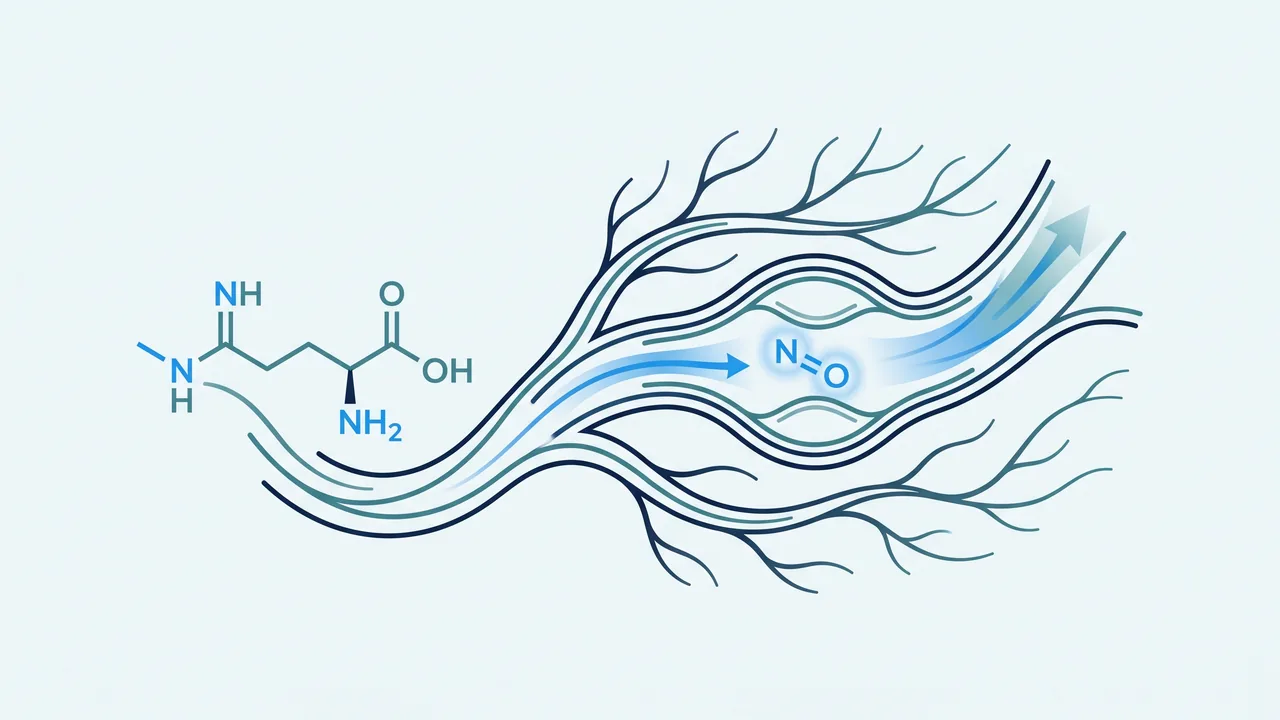
L-Arginine
Amino acids and derivatives. A research review published by South Beach Longevity.
Evidence is labelled by study type in the sentence that reports it. In vitro means a cell or a reconstituted system. Animal names the species. Human means people. A quantity appears only as it was studied, with the population and duration attached. A rise in plasma arginine is not a rise in nitric oxide. A flow-mediated dilation change is not a cardiovascular outcome. A sports-drink claim is not a training effect.
Findings are graded in place as established, strongly supported, emerging, inconsistent, or not supported. Conflict is presented as conflict. No human use, dose, route or schedule is recommended anywhere in this document.
Abstract
L-arginine is the proteinogenic amino acid with a guanidino side chain. In healthy adults it is dispensable: the urea cycle remakes it from citrulline. In growth, pregnancy, and catabolic illness the demand can exceed endogenous synthesis, which is the precise meaning of conditionally indispensable. The same carbon skeleton feeds four pathways that marketing treats as one: urea production, nitric oxide, creatine, and polyamines. Those pathways compete. They do not rise together when a capsule is swallowed.
Human tracer work shows substantial first-pass extraction of oral arginine by the splanchnic bed. Hepatic arginase-1 and intestinal arginase remove arginine before the periphery sees it. Nitric oxide synthase 3, the endothelial isoform, already sees extracellular arginine well above its Michaelis constant in healthy vessels; extra arginine therefore does not automatically make extra nitric oxide. That is the arginine paradox: a substrate that should be saturating still appears to matter in some diseased beds, probably because of asymmetric dimethylarginine, local arginase, and transporter geometry rather than because plasma was empty.
Where endothelium is impaired, some human trials report improved flow-mediated responses or modest blood-pressure reductions. Where endothelium is intact, the same intervention is often silent. Sports-performance claims for oral arginine are weakly supported once nitric-oxide slogans are stripped off. Erectile-function trials are small, often combination products, and mixed. Wound-healing and immunonutrition records are older, heterogeneous, and, in critical illness, not uniformly safe. The VINTAGE MI randomised trial in older adults after ST-elevation infarction was stopped after excess deaths in the arginine arm. Oral citrulline often produces a larger, more durable rise in plasma arginine because it is not a substrate for arginase and is converted to arginine in kidney. Pharmacokinetic superiority is strongly supported. Outcome superiority is not established. This article keeps those layers apart.
01 Chemistry
L-arginine is 2-amino-5-guanidinopentanoic acid. The formula is C6H14N4O2; the residue mass in a peptide is 156.2 Da and the free acid is 174.2 Da. At physiological pH the α-carboxyl is deprotonated, the α-amino group is protonated, and the guanidino group is protonated. The side-chain pKa is near 12.5. The molecule is therefore a cation in every human compartment that matters. That charge is why it is handled by cationic amino-acid transporters of the CAT/SLC7 family and why it competes with lysine, ornithine, and histidine for the same carriers (Wu and Morris, 1998).
The guanidino carbon is the atom nitric oxide synthases oxidise. The same carbon is the atom arginase hydrolyses to urea. The same carbon, transferred to glycine, becomes the amidine of guanidinoacetate and then of creatine. Chemistry does not pick a favourite pathway. Cells do, by expressing arginase or a nitric oxide synthase, by localising either enzyme next to a transporter, and by the availability of tetrahydrobiopterin, NADPH, and oxygen. A bottle labelled “nitric oxide booster” is a retail decision about that carbon, not a biochemical one.
Arginine is encoded by six codons (CGN and AGR). It is abundant in protamines and in many nuclear proteins, which is a fact about chromatin and not a dietary prescription. Free arginine in human plasma typically sits near 80–120 μmol L−1 in the fasted state in published adult series; intracellular concentrations are higher and tissue-specific (Wu and Morris, 1998; Morris, 2007). Those ranges are descriptive. They are not targets.
02 Conditionally indispensable
A healthy adult remakes arginine from intestinal citrulline via renal argininosuccinate synthase and lyase. That is why arginine is dispensable in ordinary adult nitrogen-balance work: the urea cycle is not only a waste dump. It is also an arginine factory (Wu and Morris, 1998; Morris, 2007). The word “non-essential” is therefore true and misleading. It is true for maintenance in a well-fed adult. It is misleading the moment net demand exceeds that remake.
Growth, pregnancy, severe burns, trauma, and some sepsis phenotypes raise arginine consumption through protein deposition, immune nitric oxide, and arginase induction. In those states endogenous synthesis can fail to keep plasma and tissue pools, which is the operational definition of conditionally indispensable (Wu et al., 2009). Established as a nutritional classification. Not a licence to treat every adult as arginine-deficient. Healthy gym users are not a burn unit.
Infant and fetal arginine economy is tighter still. The neonatal urea cycle is immature; enterocytes of the young mammal are a major citrulline source; and the growing organism deposits arginine in new protein. Human milk and complementary foods are the ordinary vehicles. Isolated arginine is not a substitute for that diet, and this title does not treat it as one.
03 The urea cycle
Five enzymes carry nitrogen from mitochondrial carbamoyl phosphate to cytosolic urea: carbamoyl phosphate synthetase 1, ornithine transcarbamylase, argininosuccinate synthase, argininosuccinate lyase, and arginase-1. Arginine sits at the last step. Arginase-1 hydrolyses it to ornithine and urea. Ornithine returns to the mitochondrion. The cycle can turn without net arginine consumption if citrulline is remade into arginine as fast as arginase removes it. Net consumption occurs when arginine leaves the cycle into protein, nitric oxide, creatine, or polyamines (Wu and Morris, 1998).
Inborn errors of the cycle — OTC deficiency, argininosuccinic aciduria, arginase deficiency — are paediatric metabolic emergencies and chronic management problems. They prove that arginine and citrulline are not optional intermediates. They do not prove that an oral arginine capsule is a treatment for anything else. This article does not review those diseases as supplement indications. It records them as the strongest human evidence that the cycle is real.
Hepatic arginase-1 is abundant. That is why portal arginine is a poor way to raise systemic arginine. Intestinal arginase and extrahepatic arginase-2 add further sinks. The kinetic contrast with nitric oxide synthase is the whole of the later argument: arginases have millimolar Michaelis constants and high capacity; the nitric oxide synthases have micromolar constants and low capacity. Capacity wins when both see the same pool (Morris, 2007; Morris, 2009).
11 Endothelial function
Creager, Gallagher, Girerd, Coleman, Dzau and Cooke reported that intravenous L-arginine augmented the forearm blood-flow response to methacholine in 14 hypercholesterolaemic humans but not in 11 normal subjects; D-arginine did nothing (Creager et al., 1992). That is an acute infusion experiment, not an oral-capsule result. Lerman, Burnett, Higano, McKinley and Holmes later randomised 26 patients with non-obstructive coronary disease to oral L-arginine or placebo for six months and reported that coronary blood flow in response to acetylcholine rose in the arginine arm (149 ± 20% versus 6 ± 9%) (Lerman et al., 1998). Those studies are real human physiology. They were done in people whose endothelium was already impaired. They are not demonstrations that a healthy vessel needs more arginine, and the Creager result cannot be spent as oral-supplement evidence.
Subsequent randomised trials in mixed populations are inconsistent. Some flow-mediated dilation protocols move; some do not. Schwedhelm and colleagues, in healthy volunteers, raised the arginine/ADMA ratio with citrulline and still did not improve flow-mediated dilation over baseline (Schwedhelm et al., 2008). The pattern that survives a hostile reading is the one the paradox already predicted: benefit, when it appears, clusters in endothelial dysfunction — hypercholesterolaemia, some coronary disease, some ageing beds — and is hard to find in young, trained, or otherwise intact vessels (Böger, 2007). Emerging to inconsistent as a class. Stronger as a statement about impaired endothelium than as a statement about healthy adults.
12 Blood pressure
Dong, Qin, Zhang, Zhao, Wang, Arigoni and Zhang meta-analysed 11 randomised, double-blind, placebo-controlled oral arginine trials (387 participants; reported oral loads 4–24 g day−1) and found a mean systolic reduction of 5.39 mm Hg (95% CI −8.54 to −2.25) and a diastolic reduction of 2.66 mm Hg (95% CI −3.77 to −1.54) (Dong et al., 2011). That is emerging human evidence for a small average effect on a surrogate. It is not an antihypertensive-drug result. The trials are short, the samples are small, and publication bias is a live concern in a supplement literature. A blood-pressure change of a few millimetres of mercury is not a cardiovascular-outcome claim. It is also not nothing. It is a surrogate that has moved, in that pooled analysis, in the direction the endothelial story would predict.
13 Exercise, strength, and endurance
Paddon-Jones, Børsheim and Wolfe, writing when the sports claim was already mature, treated arginine as a theoretical nitric-oxide and growth-hormone story that had not earned a performance recommendation (Paddon-Jones et al., 2004). Álvares, Meirelles, Bhambhani, Paschoalin and Gomes reviewed the exercise record and concluded that it was still premature to recommend arginine as an ergogenic aid in healthy, physically active people (Alvares et al., 2011). Viribay, Burgos, Fernández-Landa, Seco-Calvo and Mielgo-Ayuso later pooled 15 trials and reported a large aerobic effect (SMD 0.84; 95% CI 0.12 to 1.56; I2 89%) and a small anaerobic effect (SMD 0.24; 95% CI 0.05 to 0.43; I2 0%) (Viribay et al., 2020). The aerobic interval is wide and the heterogeneity is extreme; that is not a reliable class effect. d’Unienville, Blake, Coates, Hill, Nelson and Buckley meta-analysed food sources of nitrate, polyphenols, arginine and citrulline for endurance: 118 studies entered the pool, of which 56 were nitrate, 59 polyphenol, and three citrulline; arginine foods were not a separately pooled arm. Nitrate and polyphenol foods showed trivial benefits; citrulline foods did not (d’Unienville et al., 2021).
Campbell, Roberts, Kerksick, Wilborn, Marcello, Taylor, Nassar and Leutholtz studied arginine α-ketoglutarate in resistance-trained men aged 30–50. Some gym-test signals appeared; they do not carry a class claim for free arginine as a hypertrophy or endurance agent (Campbell et al., 2006). Growth-hormone increments after large oral arginine loads appear in some older endocrine protocols; they are brief, they are not a training programme, and they are not the nitric-oxide story the labels now tell.
The honest grade for sports claims is not supported as a general performance aid and inconsistent for narrow, acute protocols. Strength and hypertrophy evidence is weaker still. Citrulline has its own mixed sports literature; Gonzalez and Trexler reviewed that literature as limited and protocol-specific, not as a general ergogenic law, and that literature is not arginine’s to spend (Gonzalez and Trexler, 2020).
| Claim | Population in the better trials | Grade | Controlling limit |
|---|---|---|---|
| Endothelial function | Hypercholesterolaemia, some CAD | Emerging / inconsistent | Healthy vessels often null; FMD is not an outcome |
| Blood pressure | Short RCTs, hypertensive subgroups | Emerging, small average effect | Not a drug-class result; short follow-up |
| Endurance performance | Athletes and mixed adults | Not supported as a class | Small n; combinations; nitrate is a different agent |
| Strength / hypertrophy | Resistance-trained men, AAKG | Not supported | Acute GH or FMD is not hypertrophy |
| Erectile function | Organic ED, often combinations | Emerging / inconsistent | PDE5 evidence is the reference class; arginine is not |
| Wound healing | Surgical and experimental wounds | Emerging, older | Not a general tissue-repair claim |
| CVD events | Post-MI, stable CAD | Not supported for benefit | VINTAGE MI harm signal |
| Critical illness | ICU immunonutrition cocktails | Inconsistent; possible harm in sepsis | Cocktails are not arginine |
14 Erectile function
Chen, Wollman, Chernichovsky, Iaina, Sofer and Matzkin randomised 50 men with organic erectile dysfunction after a two-week placebo run-in. Nine of 29 men on arginine and two of 17 on placebo reported a subjective improvement; objective measures did not move; the nine responders had had low urinary nitric-oxide metabolites that later doubled (Chen et al., 1999). Later trials are small, often add other agents, and do not add up to a PDE5-inhibitor-class result. Rhim, Kim, Park, Choi, Park, Kim and colleagues meta-analysed ten randomised trials (540 men with mild-to-moderate erectile dysfunction) of arginine or arginine-containing combinations versus placebo or no treatment and reported an odds ratio of 3.37 (95% CI 1.29 to 8.77) for improvement, with I2 44% (Rhim et al., 2019). Combination products cannot be read as arginine monotherapy. Emerging / inconsistent. This title specifies no regimen.
15 Wound healing
Barbul and colleagues, and Kirk, Hurson, Regan, Holt, Wasserkrug and Barbul, reported that arginine increased collagen deposition in experimental and surgical wounds in human and animal protocols (Kirk et al., 1993; Witte and Barbul, 2003). Those studies are the reason arginine entered immunonutrition formulas. They are not a demonstration that oral arginine heals wounds in otherwise well-nourished adults. The grade is emerging in surgical or depleted contexts and speculative as a general longevity or skin claim. The sibling wound-and-repair titles, if commissioned, own the broader tissue question.
16 Cardiovascular disease
Stable-coronary and endothelial-function trials are the optimistic half of the cardiovascular record. The event half is thinner and, after infarction, darker. No adequately powered trial has shown that oral arginine reduces myocardial infarction, stroke, or cardiovascular death. Surrogate improvements in selected endothelial beds do not carry that claim. The VINTAGE MI trial, discussed in section 19, is the reason this article refuses to treat arginine as a post-infarct nutrient. Not supported for event reduction. Contraindicated as a research conclusion in the recently infarcted older adult population that VINTAGE enrolled — a statement about that trial, not a prescribing instruction.
17 Critical illness
Arginine disappears from plasma in some trauma and sepsis phenotypes because arginase and NOS2 consume it. Replacing it looks logical. Heyland, Novak, Drover, Jain, Su and Suchner, reviewing immunonutrition, already warned that arginine-containing formulas might be harmful in critically ill septic patients even if they looked helpful in elective surgery (Heyland et al., 2001). Subsequent ICU work did not erase that warning. Bertolini and colleagues and later guideline discussions kept arginine immunonutrition out of the “give to everyone” bin. The cocktails also contain fish oil, nucleotides, and glutamine. A cocktail result is not an arginine result. Inconsistent, with a live harm hypothesis in sepsis. Not a licence. Not a prohibition stated as medical advice — a reading of the trial record.
18 Direct comparison with citrulline
Citrulline is not “better arginine.” It is a different first-pass problem. Schwedhelm and colleagues showed, in 20 healthy volunteers, that oral citrulline raises plasma arginine AUC and Cmax more effectively than oral arginine, moves the arginine/ADMA ratio, and increases urinary nitrate and cGMP, without improving flow-mediated dilation over baseline (Schwedhelm et al., 2008). Moinard and colleagues later confirmed greater arginine availability after isomolar citrulline than after arginine in eight older men (Moinard et al., 2016). Curis, Nicolis, Moinard, Osowska, Zerrouk, Bénazeth and Cynober reviewed the biochemistry: citrulline escapes hepatic arginase, is taken up by kidney, and is converted to arginine by ASS and ASL (Curis et al., 2005). That pharmacokinetic comparison is the strongest reason citrulline appears in sports and vascular protocols that used to use arginine. The sibling L-citrulline title owns the precursor comparison from the other side.
Outcome superiority is a different claim. Figueroa, Wong, Jaime and Gonzales reviewed citrulline and watermelon for vascular function and exercise and found mixed, often small human trials; they distinguished acute nulls from some chronic signals (Figueroa et al., 2017). Gonzalez and Trexler reviewed citrulline sports evidence as limited and protocol-specific, not as a general ergogenic law (Gonzalez and Trexler, 2020). Head-to-head outcome trials of arginine versus citrulline with clinical endpoints are scarce. The correct sentence is: citrulline is the better oral precursor of circulating arginine; it has not been shown, in a decisive human outcome programme, to be the better drug.
| Dimension | Oral L-arginine | Oral L-citrulline |
|---|---|---|
| First-pass arginase | Substrate; extracted | Not a substrate; survives liver |
| Renal remake | Already arginine | Converted to arginine (ASS/ASL) |
| Plasma arginine AUC | Smaller, shorter (Schwedhelm et al., 2008) | Larger, more durable in the same study |
| NO-related markers | Inconsistent | Cleaner in the PK/PD study; mixed in later trials |
| Endothelium / BP | Signals in impaired beds; small BP meta-effect | Mixed; not a drug-class result |
| Sports performance | Not supported as a class | Limited, protocol-specific; not arginine’s to claim |
| Post-MI safety | VINTAGE MI harm signal | Not tested in that design |
| GI intolerance | Common at the oral loads used in trials | Often better tolerated at iso-effective precursor loads |
19 Cardiovascular safety and the post-MI record
Schulman, Becker, Kass, Champion, Terrin, Forman, Ernst, Kelemen, Townsend, Capriotti, Hare and Gerstenblith randomised 153 patients after a first ST-elevation myocardial infarction to oral L-arginine (goal 3 g three times daily) or placebo for six months in the VINTAGE MI trial; 77 participants were 60 years or older. Vascular stiffness and ejection fraction did not improve. Six participants (8.6%) in the arginine arm died; none in the placebo arm died (P = .01). The data and safety monitoring committee closed enrolment (Schulman et al., 2006). That is the most important human safety result in this article. It is a randomised, placebo-controlled, clinical-event signal in the exact population — recent infarct, older age — for whom nitric-oxide slogans are most tempting. The trial authors concluded that L-arginine should not be recommended after acute myocardial infarction. This article records that published conclusion. It does not convert it into advice for any reader.
Bednarz, Jaxa-Chamiec, Maciejewski, Szpajer, Janik, Gniot, Kawka-Urbanek and Drozdowska studied oral arginine after ST-elevation infarction in the ARAMI pilot (792 patients; composite 30-day events 24% versus 27%, OR 0.63, 95% CI 0.39–1.02) and did not produce a benefit that would cancel VINTAGE (Bednarz et al., 2005). The two trials are not a meta-analytic wash. VINTAGE is the trial that asked a stiffness question and found a mortality problem. A later enthusiast literature that cites endothelial surrogates and omits VINTAGE is not a complete cardiovascular review.
Why might arginine harm after infarction? The trial itself does not prove a mechanism. Plausible, unproven accounts include: excess inducible nitric oxide in a healing infarct; hypotension or steal in a compromised bed; arginase-driven ornithine and polyamine effects on remodelling; and chance in a modest sample. Chance is a live option. It is not a reason to treat the signal as a rumour. Until a larger, better trial contradicts it, post-infarct arginine remains a research hazard, not a nutrient story.
20 Hypotension, herpes, gastrointestinal effects, interactions
Hypotension. If arginine sometimes lowers blood pressure and sometimes dilates diseased beds, hypotension is a predicted adverse effect, especially when stacked with nitrates, PDE5 inhibitors, or antihypertensives. Trial reports more often list dizziness and gastrointestinal upset than documented symptomatic hypotension. The interaction is pharmacologically plausible and inadequately bounded by dedicated interaction trials. This document does not advise combination or avoidance. It records the gap.
Herpes. Herpes simplex virus replication is arginine-dependent in culture; lysine antagonises arginine in some older virological and nutritional papers (Griffith et al., 1987). The popular claim that oral arginine triggers recurrences is mostly anecdote plus that in-vitro dependence. Controlled human evidence that supplemental arginine precipitates herpes in otherwise typical adults is weak. Controlled evidence that lysine prevents recurrences is itself mixed. The grade is plausible as virology and not established as a human supplementation hazard. People with frequent recurrences appear in the clinical folklore. They do not appear in a decisive RCT of arginine challenge.
Gastrointestinal effects. Nausea, diarrhoea, and abdominal cramp are the common dose-limiting effects in oral arginine trials (Tangphao et al., 1999; Schwedhelm et al., 2008). They are one reason citrulline is easier to study at precursor loads that actually move plasma arginine. GI intolerance is not a triviality. It is a bias: people who cannot keep the capsule down do not contribute outcome data, and open-label sports use over-represents the tolerant.
Interactions. Nitrates and PDE5 inhibitors are nitric-oxide-pathway drugs. Arginine is a nitric-oxide-pathway substrate. Stacking them is an untested experiment in most of the populations who buy both. Antihypertensives add a second hypotensive hypothesis. Potassium-sparing concerns are not the arginine story; arginine is not a mineralocorticoid. Spironolactone and ACE inhibitors appear in the same cabinets as arginine for marketing reasons, not because a dedicated interaction programme exists. Immunonutrition formulas add a third interaction class: they are multi-agent by design.
21 Five questions the record can actually answer
The five questions that organise this title are answered here as verdicts, not as slogans. The supporting matrices sit in sections 10, 13 and 18.
Does raising arginine translate to useful nitric-oxide-mediated outcomes? Sometimes, in impaired endothelium, on surrogates. Not as a class in healthy adults. Not as cardiovascular events. A plasma increment is not a nitric-oxide increment. The arginine paradox exists because the naive translation already failed in healthy vessels (Böger, 2007; Creager et al., 1992; Dong et al., 2011). Verdict: conditional, surrogate, and over-claimed.
Is oral arginine limited by first-pass metabolism? Yes. Human tracer and pharmacokinetic studies show splanchnic extraction and a smaller, noisier oral increment than an intravenous peak (Castillo et al., 1993; Tangphao et al., 1999; van de Poll et al., 2007). Arginase is the named enzyme. Verdict: established.
Why might citrulline outperform it pharmacokinetically? Because citrulline is not an arginase substrate, survives the liver, and is converted to arginine in kidney. Schwedhelm and colleagues measured that advantage in humans (Schwedhelm et al., 2008; Curis et al., 2005). Verdict: strongly supported for plasma arginine; not established for clinical outcomes.
Are sports claims supported? Not as a general endurance, strength, or hypertrophy aid. The better reviews, the high-heterogeneity Viribay pool, and the food-source meta-analysis do not rescue the slogan (Alvares et al., 2011; Viribay et al., 2020; d’Unienville et al., 2021; Paddon-Jones et al., 2004). Verdict: not supported as a class.
Are cardiovascular risks adequately considered? In the enthusiast literature, no. In the trial record, VINTAGE MI is a stopped randomised trial with excess deaths after recent infarction (Schulman et al., 2006). Hypotension and nitric-oxide-pathway drug stacks remain under-tested. Verdict: the risk literature exists and is routinely omitted; it is not adequately considered in the commercial story.
22 Unresolved science
The local caveolar arginine pool has not been measured in living human endothelium during an oral load. ADMA, CAT-1, and arginase-2 are still assembled into a cartoon that is better than the slogan and worse than a flux map. Head-to-head outcome trials of arginine versus citrulline with clinical endpoints have not been done at a scale that would settle the comparison. VINTAGE MI has not been repeated. Herpes provocation has not been subjected to a modern challenge trial. Immunonutrition remains a cocktail problem. Sports protocols still confound arginine with nitrate, caffeine, and citrulline malate.
None of those gaps licences the slogan. They licence the next experiment. This article is a reading of the experiments that already exist.
This document describes published research. It is not medical advice. No human use, dose, route or schedule is recommended anywhere in this document. Amounts and durations appear only as reported experimental parameters, always with the population attached.
23 Evidence handling
Peer-reviewed identifiers were taken from NCBI records retrieved on 20 August 2026. In-prose citations are author–year. The numbered list is sorted by first-author surname. Study type is named in the reporting sentence. Animal and cell findings are not rewritten as human outcomes. A plasma-arginine increment is not a nitric-oxide increment. Flow-mediated dilation is labelled a surrogate. Project 06 and Project 07 Peptide News were searched as read-only discovery layers; they are not cited as scientific authorities. HOUSE_STYLE section 8a (peptide bioregulators) does not apply. No human use, dose, route or schedule is recommended anywhere in this document.
24 Scope relative to sibling articles
This title is the L-arginine article in the SBL-41 series. It is not the L-citrulline and citrulline-malate article, which owns the precursor comparison from the citrulline side. It is not the creatine-monohydrate title, the amino-acid-nutrition framework, or an immunonutrition clinical manual. Dietary protein arginine is mentioned only to forbid its use as free-arginine evidence. REDOXS and other glutamine or antioxidant ICU trials are mentioned only to forbid their use as arginine evidence.
25 References
38 peer-reviewed records below were verified against NCBI MEDLINE XML retrieved 20 August 2026.
- Bednarz B, Jaxa-Chamiec T, Maciejewski P, Szpajer M, Janik K, Gniot J et al.. Efficacy and safety of oral l-arginine in acute myocardial infarction. Results of the multicenter, randomized, double-blind, placebo-controlled ARAMI pilot trial. Kardiol Pol. 2005;62(5):421-7. PMID 15928719
- Bode-Böger SM, Böger RH, Galland A, Tsikas D, Frölich JC. L-arginine-induced vasodilation in healthy humans: pharmacokinetic-pharmacodynamic relationship. Br J Clin Pharmacol. 1998;46(5):489-97. PMID 9833603 · doi:10.1046/j.1365-2125.1998.00803.x · PMC1873701
- Brosnan JT, Brosnan ME. Creatine: endogenous metabolite, dietary, and therapeutic supplement. Annu Rev Nutr. 2007;27:241-61. PMID 17430086 · doi:10.1146/annurev.nutr.27.061406.093621
- Brosnan JT, da Silva RP, Brosnan ME. The metabolic burden of creatine synthesis. Amino Acids. 2011;40(5):1325-31. PMID 21387089 · doi:10.1007/s00726-011-0853-y
- Böger RH. The pharmacodynamics of L-arginine. J Nutr. 2007;137(6 Suppl 2):1650S-1655S. PMID 17513442 · doi:10.1093/jn/137.6.1650S
- Campbell B, Roberts M, Kerksick C, Wilborn C, Marcello B, Taylor L et al.. Pharmacokinetics, safety, and effects on exercise performance of L-arginine alpha-ketoglutarate in trained adult men. Nutrition. 2006;22(9):872-81. PMID 16928472 · doi:10.1016/j.nut.2006.06.003
- Castillo L, Chapman TE, Yu YM, Ajami A, Burke JF, Young VR. Dietary arginine uptake by the splanchnic region in adult humans. Am J Physiol. 1993;265(4 Pt 1):E532-9. PMID 8238326 · doi:10.1152/ajpendo.1993.265.4.E532
- Chen J, Wollman Y, Chernichovsky T, Iaina A, Sofer M, Matzkin H. Effect of oral administration of high-dose nitric oxide donor L-arginine in men with organic erectile dysfunction: results of a double-blind, randomized, placebo-controlled study. BJU Int. 1999;83(3):269-73. PMID 10233492 · doi:10.1046/j.1464-410x.1999.00906.x
- Creager MA, Gallagher SJ, Girerd XJ, Coleman SM, Dzau VJ, Cooke JP. L-arginine improves endothelium-dependent vasodilation in hypercholesterolemic humans. J Clin Invest. 1992;90(4):1248-53. PMID 1401062 · doi:10.1172/JCI115987 · PMC443166
- Curis E, Nicolis I, Moinard C, Osowska S, Zerrouk N, Bénazeth S et al.. Almost all about citrulline in mammals. Amino Acids. 2005;29(3):177-205. PMID 16082501 · doi:10.1007/s00726-005-0235-4
- d'Unienville NMA, Blake HT, Coates AM, Hill AM, Nelson MJ, Buckley JD. Effect of food sources of nitrate, polyphenols, L-arginine and L-citrulline on endurance exercise performance: a systematic review and meta-analysis of randomised controlled trials. J Int Soc Sports Nutr. 2021;18(1):76. PMID 34965876 · doi:10.1186/s12970-021-00472-y · PMC8715640
- Dong JY, Qin LQ, Zhang Z, Zhao Y, Wang J, Arigoni F et al.. Effect of oral L-arginine supplementation on blood pressure: a meta-analysis of randomized, double-blind, placebo-controlled trials. Am Heart J. 2011;162(6):959-65. PMID 22137067 · doi:10.1016/j.ahj.2011.09.012
- Figueroa A, Wong A, Jaime SJ, Gonzales JU. Influence of L-citrulline and watermelon supplementation on vascular function and exercise performance. Curr Opin Clin Nutr Metab Care. 2017;20(1):92-98. PMID 27749691 · doi:10.1097/MCO.0000000000000340
- Furchgott RF, Zawadzki JV. The obligatory role of endothelial cells in the relaxation of arterial smooth muscle by acetylcholine. Nature. 1980;288(5789):373-6. PMID 6253831 · doi:10.1038/288373a0
- Förstermann U, Sessa WC. Nitric oxide synthases: regulation and function. Eur Heart J. 2012;33(7):829-37, 837a-837d. PMID 21890489 · doi:10.1093/eurheartj/ehr304 · PMC3345541
- Gonzalez AM, Trexler ET. Effects of Citrulline Supplementation on Exercise Performance in Humans: A Review of the Current Literature. J Strength Cond Res. 2020;34(5):1480-1495. PMID 31977835 · doi:10.1519/JSC.0000000000003426
- Griffith RS, Walsh DE, Myrmel KH, Thompson RW, Behforooz A. Success of L-lysine therapy in frequently recurrent herpes simplex infection. Treatment and prophylaxis. Dermatologica. 1987;175(4):183-90. PMID 3115841
- Heyland DK, Novak F, Drover JW, Jain M, Su X, Suchner U. Should immunonutrition become routine in critically ill patients? A systematic review of the evidence. JAMA. 2001;286(8):944-53. PMID 11509059 · doi:10.1001/jama.286.8.944
- Ignarro LJ, Buga GM, Wood KS, Byrns RE, Chaudhuri G. Endothelium-derived relaxing factor produced and released from artery and vein is nitric oxide. Proc Natl Acad Sci U S A. 1987;84(24):9265-9. PMID 2827174 · doi:10.1073/pnas.84.24.9265 · PMC299734
- Kirk SJ, Hurson M, Regan MC, Holt DR, Wasserkrug HL, Barbul A. Arginine stimulates wound healing and immune function in elderly human beings. Surgery. 1993;114(2):155-9; discussion 160. PMID 8342121
- Lerman A, Burnett JC, Higano ST, McKinley LJ, Holmes DR. Long-term L-arginine supplementation improves small-vessel coronary endothelial function in humans. Circulation. 1998;97(21):2123-8. PMID 9626172 · doi:10.1161/01.cir.97.21.2123
- Moinard C, Maccario J, Walrand S, Lasserre V, Marc J, Boirie Y et al.. Arginine behaviour after arginine or citrulline administration in older subjects. Br J Nutr. 2016;115(3):399-404. PMID 26619904 · doi:10.1017/S0007114515004638
- Morris SM. Arginine metabolism: boundaries of our knowledge. J Nutr. 2007;137(6 Suppl 2):1602S-1609S. PMID 17513435 · doi:10.1093/jn/137.6.1602S
- Morris SM. Recent advances in arginine metabolism: roles and regulation of the arginases. Br J Pharmacol. 2009;157(6):922-30. PMID 19508396 · doi:10.1111/j.1476-5381.2009.00278.x · PMC2737650
- Paddon-Jones D, Børsheim E, Wolfe RR. Potential ergogenic effects of arginine and creatine supplementation. J Nutr. 2004;134(10 Suppl):2888S-2894S; discussion 2895S. PMID 15465806 · doi:10.1093/jn/134.10.2888s
- Palmer RM, Ferrige AG, Moncada S. Nitric oxide release accounts for the biological activity of endothelium-derived relaxing factor. Nature. 1987;327(6122):524-6. PMID 3495737 · doi:10.1038/327524a0
- Pegg AE. Mammalian polyamine metabolism and function. IUBMB Life. 2009;61(9):880-94. PMID 19603518 · doi:10.1002/iub.230 · PMC2753421
- Rhim HC, Kim MS, Park YJ, Choi WS, Park HK, Kim HG et al.. The Potential Role of Arginine Supplements on Erectile Dysfunction: A Systemic Review and Meta-Analysis. J Sex Med. 2019;16(2):223-234. PMID 30770070 · doi:10.1016/j.jsxm.2018.12.002
- Schulman SP, Becker LC, Kass DA, Champion HC, Terrin ML, Forman S et al.. L-arginine therapy in acute myocardial infarction: the Vascular Interaction With Age in Myocardial Infarction (VINTAGE MI) randomized clinical trial. JAMA. 2006;295(1):58-64. PMID 16391217 · doi:10.1001/jama.295.1.58
- Schwedhelm E, Maas R, Freese R, Jung D, Lukacs Z, Jambrecina A et al.. Pharmacokinetic and pharmacodynamic properties of oral L-citrulline and L-arginine: impact on nitric oxide metabolism. Br J Clin Pharmacol. 2008;65(1):51-9. PMID 17662090 · doi:10.1111/j.1365-2125.2007.02990.x · PMC2291275
- Tangphao O, Grossmann M, Chalon S, Hoffman BB, Blaschke TF. Pharmacokinetics of intravenous and oral L-arginine in normal volunteers. Br J Clin Pharmacol. 1999;47(3):261-6. PMID 10215749 · doi:10.1046/j.1365-2125.1999.00883.x · PMC2014227
- Vallance P, Leone A, Calver A, Collier J, Moncada S. Accumulation of an endogenous inhibitor of nitric oxide synthesis in chronic renal failure. Lancet. 1992;339(8793):572-5. PMID 1347093 · doi:10.1016/0140-6736(92)90865-z
- van de Poll MC, Siroen MP, van Leeuwen PA, Soeters PB, Melis GC, Boelens PG et al.. Interorgan amino acid exchange in humans: consequences for arginine and citrulline metabolism. Am J Clin Nutr. 2007;85(1):167-72. PMID 17209193 · doi:10.1093/ajcn/85.1.167
- Viribay A, Burgos J, Fernández-Landa J, Seco-Calvo J, Mielgo-Ayuso J. Effects of Arginine Supplementation on Athletic Performance Based on Energy Metabolism: A Systematic Review and Meta-Analysis. Nutrients. 2020;12(5). PMID 32370176 · doi:10.3390/nu12051300 · PMC7282262
- Witte MB, Barbul A. Arginine physiology and its implication for wound healing. Wound Repair Regen. 2003;11(6):419-23. PMID 14617280 · doi:10.1046/j.1524-475x.2003.11605.x
- Wu G, Morris SM. Arginine metabolism: nitric oxide and beyond. Biochem J. 1998;336 ( Pt 1)(Pt 1):1-17. PMID 9806879 · doi:10.1042/bj3360001 · PMC1219836
- Wu G, Bazer FW, Davis TA, Kim SW, Li P, Marc Rhoads J et al.. Arginine metabolism and nutrition in growth, health and disease. Amino Acids. 2009;37(1):153-68. PMID 19030957 · doi:10.1007/s00726-008-0210-y · PMC2677116
- Álvares TS, Meirelles CM, Bhambhani YN, Paschoalin VM, Gomes PS. L-Arginine as a potential ergogenic aid in healthy subjects. Sports Med. 2011;41(3):233-48. PMID 21395365 · doi:10.2165/11538590-000000000-00000
Continue reading