
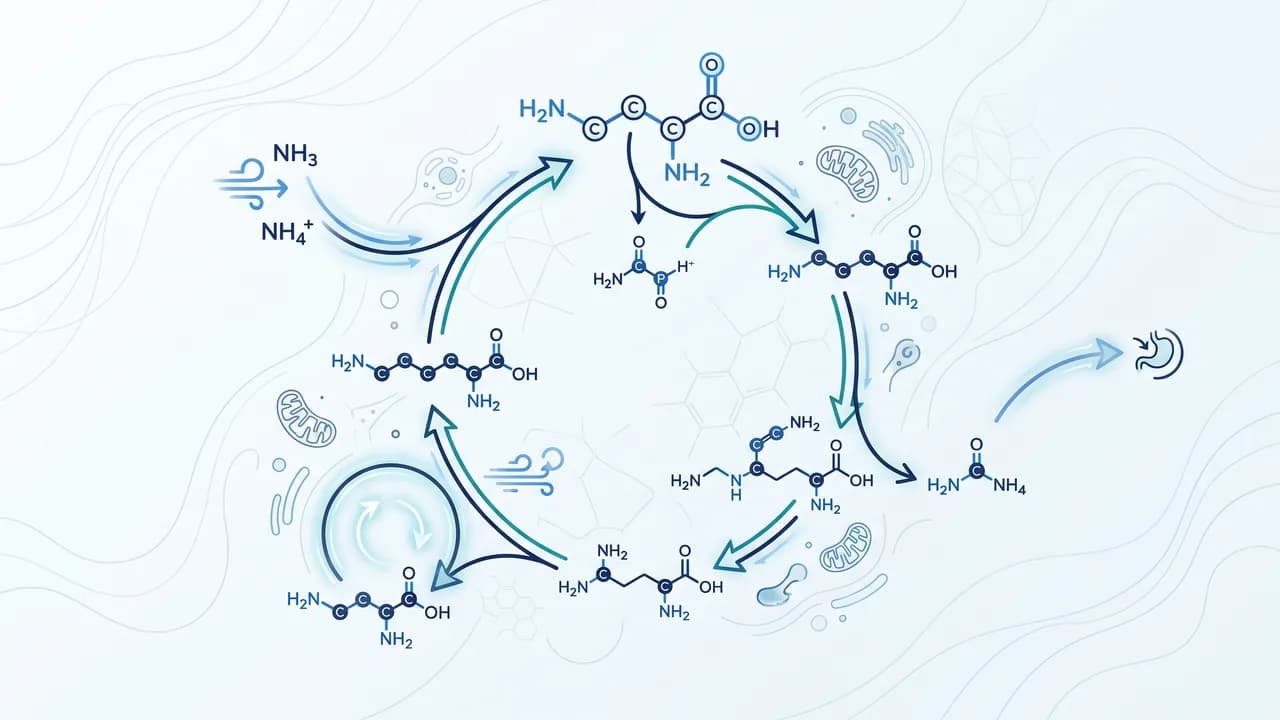
L-Ornithine
Amino acids and derivatives. A research review published by South Beach Longevity.
Evidence is labelled by study type in the sentence that reports it. In vitro means a cell or a reconstituted system. Animal names the species. Human means people. A quantity appears only as it was studied, with the population, form, and route attached. A fall in plasma ammonia is not a performance effect. A hepatic-encephalopathy grade is not a gym recovery claim. L-ornithine-L-aspartate is named as LOLA wherever it is the salt that was used.
Findings are graded in place as established, strongly supported, emerging, inconsistent, or not supported. Conflict is presented as conflict. No human use, dose, route or schedule is recommended anywhere in this document.
Abstract
L-ornithine is the non-proteinogenic diamino acid (S)-2,5-diaminopentanoic acid. It is not encoded. It is made when arginase hydrolyses L-arginine to urea and ornithine, and it is consumed when ornithine transcarbamylase condenses it with carbamoyl phosphate to citrulline (Jackson et al., 1986; Morris, 2004). The same carbon skeleton feeds polyamine synthesis through ornithine decarboxylase (Pegg, 1986; Pegg, 2006; Moinard et al., 2005). Those facts are chemistry. They do not, by themselves, establish a fatigue, sleep, or recovery effect in a healthy adult who swallows a capsule.
The human supplement record for free L-ornithine or ornithine hydrochloride is small. Sugino and colleagues, in a crossover trial of 17 healthy volunteers, reported a lower post-recovery visual-analogue fatigue score after 2 000 mg/day for seven days and 6 000 mg for one day as the hydrochloride, with a female-subgroup performance signal (Sugino et al., 2008). Demura and colleagues, in 14 regularly trained young adults, found no improvement in incremental exhaustive cycling after 0.1 g/kg hydrochloride, and plasma ammonia was higher after exhaustion than under placebo (Demura et al., 2010). A later intermittent-anaerobic trial in ten trained adults reported a higher peak cadence; the authors themselves said the change may not depend on ammonia metabolism (Demura et al., 2011). Sleep and stress claims rest on still smaller Japanese trials, often at 400 mg/day, using salivary cortisol, mood inventories, and self-rated sleep (Miyake et al., 2014; Kokubo et al., 2013; Horiuchi et al., 2013). Growth-hormone and strength claims in the older literature are mostly arginine–ornithine combinations or reviews that already judged oral amino-acid GH release inadequate (Elam et al., 1989; Zajac et al., 2010; Williams, 1999; Chromiak and Antonio, 2002; Bucci et al., 1992).
The large ammonia literature is LOLA in cirrhosis and hepatic encephalopathy: intravenous 20 g/day and oral 18 g/day placebo-controlled trials (Kircheis et al., 1997; Stauch et al., 1998), later meta-analyses that disagree on quality (Bai et al., 2013; Butterworth et al., 2018; Goh et al., 2018), and at least one oral trial in which LOLA was not better than placebo for a minimal-encephalopathy battery (Alvares-da-Silva et al., 2014). Ornithine α-ketoglutarate is a third salt. In healthy men, oral OKG is not the sum of ornithine hydrochloride plus calcium α-ketoglutarate (Cynober et al., 1990). This article keeps those three forms apart. Fatigue claims for free L-ornithine are not supported by meaningful performance endpoints as a class. Lowering ammonia has not been shown to be useful in healthy athletes, and in the one exhaustive-exercise trial it did not occur. Disease-specific LOLA findings are routinely misapplied if they are read as supplement evidence. The free-ornithine evidence base is too small for strong conclusions.
01 Chemistry
L-ornithine is (S)-2,5-diaminopentanoic acid. The free-base formula is C5H12N2O2; the monoisotopic mass is 132.09 Da and the conventional molecular weight is 132.16. It is a five-carbon diamino acid. It is not encoded. It does not appear in ribosomal protein. The molecule that marketing treats as a “recovery amino acid” is, first, an intermediate that the urea cycle must keep in motion if nitrogen is to leave as urea (Jackson et al., 1986; Morris, 2004).
At physiological pH both amino groups are protonated and the carboxyl is deprotonated. The net charge is positive. That is why ornithine shares cationic amino-acid transporters with arginine and lysine, and why an oral load competes in the same carrier family that handles those two proteinogenic cations. Stereochemistry matters: the human enzymes of the cycle and of polyamine synthesis act on the L isomer. D-ornithine is not the substrate of this article and is not interchangeable with it.
Arginase hydrolyses L-arginine to L-ornithine and urea. Ornithine transcarbamylase then condenses L-ornithine with carbamoyl phosphate to L-citrulline inside mitochondria. Ornithine aminotransferase transaminates it toward glutamate and proline. Ornithine decarboxylase removes the α-carboxyl and yields putrescine, the first committed polyamine (Pegg, 1986; Pegg, 2006; Moinard et al., 2005). Chemistry does not pick a favourite path. Cells do, by expressing those enzymes in different compartments and at different rates. A capsule labelled “ammonia detox” is a retail decision about that carbon skeleton, not a biochemical one.
02 Forms and salts
The word “ornithine” on a label is not one substance. The human literature uses at least four chemically distinct objects, and they do not generate the same metabolites.
Free L-ornithine and L-ornithine hydrochloride are the simple supplement salts. The exercise trials of Sugino and of Demura used the hydrochloride (Sugino et al., 2008; Demura et al., 2010; Demura et al., 2011). Bucci and colleagues used oral L-ornithine·HCl at 40, 100, or 170 mg/kg in bodybuilders and raised serum ornithine without raising insulin (Bucci et al., 1992). Cynober’s pharmacokinetic review treats oral ornithine as well utilised, with a return toward basal plasma values within hours and low urinary recovery, but notes that most available studies are short, hard to compare, and silent on long-term upper intake in healthy people (Cynober, 2007).
Ornithine α-ketoglutarate (OKG) is a salt of two ornithine molecules and one α-ketoglutarate. It has been used enterally and parenterally in burns, trauma, surgery, and chronic malnutrition (Cynober, 1991; De Bandt and Cynober, 1998). In ten healthy subjects fed a standard regimen, oral OKG was rapidly metabolised: plasma ornithine fell back toward baseline, plasma α-ketoglutarate did not rise, and urinary recovery of both moieties was minimal (Cynober et al., 1984). The later head-to-head in six fasting healthy men is the form-identity experiment that this article will not blur: 10 g OKG (6.4 g ornithine plus 3.6 g α-ketoglutarate), the same ornithine as hydrochloride, and the same α-ketoglutarate as the calcium salt were not equivalent. Only OKG raised proline and arginine at 60 minutes and raised insulin and glucagon (Cynober et al., 1990). Cynober later stated the point as a rule: OKG activity is not the addition of ornithine plus α-ketoglutarate, because the pair saturates the ornithine-aminotransferase path and diverts ornithine toward arginine (Cynober, 2004).
L-ornithine-L-aspartate (LOLA) is a 1:1 salt used, at gram-to-tens-of-grams intravenous or oral loads, in people with cirrhosis and hepatic encephalopathy (Kircheis et al., 1997; Stauch et al., 1998; Staedt et al., 1993). The aspartate half is not a decoration. It is a second amino acid with its own transamination into the glutamate–glutamine system that hepatocytes use to fix ammonia (Häussinger et al., 1992; Butterworth, 2000). A retail L-ornithine capsule is not a 20 g intravenous LOLA infusion, and this document does not treat it as one.
03 Form and indication matrix
The table below is an inventory of what was studied, not a menu of uses. Amounts are reported experimental parameters.
| Form | Typical studied setting | Reported experimental range | What the record actually measured | Travels to retail L-ornithine? |
|---|---|---|---|---|
| L-ornithine HCl | Healthy or trained adults; acute exercise | 2–6 g/day (Sugino et al., 2008); 0.1 g/kg (Demura et al., 2010, 2011); 40–170 mg/kg (Bucci et al., 1992) | VAS fatigue; cycle performance; ammonia, urea, glutamate; insulin | This is the closest salt. The trials are still small. |
| L-ornithine (unspecified salt, low dose) | Workers, flushers, Antarctic expeditioners | 200–400 mg/day or 400 mg once (Miyake et al., 2014; Kokubo et al., 2013; Horiuchi et al., 2013; Misaizu et al., 2014) | Cortisol; POMS; OSA sleep inventories; next-morning VAS | Same molecule class, different endpoint, still small n. |
| Arginine + ornithine | Strength-trained men; 1980s resistance protocols | 2 g combined (Elam et al., 1989); 3-week Arg/Orn stack (Zajac et al., 2010) | Strength, lean mass, hydroxyproline; GH/IGF-1 | No. Combination cannot be assigned to ornithine. |
| OKG | Healthy kinetics; injured or malnourished patients | 10 g oral in healthy men (Cynober et al., 1990); clinical nutrition doses in reviews (Cynober, 1991, 2004) | Plasma amino acids, insulin, glucagon; nitrogen economy in reviews | No. Not the sum of ornithine + αKG (Cynober et al., 1990). |
| LOLA, intravenous | Cirrhosis with hyperammonemia / HE | 5–40 g infusion (Staedt et al., 1993); 20 g/day × 7 d (Kircheis et al., 1997) | Ammonia; NCT-A; mental-state grade; PSE index | No. Different salt, population, and clinical endpoint. |
| LOLA, oral | Cirrhosis with overt or minimal HE | 18 g/day × 14 d (Stauch et al., 1998); 5 g t.i.d. × 60 d (Alvares-da-Silva et al., 2014) | Ammonia; psychometrics; OHE prophylaxis in one trial | No. Same prohibition as intravenous LOLA. |
L-ornithine is a defined non-proteinogenic diamino acid and a urea-cycle intermediate (Jackson et al., 1986; Morris, 2004). Free ornithine, OKG, and LOLA are not interchangeable experimental objects (Cynober et al., 1990; Kircheis et al., 1997). A combination trial is not an ornithine trial (Zajac et al., 2010; Elam et al., 1989).
04 The urea cycle
Five enzymes carry waste nitrogen from mitochondrial carbamoyl phosphate to cytosolic urea: carbamoyl phosphate synthetase 1, ornithine transcarbamylase, argininosuccinate synthase, argininosuccinate lyase, and arginase-1 (Jackson et al., 1986; Walser, 1982). Ornithine is not the nitrogen dump. Urea is. Ornithine is the carrier that must be regenerated if the cycle is to turn again. Arginase releases it; ornithine transcarbamylase consumes it. Net ornithine is lost when the skeleton leaves into polyamines, proline, or glutamate, or when transport into mitochondria fails (Morris, 2004; Tsujino et al., 2001).
Häussinger, Lamers and Moorman described the lobular geometry that makes ammonia handling a two-compartment problem rather than a single enzyme slogan. Periportal hepatocytes run a high-capacity, low-affinity urea cycle. A small perivenous rim expresses glutamine synthetase and scavenges the ammonia that escaped upstream. Ornithine transamination and the uptake of glutamate, aspartate and α-ketoglutarate are themselves zonated (Häussinger et al., 1992). That architecture is why a salt that supplies both ornithine and aspartate can, in a cirrhotic liver, feed two ammonia-fixing routes at once. It is also why the same cartoon does not automatically describe a healthy athlete whose urea cycle is not the limiting organ.
Inborn errors prove the cycle is not optional. Ornithine transcarbamylase deficiency is an X-linked urea-cycle emergency; neonatal male presentations can be lethal, and later-onset disease still risks hyperammonemic brain injury (Gordon, 2003; Gropman and Batshaw, 2004). Mitochondrial ornithine-transporter deficiency (HHH syndrome: hyperornithinemia, hyperammonemia, homocitrullinuria) shows what happens when ornithine cannot enter the mitochondrion (Tsujino et al., 2001). Gyrate atrophy of the choroid and retina is ornithine aminotransferase deficiency with marked hyperornithinemia (Simell and Takki, 1973; Valle and Kaiser-Kupfer, 1982). Those diseases are the strongest human evidence that ornithine traffic is real. They are not supplement indications, and this title does not treat them as such. Long-term enzymatic correction of urea-cycle disorders remains a transplant and gene-transfer problem, not an oral-capsule problem (Lee and Goss, 2001).
05 Relationship to arginine
Ornithine and arginine are interconvertible through the cycle, but they are not nutritional synonyms. Arginine is proteinogenic and conditionally indispensable; ornithine is not incorporated into protein. Arginine is also the substrate of nitric oxide synthases, of arginine:glycine amidinotransferase on the creatine path, and of arginase (Morris, 2004). Ornithine sits downstream of arginase and upstream of citrulline. Giving one is not giving the other.
Citrulline is the circulating disguise that lets arginine carbon avoid immediate hepatic capture. Intestine makes citrulline from glutamine through ornithine transcarbamylase; kidney remakes arginine; liver uses citrulline locally for urea (Curis et al., 2005). Cynober’s pharmacokinetic comparison of arginine, ornithine and citrulline in the 5–10 g range found citrulline the better absorbed and more bioavailable of the three, ornithine nitrogen-sparing relative to arginine, and arginine a net urea producer — with the explicit caveat that the studies are methodologically weak and not long-term (Cynober, 2007). That ranking is a plasma and nitrogen observation. It is not an outcome ranking, and it is not a reason to treat an ornithine capsule as an arginine capsule or the reverse.
OKG is the case where the relationship is experimentally non-additive. Separate ornithine hydrochloride and calcium α-ketoglutarate both raised glutamate in healthy men; only the combined salt raised arginine and proline and moved insulin and glucagon (Cynober et al., 1990; Cynober, 2004). Established as a form distinction. Not a warrant that OKG, or free ornithine, is an anabolic hormone therapy.
06 Ammonia detoxification
Ammonia is the metabolite that sells ornithine. The biochemistry is not invented. Periportal urea synthesis and perivenous glutamine synthesis are the two hepatic routes that dispose of ammonia in the intact lobule (Häussinger et al., 1992). Muscle can buffer ammonia by transamination and by glutamine synthesis. Intense exercise raises ammonia and IMP in working muscle; that is a fatigue hypothesis, not a proof that extra ornithine will empty the pool (Meneguello et al., 2003). Meneguello and colleagues supplemented arginine, ornithine or citrulline in swimming-trained rats and reported increased glutamine production after exhaustion. That is an animal finding. It is not a human performance trial.
In cirrhosis the ammonia problem is different in kind: portosystemic shunting, lost periportal capacity, and a brain that swells astrocytes rather than a quadriceps that burns nucleotides (Butterworth, 2000; Kircheis and Häussinger, 2002). LOLA was developed for that disease. In portacaval-shunted rats, intravenous OA at 300 mg/kg/h prevented ammonium-acetate coma in 12 of 12 animals, lowered blood ammonia, raised urea, and raised blood and CSF glutamate and glutamine (Rose et al., 1998). That is a labelled animal disease model. It is the mechanistic rationale for LOLA in hepatic encephalopathy. It is not a rationale for a 400 mg sleep capsule.
Even inside the LOLA literature, ammonia is a surrogate. Soárez and colleagues, reviewing four double-blind trials through 2006, accepted that LOLA can lower hyperammonemia and still found the studies small, short, and half of low methodological quality; they did not accept that ammonia reduction had been shown to be a significant clinical benefit (Soárez et al., 2009). Schmid and colleagues later found that intravenous LOLA and placebo both improved postural control in cirrhosis (Schmid et al., 2010). A biomarker that moves when the patient does not, or that moves in both arms, is not a licence to treat ammonia as the outcome of interest in healthy people.
07 Polyamines
Ornithine decarboxylase initiates eukaryotic polyamine synthesis. Putrescine, spermidine and spermine are required for growth, maintenance and ordinary cell function; their pools are tightly controlled at transcription, translation and protein turnover (Pegg, 1986; Pegg, 2006; Moinard et al., 2005). ODC is induced by growth factors and oncogenes and is degraded faster when antizyme is present. Transgenic overexpression raises tumour susceptibility in mice; reduced ODC or raised antizyme lowers it (Pegg, 2006). That is why polyamine metabolism is a cancer-biology and drug-target literature. It is not a recovery-supplement literature.
Moinard, Cynober and de Bandt summarised the medical implication as complexity and tight homeostasis, not as a warrant for oral ornithine (Moinard et al., 2005). OKG reviews invoke polyamine synthesis among several candidate mechanisms, alongside insulin, growth hormone, glutamine and, later, nitric oxide (Cynober, 1991; Cynober, 2004). Candidate mechanism is the correct grade. Established that ODC uses ornithine. Not supported that a retail ornithine dose has been shown, in humans, to remodel polyamine pools in a way that explains fatigue or sleep scores.
The urea-cycle placement of ornithine, the arginine–citrulline–ornithine relationships, hepatic ammonia zonation, and ODC-dependent polyamine synthesis are textbook biochemistry with named human diseases attached (Jackson et al., 1986; Häussinger et al., 1992; Curis et al., 2005; Pegg, 2006). None of those facts is a measured training, sleep, or longevity endpoint in a healthy adult.
08 Exercise studies
The free-ornithine exercise record that can be named from verified human trials is short enough to put in one table. Combination products and rat swims are listed so they can be excluded, not so they can be averaged in.
| Study | Design / n | Form and reported load | Task | Performance result | What it is not |
|---|---|---|---|---|---|
| Sugino et al., 2008 | Human RCT, crossover, n=17 healthy volunteers | Ornithine HCl 2 000 mg/d × 7 d then 6 000 mg × 1 d | 2-hour fixed-workload cycling, two occasions | VAS fatigue lower at post-recovery vs post-load (P<.01); female subgroup: smaller drop in 10-s peak pedalling speed | Not a training study. Authors’ supplement recommendation is not adopted here. |
| Demura et al., 2010 | Human crossover, n=14 regularly trained young adults | Ornithine HCl 0.1 g/kg vs placebo | Incremental exhaustive cycle ergometer | No difference in time, watts, VO2max or peak heart rate | Not an ammonia-lowering success: ammonia was higher after exhaustion on ornithine. |
| Demura et al., 2011 | Human crossover, n=10 trained young adults | Ornithine HCl 0.1 g/kg after a 30-s sprint, then five more sprints | Intermittent maximal anaerobic cycling | Peak rpm higher on ornithine; authors: may not depend on ammonia metabolism | n=10. Not a chronic recovery trial. |
| Zajac et al., 2010 | Human RCT, n=9 Arg/Orn vs n=8 placebo, 3 weeks | Arginine plus ornithine during heavy resistance training | Standardised strength-exercise test | GH and IGF-1 higher after the stack; other hormones not different between groups | Not an ornithine-alone trial. |
| Elam, 1988; Elam et al., 1989 | Human, n=22 men, 5 weeks, double-blind | 1 g arginine + 1 g ornithine vs calcium/vitamin C placebo, 25 administrations | Progressive strength training | Authors reported higher total strength and lean mass, lower urinary hydroxyproline | 1980s combination. Not ornithine alone. Small and dated. |
| Bucci et al., 1992 | Human, 3 women + 9 men, bodybuilders, three Saturday mornings | Ornithine HCl 40, 100 or 170 mg/kg | Fasted blood at 0, 45, 90 min | Serum ornithine rose; insulin did not | Not a performance trial. Refutes an insulin-secretagogue claim at those loads. |
| Meneguello et al., 2003 | Trained and sedentary rats | Arginine, ornithine or citrulline | Exhaustive swim | Authors reported increased glutamine-synthetase flux after exhaustion | Animal. Not a human endpoint. |
Williams, reviewing purported ergogenic amino acids, already wrote that well-controlled studies of arginine, ornithine or lysine, separately or together, do not enhance the exercise-stimulated growth-hormone response or muscular strength or power in experienced weightlifters (Williams, 1999). Chromiak and Antonio reached the same operational conclusion for pre-exercise oral amino acids as GH releasers: parenteral loads can raise GH; oral loads large enough to do so tend to cause gastrointestinal distress; no adequately conducted trial showed extra muscle or strength versus training alone (Chromiak and Antonio, 2002). Those reviews are not new primary trials. They are the contemporary reading of the same small primary record, and they sit against, not underneath, later marketing.
09 Fatigue and ammonia outcomes
The fatigue claim needs an endpoint that would still matter if the visual-analogue mark did not move. Time to exhaustion, power, repeated-sprint decrement, validated recovery scores over days, and training adaptations are such endpoints. A post-recovery VAS mark in seventeen people is not.
| Outcome class | What was measured | Direction in free-ornithine human trials | Grade |
|---|---|---|---|
| Subjective fatigue | VAS after 2-h cycling (Sugino et al., 2008); next-morning VAS after alcohol (Kokubo et al., 2013) | Lower marks in those two small trials | Emerging as a rating; not a performance proof |
| Aerobic performance | Incremental time, watts, VO2max (Demura et al., 2010) | No improvement | Not supported in that protocol |
| Anaerobic peak | Peak rpm, intermittent sprints (Demura et al., 2011); 10-s peak in women (Sugino et al., 2008) | Small signals, n=10 and a female subgroup | Inconsistent; underpowered |
| Plasma ammonia, healthy exercise | Ammonia at exhaustion and +15 min (Demura et al., 2010, 2011) | 2010: higher on ornithine after exhaustion. 2011: authors reject ammonia as the mechanism of any rpm change | Not supported as “ornithine lowers exercise ammonia” |
| Ammonia as a useful target in healthy athletes | No trial tied an ammonia change to a meaningful performance or recovery endpoint in healthy people | — | Not supported |
| Recovery as adaptation | Repeated training blocks, delayed-onset soreness batteries, performance 24–72 h later | Not measured in the free-ornithine RCTs named here | Not supported (absent) |
Sugino and colleagues interpreted lipid-metabolite and ammonia changes as urea-cycle activation and recommended ornithine as a nutritional supplement for physical fatigue (Sugino et al., 2008). This article records that interpretation as the authors’. It does not adopt the recommendation. Demura 2010 is the direct contradiction of the slogan that oral ornithine empties the ammonia pool during hard work: the same salt, in trained adults, left every maximal aerobic index unchanged and raised post-exhaustion ammonia relative to placebo. The authors still spoke of an increased “ability to buffer ammonia” because glutamate also rose (Demura et al., 2010). A higher measured ammonia concentration is not a demonstration that buffering has become useful. It is certainly not a demonstration that lowering ammonia would have improved the test they failed to improve.
Is lowering ammonia useful in healthy athletes? The question assumes a lowering that the free-ornithine exercise trials have not shown, and a usefulness that those trials have not tested. Exercise ammonia in a healthy liver is a transient product of working muscle, not the chronic hyperammonemia of portosystemic shunting (Butterworth, 2000). Transferring the LOLA ammonia rationale into that setting is a category error. Verdict on the athlete-ammonia claim: not supported.
10 Sleep and stress claims
The sleep literature is smaller than the already small exercise literature, and it is concentrated in Japanese worker and expedition samples at 400 mg/day.
Miyake and colleagues randomized 52 apparently healthy Japanese adults who had felt slight stress and fatigue to 400 mg/day L-ornithine or placebo for eight weeks. Serum cortisol and the cortisol/DHEA-S ratio fell versus placebo; anger on POMS fell; perceived sleep quality improved (Miyake et al., 2014). That is a human randomized trial. It is also a subjective-sleep and hormone-ratio trial, not a polysomnographic or occupational-accident trial, and 400 mg/day is not the gram-range used in the cycling studies.
Kokubo and colleagues, in a crossover of 11 healthy Japanese flushers, gave 400 mg ornithine half an hour after 0.4 g/kg alcohol. Next-morning VAS scores for awareness, fatigue and lassitude improved, POMS anger-hostility and confusion fell, OSA-MA sleep length rose, and salivary cortisol on awakening was lower. A second experiment in 16 subjects found no effect on breath ethanol, drunkenness ratings, or one-leg standing through 180 minutes: the next-morning mood change was not an acceleration of ethanol metabolism (Kokubo et al., 2013).
Horiuchi and colleagues randomized 22 Japanese Antarctic Research Expedition members to 400 mg/day ornithine or placebo for four weeks during a summer stay. Blood amino-acid patterns in Antarctica differed from Japan (higher aspartate, ornithine, serine and ammonia; lower alanine, tryptophan and the tryptophan ratio). Sleep by OSA brief questionnaire deteriorated in Antarctica; ornithine improved sleep to some extent versus placebo and was not associated with correction of the tryptophan ratio (Horiuchi et al., 2013). The setting is extreme. The n is 22. The mechanism the authors tested failed.
Misaizu and colleagues gave office workers placebo, 100 mg caffeine, or 100 mg caffeine plus 200 mg ornithine on a morning and collected mood ratings. The combination scored higher at eight hours than caffeine alone (Misaizu et al., 2014). That is a synergy claim for a stack. It is not an ornithine-alone sleep trial.
Grade for sleep and stress: emerging as self-report and selected hormone marks in small Japanese samples; not supported as a demonstrated treatment for insomnia, occupational burnout, or alcohol hangover in a general population. Several of these papers share Kyowa or Kirin-adjacent authorship. Industry proximity does not invalidate a randomized design. It does limit how far a reader should lean on a 400 mg mood inventory.
11 Growth hormone, insulin, and the older stack
Oral ornithine as a GH or insulin secretagogue is the claim the 1990s already tested and largely retired. Bucci and colleagues raised serum ornithine in bodybuilders and did not raise insulin at 40, 100 or 170 mg/kg (Bucci et al., 1992). Chromiak and Antonio reviewed arginine, lysine and ornithine as GH-releasing agents and found no adequately conducted evidence that oral pre-workout amino acids add muscle or strength beyond training (Chromiak and Antonio, 2002). Williams said the same for experienced weightlifters (Williams, 1999).
Zajac and colleagues did see higher GH and IGF-1 after a three-week arginine-plus-ornithine stack in strength-trained athletes (Zajac et al., 2010). Elam and colleagues reported strength and lean-mass differences on 1 g arginine plus 1 g ornithine during a five-week programme (Elam et al., 1989). Both are combination experiments. Hormone movement is not hypertrophy. Combination movement is not ornithine. Grade: not supported for ornithine alone as a GH or insulin therapy; inconsistent and non-attributable for the older stacks.
Free L-ornithine has been studied in healthy humans. The studies are few, small, and split by endpoint. Subjective fatigue and mood can move. Incremental aerobic performance did not. Exercise ammonia did not fall. Sleep findings are 400 mg self-report trials. GH and strength claims are mostly stacks or negative reviews (Sugino et al., 2008; Demura et al., 2010, 2011; Miyake et al., 2014; Williams, 1999).
12 LOLA in hepatic disease
L-ornithine-L-aspartate is the form that has a clinical literature large enough to meta-analyse. That literature is about cirrhosis, hyperammonemia, and hepatic encephalopathy. It is not about gym recovery. This section exists so the two files cannot be stapled together.
Kircheis and colleagues randomized 126 patients with cirrhosis, hyperammonemia, and chronic persistent hepatic encephalopathy to intravenous LOLA 20 g/day or placebo for seven days, each infusion followed by a protein load. Number-connection test A and postprandial ammonia improved versus placebo; fasting ammonia, mental-state grade and the portal-systemic encephalopathy index also moved further on LOLA. Three treated patients had mild gastrointestinal adverse events (Kircheis et al., 1997). Stauch and colleagues randomized 66 patients to oral LOLA 18 g/day or placebo for 14 days and reported improvements in NCT time, fasting and postprandial ammonia, mental-state grade and the PSE index, with no adverse events in either arm (Stauch et al., 1998). Staedt and colleagues, in a four-way crossover of ten cirrhotic patients, showed that 20 g and 40 g intravenous ornithine aspartate prevented the postprandial ammonia rise that placebo and 5 g did not, and that 40 g also caused hyperglycemia and hyperinsulinemia (Staedt et al., 1993). Those are disease-specific, high-gram, often intravenous experiments.
Subsequent trials do not speak with one voice. Poo and colleagues, in 20 Mexican patients, compared oral LOLA with lactulose for two weeks and reported ammonia reductions in both arms and additional mental-state, NCT, asterixis and EEG movement on LOLA (Poo et al., 2006). Ahmad and colleagues infused 20 g/day or placebo for five days in 80 cirrhotic patients with overt HE and reported greater ammonia and mental-state improvement on LOLA (Ahmad et al., 2008). Rees and colleagues, in a glutamine-challenge design, found that 5 g intravenous LOLA blunted the ammonia rise and choice-reaction deterioration in non-TIPS Child B/C patients but not in patients with TIPS (Rees et al., 2000). Alvares-da-Silva and colleagues randomized 64 outpatients with minimal HE to oral LOLA 5 g three times daily or placebo for 60 days: LOLA was not better than placebo on the psychometric battery, quality of life or ammonia as a between-group contrast, though NCT-B and critical flicker frequency improved within the LOLA arm and overt HE at six months was less frequent (5% versus 37.9%) as Child-Pugh score also improved (Alvares-da-Silva et al., 2014). Schmid and colleagues found that postural control and the PSE syndrome test improved in both LOLA and placebo arms (Schmid et al., 2010). Kircheis, writing a narrative of oral and parenteral OA, had already noted that oral OA did not seem to affect minimal HE in contrast to more advanced grades (Kircheis et al., 2002).
The reviews disagree in tone more than they invent new patients. Jiang and colleagues, three trials, 212 patients, reported benefit in overt grade I–II HE and not in subclinical HE (Jiang et al., 2009). Bai and colleagues, eight RCTs, 646 patients, reported HE improvement versus placebo or no intervention (RR 1.49) and a fasting-ammonia mean difference of −18.26 μmol/L, with similar effectiveness to lactulose in the comparison they had (Bai et al., 2013). Butterworth, Kircheis, Hilger and McPhail, ten RCTs, 884 patients, reported mental-state and ammonia benefit and judged eight trials at low risk of bias by Jadad/Cochrane tools (Butterworth et al., 2018). Soárez and colleagues, earlier and more severe, found ammonia lowering without sufficient evidence of a significant clinical benefit (Soárez et al., 2009). The Cochrane review is the quality brake: Goh and colleagues identified 36 randomized trials and could use outcomes from 29 (1 891 participants). Versus placebo or no intervention, LOLA appeared to reduce mortality, HE and serious adverse events in the all-trial analyses (very low quality), but not when analyses were restricted to the few low-bias trials; trial-sequential analysis found the information insufficient; comparisons with lactulose and rifaximin were null on the primary outcomes (Goh et al., 2018). Butterworth and McPhail later restated a more favourable reading and called for prophylaxis trials (Butterworth and McPhail, 2019). Both documents can be true at once: the point estimate in the mixed-quality pool is positive, and the low-bias, adequately powered demonstration is not in hand.
Butterworth and Canbay have also discussed oral LOLA 6–9 g/day for 12 weeks in NAFLD/NASH enzyme and imaging indices (Butterworth and Canbay, 2019). That is still LOLA, still a liver-disease context, and still not free L-ornithine in a healthy adult. It is recorded here so it cannot be silently reused as a longevity claim.
13 Clinical versus supplement evidence
| Dimension | Free L-ornithine / HCl (supplement trials) | LOLA (clinical trials) | OKG (nutrition-support literature) |
|---|---|---|---|
| Population | Healthy or trained adults; workers; small Japanese samples | Cirrhosis, hyperammonemia, overt or minimal HE | Healthy kinetics; burns, trauma, malnutrition (reviews) |
| Salt | Ornithine or ornithine HCl | Ornithine plus aspartate | Two ornithine + one α-ketoglutarate |
| Reported loads | 0.2–6 g oral; 0.1 g/kg HCl | Oral 15–18 g/day; IV 20 g/day; dose-finding 5–40 g | 10 g oral in healthy men; clinical nutrition doses in reviews |
| Primary endpoints | VAS fatigue, sprint rpm, VO2 indices, POMS, OSA, cortisol | Ammonia, NCT, West Haven grade, PSE index, mortality in reviews | Plasma amino acids, insulin/glucagon; nitrogen economy in reviews |
| Human n in the named core | Tens per trial (10–52) | Hundreds per review (Goh: 1 891 with data from 29 trials) | Single-digit to low-tens in the healthy PK papers |
| Quality brakes | Small n; mixed sex signals; industry-adjacent sleep papers; no recovery-adaptation trials | Cochrane: very low quality; benefit vanishes in low-bias subset; TSA underpowered (Goh et al., 2018) | OKG ≠ ornithine + αKG (Cynober et al., 1990) |
| May be cited as evidence for retail L-ornithine? | Yes, as itself, with the limits above | No, unless a trial used free ornithine in the same population and endpoint | No. Different salt and different metabolite pattern |
Are disease-specific ornithine-aspartate findings misapplied? In the commercial sentence that runs from “LOLA lowers ammonia in cirrhosis” to “ornithine helps athletes detox ammonia,” yes. The misapplication has three parts, and each is sufficient. The salt is different: aspartate is a second ammonia-fixing substrate, not a counter-ion of no metabolic consequence (Häussinger et al., 1992; Staedt et al., 1993). The population is different: a Child-Pugh liver with portosystemic shunting is not a healthy splanchnic bed (Butterworth, 2000; Rees et al., 2000). The endpoint is different: West Haven grade and NCT-A are not a 2-hour VAS. Even inside the LOLA file the ammonia-to-outcome inference is contested (Soárez et al., 2009; Goh et al., 2018; Schmid et al., 2010). Transferring the most optimistic reading of that file onto a 400 mg or 2 g free-ornithine capsule is not a conservative inference. It is a substitution.
OKG is the control experiment that the market rarely cites. If ornithine were doing the same job wherever it appears, 6.4 g as hydrochloride would have reproduced the arginine, proline and insulin moves of 10 g OKG in Cynober’s healthy men. It did not (Cynober et al., 1990). Form is mechanism in that experiment. The article treats that result as binding on any later attempt to read LOLA or OKG as “ornithine plus a helper.”
LOLA trials are evidence about LOLA in hepatic encephalopathy and related liver contexts (Kircheis et al., 1997; Stauch et al., 1998; Goh et al., 2018). They are not evidence about ordinary L-ornithine supplements. OKG trials are evidence about OKG (Cynober et al., 1990; Cynober, 2004). Crossing those files without a same-salt, same-population, same-endpoint justification is a misapplication.
14 Four questions the record can actually answer
The assignment asked four questions. They are answered here as verdicts. The matrices in sections 03, 08, 09 and 13 are the evidence, not this paragraph.
Are fatigue claims supported by meaningful endpoints? Not as a class. Sugino and colleagues moved a post-recovery visual-analogue mark in 17 people and a female-subgroup 10-second peak (Sugino et al., 2008). Demura and colleagues did not move incremental exhaustive performance in 14 trained adults (Demura et al., 2010) and reported a peak-rpm change in ten people that they themselves declined to hang on ammonia (Demura et al., 2011). No free-ornithine trial named here measured a training adaptation, a 24–72-hour recovery performance, or a validated fatigue instrument over a training block. A VAS mark is a real measurement. It is not a meaningful performance endpoint. Verdict: not supported as a class; emerging only as a small-trial rating.
Is lowering ammonia useful in healthy athletes? The premise is not in hand. In the only incremental-exhaustion trial, plasma ammonia was higher, not lower, after ornithine hydrochloride (Demura et al., 2010). No healthy-athlete trial has shown that an ammonia reduction, had it occurred, improved a performance or recovery endpoint that would still matter if ammonia had not been measured. Exercise ammonia in a competent liver is not the hyperammonemia of cirrhosis (Butterworth, 2000; Häussinger et al., 1992). Verdict: not supported, and the assumed lowering is not established.
Are disease-specific ornithine-aspartate findings misapplied? Yes, whenever LOLA ammonia or HE results are offered as evidence for ordinary L-ornithine. The salt includes aspartate; the patients have diseased livers; the endpoints are psychometric and clinical grades; and even the LOLA file is graded very low quality by Cochrane once bias is restricted (Kircheis et al., 1997; Goh et al., 2018; Alvares-da-Silva et al., 2014; Cynober et al., 1990). Verdict: established as a misapplication when the files are merged without justification.
Is the evidence base too small for strong conclusions? Yes, for free L-ornithine as a supplement. The named healthy-human trials are counted in tens of participants. Sleep trials cluster at 400 mg in Japanese samples. GH and strength claims are combinations or negative reviews (Williams, 1999; Chromiak and Antonio, 2002). The LOLA file is larger and still, on the Cochrane reading, too weak for confident clinical effect sizes (Goh et al., 2018). Strong marketing conclusions require a file that does not exist. Verdict: established that the free-ornithine base is too small; the LOLA base is larger and still contested.
15 Safety
Safety here is what the named trials reported, plus the disease boundaries that make extra ornithine the opposite of a casual load. It is not a licence and not an upper-intake recommendation. Cynober noted explicitly that long-term pharmacokinetic and safety studies of these amino acids in healthy people have not been done at a standard that would set a safe upper daily intake (Cynober, 2007).
| Context | What was reported | Bound |
|---|---|---|
| Oral ornithine HCl in small healthy trials | Sugino, Demura, Bucci, Miyake, Kokubo, Horiuchi do not describe serious adverse events in the abstracts used here. Bucci noted that oral GH-releasing loads in the wider amino-acid literature tend to cause stomach discomfort and diarrhoea at the doses that move GH (Chromiak and Antonio, 2002). | Absence of a listed SAE in a 10–52 person trial is not a safety database. |
| Oral OKG, healthy | Insulin rise and hypoglycaemia after OKG in fed healthy subjects (Cynober et al., 1984); insulin and glucagon rise after OKG but not after ornithine HCl alone (Cynober et al., 1990). | OKG-specific. Not a free-ornithine effect in that head-to-head. |
| Intravenous LOLA, cirrhosis | Mild gastrointestinal events in 3 of 63 OA patients (Kircheis et al., 1997). Staedt: 40 g caused hyperglycemia and hyperinsulinemia (Staedt et al., 1993). Cochrane: non-serious adverse events not different from placebo in the pooled analysis (Goh et al., 2018). | Disease population, clinical grams, often IV. Not a supplement safety profile. |
| Oral LOLA, cirrhosis | No adverse events in Stauch et al., 1998; no serious effects in Alvares-da-Silva et al., 2014; Poo et al., 2006 reported no serious events versus more stool frequency on lactulose. | Still LOLA in liver disease. |
| Urea-cycle disorders | OTC deficiency, HHH syndrome, and other enzymopathies: hyperammonemia, cerebral oedema, cognitive injury (Gordon, 2003; Tsujino et al., 2001; Gropman and Batshaw, 2004; Walser, 1982). Management is specialist: protein restriction, alternative-pathway drugs, transplant — not an ornithine capsule as a casual extra nitrogen load. | Disease context. Not a supplement indication. |
| Gyrate atrophy / OAT deficiency | Marked hyperornithinemia with chorioretinal degeneration (Simell and Takki, 1973; Valle and Kaiser-Kupfer, 1982). | A disease of failed ornithine disposal. Not a model for healthy supplementation. |
| Polyamine / ODC biology | ODC overexpression raises tumour susceptibility in transgenic mice (Pegg, 2006). Human oral ornithine has not been shown to reproduce that lesion. | Mechanistic boundary, not a demonstrated supplement harm. |
Unresolved science is easy to name because the file is thin. There is no adequately powered, multi-lab, pre-registered free-ornithine trial with a performance endpoint that would survive the loss of the VAS. There is no healthy-athlete study that lowers ammonia and then shows that the lowering did any work. There is no head-to-head of L-ornithine hydrochloride versus LOLA versus OKG in the same people on the same endpoints. There is no long-term safety series at retail doses. Sleep findings have not been repeated outside the Japanese 400 mg cluster with objective sleep architecture. Those gaps licence the next experiment. They do not licence the slogan.
This document describes published research. It is not medical advice. No human use, dose, route or schedule is recommended anywhere in this document. Amounts and durations appear only as reported experimental parameters, always with the population and the salt attached. LOLA findings are not transferred to free L-ornithine.
16 Evidence handling
Peer-reviewed identifiers were taken from NCBI records. In-prose citations are author–year. The numbered list is sorted by first-author surname. Study type is named in the reporting sentence. Animal and cell findings are not rewritten as human outcomes. Ammonia is labelled a surrogate wherever it is used to talk about how a person feels or performs. LOLA, OKG, free ornithine, and arginine–ornithine combinations are kept as separate experimental objects. Project 06 and Project 07 Peptide News were searched as read-only discovery layers; they are not cited as scientific authorities. HOUSE_STYLE section 8a (peptide bioregulators) does not apply. No dose, route, or schedule is recommended.
17 Scope relative to sibling articles
This title is the L-ornithine article in the SBL-41 series. It is not the L-arginine article, which owns nitric-oxide claims and the arginine paradox. It is not the amino-acid-nutrition framework title, which orients dispensable and indispensable amino acids as a class. It is not the ergogenic-aids article, which inventories performance claims across substances. It is not a hepatology manual and not a urea-cycle-disorder treatment guide. Those diseases appear only as boundary evidence that the cycle is real. Project 05 peptide-library material is out of scope.
18 References
Fifty-three peer-reviewed records below were verified against NCBI on 20 August 2026. In-prose citations use author–year; the list is surname-sorted.
- Ahmad I, Khan AA, Alam A, Dilshad A, Butt AK, Shafqat F et al. L-ornithine-L-aspartate infusion efficacy in hepatic encephalopathy. J Coll Physicians Surg Pak. 2008; 18(11):684-7. PMID 18983791
- Alvares-da-Silva MR, de Araujo A, Vicenzi JR, da Silva GV, Oliveira FB, Schacher F et al. Oral l-ornithine-l-aspartate in minimal hepatic encephalopathy: A randomized, double-blind, placebo-controlled trial. Hepatol Res. 2014; 44(9):956-63. PMID 24033861 · doi:10.1111/hepr.12235
- Bai M, Yang Z, Qi X, Fan D, Han G. l-ornithine-l-aspartate for hepatic encephalopathy in patients with cirrhosis: a meta-analysis of randomized controlled trials. J Gastroenterol Hepatol. 2013; 28(5):783-92. PMID 23425108 · doi:10.1111/jgh.12142
- Bucci LR, Hickson JF, Wolinsky I, Pivarnik JM. Ornithine supplementation and insulin release in bodybuilders. Int J Sport Nutr. 1992; 2(3):287-91. PMID 1299499 · doi:10.1123/ijsn.2.3.287
- Butterworth RF. Complications of cirrhosis III. Hepatic encephalopathy. J Hepatol. 2000; 32(1 Suppl):171-80. PMID 10728803 · doi:10.1016/s0168-8278(00)80424-9
- Butterworth RF, Kircheis G, Hilger N, McPhail MJW. Efficacy of l-Ornithine l-Aspartate for the Treatment of Hepatic Encephalopathy and Hyperammonemia in Cirrhosis: Systematic Review and Meta-Analysis of Randomized Controlled Trials. J Clin Exp Hepatol. 2018; 8(3):301-313. PMID 30302048 · doi:10.1016/j.jceh.2018.05.004 · PMC6175748
- Butterworth RF, McPhail MJW. L-Ornithine L-Aspartate (LOLA) for Hepatic Encephalopathy in Cirrhosis: Results of Randomized Controlled Trials and Meta-Analyses. Drugs. 2019; 79(Suppl 1):31-37. PMID 30706425 · doi:10.1007/s40265-018-1024-1 · PMC6416237
- Butterworth RF, Canbay A. Hepatoprotection by L-Ornithine L-Aspartate in Non-Alcoholic Fatty Liver Disease. Dig Dis. 2019; 37(1):63-68. PMID 30016770 · doi:10.1159/000491429 · PMC6390461
- Chromiak JA, Antonio J. Use of amino acids as growth hormone-releasing agents by athletes. Nutrition. 2002; 18(7-8):657-61. PMID 12093449 · doi:10.1016/s0899-9007(02)00807-9
- Curis E, Nicolis I, Moinard C, Osowska S, Zerrouk N, Bénazeth S et al. Almost all about citrulline in mammals. Amino Acids. 2005; 29(3):177-205. PMID 16082501 · doi:10.1007/s00726-005-0235-4
- Cynober L, Vaubourdolle M, Dore A, Giboudeau J. Kinetics and metabolic effects of orally administered ornithine alpha-ketoglutarate in healthy subjects fed with a standardized regimen. Am J Clin Nutr. 1984; 39(4):514-9. PMID 6369955 · doi:10.1093/ajcn/39.4.514
- Cynober L, Coudray-Lucas C, de Bandt JP, Guéchot J, Aussel C, Salvucci M et al. Action of ornithine alpha-ketoglutarate, ornithine hydrochloride, and calcium alpha-ketoglutarate on plasma amino acid and hormonal patterns in healthy subjects. J Am Coll Nutr. 1990; 9(1):2-12. PMID 2407764 · doi:10.1080/07315724.1990.10720343
- Cynober L. Ornithine alpha-ketoglutarate in nutritional support. Nutrition. 1991; 7(5):313-22. PMID 1804465
- Cynober L. Ornithine alpha-ketoglutarate as a potent precursor of arginine and nitric oxide: a new job for an old friend. J Nutr. 2004; 134(10 Suppl):2858S-2862S; discussion 2895S. PMID 15465801 · doi:10.1093/jn/134.10.2858s
- Cynober L. Pharmacokinetics of arginine and related amino acids. J Nutr. 2007; 137(6 Suppl 2):1646S-1649S. PMID 17513441 · doi:10.1093/jn/137.6.1646S
- De Bandt JP, Cynober LA. Amino acids with anabolic properties. Curr Opin Clin Nutr Metab Care. 1998; 1(3):263-72. PMID 10565359 · doi:10.1097/00075197-199805000-00005
- Demura S, Yamada T, Yamaji S, Komatsu M, Morishita K. The effect of L-ornithine hydrochloride ingestion on performance during incremental exhaustive ergometer bicycle exercise and ammonia metabolism during and after exercise. Eur J Clin Nutr. 2010; 64(10):1166-71. PMID 20717126 · doi:10.1038/ejcn.2010.149
- Demura S, Morishita K, Yamada T, Yamaji S, Komatsu M. Effect of L-ornithine hydrochloride ingestion on intermittent maximal anaerobic cycle ergometer performance and fatigue recovery after exercise. Eur J Appl Physiol. 2011; 111(11):2837-43. PMID 21431425 · doi:10.1007/s00421-011-1896-1
- Elam RP. Morphological changes in adult males from resistance exercise and amino acid supplementation. J Sports Med Phys Fitness. 1988; 28(1):35-9. PMID 3398508
- Elam RP, Hardin DH, Sutton RA, Hagen L. Effects of arginine and ornithine on strength, lean body mass and urinary hydroxyproline in adult males. J Sports Med Phys Fitness. 1989; 29(1):52-6. PMID 2770269
- Goh ET, Stokes CS, Sidhu SS, Vilstrup H, Gluud LL, Morgan MY. L-ornithine L-aspartate for prevention and treatment of hepatic encephalopathy in people with cirrhosis. Cochrane Database Syst Rev. 2018; 5(5):CD012410. PMID 29762873 · doi:10.1002/14651858.CD012410.pub2 · PMC6494563
- Gordon N. Ornithine transcarbamylase deficiency: a urea cycle defect. Eur J Paediatr Neurol. 2003; 7(3):115-21. PMID 12788037 · doi:10.1016/s1090-3798(03)00040-0
- Gropman AL, Batshaw ML. Cognitive outcome in urea cycle disorders. Mol Genet Metab. 2004; 81 Suppl 1:S58-62. PMID 15050975 · doi:10.1016/j.ymgme.2003.11.016
- Horiuchi M, Kanesada H, Miyata T, Watanabe K, Nishimura A, Kokubo T et al. Ornithine ingestion improved sleep disturbances but was not associated with correction of blood tryptophan ratio in Japanese Antarctica expedition members during summer. Nutr Res. 2013; 33(7):557-64. PMID 23827130 · doi:10.1016/j.nutres.2013.05.001
- Häussinger D, Lamers WH, Moorman AF. Hepatocyte heterogeneity in the metabolism of amino acids and ammonia. Enzyme. 1992; 46(1-3):72-93. PMID 1289083 · doi:10.1159/000468779
- Jackson MJ, Beaudet AL, O'Brien WE. Mammalian urea cycle enzymes. Annu Rev Genet. 1986; 20:431-64. PMID 3545062 · doi:10.1146/annurev.ge.20.120186.002243
- Jiang Q, Jiang XH, Zheng MH, Chen YP. L-Ornithine-l-aspartate in the management of hepatic encephalopathy: a meta-analysis. J Gastroenterol Hepatol. 2009; 24(1):9-14. PMID 18823442 · doi:10.1111/j.1440-1746.2008.05582.x
- Kircheis G, Nilius R, Held C, Berndt H, Buchner M, Görtelmeyer R et al. Therapeutic efficacy of L-ornithine-L-aspartate infusions in patients with cirrhosis and hepatic encephalopathy: results of a placebo-controlled, double-blind study. Hepatology. 1997; 25(6):1351-60. PMID 9185752 · doi:10.1002/hep.510250609
- Kircheis G, Wettstein M, Dahl Sv, Häussinger D. Clinical efficacy of L-ornithine-L-aspartate in the management of hepatic encephalopathy. Metab Brain Dis. 2002; 17(4):453-62. PMID 12602521 · doi:10.1023/a:1021934607762
- Kircheis G, Häussinger D. Management of hepatic encephalopathy. J Gastroenterol Hepatol. 2002; 17 Suppl 3:S260-7. PMID 12472947 · doi:10.1046/j.1440-1746.17.s3.11.x
- Kokubo T, Ikeshima E, Kirisako T, Miura Y, Horiuchi M, Tsuda A. A randomized, double-masked, placebo-controlled crossover trial on the effects of L-ornithine on salivary cortisol and feelings of fatigue of flushers the morning after alcohol consumption. Biopsychosoc Med. 2013; 7(1):6. PMID 23414576 · doi:10.1186/1751-0759-7-6 · PMC3583691
- Lee B, Goss J. Long-term correction of urea cycle disorders. J Pediatr. 2001; 138(1 Suppl):S62-71. PMID 11148551 · doi:10.1067/mpd.2001.111838
- Meneguello MO, Mendonça JR, Lancha AH, Costa Rosa LF. Effect of arginine, ornithine and citrulline supplementation upon performance and metabolism of trained rats. Cell Biochem Funct. 2003; 21(1):85-91. PMID 12579527 · doi:10.1002/cbf.1000
- Misaizu A, Kokubo T, Tazumi K, Kanayama M, Miura Y. The combined effect of caffeine and ornithine on the mood of healthy office workers. Prev Nutr Food Sci. 2014; 19(4):367-72. PMID 25580405 · doi:10.3746/pnf.2014.19.4.367 · PMC4287333
- Miyake M, Kirisako T, Kokubo T, Miura Y, Morishita K, Okamura H et al. Randomised controlled trial of the effects of L-ornithine on stress markers and sleep quality in healthy workers. Nutr J. 2014; 13:53. PMID 24889392 · doi:10.1186/1475-2891-13-53 · PMC4055948
- Moinard C, Cynober L, de Bandt JP. Polyamines: metabolism and implications in human diseases. Clin Nutr. 2005; 24(2):184-97. PMID 15784477 · doi:10.1016/j.clnu.2004.11.001
- Morris SM. Enzymes of arginine metabolism. J Nutr. 2004; 134(10 Suppl):2743S-2747S; discussion 2765S-2767S. PMID 15465778 · doi:10.1093/jn/134.10.2743S
- Pegg AE. Recent advances in the biochemistry of polyamines in eukaryotes. Biochem J. 1986; 234(2):249-62. PMID 3087344 · doi:10.1042/bj2340249 · PMC1146560
- Pegg AE. Regulation of ornithine decarboxylase. J Biol Chem. 2006; 281(21):14529-32. PMID 16459331 · doi:10.1074/jbc.R500031200
- Poo JL, Góngora J, Sánchez-Avila F, Aguilar-Castillo S, García-Ramos G, Fernández-Zertuche M et al. Efficacy of oral L-ornithine-L-aspartate in cirrhotic patients with hyperammonemic hepatic encephalopathy. Results of a randomized, lactulose-controlled study. Ann Hepatol. 2006; 5(4):281-8. PMID 17151582
- Rees CJ, Oppong K, Al Mardini H, Hudson M, Record CO. Effect of L-ornithine-L-aspartate on patients with and without TIPS undergoing glutamine challenge: a double blind, placebo controlled trial. Gut. 2000; 47(4):571-4. PMID 10986219 · doi:10.1136/gut.47.4.571 · PMC1728090
- Rose C, Michalak A, Pannunzio P, Therrien G, Quack G, Kircheis G et al. L-ornithine-L-aspartate in experimental portal-systemic encephalopathy: therapeutic efficacy and mechanism of action. Metab Brain Dis. 1998; 13(2):147-57. PMID 9699922 · doi:10.1023/a:1020613314572
- Schmid M, Peck-Radosavljevic M, König F, Mittermaier C, Gangl A, Ferenci P. A double-blind, randomized, placebo-controlled trial of intravenous L-ornithine-L-aspartate on postural control in patients with cirrhosis. Liver Int. 2010; 30(4):574-82. PMID 20456040 · doi:10.1111/j.1478-3231.2010.02213.x
- Simell O, Takki K. Raised plasma-ornithine and gyrate atrophy of the choroid and retina. Lancet. 1973; 1(7811):1031-3. PMID 4122112 · doi:10.1016/s0140-6736(73)90667-3
- Soárez PC, Oliveira AC, Padovan J, Parise ER, Ferraz MB. A critical analysis of studies assessing L-ornithine-L-aspartate (LOLA) in hepatic encephalopathy treatment. Arq Gastroenterol. 2009; 46(3):241-7. PMID 19918694 · doi:10.1590/s0004-28032009000300019
- Staedt U, Leweling H, Gladisch R, Kortsik C, Hagmüller E, Holm E. Effects of ornithine aspartate on plasma ammonia and plasma amino acids in patients with cirrhosis. A double-blind, randomized study using a four-fold crossover design. J Hepatol. 1993; 19(3):424-30. PMID 8151104 · doi:10.1016/s0168-8278(05)80553-7
- Stauch S, Kircheis G, Adler G, Beckh K, Ditschuneit H, Görtelmeyer R et al. Oral L-ornithine-L-aspartate therapy of chronic hepatic encephalopathy: results of a placebo-controlled double-blind study. J Hepatol. 1998; 28(5):856-64. PMID 9625322 · doi:10.1016/s0168-8278(98)80237-7
- Sugino T, Shirai T, Kajimoto Y, Kajimoto O. L-ornithine supplementation attenuates physical fatigue in healthy volunteers by modulating lipid and amino acid metabolism. Nutr Res. 2008; 28(11):738-43. PMID 19083482 · doi:10.1016/j.nutres.2008.08.008
- Tsujino S, Miyamoto T, Kanazawa N. [Molecular genetic studies of mitochondrial ornithine transporter deficiency (HHH syndrome)]. Nihon Rinsho. 2001; 59(11):2278-84. PMID 11712419
- Valle D, Kaiser-Kupfer M. Gyrate atrophy of the choroid and retina. Prog Clin Biol Res. 1982; 82:123-34. PMID 7051021
- Walser M. Urea cycle enzymopathies. Semin Liver Dis. 1982; 2(4):329-39. PMID 6763345 · doi:10.1055/s-2008-1040719
- Williams MH. Facts and fallacies of purported ergogenic amino acid supplements. Clin Sports Med. 1999; 18(3):633-49. PMID 10410846 · doi:10.1016/s0278-5919(05)70173-3
- Zajac A, Poprzecki S, Zebrowska A, Chalimoniuk M, Langfort J. Arginine and ornithine supplementation increases growth hormone and insulin-like growth factor-1 serum levels after heavy-resistance exercise in strength-trained athletes. J Strength Cond Res. 2010; 24(4):1082-90. PMID 20300016 · doi:10.1519/JSC.0b013e3181d321ff
Continue reading