
Trimethylglycine
Amino acids and derivatives. A research review published by South Beach Longevity.
Trimethylglycine
A methyl donor and osmolyte whose homocysteine, performance, and longevity claims are not the same factTrimethylglycine is sold as one molecule with one job: donate a methyl group, lower homocysteine, and thereby improve the heart, the liver, the gym, and the methylome. Those are four different literatures. This article keeps them apart, and keeps betaine hydrochloride out of the story. It is a research review. It is not medical advice.
Compiled by South Beach Longevity · 20 August 2026 Copyright 2026 Series SBL-41 / SP-TRIMETHYLGLYCINE · Register A scientific article Sources peer-reviewed biochemistry, human trials, labelled mechanistic work, and regulator documents · verified NCBI records Constraint This document describes published research. It is not medical advice. No human use, dose, route or schedule is recommended anywhere in this document.
How to read this document Every finding is labelled, in the sentence that reports it, by the kind of study that produced it. A fall in fasting homocysteine is not a cardiovascular outcome. A six-week training trial is not a training method. A registry in homocystinuria is not a longevity programme. Anhydrous trimethylglycine is not betaine hydrochloride. Amounts and durations appear only as reported study or labelled-product parameters, always with the population attached. Nothing here is a recommendation.
01 What this document is, and five things it is not
This is a research review of trimethylglycine — also called glycine betaine, N,N,N-trimethylglycine, and, in the supplement trade, TMG. The chemistry is old. The marketing is not. The molecule is a zwitterionic methylated glycine that the liver and kidney use as a methyl donor and that medullary cells use as a compatible osmolyte (Craig, 2004; Lever and Slow, 2010). Those two jobs are real. They are not a licence to treat every downstream slogan as a demonstrated human result.
Five exclusions are standing, not decorative.
It is not a treatment guide. Reported amounts and durations are study parameters.
It is not a product comparison. Brand names appear only when a regulator or a named trial used them.
It is not a Radix peptide article and does not take a number from that series.
It is not a therapeutic-peptides database. Overlapping one-carbon vocabulary is not an import.
It is not a review of betaine hydrochloride. That salt is a different object, sold for a different reason, and it is kept in its own section so it cannot leak into the rest of the document.
The controlling question is narrow. What does the human and mechanistic evidence show for trimethylglycine once those exclusions are enforced, and which homocysteine, cardiovascular, hepatic, metabolic, sports, and methylation claims remain proportionate to that evidence?
02 Chemistry
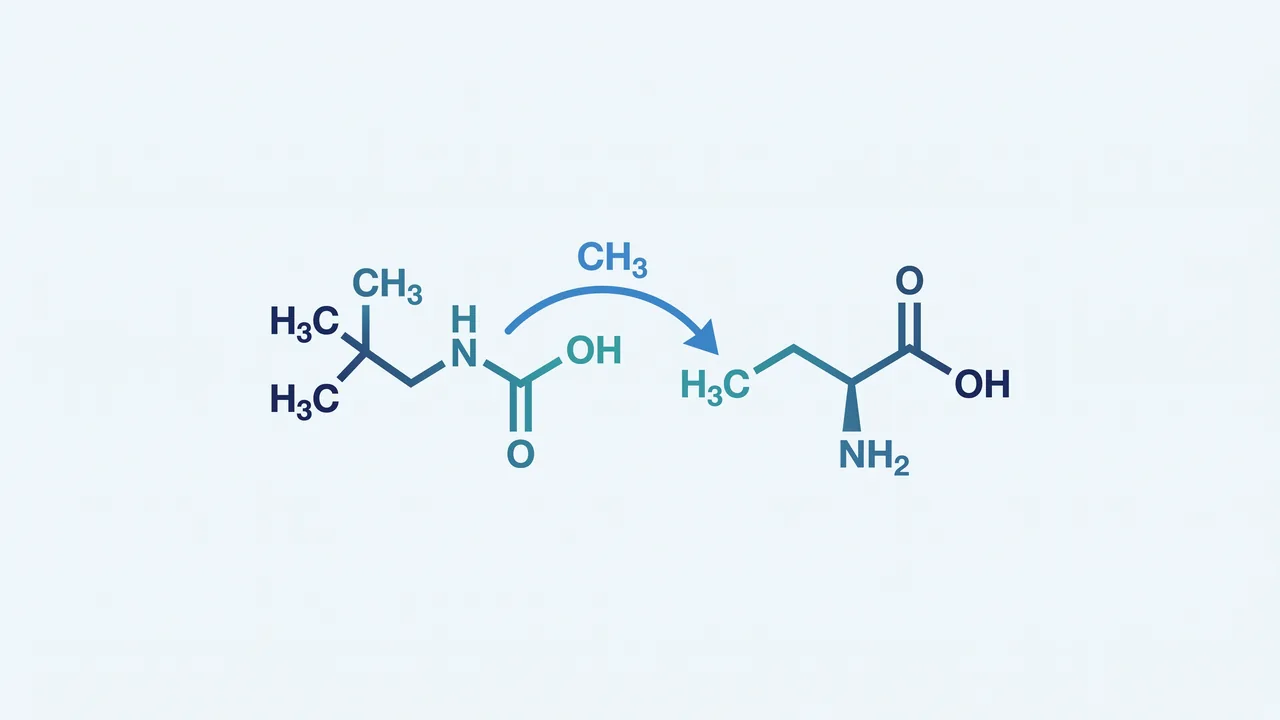
Trimethylglycine is glycine with three methyl groups on the nitrogen. The formula is C5H11NO2. At physiological pH the carboxyl is deprotonated and the quaternary ammonium is permanently charged, so the molecule is a zwitterion. That charge pattern is why the same compound can sit in the methionine cycle as a methyl donor and in the inner medulla as a compatible osmolyte: it is polar enough to be retained, and small enough not to denature proteins at the concentrations renal cells require (Craig, 2004; Lever and Slow, 2010).
The common laboratory and food name is betaine, from Beta vulgaris, the sugar beet from which Scheele’s successors isolated it. The name is a class name as well as a compound name. Carnitine, trigonelline, and proline betaine are also betaines. When this document writes betaine without a qualifier, it means glycine betaine / trimethylglycine. When it means another betaine, it names it.
Dimethylglycine (DMG) is the demethylated product of the BHMT reaction. Sarcosine is the next demethylation. Neither is TMG. Neither is a substitute citation.
Craig’s 2004 nutrition review remains the cleanest single map of occurrence: seafood, especially marine invertebrates at about 1 percent by weight; wheat germ or bran at about 1 percent; spinach at about 0.7 percent (Craig, 2004). Those percentages are food-composition statements, not prescriptions. Estimated dietary intake in the same review and in the later homocysteine papers is of the order of 0.5–2 g/day from food (Craig, 2004; Olthof et al., 2003; Olthof and Verhoef, 2005). Plasma concentrations in healthy adults are highly individual: Lever and Slow summarised typical ranges of about 20–60 µmol/L in women and 25–75 µmol/L in men, with dimethylglycine typically below 10 µmol/L and urinary betaine excretion normally low even after a large oral load (Lever and Slow, 2010; Ueland, Holm, and Hustad, 2005).
03 Betaine hydrochloride is not trimethylglycine
Betaine hydrochloride is the hydrochloride salt of the same organic cation. It is sold as a gastric-acidifier and digestive aid. Anhydrous betaine (Cystadane and generic betaine anhydrous) is the zwitterion used in homocystinuria and in the nutrition and sports trials cited below. The two products share a word. They do not share a labelled indication, a trial literature, or a safety ledger.
A 2007 analytical paper described potentiometric assay of betaine hydrochloride as a pharmaceutical object (Badawy, Youssef, and Mutair, 2007). That is pharmacy chemistry. It is not evidence that the hydrochloride salt remethylates homocysteine in the trials of Steenge, Olthof, or Schwab. Those trials used betaine as a methyl donor, not as a source of hydrochloric acid.
A 2022 broiler study compared natural betaine with betaine hydrochloride on gut physiology in chickens (Awad et al., 2022). That is an animal-feed experiment. It does not licence a human gastric or performance claim for the hydrochloride salt.
A 2022 gestation–lactation feed paper added betaine hydrochloride to mini-pig diets (Azad et al., 2022). Again animal husbandry. The article does not carry those results into human physiology.
The practical rule is simple. If a citation does not specify anhydrous betaine, glycine betaine, or a named homocystinuria product, it is not evidence for TMG. If it specifies betaine HCl, it is evidence about a different product.
04 Dietary sources and choline oxidation
Betaine in the body has two sources: the diet, and the mitochondrial oxidation of choline. Zeisel’s choline reviews are the parent literature for the second route. Choline is an essential nutrient; it is a phosphatidylcholine head-group, an acetylcholine precursor, and the carbon skeleton of betaine (Zeisel, 2000; Zeisel and da Costa, 2009; Zeisel, Klatt, and Caudill, 2018). Choline dehydrogenase (CHDH) oxidises choline to betaine aldehyde in mitochondria. Betaine aldehyde dehydrogenase (ALDH7A1 / BADH) oxidises the aldehyde to betaine. The product then leaves that compartment and becomes a cytosolic methyl donor or an osmolyte.
Ueland’s 2011 review stated the link in one sentence that this article keeps: choline is oxidised to betaine, which is both an osmoregulator and a substrate of betaine-homocysteine methyltransferase, and therefore a folate-independent one-carbon source, especially when folate is low (Ueland, 2011). The same review recorded that high maternal choline intake has been associated with lower neural-tube-defect risk, while intake of choline and betaine shows no consistent relation to cancer or cardiovascular risk, and that plasma choline and plasma betaine can move in opposite directions against metabolic-syndrome components — a pattern he read as a possible disruption of mitochondrial choline oxidation (Ueland, 2011). That is epidemiology and biochemistry. It is not a TMG longevity trial.
Cho, Zeisel, Jacques and colleagues showed, in a food-frequency analysis, that dietary choline and betaine relate to plasma total homocysteine (Cho et al., 2006). Atkinson, Elmslie, Lever and colleagues later showed, in an acute randomised crossover in eight healthy men, that a betaine-rich meal, a choline-rich meal, and a betaine supplement all raise plasma betaine and all attenuate the post-methionine-load rise in homocysteine (Atkinson et al., 2008). Food and a supplement can therefore occupy the same biochemical slot for a few hours. They do not automatically occupy the same outcome slot for years.
05 Two remethylation doors
Homocysteine has two enzymatic exits back to methionine and one irreversible exit toward cysteine. Finkelstein’s mammalian reviews are the primary map (Finkelstein, 1990; Finkelstein, 1998; Finkelstein, 2000; Finkelstein and Martin, 2000). Methionine synthase (MTR), with 5-methyltetrahydrofolate and cobalamin, remethylates homocysteine in most tissues. Betaine-homocysteine methyltransferase (BHMT) remethylates it with betaine, chiefly in liver and kidney. Cystathionine β-synthase (CBS), with pyridoxal phosphate, condenses homocysteine with serine toward cysteine. The three reactions compete for the same thiol. They are not synonyms.
The practical consequence for this title is that TMG cannot be discussed as “the methylation vitamin.” Folate and cobalamin already occupy that sentence. Betaine occupies a parallel door that becomes more visible when folate is low, after a methionine load, and in the inborn errors that block the folate door or the trans-sulfuration door (Ueland, Holm, and Hustad, 2005; Ueland, 2011).
06 BHMT
BHMT transfers a methyl group from betaine to homocysteine, yielding methionine and dimethylglycine. Finkelstein’s kinetic and dietary-regulation papers in the rat established that hepatic BHMT is inducible by dietary betaine and is sensitive to methionine supply (Finkelstein, Harris, and Kyle, 1972; Finkelstein, Martin, and Harris, 1983; Finkelstein and Martin, 1984). Those are animal enzymology papers. They explain why an oral betaine load can move human homocysteine. They do not, by themselves, explain a human clinical outcome.
Teng, Mehedint, Garrow and colleagues deleted BHMT in mice and produced perturbed choline and one-carbon metabolism with fatty liver (Teng et al., 2011). That is a loss-of-function animal result. It supports the statement that BHMT is not a redundant curiosity in murine hepatic fat handling. It does not show that extra oral betaine reverses human NASH. Abdelmalek’s later human trial is the document that tests that hop (section 16).
07 Methionine, SAM, and the claim that more methyl means more health
S-adenosylmethionine (SAM) is the universal methyl donor for a large set of methyltransferases. S-adenosylhomocysteine (SAH) is its product and a potent inhibitor of many of those enzymes. Homocysteine is the hydrolysis product of SAH. The cycle can be written as methionine → SAM → SAH → homocysteine → methionine. Finkelstein reviewed the regulatory properties of SAM and SAH directly (Finkelstein, 2007). Raising SAM, or lowering the SAH/SAM ratio, is a coherent biochemical ambition. It is not, in healthy adults, a demonstrated clinical programme.
The popular longevity sentence treats TMG as a SAM-raising pill that will “improve methylation.” The human evidence that follows is thinner than the sentence. Plasma homocysteine can be lowered (Part Three). Flow-mediated dilation does not improve with that lowering in healthy older adults (Olthof et al., 2006). Large B-vitamin trials that lowered homocysteine through the other door did not reduce major vascular events (Part Three). In NASH, high-dose betaine for twelve months did not reduce the already elevated S-adenosylhomocysteine that Abdelmalek’s group measured (Abdelmalek et al., 2009). The methylation claim is therefore biologically typed and clinically unproven outside inborn errors.
08 Osmolyte biology
The second job is older than the supplement aisle. In the inner medulla, extracellular osmolality can rise far above plasma. Compatible organic osmolytes — betaine, myo-inositol, sorbitol, glycerophosphocholine, taurine — accumulate so that cells can match the external osmoles without raising inorganic ions to denaturing levels (Craig, 2004; Lever and Slow, 2010). The renal betaine/GABA transporter BGT-1 (SLC6A12) is the named uptake route in that literature. This document does not treat transporter kinetic constants as human performance data.
Craig stated the osmolyte role as protection of cells, proteins, and enzymes against low water, high salinity, or extreme temperature (Craig, 2004). That is comparative physiology and in-vitro stress chemistry. Translating it into a sports-hydration claim requires a human trial in the heat, not a medulla cartoon. Armstrong, Casa, Roti and colleagues tested betaine during strenuous running and sprinting in a hot environment and did not convert the osmolyte story into a clean field result (Armstrong et al., 2008). The trial is in the sports matrix, not here as a slogan.
Lever and Slow noted a laboratory caution that matters for the TMAO section: proton NMR can confuse betaine with trimethylamine-N-oxide if the operator is careless (Lever and Slow, 2010). Identity of the peak is not identity of the pathway.
09 Liver as the shared organ
The liver is where BHMT is abundant, where choline oxidation feeds betaine, where VLDL assembly can fail into steatosis, and where the inborn errors of methionine metabolism declare themselves (Finkelstein, 2003; Craig, 2004; Ueland, 2011). That is why a single molecule attracts a homocystinuria licence, a NASH hope, a lipid warning, and a methylation slogan. They are four readings of one organ, not four proofs of one intervention.
10 Homocysteine lowering is a real, dose-visible human effect
The biomarker claim is not in dispute. In healthy adults, oral anhydrous betaine lowers fasting total homocysteine and, more strikingly, the rise after a methionine load.
Steenge, Verhoef, and Katan randomised groups of twelve men and women with mildly elevated homocysteine to 6 g betaine daily, 800 µg folic acid, or placebo for six weeks. Relative to placebo, fasting homocysteine fell by 1.8 µmol/L with betaine (95% CI −3.6 to 0.0) and by 2.7 µmol/L with folic acid. Betaine, but not folic acid, suppressed the 24-hour area under the post-methionine-load curve (Steenge, Verhoef, and Katan, 2003).
Olthof, van Vliet, Boelsma, and Verhoef then asked whether amounts in the dietary range moved the same marker. Four groups of 19 healthy adults took 1.5, 3, or 6 g betaine daily, or placebo, for six weeks. Fasting homocysteine after six weeks was 12, 15, and 20 percent lower than placebo. The first-day methionine-load increment was already attenuated, and the six-week load responses were 23, 30, and 40 percent smaller than placebo (Olthof et al., 2003). The paper inferred that a betaine-rich diet might lower cardiovascular risk. That inference is the claim Part Three exists to test, not to repeat.
Schwab and colleagues, in 42 obese adults on a hypoenergetic diet, found that 6 g/day for twelve weeks lowered homocysteine (interaction p = 0.030) without changing body composition beyond diet alone, and with higher total and LDL cholesterol than control (Schwab et al., 2002).
McRae’s 2013 meta-analysis of five randomised trials in healthy adults, each using at least 4 g/day for 6–24 weeks, estimated a pooled reduction of 1.23 µmol/L (95% CI −1.61 to −0.85) (McRae, 2013). The estimate is a biomarker summary. It is not an outcome trial.
Ueland, Holm, and Hustad placed the physiology under the numbers: plasma betaine is typically about 30 µmol/L, varies ten-fold between people, and is a stronger determinant of post-methionine-load homocysteine than vitamin B6 or folate, especially when folate is low (Ueland, Holm, and Hustad, 2005). Pregnancy shifts the ranking: from about week 20, fasting homocysteine tracks betaine more tightly than folate (Ueland, Holm, and Hustad, 2005). That is a status paper, not a supplement trial.
11 The same amounts can raise LDL and triglycerides
Olthof, van Vliet, Verhoef, Zock, and Katan pooled lipids from four randomised, placebo-controlled studies in healthy humans (three betaine trials, n = 151). Betaine at 6 g/day for six weeks increased LDL cholesterol by 0.36 mmol/L (95% CI 0.25–0.46) and triacylglycerol by 0.14 mmol/L (0.04–0.23) relative to placebo. The total/HDL ratio rose by 0.23 (0.14–0.32). HDL did not change. Lower daily amounts moved LDL in the same direction without statistical significance. The LDL effect was already visible at two weeks. Folic acid at 0.8 mg/day did not move lipids. The authors wrote the sentence this article will not soften: the adverse lipid changes may undo any hypothetical cardiovascular benefit of the homocysteine fall (Olthof et al., 2005).
Zeisel asked, in a 2006 commentary, whether the LDL rise was a clinically important problem or an artifact, and said the question needed more study (Zeisel, 2006). Schwab’s later six-month trial in 63 young healthy adults, using 4 g/day in mineral water, found no significant between-group lipid change and only a weak homocysteine effect (Schwab et al., 2011). The lipid signal is therefore real at the 6 g/day, six-week design used in the Wageningen healthy-adult programme, and less clear at a lower amount over a longer span in younger leaner adults. It is not “debunked.” It is design-dependent.
12 Vascular function does not move when the marker does
Olthof, Bots, Katan, and Verhoef ran a randomised, placebo-controlled, double-blind crossover in 39 apparently healthy adults aged 50–70 years: 0.8 mg/day folic acid, 6 g/day betaine, and placebo, each for six weeks. Folic acid lowered fasting homocysteine by 20 percent (−2.0 µmol/L). Betaine lowered it by 12 percent (−1.2 µmol/L). Neither changed brachial flow-mediated dilation relative to placebo (Olthof et al., 2006). A surrogate of endothelial function that the field once hoped would track homocysteine did not track it here. The paper is a healthy-volunteer surrogate study, not an outcome trial. It is still the cleanest available human test of the idea that betaine’s homocysteine effect is, by itself, a vascular treatment.
13 Lowering homocysteine did not improve clinical outcomes
The homocysteine hypothesis was tested with B vitamins, not with TMG. That is a limitation and also a strength. The B-vitamin trials are larger, longer, and harder than any betaine trial, and they ask the clinical question the TMG literature only infers.
VISP randomised 3,680 adults after nondisabling cerebral infarction to high-dose versus low-dose folic acid, B6, and B12. Mean homocysteine fell 2 µmol/L more on the high dose. The unadjusted risk ratio for stroke, coronary events, or death was 1.0 (95% CI 0.8–1.1). Two-year ischemic stroke rates were 9.2 percent versus 8.8 percent (Toole et al., 2004). Baseline homocysteine still predicted events. Changing the marker did not.
NORVIT randomised 3,749 patients within seven days of acute myocardial infarction in a two-by-two factorial of folic acid plus B12, B6, both, or neither. Folic acid plus B12 lowered mean total homocysteine by 27 percent and did not reduce the composite of recurrent infarction, stroke, and sudden coronary death (risk ratio 1.08, 95% CI 0.93–1.25). Combined B vitamins showed a trend toward harm (relative risk 1.22, 95% CI 1.00–1.50, p = 0.05) (Bønaa et al., 2006).
HOPE-2 randomised 5,522 patients aged 55 or older with vascular disease or diabetes to folic acid 2.5 mg, B6 50 mg, and B12 1 mg daily, or placebo, for an average of five years. Homocysteine fell 2.4 µmol/L on treatment and rose 0.8 µmol/L on placebo. The primary composite of cardiovascular death, myocardial infarction, and stroke occurred in 18.8 percent versus 19.8 percent (relative risk 0.95, 95% CI 0.84–1.07). Stroke was lower (relative risk 0.75, 95% CI 0.59–0.97); unstable-angina hospitalisation was higher (relative risk 1.24, 95% CI 1.04–1.49). The authors concluded that the combination did not reduce major cardiovascular events (Lonn et al., 2006).
SEARCH randomised 12,064 myocardial-infarction survivors to 2 mg folic acid plus 1 mg B12 daily or placebo for 6.7 years. Homocysteine fell 3.8 µmol/L (28 percent). Major vascular events were 25.5 percent versus 24.8 percent (risk ratio 1.04, 95% CI 0.97–1.12) (SEARCH Collaborative Group, 2010).
Clarke and colleagues’ individual-participant meta-analysis of eight large folic-acid trials in 37,485 people at increased cardiovascular risk found a 25 percent average homocysteine reduction and rate ratios of 1.01 (0.97–1.05) for major vascular events, 1.03 (0.97–1.10) for major coronary events, and 0.96 (0.87–1.06) for stroke, with no effect on cancer or all-cause mortality over a median five years (Clarke et al., 2010). An earlier interim meta-analysis of four completed trials had already been null (Clarke, Lewington, Sherliker, and Armitage, 2007).
Mendelian randomisation tightened the same conclusion. In 19 unpublished datasets (48,175 coronary cases, 67,961 controls), the MTHFR C677T TT versus CC odds ratio for coronary disease was 1.02 (0.98–1.07), against a published-literature odds ratio of 1.15 that the authors attributed to publication bias (Clarke et al., 2012). Lifelong moderate homocysteine elevation, at the increment the genotype produces, showed little or no effect on coronary disease.
These trials are not betaine trials. They are the clinical test of the inference that motivated the betaine papers of 2002–2006. A molecule that lowers homocysteine less than folate, and that can raise LDL, does not inherit a cardiovascular indication from a hypothesis that already failed on the more efficient lever.
Dietary-intake epidemiology is not a rescue. Dalmeijer, Olthof, Verhoef and colleagues found no clear prospective protection from dietary folate, betaine, and choline against cardiovascular disease in women (Dalmeijer et al., 2008). Bidulescu and colleagues, in ARIC, likewise did not establish usual choline and betaine intake as a coronary-disease preventative (Bidulescu et al., 2007). Ueland’s later synthesis is the fair summary: no consistent relation of intake to cardiovascular risk (Ueland, 2011).
| Trial or synthesis | Design | Population | Marker change | Clinical result |
|---|---|---|---|---|
| Steenge, Verhoef, and Katan, 2003 | RCT, 6 wk | mildly elevated tHcy, n=12/arm | fasting tHcy −1.8 µmol/L vs placebo; PML AUC down | no clinical endpoint |
| Olthof et al., 2003 | RCT, 6 wk | healthy adults, n=19/arm | fasting tHcy −12 to −20% | no clinical endpoint |
| Schwab et al., 2002 | RCT, 12 wk + diet | obese adults, n=42 | tHcy down; LDL/total cholesterol up | body composition unchanged vs diet |
| Olthof et al., 2005 | pooled RCTs | healthy, betaine n=151 | LDL +0.36 mmol/L; TG +0.14 | no clinical endpoint |
| Olthof et al., 2006 | RCT crossover, 6 wk | healthy 50–70 y, n=39 | tHcy −12% (betaine), −20% (folate) | FMD unchanged |
| McRae, 2013 | meta-analysis, 5 RCTs | healthy adults | tHcy −1.23 µmol/L | no clinical endpoint |
| Toole et al., 2004 (VISP) | RCT, 2 y | 3680 after ischemic stroke | tHcy −2 µmol/L extra on high dose | stroke/CHD/death RR 1.0 |
| Bønaa et al., 2006 (NORVIT) | RCT factorial, 40 mo | 3749 after MI | tHcy −27% on folate+B12 | primary RR 1.08; combined vitamins RR 1.22 |
| Lonn et al., 2006 (HOPE-2) | RCT, 5 y | 5522 vascular/diabetes | tHcy −2.4 vs +0.8 µmol/L | primary RR 0.95 (0.84–1.07) |
| SEARCH, 2010 | RCT, 6.7 y | 12064 after MI | tHcy −3.8 µmol/L | major vascular RR 1.04 |
| Clarke et al., 2010 | IPD meta-analysis | 37485, 8 trials | tHcy −25% | MVE RR 1.01 (0.97–1.05) |
| Clarke et al., 2012 | unpublished MR | 48175 CHD cases | TT ~+20% tHcy expected | CHD OR 1.02 (0.98–1.07) |
14 What a homocysteine fall is allowed to mean
A homocysteine fall after oral betaine is evidence that BHMT can be substrate-driven in living people. It is evidence that the post-meal methionine increment can be blunted. It is not evidence that myocardial infarction, stroke, or death will fall. The B-vitamin outcome literature closed that inference for the more powerful folate door. Betaine does not reopen it by being a different methyl donor. If anything, the LDL signal (Olthof et al., 2005) makes a naive cardiovascular extrapolation less defensible, not more.
A reader who wants a remaining opening can point to HOPE-2’s stroke signal (relative risk 0.75) or to the fact that no one has run a betaine outcome trial of SEARCH’s size. Those are real sentences. They are not a rescue. The stroke finding sat inside a null primary composite, and unstable-angina hospitalisation moved the other way (Lonn et al., 2006). A missing betaine-specific outcome trial is a gap, not a hidden positive. The honest residual is that homocysteine remains a risk marker whose modification, by the lever that was actually tested, did not change the events the marker was hired to predict.
15 Homocystinuria is the licensed use
The one human indication that is not an extrapolation is the inborn-error use. Betaine anhydrous (Cystadane) is used, with diet and other cofactors, to lower homocysteine in cystathionine β-synthase deficiency, methylene-tetrahydrofolate-reductase deficiency, and cobalamin-metabolism defects (Valayannopoulos et al., 2019). The RoCH registry enrolled 125 treated patients in France and Spain, mean treatment duration 7.4 years, and reported a mean 29 percent reduction in plasma homocysteine. Among 277 adverse events, two non-serious events (taste, headache) and one serious event (interstitial lung disease) were judged drug-related. Median total daily amounts at first and last visit differed by diagnosis: 6 g/day in B6-responsive CBS deficiency, 9 g/day in MTHFR deficiency, with increases over time in B6-non-responsive CBS and cobalamin defects (Valayannopoulos et al., 2019). Those figures are registry parameters in a rare-disease population. They are not a healthy-ageing schedule.
A 2009 drug note recorded that betaine anhydrous required continued evaluation in homocystinuria (Betaine anhydrous: new drug, 2009). Kumar, Sharma, and Singh later reviewed therapeutic approaches to homocystinuria as a class (Kumar, Sharma, and Singh, 2016). This article does not convert an orphan metabolic therapy into a consumer methylation product.
The licensed use also sets the scale of the safety conversation. Years of registry follow-up in children and adults with enzymatic blocks are not a substitute for a healthy-adult chronic-safety file, and they are not irrelevant to it. They show that anhydrous betaine can be taken for years under specialist supervision, that taste and headache appear as labelled nuisances, and that a single serious interstitial-lung-disease report was judged related in that cohort (Valayannopoulos et al., 2019). None of that is a consumer clearance. It is the one long-exposure human ledger the molecule actually has.
16 NAFLD and NASH: a promising pilot, a failed primary, a still-open organ
Abdelmalek, Angulo, Jorgensen, Sylvestre, and Lindor treated ten adults with NASH using betaine anhydrous for oral solution in two divided daily amounts for twelve months. Seven completed a year. Aminotransferases improved (AST p = 0.02; ALT p = 0.007); three of seven normalised, three of seven fell by more than half. Histology of steatosis, necroinflammation, and fibrosis was described as markedly improved. Four patients had transitory gastrointestinal events that did not force discontinuation. The authors called for a randomised trial (Abdelmalek et al., 2001).
They ran it. Fifty-five patients with biopsy-proven NASH were randomised to oral betaine 20 g daily or placebo for twelve months. Thirty-five completed; 34 had paired biopsies. Betaine decreased steatosis grade. There were no intra- or intergroup differences in NAFLD activity score or fibrosis stage. Insulin, glucose, proinflammatory cytokines, and antioxidant status did not improve. Adiponectin fell in both groups. S-adenosylhomocysteine was about twice normal and was not reduced. The published conclusion is the one that governs this section: compared with placebo, betaine did not improve hepatic steatosis in the way the field needed, though it may protect against worsening; high-dose supplementation failed to reduce SAH and did not move the “second-hit” mechanisms the investigators had postulated (Abdelmalek et al., 2009). Animal steatosis models had been more encouraging. The translation failed on the endpoints that matter for NASH.
A 2007 symposium summary treated SAM, folate, and betaine as candidate tools in alcoholic liver disease (Purohit et al., 2007). A single-patient transplant report described resolution of severe alcohol-related hepatitis and steatosis with betaine (Samara et al., 2006). Those are a symposium and a case, not a trial.
Abdelmalek and Lindor returned in 2026 with a short Hepatology piece asking whether betaine in steatotic liver disease was a historical fad or a treasure worth reviving (Abdelmalek and Lindor, 2026). The existence of that question, sixteen years after their own RCT, is itself evidence. The human NASH file is not closed by mechanism papers. It is held open by a negative-leaning randomised trial and a still-curious organ.
17 Metabolic health without a metabolic indication
Schwab’s obese-diet RCT (section 10) is the honest body-composition trial in people not lifting weights: 6 g/day did not increase fat loss beyond energy restriction (Schwab et al., 2002). The 2011 six-month healthy-adult RCT at 4 g/day did not remodel the lipid profile and barely moved homocysteine (Schwab et al., 2011). Konstantinova, Tell, Vollset and colleagues reported divergent plasma choline and betaine associations with metabolic-syndrome components in middle-aged and elderly Hordaland adults (Konstantinova et al., 2008). Lever’s group has repeatedly shown that plasma and urine betaine track lipids, fibrates, and diabetes in clinical cohorts — associations and drug interactions, not supplement effects (Lever et al., 2009; Lever et al., 2011; Lever et al., 2012; Lever et al., 2014).
The metabolic-health claim that survives is modest. Low plasma betaine clusters with an unfavourable metabolic profile in observational work (Ueland, 2011; Lever and Slow, 2010). Raising betaine with a capsule in otherwise healthy or diet-treated adults has not produced a replicated metabolic-syndrome benefit. Body-composition changes in trained or newly trained people belong in the sports section, where the training is a co-intervention.
18 Strength, power, and body composition
The sports literature is real, small, short, and uneven.
Hoffman, Ratamess, Kang, Rashti, and Faigenbaum randomised 24 active college men to betaine or placebo for 15 days. Squat repetitions to exhaustion and the number of squat repetitions at or above 90 percent of peak power favoured betaine. Vertical-jump power, bench-throw power, and Wingate power did not differ (Hoffman et al., 2009). Two weeks. One exercise pattern. Not a training method.
Lee, Maresh, Kraemer and colleagues used a randomised, double-blind, crossover in 12 resistance-trained men: 14 days of twice-daily betaine or placebo, 14-day washout. Bench-throw power and isometric bench force rose on betaine relative to pre-supplementation and placebo. Vertical-jump power and isometric squat force rose versus pre-supplementation. Jump-squat power and bench or squat repetition counts did not (Lee et al., 2010). Again two weeks. Selected upper-body force and power measures moved; work capacity did not.
Cholewa and colleagues randomised 23 trained men to 2.5 g/day or placebo during six weeks of periodised training. Arm cross-sectional area and body composition (body-fat percentage, fat mass, lean mass) improved in the betaine arm and not in placebo. Bench-press training volume favoured betaine at two microcycles. Bench and squat 1 RM and vertical jump did not differ between groups; vertical-jump power showed a trend (p = 0.07). Urinary homocysteine thiolactone rose in placebo and not in betaine (Cholewa et al., 2013). This is the strongest body-composition signal in trained men. It is still n = 23, six weeks, and skinfold-estimated composition.
The same group later randomised 23 untrained collegiate women to 2.5 g/day or placebo during eight weeks of failure-based training. Lean mass, muscle thickness, vertical jump, and 1 RM rose in both arms with no interaction. Fat mass and body-fat percentage fell more with betaine (−2.0 ± 1.1 kg and −3.3 ± 1.7 percent) than placebo (−0.8 ± 1.3 kg and −1.7 ± 1.6 percent). Weekly volume trended higher (p = 0.056) (Cholewa et al., 2018). Fat loss with training, not a strength effect.
Ismaeel’s 2017 systematic review of randomised trials of strength and power identified seven excellent-quality trials. Two reported increases; five did not. The review’s conclusion is the one this article uses: there is no clear ergogenic effect on strength and power, and the two positive trials are a reason for more work, not a settled claim (Ismaeel, 2017).
Zawieja, Machek, Zanchi, Cholewa, and Woźniewicz meta-analysed chronic supplementation in 17 studies (317 participants, 21 percent female, ages 15–60). They reported a significant effect on maximal strength (SMD 0.47, 95% CI 0.04–0.89), driven by lower-body strength (SMD 0.49, 0.01–0.98), no significant effects on upper-body strength, cycling sprint power, bench-throw power, or muscular endurance, and a vertical-jump effect (SMD 0.36, 0.03–0.69) only after excluding a low-quality study (Zawieja et al., 2024). A pooled SMD near 0.5 on lower-body strength, from short trials with heterogeneous protocols, is a possible small effect. It is not a replicated championship result. The authors’ own nulls on endurance and several power tests are part of the finding.
Trepanowski, Farney, McCarthy and colleagues reported mixed chronic-supplementation effects on performance and muscle oxygen saturation (Trepanowski et al., 2011). Pryor, Craig, and Swensen tested cycling sprint performance (Pryor, Craig, and Swensen, 2012). Apicella, Lee, Bailey and colleagues reported enhanced anabolic endocrine and Akt signalling after acute exercise bouts with supplementation — a signalling paper, not a performance championship (Apicella et al., 2013). Armstrong’s heat study is a hydration-adjacent trial, not a strength trial (Armstrong et al., 2008). Bloomer, Farney, and Trepanowski measured plasma nitrate/nitrite in trained men (Bloomer, Farney, and Trepanowski, 2011).
Nobari’s youth-soccer programme (14 weeks, professional players about 15 years old) reported testosterone and testosterone/cortisol changes and no lean-mass interaction (Nobari et al., 2021). Those are adolescent athletes during a season. They are not adult hypertrophy evidence and are not used as such here.
Machek and colleagues’ 14-day loading / 28-day washout pilot in five trained men showed serum betaine rising from 2.31 ± 1.05 to 11.1 ± 4.91 µg/mL and returning toward baseline by day 4, with the authors preferring a conservative seven-day washout because muscle was not measured (Machek et al., 2022). That paper is a kinetic caution for crossover designs. It is not a performance result.
Cholewa, Guimarães-Ferreira, and Zanchi’s 2014 narrative review listed mechanisms that remain, in their own words, poorly understood: lipolysis/lipogenesis gene expression, IGF-1 and insulin-receptor signalling, growth-hormone secretion, creatine synthesis, intracellular hyperhydration, and fatigue sensation (Cholewa, Guimarães-Ferreira, and Zanchi, 2014). A list of possible mechanisms is not a hierarchy of proven ones.
| Study | Design | Population | Parameter window | What moved | What did not |
|---|---|---|---|---|---|
| Hoffman et al., 2009 | RCT, 15 d | 24 college men | 15 days | squat reps; high-quality squat reps | VJ, bench throw, Wingate |
| Lee et al., 2010 | RCT crossover, 14 d | 12 trained men | 14 days + washout | bench-throw power; isometric bench; some jump/squat force | jump-squat power; bench/squat reps |
| Cholewa et al., 2013 | RCT + training, 6 wk | 23 trained men | 2.5 g/day, 6 wk | arm CSA; BF%/FM/LBM; some bench volume | 1 RM strength; VJ (trend only) |
| Cholewa et al., 2018 | RCT + training, 8 wk | 23 untrained women | 2.5 g/day, 8 wk | fat mass and BF% vs placebo | strength, lean mass, thickness (time only) |
| Ismaeel, 2017 | systematic review | 7 RCTs | mixed | 2 of 7 positive | 5 of 7 null on strength/power |
| Zawieja et al., 2024 | meta-analysis | 17 studies, n=317 | ≥7 days | lower-body strength SMD 0.49; VJ after exclusion | upper-body strength; sprint; endurance |
| Nobari et al., 2021 | RCT, 14 wk | 29 youth soccer, ~15 y | 2 g/day | testosterone, T/C | lean mass, body fat (no interaction) |
| Schwab et al., 2002 | RCT + diet, 12 wk | 42 obese adults | 6 g/day | tHcy | body composition vs diet alone |
19 Hydration and osmoregulation in athletes
The medulla story does not automatically become a hydration strategy. Armstrong’s hot-environment running and sprinting study is the human attempt most often borrowed for that sentence (Armstrong et al., 2008). It does not, on the published sports set above, establish a reliable effect on power in the heat or on field hydration outcomes. Lever and Slow’s clinical review treated athletic-performance reports as a stimulus for more human work, not as a settled osmolyte indication (Lever and Slow, 2010). This article follows that restraint.
An osmolyte can be essential in the medulla and still be a weak field intervention. Cell-volume defence against a urea and salt gradient is not the same problem as a humid time-trial, a two-hour practice, or a sauna protocol. Until a heat or hydration trial reports a pre-specified, replicated field endpoint — not a borrowed medulla cartoon — the osmolyte job stays in Part Two, where it belongs.
20 Gastrointestinal effects
The NASH pilot recorded transitory gastrointestinal events in four of ten patients, without forced discontinuation (Abdelmalek et al., 2001). The RoCH homocystinuria registry judged bad taste and headache as the non-serious drug-related events in a much longer exposure (Valayannopoulos et al., 2019). Healthy-adult homocysteine trials at 1.5–6 g/day over six to twelve weeks did not advertise a GI-limiting toxicity in their abstracts; they were not designed as formal safety registries. High-dose NASH treatment (20 g/day) is a different exposure from sports trials (typically 2.5 g/day). Those populations are not interchangeable. A taste complaint in a registry is not a dose-limiting toxicity, and the absence of a published GI dropout signal in short healthy-adult trials is not a chronic-tolerance file. Both statements can be true at once.
21 Lipids, again, as a safety finding
The Olthof 2005 pooled analysis is the safety paper as well as the efficacy paper (Olthof et al., 2005). A homocysteine-lowering nutrient that raises LDL by a third of a millimole and triglycerides by 0.14 mmol/L in six weeks is not a free cardiovascular good. Zeisel’s artifact question remains open at lower amounts and longer spans (Zeisel, 2006; Schwab et al., 2011). Until a modern lipid-focused RCT says otherwise, the 6 g/day healthy-adult signal stands.
22 TMAO: relevant pathway, borrowed exposure
Trimethylamine-N-oxide is a gut-flora product. Dietary phosphatidylcholine and choline yield trimethylamine, which hepatic flavin mono-oxygenases oxidise to TMAO. Wang, Klipfell, Bennett, Koeth and colleagues identified choline, TMAO, and betaine as CVD-predictive metabolites; in mice, choline or TMAO promoted atherosclerosis, and germ-free or antibiotic conditions blocked the choline effect (Wang et al., 2011). The paper places betaine on the marker list. The interventional atherosclerosis in mice was shown for choline and TMAO.
Koeth, Wang, Levison and colleagues showed that L-carnitine, abundant in red meat, is also a TMAO precursor, that omnivores produce more TMAO after carnitine than vegans, and that plasma carnitine predicted events only when TMAO was also high (Koeth et al., 2013). Tang, Wang, Levison and colleagues showed, in humans, that a phosphatidylcholine challenge (two eggs plus labelled PC) raises TMAO in a microbiota-dependent way, and that fasting TMAO predicted three-year major adverse events in 4,007 patients undergoing elective angiography (highest versus lowest quartile hazard ratio 2.54, 95% CI 1.96–3.28) (Tang et al., 2013).
Wang, Bergeron, Levison and colleagues later showed that chronic red meat, not white meat or non-meat protein, raised plasma and urine TMAO more than two-fold in a randomised dietary crossover, by increasing precursors, increasing microbial TMA production from carnitine (not choline), and reducing renal TMAO excretion (Wang et al., 2019).
What this is not: a randomised demonstration that supplemental anhydrous betaine at sports-trial amounts raises TMAO in healthy adults to a degree that changes events. Plasma betaine can correlate with TMAO because they share choline-family neighbourhoods (Wang et al., 2011; Lever et al., 2014). Lever and colleagues, in a diabetes/acute-coronary cohort, found that betaine and TMAO predicted cardiovascular outcomes with different patterns (Lever et al., 2014). Correlation of two trimethylamines is not identity of exposure.
The TMAO literature is therefore relevant as a neighbouring risk biology, especially for choline, carnitine, and red meat. It is not, on the papers in the reviewed record, a completed safety case against TMG supplementation. Claiming that it is, or that it is irrelevant, both overreach.
23 Methylation interactions
The interactions that are documented are biochemical, not clinical longevity effects. Plasma betaine predicts post-load homocysteine more when folate is low (Ueland, Holm, and Hustad, 2005; Holm et al., 2007). B-vitamin supplementation attenuates the betaine–homocysteine relationship (Holm et al., 2005; Holm et al., 2007). Fibrates increase urinary betaine loss and can raise homocysteine (Lever et al., 2009; Lever et al., 2014). Pregnancy reorders the predictors (Ueland, Holm, and Hustad, 2005). MTHFR 677 TT makes the folate door less efficient and therefore makes the betaine door more visible (Ueland, 2011). None of those facts is a demonstrated change in DNA-methylation age, a compressed morbidity interval, or a healthspan year.
Zeisel’s later choline/methyl-donor/epigenetics essay is a mechanistic horizon (Zeisel, 2017). Horizons are not endpoints.
24 Claim ledger
| Claim often heard | What is true | What is not shown |
|---|---|---|
| TMG donates a methyl group | BHMT does this in liver and kidney (Finkelstein, 1998; Ueland, 2011) | that extra oral TMG “optimises methylation” in healthy adults |
| TMG lowers homocysteine | replicated RCTs; meta-analysis −1.23 µmol/L (McRae, 2013) | that the fall is a clinical treatment |
| Lower homocysteine protects the heart | observational association | VISP, NORVIT, HOPE-2, SEARCH, Clarke 2010/2012 |
| TMG is heart-healthy | biomarker movement | lipids may move the wrong way (Olthof et al., 2005); FMD null (Olthof et al., 2006) |
| TMG treats fatty liver | animal models; 2001 pilot | 2009 NASH RCT missed NAS and fibrosis (Abdelmalek et al., 2009) |
| TMG is a fat-loss agent | some training RCTs (Cholewa 2013, 2018) | Schwab 2002 diet RCT null; small n; short |
| TMG is a strength/power aid | selected short trials; 2024 MA on lower-body strength | Ismaeel: 5/7 null; upper-body and endurance null in the MA |
| TMG hydrates like an osmolyte | renal medulla biology (Craig, 2004) | a reliable human heat/performance effect |
| TMG raises TMAO like steak | shared choline-family neighbourhood | red meat/carnitine/PC are the human TMAO drivers (Tang 2013; Koeth 2013; Wang 2019) |
| Betaine HCl is the same thing | shared cation | different salt, literature, and use |
| Cystadane proves a longevity use | licensed in homocystinuria (Valayannopoulos et al., 2019) | orphan disease ≠ consumer ageing |
25 Five adversarial questions
Does lowering homocysteine improve clinical outcomes? Not in the large B-vitamin outcome trials. VISP, NORVIT, HOPE-2, and SEARCH lowered the marker and did not reduce their primary vascular composites (Toole et al., 2004; Bønaa et al., 2006; Lonn et al., 2006; SEARCH Collaborative Group, 2010). Clarke’s 2010 pooled analysis is null on major vascular events, cancer, and death (Clarke et al., 2010). Unpublished Mendelian randomisation is null on coronary disease (Clarke et al., 2012). Betaine has not been given its own outcome trial. It does not get to skip the queue.
Are performance benefits replicated? Partly, and narrowly. Lower-body strength in a 2024 meta-analysis is the most coherent positive (Zawieja et al., 2024). Ismaeel’s earlier vote-count was mostly null (Ismaeel, 2017). Individual trials disagree about which test moves. That is incomplete replication, not a consensus ergogenic.
Are short sports trials overinterpreted? Yes, when they are rewritten as a training system or a body-recomposition method. Hoffman and Lee are two-week studies (Hoffman et al., 2009; Lee et al., 2010). Cholewa 2013 and 2018 are six and eight weeks in 23-person samples (Cholewa et al., 2013; Cholewa et al., 2018). Skinsfolds and BodPod are not MRI. Youth-soccer endocrine papers are a different population (Nobari et al., 2021). Overinterpretation is the conversion of those designs into a general adult claim.
Is TMAO relevant at supplemental exposure? Relevant as neighbouring biology. Not established as a quantified harm of sports-range anhydrous betaine. The human TMAO experiments that changed the field used phosphatidylcholine challenges, carnitine, and red-meat diets (Wang et al., 2011; Koeth et al., 2013; Tang et al., 2013; Wang et al., 2019). Plasma betaine can travel with TMAO without being the ingested driver.
Are methylation claims biologically plausible but clinically unproven? Yes. BHMT, SAM/SAH regulation, and folate-dependent visibility of the betaine door are standard biochemistry (Finkelstein, 1998, 2007; Ueland, 2011). Clinical proof that oral TMG improves a methylation-dependent disease phenotype exists in homocystinuria (Valayannopoulos et al., 2019). Clinical proof that it improves ageing, cognition, or “epigenetic health” in people without those errors does not exist in the reviewed record.
26 Standing constraint
No human use, dose, route or schedule is recommended anywhere in this document. Reported amounts are the parameters of the studies that used them. Anhydrous betaine in homocystinuria is a specialist metabolic therapy. It is not a template for healthy adults. Betaine hydrochloride is not covered as a substitute.
27 Evidence handling
Findings are labelled by design in the sentence that carries them. Animal and in-vitro results are not rewritten as human outcomes. Conflicting trials are left in conflict: Abdelmalek 2001 versus 2009; Hoffman and Lee versus Ismaeel’s five nulls; Olthof 2005 lipids versus Schwab 2011. A newer null does not automatically delete an older positive; it changes what a claim is allowed to mean. Secondary sources (Craig, 2004; Lever and Slow, 2010; Ueland, 2011; Cholewa, Guimarães-Ferreira, and Zanchi, 2014) are used for maps and food-composition statements, not as substitutes for the trials they cite. References were generated from verified NCBI MEDLINE records. No third-party figure has been reproduced.
Where a secondary review and a primary trial disagree, the trial keeps the number. Where two trials disagree, both remain in the sentence that reports them. Unresolved PMIDs are a build failure, not a footnote.
28 Unresolved science
There is still no adequately powered cardiovascular-outcome trial of anhydrous betaine. The lipid signal at 6 g/day needs a modern, pre-specified lipid RCT at the amounts people actually use. NASH remains open after a negative-leaning 2009 trial and a 2026 revival essay. TMAO production after a defined oral betaine load, as opposed to a choline or carnitine load, is not mapped here at the standard of Tang 2013. Sports meta-analytic effects remain sensitive to inclusion, sex, and test choice. Whether long-term supplemental betaine changes SAM/SAH, circulating methylation marks, or any functional ageing endpoint in people without inborn errors is untested at a standard this document would accept.
References
Continue reading