
Peptides Versus Small Molecules and Other Therapeutic Modalities How drug classes differ, and where each one belongs
Two patients can have the same disease, aimed at the same molecular target, and be handed three completely different kinds of medicine: a pill taken each morning, an injection given once a week, an infusion given twice a year. None of them is simply better than the others. Each is the answer to a different set of constraints — where the target sits, what shape it presents, how long the effect must last, whether it must be reversible, how it can be made and delivered, and who has to live with it. This monograph is a map of those constraints, and of where peptides fall on it: not at the top, but in a specific and useful middle.
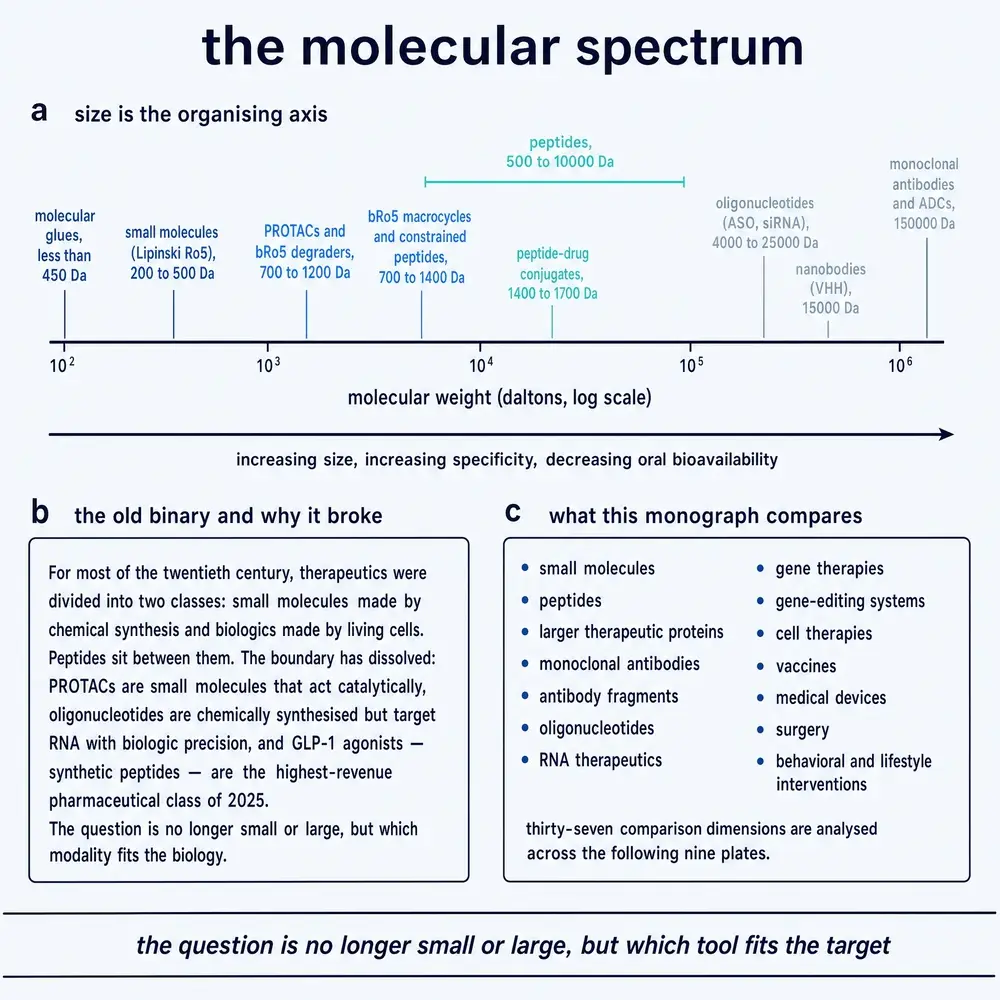
The argument hangs on one picture: a map of molecular scale and target access, drawn in Figure 1. Every later section is a different way of reading position on that map. Keep it in mind and the comparison stays legible even where the chemistry is dense.
Evidence is labelled by study type in the sentence that reports it: in vitro means a cell or a tube, animal names the species, human means people, and a dose or schedule appears only as it was studied or observed, never as a recommendation. No human use, dose, route or schedule is recommended anywhere in this document. Nothing here is medical advice.
Abstract
The question this monograph answers is not which modality is best but which modality fits. We compare peptides with conventional small molecules, larger therapeutic proteins, monoclonal antibodies and their fragments, oligonucleotides and RNA therapeutics, gene therapies and gene-editing systems, cell therapies, vaccines, devices, surgery and behavioural intervention, across roughly forty properties spanning molecular size, target access, pharmacokinetics, safety, manufacturing, delivery and cost. From that comparison we build a single tool: a twelve-gate modality-selection framework that takes a therapeutic problem and, gate by gate, eliminates the classes physically or practically incapable of solving it, leaving a shortlist among which the final choice is a value judgement about risk, cost and evidence rather than a molecular deduction.
The recurring finding is that peptides occupy a deliberate middle of the scale map: a binding surface large enough to engage the flat protein–protein interfaces that defeat small molecules, with far lower manufacturing and analytical complexity than antibodies, clean catabolism to amino acids, and few of the drug–drug interactions that burden small-molecule chemistry. They pay for this with poor unaided oral availability, usual exclusion from targets inside the cell and behind the blood–brain barrier, the burden of injection, and the possibility of an immune response. A century of anatomy, physiology and chemistry — from the discovery that the body speaks in peptides to the synthetic and half-life-engineering advances that made those peptides last a week instead of a minute — explains both the promise and the price. The document argues no categorical superiority for any class and treats none as homogeneous.
Section 01One target, several medicines
Consider PCSK9, a protein that circulates in the blood and controls how many receptors the liver keeps for clearing cholesterol. Lower its activity and cholesterol falls. The target is the same for every patient, and yet the medicines aimed at it could hardly be more different in kind. One is a monoclonal antibody, a large protein injected under the skin every few weeks. Another is a small interfering RNA that silences the gene, given as an injection roughly twice a year. A third, newer entry is an orally available macrocyclic peptide taken as a tablet. Same target, three modalities, three completely different experiences of treatment.
This is not an accident of history or marketing. It is what happens when a single biological problem is approached from different regions of a map whose axes are physical: how big the therapeutic molecule is, and where and how it must reach its target. The purpose of this monograph is to draw that map carefully, place each class of medicine on it, and explain the reasoning that decides which region a given disease should be treated from.
Section 02The question, and the questions we refuse
The question is: how do peptide medicines differ from the alternatives, and where is each alternative most appropriate? That framing already rules out two tempting mistakes. The first is arguing that peptides — or small molecules, or antibodies, or gene therapies — are categorically superior. No class wins in general, because “in general” is not a clinical situation; a class wins for a target, an indication and a population. The second mistake is treating any class as homogeneous. “Small molecules” includes both a freely absorbed tablet and a compound that cannot survive the gut; “peptides” includes both a signal that lasts ninety seconds and an engineered analogue that lasts a week; “biologics” includes both exquisitely selective antibodies and agents with serious on-target toxicity. Wherever this document makes a comparison, it names the exception that breaks the rule.
Section 03The map, and the modalities on it
The controlling idea is a single axis — molecular size — because size is the property from which most of the others follow. A very small molecule can slip across a cell membrane, be swallowed and absorbed, and be built and characterised down to the last atom; it will also struggle to grip a large, flat protein surface with any selectivity. A very large molecule can wrap around such a surface with antibody-grade specificity; it will also be impossible to swallow, expensive to manufacture, and visible to the immune system. Between those extremes sit the peptides.
Figure 1 places the classes on that size axis: from molecular glues and conventional small molecules, through PROTACs and constrained peptides, across the wide peptide band, on to oligonucleotides, nanobodies, monoclonal antibodies and antibody–drug conjugates. Increasing size brings increasing specificity and, usually, decreasing oral bioavailability. The figure is the spine of everything that follows. Every later property — whether a class can be swallowed, how long it lasts, whether the immune system notices it, how it is cleared and how it is made — is first read off a class’s position on this spine, and only then adjusted for the specifics of a given molecule.
Beyond the molecules that are the drug, the map has a second country: modalities that carry or encode a drug rather than acting by shape alone. Antibody–drug conjugates and protein degraders deliver a payload; antisense oligonucleotides and small interfering RNAs silence a message; mRNA therapeutics supply a temporary instruction to make a protein; gene therapies install a lasting one; gene editing rewrites the instruction permanently; cell therapies deliver living, self-renewing machinery. Here the axis that matters is not size but permanence — how reversible the change is — and it will return as one of the sharpest dividing lines in the whole comparison. Finally, the map has an honest edge where the alternatives are not molecules at all: vaccines, devices, surgery and behavioural change, which a clinician weighs against every drug class and which this document refuses to pretend away.
Section 04The body speaks in peptides
The map was not designed; it was discovered, one surprise at a time, and the first surprise was that the body signals with short chains of amino acids at all. In 1902 the English physiologists William Bayliss and Ernest Starling found that a substance released by the gut lining could travel through the blood and command the pancreas to secrete, even when every nerve between the two organs had been cut. They named the substance secretin and coined the word hormone for the whole class of blood-borne messengers. A chemical message, carried in the circulation, acting at a distance: the idea that would eventually define an entire modality began here, in a question about digestion.
The second surprise, two decades later, made the idea unforgettable. In 1921–22 Frederick Banting, Charles Best, James Collip and John Macleod extracted insulin from pancreas and showed that it reversed the otherwise fatal wasting of type 1 diabetes. Insulin was a peptide hormone, and its therapeutic use established the template that peptide medicine still follows: identify a signal the body already uses, and supply it. But insulin also exposed the template’s central difficulty. It could not be swallowed; the gut that Bayliss and Starling had studied digested it as food. It had to be injected, and it did not last long once injected. The promise and the price arrived together.
Section 05The small-molecule century
While physiologists were learning that the body speaks in peptides, chemists were building a different kind of medicine entirely. The twentieth century belonged to the small molecule: synthetic organic compounds, small enough to be swallowed and absorbed, that could be made in tonnes and characterised completely. The conceptual scaffolding grew alongside the chemistry — the receptor concept, the image of a drug fitting a target like a key in a lock, and eventually a set of empirical rules, associated with Christopher Lipinski, describing the physical properties a molecule usually needs to be an oral drug. The small molecule became so dominant that for most of the century “drug” and “small molecule” were nearly synonymous, and the peptides — unswallowable, short-lived, hard to make — were left to a few indispensable exceptions like insulin.
Section 06The biologics turn
The hinge came in 1982, when recombinant DNA technology produced human insulin in bacteria — the first medicine made by instructing a living cell to build a human protein. Recombinant manufacturing lifted the ceiling on what could be a drug: proteins too large and too complex to synthesise chemically were now producible, and the biologics era followed. Monoclonal antibodies, huge and exquisitely specific, reached the clinic from the mid-1980s and became the defining medicines of modern immunology and oncology. But biologics inherited insulin’s bargain in full. They could not be swallowed, they generally required refrigeration and injection, and their size kept them outside the cell and out of the brain. The map now had a firmly populated large-molecule end, with all the reach and all the burdens that came with it.
Section 07The peptide comeback
Peptides returned not because the field changed its mind about them but because three technical problems were solved. The first was synthesis: solid-phase peptide synthesis, developed by Bruce Merrifield and matured into a routine, automated process, made peptides of defined sequence reliable and scalable to manufacture. The second was half-life. Native signals are built to be destroyed — glucagon-like peptide-1 vanishes from human circulation in a minute or two — and that is fatal for a medicine. Attaching a fatty acid chain that binds reversibly to circulating albumin, or fusing the peptide to an antibody fragment, slowed clearance enough to turn a signal lasting minutes into a drug lasting a week; the acylated peptide semaglutide is the emblem of this advance. The third was the oral door: absorption enhancers and careful formulation opened a narrow route to swallowing a peptide, at the cost of low and variable absorption. Each fix targeted exactly one of the liabilities insulin had exposed sixty years earlier.
Section 08The information age of medicine
The most recent era added a genuinely new kind of medicine: agents that carry information rather than shape. Antisense oligonucleotides, the first of which reached the clinic in 1998, and small interfering RNAs, the first approved in 2018, silence specific genetic messages. mRNA therapeutics, proven at planetary scale in the COVID-19 vaccines of 2020, supply a temporary instruction to make a protein. Gene therapies install a lasting genetic correction, and gene editing — with the first CRISPR-based therapy approved in 2023 — rewrites the genome directly. These modalities reach targets the shape-based classes never could, above all the genetic message itself; they also raise the newest and least mature questions about delivery, durability and, in the case of editing, permanence.
Figure 2 lays this history on a single timeline. It is placed here, before the technical chapters, deliberately: each modality carries the marks of the problem it was invented to solve, and the comparisons that follow are easier to read once the reader knows why each class exists.
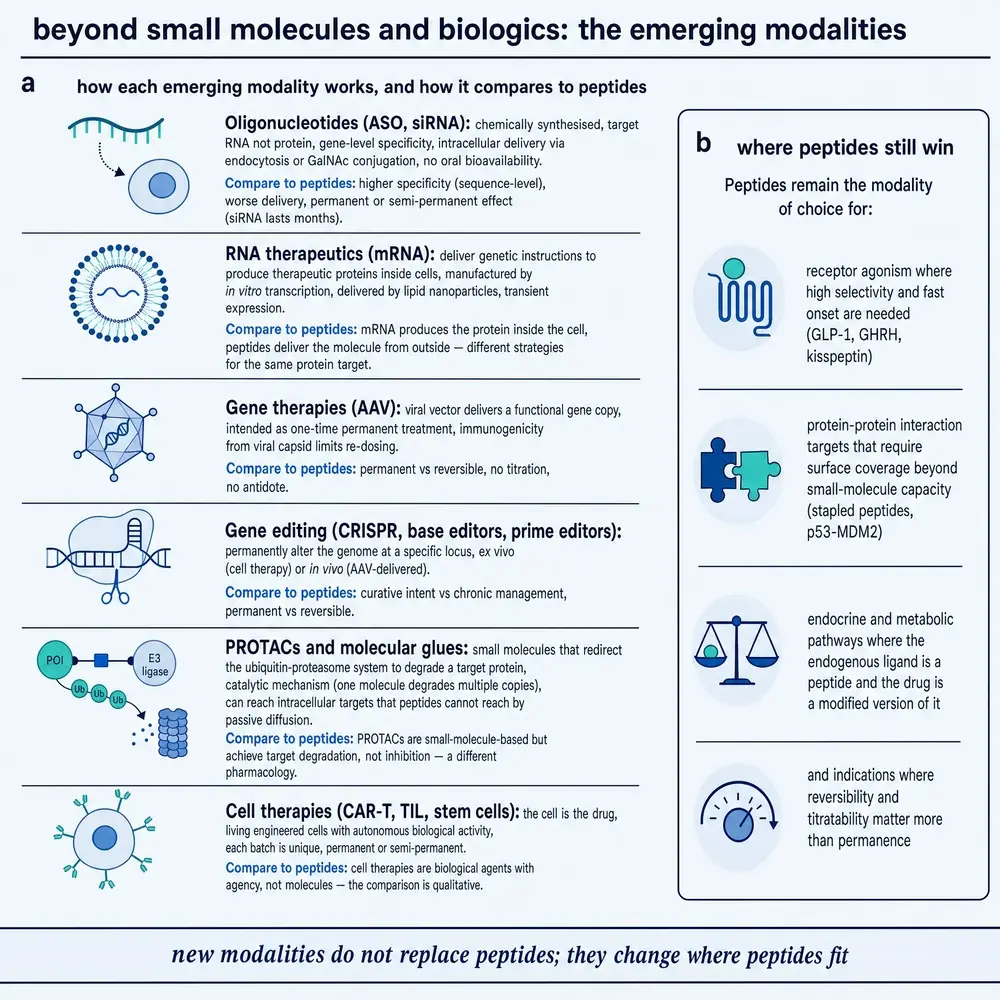
Figure 3 then sets the emerging modalities — oligonucleotides, RNA therapeutics, gene therapy, gene editing, PROTACs and molecular glues, and cell therapies — against the peptide niche they now share the map with. Where each still wins, and where peptides remain the better fit, is the question the rest of the document answers dimension by dimension.
Section 09The membrane is the great divider
The single most powerful fact in the whole comparison is also the simplest: a cell is wrapped in an oily membrane, and most molecules cannot cross it. That one barrier splits every therapeutic target into two worlds. Targets that float in the blood or sit on the outer surface of a cell — circulating proteins, cell-surface receptors — are accessible in principle to molecules of any size. Targets inside the cell — a cytoplasmic enzyme, a nuclear transcription factor, the genetic message itself — are reachable only by agents that have some way through the membrane.
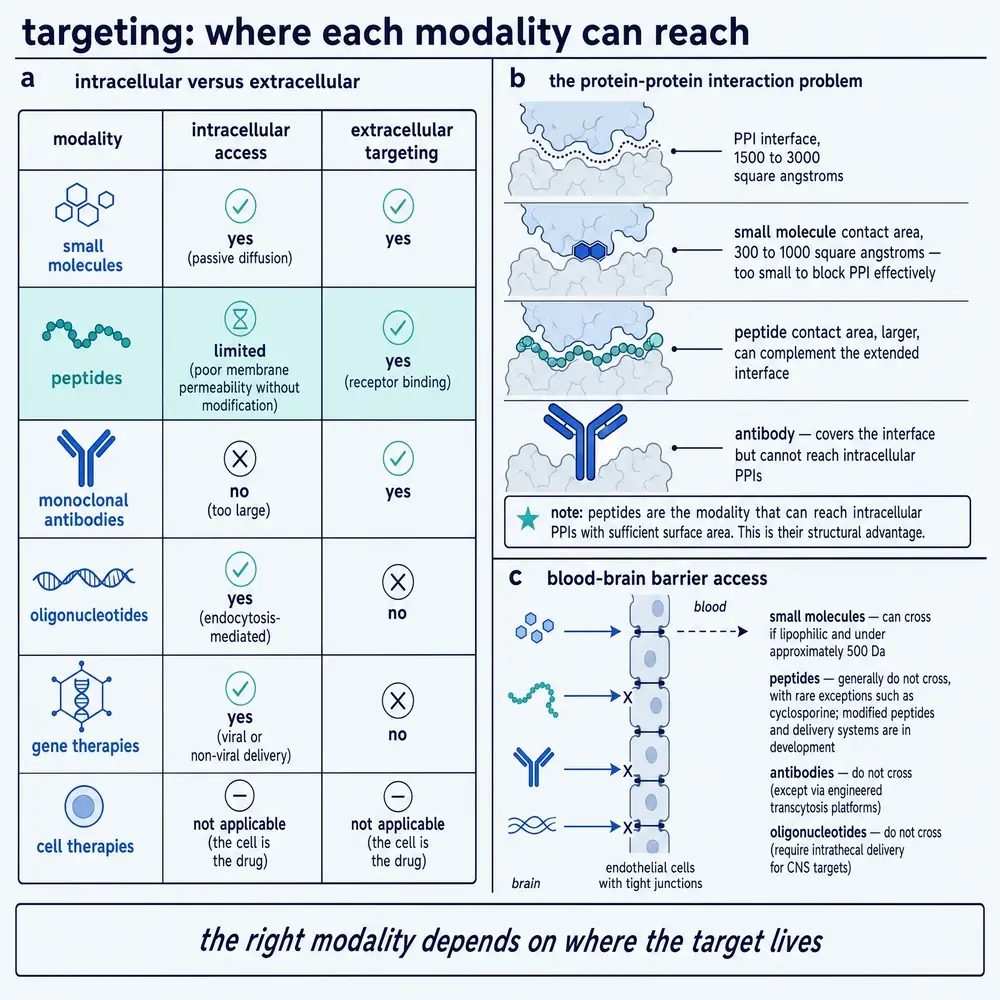
Figure 4 maps the classes against those locations. The pattern is stark. Small molecules cross the membrane by passive diffusion and can work inside; that is why intracellular targets belonged almost exclusively to small-molecule chemistry for most of a century. Antibodies, proteins and unaided peptides stay outside, because their size and polarity keep them out. Oligonucleotides reach the interior by endocytosis-mediated delivery. Gene and cell modalities get inside by hijacking biology’s own entry routes. The same figure also names the protein–protein-interaction problem: a flat interface of roughly 1,500–3,000 Ų that a small molecule (covering 300–1,000 Ų) cannot grip, and that peptides — with a larger contact area — can begin to complement, including at some intracellular PPIs that antibodies cannot reach.
Section 10The peptide predicament
Peptides sit awkwardly against this divider, and the awkwardness defines the class. A peptide is large enough and shaped enough to make a superb selective binder of a cell-surface receptor — the receptors for the body’s own peptide hormones are, unsurprisingly, ideal peptide targets — but it is usually too large and too polar to cross the membrane unaided. So the default peptide is an outside drug: excellent at surfaces and circulating targets, largely shut out of the cell’s interior. This is not a flaw so much as a boundary, and it explains why the great commercial successes of the class, the incretin-receptor agonists among them, all act on receptors sitting on the outside of the cell.
It is worth dwelling on how recent the “inside” routes are. For decades, a target inside the cell that presented no small-molecule pocket was simply called undruggable. The delivery systems for oligonucleotides, the designed protein degraders, and the viral vectors of gene therapy are the field’s answer to that word, and they are the reason the interior of the cell is no longer the exclusive property of small molecules.
Section 11Special territory: the brain and the tumour
Two locations deserve separate mention because they defeat most of the map at once. The blood–brain barrier is a second membrane, wrapped around the vasculature of the brain, and it is even more selective than the ordinary cell membrane; most large molecules, peptides included, do not cross it, and even small molecules cross only if designed for it. The dense, poorly perfused interior of a solid tumour is a physical obstacle of a different kind, where large molecules penetrate slowly and unevenly. A caution follows directly, and it is worth stating plainly because it is so often assumed away: molecular size alone does not predict tissue penetration. Charge, shape and whether a molecule can borrow an active transport system all matter, and a small molecule that is highly polar can be excluded from a tissue that a cleverly designed larger molecule reaches.
It is tempting to reduce “can it reach the target” to a single number for molecular weight. Resist it. Access is set by the membrane, the charge and shape of the molecule, the availability of a transporter, and the tissue in question — not by size alone. The map organises the classes by size because size is the best first predictor, not the only one.
Section 12Pockets and interfaces
Once a molecule can reach its target, a second physical question decides which class fits: what shape does the target present? Many targets offer a deep, well-formed pocket — the active site of an enzyme, the pocket where a small hormone binds its receptor. A pocket is the natural home of a small molecule, which can nestle into it and grip it tightly. This is the classic, century-old drug-discovery problem, and where a target offers a good pocket and sits somewhere a small molecule can reach, a small molecule is usually the efficient answer.
But a great many important targets present no pocket at all. Two proteins that signal disease by touching each other meet across a broad, flat interface, with no crevice for a small molecule to grip. For decades these protein–protein interfaces were the canonical “undruggable” targets, not because they did not matter but because the dominant modality had nothing to hold onto. The solution is more contact area: a larger molecule that can lay a broad binding surface across a broad target surface. This is exactly what antibodies do, and it is exactly what peptides — larger than small molecules, with an extended rather than a compact binding surface — can begin to do.
Section 13Binding surface buys selectivity
A larger contact area does more than provide grip; it provides discrimination. A small molecule binding a small pocket is at the mercy of every other pocket in the body that happens to look similar, which is the root of much off-target activity. A larger binder making many contacts across an extended surface can distinguish targets that a small molecule cannot tell apart. This is why, when an indication demands exquisite selectivity among closely related targets, the geometry pushes toward larger binders — peptides, antibodies, fragments — even in cases where a small molecule could physically bind something.
Section 14When geometry stops mattering
There is a class of target for which the whole question of shape dissolves. If the target is not a protein to be gripped but a genetic message to be matched — a specific messenger RNA to be silenced, a gene to be corrected — then the relevant complementarity is between sequences, not surfaces. An oligonucleotide or an RNA therapeutic reads its target by base-pairing, and geometry in the lock-and-key sense is irrelevant. This is why the information modalities can be aimed at targets that shape-based drugs of every size cannot touch: they are playing a different game.
Section 15The macrocyclic frontier
The most interesting recent development is peptides reaching into territory that used to belong to their neighbours. Macrocyclic and chemically constrained peptides — cyclised, or locked into shape by internal staples — combine a peptide’s large binding surface with enough rigidity and protection to survive longer, to engage flat interfaces, and in some cases to be swallowed. An oral macrocyclic peptide directed at PCSK9, and an oral peptide aimed at an interleukin pathway, are early demonstrations that the peptide band on the map is not fixed: it is pushing leftward, toward the small molecule’s oral, interface-engaging territory, without giving up the selectivity that a large binding surface provides. The map, in other words, is not a static classification; it is a frontier that engineering keeps moving.
Section 16The oral advantage, and the peptide tax
A medicine that can be swallowed has an enormous, quiet advantage: it asks almost nothing of the patient. This is the small molecule’s home ground. A well-designed small molecule survives the stomach, crosses the gut wall, and enters the circulation with good and predictable efficiency. Not all of them do — plenty of small molecules are poorly absorbed and must be given by other routes — but the class as a whole owns the oral route in a way no other does.
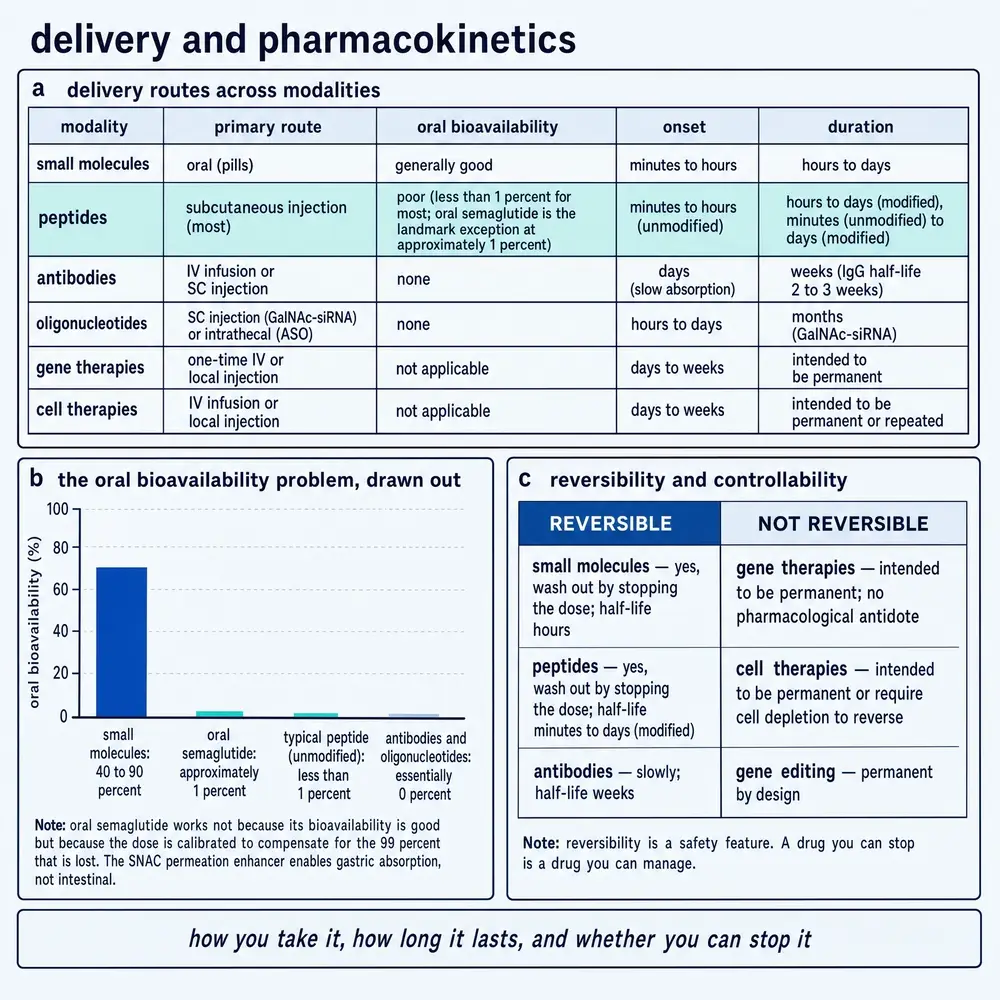
Peptides start near zero. The gut is, after all, an organ evolved to digest peptides, and an unprotected peptide is broken down and barely absorbed. The field’s response has been formulation heroics: absorption enhancers that transiently help a fraction of the dose across the stomach lining, paired with strict conditions of administration. The oral form of the peptide semaglutide is the emblem and the cautionary tale at once. In its clinical development (human trials) it was given as a daily tablet with an absorption enhancer, on an empty stomach with only a sip of water and a waiting period before eating, and even then only on the order of one percent of the dose was absorbed, with substantial variability between doses. It works, and it demonstrates that an oral peptide is possible; it also demonstrates the tax that possibility carries. The pharmacokinetic literature has gone so far as to propose a negative-selection logic — a way of identifying, in advance, the peptides and proteins whose properties make forcing them into an oral form a poor bet, so that effort is spent where the oral route can realistically win.
Section 17Half-life engineering
If oral delivery is the peptide’s hardest problem, duration is its greatest engineering success. Recall the design specification of a natural signal: it is built to be destroyed quickly, because a message that will not stop is a disease. Native glucagon-like peptide-1 disappears from human circulation with a half-life on the order of a minute or two. A medicine needs the opposite. The class solved this not by fighting the body’s clearance machinery head-on but by hiding from it: attaching a fatty-acid chain that clings reversibly to circulating albumin, so the peptide travels as a passenger and is released slowly, or fusing it to an antibody fragment that carries its own long-circulating machinery. The result is a shift from minutes to about a week — the difference between a curiosity and a once-weekly medicine.
Figure 5 already shows what that engineering buys: a redosed oral small molecule rises and falls with each dose; an unmodified peptide spikes and vanishes; a modified peptide stretches into days; an antibody persists for weeks (IgG half-life typically two to three weeks); and a small interfering RNA, though itself cleared, can silence its target for months per dose. Duration is a property the field now designs, not merely inherits.
Section 18The route, and the burden it carries
Duration and route together decide much of what a patient actually experiences. Peptides are dominantly injected under the skin, usually with a pen or auto-injector; the thin oral branch exists but pays the tax of the previous section. Proteins and antibodies are injected or infused. Oligonucleotides and RNA are injected and, for central-nervous-system targets, sometimes delivered directly into the spinal fluid. Gene and cell therapies are delivered by infusion or by a procedure. Route is not a footnote: it sets the device dependence, the need for a clinic, and much of the burden the patient must accept.
Section 19Onset, duration, reversibility, control
The last group of pharmacokinetic properties is where the information and gene modalities separate most sharply from everything smaller. A small molecule or a short peptide can be titrated up, held, and — crucially — stopped; when the dosing stops, the drug washes out and the effect ends. An antibody, with its weeks-long persistence, is harder to reverse quickly. A gene therapy is durable by design, and a gene edit is permanent: there is no washout, no off-switch, no way to take it back. That combination — a long effect that can still be stopped — is precisely what a chronic medicine often wants, and it is a region of the chart that the permanent modalities cannot occupy. Reversibility, as the next parts will show, can outrank raw efficiency in deciding what is acceptable.
Section 20Two ways to disappear
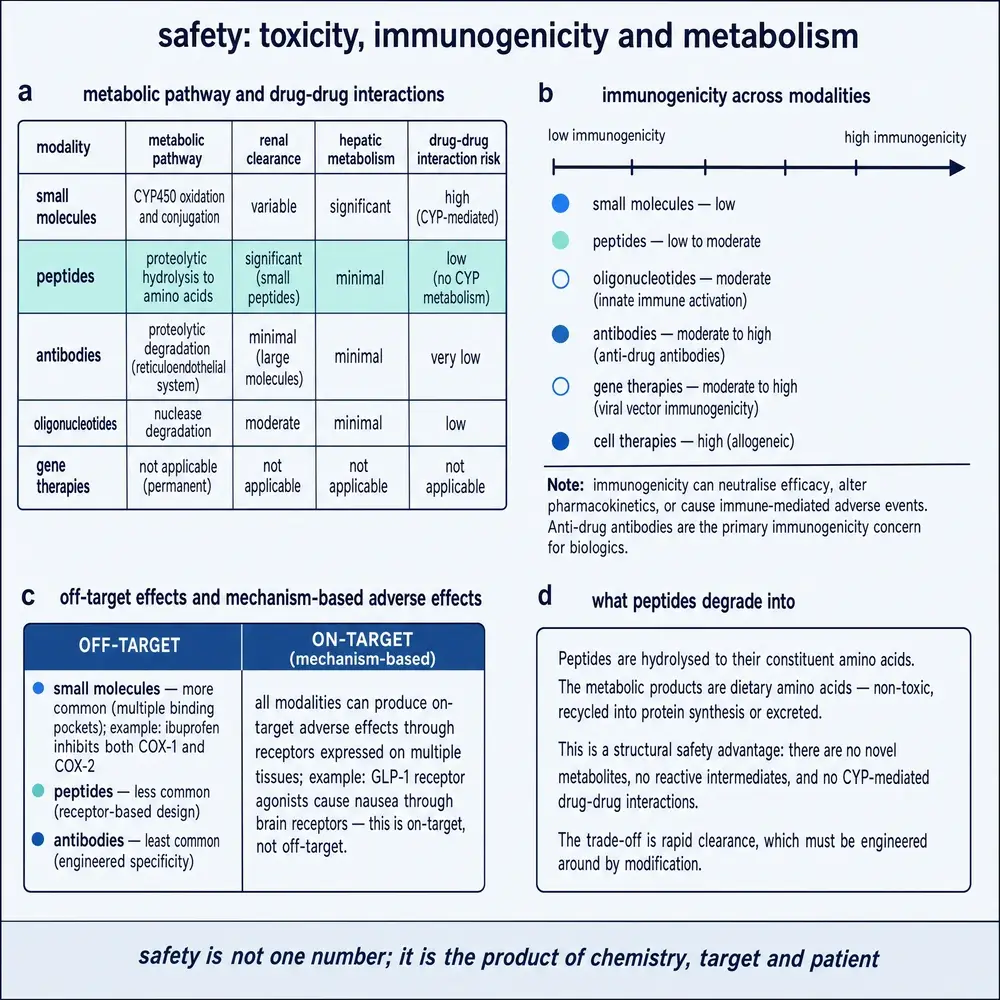
How a medicine is cleared shapes its safety and its interactions, and here the classes diverge along a clean line. Small molecules are largely handled by the liver, chemically transformed by a family of enzymes — the cytochrome P450 system chief among them — and this is the source of one of the class’s characteristic burdens. Because many small molecules compete for the same handful of metabolising enzymes and transporters, they interfere with one another; drug–drug interactions are a defining, and sometimes dangerous, feature of small-molecule pharmacology.
Peptides disappear a different way. They are taken apart by the same ubiquitous proteases that handle dietary and endogenous protein, broken down into amino acids that the body reuses. Two consequences follow. First, peptides largely bypass the cytochrome P450 system, so they carry comparatively few of the metabolic drug–drug interactions that complicate small-molecule regimens. Second, their breakdown products are, in the ordinary case, unremarkable amino acids rather than potentially reactive chemical metabolites. Proteins and antibodies are similarly catabolised to peptides and amino acids; oligonucleotides are cut by nucleases and cleared substantially through the kidney. Each clearance route brings its own considerations, but the peptide route is notably quiet.
Section 21Immunogenicity, and a caution about “natural”
The immune system reads size and foreignness, and broadly — with many exceptions — the larger and more foreign an agent, the more likely it is to provoke a response. Small molecules are usually invisible to it; proteins, antibodies, and especially viral vectors and cells can raise substantial immune reactions, including antibodies against the drug itself that blunt its effect. Peptides fall in between, and their behaviour is genuinely variable: some raise anti-drug antibodies, some do not, and the outcome depends on the sequence, the modifications and the route.
Figure 6 carries a deliberate warning label here, because this is where one of the most seductive errors in the whole field lives. It is tempting to reason that because a peptide resembles a molecule the body already makes, it must be safe and invisible. That inference does not hold. An analogue is not identical to the native molecule; modifications made precisely to extend its life can also make it visible to the immune system, and a molecule that resembles an endogenous signal still carries that signal’s biological consequences in full. “Endogenous-like” is a statement about structure, not a guarantee of safety.
Section 22Off-target versus mechanism-based effects
It helps to separate two quite different kinds of harm. Off-target effects come from a drug touching something it was not meant to touch — the small-molecule selectivity problem of Part Four — and larger, more selective binders tend to have fewer of them. Mechanism-based effects come from the drug doing exactly what it is designed to do, in a place or to a degree that is unwanted. These belong to the target, not the modality, and they cannot be engineered away by changing molecular class.
The incretin-receptor agonists are a clear, and strictly illustrative, example. The gastrointestinal effects commonly reported with this class in human trials — nausea and related symptoms — are not off-target accidents; they follow from engaging the very receptors that produce the intended metabolic effect. Reporting this is not a recommendation about use; it is an illustration that a mechanism-based effect travels with the target whichever modality reaches it, so that a small molecule and a peptide acting on the same receptor would be expected to share the same class of on-target effect. No dose, schedule or use is recommended here; the point is purely that the source of an effect — target or molecule — determines whether changing modality can change it.
Section 23How each class is made
A molecule that cannot be manufactured reliably at the scale a population needs is not a medicine, whatever its elegance in the laboratory, and manufacturing tracks the size map as faithfully as pharmacology does. Small molecules are made by chemical synthesis, purified and characterised down to the last atom; batches are highly consistent and the analytical picture is complete. Peptides are made by solid-phase synthesis, by recombinant expression in cells, or by a hybrid of the two; because their sequence is defined, they remain analytically tractable and, increasingly, scalable to large volumes. Proteins and antibodies are grown in living cell cultures, which introduces inherent variability — different sugar decorations from batch to batch, for instance — and a far more complex characterisation problem. Oligonucleotides and RNA are chemically synthesised or enzymatically transcribed. Gene and cell products are the most complex of all, assembled through vector production or the processing of living cells, with the least batch-to-batch uniformity.
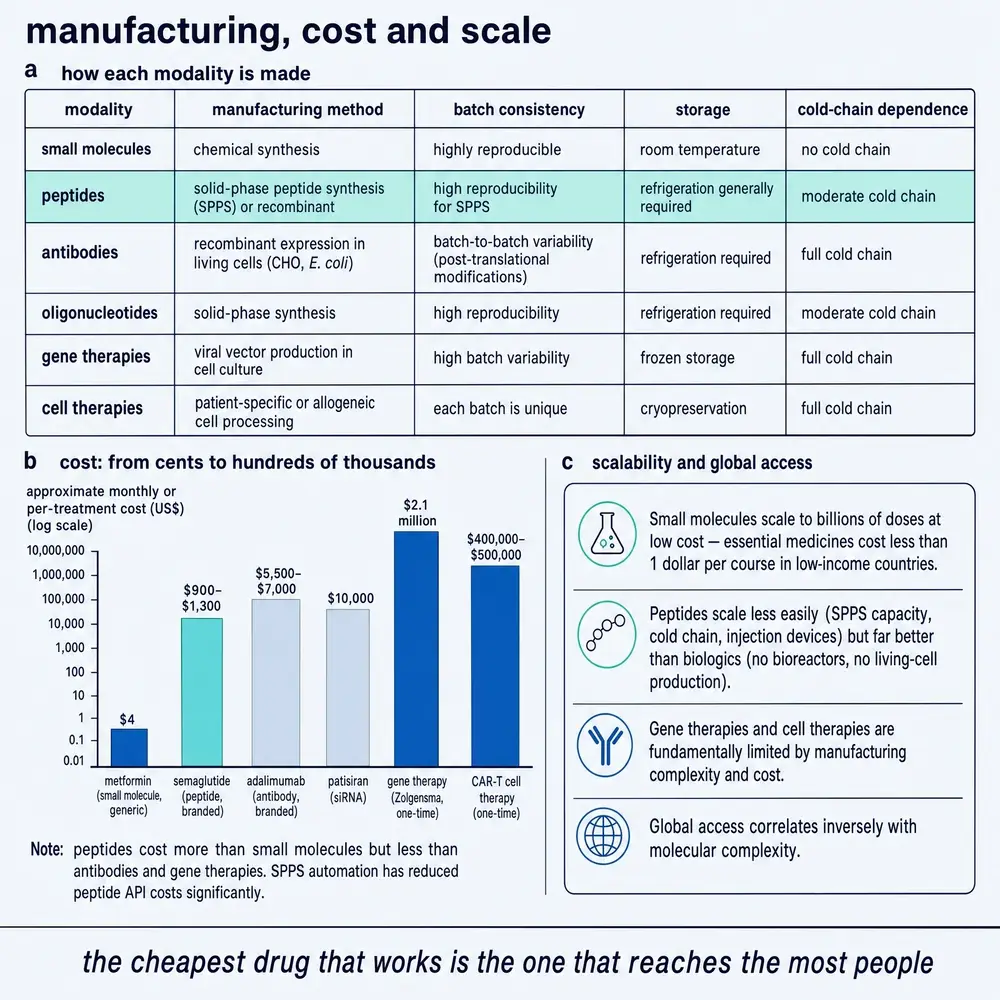
The practical upshot is that analytical characterisation and batch consistency — how completely a maker can know and reproduce what is in each vial — degrade steadily as one moves up the size map, and this has direct consequences for regulation, cost and the confidence with which a product can be released.
Section 24Storage, cold chain, and the device
Small molecules are typically stable at room temperature, which is why a tablet can sit in a cabinet for a year. As molecules grow larger and more delicate, they demand refrigeration or freezing — a cold chain — and the cold chain is not a minor logistical detail but a determinant of where a medicine can realistically be used. Many peptides require refrigeration but tolerate ordinary handling; proteins, antibodies, RNA products and cell therapies impose progressively harsher storage demands. Layered on top is device dependence: the pen or auto-injector a peptide needs, the infusion suite an antibody or cell therapy requires. Each of these is a link that can break between a working molecule and a treated patient.
Section 25The burden the patient carries
All of this converges on the person being treated. Dosing frequency, route invasiveness, monitoring, and dependence on a clinic and a cold chain stack from an oral small molecule at the bottom to a cell therapy at the top. An oral pill asks almost nothing; a weekly peptide pen adds self-injection but little else; an antibody adds monitoring and clinic dependence; an intrathecal oligonucleotide or a cell therapy demands procedures, specialised centres and extensive follow-up. Heavier burden is often exactly the right choice when it is the only modality that reaches the target — but burden is a real cost that any honest comparison must weigh.
Section 26Cost, done honestly
Costs of different modalities cannot be compared as sticker prices. A meaningful comparison has to account for the indication, the dose, the frequency, the manufacturing, and above all the outcome, over the whole horizon of treatment. The dollar bands on Figure 7 are indicative public list figures, not a ranking.
A daily tablet that looks cheap per unit may cost more over a lifetime of chronic use than a one-time therapy priced in the millions — or far less, depending entirely on the disease and how well each works. A twice-yearly injection and a daily pill can deliver the same biological effect at completely different total burdens and costs. The scalability of the classes also differs: chemically synthesised small molecules and, increasingly, peptides reach whole populations, whereas a personalised cell therapy manufactured for one patient does not scale in the same sense at all. Any statement that one modality is “cheaper” without naming the indication, the dose, the frequency, the manufacturing and the outcome is not an economic comparison; it is a slogan.
Section 26aRegulatory pathway and intellectual property
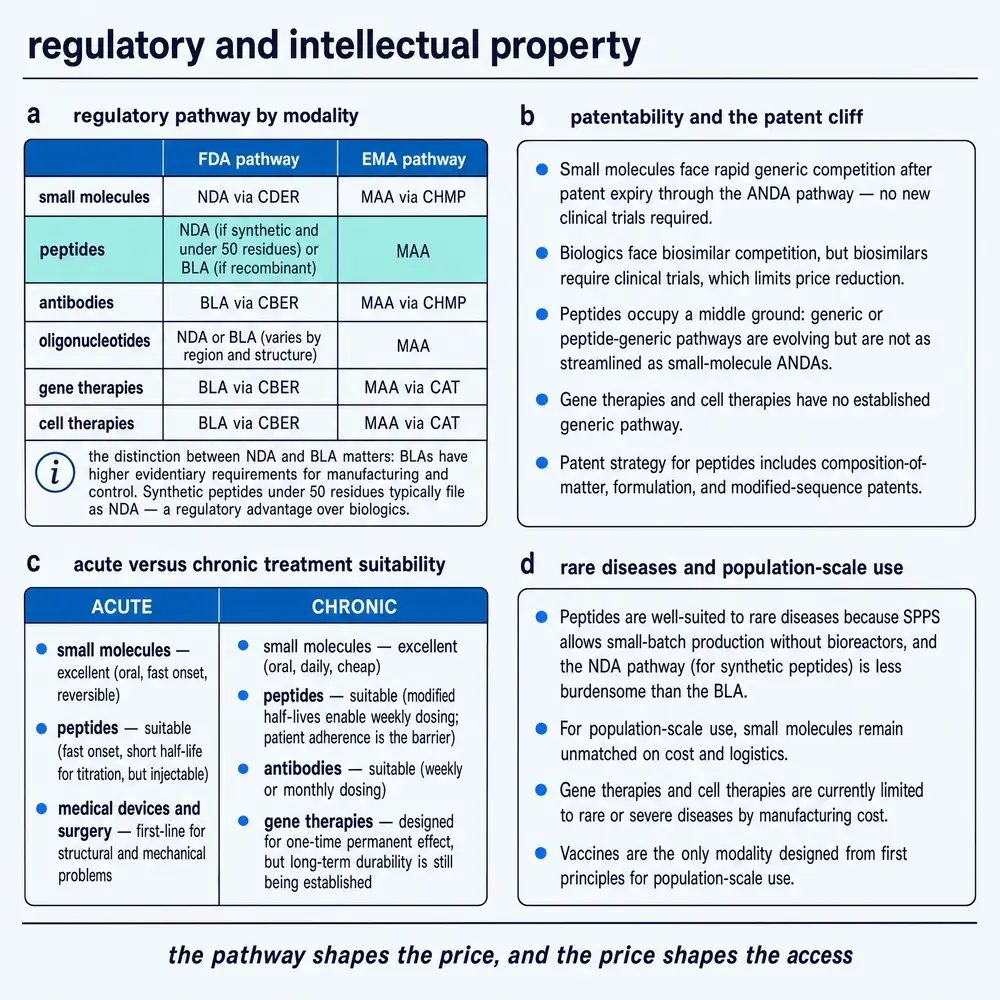
How a modality is regulated and how its intellectual property erodes shape who can make it and how quickly a competitor can arrive. Figure 8 lays this out. Synthetic peptides under roughly fifty residues typically travel the new-drug (NDA) path rather than the biologics (BLA) path — a real regulatory difference from recombinant proteins and antibodies. Small molecules face rapid generic competition once patents expire; biologics face biosimilars that still require trials; peptides sit between those regimes. Gene and cell therapies have no established generic pathway. Acute suitability still favours oral, reversible small molecules; chronic suitability is shared by modified peptides, antibodies and long-interval oligonucleotides; rare-disease and population-scale use pull in opposite directions on manufacturing burden.
Section 27Twelve gates, in three groups
Everything so far can be assembled into a single decision tool. The framework is eliminative, not competitive: it does not score the classes and crown a winner, it asks at each step which classes are still capable of solving the problem and removes those that are not. What survives all twelve gates is a shortlist, and the choice among the survivors is a judgement about risk, cost and evidence — not a fact about molecules.
The gates fall into three groups. The first three are physical: can the agent reach and engage the target at all? Gate 1 asks where the target lives — and an intracellular target immediately removes unaided peptides, proteins and antibodies. Gate 2 asks what geometry the target presents — and a flat protein interface removes classic small-molecule pockets. Gate 3 asks how much binding surface and selectivity the target demands — and a need for exquisite discrimination favours larger binders. These three gates do most of the pruning.
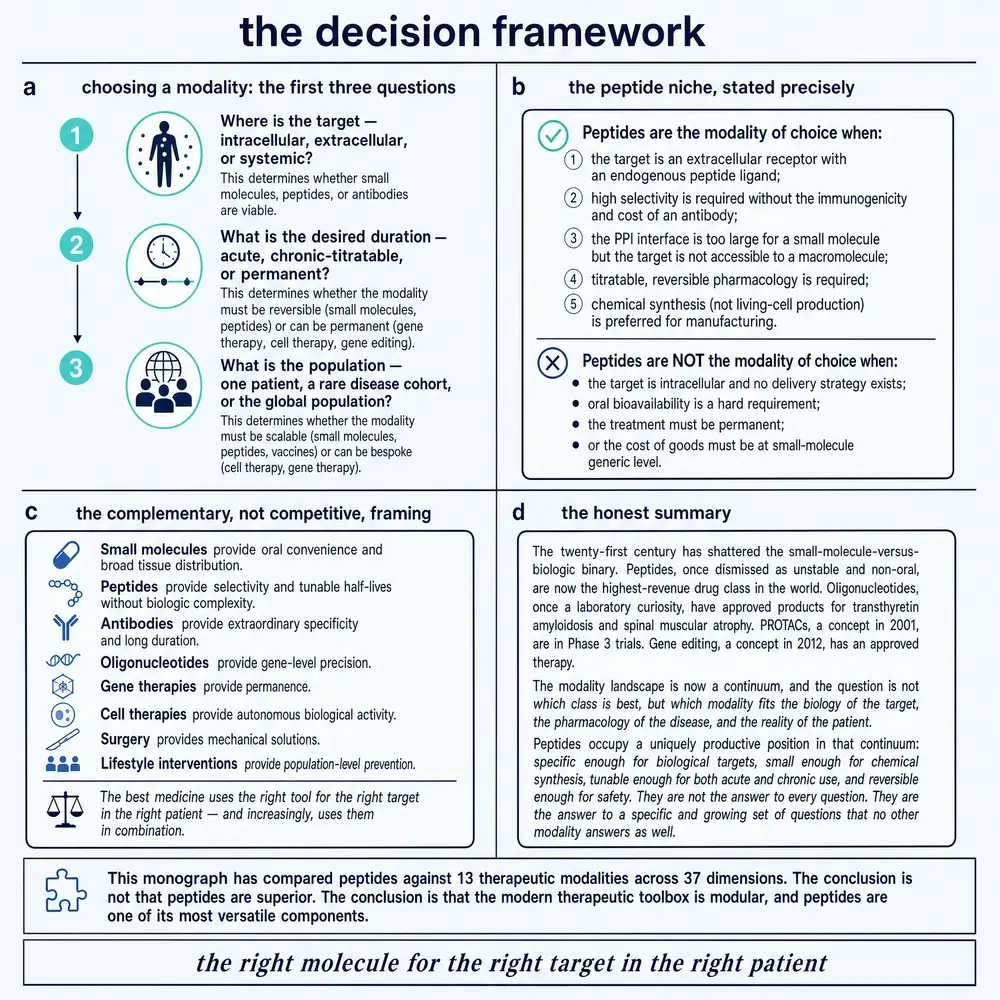
The next four are pharmacological: will the effect be right in kind and duration? Gate 4 asks how much off-target activity the indication can tolerate; Gate 5 asks whether the disease needs a short titratable exposure, a steady chronic one, or a one-time durable correction; Gate 6 asks whether the effect must be reversible and controllable, a gate that can override raw efficiency; and Gate 7 asks what level of risk the indication justifies. The last five are practical: Gate 8, delivery feasibility; Gate 9, whether it can be manufactured at the needed scale and consistency; Gate 10, the size and setting of the patient population; Gate 11, cost and access over the treatment horizon; and Gate 12, how mature the evidence for the modality is. Figure 9 draws that decision framework as three opening questions and a precise statement of the peptide niche.
Section 28Three worked cases
PCSK9, the target we started with. The target is extracellular, so Gate 1 admits every molecular class. Its surface is a flat interface, so classic small-molecule pockets struggled at Gate 2. By the practical gates, three modalities survive and differ mainly in delivery: a monoclonal antibody injected every few weeks, a small interfering RNA given twice a year, and an oral macrocyclic peptide taken daily. That three distinct classes all clear the framework for one target is the whole point — the framework narrows the field but rarely to a single answer, and the final choice turns on dosing interval, route and cost rather than physical capability.
Metabolic disease at a cell-surface receptor. Here the target is a receptor on the outside of the cell, which peptides engage superbly (Gate 1 and Gate 2 both favour them), and the disease is chronic, so Gate 5 wants a long, steady exposure — which acylated weekly peptides deliver. The recent arrival of a non-peptide oral small molecule acting at the same receptor shows two modalities converging on one target from opposite ends of the size map, trading the peptide’s injection for the small molecule’s daily tablet. This is the peptide-versus-small-molecule choice of the monograph’s title, made concrete: neither is categorically superior; they occupy different points on the burden-and-delivery trade-off.
A transcription factor inside the cell. Now Gate 1 is decisive. The target sits in the cytoplasm or nucleus, which eliminates unaided peptides, proteins and antibodies outright, and it presents a flat surface rather than a pocket, which eliminates classic small molecules at Gate 2. The survivors are the newest classes: a protein degrader, an oligonucleotide against the target’s message, or a gene-based approach. This is the frontier where the information and gene modalities are not luxuries but the only options — and where their less mature evidence base, caught at Gate 12, is weighed against the fact that nothing else can reach the target at all.
Section 29Benefit against risk
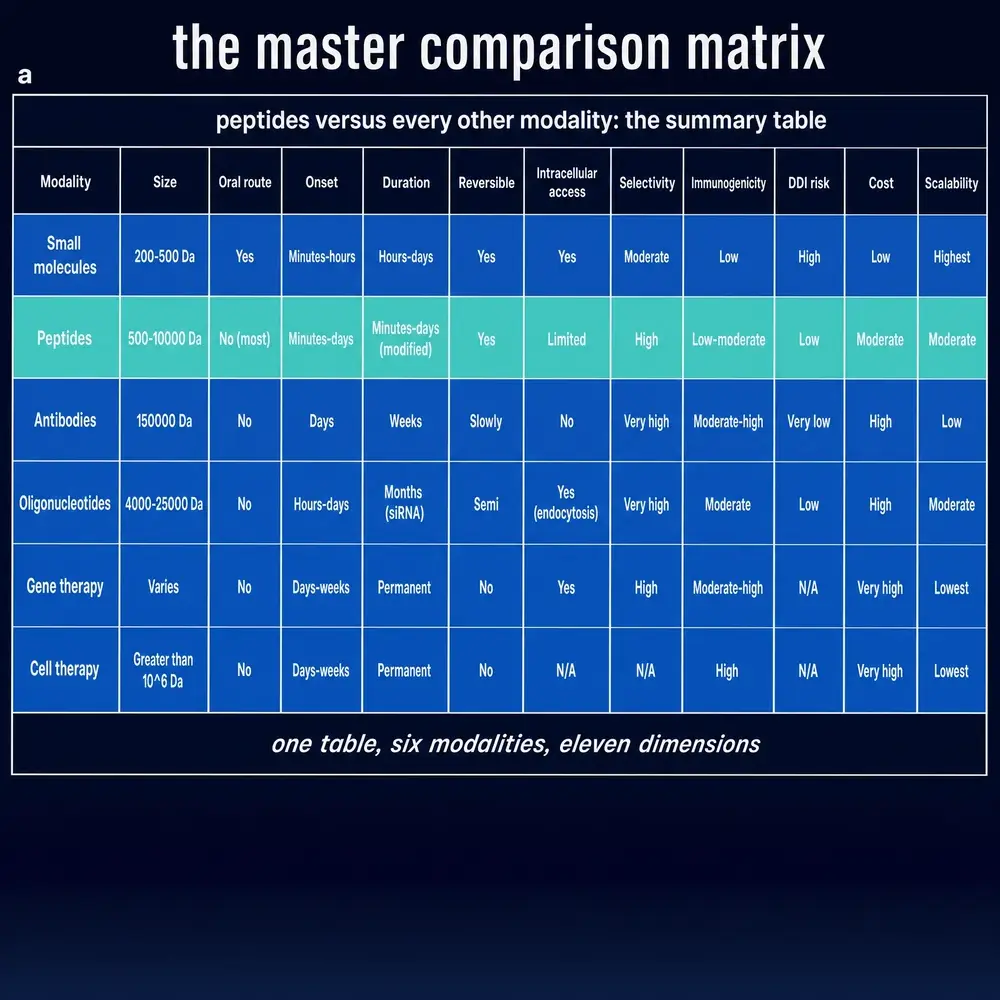
The survivors of the framework are finally weighed on benefit against risk. Figure 10 gathers six modalities across eleven dimensions into a single master matrix — size, oral route, onset, duration, reversibility, intracellular access, selectivity, immunogenicity, drug–drug-interaction risk, cost and scalability — with the peptide row highlighted. The essential caveat is built into the figure’s caption and repeated here: no cell in that grid is a verdict. The tolerable ceiling of risk is set by the indication and by what else is available. The same shade of risk means one thing for a preventive given to healthy people and something entirely different for a last-line therapy in a lethal disease. A modality can be physically ideal and still fail this final weighing, or carry heavy risks and still be the right choice because the disease is worse.
Section 30The deliberate middle
Gather the threads and the peptide’s position on the map comes into focus. Peptides occupy a deliberate middle: a binding surface large enough to grip the flat protein interfaces that defeat small molecules, yet a molecule far simpler to make and characterise than an antibody. They are cleared cleanly to amino acids, carry few of the metabolic drug–drug interactions that burden small-molecule regimens, and can now be engineered to last a week while remaining, unlike the permanent modalities, reversible and controllable. That is a genuine and specific set of virtues.
They come at a price that is equally specific. Peptides are, by default, poorly absorbed when swallowed; they are usually shut out of targets inside the cell and behind the blood–brain barrier; they generally require injection; and they can, unpredictably, provoke an immune response. The engineering history of the class — solid-phase synthesis, acylation and fusion for half-life, absorption enhancers for the oral route, cyclisation for stability and reach — reads as a sustained assault on exactly these liabilities, one at a time. The class did not win an argument about superiority; it earned a region of the map by fixing its own weaknesses.
Section 31What peptides are not the answer for
The same map that shows where peptides fit shows where they do not. A target that sits inside the cell, presenting no route across the membrane to a large polar molecule, is not peptide territory — it belongs to small molecules, to the information modalities, or to gene-based approaches. A disease that requires reaching the brain across the blood–brain barrier generally excludes them. A condition best served by a one-time durable correction is the domain of gene therapy, not of any redosed drug. Naming these limits is not a concession; it is the discipline that keeps the framework honest, and it is why this document argues for fit rather than for a favourite.
Section 31aThe non-molecular edge of the map
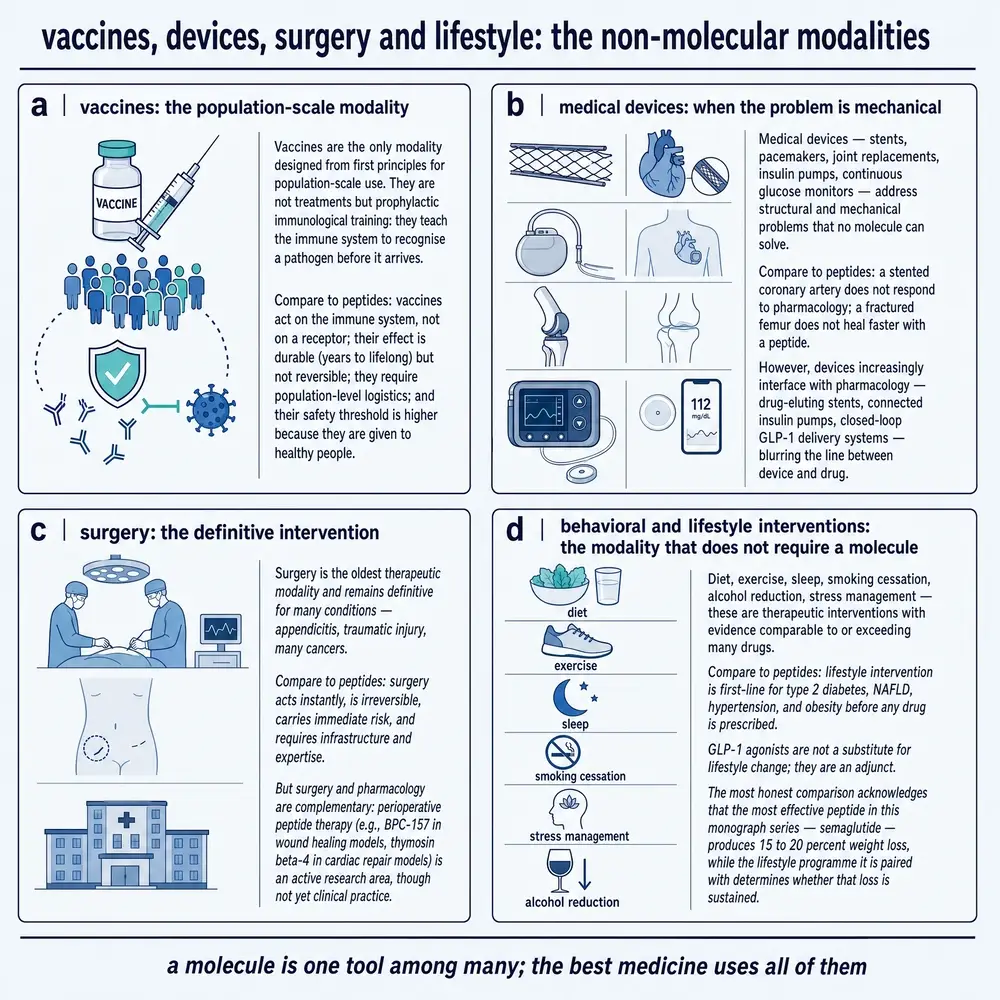
An honest comparison does not stop at molecules. Figure 11 places vaccines, medical devices, surgery and behavioural and lifestyle interventions beside the molecular classes. Vaccines train immunity at population scale and are not treatments. Devices solve mechanical problems no molecule can. Surgery remains definitive for structural disease. Lifestyle change — diet, exercise, sleep, smoking cessation — carries evidence comparable to or exceeding many drugs for metabolic disease, and every successful metabolic peptide in this series is an adjunct to that change, not a substitute for it. No dose, schedule or use is recommended here; the point is that the clinician weighs these options against every drug class, and so must this document.
Section 32The map is moving
The final observation is that the boundaries drawn here are not fixed. Small molecules are climbing up toward the peptide band, as a non-peptide oral agent reaching a classic peptide-hormone receptor demonstrates. Biologics are reaching down, as macrocyclic peptides take on interface targets and even oral delivery that once belonged to small molecules. The information and gene modalities are annexing the interior of the cell that used to be small-molecule country. The comparison in this monograph is a snapshot of a frontier, not a permanent survey, and the framework is built to survive that movement: its gates are physical and clinical questions that remain valid even as which class answers them best keeps changing.
Section 33The honest close
There is no categorical winner, because the question “which modality is best?” has no answer in the abstract. Put a target, an indication and a population in front of the framework and it will narrow the field, often to more than one viable class, among which the last decision belongs to a weighing of risk, cost, burden and evidence that is a matter of judgement rather than chemistry. Peptides earn their place in that process not by being best but by fitting a particular, valuable region of the map — the large-surface, extracellular, engineerable, reversible middle — that no neighbouring class fills as well. That is the claim this document set out to support, and it is the claim it rests on.
ReferenceTerms used in this document
Definitions are given in the sense used here, for a general reader; they are not exhaustive technical definitions.
| Term | Meaning as used here |
|---|---|
| Acylation | Attaching a fatty-acid chain to a peptide so it binds circulating albumin and is cleared more slowly, extending its half-life. |
| Antibody fragment | A smaller engineered piece of an antibody (such as a Fab or a single-domain nanobody) that keeps the binding function at a fraction of the size. |
| Bioavailability | The fraction of an administered dose that reaches the circulation intact; for oral drugs, the fraction surviving the gut and crossing into the blood. |
| Blood–brain barrier | A highly selective barrier around the brain’s blood vessels that excludes most large and many small molecules. |
| Catabolism | The breakdown of a molecule into smaller building blocks; peptides are catabolised to amino acids. |
| Cytochrome P450 | A family of liver enzymes that metabolise many small-molecule drugs and are a common source of drug–drug interactions. |
| Gene editing | Directly and permanently rewriting a DNA sequence in the genome, for example with CRISPR-based systems. |
| Gene therapy | Delivering a functional gene, often in a viral vector, to produce a lasting genetic correction. |
| Immunogenicity | The tendency of a therapeutic agent to provoke an immune response, including anti-drug antibodies that can reduce its effect. |
| Macrocyclic peptide | A peptide cyclised into a ring, gaining stability and sometimes the ability to engage flat targets or be taken orally. |
| Mechanism-based effect | An unwanted effect that follows from the drug doing exactly what it is designed to do; it travels with the target, not the modality. |
| Modality | A kind of therapeutic agent defined by what it is and how it acts — small molecule, peptide, antibody, oligonucleotide, gene therapy, and so on. |
| Monoclonal antibody | A large, highly specific immune protein produced as a drug, typically injected or infused. |
| Off-target effect | An effect caused by a drug binding something other than its intended target. |
| Oligonucleotide | A short strand of nucleic acid (such as an antisense oligonucleotide or small interfering RNA) that acts by matching a genetic sequence. |
| Peptide | A short chain of amino acids, larger than a small molecule and smaller than a protein, often used to engage cell-surface receptors. |
| Pharmacokinetics | What the body does to a drug over time — how it is absorbed, distributed, metabolised and cleared. |
| Protein–protein interface | The broad, flat surface where two proteins meet; historically hard for small molecules to grip. |
| Reversibility | Whether a drug’s effect can be ended by stopping treatment; a washout-reversible agent clears a lower safety bar than a permanent one. |
| Small molecule | A low-molecular-weight synthetic compound, often orally available and able to cross cell membranes. |
| Solid-phase peptide synthesis | A method for building peptides step by step on a solid support, making defined-sequence peptides reliable to manufacture. |
| Therapeutic protein | A folded protein used as a medicine, such as insulin, a clotting factor or a replacement enzyme. |
AppendixWhat this comparison can and cannot claim
An honest comparison states its own boundaries. The following limitations bound the claims made in this document.
The local corpus is a broad but incidental modality corpus
The shared full-text library from which this monograph’s reading corpus was drawn was assembled to support single-compound peptide monographs, not modality comparisons. Screened for this topic it yielded 183 documents across roughly 4,506 printed-page equivalents that touch several modalities, but very few are dedicated head-to-head comparisons. The corpus therefore serves as corroboration and as a rich source of worked examples, particularly in metabolic disease; the primary weight for cross-modality claims rests on the authoritative comparative literature and regulatory guidance listed in the bibliography. No cross-modality quantitative claim in this document rests on the local corpus alone.
Every class is heterogeneous
The comparisons describe the typical member of each class, and the typical member is a fiction that no individual drug perfectly matches. Not all small molecules are orally available; not all peptides are short-lived; not all biologics are selective in their effects; not all members of any class behave as the central tendency suggests. Wherever a generalisation is drawn, the exception that breaks it is named, but the reader should treat every cell of every comparison as a central tendency with real variance, not a law.
The frontier is moving faster than any snapshot
The emerging modalities — in-vivo gene editing, many RNA therapeutics, several cell therapies — are advancing quickly, and their long-term behaviour is less characterised than that of the mature classes. Where recent evidence updates an older claim without being contradicted by a weight of prior work, the recent figure has been given precedence; but recency has not been mistaken for durability, and the evidentiary-maturity gate exists precisely so that a promising new class is not over-credited against a class with decades of follow-up.
This is not clinical guidance
Doses, routes and schedules appear in this document only as they were studied or observed in the cited research, with the study type and, for animal work, the species named in the reporting sentence. Nothing here recommends any human use, dose, route or schedule, and nothing here is medical advice. The modality-selection framework is an analytical tool for reasoning about fit between problems and classes of medicine; it is not a prescribing aid and makes no treatment recommendation for any individual.
ReferencesSources cited
The list below carries the backbone comparative and historical literature on which this monograph’s cross-modality claims rest, together with the two corpus full texts used as direct anchors for the oral-peptide and peptide-versus-small-molecule discussions. Recent sources are given precedence where they update older claims without contradiction from a weight of prior evidence.
- Banting FG, Best CH, Collip JB, Campbell WR, Fletcher AA. Pancreatic extracts in the treatment of diabetes mellitus. Canadian Medical Association Journal. 1922;12(3):141-146.
PMC1524425 - Bayliss WM, Starling EH. The mechanism of pancreatic secretion. The Journal of Physiology. 1902;28(5):325-353.
PMC1540572 · doi:10.1113/jphysiol.1902.sp000920 - Buckley ST, Baekdal TA, Vegge A, Maarbjerg SJ, Pyke C, Ahnfelt-Ronne J, et al.. Transcellular stomach absorption of a derivatized glucagon-like peptide-1 receptor agonist. Science Translational Medicine. 2018;10(467):eaar7047.
doi:10.1126/scitranslmed.aar7047 - Ballantyne CM, Banka P, Mendez G, Garcia R, Rosenstock J, Rodgers A, et al.. Phase 2b randomized trial of the oral PCSK9 inhibitor MK-0616. Journal of the American College of Cardiology. 2023;81(16):1553-1564.
doi:10.1016/j.jacc.2023.02.018 - Crooke ST, Baker BF, Crooke RM, Liang XH. Antisense technology: an overview and prospectus. Nature Reviews Drug Discovery. 2021;20(6):427-453.
doi:10.1038/s41573-021-00162-z - Doudna JA, Charpentier E. The new frontier of genome engineering with CRISPR-Cas9. Science. 2014;346(6213):1258096.
doi:10.1126/science.1258096 - Fosgerau K, Hoffmann T. Peptide therapeutics: current status and future directions. Drug Discovery Today. 2015;20(1):122-128.
doi:10.1016/j.drudis.2014.10.003 - Jastreboff AM, Aronne LJ, Ahmad NN, Wharton S, Connery L, Alves B, et al.. Tirzepatide once weekly for the treatment of obesity. New England Journal of Medicine. 2022;387(3):205-216.
doi:10.1056/NEJMoa2206038 - Knudsen LB, Lau J. The discovery and development of liraglutide and semaglutide. Frontiers in Endocrinology. 2019;10:155.
PMC6437066 · doi:10.3389/fendo.2019.00155 - Lau JL, Dunn MK. Therapeutic peptides: historical perspectives, current development trends, and future directions. Bioorganic & Medicinal Chemistry. 2018;26(10):2700-2707.
doi:10.1016/j.bmc.2017.06.052 - Lipinski CA, Lombardo F, Dominy BW, Feeney PJ. Experimental and computational approaches to estimate solubility and permeability in drug discovery and development settings. Advanced Drug Delivery Reviews. 2001;46(1-3):3-26.
doi:10.1016/s0169-409x(00)00129-0 - Merrifield RB. Solid phase peptide synthesis. I. The synthesis of a tetrapeptide. Journal of the American Chemical Society. 1963;85(14):2149-2154.
doi:10.1021/ja00897a025 - Muttenthaler M, King GF, Adams DJ, Alewood PF. Trends in peptide drug discovery. Nature Reviews Drug Discovery. 2021;20(4):309-325.
doi:10.1038/s41573-020-00135-8 - Ray KK, Wright RS, Kallend D, Koenig W, Leiter LA, Raal FJ, et al.. Two phase 3 trials of inclisiran in patients with elevated LDL cholesterol. New England Journal of Medicine. 2020;382(16):1507-1519.
doi:10.1056/NEJMoa1912387 - Verdine GL, Walensky LD. The challenge of drugging undruggable targets in cancer: lessons learned from targeting BCL-2 family members. Clinical Cancer Research. 2007;13(24):7264-7270.
doi:10.1158/1078-0432.CCR-07-2184 - Vargason AM, Anselmo AC, Mitragotri S. The evolution of commercial drug delivery technologies. Nature Biomedical Engineering. 2021;5(9):951-967.
doi:10.1038/s41551-021-00698-w - Wharton S, Blevins T, Connery L, Rosenstock J, Raha S, Liu R, et al.. Daily oral GLP-1 receptor agonist orforglipron for adults with obesity. New England Journal of Medicine. 2023;389(10):877-888.
doi:10.1056/NEJMoa2302392 - [No authors listed]. Oral delivery of peptides and proteins: pharmacokinetic boundaries, negative selection, and route triage. Open-access full text (shared corpus). 2026.
PMC13047097 - [No authors listed]. Small-molecule oral versus injectable glucagon-like peptide-1 (GLP-1) receptor agonists: comparative efficacy, safety, and adherence. Open-access full text (shared corpus). 2026.
PMC13180026
Continue exploring