
Benefits, Risks, and Safety of Peptide Medicines What peptides can do well, and where they can harm
A peptide medicine is a borrowed signal. Its benefits come from how well it imitates or reshapes a conversation the body already knows how to have. Its risks come from the same conversation — from saying too much, saying it in the wrong place, saying it for too long, or from impurities, aggregates and manufacturing failures that turn a message into an antigen. This monograph maps both ledgers without pretending that every peptide shares the same balance.
Section 01The borrowed signal
Every medicine is a wager that a chemical change will do more good than harm. Peptide medicines make that wager in a particular way. They are short chains of amino acids — often between a handful and a few dozen residues — designed to occupy the same kind of receptors, and to speak the same kind of molecular language, that the body already uses to run itself. Insulin is the founding example; glucagon-like peptide-1 analogues are the contemporary ones; gonadotropin-releasing hormone analogues, natriuretic peptides, calcitonin analogues and dozens of others fill the catalogue between.12, 16
That familiarity is the source of their promise. A peptide can be potent at nanomolar concentrations, selective among related receptors, and able to cover binding surfaces that a small tablet molecule cannot reach. It can often be cleared by ordinary proteolysis and filtration rather than by the cytochrome machinery that complicates so many small-molecule regimens.13 The same familiarity is also the source of their characteristic harms. When a peptide works, it works by pushing a physiological pathway. Push that pathway too hard, for too long, in the wrong patient, or with a product that is not what its label claims, and the body answers with an exaggerated version of the very effect you wanted — or with an immune response to a molecule it was never meant to see as foreign.
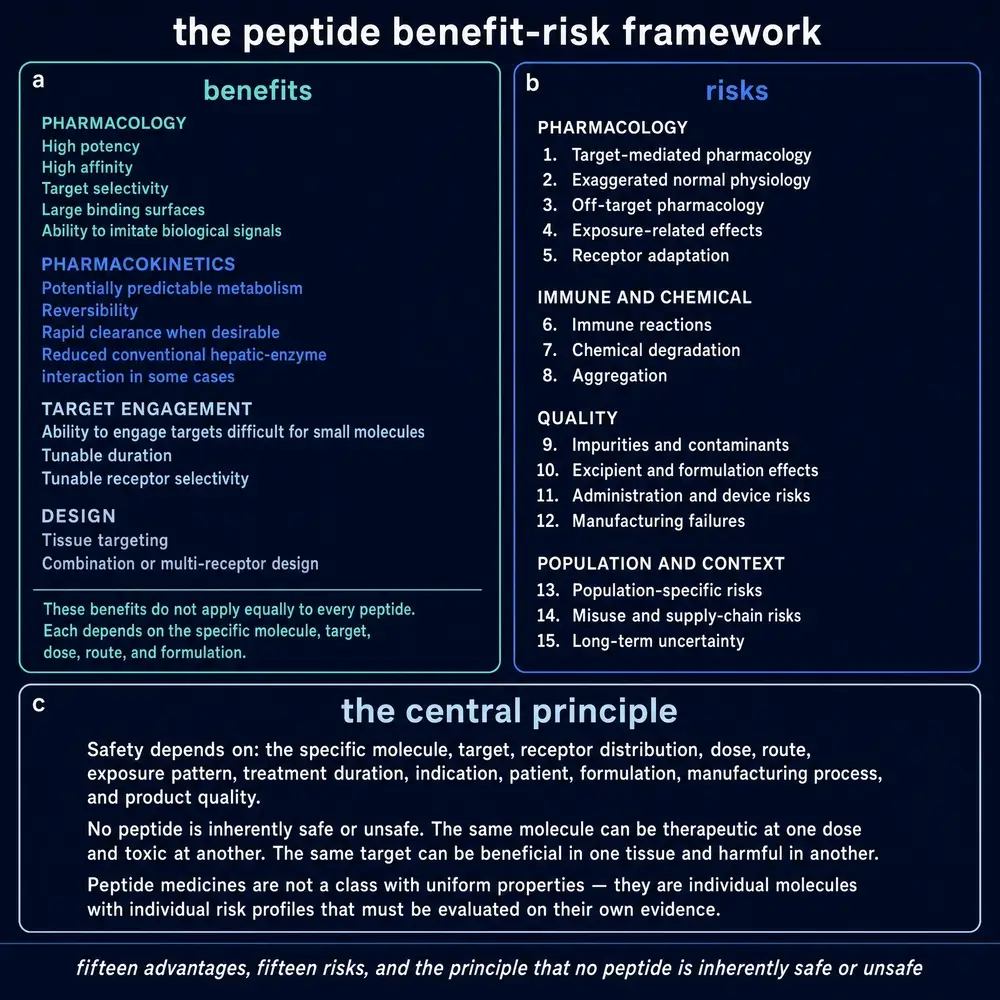
This document therefore refuses two popular shortcuts. It will not say that peptides are “safer than small molecules,” because safety is not a class property. It will not say that every peptide benefit — potency, selectivity, tunable half-life, tissue targeting — arrives free with every sequence, because engineering that buys a benefit usually buys a risk. What it will do is walk the benefit ledger and the risk ledger with equal seriousness, compare peptides with other modalities without ranking them, and keep every claim tethered to evidence that can be checked.
Section 02Discovery history: hormones, receptors, and harm
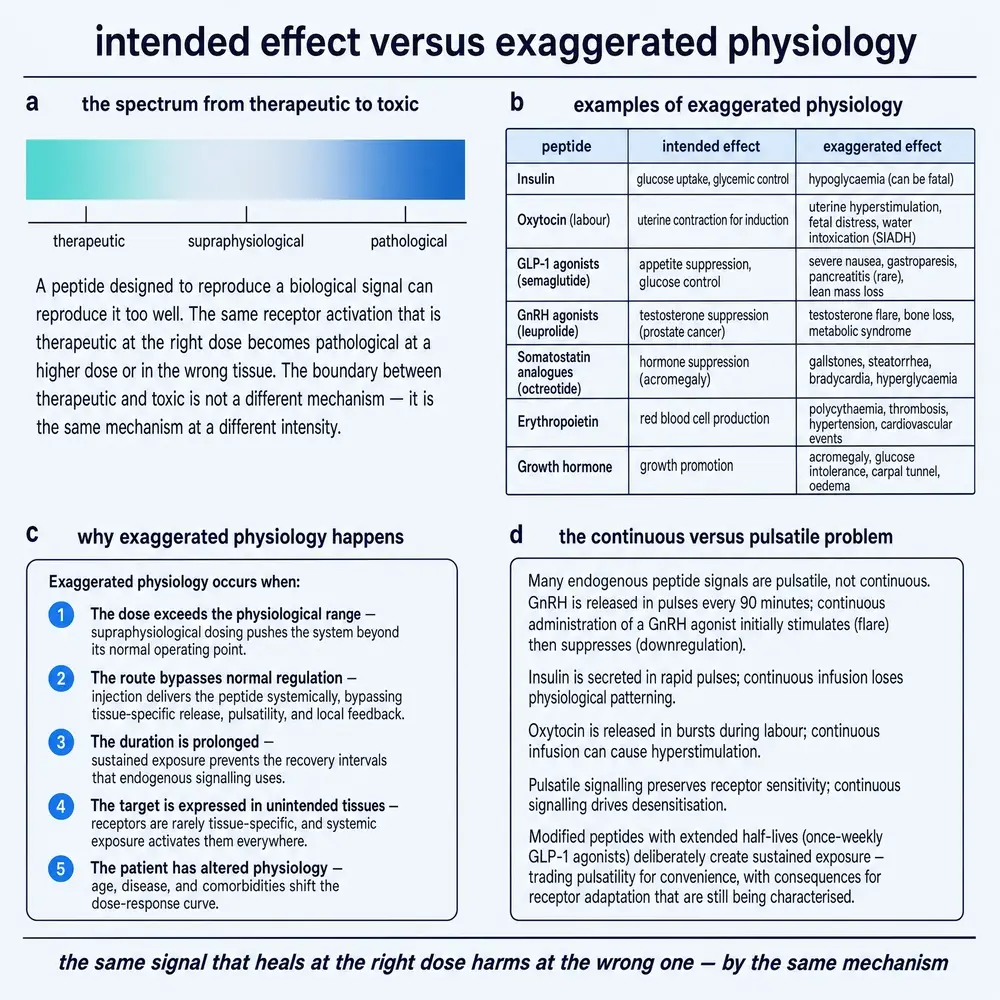
The story begins before anyone used the word “peptide drug.” In 1902, Bayliss and Starling showed that a chemical released from the gut could make the pancreas secrete — secretin, the first hormone in the modern sense. The body, it turned out, was not only a network of nerves; it was a pharmacy of short messages. Two decades later, Banting, Best, Collip and Macleod brought insulin out of canine and bovine pancreas and into children dying of diabetes. The first patients lived. They also taught medicine its first clear lesson in peptide harm: too much insulin does not invent a new poison — it pushes glucose disposal until the brain starves. Hypoglycaemia is exaggerated physiology, and it remains the archetype of on-target peptide risk.
Mid-century work named the receptors those messages bind. Ahlquist’s adrenergic classification, the radioligand era, and the later cloning of G protein–coupled receptors turned “a hormone does something” into “a ligand occupies a defined protein.” That shift matters for safety. Once a target is named, exaggerated pharmacology can be anticipated from where the receptor lives — gut, pancreas, pituitary, kidney, brain — rather than discovered only in post-marketing surprise.
The modern benefit–risk regime itself was forged by disasters that were not peptide-specific. Thalidomide forced regulators to demand teratology; subsequent statutes built the apparatus of controlled trials, labelled warnings, and pharmacovigilance. When recombinant insulin arrived in 1982, peptides entered that apparatus as engineered biologics rather than as organ extracts. The hinge was not merely purity. It was the possibility of changing a sequence deliberately — and therefore of creating both new benefits and new immune surfaces. Everything in Parts Two and Three sits on that hinge: design can extend half-life, bias a receptor, or add a second agonist arm, and each design choice redraws the risk map.9, 19
Section 03What “benefit” means for a peptide
Benefit, in this monograph, is not marketing language. It is a property a specific molecule can demonstrate under a specific indication: high potency at the intended receptor; affinity that holds at physiological concentrations; selectivity among related subtypes; a binding interface large enough to engage flat protein surfaces; the ability to mimic an endogenous signal; metabolism that is largely proteolytic and therefore relatively predictable; clearance that can be short when short is wanted; reduced reliance on cytochrome P450 in many (not all) cases; access to targets that frustrate small molecules; and the engineering levers that tune duration, selectivity, tissue exposure or multi-receptor pharmacology.12, 20
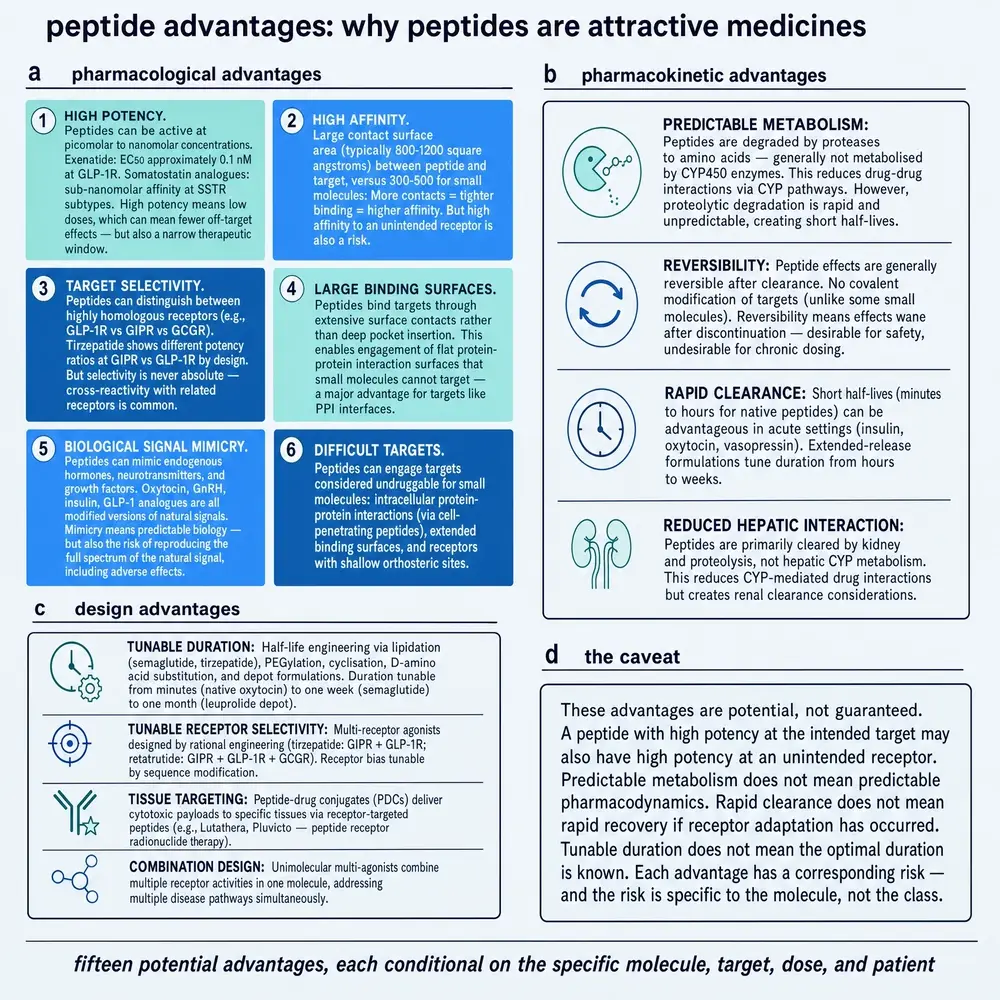
None of these is automatic. A dual agonist that improves weight outcomes in trials also concentrates on-target gastrointestinal and metabolic effects; a lipidated peptide that lasts a week is less “reversible” than a native hormone that vanishes in minutes; a conjugate that homes to a tissue adds linker chemistry and new impurity risks. Part Two takes each benefit class in turn and states the conditions under which it is real.
Section 04What “risk” means when the drug is a message
Small-molecule toxicology often worries about reactive metabolites, off-target enzymes, and hERG. Peptide toxicology more often worries about too much of the intended biology, immune recognition of a foreign or aggregated sequence, and failures of identity or purity. That difference is real. It is not a free pass. Related receptors still cross-talk; delayed gastric emptying still changes the absorption of other drugs; long-acting designs still accumulate in renal impairment; and a grey-market vial with the wrong sequence is not “a peptide risk” in the pharmacological sense — it is a product-quality catastrophe.3, 29
The fifteen risk classes used in this document — from target-mediated pharmacology through long-term uncertainty — are therefore not a scare list. They are a checklist for reading any peptide claim. A paper that reports only efficacy has not addressed the checklist. A pharmacovigilance disproportionality signal is not by itself proof of causation. A rodent neoplasia finding is not automatically a human cancer risk. Part Three keeps those distinctions visible.
Section 05How evidence is weighed
Three rules govern the weighing. First, species and setting travel with every number: human trial, animal experiment naming the species, in-vitro assay, or model. Second, recency is preferred when a newer high-quality study is not contradicted by a preponderance of earlier evidence — freshness without amnesia. Third, null, negative and safety-only results are first-class citizens; they are not buried beneath efficacy headlines.7, 10
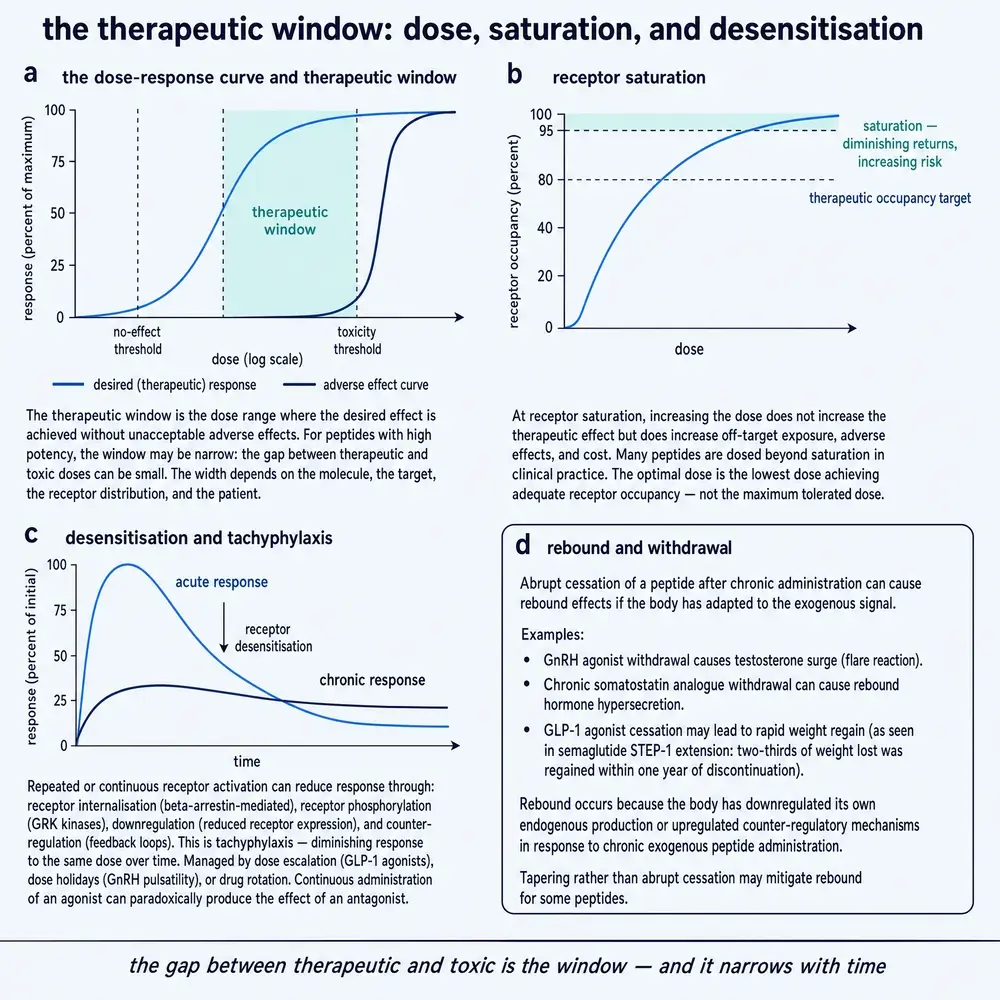
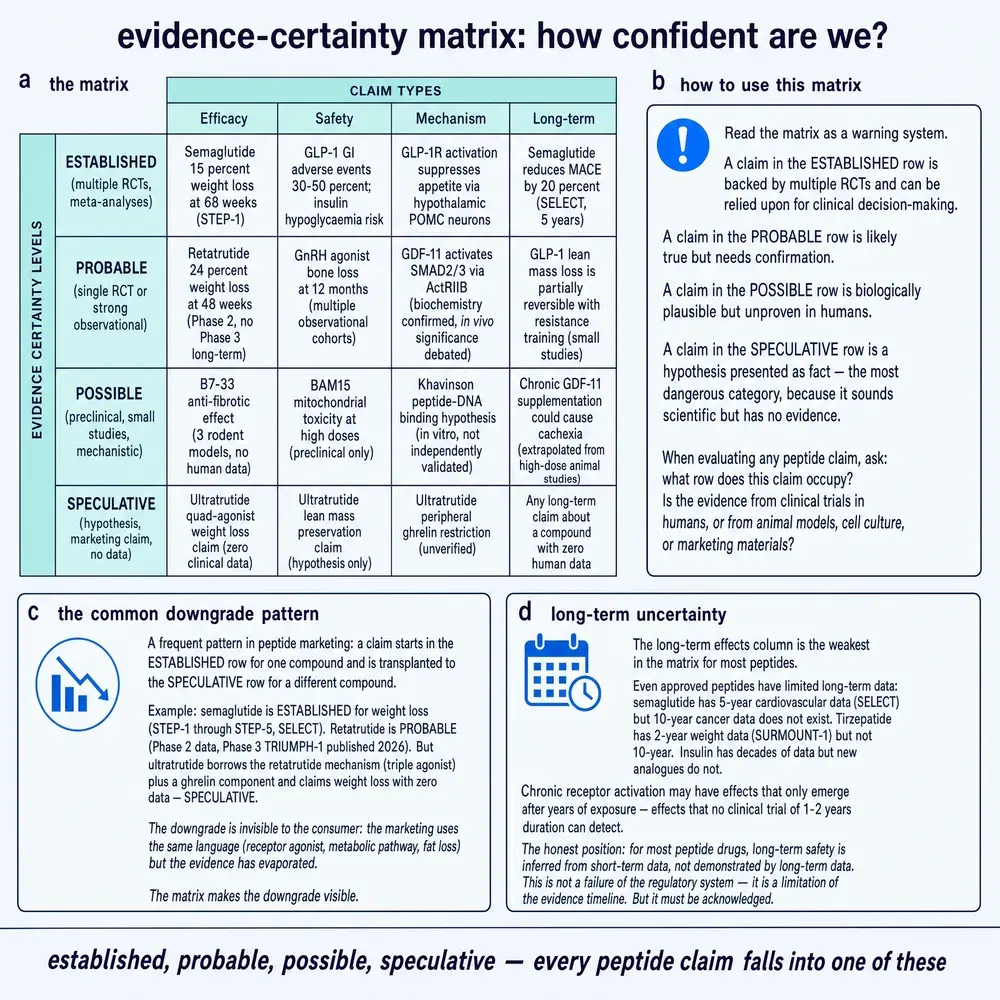
The therapeutic window is treated as a relationship among exposure, effect and harm for a given molecule and population, not as a single number that attaches to “peptides.” Receptor saturation, desensitization and antibody formation can move that window over time. Those dynamics are why acute and chronic risk registers differ, and why cessation can itself be an event.
Citations in the bibliography are load-bearing sources for the claims they support, each resolved from source metadata rather than from memory. Efficacy papers that never address harm, and safety papers that never address benefit, are treated as incomplete ledgers rather than as balanced appraisals.
Section 06Potency, affinity, and the large interface
Ask a medicinal chemist why peptides keep returning to the pipeline and the honest answer is geometry. A small molecule prefers a deep pocket. Many of the signals that matter in human physiology — class B G protein–coupled receptors, cytokine-like contacts, protein–protein interfaces — present broad, shallow, or discontinuous surfaces. A peptide of twenty or thirty residues can lay a complementary patch across that surface and achieve potencies that sit in the nanomolar or even picomolar range.12, 28
High affinity is not automatically high clinical value. Affinity that is too sticky can prolong off-target occupancy, worsen target-mediated clearance, or make an overdose harder to reverse. Potency that looks spectacular in a cell assay can vanish in a human if proteolysis, poor bioavailability or immunogenicity intervenes. The benefit is real when the interface is the right one and the exposure can be delivered; it is not a sticker that reads “peptide.”
Section 07Selectivity and multi-receptor design
Selectivity is the art of speaking to one receptor without shouting at its cousins. Native ligands are often already selective; analogues can sharpen or blur that preference. The past decade’s dual and triple agonists — combining GLP-1 with GIP, glucagon, or other metabolic receptors — show both sides of the coin. In clinical development programmes, multi-receptor design has been associated with substantial metabolic efficacy signals; it also concentrates on-target effects across more than one pathway, so gastrointestinal tolerability, heart rate, and other physiological readouts must be read as part of the same design choice.9, 19, 20
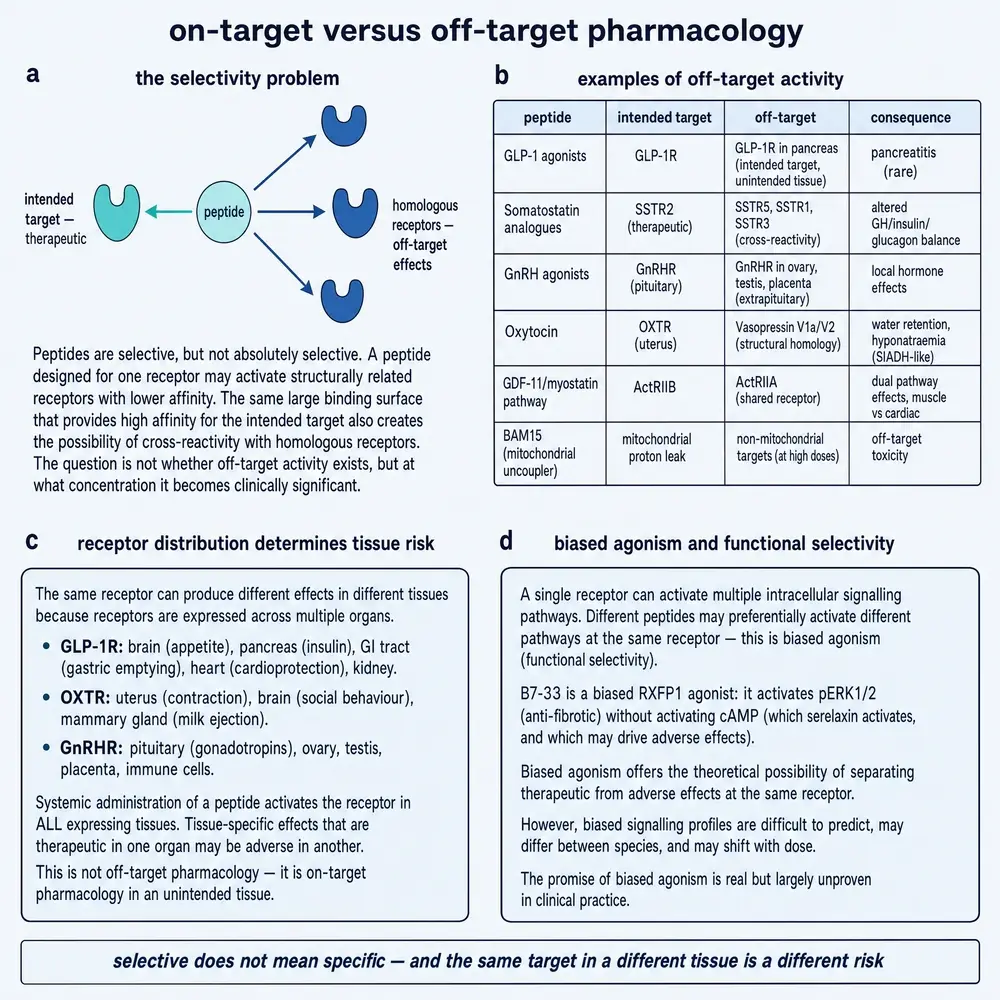
Biased agonism — preferring one downstream pathway over another at the same receptor — is frequently promised and less frequently proven in humans. Where bias is demonstrated only in vitro, this monograph treats it as a hypothesis, not a delivered benefit.
Section 08Metabolism, clearance, and reversibility
Many peptides are destroyed the way the body destroys its own hormones: by peptidases and by glomerular filtration of unbound drug. That can be an advantage. It often means fewer reactive metabolites of the kind that drive idiosyncratic small-molecule liver injury, and fewer classic cytochrome P450 drug–drug interactions.13 Rapid clearance can also be desirable when a short, controllable effect is wanted.
The advantage has edges. Delayed gastric emptying from incretin-pathway drugs can still alter the absorption of concomitant oral medicines even when CYP enzymes are untouched.7 Albumin-binding lipidation and other half-life extension strategies make clearance slow and reversibility less immediate; the medicine becomes less like a switch and more like a dimmer with inertia. Target-mediated disposition can make clearance dose-dependent. None of these facts cancel the metabolic simplicity of many linear peptides; they warn against treating that simplicity as universal.
Section 09Targeting and combination design
Homing sequences, peptide–drug conjugates, nanoparticles aimed at GLP-1 receptors, and locally delivered orthopaedic or wound-healing peptides all try to put exposure where effect is wanted.17, 28 When targeting is measured as tissue concentration and linked to outcome, it is a benefit. When it is asserted from a dye image alone, it is a hope. Combination products and co-formulations add further benefit only if each component’s risks remain separable in the label and in the clinic.
Cosmetic and topical peptide use is a separate evidence world. Safety evaluation frameworks for cosmetic peptides emphasise local irritation, sensitisation and impurity control more than systemic therapeutic windows.3 That literature is useful for methods; it is not a substitute for drug-grade benefit–risk assessment.
Section 10Comparative placement among modalities
Place peptides on a map beside small molecules, antibodies, oligonucleotides and gene or cell therapies, and they occupy the middle: larger and more specific than most oral small molecules, smaller and usually shorter-lived than antibodies, less informationally radical than nucleic-acid or cellular medicines.6, 14 Comparative advantage is therefore eliminative. Choose a peptide when the target wants a large extracellular interface, when a tunable protein-like signal is enough, and when injection or specialised oral delivery is acceptable. Choose something else when you need a daily pill without enhancers, intracellular gene control, or antibody-scale persistence.
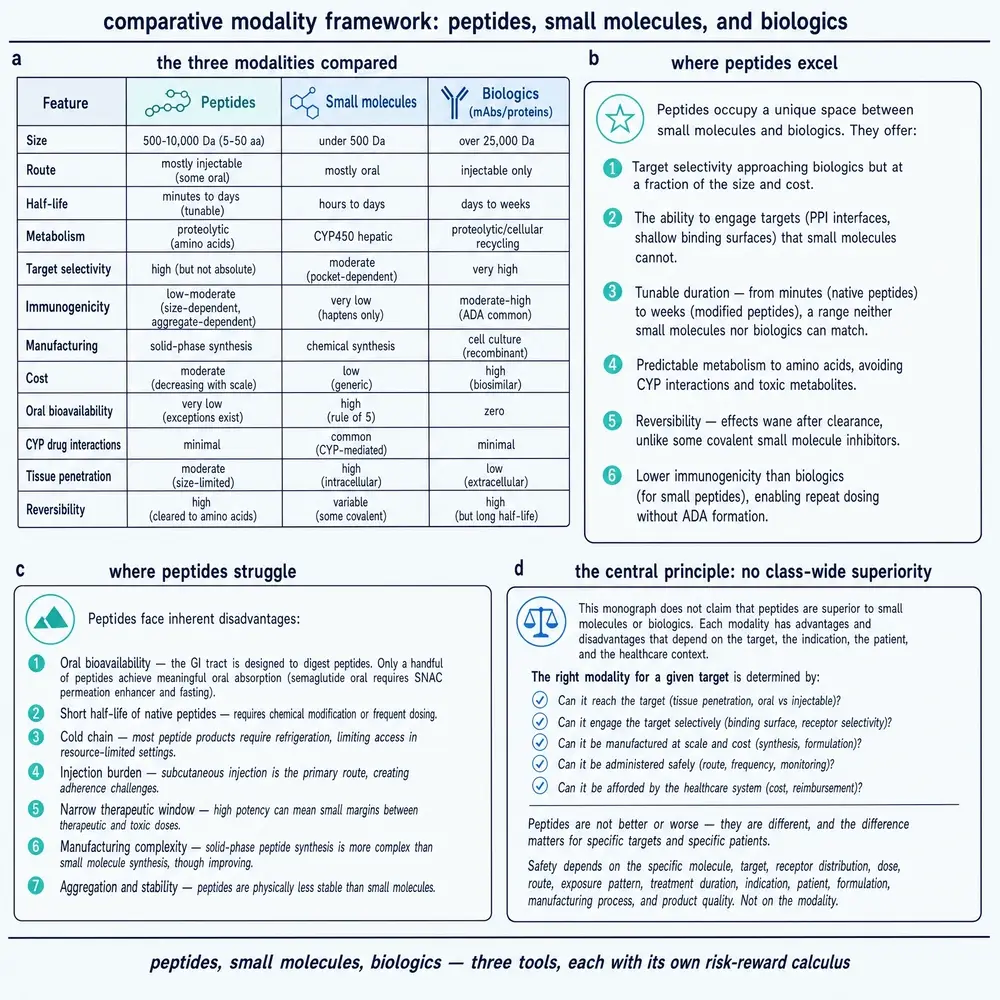
Modality comparison does not license slogans. Antibodies bring their own infusion reactions and long washout; small molecules bring CYP and off-target chemistry; oligonucleotides bring chemistry-specific organ toxicities. Peptides bring exaggerated physiology, immunogenicity and product-quality sensitivity. The mature question is never “which class wins?” It is “which failure mode can this patient and this indication afford?”
Section 11Target-mediated and exaggerated physiology
Start with the harms that are easiest to understand and hardest to dismiss. Insulin lowers glucose; too much insulin lowers it until consciousness fails. GLP-1 receptor agonists slow gastric emptying and reduce appetite; the same physiology produces nausea, vomiting and other gastrointestinal adverse effects that dominate tolerability discussions in diabetes and obesity care.2, 12, 16 Desmopressin conserves water; in intensive-care use, hyponatraemia is the named shadow of that benefit.22 GnRH agonists first stimulate and then suppress the pituitary–gonadal axis; the early flare is not a mystery toxicity — it is the receptor doing what stimulation predicts.8, 30
These are target-mediated risks. They scale with receptor occupancy, with exposure pattern, and with how widely the receptor is expressed. They are also why peptide safety cannot be read from a general “biologic safety” checklist alone. The checklist must begin with the physiology the drug is borrowing.
Section 12Off-target pharmacology and exposure
Off-target risk is thinner for many peptides than for promiscuous small molecules, but it is not empty. Related GPCRs can share enough surface for cross-talk; melanocortin, tachykinin and other families illustrate how subtype selectivity must be earned. Residual agonist or antagonist activity at a cousin receptor is still pharmacology, even if the chemist’s slide calls the compound “selective.”
Exposure-related harm is broader than off-target binding. It includes supratherapeutic peaks, accumulation when clearance falls, and durations of occupancy that convert a tolerable effect into an adverse one. Therapeutic windows narrow in renal impairment for peptides that rely on filtration; hepatic impairment matters less often for intact peptide clearance but can still matter for comorbidities and concomitant drugs.23
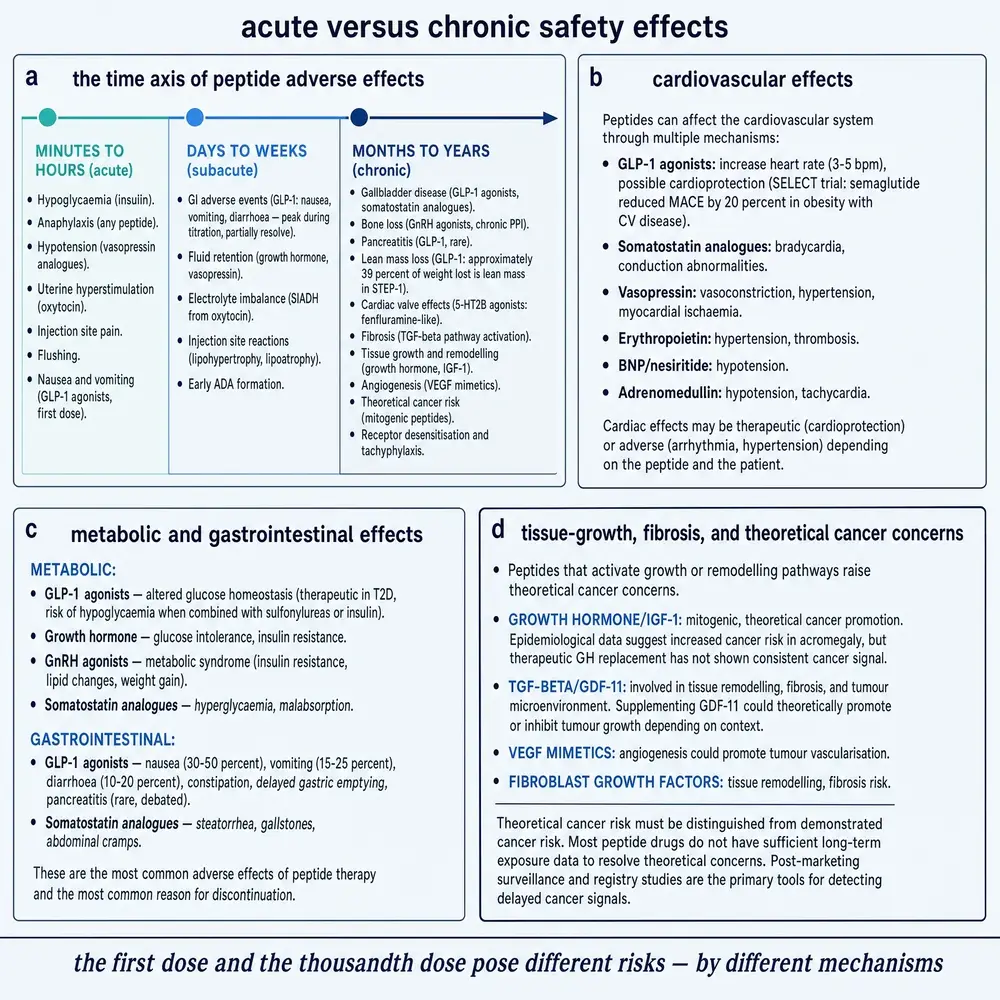
Pharmacovigilance studies of GLP-1 receptor agonists have flagged metabolic and nutritional adverse-event patterns that track the drugs’ known actions and also surface rarer signals that require clinical adjudication rather than automatic attribution.7, 10 Disproportionality is a hypothesis generator. It is not a verdict.
Section 13Receptor adaptation
Receptors are not static sockets. Sustained agonism can desensitize signalling, internalize receptors, downregulate surface expression, and recruit counter-regulatory pathways. Tachyphylaxis is the clinical name for a response that fades despite continued presence of drug. Rebound is the name for an overshoot when the drug is removed and the adapted system snaps back.
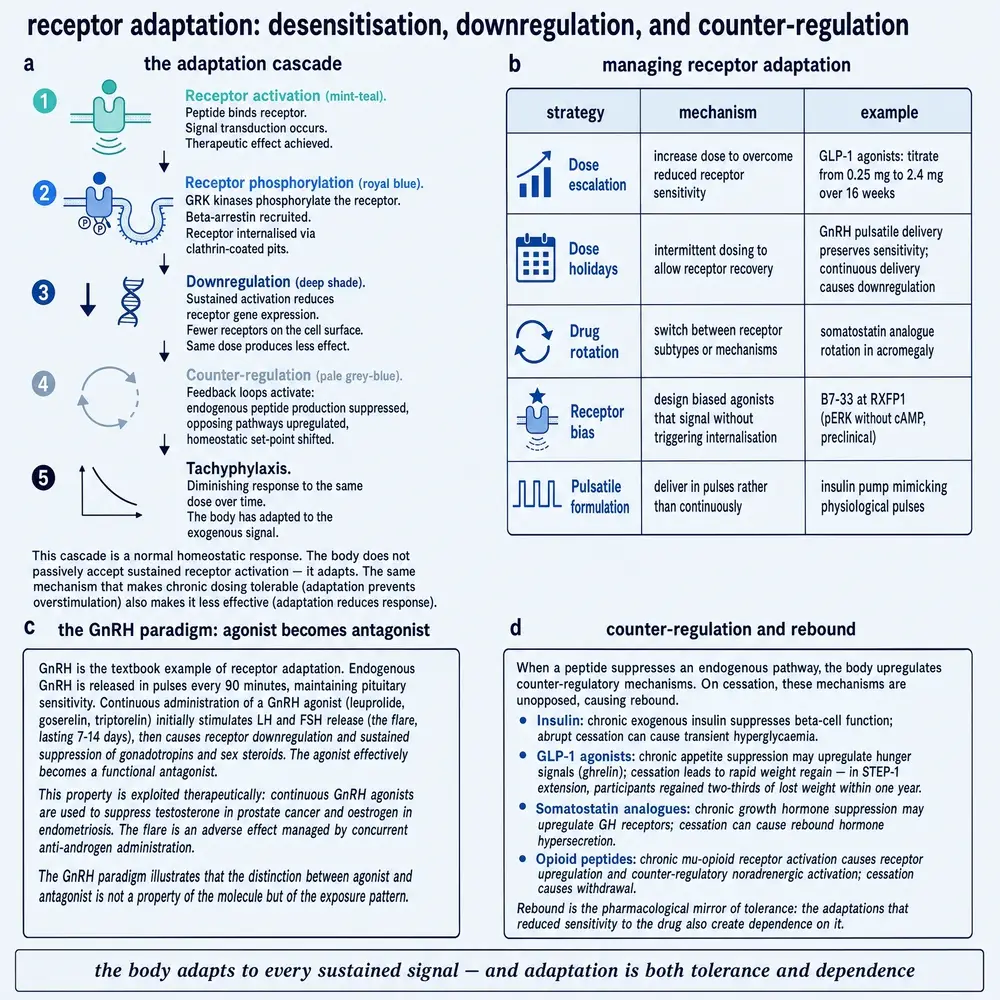
GnRH analogues again supply a clean teaching case: initial gonadotropin flare, then profound suppression with continued exposure. Continuous versus pulsatile stimulation of the same axis can produce opposite endocrine outcomes — a reminder that exposure pattern is part of the risk, not a dosing afterthought. Chronic incretin-pathway stimulation has its own adaptation and tolerability dynamics; nausea often peaks early and may lessen, which is not the same as proving that all on-target risks diminish with time.16
Section 14Immune reactions
Any peptide large enough or foreign enough can teach the immune system a new epitope. Anti-drug antibodies may be binding only, or neutralizing; they may alter pharmacokinetics, blunt effect, or, in worse cases, cross-react with an endogenous hormone. Immediate hypersensitivity and anaphylaxis are uncommon but not theoretical for protein and peptide products; delayed-type reactions are documented even among related agents in the same class — including reports of liraglutide-associated delayed hypersensitivity with subsequent tolerance to semaglutide in an individual case context, which illustrates molecule-specificity inside one receptor class.11
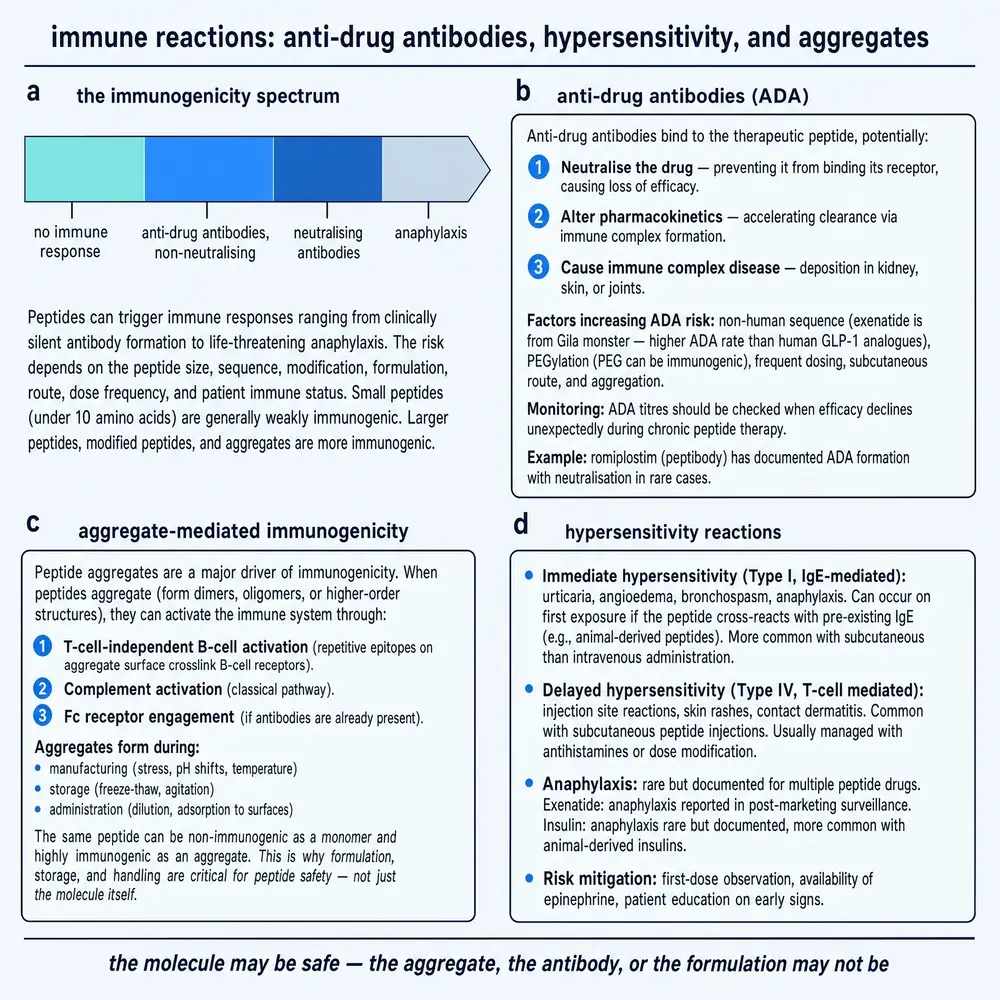
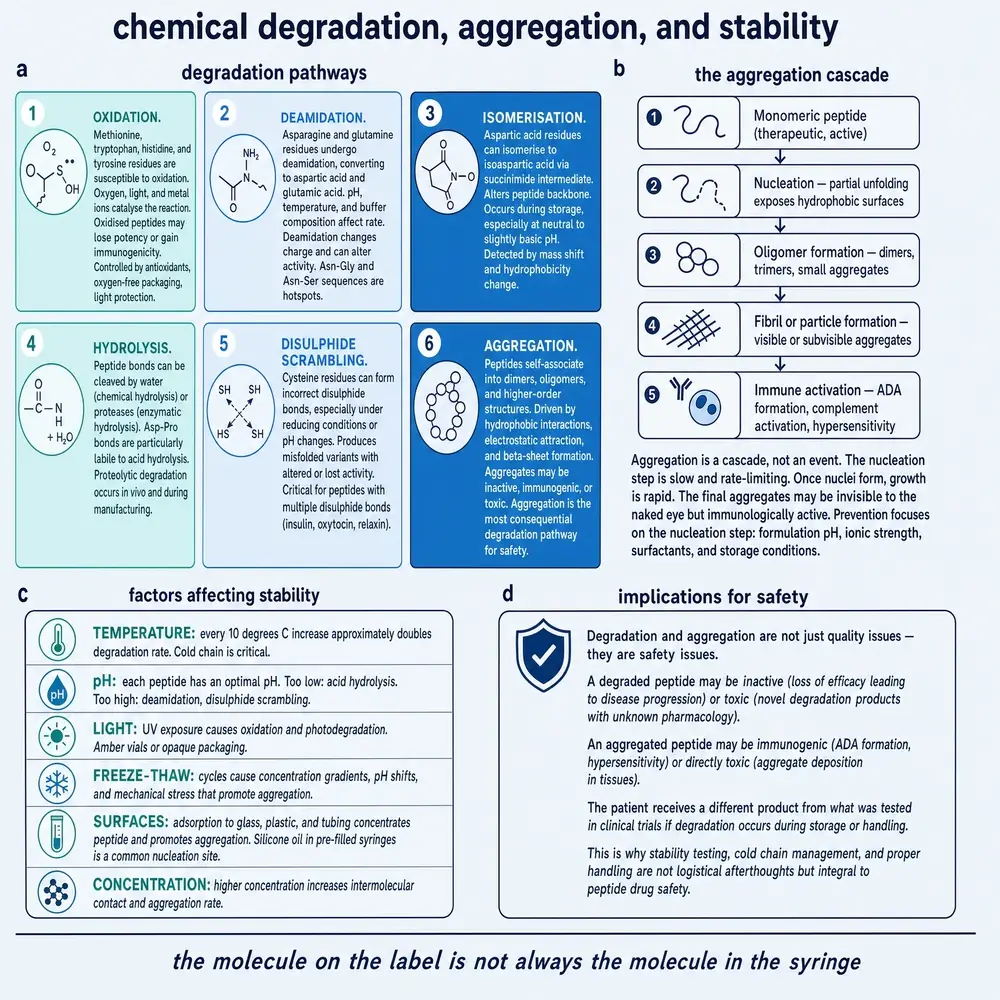
Aggregates and subvisible particles amplify immunogenicity by presenting repetitive epitopes in an adjuvant-like form. That is why aggregation is filed here under safety as well as under chemistry. Biosimilar insulin programmes have had to demonstrate immunogenicity and efficacy comparability rather than assume sequence identity alone settles the question.4, 18 Assays for neutralizing antibodies themselves require careful drug-tolerance design; an insensitive assay can manufacture false reassurance.21
Section 15Chemistry, formulation, and administration
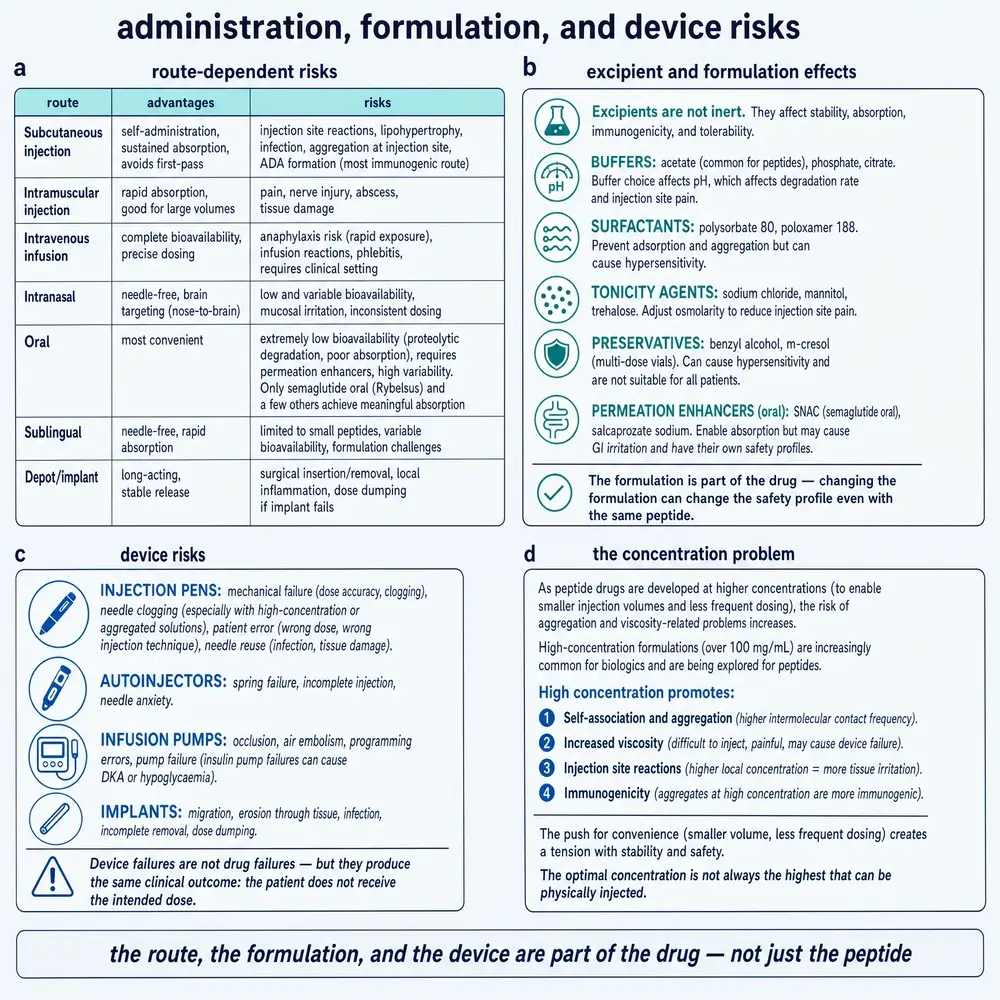
Peptides deamidate, oxidize, isomerize, clip and aggregate. Each change can reduce potency or create a neoepitope. Formulation choices — buffer, preservative, tonicity, permeation enhancers such as SNAC in oral peptide products — carry their own local and systemic effects.1, 14 Device and administration risks include reconstitution errors, pump failures, incorrect injection technique and cold-chain breaks. None of these is exotic. All of them convert a well-characterised molecule into an uncertain exposure.
Section 16Manufacturing and supply chain
A peptide’s safety file assumes that the vial contains the sequence, purity, potency and sterility the manufacturer released. Manufacturing deviations — wrong sequence, deletion/insertion impurities, residual reagents, endotoxin, incorrect concentration — break that assumption. In regulated pathways, release testing and GMP oversight exist to catch such failures. Outside those pathways, the assumption collapses.
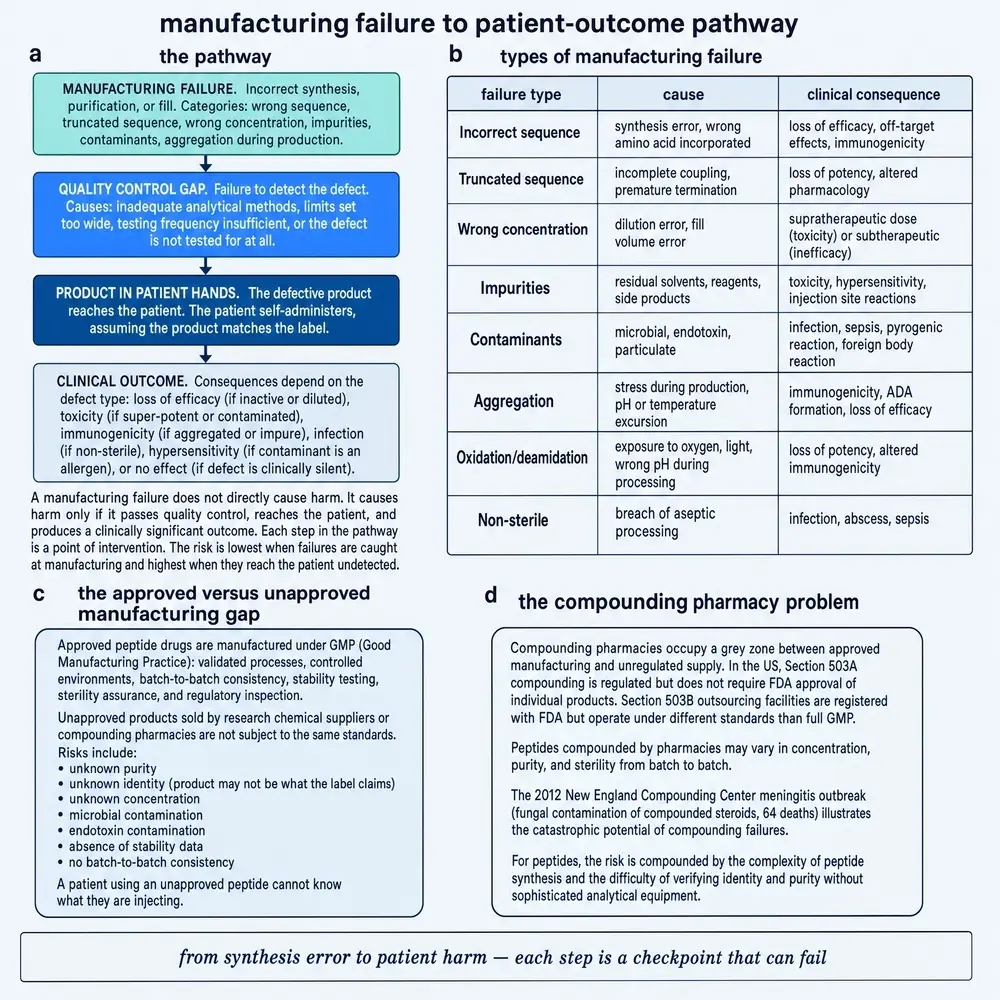
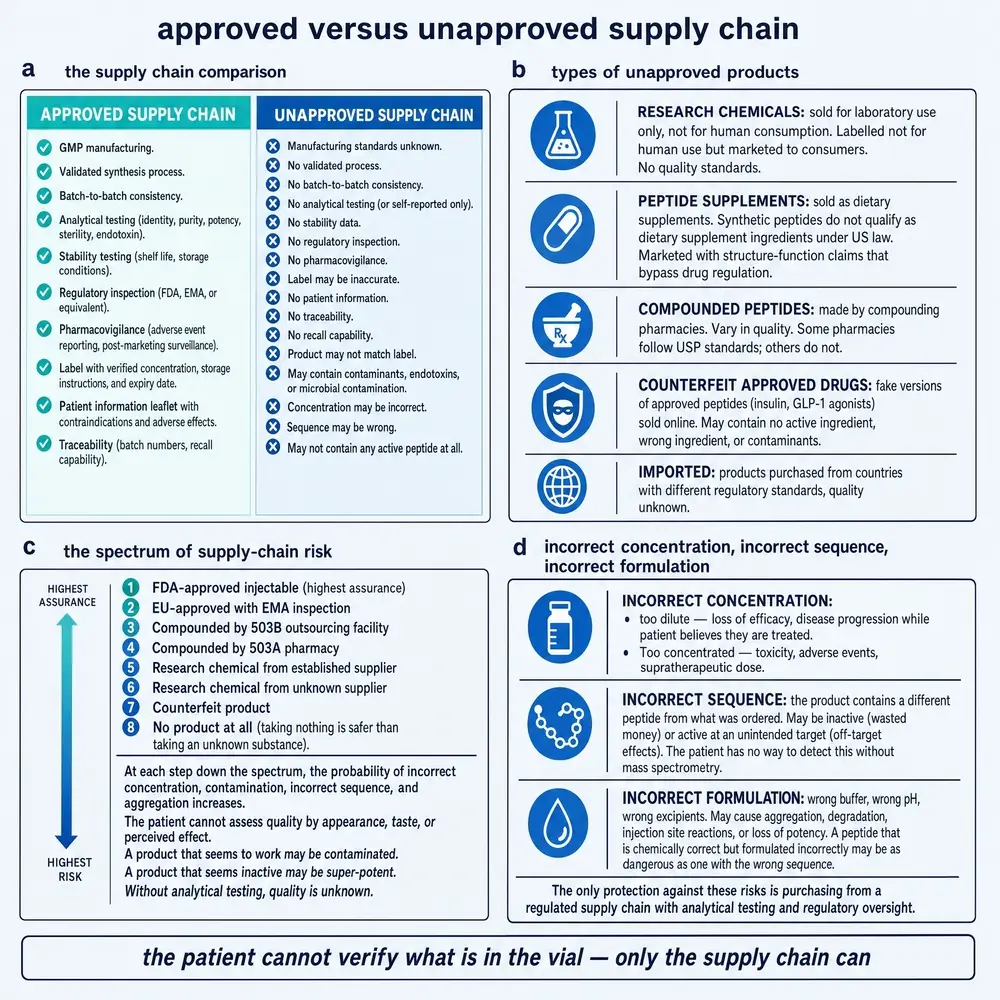
Real-world safety data have begun to capture the counterfeit problem explicitly. Analysis of EudraVigilance reports has been used to unmask patterns consistent with falsified semaglutide in unregulated supply — a pharmacovigilance finding about products, not about the GLP-1 receptor as such.29 Research-use-only labels, compounding without adequate identity testing, and online grey-market vials are not alternative evidence grades. They are absences of evidence wearing the mask of availability.
Section 17Population-specific risks
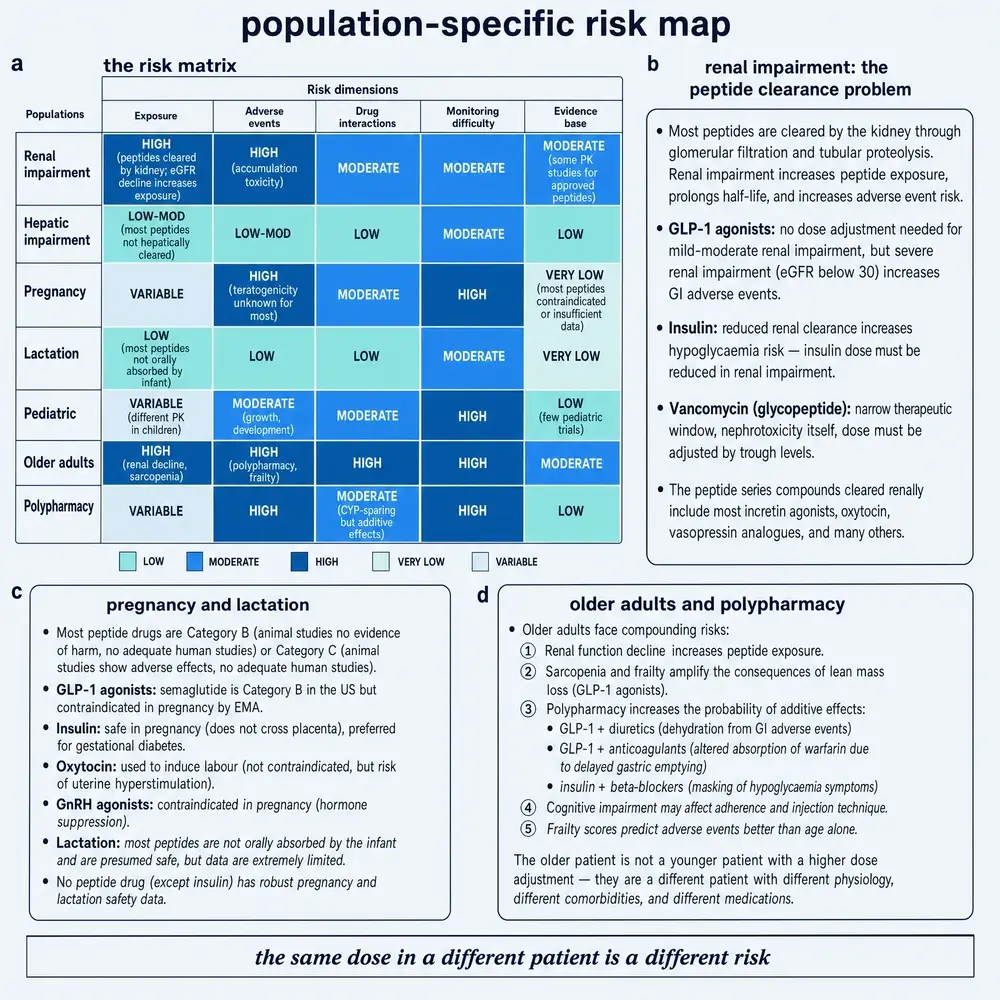
Renal impairment reduces clearance for many filtration-dependent peptides and can raise exposure. Hepatic impairment reshapes comorbidity and concomitant-drug risk more often than it reshapes intact-peptide clearance. Pregnancy and lactation remain sparsely studied for many newer agents; absence of data is not evidence of safety. Pediatric use requires separate efficacy and safety programmes — extrapolation from adults is a hypothesis. Older adults bring polypharmacy, altered body composition and higher stakes for gastrointestinal losses, hypoglycaemia and falls.2, 27
Chronic administration changes the register again: cumulative GI effects, gallbladder events discussed in incretin literature, nutritional adverse-event patterns in pharmacovigilance datasets, and the open question of how long adaptation and antibody risk continue to evolve.7, 10
| Population | Principal concern pattern | Evidence note |
|---|---|---|
| Renal impairment | Higher exposure if filtration-dependent | Molecule-specific PK |
| Hepatic impairment | Comorbidity / DDIs more than proteolysis | Often indirect |
| Pregnancy / lactation | Developmental and exposure uncertainty | Often labelled data gaps |
| Pediatrics | Growth, immunogenicity, dosing uncertainty | Separate trials needed |
| Older adults | Polypharmacy, volume loss, hypoglycaemia stakes | PV + trials |
| Chronic use | Adaptation, ADA, nutritional / biliary signals | Long-term PV |
Section 18Long-term uncertainty: growth, remodeling, neoplasia
Some peptide pathways touch cell growth, angiogenesis, fibrosis or tissue repair. That fact generates theoretical cancer and remodeling concerns that must be separated from demonstrated human risk. Rodent thyroid C-cell findings in some GLP-1 receptor agonist programmes are the textbook case: a real preclinical signal that has not translated into a clear human cancer verdict in the same simple form, and that continues to be watched in pharmacovigilance and trial follow-up rather than treated as settled alarm or settled dismissal.10, 16
Orthopaedic and regenerative peptide claims often live in a thinner evidence tier; promise of remodeling is not proof of long-term safety.17 Withdrawal and cessation effects — rebound hyperglycaemia after insulin mismanagement, weight regain after incretin discontinuation in observational settings, endocrine rebound after sex-hormone axis suppression — belong in the long-term ledger even when they are physiologically unsurprising.
Section 19The benefit–risk matrix
Benefit–risk is not a score you compute once for “peptides.” It is a matrix whose cells are filled by a specific molecule, a specific indication, a specific patient, and a specific product quality. A short-acting insulin in a monitored setting and a grey-market multi-agonist vial bought online do not share a matrix cell merely because both are peptides.
| Context | Benefit emphasis | Risk emphasis | What changes the balance |
|---|---|---|---|
| Approved metabolic peptide, labelled use | Glycaemic / weight efficacy with outcome data | GI effects; rare PV signals; gallbladder; nutrition | Comorbidities; concomitant drugs; duration |
| Endocrine axis analogue (e.g. GnRH) | Controlled suppression / stimulation | Flare; hypoestrogenism/androgenism effects; injection-site | Indication; monitoring; formulation |
| Replacement hormone (insulin family) | Life-saving physiology replacement | Hypoglycaemia; immunogenicity (historical and biosimilar) | Education; product quality; PK profile |
| Unapproved / falsified product | Unverified | Identity, purity, dose unknown; no reliable PV | Supply chain — usually unfavourable |
Reading across the matrix, approved peptides with mature labels can show favourable balances for defined indications precisely because their risks are characterised enough to manage. That characterisation is part of the benefit. An uncharacterised product cannot inherit it.2, 19, 29
Section 20Organ-system effects in practice
Gastrointestinal. For incretin-pathway drugs, nausea, vomiting, diarrhoea and constipation are common and mechanism-linked; they drive discontinuation in a fraction of users in trial and real-world settings.15, 16
Metabolic. Hypoglycaemia risk rises when insulin or insulinotropic therapy is combined with other glucose-lowering drugs; GLP-1 receptor agonists alone have a different hypoglycaemia profile than insulin, which is a comparative fact about mechanisms, not a blanket safety crown.12
Cardiovascular. Some metabolic peptides have outcome-trial evidence that belongs on the benefit side for defined populations; heart-rate rises and other physiologic effects still require molecule-specific reading.20
Gallbladder and nutrition. Pharmacovigilance and clinical literature discuss biliary events and nutritional adverse-event patterns in association with substantial weight loss and delayed gallbladder emptying — signals to weigh, not to sensationalise.7, 10
Dermatologic and local. Injection-site reactions are common across peptide injectables; class-specific cutaneous adverse events appear in real-world reviews of newer agents.5
Immune. From ADA to delayed hypersensitivity, immune risk is product- and patient-specific (Section 14).
Neurologic / psychiatric. Spontaneous reports periodically raise questions about mood or neurologic events for widely used metabolic drugs. Such reports require careful confounding control; this monograph records them as areas of active surveillance rather than as established class effects without stronger evidence.10
Reproductive. GnRH-pathway agents intentionally alter reproductive hormones; fertility and bone consequences are part of labelled risk management in their indications.8, 27
Section 21Misuse and uncertain products
The hardest safety problem in the contemporary peptide landscape is not a receptor — it is a market. Unapproved peptides sold for human experimentation, compounded products without adequate analytical release, and falsified branded pens create exposures that no pivotal trial characterised. Counterfeit semaglutide reporting in European pharmacovigilance data is a concrete instance of that structural risk.29
Incorrect concentration, incorrect sequence and incorrect formulation are not edge cases in that market; they are predictable outcomes of missing CMC. A manuscript that discussed only receptor pharmacology while ignoring supply chain would mislead by omission.
Section 22Comparative synthesis
Relative to many small molecules, peptides often show fewer CYP-mediated interaction surprises and less reactive-metabolite chemistry — and more injection burden, aggregation worry and on-target physiologic excess. Relative to antibodies, peptides are often shorter-acting and less persistent after cessation — and less able to engage some immune-oncology mechanisms antibodies own. Relative to oral small-molecule GLP-1 agonists now entering comparative discussion, injectable peptides differ in bioavailability engineering and adverse-effect choreography rather than in moral rank.14
Where peptide benefit–risk looks favourable, it is usually because three things coincide: a well-chosen extracellular target, a product made to a documented specification, and an indication in which exaggerated physiology is clinically manageable. Where it looks unfavourable, at least one of those three is missing.
Section 23What remains unresolved
Long-term immune trajectories for newer multi-agonists, the human meaning of some preclinical growth signals, the true incidence of rare PV associations after confounding is removed, pediatric benefit–risk for metabolic peptides, and the public-health burden of falsified products are open files, not closed chapters.9, 10 This monograph does not close them with advice. It marks them so that enthusiasm and fear are both forced to wait on evidence.
Section 24Glossary
Anti-drug antibody (ADA). An antibody raised against a therapeutic peptide or protein; may be binding or neutralizing.
Benefit–risk. The indication- and product-specific balance between demonstrated advantages and characterised harms.
Exaggerated pharmacology. Adverse effects that are excesses of the intended physiological action.
Immunogenicity. The capacity of a product to provoke an immune response, including ADA and hypersensitivity.
Neutralizing antibody (nAb). An ADA that blocks the medicine’s biological activity.
Off-target. Activity at unintended molecular targets.
On-target. Activity at the intended target, including harmful excess.
Pharmacovigilance. Post-marketing surveillance for adverse effects and product quality problems.
Therapeutic window. The exposure range separating useful effect from unacceptable toxicity for a given context.
Tachyphylaxis. Rapid diminution of response after repeated doses.
Section 25Benefit and risk taxonomies (summary)
Full taxonomies are filed in notes/BENEFIT_TAXONOMY.md and notes/RISK_TAXONOMY.md. In brief: benefits B01–B14 cover potency, selectivity, interface size, signal mimicry, metabolism, reversibility, clearance, CYP sparing, hard-target access, tunable duration/selectivity, targeting and multi-receptor design. Risks R01–R15 cover target-mediated effects, exaggerated physiology, off-target activity, exposure, receptor adaptation, immune reactions, chemical degradation, aggregation, impurities, formulation/excipients, administration/device, manufacturing, populations, misuse/supply chain and long-term uncertainty.
Section 26Evidence-grade table
| Grade | Meaning in this monograph | Example use |
|---|---|---|
| A | Human trials + concordant PV / labels | GI effects of GLP-1 RAs |
| B | Human data present but confounded or heterogeneous | Some rare PV signals |
| C | Animal or strong in-vitro mechanistic data | Receptor adaptation models |
| D | Theoretical / sparse / product-quality anecdotes | Some remodeling claims |
Section 27Contradictory evidence and unresolved risks
Contradictions handled explicitly. (1) Rodent thyroid C-cell findings versus still-evolving human neoplasia data for some GLP-1 receptor agonists — neither ignored nor over-translated.10, 16 (2) Class immunogenicity expectations versus molecule-specific hypersensitivity patterns (e.g. liraglutide vs semaglutide in a delayed-hypersensitivity case context).11 (3) The intuition that peptides lack drug interactions versus documented absorption interactions via delayed gastric emptying.7
Unresolved risk register (summary). Long-term multi-agonist immune trajectories; pediatric metabolic peptide balances; true incidence of rare PV associations after adjudication; public-health burden of falsified products; human significance of some angiogenesis/fibrosis theoretical concerns. Details in notes/UNRESOLVED_RISK_REGISTER.md.
Section 28References
Entries are numbered and sorted by first-author surname. Every entry was resolved from the source record’s own metadata — never from recall. In-text citations are the superscript numbers throughout the document.
- Abbasi M, Sun K, Huggins KW, Heath B, DeLoit H, McGinness L, et al.. Advances in GLP-1 receptor agonists delivery systems for obesity and diabetes. Acta Pharmaceutica Sinica. B. 2026;16(5):2682.
PMID 42180536 · doi:10.1016/j.apsb.2026.01.035 · PMC13198345 - Bays HE, Fitch A, Christensen S, Burridge K, Tondt J. Anti-Obesity Medications and Investigational Agents: An Obesity Medicine Association (OMA) Clinical Practice Statement (CPS) 2022. Obesity Pillars. 2022;2:100018.
PMID 37990711 · doi:10.1016/j.obpill.2022.100018 · PMC10662004 - Bjerke DL, Li J, Gao Y, Hu P, Lintner K, Hakozaki T. A framework for the safety evaluation of peptides in cosmetics. Current Research in Toxicology. 2026;10:100291.
PMID 41953401 · doi:10.1016/j.crtox.2026.100291 · PMC13054063 - Blevins TC, Raiter Y, Sun B, Donnelly C, Shapiro R, Chullikana A, et al.. Immunogenicity, Efficacy, and Safety of Biosimilar Insulin Aspart (MYL-1601D) Compared with Originator Insulin Aspart (Novolog®) in Patients with Type 1 Diabetes After 24 Weeks: A Randomized Open-Label Study. Biodrugs. 2022;36(6):761-772.
PMID 36114990 · doi:10.1007/s40259-022-00554-6 · PMC9649481 - El-Amawy HS. Tirzepatide in dermatology: cutaneous adverse events, emerging therapeutic roles, and cosmetic implications – A comprehensive review☆. Anais Brasileiros de Dermatologia. 2025;101(1):501255.
doi:10.1016/j.abd.2025.501255 · PMC12800350 - Guarnieri L, Bosco F, Corasaniti MT, Citraro R, De Sarro G. Migraine, monoclonal antibodies, and monitoring: a review of pharmacovigilance in the era of biologics. Frontiers in Pharmacology. 2026;17:1822176.
PMID 42292852 · doi:10.3389/fphar.2026.1822176 · PMC13260513 - He L, Li Q, Yang Y, Li J, Luo W, Huang Y, et al.. Pharmacovigilance study of GLP-1 receptor agonists for metabolic and nutritional adverse events. Frontiers in Pharmacology. 2024;15:1416985.
PMID 39040467 · doi:10.3389/fphar.2024.1416985 · PMC11260617 - Jia W, Wang T. Triptorelin associated adverse events evaluated using FAERS pharmacovigilance data. Scientific Reports. 2025;15:32042.
PMID 40890214 · doi:10.1038/s41598-025-16734-7 · PMC12402341 - Lempesis IG, Dalamaga M. Obesity pharmacotherapy reimagined: The era of multi-receptor agonists and next-generation metabolic modulators, perspectives and controversies. Metabolism Open. 2026;30:100463.
PMID 41948476 · doi:10.1016/j.metop.2026.100463 · PMC13051938 - Li J, Liang J, Zhang W, He J, Ye X. Integrated Evidence from VigiBase and Clinical Trials: A Comprehensive Pharmacovigilance Analysis of Seven Glucagon-Like Peptide 1 Receptor Agonists (GLP-1 RAs). Diabetes Therapy. 2026;17(6):853.
PMID 42012593 · doi:10.1007/s13300-026-01872-6 · PMC13253940 - Moreno-Borque R, Guhl-Millán G, Mera-Carreiro S, Pazos-Guerra M, Cortés-Toro JA, López-Bran E. Delayed Type Hypersensitivity Reaction Induced By Liraglutide With Tolerance to Semaglutide. JCEM Case Reports. 2024;2(6):luae105.
PMID 38911363 · doi:10.1210/jcemcr/luae105 · PMC11191647 - Nauck MA, Quast DR, Wefers J, Meier JJ. GLP-1 receptor agonists in the treatment of type 2 diabetes – state-of-the-art. Molecular Metabolism. 2020;46:101102.
PMID 33068776 · doi:10.1016/j.molmet.2020.101102 · PMC8085572 - Niazi SK. Oral delivery of peptides and proteins: pharmacokinetic boundaries, negative selection, and route triage. Frontiers in Drug Delivery. 2026;6:1776167.
PMID 41939723 · doi:10.3389/fddev.2026.1776167 · PMC13047097 - Patel D, Muacevic A, Adler JR. Small-Molecule Oral Versus Injectable Glucagon-Like Peptide-1 (GLP-1) Receptor Agonists: Comparative Efficacy, Safety, and Future Clinical Perspectives. Cureus. 2026;18(4):e107202.
PMID 42153087 · doi:10.7759/cureus.107202 · PMC13180026 - Patel JP, Hardaswani D, Patel J, Saiyed F, Goswami RJ, Saiyed TI, et al.. Comparative Effectiveness of Semaglutide, Liraglutide, Orlistat, and Phentermine for Weight Loss in Obese Individuals: A Systematic Review. Cureus. 2025;17(3):e80321.
PMID 40206909 · doi:10.7759/cureus.80321 · PMC11979670 - Prasad-Reddy L, Isaacs D. A clinical review of GLP-1 receptor agonists: efficacy and safety in diabetes and beyond. Drugs in Context. 2015;4:212283.
PMID 26213556 · doi:10.7573/dic.212283 · PMC4509428 - Rahman OF, Lee SJ, Seeds WA. Therapeutic Peptides in Orthopaedics: Applications, Challenges, and Future Directions. JAAOS Global Research & Reviews. 2026;10(1):e25.00236.
PMID 41490200 · doi:10.5435/JAAOSGlobal-D-25-00236 · PMC12753158 - Sagi S, Anjaneya P, Kalsekar S, Kottke A, Cohen HP. Long-Term Real-World Post-approval Safety Data of Multiple Biosimilars from One Marketing-Authorization Holder After More than 18 Years Since Their First Biosimilar Launch. Drug Safety. 2023;46(12):1391-1404.
PMID 37902937 · doi:10.1007/s40264-023-01371-8 · PMC10684613 - Sidrak WR, Kalra S, Kalhan A. Approved and Emerging Hormone-Based Anti-Obesity Medications: A Review Article. Indian Journal of Endocrinology and Metabolism. 2024;28(5):445.
PMID 39676791 · doi:10.4103/ijem.ijem_442_23 · PMC11642516 - Stachteas P, Nasoufidou A, Karakasis P, Koiliari M, Karagiannidis E, Koufakis T, et al.. Efficacy of Dual Glucagon and Glucagon-like Peptide-1 Receptor Agonists Across the Cardiometabolic Continuum: A Review of Current Clinical Evidence. Reviews in Cardiovascular Medicine. 2025;26(7):39691.
PMID 40776973 · doi:10.31083/RCM39691 · PMC12326405 - Videbæk N, Jørgensen L, de Lemos Rieper C, Hummelshøj L, Petersen SS, Wøldike DBC, et al.. Improving sensitivity and drug tolerance of assays for neutralizing anti-drug antibodies to semaglutide and native GLP-1. Bioanalysis. 2025;17(22):1449-1460.
PMID 41334584 · doi:10.1080/17576180.2025.2596576 · PMC12785235 - Vinjamuri S, Tiwari E, Kataria S, Juneja D. Haemostasis and beyond: The expanding role of desmopressin in intensive care. World Journal of Critical Care Medicine. 2025;14(4):108370.
PMID 41377554 · doi:10.5492/wjccm.v14.i4.108370 · PMC12687054 - Wang T, He G, Xiong W, Huang J. Adverse drug events associated with insulin glargine: a real-world pharmacovigilance study based on the FAERS database. Frontiers in Pharmacology. 2025;16:1563238.
PMID 40356973 · doi:10.3389/fphar.2025.1563238 · PMC12066629 - Wang X, Chen H, Han S, Li L, Chen H, Yang B. The real-world analysis of adverse events with teduglutide: a pharmacovigilance study based on the FAERS database. Frontiers in Pharmacology. 2024;15:1404658.
PMID 39329127 · doi:10.3389/fphar.2024.1404658 · PMC11424547 - Wasilewska B, Petruczynik A. Semaglutide - properties, action and chromatographic analysis. Journal of Diabetes and Metabolic Disorders. 2025;24(2):197.
PMID 40937273 · doi:10.1007/s40200-025-01711-8 · PMC12420565 - Welsh BT, Cote SM, Meshulam D, Jackson J, Pal A, Lansita J, et al.. Preclinical Safety Assessment and Toxicokinetics of Apitegromab, an Antibody Targeting Proforms of Myostatin for the Treatment of Muscle-Atrophying Disease. International Journal of Toxicology. 2021;40(4):322-336.
PMID 34255983 · doi:10.1177/10915818211025477 · PMC8326894 - Yang Y, Cui Z, Feng X, Zou F, Wu X. Post-marketing safety profile of ganirelix in women: a 20-year pharmacovigilance analysis of global adverse drug event databases (2004–2024). BMC Pharmacology & Toxicology. 2025;26:91.
PMID 40264185 · doi:10.1186/s40360-025-00920-4 · PMC12016398 - Zeng J, Tang X, Qin D, Yu L, Zhou X, Feng C, et al.. Engineered GLP-1R-targeting nanoplatforms: multimodal therapeutics in human diseases. Journal of Nanobiotechnology. 2025;23:682.
PMID 41088364 · doi:10.1186/s12951-025-03677-4 · PMC12522959 - Zinzi A, Gaio M, Ruggiero R, Mascolo A, Riemma MA, Cipriani M, et al.. Unmasking counterfeit semaglutide: analysis of real-world safety data from EudraVigilance. Frontiers in Pharmacology. 2026;17:1805842.
PMID 42137313 · doi:10.3389/fphar.2026.1805842 · PMC13168152 - Zou S, Ouyang M, Zhao Y, Cheng Q, Shi X, Sun M. A disproportionality analysis of adverse events caused by GnRHas from the FAERS and JADER databases. Frontiers in Pharmacology. 2024;15:1392914.
PMID 39027335 · doi:10.3389/fphar.2024.1392914 · PMC11254796
Section 29Evidence handling
Study type is labelled at the point of use. Recency is preferred but not blindly: a 2025–2026 pharmacovigilance analysis is weighted above an older narrative when methods are sound, yet a preponderance of contradictory evidence still wins. Null and negative safety findings are included. No numerical value was invented. No human use, dose, route or schedule is recommended anywhere in this document.
Continue exploring