
Evidence and Clinical Development in Peptide Medicine From mechanism to demonstrated benefit
A peptide can look irresistible in a dish, persuasive in a mouse, and disappointing in a person — or the reverse. This monograph is a field guide to that journey: how candidates move from molecular hypothesis to credible clinical therapy, and how a careful reader tells biological plausibility from demonstrated benefit, a marketing claim from a labelled indication, and a p-value from a patient who is better.
Section 01The claim and the climb
Every peptide story that reaches a newspaper or a social feed has already climbed a ladder. Somewhere, often years earlier, someone named a target. An assay said the molecule binds. A cell said a pathway moves. An animal said a disease model improves. A first-in-human study said people can tolerate an exposure. A later trial said an endpoint moved. A regulator said the benefit–risk balance was acceptable for a labelled use. A brochure, a post, or a sales pitch then said something louder.23
The ladder is not a formality. Each rung answers a different question, and the honest name of the claim is the highest rung that has actually been reached. Biological plausibility is not preclinical evidence. Preclinical evidence is not human pharmacology. Human pharmacology is not clinical efficacy. Efficacy in a trial is not effectiveness in ordinary practice. Approval is not proof of universal superiority. Marketing language is not any of the above.34
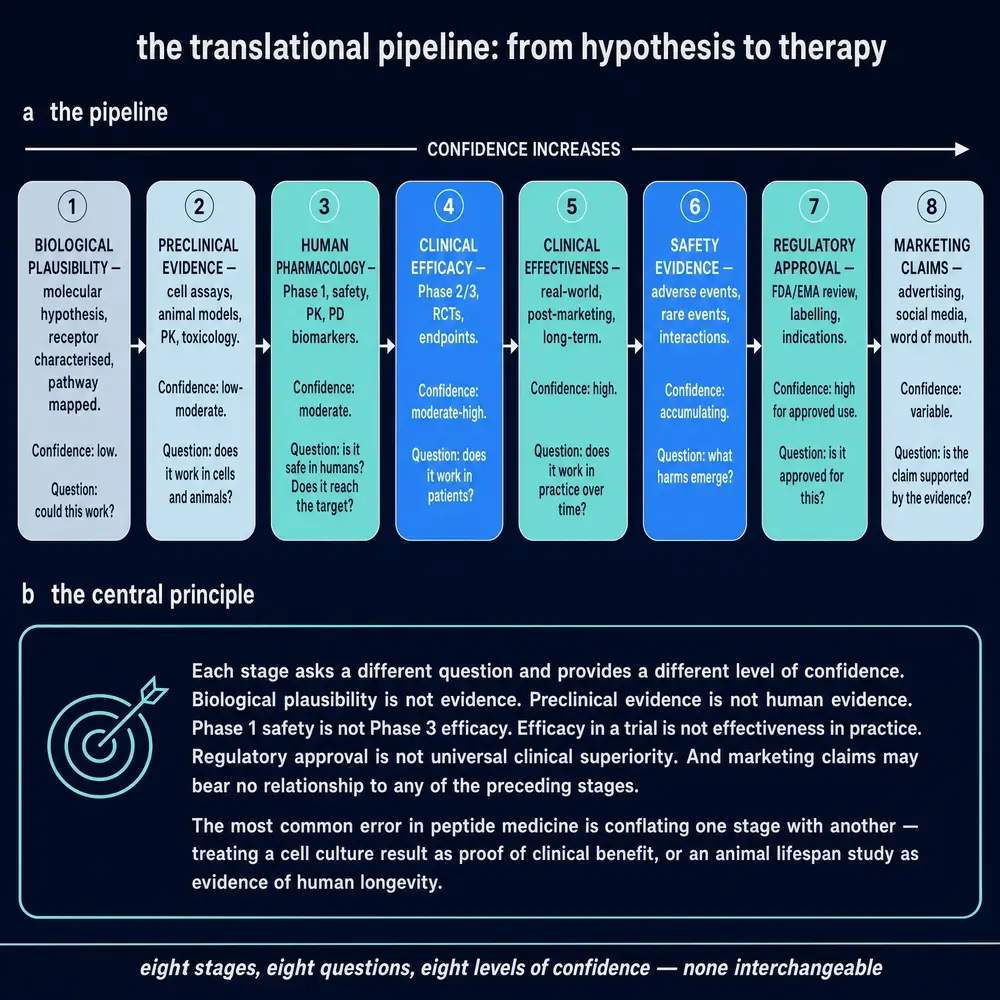
This monograph exists because peptide medicine is unusually vulnerable to rung confusion. Peptides are the body’s own vocabulary: hormones, cytokines, neuromodulators, host-defence fragments. That familiarity makes a leap from “the pathway is real” to “the product works in people” feel shorter than it is. The same familiarity makes animal data feel more decisive than it is, and makes a biomarker change feel like a clinical benefit. The discipline of clinical development — and the quieter discipline of reading its products — exists to keep those leaps honest.
This document teaches how peptide-related evidence is generated and how to weigh it. It does not recommend that any person use any peptide, and it specifies no dose, route or schedule. Where research literature reports a regimen, that report is historical observation, not advice.
Section 02A short history of learning to test medicines
The modern clinical trial did not arrive fully formed with the first synthetic peptide. It grew out of a longer argument about how medicine should decide that something works. In the eighteenth century, Lind’s comparative trial of treatments for scurvy already understood that parallel groups beat anecdotes. In the nineteenth and early twentieth centuries, laboratory physiology — Bernard, Pavlov, Starling’s secretin work that opened peptide endocrinology — taught that mechanisms could be isolated. Banting and Best’s insulin extracts in the early 1920s then forced a new kind of urgency: a peptide preparation that dramatically changed diabetic ketoacidosis could not wait for twentieth-century trial architecture, yet its very success created the demand for potency standards, purity, and eventually randomized evaluation of analogues and delivery systems.24
After the Second World War, randomization, blinding and placebo controls hardened into method, not manners. The streptomycin trials for tuberculosis, the rise of biostatistics, and later the CONSORT reporting standards made the randomized controlled trial the central engine of confirmatory claims — not because randomization is fashionable, but because it is the most practical way yet found to balance known and unknown prognostic factors across arms and to make a parallel comparison publicly auditable.31 In parallel, regulators — the expanding role of the U.S. Food and Drug Administration after 1962, the European Medicines Agency and its predecessors — demanded evidence of efficacy as well as safety. Good Clinical Practice as restated in ICH E6(R2), Good Laboratory Practice, and the broader ICH library (including nonclinical expectations in M3(R2)) turned those demands into a shared grammar across regions.212218
Peptide therapeutics rode that grammar rather than inventing a private one. Insulin’s century, gonadotropin-releasing hormone analogues, somatostatin analogues, GLP-1 receptor agonists, natriuretic peptides, antimicrobial peptides and dozens of others all had to pass through some version of the same sequence: target thinking, controlled measurement, animal risk, human exposure, then confirmatory trials when the claim was benefit. What is special about peptides is not that they escape the ladder, but that their biology makes certain rungs unusually informative — and certain distortions unusually tempting.7
Section 03Eight kinds of claim that must not be confused
Before the laboratory details, a vocabulary. The distinctions below are not academic hair-splitting; they are the difference between a sentence that is true and a sentence that only sounds true.
Biological plausibility means the mechanism could work. Receptors exist; pathways connect; endogenous peptides do something similar. Plausibility is necessary and cheap. It is also the native tongue of hype.
Preclinical evidence means controlled observations outside the intended human patient: binding, cells, organoids, ex vivo tissue, animals, toxicology. It can be rigorous and still fail to predict people.3317
Human pharmacology means exposure, tolerability and pharmacodynamic response in people — often healthy volunteers first. It asks whether the molecule behaves in a human body, not whether patients get better.
Clinical efficacy means benefit under trial conditions: selected participants, protocolized care, defined endpoints. It is a strong claim and a bounded one.
Clinical effectiveness means benefit in ordinary practice, where adherence, comorbidity and less tidy follow-up live. Efficacy can exceed effectiveness; sometimes the gap is the whole story.
Safety evidence is not the absence of a scare in a press release. It is a body of monitored observations with denominators, severity, reversibility and an honest account of what the sample size could not see.
Regulatory approval means a competent authority accepted a benefit–risk argument for a labelled use in a jurisdiction. It is not a global medal for best possible therapy.
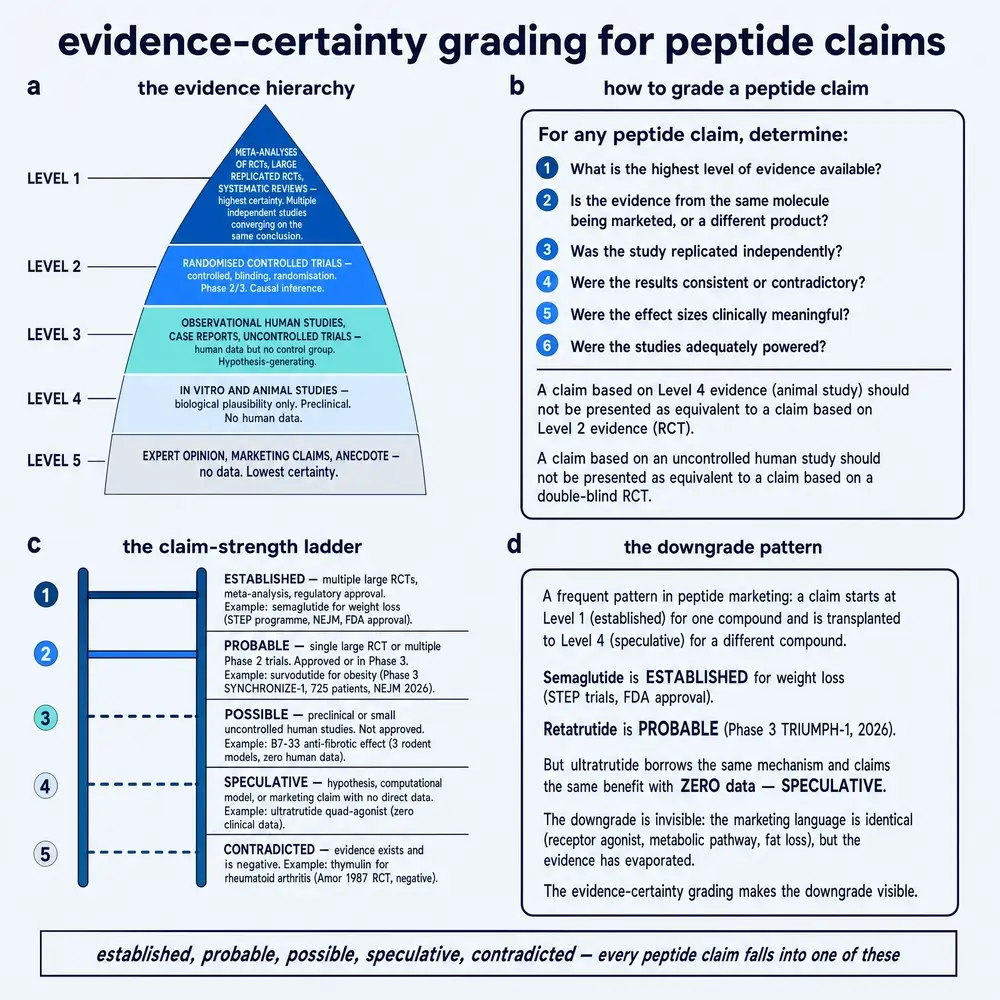
Marketing claims are persuasion. They may quote real papers. They are still not the papers.
Section 04How this monograph weighs evidence
Citations in this monograph are load-bearing records for the claims they support, with bibliographic fields taken from each source’s own metadata rather than from memory. Papers that only report that a peptide “worked” in one assay are not treated as appraisals of evidence quality or of clinical development strategy.
The evidence base is dual-track. A Project 05 open-access JATS sweep
supplies deep full text already in the local library (hundreds of
topic-matched articles; eighty-two read in full for this edition). That
local store was then extended, for this rewrite, through the shared research
stack at C:\Apps\_env\research_stack.env: Tavily and Exa for
grounded discovery of guidance and recent syntheses; Europe PMC for
bibliographic harvest and open abstracts; ClinicalTrials.gov for the live
shape of peptide and incretin development programmes; and Firecrawl for
clean extraction from CONSORT, GRADE, ICH and related instruments. GRADE
itself is treated here as a certainty language for evidence bodies, not as
a substitute for reading methods.16
Recency is weighted when it is not contradicted by a preponderance of older evidence. In vitro, in vivo, animal and human results are labelled as such at the point of use. Negative, null and contradictory findings are not decorative — they are part of the map. Registry records are cited as evidence of what is being asked in development, never as instructions for personal use.
Section 05Target identification and validation
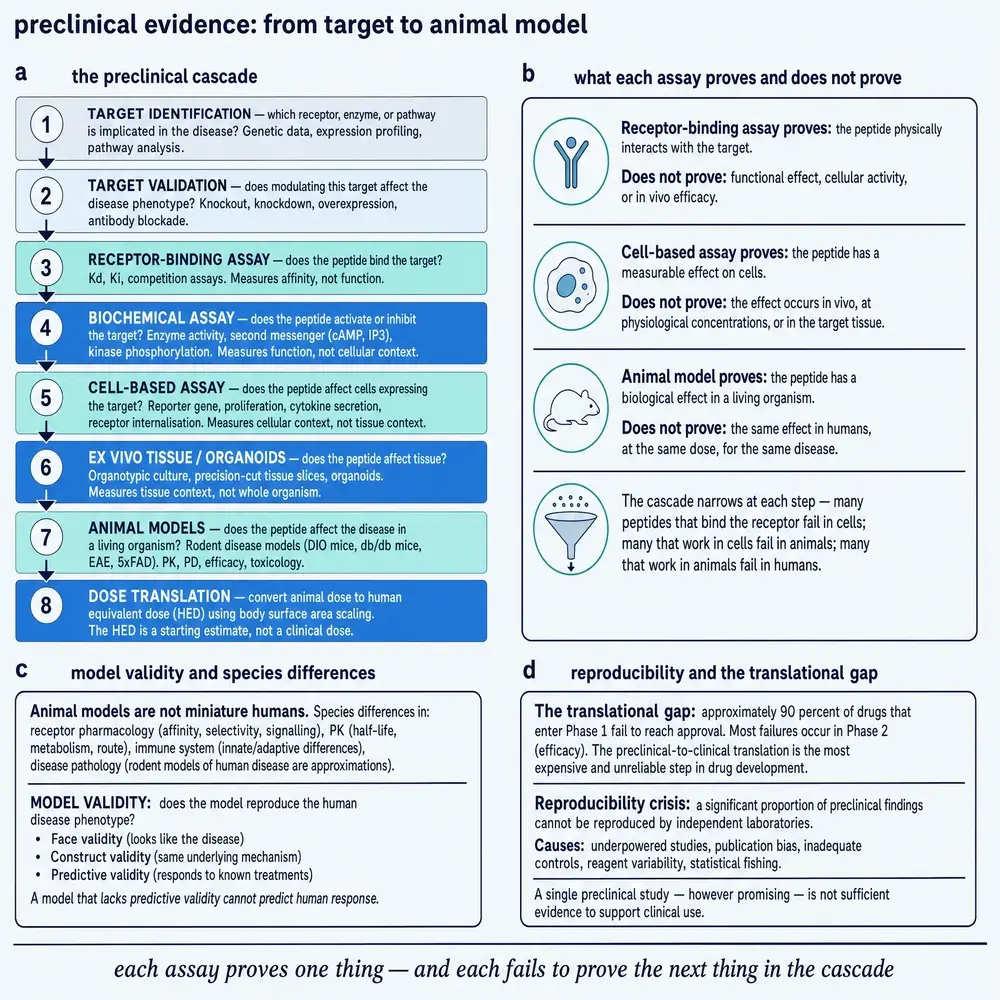
A peptide programme begins, whether anyone admits it or not, with a bet on a target: a receptor, an enzyme, a protein–protein interface, a microbial membrane, a trafficking pathway. Identification can come from physiology (an endogenous hormone already does the job), from genetics (loss or gain of function in humans points at a node), from expression atlases, or from unbiased screens. Validation is the colder question: if you perturb this target, does the disease-relevant phenotype move in the direction you need, with a magnitude that could matter, and with a side-effect surface you can bear?
For peptides the endogenous ligand is often the first teacher. Insulin, GLP-1, PTH, oxytocin, somatostatin and natriuretic peptides did not need a high-throughput fantasy to become interesting; physiology had already run a multi-million-year pilot. Genetic evidence — Mendelian syndromes, coding variants, progressive allelic series — has become a second teacher, because a lifelong human perturbation of a target is a kind of natural randomized experiment. Neither teacher is sufficient. Physiology can over-sell a pathway that is redundant in disease; genetics can highlight a target that is undruggable with a peptide format. Validation is where those stories meet assayable reality.82
Section 06Binding, biochemistry and the seduction of affinity
Receptor-binding assays and biochemical potency measurements are the first numbers a programme learns to love: IC50, EC50, Ki, Kd, residence time, selectivity panels. They are indispensable. They are also the easiest place to confuse a clean curve with a medicine. Affinity in a purified system does not guarantee cell-surface engagement in tissue. Selectivity on a panel does not guarantee selectivity in a human who expresses isoforms, metabolites and off-targets the panel never saw. And a picomolar binder that cannot be formulated, distributed or tolerated is a trophy, not a therapy.
The honest use of these assays is comparative and mechanistic: rank analogues, map structure–activity relationships, test whether a modification that helps pharmacokinetics destroyed recognition. The dishonest use is ornamental: quoting a nanomolar figure beside a human health claim as if the units converted themselves.
Section 07Cells, organoids and ex vivo tissue
Cell-based assays restore some biology the biochemist removed: membrane context, signalling cascades, trafficking, feedback. Organoids and primary human tissue go further, offering architecture and donor diversity that immortalized lines lack. Ex vivo vessels, islets, skin or brain slices can show whether a peptide does anything in a human-derived structure before anyone is dosed.37
What they still cannot do is settle clinical benefit. Concentrations that bathe a well are not automatically concentrations at a human receptor after subcutaneous absorption and proteolysis. Serum-free media are not plasma. A signalling readout is a pharmacodynamic clue, not a patient-reported outcome. Read cell data as tightly controlled mechanism and ranking tools. Promote them to human promises only when human data agree.
Section 08Animal models: efficacy, PK/PD and the validity problem
Animal studies are where many peptide narratives become emotionally convincing. Tumours shrink. Glucose falls. Inflammation scores improve. Wounds close. The photograph enters the slide deck. The validity question has to enter with it.3
Face validity asks whether the model looks like the disease. Construct validity asks whether it recapitulates the causal machinery you intend to treat. Predictive validity asks whether drugs that work in the model work in patients — and whether drugs that fail in patients also fail in the model. A model can have a friendly face and a hollow construct. Peptide programmes are full of both.
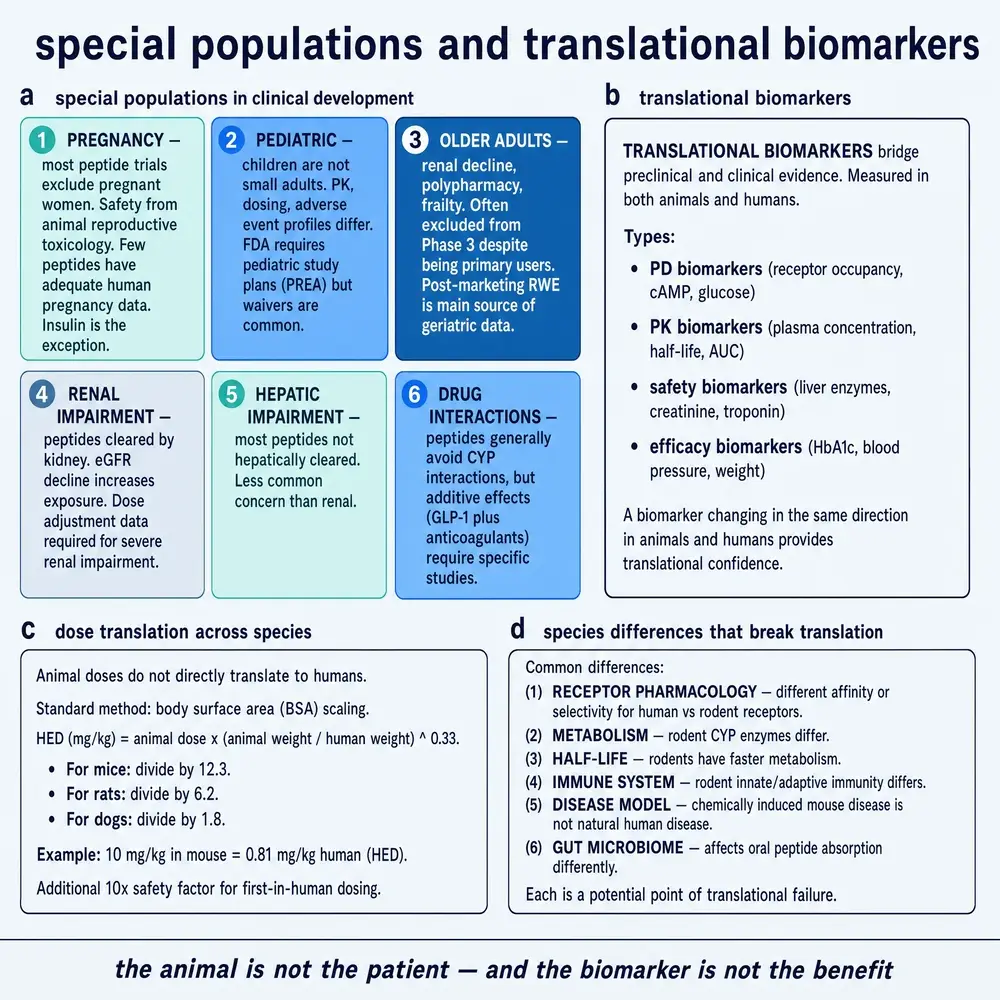
Species differences cut especially hard for peptides. Protease repertoires differ. FcRn and albumin biology differ. Immune recognition of a sequence that is “human” differs. A depot that delights a rodent may humiliate a primate study. Cross-species pharmacokinetics, when done carefully, is not bureaucracy; it is the translation of exposure. Allometric scaling and human equivalent dose calculations are starting tools for first-in-human planning, not proofs that efficacy will follow. ICH M3(R2) frames which nonclinical packages are ordinarily expected before humans are exposed; it is a map of minimum diligence, not a certificate that the model was valid.2232
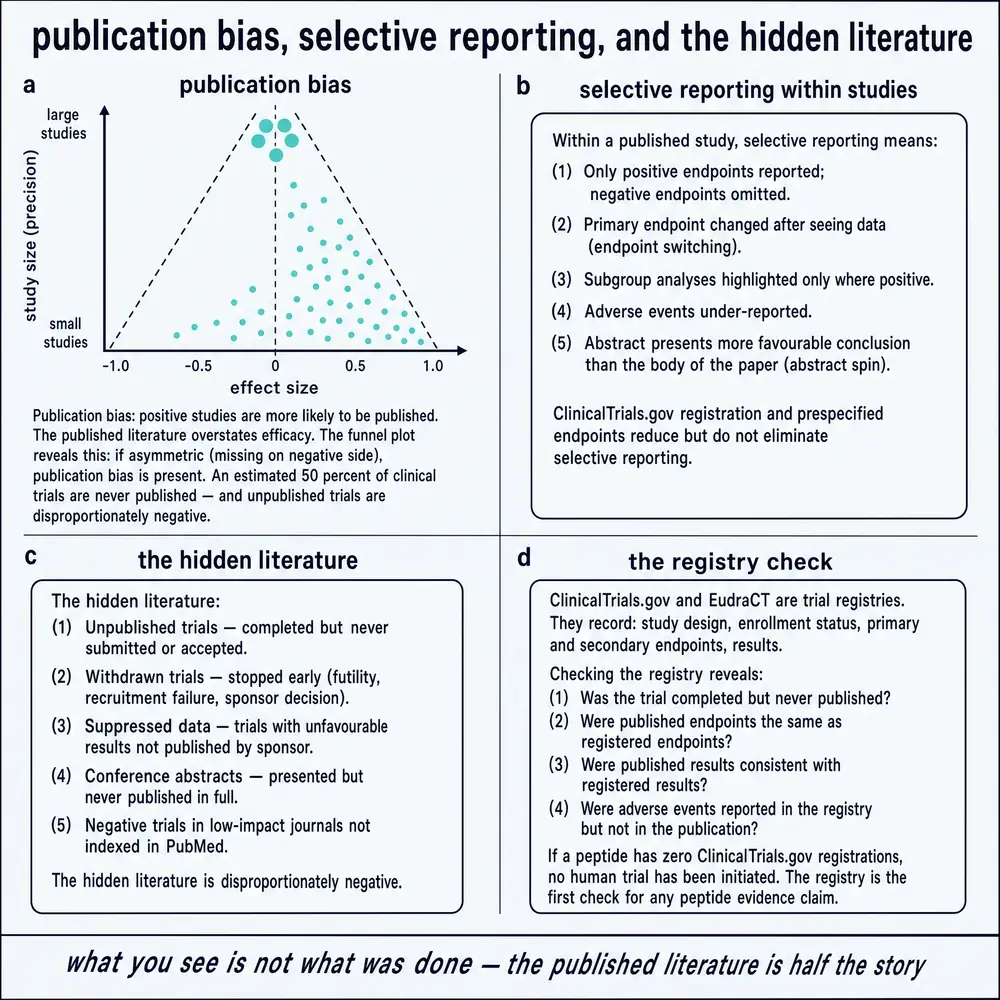
Reproducibility belongs here too. Underpowered animal studies, unblinded outcome assessment, flexible endpoints and publication bias can manufacture a preclinical consensus that never deserved the name. Machine-learning aids to preclinical toxicology are arriving quickly; they may triage risk signals, but they do not retire the demand for blinded assessment and independent replication.19 When only the pretty animal studies are cited, the literature has been laundered before the first volunteer is screened.
Section 09Toxicology, safety pharmacology and immunogenicity
Safety pharmacology asks whether the candidate disturbs vital systems — cardiovascular (including hERG liability where relevant to the chemotype), respiratory, central nervous — at exposures near those intended. Toxicology asks what repeat dosing does to organs, clinical chemistry, reproduction and genotoxicity risk as appropriate to the product. For peptides, classical small-molecule mutagenicity concerns are often secondary to local tolerability, exaggerated pharmacology and immunogenicity.36
Immunogenicity is not a moral failing of a sequence; it is a probabilistic property of a foreign or even a self-like peptide presented in a particular context. Anti-drug antibodies can alter clearance, neutralize activity or, rarely, cross-react with endogenous counterparts. Measuring them, interpreting titres and linking them to clinical consequence is part of the peptide safety story from late preclinical work through postmarketing surveillance. Recent work on predicting clinical immunogenicity from in vitro readouts underscores both the promise and the ceiling of those assays: they can rank risk and guide engineering, yet clinical ADA consequence remains an empirical question tied to exposure, assay cut-points and patient context.1
Section 10Translational biomarkers and model-informed bridges
The bridge from animal to human is not hope; it is measurement. Target engagement biomarkers, receptor-occupancy methods (including imaging where feasible), pathway readouts and exposure–response models exist to ask a precise question: is the human dose engaging the same biology the animal study credited?
When the answer is no, an efficacy failure is unsurprising. When the answer is yes and efficacy still fails, the failure is more informative — the target hypothesis, the endpoint, or the patient selection may be wrong.
Dose translation remains one of the most misused arts in popular peptide discussion. A milligram-per-kilogram figure from a mouse, multiplied by a human weight, is not a clinical regimen. First-in-human starting doses for many biologics lean on MABEL (minimum anticipated biological effect level) thinking, NOAEL-based margins and modelled exposure, not on folklore conversion charts. European guidance on strategies to identify and mitigate risks for first-in-human and early clinical trials makes the same point in regulatory prose: starting exposure should be justified by pharmacology and safety margins appropriate to the modality’s risk, with sentinel dosing and escalation rules when uncertainty is high.15 This monograph records that such methods exist in research and regulation; it does not convert them into instructions for personal use.
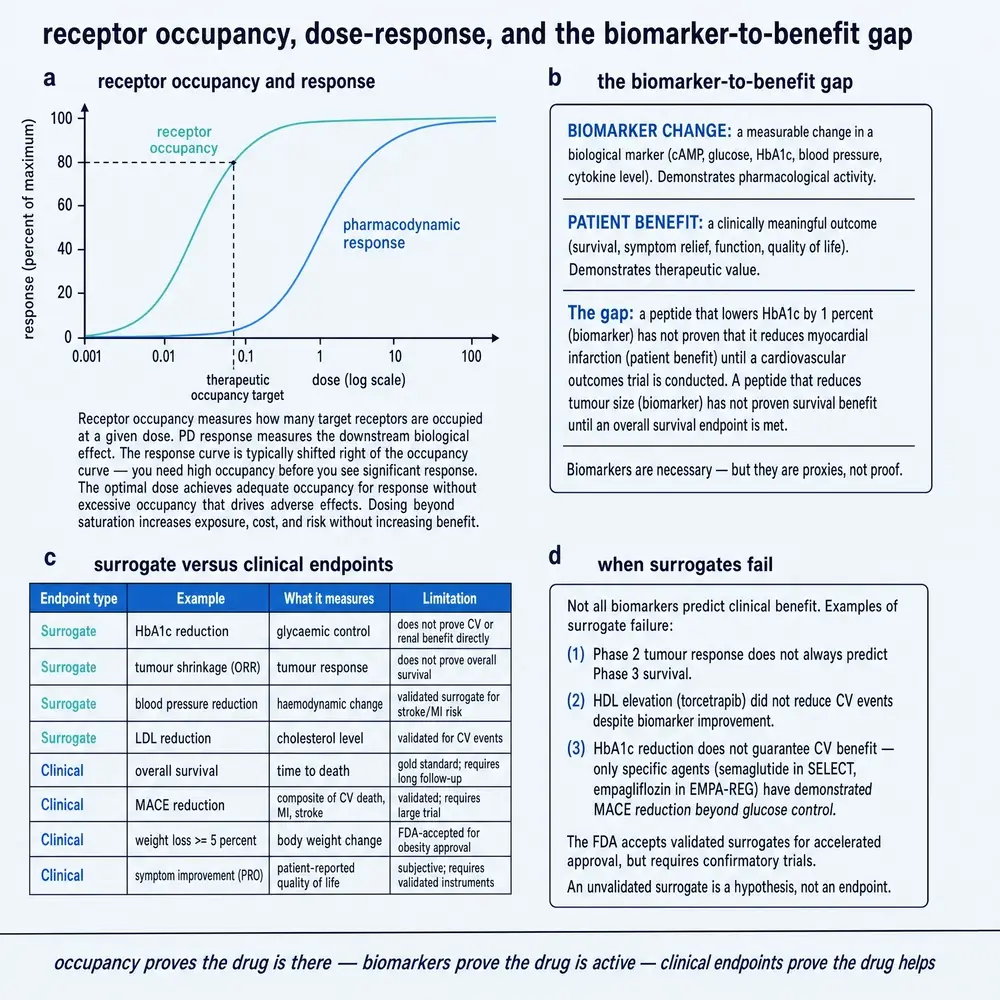
The best preclinical package can establish plausibility, reverse translation targets, and a justified human starting exposure. It cannot, by itself, demonstrate clinical benefit. Any claim that skips from a dish or a mouse to a human outcome has changed the subject.
Section 11Investigational status and the first human question
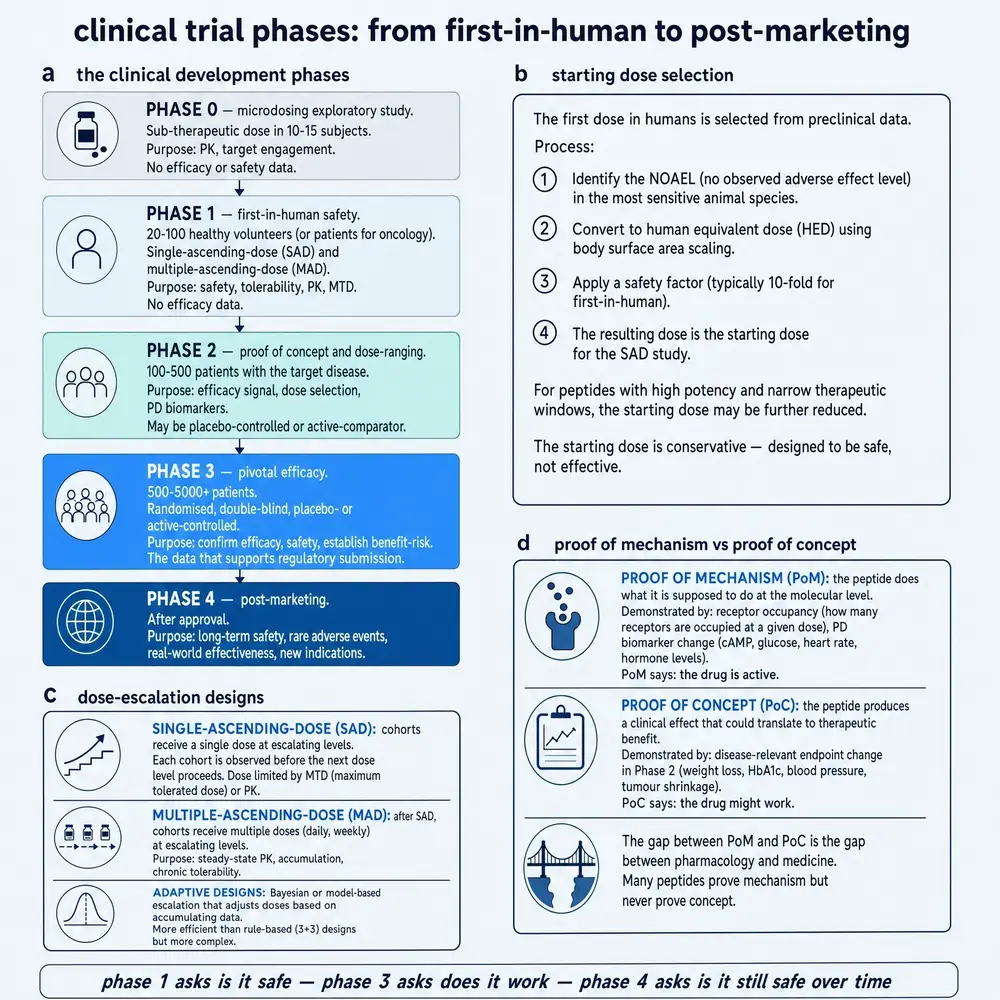
Crossing into human research changes the ethical and epistemic stakes. An investigational peptide is not a lifestyle accessory; it is an experiment under protocol, oversight and informed consent. First-in-human (FIH) studies usually ask about safety, tolerability and pharmacokinetics — sometimes with pharmacodynamic biomarkers — before anyone seriously claims efficacy. The starting dose is chosen to be cautiously informative, not heroic. EMA revision-1 guidance on FIH and early clinical trials, and the MABEL tradition for many biologics, exist because history taught expensive lessons about what happens when escalation outruns understanding. Sentinel dosing, staggered cohorts and pre-specified stopping rules are the operational face of that lesson.1513
Modern translational packages for complex biologics increasingly document how in vitro potency, tissue distribution assumptions and cynomolgus or other relevant species PK/PD were used to nominate a human starting exposure. That paper trail is itself evidence to read: when the assumptions are thin, the FIH design should be more conservative, not more romantic.4
Section 12SAD, MAD and the shape of early exposure
Single-ascending-dose (SAD) studies climb exposure across cohorts, usually with washout and review between steps. Multiple-ascending-dose (MAD) studies ask what repeated administration does to accumulation, troughs, induction of clearance mechanisms, tolerability and steady-state pharmacodynamics. For peptides, these designs also surface practicalities that tables omit: injection-site reactions, anti-drug antibodies emerging with repeat exposure, and whether a formulation’s promise survives real administration. The early clinical programme for the dual GIP/GLP-1 receptor agonist later known as tirzepatide (LY3298176) remains a useful open example of how receptor pharmacology, SAD/MAD exposure and a disease-relevant proof-of-concept signal were sequenced before confirmatory development — a case study in reading phase logic, not a dosing template.11
Bioavailability studies, food-effect studies where an oral or intestinal route is plausible, and drug–interaction programmes where transporters or concomitant disease therapies matter, extend the same logic: characterize the human fate of the molecule before betting a Phase III budget on an unexamined exposure pattern. Not every peptide needs every study; every programme needs a reasoned map of which uncertainties still threaten patients or interpretation.
Section 13Proof of mechanism, proof of concept, dose-ranging
Proof of mechanism asks whether the human biology moved as intended — occupancy, a pathway marker, a physiological response tightly tied to the target. Proof of concept asks whether that engagement produces a disease-relevant signal worth confirming. Dose-ranging asks which exposure band carries the signal with a tolerable safety surface. These studies are often Phase II in name and exploratory in spirit; their job is to earn or refuse a confirmatory trial, not to dress up as one.29
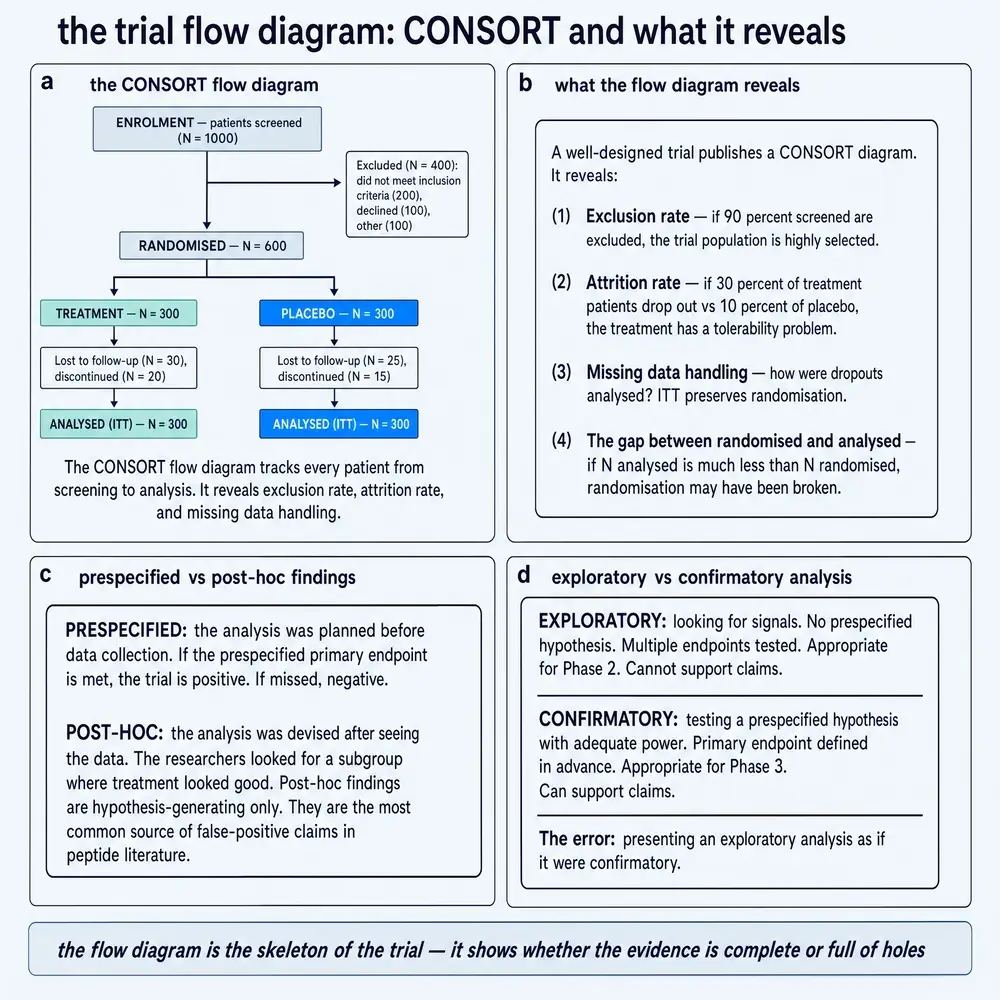
A common distortion is to treat a successful biomarker Phase II as if it were a hard-outcome Phase III. Another is to treat a failed exploratory study as proof of absence when it was never powered or designed to rule a benefit out. Exploratory and confirmatory analyses are different animals; renaming one as the other is not analysis, it is costume.
Section 14Randomization, controls, blinding
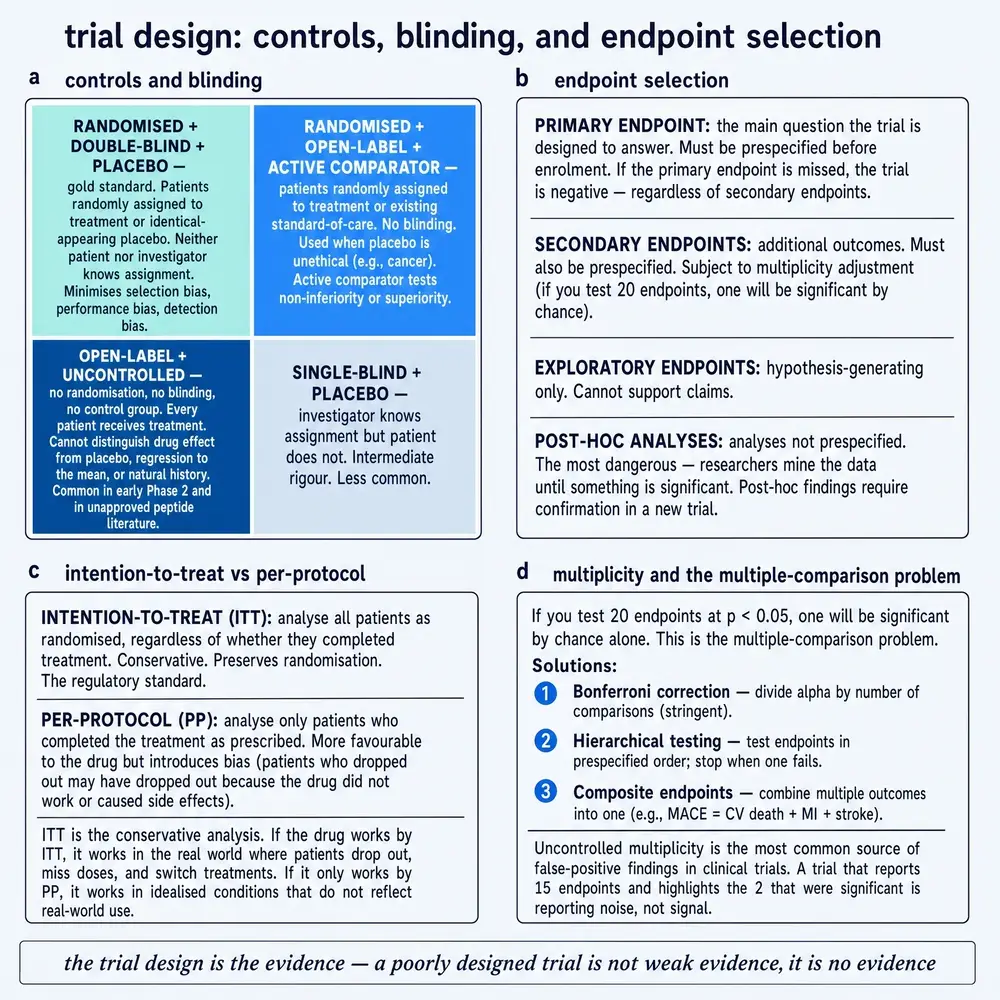
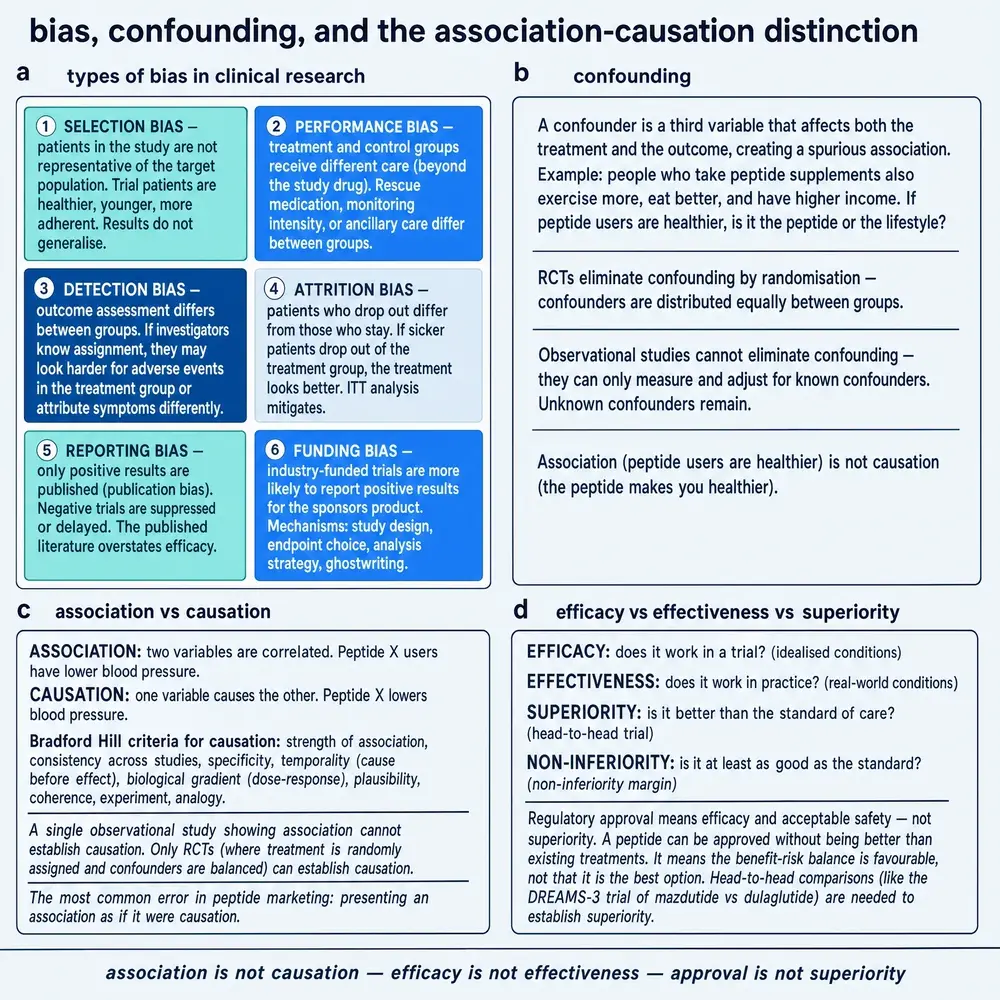
The randomized controlled trial remains the central instrument for confirmatory efficacy because it attacks confounding at the root: on average, known and unknown prognostic factors balance across arms. Placebo controls estimate the package of expectation, natural history and measurement ritual. Active comparators answer a different social question: is this better than what we already have? Both are legitimate; they are not interchangeable sentences.
Blinding (masking) protects against detection and performance bias when outcomes have subjectivity. For injectables, double-dummy designs and matched devices exist because a cold subcutaneous sting can unblind a hopeful participant. Allocation concealment protects the randomization itself. Intention-to-treat analysis asks what strategy was assigned; per-protocol analysis asks what happened among adherers. Neither is automatically “the truth”; each answers a different question, and selective switching between them after seeing the data is a classic path to spin.5
Section 15Endpoints: clinical, surrogate, patient-reported
Endpoint selection is where a trial decides what kind of truth it is allowed to tell.
Death, organ failure, validated functional scores and durable disease remission are hard to argue with. Surrogate endpoints — HbA1c, body weight, LDL, tumour shrinkage by imaging, a biomarker down 40% — can be indispensable for speed and power, yet history is littered with surrogates that moved while patients did not benefit, or while harm increased. Incretin medicines illustrate the mature pattern: glycaemic and weight endpoints can justify labelled metabolic claims, while blood-pressure effects, cardiovascular outcomes and rare safety questions require separate evidence bodies that should not be smuggled in as automatic consequences of HbA1c.2732 Patient-reported outcomes restore the authority of symptoms and quality of life when those are the point of treatment, provided the instruments are validated and the missing-data story is honest.28
Rare-event and organ-specific safety signals demand the same discipline. A systematic review and meta-analysis of randomized evidence on incretin-based therapy and thyroid cancer risk is the sort of object a careful reader wants: pooled randomized data, explicit null or small effects where present, and a refusal to let a pharmacovigilance anecdote outrank the design that can actually estimate relative risk.14 Certainty language borrowed from GRADE helps name how sure one ought to be after that pooling.16
Composite endpoints amplify event rates and can hide which component drove the result. Secondary endpoints generate hypotheses; they do not automatically inherit the confirmatory aura of the primary. Multiplicity — many looks, many endpoints, many subgroups — inflates false-positive risk unless the statistical plan pays for it in advance.
Section 16Safety monitoring and the rare-event problem
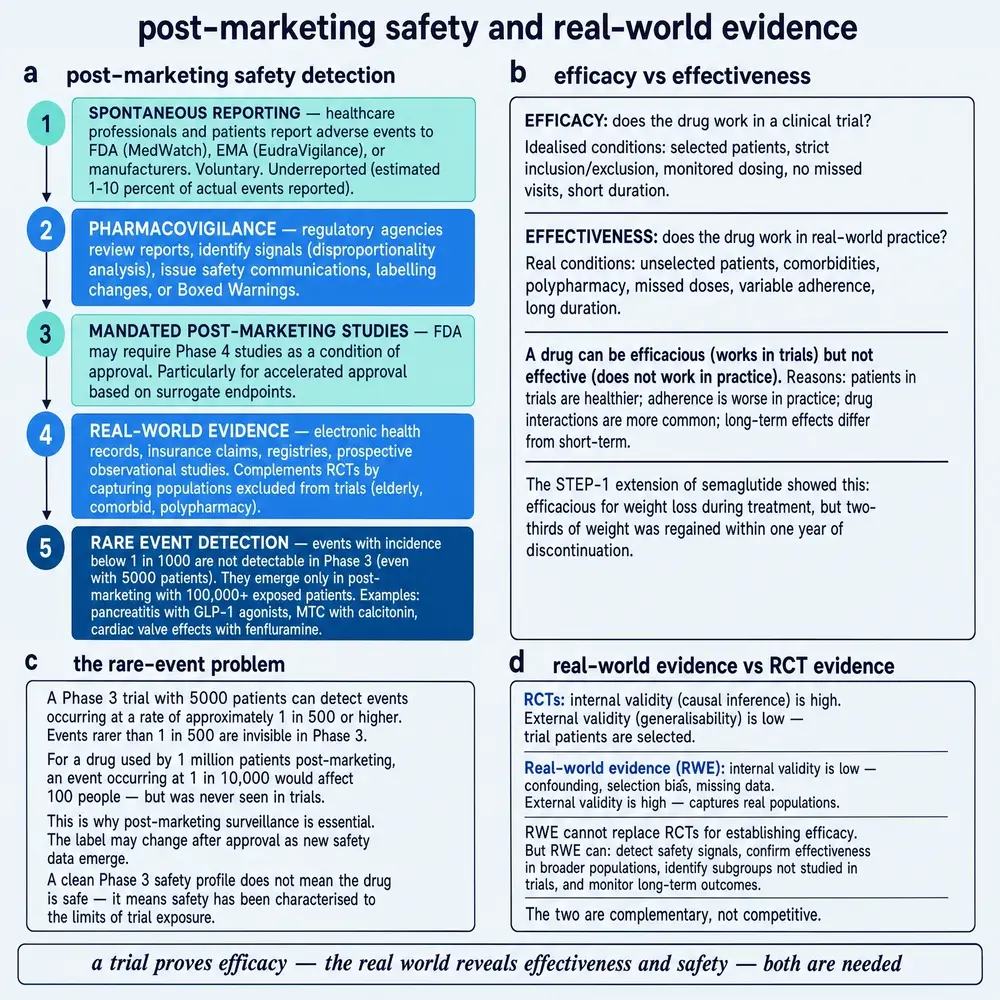
Safety monitoring in development includes adverse-event capture, laboratory panels, adjudication committees and, for larger programmes, data safety monitoring boards with access to accumulating unblinded risk. Even so, pre-approval trials are structurally weak against rare harms. If an adverse event occurs in one in five thousand exposed people, a three-thousand-person programme may see nothing. That is not a conspiracy; it is arithmetic. Postmarketing surveillance and real-world evidence exist because the denominator has to grow.30
Section 17Special populations and external validity
Children, older adults, people with renal or hepatic impairment, pregnant people and those with multiple interacting medicines are often under- represented early. Label expansions and dedicated studies exist to close those gaps.
Until those gaps close, efficacy in a tidy Phase III population is a claim about that population. Extrapolation is an argument, not a right.
Section 18Approval, labels and life after launch
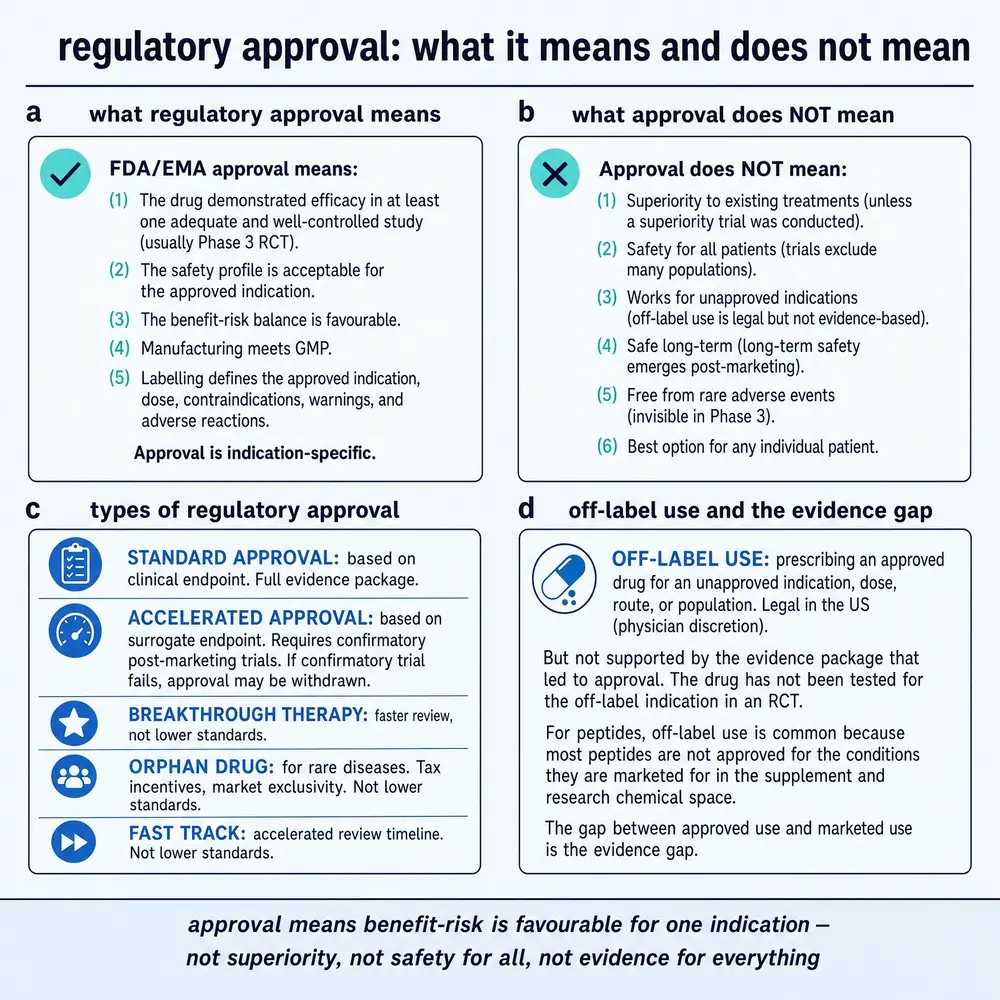
Regulatory approval, when it comes, is a jurisdiction-specific judgment that a dossier supports a favourable benefit–risk balance for a labelled use. The label — indications, contraindications, warnings, clinical pharmacology — is part of the evidence product. Accelerated or conditional pathways may lean more heavily on surrogates with obligations for confirmatory follow- through; those obligations are not fine print for lawyers alone.35
Real-world evidence after launch can refine effectiveness, detect rare safety signals and describe adherence. It can also re-introduce confounding at industrial scale. Fresh comparative RWE among GLP-1 receptor agonists already shows that agents sharing a receptor class are not interchangeable clinical objects: endocrine and dermatologic adverse-event patterns can diverge, which is precisely why class-level marketing language is a poor substitute for product-level evidence.26 A large observational association is a beginning, not an automatic upgrade over randomization.6
The live registry landscape is another reading tool. Head-to-head and extension programmes — for example comparative work on retatrutide versus tirzepatide in adults with obesity (NCT06662383), or long-horizon investigations such as semaglutide in early Alzheimer disease (NCT04777396) — tell you which questions sponsors still consider unsettled enough to randomize. Registry presence is not efficacy; completed Phase 3 packages and labelled indications remain the confirmatory objects.910 Oral small-molecule GLP-1 receptor agonists now entering the same evidentiary conversation further remind the reader that route and modality change the pharmacology file even when the receptor name stays familiar.25 Adjacent metabolic programmes combining incretin biology with other pathways (for example in metabolic dysfunction-associated steatohepatitis) should likewise be appraised by endpoint and population, not by brand adjacency.12
Efficacy asks what the peptide can do under protocol. Effectiveness asks what it does in the messy world. A medicine can win the first contest and lose the second — or, more quietly, win both for a narrower group than the marketing story prefers.
Section 19Mechanism is not outcome
A peptide can engage its receptor exactly as drawn on the whiteboard and still fail patients. Downstream redundancy, compensatory physiology, wrong tissue, wrong time scale, wrong patient subset, or an endpoint that does not care about that pathway will all produce the same public fact: the mechanism was real and the benefit was not. Conversely, a clinical benefit without a fully mapped mechanism can still be real — insulin’s early decades were not waiting for modern receptor crystallography. Mechanism explains and guides; it does not substitute for outcome.
Section 20Statistical significance and clinical importance
A p-value answers a narrow question about compatibility of the data with a model that assumes no effect (or another pre-specified null). It does not answer whether the effect is large enough to matter to a person. Huge trials detect tiny differences; tiny trials miss large ones. The useful companions are effect size, confidence intervals, and a pre-specified notion of clinical importance — sometimes formalized as a minimal clinically important difference for a score.
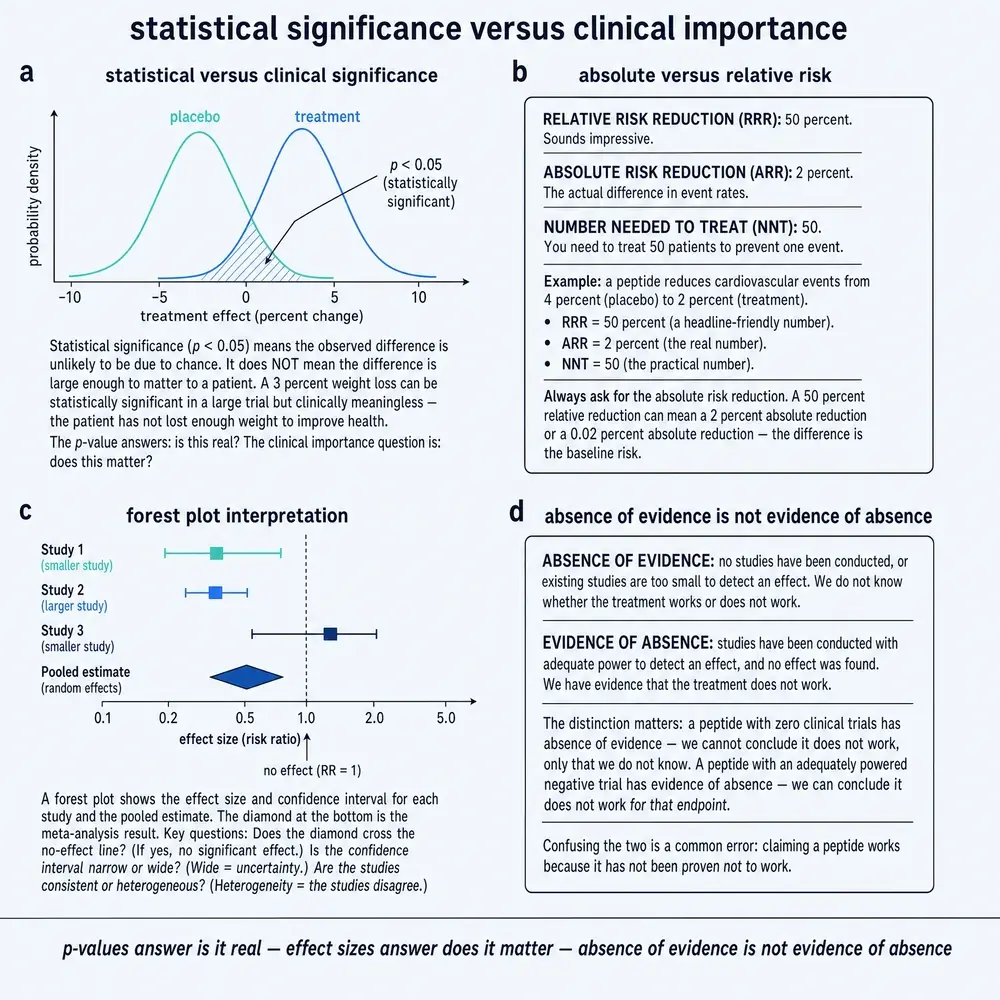
Relative and absolute measures tell the same arithmetic in different emotional registers. A 50% relative risk reduction may be a 5 percentage-point absolute change; the number needed to treat is the reciprocal of that absolute difference. Readers who see only the relative figure are being offered temperature without mass.
Section 21Biomarkers, surrogates and patient benefit
A biomarker can prove you hit the target. A surrogate endpoint is a biomarker or intermediate outcome accepted (rightly or wrongly) as a stand-in for clinical benefit. Patient benefit is how people feel, function or survive. The further left you sit on that chain, the faster the study and the larger the risk of a beautiful irrelevance. Surrogate inflation — selling a marker change as if it were a hard outcome — is one of the most common peptide-era distortions precisely because peptides are so good at moving markers.
Section 22Prespecified versus post hoc; exploratory versus confirmatory
A finding predicted in a protocol and protected by a statistical plan is not the same object as a finding noticed while swimming through subgroups. Post hoc observations can be true and still be hypotheses. Exploratory analyses are how science generates its next questions; confirmatory analyses are how it earns its public claims. Mixing the labels after the fact is how literature and press releases launder chance.
Section 23Animal efficacy, short-term response, durable benefit
Animal efficacy is evidence about animals (and about the model). Short-term human response is evidence about acute pharmacology or early endpoints. Durable benefit is evidence about whether the advantage persists on a time scale that matches the disease. Obesity, neurodegeneration, heart failure, infection and acute pain do not share a time scale; a twelve-week signal is decisive in one setting and preliminary in another. Saying “it worked” without the tense and the species is not brevity. It is erasure.
Section 24Absence of evidence and evidence of absence
A small null trial does not prove a peptide is inert; it often proves the study could not see a moderate effect. A large, well-conducted null trial on a well-chosen endpoint in the right population can justify saying the benefit is unlikely at the tested regimen. The vocabulary should track the design. “No evidence of benefit” and “evidence of no benefit” are different sentences; popular discussion collapses them constantly.
Section 25Association, causation and the observational tax
Observational studies of peptide users — clinic series, registries, pharmacovigilance databases — are essential for safety and for effectiveness questions trials will never fully answer. They are also soaked in confounding: who gets access, who adheres, who is monitored, who reports. Causal language (“it made”, “it cured”) needs causal methods and preferably causal designs. A chart of before-and-after scores from an uncontrolled series is a beginning of curiosity, not an end of debate.
Section 26Common distortions in peptide evidence culture
Citation laundering is citing a review that cited a review that cited an abstract, until a weak claim wears a tuxedo of superscripts.
Selective citation is harvesting every supportive animal study while leaving contradictory human data in the drawer.
Selective quotation is lifting a hopeful clause from a paper whose conclusion was cautious or negative.
Animal-to-human extrapolation without exposure, species and model- validity caveats is storytelling with laboratory props.
In vitro concentration-to-human-dose confusion treats micromolar media concentrations as if they were a syringe label.
Uncontrolled case reports are signals and anecdotes; they become misleading when sold as efficacy.
Underpowered trials produce noisy estimates that marketing can cherry- pick as “promising trends.”
Surrogate-endpoint inflation and multiple-comparison problems turn flexible analysis into false discovery.
Publication bias and abstract spin mean the paper’s face and body disagree — believe the body, then check the data tables.
Conflicts of interest do not automatically falsify a result; they do justify slower reading and independent replication.
Social-media amplification rewards certainty and speed, the two qualities evidence appraisal spends its life restraining.
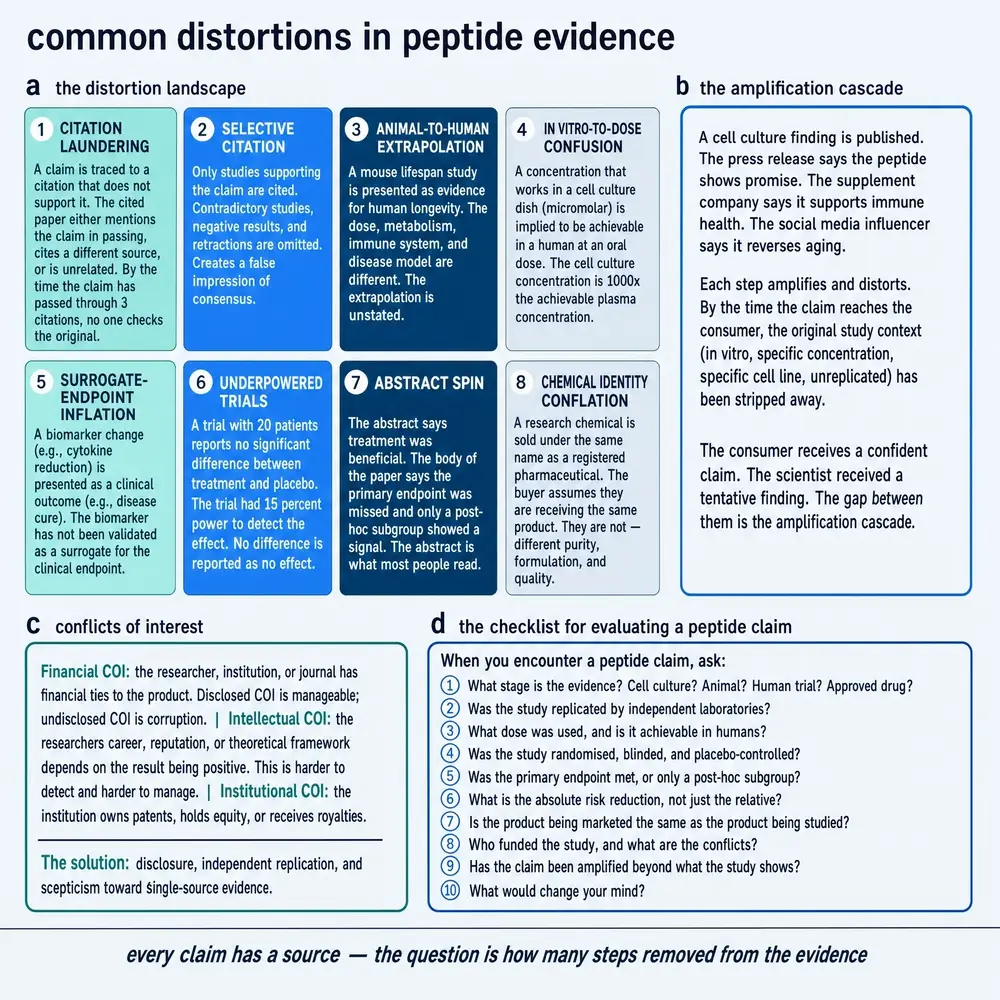
Non-equivalent products are a peptide-specific trap: research on a pharmaceutical, well-characterized preparation is used to advertise a different salt, purity, impurity profile or untested compounded mixture. Chemical family resemblance is not clinical interchangeability. Sequence identity on a vendor page is not a bioequivalence study. Even within regulated biosimilar insulin, stakeholder experience of switching shows that analytical similarity, clinical packages and lived interchangeability are related but not identical claims — a caution that applies a fortiori when the compared articles are not biosimilars at all.203
If the product studied is not the product being discussed, the clinical claim does not transfer by brand proximity. That error is common enough in peptide commerce to deserve its own red flag.
Section 27An evidence-assessment framework for peptide claims
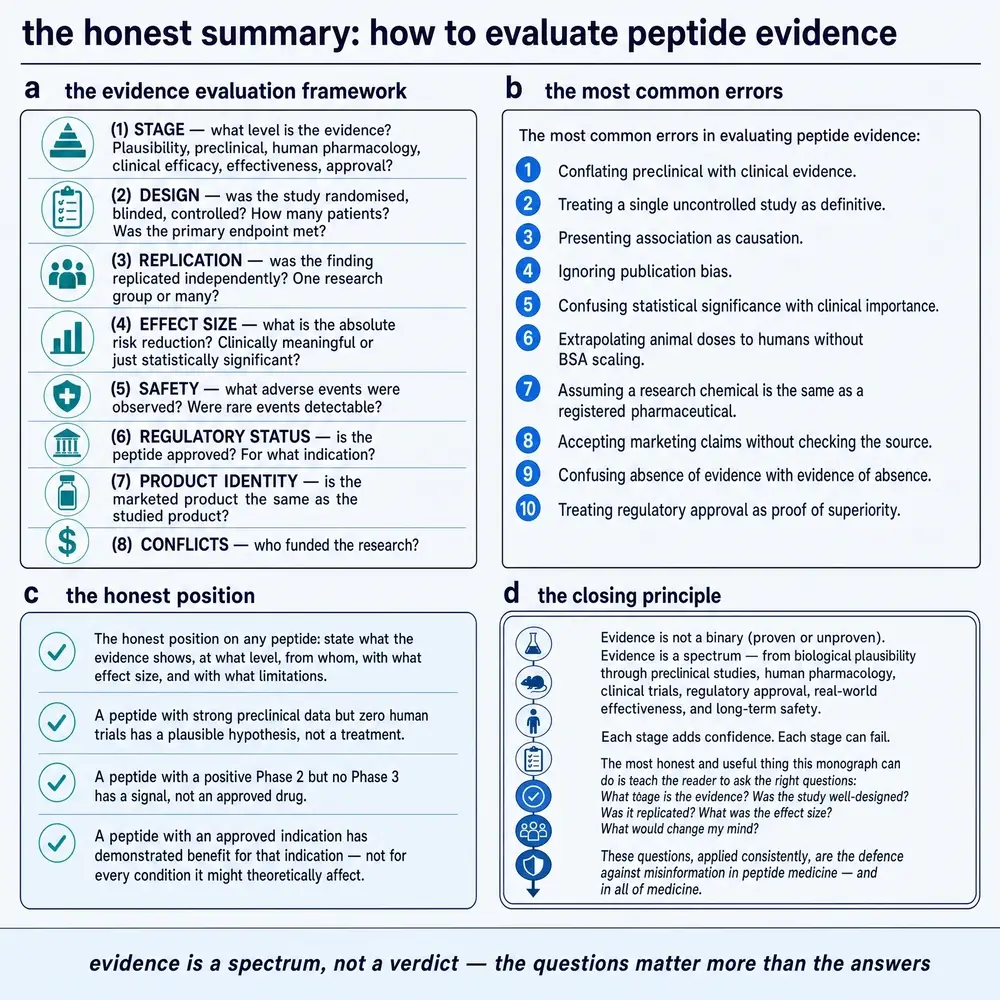
When a peptide claim reaches you — in a paper, a deck, a podcast, a catalogue — a short framework beats a vague feeling of scepticism.
- Name the claim type. Plausibility, preclinical, human PK/PD, efficacy, effectiveness, safety, approval, or marketing?
- Name the product identity. Sequence, salt, formulation, purity context, and whether the studied article matches the discussed article.
- Name the system. In vitro, ex vivo, which animal, which human population.
- Name the endpoint. Binding, biomarker, surrogate, symptom, hard clinical outcome.
- Name the design. Uncontrolled, observational, randomized; blinded or not; prespecified or post hoc.
- Name the effect honestly. Absolute and relative; interval not only point; durability.
- Name what could fake it. Bias domains, confounding, attrition, selective reporting, multiplicity.
- Name what is still unknown. Rare harms, special populations, long-term effectiveness, independent replication.
- Only then decide how loud you are allowed to speak.
This framework is expanded as a checklist in the apparatus. It is not a substitute for reading the methods; it is a way to remember what the methods were for.
Section 28A clinical-development map you can hold in your head
Think of development as nested questions rather than as a prestige staircase:
- Is the target worth betting on?
- Does the molecule engage it with usable potency and selectivity?
- Does engagement survive cells and tissues?
- Does an animal model with real validity respond at a human-relevant exposure?
- Can humans tolerate an engaging exposure?
- Does engagement produce a disease-relevant signal?
- Does a confirmatory trial show benefit that outweighs harm on an endpoint patients should care about?
- Does broader use still look favourable when the sample size grows and the protocol thins?
Skip a question and you do not go faster. You go blind.
Section 29Weighing freshness without worshipping it
Recent evidence often improves on assay technology, trial conduct, endpoint discipline and manufacturing characterization. That is why this series weights freshness — and why this rewrite deliberately re-queried Europe PMC, trial registries and guidance portals rather than freezing the bibliography at the first local sweep. But a 2026 observational flourish does not erase a decade of adequately powered null trials, and a new surrogate victory does not retire an older hard-outcome failure without a specific reconciliation. The rule used here is simple: prefer the newer result when it is not contradicted by a preponderance of better or larger evidence; when it is contradicted, explain the disagreement rather than deleting one side.
Section 30What demonstrated benefit looks like
Demonstrated benefit, in the sense this monograph defends, is cumulative: human exposure characterized; mechanism engaged or thoughtfully unnecessary to the claim; confirmatory evidence on an outcome that matches the promise; safety understood at least as far as the denominator allows; and product identity held constant across the evidence and the discussion. Regulatory approval is often strong corroboration of that package for a labelled use. It is still not a licence for every adjacent claim a marketer can imagine.
Peptide medicine has already delivered some of the most important therapies in modern history. That success is precisely why evidence literacy matters. The more powerful the class becomes, the more expensive confusion gets — for patients, for science, and for anyone trying to tell the difference between a molecule that changed medicine and a story that only rented the vocabulary.
This monograph describes how evidence for peptide medicines is generated and how that evidence should be read. It weighs study designs, endpoints and distortions; it labels species and systems; it prefers recent data except where a preponderance of evidence contradicts them. It does not recommend the human use of any compound and specifies no dose, route or schedule for any person.
Section 31References
The list below is numbered and sorted by first-author surname. Every entry was resolved from the source record’s own metadata — author, title, journal, year, volume, issue, pages and identifiers — and never from recall. In-text citations are the superscript numbers throughout the document.
- Agnihotri S, Venkatesh A, Ramanathan M, Balu-Iyer S.. First step towards predicting clinical immunogenicity of biologics using in vitro based readouts as animal trial alternatives. . 2026.
PMID 42036038 · doi:10.1016/j.xphs.2026.104297 · PMC13162341 · source - Alleva DG, Delpero AR, Sathiyaseelan T, Murikipudi S, Lancaster TM, Atkinson MA, et al.. An antigen-specific immunotherapeutic, AKS-107, deletes insulin-specific B cells and prevents murine autoimmune diabetes. Frontiers in Immunology. 2024;15:1367514.
PMID 38515750 · doi:10.3389/fimmu.2024.1367514 · PMC10954819 - Aravind SR, Singh KP, Aquitania G, Mogylnytska L, Zalevskaya AG, Matyjaszek-Matuszek B, et al.. Biosimilar Insulin Aspart Premix SAR341402 Mix 70/30 Versus Originator Insulin Aspart Mix 70/30 (NovoMix 30) in People with Diabetes: A 26-Week, Randomized, Open-Label Trial (GEMELLI M). Diabetes Therapy. 2022;13(5):1053.
PMID 35420397 · doi:10.1007/s13300-022-01255-7 · PMC9008602 - Augustin A, Avignon B, Boetsch C, Breous-Nystrom E, Broders O, Cabon L, Dernick K, Durr E, Eigenmann MJ, Fischer S, Flinn N, Gerard R, Giusti AM, Gjorevski N, Grote HJ, Häusermann F, Hobi N, Husar E, Juglair L, Keiser SP, Keshelava N, Kustermann S, Marban-Doran C, Marrer-Berger E, Quetglas IM, Micallef V, Matheis R, Ortiz Franyuti D, Polonchuk L, Raggi G, Roller A, Ruffiner P, Sadok S, Saylan T, Schaub N, Schubert D, Shetage S, Stokar-Regenscheit N, Walz AC, Weinzierl T, Wolowski V, Zihlmann C.. Translational strategy to support the first-in-human study of a TCR-like T cell bispecific with an <i>in vitro</i>-based safety approach. . 2026.
PMID 42079663 · doi:10.3389/fimmu.2026.1736584 · PMC13133561 · source - Aydın G, Hatırnaz Ş, Hatırnaz ES, Çetinkaya MB, Akdeniz M, Güngör ND, et al.. The letrozole use in reproductive medicine: Beyond aromatase inhibition - a comprehensive review. Turkish Journal of Obstetrics and Gynecology. 2026;23(1):101.
PMID 41700008 · doi:10.4274/tjod.galenos.2026.02391 · PMC12963804 - Babazadeh D, Wyatt S, Steinberg FM. Examining the Omission of Dietary Quality Data in Glucagon-Like Peptide 1 Clinical Trials: A Scoping Review. Advances in Nutrition. 2025;16(10):100491.
PMID 40812508 · doi:10.1016/j.advnut.2025.100491 · PMC12592236 - Bjerke DL, Li J, Gao Y, Hu P, Lintner K, Hakozaki T. A framework for the safety evaluation of peptides in cosmetics. Current Research in Toxicology. 2026;10:100291.
PMID 41953401 · doi:10.1016/j.crtox.2026.100291 · PMC13054063 - Bonga KN, Padhan M. Incretin Analogues for Weight Reduction in Non-Diabetic Obese: A Review of Liraglutide, Semaglutide, and Tirzepatide Beyond Glycemic Control. Rambam Maimonides Medical Journal. 2026;17(1):e0006.
PMID 41605830 · doi:10.5041/RMMJ.10565 · PMC12857648 - ClinicalTrials.gov registry record. A Study of Retatrutide (LY3437943) Compared to Tirzepatide (LY3298176) in Adults Who Have Obesity. ClinicalTrials.gov. 2024.
source - ClinicalTrials.gov registry record. A Research Study Investigating Semaglutide in People With Early Alzheimer's Disease (EVOKE). ClinicalTrials.gov. 2021.
source - Coskun T, Sloop KW, Loghin C, Alsina-Fernandez J, Urva S, Bokvist KB, et al.. LY3298176, a novel dual GIP and GLP-1 receptor agonist for the treatment of type 2 diabetes mellitus: From discovery to clinical proof of concept. Molecular Metabolism. 2018;18:3.
PMID 30473097 · doi:10.1016/j.molmet.2018.09.009 · PMC6308032 - Cruz AM, Lima BCV, de Ferreira JESM, Teles RB.. SGLT2 inhibitors and incretin-based therapies for metabolic dysfunction-associated steatohepatitis: a systematic review. . 2026.
PMID 42265474 · doi:10.1007/s00228-026-04095-7 · PMC13249686 · source - Day JW, Howell K, Place A, Long K, Rossello J, Kertesz N, et al.. Advances and limitations for the treatment of spinal muscular atrophy. BMC Pediatrics. 2022;22:632.
PMID 36329412 · doi:10.1186/s12887-022-03671-x · PMC9632131 - Eisa N, Barood O.. Incretin-Based Therapy and Thyroid Cancer Risk: A Systematic Review and Meta-Analysis of Randomized Controlled Trials. . 2026.
PMID 42221413 · doi:10.1016/j.aed.2026.03.003 · PMC13221932 · source - European Medicines Agency. Guideline on strategies to identify and mitigate risks for first-in-human and early clinical trials with investigational medicinal products (Revision 1). EMA/CHMP/SWP/28367/07 Rev. 1. 2017.
source - GRADE Working Group. Grading of Recommendations Assessment, Development and Evaluation (GRADE). GRADE Working Group. 2024.
source - Guarnieri L, Bosco F, Corasaniti MT, Citraro R, De Sarro G. Migraine, monoclonal antibodies, and monitoring: a review of pharmacovigilance in the era of biologics. Frontiers in Pharmacology. 2026;17:1822176.
PMID 42292852 · doi:10.3389/fphar.2026.1822176 · PMC13260513 - Heymsfield SB, Aronne LJ, Montgomery P, Klickstein LB, Coleman LA, Dole K, et al.. Bimagrumab plus semaglutide alone or in combination for the treatment of obesity: a randomized phase 2 trial. Nature Medicine. 2026;32(3):869.
PMID 41772149 · doi:10.1038/s41591-026-04204-0 · PMC13004672 - Hickling TP, Nielsen M, Meysman P, Rose RH, Obrezanova O.. Review: application and opportunities for machine learning and artificial intelligence in preclinical immunogenicity risk assessment. . 2026.
PMID 42292401 · doi:10.3389/fimmu.2026.1720928 · PMC13253642 · source - Hindley B, Wright S, Ooi C, Da Costa R, Cope L.. Exploring Stakeholder Perceptions and Experience of Biosimilar Insulin Switching: A Scoping Review. . 2026.
PMID 41466553 · doi:10.1002/edm2.70142 · PMC12750096 · source - International Council for Harmonisation. ICH E6(R2) Good Clinical Practice. ICH Harmonised Guideline. 2016.
source - International Council for Harmonisation. ICH M3(R2) Guidance on nonclinical safety studies for the conduct of human clinical trials and marketing authorization for pharmaceuticals. ICH Harmonised Guideline. 2009.
source - Iseas S, Roca EL, O’Connor JM, Eleta M, Sanchez-Luceros A, Di Leo D, et al.. Administration of the vasopressin analog desmopressin for the management of bleeding in rectal cancer patients: results of a phase I/II trial. Investigational New Drugs. 2020;38(5):1580-1587.
PMID 32166534 · doi:10.1007/s10637-020-00914-5 · PMC7497699 - Jeong SH, Shin JY, Lee PH. Drug repurposing for disease-modifying effects in multiple system atrophy. Translational Neurodegeneration. 2026;15:15.
PMID 42010648 · doi:10.1186/s40035-026-00551-7 · PMC13097543 - Kansakar U, Jankauskas SS, Pande S, Mone P, Varzideh F, Santulli G.. Orforglipron: A Comprehensive Review of an Oral Small-Molecule GLP-1 Receptor Agonist for Obesity and Type 2 Diabetes. . 2026.
PMID 41683830 · doi:10.3390/ijms27031409 · PMC12898445 · source - Lee N, Kim Y.. Not All GLP-1 Receptor Agonists Are Alike: Real-World Evidence of Differential Endocrine and Dermatologic Safety. . 2026.
PMID 41886296 · doi:10.1002/dmrr.70163 · PMC13020769 · source - Moiz A, Zolotarova T, Filion KB, Eisenberg MJ.. GLP-1 Receptor Agonists and Blood Pressure: A State-of-the-Art Review of Mechanisms, Evidence, and Clinical Implications. . 2026.
PMID 41128495 · doi:10.1093/ajh/hpaf205 · PMC13080269 · source - Omes QPM, van der Veen D, Kersten CJBA, Arntz RM, Filius PMG, van den Wijngaard IR, et al.. MR GENTLE—multicentre randomised controlled trial of ghrelin in anterior circulation ischaemic stroke treated with endovascular thrombectomy: a phase 2 trial. Trials. 2026;27:126.
PMID 41546024 · doi:10.1186/s13063-026-09426-8 · PMC12892552 - Paphawannasri P, Tawonsawatruk T, Phetfong J, Supokawej A. Stem cell-based approaches for alopecia: A narrative review of current and emerging treatment strategies. Cell Transplantation. 2026;35:09636897261454219.
PMID 42246281 · doi:10.1177/09636897261454219 · PMC13241688 - Rosenstock J, Bajaj HS, Lingvay I, Heller SR. Clinical perspectives on the frequency of hypoglycemia in treat-to-target randomized controlled trials comparing basal insulin analogs in type 2 diabetes: a narrative review. BMJ Open Diabetes Research & Care. 2024;12(3):e003930.
PMID 38749508 · doi:10.1136/bmjdrc-2023-003930 · PMC11097869 - Schulz KF, Altman DG, Moher D; CONSORT Group. CONSORT 2010 Statement: updated guidelines for reporting parallel group randomised trials. BMJ / CONSORT. 2010.
PMID 20332511 · doi:10.1136/bmj.c332 · source - Sidrak WR, Kalra S, Kalhan A. Approved and Emerging Hormone-Based Anti-Obesity Medications: A Review Article. Indian Journal of Endocrinology and Metabolism. 2024;28(5):445.
PMID 39676791 · doi:10.4103/ijem.ijem_442_23 · PMC11642516 - Song Q, Liu L, Yang Q, Pan M, Zhang Y. Quercetin in metabolic diseases: mechanisms, therapeutics, and multidimensional frontiers. Frontiers in Endocrinology. 2026;17:1800322.
PMID 42051459 · doi:10.3389/fendo.2026.1800322 · PMC13111143 - Sonne N, Roque M, Zachariassen LF, Porsgaard T, Pors SE, Cavalera M, et al.. Generation and characterisation of a humanised GLP-1 receptor mouse model for translational drug development. eBioMedicine. 2026;124:106121.
PMID 41547115 · doi:10.1016/j.ebiom.2026.106121 · PMC12855590 - Tantoush M, Almaghrabi Y, Abusbaeh A, Ahmed N, Tantush A, Ben Hamida B, et al.. Comparative Efficacy and Safety of Different Orforglipron Doses in Patients With Type 2 Diabetes Mellitus and Obesity: A Systematic Review and Network Meta-Analysis. Cureus. 2026;18(1):e102018.
PMID 41728423 · doi:10.7759/cureus.102018 · PMC12923295 - Welsh BT, Cote SM, Meshulam D, Jackson J, Pal A, Lansita J, et al.. Preclinical Safety Assessment and Toxicokinetics of Apitegromab, an Antibody Targeting Proforms of Myostatin for the Treatment of Muscle-Atrophying Disease. International Journal of Toxicology. 2021;40(4):322-336.
PMID 34255983 · doi:10.1177/10915818211025477 · PMC8326894 - Zhou Z, Li Y, Tu Y, He M, Liao D, He Z, et al.. Efficacy and safety of Guanylyl cyclase C agonists (linaclotide and plecanatide) in patients with irritable bowel syndrome with constipation: a systematic review and meta-analysis of randomized controlled trials. Frontiers in Pharmacology. 2026;17:1761301.
PMID 42038325 · doi:10.3389/fphar.2026.1761301 · PMC13106150
Section 32Evidence handling and research method
Study type is labelled at the point of use. Recency is preferred when not contradicted by a preponderance of older or stronger evidence. Negative and null findings are retained as first-class evidence. No human use, dose, route or schedule is recommended anywhere in this document.
Local corpus. Topic-gated scan of the Project 05 open-access JATS
store (fulltext/open_access_jats and related peptide-sciences
XML), reported in notes/CORPUS_REPORT.md.
API enrichment (this rewrite). Keys and service URLs loaded from
C:\Apps\_env\research_stack.env (never reproduced in the
manuscript). Harvest script
pipeline/02_api_research_harvest.py queried Tavily, Exa,
Europe PMC and ClinicalTrials.gov, and Firecrawl-extracted CONSORT, GRADE,
ICH E6(R2) and FDA guidance landing material into
notes/API_RESEARCH_PACKET.json. External bibliographic records
were normalized in manifest/02_external_refs.json and merged into
the cited set by pipeline/05_source_matrix.py.
NCBI note. NCBI_API_KEY was empty in the shared env at
build time; PubMed rate-limited eutils were not relied upon. Europe PMC and
the local JATS store carried the bibliographic load.
Appendix AGlossary
Absolute risk reduction (ARR). The arithmetic difference in event rates between control and treated groups.
Active comparator. A control arm that receives an established therapy rather than placebo.
Allocation concealment. Preventing foreknowledge of the next assignment so randomization cannot be subverted.
Biological plausibility. A mechanistic story that could be true; not yet evidence of benefit.
Blinding (masking). Keeping participants and/or investigators unaware of assignment to reduce bias.
Clinical effectiveness. Benefit in ordinary practice conditions.
Clinical efficacy. Benefit under protocolized trial conditions.
Confounding. A mixing of effects when a third factor is associated with both exposure and outcome.
Endpoint. The pre-specified outcome a trial is designed to measure.
First-in-human (FIH). The initial clinical administration of an investigational product, usually focused on safety and PK/PD.
GRADE. A system for rating certainty of evidence and strength of recommendations.
Immunogenicity. The capacity of a product to provoke anti-drug immune responses.
Intention-to-treat (ITT). Analysis by assigned strategy, regardless of adherence.
MABEL. Minimum anticipated biological effect level; a starting-dose concept used for many biologics.
MAD / SAD. Multiple- / single-ascending-dose early clinical designs.
Minimal clinically important difference (MCID). The smallest change in an outcome that patients would consider meaningful.
Number needed to treat (NNT). 1 / ARR; how many people need the intervention for one additional good outcome.
Pharmacovigilance. Organised detection and assessment of adverse effects after a product is in wider use.
Placebo. An inactive control that preserves expectation and measurement ritual.
Post hoc analysis. An analysis defined after seeing the data; hypothesis-generating unless carefully constrained.
Proof of concept (PoC). Early clinical evidence that engagement may produce a disease-relevant signal worth confirming.
Proof of mechanism (PoM). Evidence that the intended human biology was engaged.
Real-world evidence (RWE). Evidence from routine-care data and observational designs outside classical trials.
Receptor occupancy. The fraction of target receptors bound at a given exposure.
Relative risk reduction (RRR). The proportional reduction in risk; can look large when absolute risk is small.
Surrogate endpoint. A substitute outcome believed to predict clinical benefit; requires validation of the chain.
Translational biomarker. A measurable marker used to bridge preclinical engagement to human pharmacology.
Appendix BStudy-appraisal checklist
- Is the chemical / product identity the same as the product being discussed?
- What exact claim is being made (plausibility through marketing)?
- What system produced the data (assay, animal species, human population)?
- Was the endpoint clinical, surrogate, biomarker, or binding only?
- Was allocation randomized? Was blinding plausible for this modality?
- Was the primary analysis prespecified? How many other looks occurred?
- Are absolute effects and intervals reported, or only relative spin?
- Was the study powered for the claim now being made?
- How much attrition occurred, and was ITT respected?
- What safety denominator exists for rare events?
- Do independent studies agree, or is the claim a singleton?
- Does a regulator’s labelled language match the popular claim?
Appendix CExamples of misinterpretation
C.1 The nanomolar leap. A vendor cites a 2 nM IC50 beside a human wellness claim. The assay used a purified receptor and a peptide preparation that is not the marketed vial. Misinterpretation: treating biochemical potency as clinical benefit and product identity as fungible.
C.2 The mouse photograph. An animal study shows dramatic tumour shrinkage at a milligram-per-kilogram dose. Social media converts the figure into a human regimen by body-weight arithmetic. Misinterpretation: dose translation without exposure, species or safety margins; efficacy model treated as predictive without validation.
C.3 The surrogate press release. A Phase II trial announces a biomarker win as if hard outcomes were shown. Misinterpretation: surrogate inflation; exploratory success dressed as confirmatory benefit.
C.4 The relative-risk poster. “50% fewer events” without baseline risk. Misinterpretation: relative framing that hides a small absolute difference and a large NNT.
C.5 The interchangeable sequence. A pharmaceutical RCT is used to advertise a research-chemical vial with the same amino-acid string. Misinterpretation: conflating sequence identity with clinical interchangeability.
Appendix DContradictory-evidence register
This register records classes of contradiction the reader should expect, not a claim that every peptide fails.
- Marker up, patient flat: target engagement without clinical benefit on hard endpoints.
- Animal yes, human no: efficacy models that do not predict clinical trials.
- Short-term yes, durable no: early responses that fade with counter-regulation or attrition of effect.
- Efficacy yes, effectiveness thinner: trial benefit that shrinks in routine care.
- Approval yes, superiority no: labelled use without proof of being best-in-class for every patient.
- Abstract hopeful, body cautious: spin discordance inside a single paper.
Specific contradictory papers from the reading corpus are listed in
notes/CONTRADICTORY_EVIDENCE_REGISTER.md after the corpus export.
Appendix EAdversarial methodological review
An adversary would say this monograph still leans on open-access full text
and therefore under-samples paywalled pivotal trials; that commissioned
schematics are pedagogically cleaner than messy trial conduct; and that
GRADE-style language is applied narratively rather than as a formal rating
for every claim. Those limitations are real. They do not licence confusing a
binding assay with a patient benefit, or a labelled indication with a
marketing superlative. A longer adversarial note lives in
notes/ADVERSARIAL_REVIEW.md.
Appendix FClaim-to-source audit summary
Load-bearing distinctions in Parts One through Five are tied to the cited
bibliography records and to the local corpus report. The detailed audit table
is in notes/CLAIM_SOURCE_AUDIT.md. Where a sentence is framework
or definitional (for example, the difference between ARR and RRR), it is
labelled as pedagogy rather than as a finding from a single trial.
Continue exploring