
BPC-157 A student's idea about the stomach, thirty-four years of animal experiments, and the question nobody has answered
BPC-157 has more than two hundred published papers, an FDA advisory committee in its corner, and almost no evidence that it works in people. The gap between those facts is the subject of this monograph.
On the morning of 23 July 2026, fourteen people sat down in a conference room outside Washington to decide the fate of a molecule that almost none of them could describe. The occasion was a meeting of the Pharmacy Compounding Advisory Committee, the panel that advises the US Food and Drug Administration on which raw substances American pharmacies may legally make drugs from. First on the agenda was a fifteen–amino-acid peptide called BPC-157.
The agency's own scientists had already given their answer. Their review found no evidence that BPC-157 worked for the one condition it had ever been formally tested against. One reviewer, Russell Wesdyk, questioned whether the compound's amino acid sequence was pinned down well enough for the FDA to set quality standards for it at all. Another, Mai Tu, said flatly that it was not well characterised. Three adverse event reports had come in — injection-site reactions, and one case of shortness of breath severe enough to send someone to an emergency room — though the records were too incomplete to say whether the peptide caused them.
The committee voted eight to six, with one abstention, to recommend that pharmacies be allowed to compound it anyway.
That vote is the natural place to begin, because it compresses the entire strange history of this compound into a single room. Here is a substance that has been studied continuously since 1992, that has generated over two hundred peer-reviewed papers, that is reported to heal tendons, ligaments, muscle, bone, cornea, retina, brain, spinal cord, liver, pancreas, gut and blood vessels in laboratory animals — and about which a regulator, in 2026, could still say: we are not sure what it is.
This monograph is an attempt to hold both of those facts at once. It is not a case for BPC-157 and it is not a case against it. It is an account of what the evidence actually says, who produced it, and why a question as simple as does this work in humans has stayed open for three and a half decades.
The story starts with a question that was, for its time, a good one.
In 1975 Predrag Sikirić was a medical student at the University of Zagreb, sitting through a lecture on stress and the adrenal glands. The physiology of stress was then dominated by Hans Selye's framework, in which the body meets threat with a coordinated hormonal response. Sikirić's thought was a lateral one. If stress reliably damages the stomach lining — and it does — then the stomach, an organ that spends its life bathing in its own acid, must have some means of defending itself. Something in there, he reasoned, must be protective.
He was not working in a vacuum. A parallel idea was taking hold in gastroenterology at exactly that moment. André Robert had shown in the 1970s that prostaglandins protect the stomach lining against injury at doses far too low to reduce acid secretion. Robert called this cytoprotection: the tissue could be defended without neutralising the thing that was attacking it. Cytoprotection was a real and productive concept, and Sikirić's proposal — that the stomach might make its own cytoprotective agent — was a reasonable extension of it.
Turning that idea into a molecule took the better part of two decades. By 1981 he had assembled a group that began collecting gastric juice, from hospitals and from slaughterhouses, and screening the fractions for protective activity in animal ulcer models. In 1989 the team reported that they had found the active principle and named it Body Protection Compound. From it they identified a fifteen-residue stretch, synthesised it, and called that fragment BPC-157.
The first paper indexed in PubMed appeared in 1992, in Acta Physiologica Hungarica, with Sikirić, Petek, Rucman, Seiwerth, Grabarević and Rotkvić as authors — a roster that would recur, in various orders, on more than a hundred and fifty papers over the next thirty-four years. The 1993 paper in the Journal of Physiology (Paris) laid out the full framework: a new gastric juice peptide, and a stomach–stress–organoprotection hypothesis to go with it.
All of this was happening as Yugoslavia came apart. The early BPC-157 work was done in a country at war, in a laboratory whose members reportedly gave the substance an informal nickname that translates roughly as the “God help” compound. It is a good detail and it belongs in the story. It is not evidence of anything.
01The part that never got nailed down
Here is the sentence that matters most in this section, and it is easy to miss because it is a negative.
What the Zagreb group demonstrated was that a fraction of gastric juice had protective activity in ulcer models, and that a synthetic fifteen-residue peptide derived from their analysis of that fraction reproduced the effect. What was never established — not then, and not in the thirty-four years since — is the existence of the parent protein. No independent laboratory has isolated it. It has no entry in any protein sequence database. Nobody has published a structure–activity study asking which of the fifteen residues are load-bearing. The compound universally described as “a naturally occurring peptide found in human gastric juice” is, in every experiment ever run on it, a synthetic peptide.
“Naturally occurring” is doing enormous work in the marketing of this compound, and it is not established. The honest formulation is: BPC-157 is a synthetic peptide whose sequence was proposed, on the basis of one laboratory's gastric juice fractionation, to correspond to part of a human protein that has never been independently characterised.
This is not a fringe complaint. It is the first thing a sceptical reader of the 2024 literature asks. In a 2025 commentary in Inflammopharmacology, a reviewer responding to a twenty-two-author Zagreb review put the question in almost exactly those terms: is this a hormone, with cells that make it and transporters that export it — or is it merely an indigestible, pepsin-resistant fragment left over after gastric digestion? Nobody knows. It is a remarkable thing not to know about a compound in its fourth decade.
What happened next is the most distinctive feature of the BPC-157 literature, and the hardest to convey without seeming to sneer. So let it be said plainly first: the individual experiments are, for the most part, ordinary animal pharmacology, competently described. It is the aggregate that is extraordinary.
Having started in the stomach, the work moved outward. Duodenal ulcers. Then the oesophagus and the sphincters at either end of it. Then the colon, and colitis, and short bowel syndrome. Then fistulas — gastrocutaneous, colocutaneous, ileoileal. Then surgical anastomoses. Then the liver: carbon tetrachloride injury, bile duct ligation, paracetamol overdose, radiation. Then the pancreas.
Then it left the gut entirely. Achilles tendon transection, and tendon-to-bone healing, and the medial collateral ligament, and completely transected quadriceps muscle, and segmental bone defects in rabbits. Then the eye: corneal epithelial defects, corneal anaesthesia, retinal ischaemia. Then the brain: traumatic brain injury in mice, spinal cord injury, hippocampal ischaemia–reperfusion, Parkinson's models, amphetamine-induced stereotypy, haloperidol supersensitivity, diazepam tolerance, morphine analgesia, serotonin syndrome, and — in a 2000 paper — an antidepressant effect in the forced swim test.
Then the vasculature and the blood: abdominal aortic anastomosis, thrombosis, major vein occlusion, Budd–Chiari syndrome, abdominal compartment syndrome, bleeding after amputation in animals given heparin or warfarin, thrombocytopenia, arrhythmia, severe electrolyte disturbance. Adjuvant arthritis. Capsaicin-induced rhinitis. Stress urinary incontinence in female rats. And, in two papers from 2018 and 2021, honeybees infected with Nosema ceranae.
There are two honest ways to read a list like that.
The generous reading is that BPC-157 acts on something genuinely upstream — a shared repair process that every tissue uses, so that helping it helps everywhere. The angiogenesis and nitric oxide findings would fit this. Vascular supply is the rate-limiting step in healing almost anywhere in the body, and a compound that improved it would plausibly show up in a great many models.
The sceptical reading is that a research programme which finds a positive result in every model it tries is telling you as much about the programme as about the molecule. Publication bias, small group sizes, unblinded outcome scoring and flexible endpoint selection all push in the same direction, and none of them requires anyone to act in bad faith.
You cannot settle between those readings from the animal literature itself. That is precisely why the human data matters so much, and why its near-total absence is the central fact of this monograph.
02The dose that never changes
One methodological detail deserves its own paragraph, because a non-specialist would never spot it and a pharmacologist notices immediately.
Across an enormous span of species, tissues and injury models, the Zagreb papers use the same two or three doses: 10 micrograms per kilogram and 10 nanograms per kilogram, sometimes with 10 picograms per kilogram added. Those are separated by factors of a thousand, and the papers frequently report that both work. Formal dose–response curves — the ordinary business of establishing that a drug effect scales with drug exposure — are largely absent.
A compound that produces the same effect at a dose and at one-thousandth of that dose is either acting through something with extraordinary reserve capacity, or the assay is not sensitive to dose. Either possibility is interesting. Neither has been pursued.
03Pliva, and the trials that vanished
By the late 1990s the compound had attracted a real pharmaceutical company. Pliva, the Croatian firm best known for developing azithromycin, took BPC-157 into development under a succession of code names — PL-10, PLD-116, and finally PL 14736.
Pliva did what a drug company does. A phase 1 safety and pharmacokinetics study was run in healthy male volunteers, presented by Veljača and colleagues in 2003. Then a genuine phase 2: a multicentre, randomised, double-blind, placebo-controlled trial of PL 14736 given as an enema for mild-to-moderate ulcerative colitis, presented by Ruenzi and colleagues in 2005.
Those two studies are, to this day, the only randomised controlled human data ever generated for this compound.
And neither was ever published.
Both exist only as conference abstracts — the phase 1 in a 2003 supplement of Gut, the phase 2 in a 2005 supplement of Gastroenterology. A supplement abstract is a few hundred words with no methods section, no participant flow, no adverse event table, and no peer review of the kind a full paper receives. No full report followed, in that journal or any other. Development stopped.
What happened next is the part worth dwelling on. From roughly 2003 onward, a formula begins appearing in the introductions of the Zagreb group's animal papers: BPC-157, an anti-ulcer peptide proven safe in clinical trials for inflammatory bowel disease (PL-10, PLD-116, PL 14736, Pliva, Croatia), with no toxicity reported. Some version of that sentence appears in dozens of papers across two decades. Each instance cites the unpublished trials. None adds new human data.
This is how an unverified claim acquires the texture of an established fact. Nobody fabricated anything. A real trial really happened. But a claim that has been repeated fifty times in fifty introductions, all tracing back to a single unpublished abstract, is not fifty pieces of evidence. It is one piece of evidence with an echo.
Set the sociology aside for a moment. There is real pharmacology here, and some of it is genuinely interesting.
04What it is made of
Fifteen residues, about 1,419 daltons, and a composition that is unusual in two specific ways.
The first is a run of three consecutive prolines near the N-terminus, with a fourth further along. Proline is the awkward amino acid. Its side chain loops back and bonds to its own backbone nitrogen, which puts a permanent kink in the chain and removes the hydrogen that ordinary residues use to build the regular hydrogen-bonding patterns of helices and sheets. A polyproline run is rigid without being folded.
The second unusual thing is what is absent. No cysteine, so no disulfide bridges. No methionine, so nothing that readily oxidises. No asparagine or glutamine, so none of the deamidation that quietly degrades most peptide drugs in storage. The one real chemical weak point is the Asp10–Asp11 pair, where the backbone is vulnerable to hydrolysis under acidic and neutral conditions.
What follows from that composition is a molecule that is constrained but not folded, and this is worth being precise about because it is routinely got wrong. BPC-157 has no published three-dimensional structure. Not a disputed one, not a low-resolution one — none has ever been determined by circular dichroism, nuclear magnetic resonance, or crystallography. That is not an oversight anyone should be embarrassed by. A fifteen-residue peptide built around a polyproline segment does not have a single native shape to determine. It exists as a shifting population of extended conformations, and asking for the structure is close to a category error.
05It survives the stomach
The best-documented and least disputed property of BPC-157 is that it is stable in gastric juice — it withstands a pH of 1 to 2 in the presence of pepsin. For a peptide, that is unusual to the point of being remarkable. The overwhelming majority of therapeutic peptides are destroyed within minutes of meeting stomach acid, which is why insulin is injected rather than swallowed.
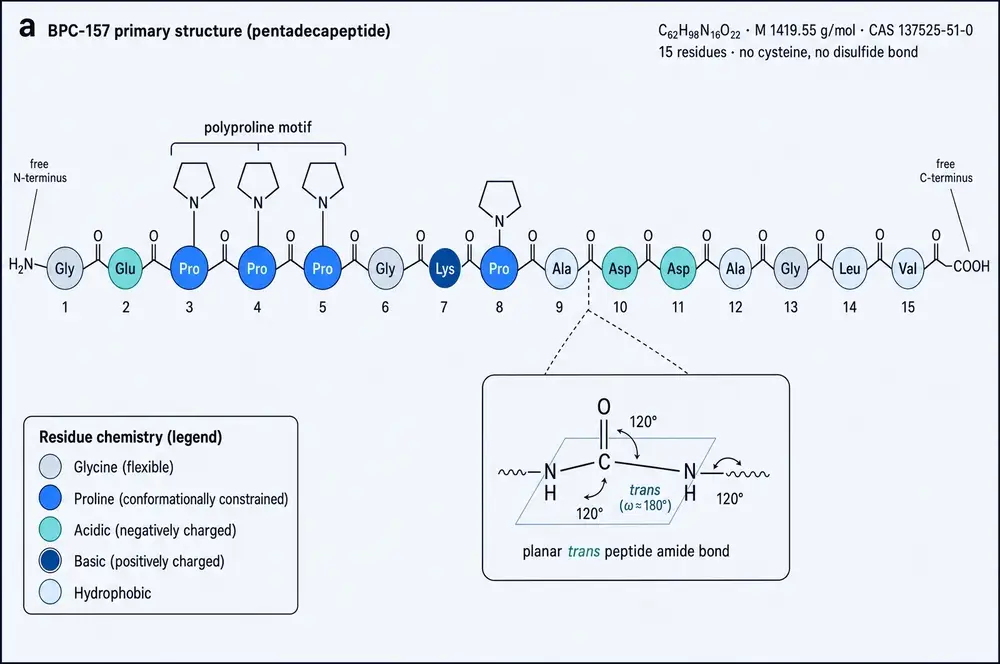
The explanation is the prolines. Proteases work by fitting a stretch of extended peptide chain into a groove and cutting; the kinked, conformationally locked geometry of a polyproline run makes that fit hard to achieve. The same feature turns up in other unusually durable natural peptides.
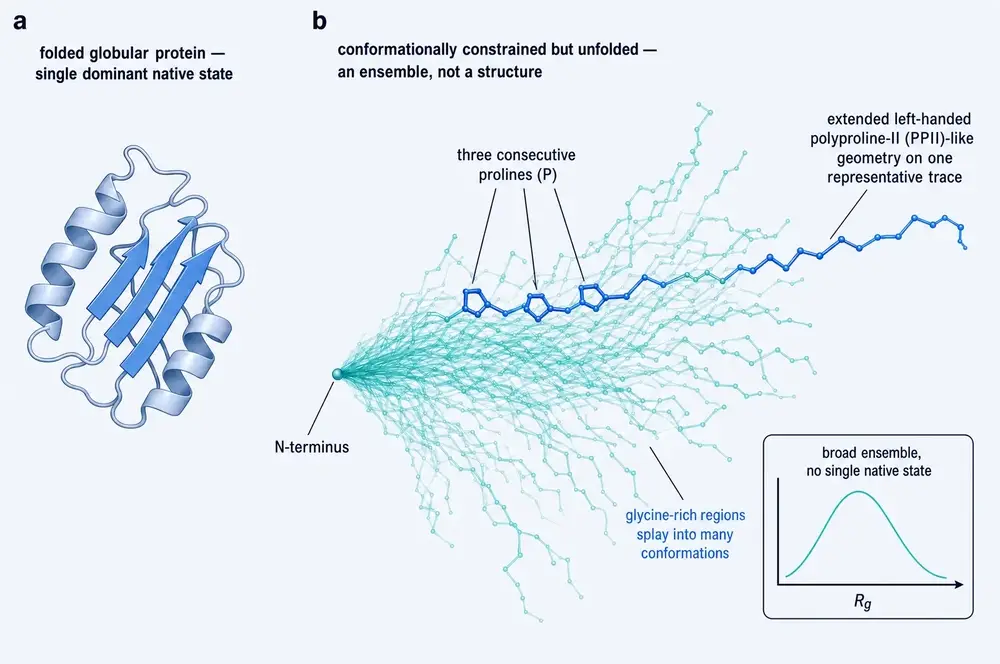
But gastric stability is not oral bioavailability, and the distinction is where a great deal of consumer marketing goes wrong. Surviving the stomach is the first of four hurdles. A molecule then has to survive the small intestine, cross the intestinal epithelium, and get past the liver before it reaches the circulation. For BPC-157, the last three have never been measured, in any species. Oral bioavailability is not a contested number. There is no number.
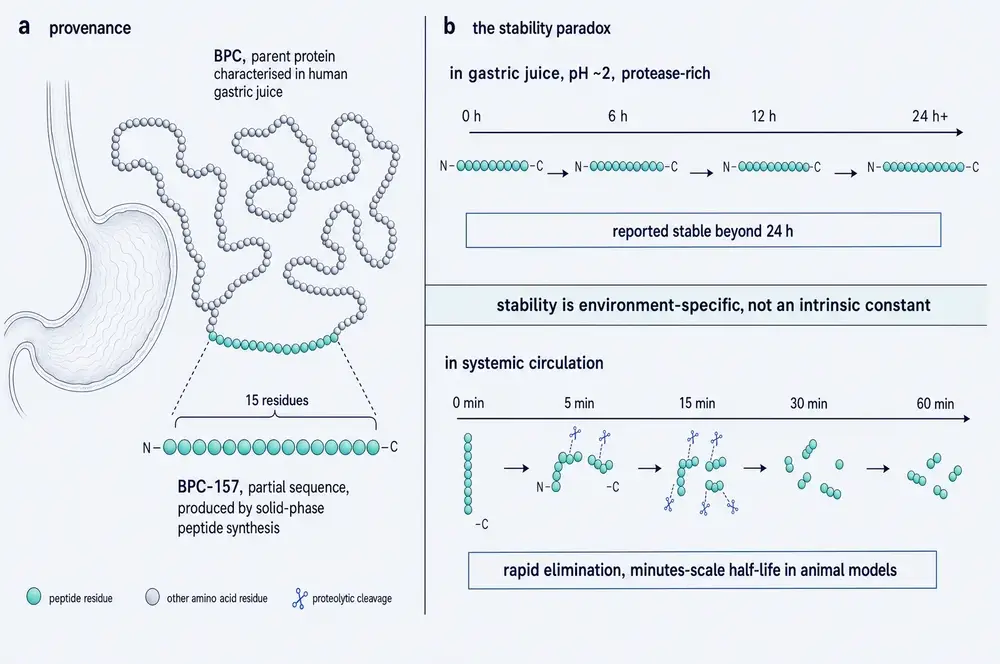
06Thirty years in, someone finally measured it
The single most useful paper in this entire literature was published in 2022, in Frontiers in Pharmacology, by He and colleagues — a Chinese group with no connection to Zagreb. It is the first and still the only regulatory-grade absorption, distribution, metabolism and excretion study of BPC-157 in any species.
They dosed Sprague-Dawley rats and beagle dogs, six animals per group per timepoint, intravenously and intramuscularly at three escalating doses, plus a seven-day repeat-dose arm, and tracked a tritium-labelled version through tissues and excreta.
| Parameter | Rat | Beagle dog | Note |
|---|---|---|---|
| IV elimination half-life | 15.2 min | 5.27 min | Gone from plasma almost immediately |
| Volume of distribution (steady state) | 36.4 mL/kg | 243 mL/kg | Rat value is roughly plasma volume |
| Clearance | 50.1 mL/min/kg | 90.8 mL/min/kg | Rapid renal and proteolytic |
| IM bioavailability | 14–19% | 45–51% | Threefold species difference |
| Time to peak (IM) | 3 min | 6–9 min | |
| Peak concentration, highest IM dose | — | 26.1 ng/mL | At 150 µg/kg |
| Accumulation over 7 days | none | none | |
| Oral bioavailability | not measured | not measured | In any species, ever |
Two rows in that table carry more weight than the rest.
The first is the intramuscular bioavailability gap: 14–19 per cent in rats, 45–51 per cent in dogs. A threefold difference between two common laboratory species means that scaling any dose from animals to humans is guesswork. You cannot know which species humans resemble without measuring humans.
The second is subtler. The rat's volume of distribution at steady state was 36.4 millilitres per kilogram — approximately the volume of the rat's own plasma. On that measurement, intact BPC-157 barely leaves the bloodstream. Yet the tritium tracing showed radioactivity all over the body. Both are true, and the reconciliation is in the paper: the labelled peptide is rapidly chopped into small fragments and then into free amino acids, which enter normal metabolism and go everywhere. The tissue distribution map is largely a map of where the amino acids went, not where the drug went.
07The half-life paradox
Now the central pharmacological puzzle, and the thing that makes BPC-157 genuinely strange rather than merely under-studied.
The compound is cleared from plasma in well under thirty minutes. That figure has now been confirmed in rats, in dogs, and — with all the caveats a sample size of two deserves — in humans. Yet the effects reported throughout the animal literature persist for days and sometimes weeks after a single dose.
There are four standard ways a drug can outlive its own presence in the blood. It can bind a receptor and let go very slowly. It can trip a change in gene transcription that then runs on its own. It can concentrate in the target tissue and linger there after clearing from plasma. Or it can start a biological cascade — inflammation resolving, a vessel growing — that continues under its own momentum.
Any of those could be true of BPC-157. None has been shown to be. And the first is complicated by a fact that keeps coming up: no one has identified a high-affinity receptor for this compound. Not a candidate that failed to replicate — nothing. A molecule reported to act on a dozen organ systems, with no known binding partner, is a pharmacological anomaly. It is either a very deep mechanism or a very loud signal about the evidence.
08Mechanisms, and who found them
The mechanistic work is the strongest part of the non-clinical literature, partly because a meaningful share of it comes from outside Zagreb.
- The nitric oxide system. The most-replicated theme. BPC-157 is repeatedly reported to interact with nitric oxide signalling, counteracting the effects of both the NOS inhibitor L-NAME and excess L-arginine — that is, buffering the system in both directions rather than pushing it one way.
- VEGFR2 and the Akt–eNOS axis. Hsieh and colleagues (2017, Journal of Molecular Medicine) linked the pro-angiogenic activity to VEGFR2 activation and upregulation. Independent group.
- Src–caveolin-1–eNOS. A 2020 Scientific Reports paper traced vasomotor and endothelial migration effects through this pathway in human umbilical vein endothelial cells. Independent group.
- Growth hormone receptor in tendon. Chang and colleagues (2014, Molecules) found growth hormone receptor among the most strongly upregulated genes in rat Achilles tendon fibroblasts exposed to BPC-157, dose- and time-dependently at both mRNA and protein level, with downstream JAK2 activation. Independent group. This is the most mechanistically satisfying result in the tendon literature, and it is a plausible bridge to the musculoskeletal claims.
- ERK1/2, FAK–paxillin, and egr-1. Reported in wound and granulation models.
Notice the pattern: the mechanistic findings that have been reproduced outside the discovering laboratory all converge on vascular biology and growth-factor signalling. That is a coherent story, and it is the part of the BPC-157 case that a fair-minded sceptic should take seriously.
The three figures that follow trace that story at three magnifications: the receptor, the membrane pocket it signals from, and the tissue outcome it is meant to produce. Read them as the field's best current account of how BPC-157 might work — not as established fact. Every step in them comes from cell culture or rodent experiments.
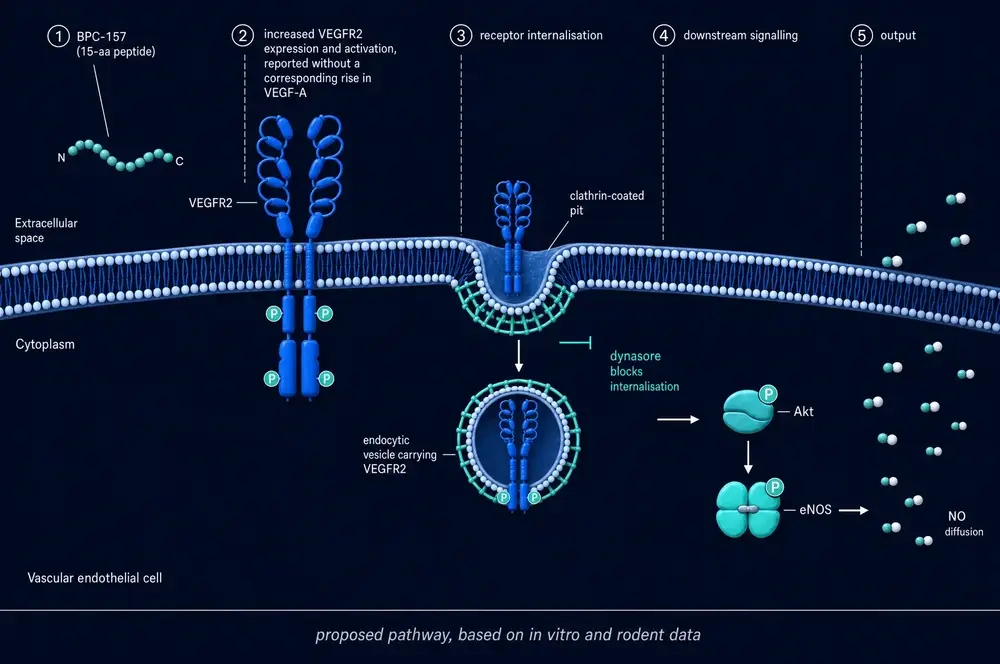
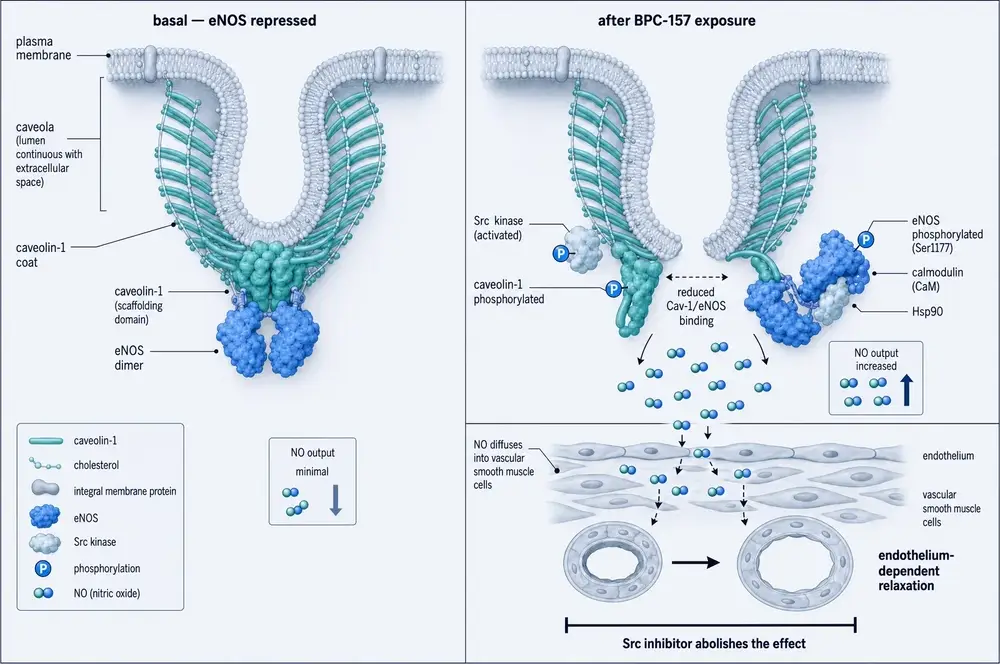
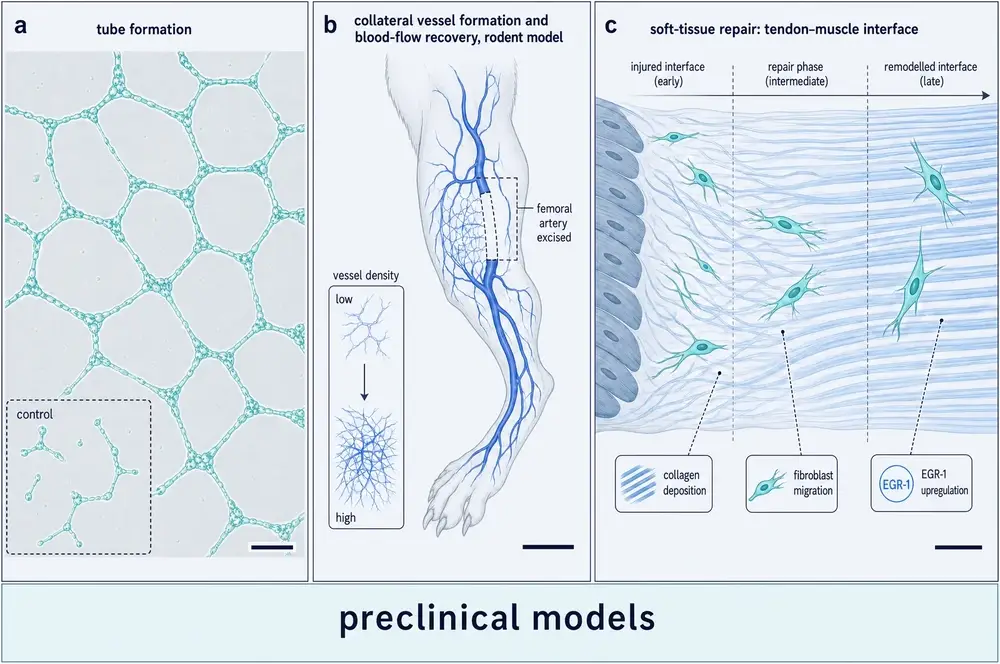
Those two figures describe a mechanism. Whether the mechanism produces anything a person would notice is a separate question, and it is answered in a different register — not receptors and phosphorylation flags, but tissue that has visibly changed. The third figure moves to that scale.
Most drug monographs cannot list the human evidence exhaustively, because there is too much of it. This one can.
In thirty-four years, four datasets have been generated in human beings or human tissue, plus the two unpublished Pliva abstracts. That is the whole of it. Here it is.
| Year | Study | Design | n | Status |
|---|---|---|---|---|
| 2003 | Veljača et al., PL 14736 | Phase 1, healthy male volunteers | not stated | Conference abstract only |
| 2005 | Ruenzi et al., PL 14736 enema | Multicentre randomised double-blind placebo-controlled, ulcerative colitis | not stated | Conference abstract only |
| 2021 | Intra-articular injection for knee pain | Retrospective chart review, no control, ± thymosin-β4 | 17 | Published, no DOI |
| 2024 | Interstitial cystitis pilot | Open-label, single cystoscopic injection, no control | 12 | Published, no DOI |
| 2025 | Intravenous safety pilot | Open-label, 10 mg then 20 mg on consecutive days | 2 | Published, no DOI |
| 2026 | Internal mammary artery rings | Ex vivo organ bath, human tissue, not human treatment | 12 donors | Published, peer-reviewed |
Studies three, four and five share more than a journal. All three were conducted at private clinics in Florida. All three appeared in Alternative Therapies in Health and Medicine. None carries a digital object identifier. None was randomised. None had a control group. And their combined enrolment is thirty-one people.
09What a chart review can and cannot tell you
The knee-pain study is worth walking through, because it is the kind of evidence most often cited to a curious patient, and because its limitations are instructive rather than damning.
Seventeen patients at a clinic in Orlando had received an intra-articular injection of BPC-157, some with thymosin-β4 added, at some point in the preceding year. A year later, sixteen were reached by telephone and asked to recall how much pain they had been in before the injection, how long any relief lasted, and how much it helped. No validated instrument was used. No function, quality-of-life or stiffness measure was collected. There was no comparison group, and no blinding — patients knew what they had received and had paid for it.
That design cannot separate a drug effect from the natural course of knee pain, from the placebo response (which is unusually large for injected treatments of joint pain), from regression to the mean, or from the well-documented tendency of recalled pain to drift. It is a legitimate way to notice that something might be worth studying. It is not a way to find out whether it works.
10Human tissue is not human treatment
The 2026 artery study is the best-designed human-derived work in the literature, and it repays careful reading in both directions.
Surgeons taking the internal mammary artery for coronary bypass grafts have leftover segments. Twelve patients' worth were taken to a physiology laboratory, cut into twenty-four rings, half of them stripped of their endothelial lining, mounted in organ baths and pre-contracted with phenylephrine. BPC-157 was added in increasing concentrations. It relaxed the vessels, significantly more so when the endothelium was intact, and blocking nitric oxide synthase with L-NAME largely abolished that advantage.
That is a clean result. It supports the nitric oxide story in human tissue, which no previous study had done. The authors are also candid about a real statistical flaw: two rings from the same patient were analysed as if they were independent, with no adjustment for clustering.
But the number that should stop a reader is the concentration. The bath range was 0.01 to 1 milligram per millilitre. Convert it: that is 10,000 to 1,000,000 nanograms per millilitre. The highest plasma concentration BPC-157 has ever been shown to reach in a controlled pharmacokinetic study is 26.1 nanograms per millilitre, in a beagle dog given the top intramuscular dose.
The lowest concentration that relaxed those human arteries is roughly 400 times the highest plasma level ever measured. The highest is roughly 38,000 times it. The pharmacology is real. Its relevance to a circulating dose is entirely unestablished.
This is not a criticism of the study, which did what organ-bath pharmacology does. It is a warning about how such a result travels. “BPC-157 dilates human arteries” is a true sentence about a laboratory preparation and a misleading one about a person.
11The systematic review's arithmetic
In 2025 a group at the Hospital for Special Surgery in New York did the obvious thing and searched the literature systematically, from database inception to June 2024, across PubMed, Cochrane and Embase, with two independent screeners.
They found 544 records. After screening, 36 studies met inclusion criteria. Of those 36, thirty-five were preclinical and one was clinical.
A separate scoping review the same year, in Current Reviews in Musculoskeletal Medicine, reached the same place by a different route and titled itself Regeneration or Risk?. Its summary is about as balanced as the evidence permits: robust preclinical effects, extremely limited human data, three pilot studies, no adverse effects reported, no rigorous large-scale trials, and the conclusion that BPC-157 should be considered investigational.
Two hundred and twenty-two records mention BPC-157 in PubMed as of 31 July 2026. That number is cited constantly, usually as a mark of how well-studied the compound is. It is worth taking apart.
Of those 222 records, 168 — just over three-quarters — carry Predrag Sikirić or Sven Seiwerth as an author. Seiwerth appears on 162 of them; Sikirić on 156. Forty-six of the 222 are reviews rather than primary research, and 31 of those reviews are also from the same two authors.
Strip out the reviews, the editorials, the comments and the letters, and the primary experimental literature on BPC-157 produced by anyone other than the discovering laboratory, over thirty-four years, amounts to a few dozen papers.
12Why single-source literature is a problem
This needs saying carefully, because it is easy to hear as an accusation and it is not one.
Replication is not a formality that science performs after the real work is done. It is the mechanism by which findings become knowledge. A single laboratory, however scrupulous, carries its own reagents, its own animal supplier, its own surgical technique, its own scoring conventions, its own instincts about which experiments are worth finishing. Those things do not cancel out within a group. They cancel out across groups. When 76 per cent of a literature comes from one place, the usual error-correction has not run.
The concern is amplified when the effects are as broad as these. A finding that a compound helps rat gastric ulcers can be checked easily. A body of work reporting benefit in every organ system that has been examined is much harder to falsify, because there is always another model.
13The 2025 reversal, and what it actually consists of
For three decades the independent output was a trickle — zero papers in most years, never more than four. Then it flipped. In 2025, independent papers outnumbered Zagreb's for the first time, ten to six. In the first seven months of 2026, twelve to seven.
It would be easy to read that as the field finally opening up. Look at what the papers are, though. Of those 22 independent papers from 2025 and 2026, thirteen are reviews and two are comments or editorials. Seven are primary reports, and of those, one is a doping-control assay, one is the two-person infusion pilot, and one mentions BPC-157 only in passing in a study of compounded weight-loss drugs. Four are genuinely new BPC-157 biology.
So the surge is not new evidence. It is the medical literature reacting to something else: orthopaedic and sports-medicine journals publishing primers because their clinicians' patients have started turning up already using the compound. The American Journal of Sports Medicine ran “Injectable Peptide Therapy: A Primer for Orthopaedic and Sports Medicine Physicians” in January 2026. Sports Medicine followed in April with a review of approved and unapproved peptide therapies. These are not discoveries. They are clinicians briefing each other about a consumer phenomenon.
Consumption ran ahead of evidence, and the literature is now catching up to the consumption rather than the other way round. That inversion is the single most important thing to understand about the current state of BPC-157.
14An argument in the journals
The dispute is now being conducted in print, which is healthy.
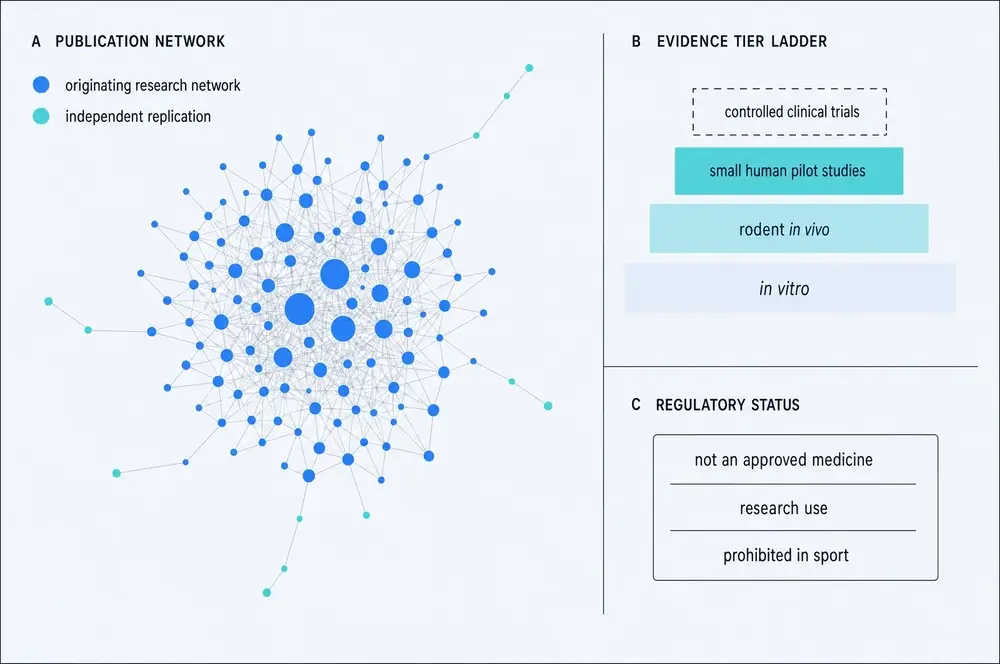
In 2024 Sikirić and twenty-one co-authors published a review in Inflammopharmacology running to more than forty pages, with two tables — one of nine pages, one of fourteen — cataloguing reported effects. In 2025 the same journal published a commentary responding to it, which reads less like a rebuttal than a list of things a pharmacologist would expect to exist and cannot find: structure–activity relationships, potency comparisons against other cytoprotectants, radiolabelled human biodistribution, evidence of a transporter, an explanation of why a compound this good has produced so few human reports. Its closing position is that the peptide needs to be re-evaluated.
Separately, a 2025 review by Józwiak and colleagues in Pharmaceuticals raised a theoretical concern that an agent promoting new blood vessel growth might also support tumour growth. Sikirić's group published a comment; Józwiak's group published a reply. Both are on the record.
And there is a quieter data point. Vladimir Trkulja, who heads the pharmacology department at the same institution where Sikirić works, has told reporters that he is not aware of any formal human study in which this peptide was used.
15Interests
Reporting by STAT in 2026 established several facts about the commercial situation that readers should weigh. Sikirić holds BPC-157 patents dating back to 1989. He owns PharmaCotherapia, the company that sponsored the registered phase 1 trial. He is chief executive of Diagen, which sells a patented stable form of the peptide. According to that reporting, these interests were not disclosed in the published papers the reporters reviewed.
None of that makes the science wrong. Financial interest is disclosed rather than prohibited precisely because it is common and manageable. But it is the sort of thing a reader is entitled to know when weighing a body of work that is three-quarters the product of one group.
The compound's public life did not begin with a paper. It began with bodybuilding forums in the early 2000s, and accelerated when Chinese research-chemical suppliers began shipping synthesised peptides around 2010. By 2018 there were active communities on Reddit trading dosing schedules and vial sources. By 2024 it had crossed into mainstream wellness, carried by podcasts and by the broader political enthusiasm for peptides in American health policy.
Almost all of that material is sold labelled “for research use only” and “not for human consumption.” That phrase is a legal instrument, not a description of the buyer's intention, and everyone involved knows it. It means the product has not been manufactured to pharmaceutical standards, has not been tested for the impurities that matter in an injectable, and carries no assurance that the vial contains what the label says.
This is worth pausing on, because it is the risk that gets least attention. In a compounded or grey-market peptide, the main hazards are not exotic pharmacology. They are the ordinary ones: wrong identity, wrong quantity, bacterial endotoxin, and process-related peptide impurities that can provoke immune responses. Matthew Fedoruk, chief science officer of the US Anti-Doping Agency, has put the problem in one sentence: you don't even know what you're buying.
16Sport
The World Anti-Doping Agency added BPC-157 to its Prohibited List effective 1 January 2022, under class S0 — non-approved substances. S0 is the catch-all category for pharmacological agents that are not approved for human therapeutic use by any government health authority. Substances in S0 are prohibited at all times, in and out of competition, with no threshold and no therapeutic use exemption pathway in practice.
Detection has kept pace. A 2017 paper in Drug Testing and Analysis reported methods for confiscated BPC-157, and a 2026 paper in The Analyst describes a harmonised workflow detecting 54 prohibited peptidic and non-peptidic compounds in dried blood spots, serum and plasma — with BPC-157 among them. That paper also contains an incidental finding of practical interest: in liquid serum held at 4 or 22 °C, BPC-157 degraded completely within a week, while in dried blood spots it stayed detectable. An athlete should assume it is findable.
17The regulators
The FDA's involvement runs through drug compounding law. Under section 503A of the Federal Food, Drug, and Cosmetic Act, a pharmacy may compound a medicine from a bulk substance only if that substance meets certain conditions — and the agency maintains a list of substances that have been nominated for that use and evaluated.
On 29 September 2023, the FDA placed BPC-157 in Category 2: substances that may present significant safety risks, and which pharmacies may not compound with. The stated reasons were specific — possible immunogenicity for certain routes of administration, complexities around peptide-related impurities and characterisation of the active ingredient, and limited or absent safety information for the proposed routes.
Then came July 2026.
18What the vote was, and what it was not
At the 23–24 July 2026 meeting of the Pharmacy Compounding Advisory Committee, BPC-157 was the first of seven peptides considered. The FDA's own review team recommended against inclusion, citing the absence of evidence of effectiveness for ulcerative colitis — the only indication with any trial history — and the inability to establish quality standards for a substance whose characterisation they considered incomplete.
The committee heard arguments both ways. Elizabeth Rebello of MD Anderson Cancer Center pointed to the absence of randomised controlled trials. Bill Zamboni said there were too many unknowns. David Pope of XiFin Pharmacy Solutions argued for physician and pharmacist discretion. Reporting on the meeting noted that several members voting in favour have professional relationships with telehealth companies positioned to benefit from wider peptide availability.
The vote was 8 to 6, with one abstention, in favour of recommending BPC-157 for the 503A Bulks List. Over the two days the committee backed six of the seven peptides on the agenda, rejecting only one.
Nothing, legally. The committee is advisory and its votes are not binding. Adding a substance to the 503A Bulks List requires formal notice-and-comment rulemaking, which typically takes many months, and the FDA has departed from advisory committee recommendations before. As of this writing BPC-157 remains a non-approved drug substance in the United States, remains in Category 2, and remains prohibited in sport worldwide.
Pull the threads together.
19What the evidence supports
That BPC-157 is stable in gastric acid: well established, and genuinely unusual.
That it interacts with nitric oxide signalling and promotes angiogenesis in laboratory systems: supported, and — importantly — supported by several groups independent of the discovering laboratory, converging on VEGFR2, the Akt–eNOS axis, and Src–caveolin-1–eNOS. This is the most robust part of the case.
That it upregulates the growth hormone receptor in tendon fibroblasts and activates JAK2 downstream: shown by an independent group, and a coherent bridge to the musculoskeletal claims.
That it accelerates healing across a very wide range of injury models in rodents: reported extensively, overwhelmingly by one laboratory, with limited independent replication and largely without dose–response characterisation.
That it relaxes human arteries through an endothelium-dependent, nitric-oxide-mediated mechanism: shown once, in twelve donors' tissue, at concentrations hundreds to tens of thousands of times higher than any measured plasma level.
20What the evidence does not support
That it heals anything in a living human being. There is no randomised controlled trial result in the published literature. There is no controlled trial result of any kind. The largest completed human study enrolled seventeen people and asked them to remember, a year later, how much their knee had hurt.
That it is safe in humans. This one needs care in both directions, because it is usually overstated by advocates and understated by critics.
More formal toxicology exists than most commentary acknowledges. In 2020, Xu and colleagues at the Fourth Military Medical University in Xi'an published a preclinical safety package in Regulatory Toxicology and Pharmacology covering mice, rats, rabbits and dogs: single-dose toxicity, repeated-dose toxicity, local tolerance, genotoxicity, and embryo-fetal toxicity. BPC-157 was well tolerated. The one signal was a fall in creatinine in dogs at 2 mg/kg but not at lower doses, which reversed within two weeks of stopping. No genetic or embryo-fetal toxicity was found. That is a real dataset, produced by a group with no connection to Zagreb, and it deserves more weight than it usually gets.
What is still missing is specific and consequential. There is no published carcinogenicity study — which is the study that would speak to the angiogenesis concern. There is no immunogenicity assessment, which is one of the two things the FDA explicitly cited in 2023. There is no chronic-exposure data in any species at the durations people actually use it for. And on the human side there is nothing but thirty-one people across three uncontrolled pilot studies, in whom no adverse events were recorded.
Animal toxicology tells you about acute and sub-chronic organ damage. It does not tell you what happens to a person who injects a peptide of unverified purity for years, and it says nothing at all about immune responses to the impurities in a particular vial. Absence of reported harm in studies not designed to detect that harm is absence of evidence, not evidence of safety.
The angiogenesis question sits in this space and should be stated as genuinely open. A compound whose most reproducible property is promoting new blood vessel growth is, in principle, a compound that might support the growth of a tumour that needs a blood supply. Reviewers have raised this. Nobody has demonstrated it. Nobody has ruled it out. There is no carcinogenicity study. In a healthy adult using it for a hamstring strain the theoretical concern is small; in someone with an undiagnosed malignancy it is not obviously small; and the literature offers no basis for saying which.
21What is simply unknown
- Oral bioavailability, in any species. Not disputed — unmeasured.
- Subcutaneous pharmacokinetics in humans — the route most people actually use.
- The three-dimensional structure of the molecule.
- Any receptor or binding partner.
- Why the effects outlast the drug.
- Whether the parent protein exists.
- Which of the fifteen residues matter.
- What long-term exposure does to anything.
22What would settle it
On 2 February 2026, a company called Hudson Biotech opened enrolment in NCT07437547: a randomised, double-blind, placebo-controlled phase 2 trial of BPC-157 in 120 people with an acute grade II hamstring strain confirmed by MRI. Primary completion is scheduled for 14 February 2027.
That trial is, by a wide margin, the most consequential thing that has ever happened to this compound. It is larger than every completed human BPC-157 study combined. It is randomised, which the pilots were not. It is placebo-controlled, which matters enormously for a soft-tissue injury that heals on its own. It uses an objective imaging endpoint rather than recalled pain. And it is testing the exact use — athletic soft-tissue injury — that drives essentially all real-world consumption.
If BPC-157 does what its advocates believe, that trial should show it. If it does not, that will be the first properly designed opportunity in thirty-four years to find out.
Go back to the conference room outside Washington on 23 July.
What made that vote strange was not that the committee disagreed with the FDA's scientists about a judgement call. It is that both sides were, in a sense, correct. The reviewers were right that the compound is poorly characterised, that the effectiveness evidence is absent, and that they could not write quality standards for a substance whose identity they could not pin down. The members who voted yes were also responding to something real: people are already using this, in large numbers, buying it from sources nobody inspects, and a regulated compounding pathway is at least a pathway with a pharmacist in it.
That is the actual state of BPC-157 in 2026. It is not a scandal and it is not a miracle. It is a molecule with one genuinely remarkable property, a real and reproducible line of vascular biology behind it, an enormous animal literature of unusually narrow provenance, a central pharmacological anomaly nobody has explained, and — after half a century from the original idea and thirty-four years from the first paper — essentially nothing to say about whether it helps a human being.
The reason to know all this is not to decide whether BPC-157 works. That question is not currently answerable, and anyone who tells you otherwise is telling you something the evidence does not contain. The reason is that the next compound will arrive the same way — a striking animal literature, a compelling origin story, a confident internet, and a gap where the human trials should be. Knowing how to see that shape is the durable part.
February 2027 is when the first real answer arrives.
23References
Generated from verified NCBI records rather than from recall. Author lists, journal names, volumes, pages and identifiers are taken from the PubMed record for each citation. Five author attributions in an earlier draft of this list were written from memory and proved wrong on checking; every entry below was re-derived from the harvest and checked against its title.
- Chang, C.-H., Tsai, W.-C., Hsu, Y.-H., & Pang, J.-H. (2014). Pentadecapeptide BPC 157 enhances the growth hormone receptor expression in tendon fibroblasts. Molecules, 19(11), 19066–19077. PMID 25415472. https://doi.org/10.3390/molecules191119066
- Hsieh, M.-J., Liu, H.-T., Wang, C.-N., Huang, H.-Y., Lin, Y., Ko, Y.-S., Wang, J.-S., Chang, V. H., & Pang, J.-S. (2017). Therapeutic potential of pro-angiogenic BPC157 is associated with VEGFR2 activation and up-regulation. Journal of Molecular Medicine, 95(3), 323–333. https://doi.org/10.1007/s00109-016-1488-y
- He, L., Feng, D., Guo, H., Zhou, Y., Li, Z., Zhang, K., Zhang, W., Wang, S., Wang, Z., Hao, Q., Zhang, C., Gao, Y., Gu, J., Zhang, Y., Li, W., & Li, M. (2022). Pharmacokinetics, distribution, metabolism, and excretion of body-protective compound 157, a potential drug for treating various wounds, in rats and dogs. Frontiers in Pharmacology, 13, 1026182. https://doi.org/10.3389/fphar.2022.1026182
- Sikirić, P., Petek, M., Rucman, R., Seiwerth, S., Grabarević, Ž., Rotkvić, I., Turković, B., Jagić, V., & Mildner, B. (1992). The significance of the gastroprotective effect of body protection compound (BPC): Modulation by different procedures. Acta Physiologica Hungarica, 80(1–4), 89–98.
- Sikirić, P., Petek, M., Rucman, R., Seiwerth, S., Grabarević, Ž., Rotkvić, I., Turković, B., Jagić, V., Mildner, B., Duvnjak, M., Lang, N., Danilović, Ž., Sallmani, A., Djačić, S., Prkačin, I., Bura, M., Brkić, T., Banić, M., & Marović, A. (1993). A new gastric juice peptide, BPC: An overview of the stomach-stress-organoprotection hypothesis and beneficial effects of BPC. Journal of Physiology (Paris), 87(5), 313–327. https://doi.org/10.1016/0928-4257(93)90038-U
- Sikirić, P., Seiwerth, S., Grabarević, Ž., Rucman, R., Petek, M., & Rotkvić, I. (1993). Hepatoprotective effect of BPC 157, a 15-amino acid peptide, on liver lesions induced by either restraint stress or bile duct and hepatic artery ligation or CCl4 administration: A comparative study with dopamine agonists and somatostatin. Life Sciences, 53(18), PL291–PL296. https://doi.org/10.1016/0024-3205(93)90589-U
- Veljača, M., Lesch, C. A., Pllana, R., Sanchez, B., Chan, K., & Guglietta, A. (1995). BPC-15 reduces trinitrobenzene sulfonic acid-induced colonic damage in rats. Journal of Pharmacology and Experimental Therapeutics, 272(1), 417–422.
- Veljača, M., Pavić-Sladoljev, D., Mildner, B., Brajša, K., Krnić, Ž., Bubenik, M., Stipanicić, S., Tabak-Slosić, M., Brnić, L., Kapitanović-Vidak, H., Trnski, D., & Sikirić, P. (2003). Safety, tolerability and pharmacokinetics of PL 14736, a novel agent for treatment of ulcerative colitis, in healthy male volunteers [Conference abstract]. Gut, 52(Suppl. VI), A125.
- Ruenzi, M., Stolte, M., Veljača, M., Oreskovic, K., & Peterson, J. (2005). A multicenter, randomized, double blind, placebo-controlled phase II study of PL 14736 enema in the treatment of mild-to-moderate ulcerative colitis [Conference abstract]. Gastroenterology, 128(4, Suppl. 2), A584.
- Sebečić, B., Nikolić, V., Sikirić, P., Seiwerth, S., Šoša, T., Patrlj, L., Grabarević, Ž., Rucman, R., Petek, M., Konjevoda, P., Jadrijević, S., Perović, D., & Šlaj, M. (1999). Osteogenic effect of a gastric pentadecapeptide, BPC-157, on the healing of segmental bone defect in rabbits: A comparison with bone marrow and autologous cortical bone implantation. Bone, 24(3), 195–202. https://doi.org/10.1016/S8756-3282(98)00180-X
- Chang, C.-H., Tsai, W.-C., Lin, M.-S., Hsu, Y.-H., & Pang, J.-H. (2011). The promoting effect of pentadecapeptide BPC 157 on tendon healing involves tendon outgrowth, cell survival, and cell migration. Journal of Applied Physiology, 110(3), 774–780. https://doi.org/10.1152/japplphysiol.00945.2010
- Hsieh, M.-J., Lee, C.-H., Chueh, H.-Y., Chang, G.-J., Huang, H.-Y., Lin, Y., & Pang, J.-S. (2020). Modulatory effects of BPC 157 on vasomotor tone and the activation of Src-Caveolin-1-endothelial nitric oxide synthase pathway. Scientific Reports, 10(1), 17078. https://doi.org/10.1038/s41598-020-74022-y
- Seiwerth, S., Milavić, M., Vukojević, J., Gojković, S., Krezić, I., Vuletić, L. B., Pavlov, K. H., Petrović, A., Sikirić, S., Vranes, H., Prtorić, A., Zizek, H., Durasin, T., Dobric, I., Staresinic, M., Strbe, S., Knezevic, M., Sola, M., Kokot, A., … Sikirić, P. (2021). Stable gastric pentadecapeptide BPC 157 and wound healing. Frontiers in Pharmacology, 12, 627533. https://doi.org/10.3389/fphar.2021.627533
- Sikirić, P., Rucman, R., Turkovic, B., Sever, M., Klicek, R., Radic, B., Drmic, D., Stupnisek, M., Misic, M., Vuletic, L. B., Pavlov, K. H., Barisic, I., Kokot, A., Japjec, M., Blagaic, A. B., Tvrdeic, A., Rokotov, D. S., Vrcic, H., Staresinic, M., … Seiwerth, S. (2018). Novel cytoprotective mediator, stable gastric pentadecapeptide BPC 157: Vascular recruitment and gastrointestinal tract healing. Current Pharmaceutical Design, 24(18), 1990–2001. https://doi.org/10.2174/1381612824666180608101119
- Sikirić, P., Seiwerth, S., Rucman, R., Turković, B., Rokotov, D. S., Brcic, L., Sever, M., Klicek, R., Radic, B., Drmic, D., Ilic, S., Kolenc, D., Vrcic, H., & Sebecic, B. (2011). Stable gastric pentadecapeptide BPC 157: Novel therapy in gastrointestinal tract. Current Pharmaceutical Design, 17(16), 1612–1632. https://doi.org/10.2174/138161211796196954
- Mateescu, D. M., Gavrilescu, D. M., Constantinescu, F. E., Oancea, C., Ilie, A. C., Folescu, R., Popa, M. D., Iurciuc, S., Muresan, C. O., & Enache, A. (2026). BPC-157 as an investigational peptide therapeutic: Biopharmaceutical challenges, formulation strategies, and translational development barriers. Pharmaceutics, 18(5), 625. https://doi.org/10.3390/pharmaceutics18050625
- Vasireddi, N., Hahamyan, H., Salata, M. J., Karns, M., Calcei, J. G., Voos, J. E., & Apostolakos, J. M. (2025). Emerging use of BPC-157 in orthopaedic sports medicine: A systematic review. HSS Journal, 21(4), 15563316251355551. https://doi.org/10.1177/15563316251355551
- McGuire, F. P., Martinez, R., Lenz, A., Skinner, L., & Cushman, D. M. (2025). Regeneration or risk? A narrative review of BPC-157 for musculoskeletal healing. Current Reviews in Musculoskeletal Medicine, 18(12), 611–619. https://doi.org/10.1007/s12178-025-09990-7
- Józwiak, M., Bauer, M., Kamysz, W., & Kleczkowska, P. (2025). Multifunctionality and possible medical application of the BPC 157 peptide — Literature and patent review. Pharmaceuticals, 18(2), 185. https://doi.org/10.3390/ph18020185
- Sikirić, P., Seiwerth, S., Skrtic, A., Staresinic, M., Strbe, S., Vuksic, A., Sikiric, S., Bekic, D., Soldo, D., Grizelj, B., Novosel, L., & Beketic Oreskovic, L. (2025). BPC 157 therapy: Targeting angiogenesis and nitric oxide's cytotoxic and damaging actions, but maintaining, promoting, or recovering their essential protective functions. Comment on Józwiak et al. Pharmaceuticals, 18(10), 1450. https://doi.org/10.3390/ph18101450
- Józwiak, M., Bauer, M., Kamysz, W., & Kleczkowska, P. (2025). Reply to Sikiric et al. Pharmaceuticals, 18(10), 1451. https://doi.org/10.3390/ph18101451
- Whitehouse, M. (2025). Concerning BPC-157, a natural pentadecapeptide, that acts as a cytoprotectant and is believed to protect the gastro-intestinal tract (GIT). Inflammopharmacology, 33(8), 4879–4881. https://doi.org/10.1007/s10787-025-01882-z
- Sikirić, P., Sever, M., Krezic, I., Vranes, H., Kalogjera, L., Smoday, I. M., Vukovic, V., Oroz, K., Coric, L., Skoro, M., Kavelj, I., Zubcic, S., Sikiric, S., Beketic Oreskovic, L., Oreskovic, I., Blagaic, V., Brcic, K., Strbe, S., Staresinic, M., Boban Blagaic, A., Skrtic, A., & Seiwerth, S. (2024). New studies with stable gastric pentadecapeptide protecting gastrointestinal tract: Significance of counteraction of vascular and multiorgan failure of occlusion/occlusion-like syndrome in cytoprotection/organoprotection. Inflammopharmacology, 32(5), 3119–3161. https://doi.org/10.1007/s10787-024-01499-8
- Lee, E., & Burgess, R. (2025). Safety of intravenous infusion of BPC157 in humans: A pilot study. Alternative Therapies in Health and Medicine. PMID 40131143.
- Effect of BPC-157 on symptoms in patients with interstitial cystitis: A pilot study. (2024). Alternative Therapies in Health and Medicine. PMID 39325560.
- Intra-articular injection of BPC 157 for multiple types of knee pain. (2021). Alternative Therapies in Health and Medicine. PMID 34324435.
- Yildirim, A. K., Dastan, A. O., Demeli Ertus, M., Ensarioglu, M., Karabacak, K., & Pehlivanoglu, B. (2026). Endothelium-dependent nitric oxide-mediated vasorelaxant effects of BPC 157 in human internal mammary artery. Journal of Clinical Medicine, 15(9), 3488. https://doi.org/10.3390/jcm15093488
- Cox, H. D., Miller, G. D., & Eichner, D. (2017). Detection and in vitro metabolism of the confiscated peptides BPC 157 and MGF R23H. Drug Testing and Analysis, 9(10), 1490–1498. https://doi.org/10.1002/dta.2152
- Mazzarino, M., Colpaert, T., Deventer, K., & Van Eenoo, P. (2026). Rapid and harmonized analytical workflow for the determination of peptidic and non-peptidic doping agents in dried and liquid blood matrices. The Analyst, 151(15), 4398–4413. https://doi.org/10.1039/d6an00455e
- Xu, C., Sun, L., Ren, F., Huang, P., Tian, Z., Cui, J., Zhang, W., Wang, S., Zhang, K., He, L., Zhang, W., Zhang, C., Hao, Q., Zhang, Y., Li, M., & Li, W. (2020). Preclinical safety evaluation of body protective compound-157, a potential drug for treating various wounds. Regulatory Toxicology and Pharmacology, 114, 104665. https://doi.org/10.1016/j.yrtph.2020.104665
- US Food and Drug Administration. (2023, September 29). Certain bulk drug substances for use in compounding that may present significant safety risks [Category 2 listing]. Silver Spring, MD: FDA.
- US Food and Drug Administration. (2026, July 23–24). Meeting of the Pharmacy Compounding Advisory Committee [Advisory committee proceedings]. Silver Spring, MD: FDA.
- World Anti-Doping Agency. (2022). The 2022 Prohibited List: International Standard [BPC-157 listed under class S0, non-approved substances; effective 1 January 2022]. Montreal: WADA.
- PharmaCotherapia d.o.o. (2015). Phase I, pilot study in healthy volunteers, to assess the safety and pharmacokinetics of PCO-02, which active ingredient is BPC-157, a penta-deca-peptide from gastric source (ClinicalTrials.gov Identifier NCT02637284). US National Library of Medicine.
- Hudson Biotech. (2026). A randomized, double-blind, placebo-controlled phase 2 trial of pentadecapeptide BPC 157 for accelerated repair of acute grade II hamstring strain confirmed by MRI (ClinicalTrials.gov Identifier NCT07437547). US National Library of Medicine.
- Chemistry World. (2026). Croatian researchers thrust into limelight as their 1990s' peptide discovery goes mainstream in the US. Royal Society of Chemistry.
- STAT News. (2026, February 3). BPC-157: The peptide with big claims and scant evidence.
- STAT News. (2026, July 23). FDA panel backs compounded BPC-157, KPV peptides in vote against agency scientists' advice.
- Undark Magazine. (2026, May 29). Stress test: A peptide, a secretive scientist, and a debate over evidence.
- Regulatory Affairs Professionals Society. (2026, July). FDA advisory committee backs two controversial peptides.
Bibliographic records for items 1–30 were retrieved from PubMed; digital object identifiers link to the publishers of record. Items 8 and 9 are conference abstracts and have no DOI. Items 23–25 were published without DOIs. Author lists for very recent papers are abbreviated where the full list was not available in the retrieved record.
24How this document was assembled
The corpus was built by a five-stage pipeline against project 05, the Therapeutic Peptide Research Library. Every file with a document extension in the project's document stores was opened and its extracted text searched for explicit mentions of BPC-157 under all its names and development codes — BPC-157, BPC 157, BPC-15, PL 14736, PLD-116, PL-10, body protection compound. Generic matches on pentadecapeptide were recorded but never counted on their own. That sweep opened 45,541 files and returned 843 raw matches, which collapsed to 535 after de-duplication.
Classifying those by kind of source is the step that matters. Only 31 were peer-reviewed scientific full texts. The remainder were vendor catalogue material, consumer web content captured for style training, and this project's own earlier drafts — none of which is evidence about the compound. Because the local snapshot predated the 2025–26 literature, the pipeline queried PubMed directly, retrieving 222 indexed records spanning 1992 to 2026 and fetching 87 open-access full texts from PubMed Central. Merging the local and fetched sets and removing the 28 documents present in both gives the reading corpus this monograph is written from: 94 unique scientific full texts, roughly 1,470 printed-page equivalents.
| Stage | What it does | Result |
|---|---|---|
| 01 | Exhaustive sweep of the whole project tree, as a completeness check | 87,292 files opened |
| 01b | Targeted scan of the project's document stores | 45,541 files opened |
| 02 | PubMed E-utilities harvest, complete publication record | 222 records |
| 03 | PubMed Central open-access full-text retrieval | 87 full texts |
| 04 | De-duplication, classification, inventory report | 94 unique |
| 05 | Assembly of this document | 1 deliverable |
A note on one recurring trap. A PubMed article record contains reference and comment lists that are themselves full of identifier nodes belonging to other papers. Parsing those without scoping each lookup to the article's own subtree silently assigns a bibliography entry's PMID and DOI to the article being read. The first run of this pipeline had exactly that fault and produced records whose titles and identifiers belonged to different papers; every lookup in stage 02 is now scoped, and the harvest was re-run before any downstream stage consumed it.
25Evidence handling
Findings in this document are labelled by the kind of study that produced them. Animal experiments, cell and tissue measurements, uncontrolled human pilot studies, trial-registry entries and narrative reviews are different kinds of claim, and the difference is stated in the sentence that reports the result rather than left to the reader. Animal and in-vitro findings are never phrased so as to imply a human outcome.
Where evidence conflicts, both sides are given. The published preclinical toxicology package is presented next to the gaps it does not cover, rather than either being used to dismiss the other. Where a human finding rests on a sample of two, the number appears in the same sentence as the finding. Where an experiment used concentrations far above anything achievable in circulation, the comparison is made explicitly.
The figures are of two kinds, and the difference matters. Figures 1, 2, 6, 10, 11 and 13 are data graphics: every value in them is computed from the manifests above and can be checked against the source files. Figures 3, 4, 5, 7, 8, 9 and 12 are commissioned scientific illustrations, rendered with generative image tools and reviewed against the source literature before inclusion. They depict structures, mechanisms and concepts. They are not micrographs, not experimental data, and not figures reproduced from any published paper. Where an illustration asserts something this monograph treats as unsettled — the parent protein in Figure 5 — or renders schematically something that exists as real data elsewhere in the document — the network in Figure 12, against the measured counts in Figure 11 — the caption says so. Figure 3's chemical identity block was verified residue by residue against the sequence.
26Limitations of this document
- Two of the six human datasets exist only as conference abstracts that could not be retrieved in full; their designs are described from secondary citation, and their results are not reported here because they were never published.
- The provenance analysis codes authorship by surname and initials as they appear in PubMed. It counts papers, not contribution.
- Non-English-language literature, and work indexed outside PubMed, is not captured.
- Conflict-of-interest facts are reported as journalism, attributed to the outlet, and were not independently verified.
- The concentration comparison in Part Four is arithmetic performed for this monograph across two separate papers, not a comparison either paper makes.
- The July 2026 advisory committee proceedings are reported from contemporaneous coverage; the FDA's own briefing materials and transcript were not retrievable at the time of writing.
Continue exploring