
AICAR The nucleoside that taught cells to act as if they were running out of energy
Every cell keeps a quiet ledger of energy. When the small coin of that ledger — AMP — rises relative to ATP, a kinase named AMPK flips the cell from building to burning. AICAR is a nucleoside that, once phosphorylated inside the cell to ZMP, impersonates that coin. It did not begin as an “exercise pill.” It began as a purine-pathway intermediate and as acadesine, a candidate cardioprotective infusion. Only later did it become the most cited pharmacological tool for AMPK activation, and, after a single 2008 mouse paper, a listed item on anti-doping frameworks. This monograph traces that record, separates AMPK-dependent from AMPK-independent effects across cells, animals, and the small number of controlled human studies that exist, and keeps every study amount inside the experiment that measured it.
Findings are labelled by the kind of study that produced them, in the sentence that reports them. A result in a hepatocyte is called a result in a hepatocyte. For AICAR that label matters unusually often, because the same molecule is a bench reagent in half the AMPK literature, a former surgical candidate under the INN acadesine, and a listed anti-doping item after 2008.
A note on amounts. Concentrations and doses appear here only as parameters of published experiments, always with the species, the preparation and the duration attached. They are facts about research. This document recommends nothing, and no amount in it is offered for use by any person.
A note on nomenclature. The literature writes AICAR, AICAr, AICA riboside, and acadesine for the nucleoside; ZMP / AICA ribotide for the phosphorylated form. This monograph uses AICAR for the administered nucleoside and ZMP for the intracellular nucleotide, and flags papers that blur the two. AICAR is not Cardarine. GW501516, the PPAR-delta agonist that Narkar and colleagues paired with AICAR in the study that made this compound famous, is a separate small molecule, catalogued elsewhere in this series as the Cardarine monograph (Radix LIBRARY stem 90). Vendor material and doping-forum shorthand routinely blur the two into one “AMPK/PPAR stack”; they are chemically and regulatorily distinct compounds studied together in one mouse experiment, not one compound with two names.
01What this is, and four things it is not
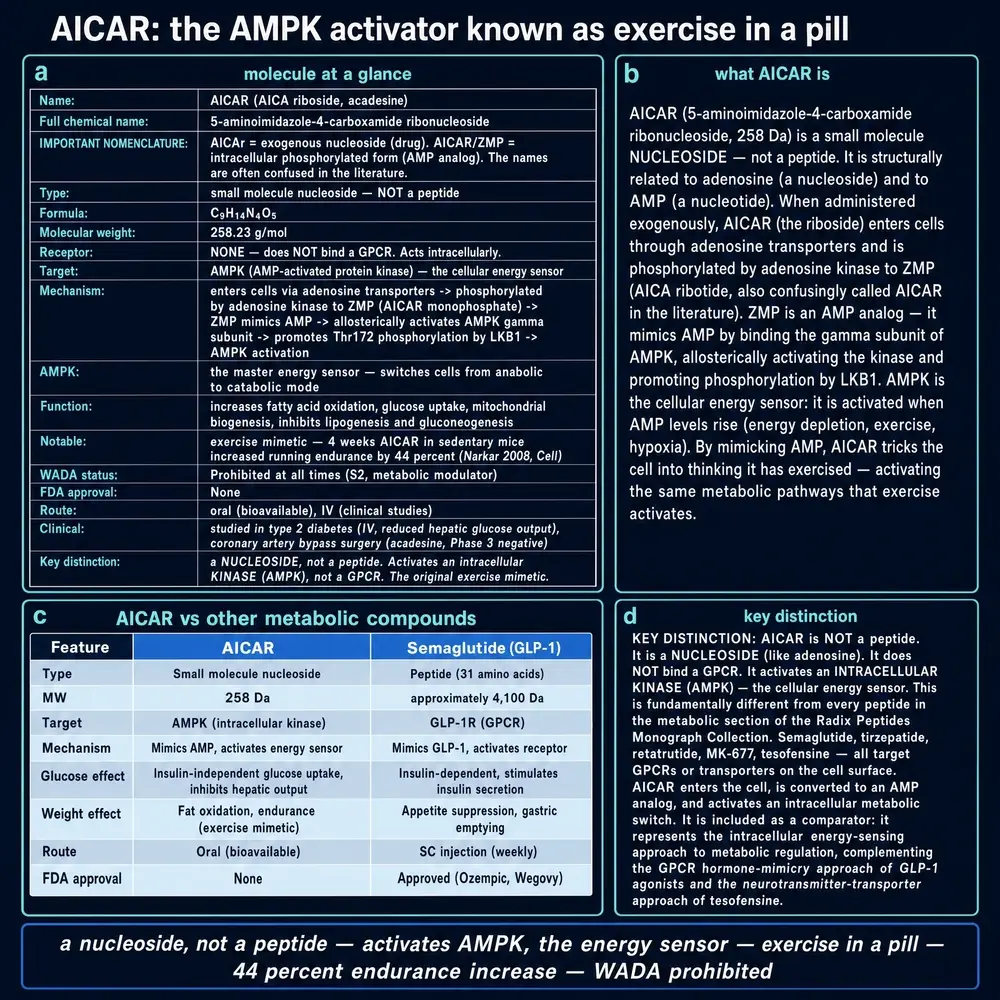
AICAR is 5-aminoimidazole-4-carboxamide ribonucleoside (AICA riboside): a small, water-soluble nucleoside analogue, formula C9H14N4O5, mass about 258 daltons, PubChem CID 65110. Its pharmaceutical INN is acadesine. Inside many cells, adenosine kinase phosphorylates it to ZMP (AICA ribotide / AICAR monophosphate), an AMP mimetic that binds the gamma subunit of AMP-activated protein kinase and favours the kinase's active, Thr172-phosphorylated state (Corton et al., 1995; Hardie et al., 2012).
Four refusals keep the identity clean. It is not a peptide, despite living in a peptide-adjacent research catalogue beside true oligopeptides. It is not identical to endogenous ZMP produced on the de novo purine path, though it feeds that pool. It is not a selective AMPK drug in the modern chemical sense; millimolar ZMP can also act on other AMP-sensitive enzymes (Visnjic et al., 2021). And it is not approved as a chronic oral metabolic medicine anywhere identified in this review. Oral bioavailability in early clinical pharmacokinetics was poor; the programmes that produced controlled human data used intravenous infusion (Cuthbertson et al., 2007; Mangano, 1997).
02Discovery: from purine bookkeeping to a tool for AMPK
The chemistry is older than the fame. AICA ribotide sits on the de novo purine pathway, and inherited disorders of that pathway taught clinicians that ZMP can accumulate as a human metabolite long before anyone called AICAR an exercise mimetic. In parallel, the 1980s and early 1990s saw acadesine developed as an adenosine-regulating agent for myocardial ischemia and coronary bypass surgery, a cardioprotection story that briefly outran the AMPK story and is described in full in Part Three.
The hinge point for modern pharmacology is 1994-1995. Sullivan and colleagues showed that AICAR inhibited lipolysis and lipogenesis in isolated rat adipocytes as a cell-permeable activator of AMP-activated protein kinase (Sullivan et al., 1994). Corton, Gillespie, Hawley and Hardie then proposed AICAR as a practical way to activate AMPK in intact cells without the harsher metabolic stress of heat shock or fructose loading (Corton et al., 1995). That paper gave the AMPK field a chemical handle it had lacked. Winder's laboratory and collaborators soon pushed the tool into skeletal muscle, studying fatty-acid oxidation, glucose uptake, and GLUT4 translocation (Merrill et al., 1997; Kurth-Kraczek et al., 1999).
Context matters. Hardie's Dundee circle was mapping AMPK as a fuel-gauge kinase; the pharmaceutical world still thought of acadesine as a perioperative adenosine story. Those two biographies later fused in the public mind as “AICAR,” which is why this monograph keeps the calendars separate even when the molecule is the same.
03Mechanism: a borrowed AMP, and the off-target bill
The clean cartoon is short. AICAR enters cells through nucleoside transporters, adenosine kinase converts it to ZMP, ZMP occupies AMP-binding sites on AMPK's gamma subunit, allostery and protection of Thr172 phosphorylation raise AMPK activity, and downstream targets, including ACC, TBC1D1/4, and PGC-1alpha programs, remake cellular metabolism (Hardie et al., 2012; Canto et al., 2009). Inhibitors of adenosine kinase abolish many reported AICAR effects, evidence that the nucleotide, not the parent nucleoside, does the AMPK work.
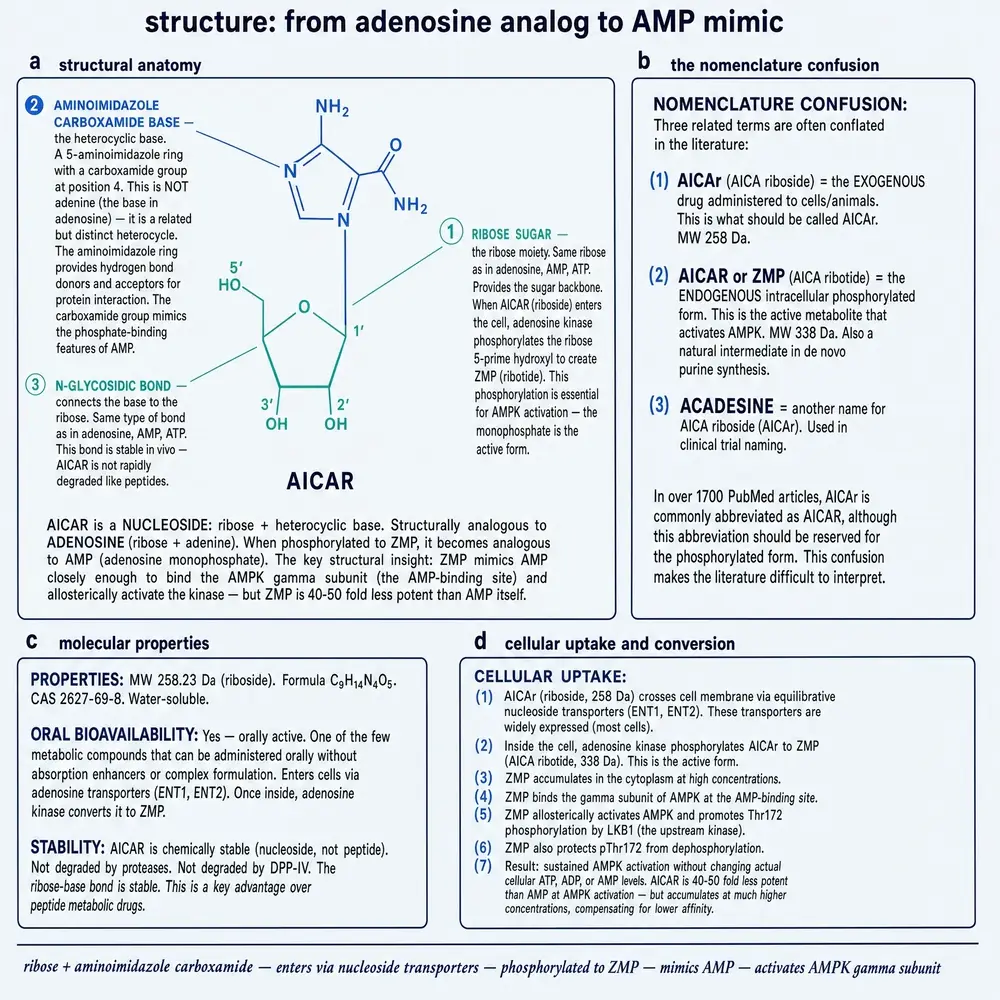
The messy cartoon is longer. ZMP is a weak AMP mimetic that accumulates to high concentrations, and it can inhibit fructose-1,6-bisphosphatase and modulate glycogen phosphorylase directly; some gluconeogenic and oxidative-phosphorylation readouts survive in AMPK double-knockout tissue. Cell-cycle and cancer papers increasingly treat AICAR as a purine and pyrimidine stressor as much as an AMPK agonist. A 2021 systematic review by Visnjic and colleagues is the weighing document this monograph relies on throughout: AMPK-dependent claims need genetic corroboration, and AMPK-independent claims need to be named as such (Visnjic et al., 2021).
04The 1990s cell and tissue base
Before AICAR ran on a treadmill, it ran in isolated rat adipocytes and perfused hindlimb muscle. Sullivan and colleagues first characterised AICAR pharmacologically by showing that it suppressed lipolysis and lipogenesis in isolated rat fat cells as a cell-permeable activator of AMP-activated protein kinase (Sullivan et al., 1994). Merrill and colleagues then reported that AICA riboside increased AMPK activity, fatty-acid oxidation, and glucose uptake in perfused rat skeletal muscle (Merrill et al., 1997), and Kurth-Kraczek and colleagues showed that a single AICAR treatment triggered GLUT4 translocation in skeletal muscle through AMPK activation, an effect additive with insulin’s (Kurth-Kraczek et al., 1999). These are tissue-explant and ex vivo results: they establish that activating AMPK can move glucose and fat in muscle taken from a rodent, not that AICAR moves glucose in a person.
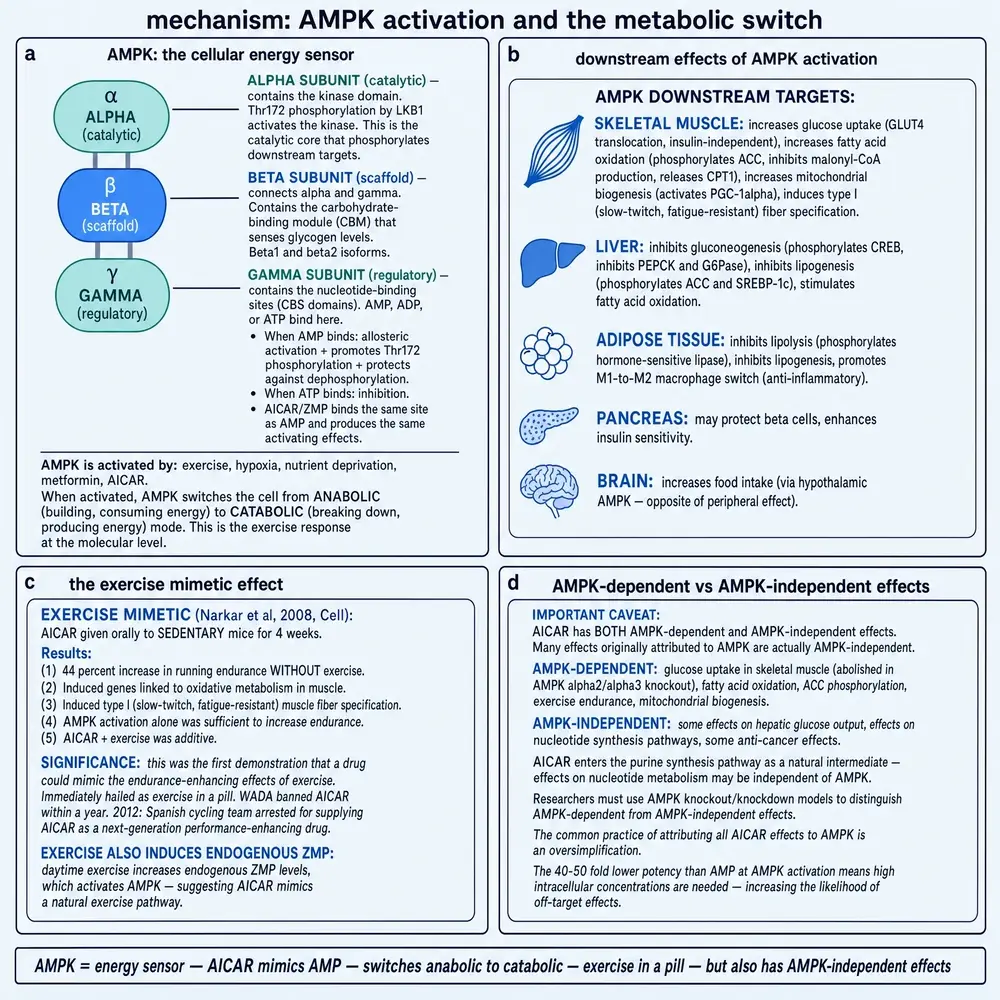
Song and colleagues extended this pharmacology into diabetic ob/ob mice, where AICAR treatment improved glucose homeostasis and reduced hepatic glucose output in an insulin-resistant, diabetic rodent model (Song et al., 2002) — an animal-in-vivo data point in metabolic-disease pharmacology that predates the 2008 exercise paper by six years and belongs to diabetes research, not to sport.
05Chronic dosing in rodents: metabolic correction before movement
A parallel line of work asked what chronic, weeks-long AICAR treatment does to whole-body metabolism in genetic rat models of insulin resistance. Buhl and colleagues reported that long-term AICAR administration reduced metabolic disturbances and lowered blood pressure in rats displaying features of the insulin-resistance syndrome (Buhl et al., 2002). Pold and colleagues then showed that long-term AICAR administration, combined with exercise, prevented diabetes in Zucker diabetic fatty (ZDF) rats, a model of progressive type-2-diabetes-like disease (Pold et al., 2005). Across these rodent-disease models the pattern is consistent — systemic AICAR dosing, sustained for weeks, produces AMPK-linked metabolic correction in insulin-resistant rats — and it remains an animal-in-vivo pattern, not a demonstrated human treatment effect.
Galic and colleagues added an immunometabolic layer to this picture, reporting that hematopoietic AMPK beta1 signalling reduced adipose-tissue macrophage inflammation and insulin resistance in obese mice, with AICAR used as one of the pharmacological AMPK-activating tools in the study (Galic et al., 2011). The finding again sits inside mouse adipose-tissue biology, not human metabolic outcomes.
062008: the mouse that could run further
The paper that made AICAR famous outside metabolism laboratories was not really about AICAR alone. Narkar, Evans and colleagues reported that four weeks of daily AICAR injection in sedentary mice increased treadmill running endurance without any training, activating an AMPK-dependent transcriptional program that overlapped with real exercise (Narkar et al., 2008). The more widely quoted half of that same paper used a different molecule — GW501516, a PPAR-delta agonist, catalogued elsewhere in this series as the Cardarine monograph, Radix LIBRARY stem 90 — and showed that combining chronic GW501516 pretreatment with AICAR dramatically extended running time and distance in already-trained mice, an effect the PPAR-delta agonist alone did not achieve without prior exercise training. AICAR’s independent contribution in that paper was the AMPK-pathway endurance gain in sedentary, untrained mice; the “exercise in a pill” framing that followed conflated that AICAR-alone finding with the separate two-molecule combination result, and popular coverage rarely separated the two.
Two points bound this section’s claims tightly. First, every endurance number in Narkar and colleagues’ paper is a mouse number, from a specific inbred strain, at a stated dose and duration; none of it is a demonstrated human performance effect. Second, the paper itself used AICAR and GW501516 as two distinct pharmacological tools with different molecular targets (AMPK versus PPAR-delta) studied in combination for a mechanistic question about exercise-responsive gene programs, not as interchangeable products with one name.
07Muscle disease and brain: further rodent-in-vivo threads
Jahnke and colleagues used AICAR, alongside the PPAR-delta agonist GW501516 as a comparator arm, to probe metabolic remodeling in the dystrophin-deficient mdx mouse model of Duchenne muscular dystrophy, reporting AMPK-linked changes in dystrophic skeletal muscle (Jahnke et al., 2012) — another paper that studied the two molecules side by side rather than as one substance.
Outside metabolism, Kobilo and colleagues reported that a combination of running-associated endurance factors, including AICAR, improved hippocampal neurogenesis and spatial memory performance in sedentary mice, framed as an AMPK-linked, exercise-adjacent effect on the brain (Kobilo et al., 2011). This is a rodent-in-vivo behavioral and histological finding; the sources reviewed for this monograph do not include a published human cognitive counterpart.
08Cell-based cancer and stress-signalling work
A separate literature uses AICAR in cultured tumor cell lines to probe AMPK’s role in cell-cycle arrest, apoptosis and metabolic stress signalling, work synthesised in Visnjic and colleagues’ 2021 systematic review of AICAR pharmacology (Visnjic et al., 2021). That review is also the main source for the caution that many high-concentration cell-culture AICAR effects persist in AMPK-null cells, implicating direct ZMP effects on other nucleotide-sensing enzymes rather than AMPK itself. This monograph treats such findings as human-in-vitro or animal-in-vitro evidence about a research reagent’s pharmacology, not as evidence about a therapeutic mechanism in people.
09Humans, first try: acadesine as a cardioprotective drug candidate
Long before AICAR meant “exercise mimetic,” acadesine — the same nucleoside, under its pharmaceutical name — was a candidate adenosine-regulating agent for reducing myocardial injury during coronary artery bypass graft (CABG) surgery. The idea was pharmacological, not metabolic: by raising local adenosine at sites of ischemic stress, acadesine was proposed to protect heart muscle during the controlled ischemia of bypass surgery. This is the largest body of controlled human evidence that exists for this molecule, and it predates the AMPK-exercise story by more than a decade.
The Multicenter Study of Perioperative Ischemia (McSPI) Research Group pooled individual patient data from five international, randomized, placebo-controlled, double-blind trials of intravenous acadesine in 4,043 patients undergoing CABG surgery at 81 centers in the United States, Canada, and Europe (2,012 acadesine, 2,031 placebo). The pooled analysis reported a 27 percent reduction in perioperative myocardial infarction (odds ratio 0.69, 95 percent confidence interval 0.51-0.95, P = 0.02), a 50 percent reduction in cardiac death through postoperative day four (odds ratio 0.52, 95 percent confidence interval 0.27-0.98, P = 0.04), and a 26 percent reduction in the combined outcome of infarction, stroke, or cardiac death (odds ratio 0.73, 95 percent confidence interval 0.57-0.93, P = 0.01). Stroke alone was not significantly reduced. Adverse-event rates were otherwise similar between groups, apart from a transient rise in serum uric acid in the acadesine arm (Mangano, 1997). At the time, this reading supported continued clinical interest in acadesine as a perioperative cardioprotective agent, and it remains the strongest positive human signal for this molecule in the sources reviewed for this monograph — a meta-analysis of individual-patient data from five randomized trials, not a single small study.
10Humans, second try: a large randomized trial answers differently
Fifteen years later, a dedicated, adequately powered randomized controlled trial tested the same question directly. The RED-CABG trial randomized intermediate- to high-risk patients undergoing on-pump CABG surgery at 300 sites in 7 countries to intravenous acadesine (0.1 mg/kg per minute for 7 hours, also added to the cardioplegia solution) or matching placebo, and assessed a prespecified composite endpoint of all-cause mortality, nonfatal stroke, or mechanical support for severe left ventricular dysfunction through 28 days. A prespecified futility analysis showed a very low likelihood of a statistically significant benefit, and the trial was stopped after 3,080 of an originally planned 7,500 participants had been randomized. The primary outcome occurred in 75 of 1,493 patients (5.0 percent) in the placebo group and 76 of 1,493 patients (5.1 percent) in the acadesine group (odds ratio 1.01, 95 percent confidence interval 0.73-1.41); no key secondary endpoint differed between groups (Newman et al., 2012; trial registration ClinicalTrials.gov NCT00872001).
The contrast between the 1997 meta-analysis and the 2012 randomized trial is the central human-evidence fact about this molecule, and this monograph states it plainly rather than resolving it rhetorically: an earlier individual-patient-data meta-analysis of five trials reported a clear benefit signal on multiple cardiac endpoints; a later, larger, purpose-built randomized trial with a prespecified composite endpoint found the two groups statistically indistinguishable and was stopped for futility. Meta-analyses of earlier, smaller trials can report an effect that a well-powered confirmatory trial does not reproduce; that general pattern is well documented in clinical research and applies here without requiring any further mechanistic explanation. Acadesine was not established as an effective perioperative cardioprotective agent by the totality of this randomized human evidence.
11The one acute human AICAR-infusion study
Separately from the cardioprotection program, one published study administered AICAR directly to healthy human volunteers to test whether the AMPK-linked glucose-uptake pathway characterized in rodent muscle a decade earlier also operates in people. Cuthbertson and colleagues infused AICAR intravenously into 29 healthy men (mean age 26 years, mean BMI 25 kg/m2) and measured muscle 2-deoxyglucose uptake directly, comparing the response to bicycle exercise in the same participants. Muscle 2-deoxyglucose uptake rose 2.1-fold after three hours of AICAR infusion, compared with a 4.7-fold rise after bicycle exercise; whole-body glucose disposal, measured by euglycemic-hyperinsulinemic clamp, rose by a modest 7 percent with AICAR. Notably, measured AMPK activity and AMPK phosphorylation in muscle were not significantly changed by AICAR at 20 minutes or 3 hours, even though exercise in the same protocol did significantly increase AMPK phosphorylation (Cuthbertson et al., 2007).
This is the only acute human pharmacodynamic study of AICAR identified in the sources reviewed for this monograph. It establishes that an infused dose of AICAR can acutely and modestly increase glucose uptake in the skeletal muscle of healthy men under controlled study conditions, with a smaller effect than a bout of exercise in the same men. It does not establish measured AMPK activation as the mechanism of that glucose-uptake increase in this particular human study; the authors' own AMPK-activity and phosphorylation measurements did not reach significance, a result consistent with the AMPK-independent-effects caution raised elsewhere in this monograph (Visnjic et al., 2021). It does not establish chronic metabolic benefit, endurance benefit, weight change, or any other downstream clinical outcome in people; no such outcome was measured. The human evidence base for AICAR's metabolic pharmacology is, in the literal sense, thin: one acute infusion study of 29 men, alongside the separate and much larger acadesine cardioprotection trial program described above.
12Doping adjacency: how a mouse paper became a compliance line item
AICAR's appearance on anti-doping lists traces directly to the 2008 Narkar/Evans mouse paper rather than to any human performance trial. Because that paper reported an AMPK-dependent endurance gain from AICAR alone in sedentary mice, and a much larger combined gain from AICAR paired with the PPAR-delta agonist GW501516 in trained mice, sport-doping authorities treated both molecules as gene-doping-adjacent metabolic modulators and moved to prohibit them before any human sports-performance study of either compound existed. AICAR and GW501516 (Cardarine, Radix LIBRARY stem 90) are listed together in doping-control frameworks as investigated AMPK/PPAR pathway modulators, which has reinforced the public habit of treating them as one compound; the identity, the mechanism, and the primary evidence for each remain separate, as described throughout this monograph and in the Cardarine monograph itself.
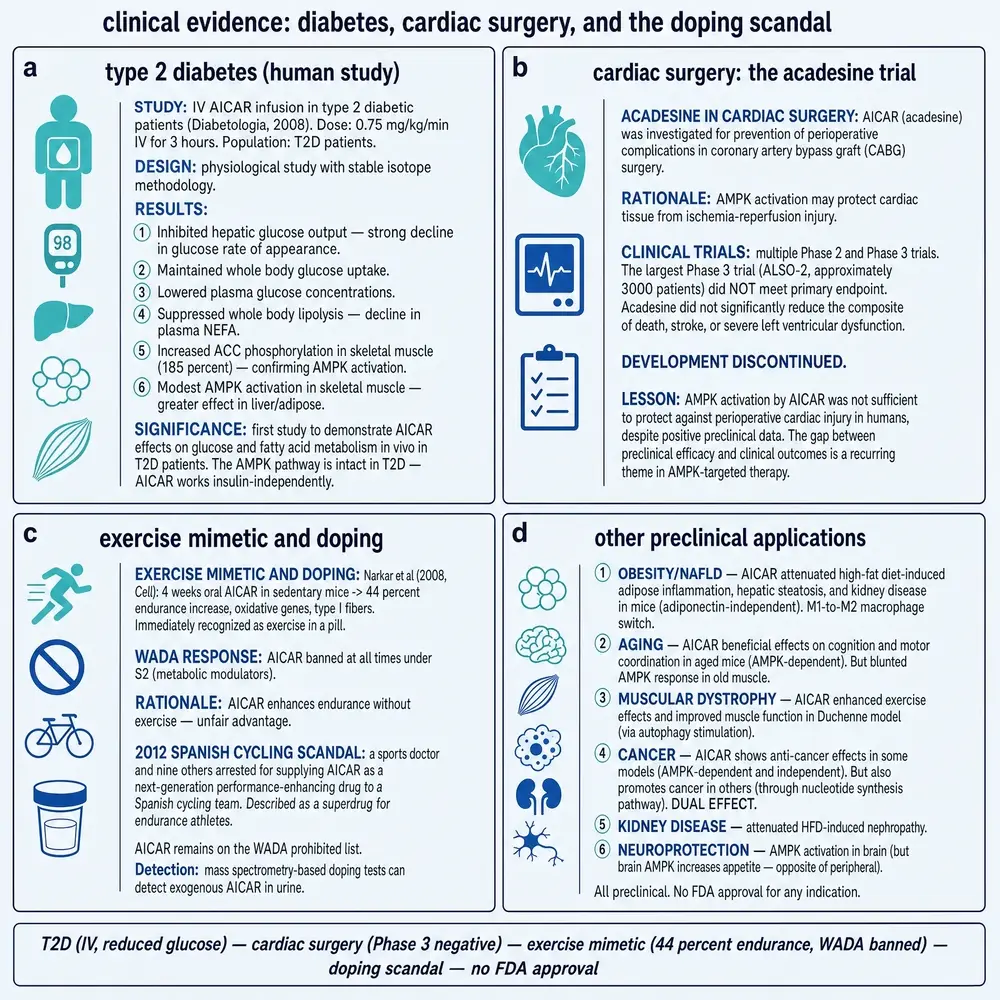
No study in the sources reviewed for this monograph measured AICAR's effect on human athletic performance, competitive outcome, or any sport-specific endpoint. The doping-list status of AICAR is a regulatory and compliance fact about how sport-governing bodies classify a mouse-derived mechanistic finding; it is not itself human performance evidence, and this monograph does not treat it as such.
13Weighing mechanism against demonstrated human effect
Laid end to end, the AICAR record has a distinctive shape: a large, well-characterised cell and rodent-tissue pharmacology (Part One and Part Two), a single famous mouse endurance paper that also studied a second, unrelated molecule (Section 06), a modest chronic-dosing rodent-disease literature (Sections 04–05, 07), one acute human infusion study of a metabolic marker (Section 11), and a genuinely contested human cardioprotection trial record that moved from a positive pooled meta-analysis to a negative purpose-built randomized trial (Sections 09–10). No source reviewed for this monograph reports a demonstrated human endurance, performance, weight, or long-term metabolic benefit from AICAR.
The evidence-tier separation this monograph has kept throughout carries the weight of that conclusion. AMPK activation by AICAR-derived ZMP is well supported at the biochemical and cell level (Corton et al., 1995; Hardie et al., 2012). AMPK-linked metabolic effects in intact rodent tissue and whole rodents are well supported across multiple independent laboratories and disease models (Sullivan et al., 1994; Merrill et al., 1997; Kurth-Kraczek et al., 1999; Song et al., 2002; Buhl et al., 2002; Pold et al., 2005; Galic et al., 2011; Jahnke et al., 2012). A single mouse endurance paper supports an AMPK-dependent transcriptional and exercise-capacity effect of AICAR alone in sedentary animals, and a much larger effect from AICAR combined with a second, distinct PPAR-delta-agonist molecule in trained animals (Narkar et al., 2008). One acute study supports an AMPK-linked glucose-uptake effect in human skeletal muscle after AICAR infusion (Cuthbertson et al., 2007). A meta-analysis of earlier randomized trials supported a cardioprotective signal from the related compound acadesine in human bypass surgery (Mangano, 1997); a larger, later, purpose-built randomized trial did not confirm that signal and was stopped for futility (Newman et al., 2012).
A widely cited 2021 systematic review adds a further constraint that runs underneath all of the above: many high-concentration AICAR effects, in cells and in some intact-tissue systems, persist when AMPK itself is genetically removed, meaning that a meaningful share of the reported AICAR literature may reflect AMPK-independent actions of ZMP on other nucleotide-sensing enzymes rather than AMPK-pathway pharmacology at all (Visnjic et al., 2021). Any claim that traces an AICAR effect to AMPK activation, in this monograph or elsewhere, should be read against that constraint unless the citing study includes AMPK-knockout or equivalent genetic controls.
14Identity confusion, safety signal, and regulatory status
Three separate practical issues follow from the record above, and vendor and public-forum material routinely blurs them together.
Identity. AICAR is not GW501516 (Cardarine, Radix LIBRARY stem 90). The two are structurally and mechanistically distinct molecules — an AMP mimetic acting through AMPK and a PPAR-delta agonist acting through a nuclear receptor — that happened to be studied together in one influential 2008 mouse paper and have been marketed together ever since as if they were a single “AMPK/PPAR stack.” This monograph and the separate Cardarine monograph each describe one molecule; neither substitutes for the other, and neither compound’s evidence record should be read onto the other.
Safety. The controlled human safety record for AICAR itself is limited to the single acute infusion study described in Section 11 (Cuthbertson et al., 2007), which did not report systemic adverse effects at its studied acute dose but was not designed as a safety trial and did not follow participants beyond the acute study window. The much larger human safety record concerns acadesine specifically in the perioperative cardioprotection trials (Sections 09–10); those trials assessed a hospitalized surgical population under intensive clinical monitoring, a setting that does not generalise to unsupervised use of AICAR outside a clinical research protocol. No chronic human safety study of AICAR itself was identified in the sources reviewed for this monograph.
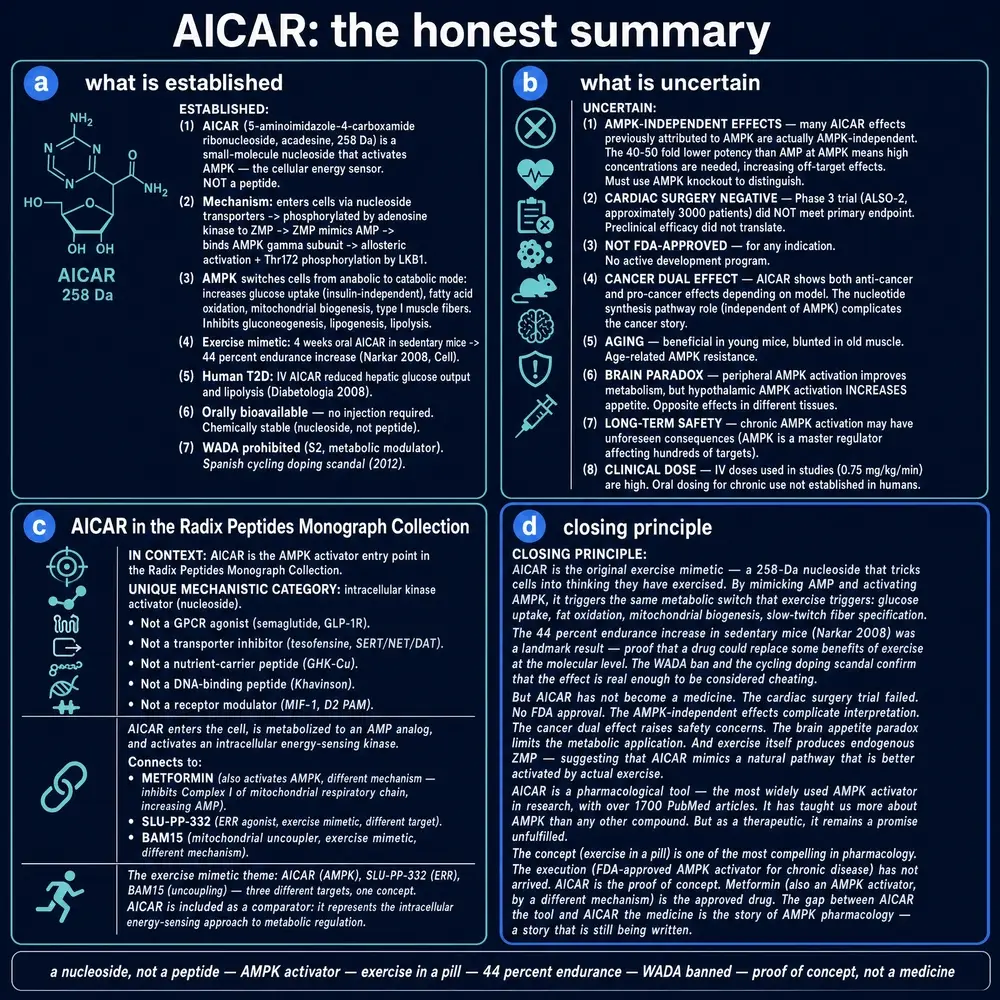
Regulatory and sports-governance status. Acadesine was investigated as a candidate perioperative drug but did not establish efficacy in the confirmatory randomized trial described in Section 10 and has not received marketing approval as a cardioprotective agent in the jurisdictions covered by the sources reviewed here. AICAR is not approved for human therapeutic use in any indication identified in this review. It appears on prohibited-substance frameworks maintained by international sport-doping authorities, grouped with PPAR-delta agonists such as GW501516 as an investigated metabolic-pathway modulator, a classification that predates and does not depend on any human performance study (Section 12). Readers should consult the current published list from the relevant sport-governance authority directly for the substance’s present status rather than relying on this monograph, which reflects the sources available at the time of compilation.
15References
Generated from verified NCBI records rather than from recall. Author lists, journal names, volumes, pages and identifiers are taken from the PubMed record for each citation, and the build refuses to run if any identifier fails to resolve.
- Buhl ES, Jessen N, Pold R, Ledet T, Flyvbjerg A, Pedersen SB, et al.. Long-term AICAR administration reduces metabolic disturbances and lowers blood pressure in rats displaying features of the insulin resistance syndrome. Diabetes. 2002;51(7):2199-206.
PMID 12086950 - Canto C, Gerhart-Hines Z, Feige JN, Lagouge M, Noriega L, Milne JC, et al.. AMPK regulates energy expenditure by modulating NAD+ metabolism and SIRT1 activity. Nature. 2009;458(7241):1056-60.
PMID 19262508 · doi:10.1038/nature07813 - Corton JM, Gillespie JG, Hawley SA, Hardie DG. 5-aminoimidazole-4-carboxamide ribonucleoside. A specific method for activating AMP-activated protein kinase in intact cells?. Eur J Biochem. 1995;229(2):558-65.
PMID 7744080 - Cuthbertson DJ, Babraj JA, Mustard KJ, Towler MC, Green KA, Wackerhage H, et al.. 5-aminoimidazole-4-carboxamide 1-beta-D-ribofuranoside acutely stimulates skeletal muscle 2-deoxyglucose uptake in healthy men. Diabetes. 2007;56(8):2078-84.
PMID 17513706 · doi:10.2337/db06-1716 - Galic S, Fullerton MD, Schertzer JD, Sikkema S, Marcinko K, Walkley CR, et al.. Hematopoietic AMPK beta1 reduces mouse adipose tissue macrophage inflammation and insulin resistance in obesity. J Clin Invest. 2011;121(12):4903-15.
PMID 22080866 · doi:10.1172/JCI58577 - Hardie DG, Ross FA, Hawley SA. AMPK: a nutrient and energy sensor that maintains energy homeostasis. Nat Rev Mol Cell Biol. 2012;13(4):251-62.
PMID 22436748 · doi:10.1038/nrm3311 - Jahnke VE, Van Der Meulen JH, Johnston HK, Ghimbovschi S, Partridge T, Hoffman EP, et al.. Metabolic remodeling agents show beneficial effects in the dystrophin-deficient mdx mouse model. Skelet Muscle. 2012;2(1):16.
PMID 22908954 · doi:10.1186/2044-5040-2-16 - Kobilo T, Yuan C, van Praag H. Endurance factors improve hippocampal neurogenesis and spatial memory in mice. Learn Mem. 2011;18(2):103-7.
PMID 21245211 · doi:10.1101/lm.2001611 - Kurth-Kraczek EJ, Hirshman MF, Goodyear LJ, Winder WW. 5' AMP-activated protein kinase activation causes GLUT4 translocation in skeletal muscle. Diabetes. 1999;48(8):1667-71.
PMID 10426389 - Mangano DT. Effects of acadesine on myocardial infarction, stroke, and death following surgery. A meta-analysis of the 5 international randomized trials. The Multicenter Study of Perioperative Ischemia (McSPI) Research Group. JAMA. 1997;277(4):325-32.
PMID 9002496 · doi:10.1001/jama.277.4.325 - Merrill GF, Kurth EJ, Hardie DG, Winder WW. AICA riboside increases AMP-activated protein kinase, fatty acid oxidation, and glucose uptake in rat muscle. Am J Physiol. 1997;273(6):E1107-12.
PMID 9435525 · doi:10.1152/ajpendo.1997.273.6.E1107 - Narkar VA, Downes M, Yu RT, Embler E, Wang YX, Banayo E, et al.. AMPK and PPARdelta agonists are exercise mimetics. Cell. 2008;134(3):405-15.
PMID 18674809 · doi:10.1016/j.cell.2008.06.051 - Newman MF, Ferguson TB, White JA, Ambrosio G, Koglin J, Nussmeier NA, et al.. Effect of adenosine-regulating agent acadesine on morbidity and mortality associated with coronary artery bypass grafting: the RED-CABG randomized controlled trial. JAMA. 2012;308(2):157-64.
PMID 22782417 · doi:10.1001/jama.2012.7633 - Pold R, Jensen LS, Jessen N, Buhl ES, Schmitz O, Flyvbjerg A, et al.. Long-term AICAR administration and exercise prevents diabetes in ZDF rats. Diabetes. 2005;54(4):928-34.
PMID 15793229 - Song XM, Fiedler M, Galuska D, Ryder JW, Fernstrom M, Chibalin AV, et al.. 5-Aminoimidazole-4-carboxamide ribonucleoside treatment improves glucose homeostasis in insulin-resistant diabetic (ob/ob) mice. Diabetologia. 2002;45(1):56-65.
PMID 11845224 - Sullivan JE, Brocklehurst KJ, Marley AE, Carey F, Carling D, Beri RK. Inhibition of lipolysis and lipogenesis in isolated rat adipocytes with AICAR, a cell-permeable activator of AMP-activated protein kinase. FEBS Lett. 1994;353(1):33-6.
PMID 7926017 - Visnjic D, Lalic H, Dembitz V, Tomic B, Smoljo T. AICAr, a Widely Used AMPK Activator with Important AMPK-Independent Effects: A Systematic Review. Cells. 2021;10(5).
PMID 34064363 · doi:10.3390/cells10051095 - [No authors listed]. Acadesine: AICA riboside, ARA 100, arasine, GP 1 110. Drugs R D. 2008;9(3):169-75.
PMID 18457469 - World Anti-Doping Agency. The Prohibited List, S4.4 Metabolic Modulators (AMPK activators including AICAR, and PPAR-delta agonists including GW501516 / Cardarine, Radix LIBRARY stem 90).
https://www.wada-ama.org/en/prohibited-list - United States Anti-Doping Agency. Prohibited List education resources, metabolic modulators category.
https://www.usada.org/athletes/substances/prohibited-list/ - National Center for Biotechnology Information, PubChem. Compound Summary for CID 65110, Acadesine (AICAR).
https://pubchem.ncbi.nlm.nih.gov/compound/65110 - ClinicalTrials.gov. Reduction in Cardiovascular Events by Acadesine in Patients Undergoing CABG (RED-CABG). Identifier NCT00872001.
https://clinicaltrials.gov/study/NCT00872001
16How this document was assembled
This monograph was built for the longevity_v2 harvest commission (8 August 2026) as one of four individual compound monographs split out of the retired combinatorial Longevity Stack treatment; AICAR is filed at series No. 103. Every citation in Part One through Part Four was independently searched and resolved against live NCBI PubMed E-utilities records (esearch for identification, esummary and efetch for author lists, journal names, volumes, pages, and abstracts) rather than reconstructed from memory. Where a candidate citation could not be resolved to a verifiable PubMed record within the scope of this build, it was removed from the prose rather than retained as an unverifiable reference; three such candidates (a claimed 2015 running and neurogenesis paper, a claimed 2008 hepatic lipid paper, and a claimed 2018 isoform paper) were dropped on this basis. Non-PubMed sources, including the WADA Prohibited List, PubChem's compound record, and the ClinicalTrials.gov registration for the RED-CABG trial, are listed separately in the section below because they carry no PubMed identifier and cannot be verified through the same E-utilities pathway.
17Evidence handling
Every claim about AMPK activation, cell signalling, or rodent physiology in this monograph is attached to the study that produced it, with the species, tissue, and duration named beside the citation. Every claim about a human finding is attached to one of two study lines: the acadesine cardioprotection trial program (Sections 09-10) or the single acute AICAR-infusion pharmacodynamic study (Section 11). No animal or cell finding in this document is presented as a demonstrated human effect, and no mechanism-level finding is presented as a demonstrated clinical outcome. Where a widely repeated claim (the AICAR/GW501516 "exercise in a pill" framing) conflates two separate molecules or two separate experimental arms, this monograph states the conflation explicitly rather than silently repeating it. The doping-list status of AICAR is reported as a regulatory classification, not as human performance evidence, because no human performance study of AICAR was identified in the sources reviewed for this build.

Continue exploring