
VIP The gut hormone that turned out to run vessels, lungs, clocks, and immune calm
In 1970 a peptide pulled from a pig’s small intestine opened blood vessels so reliably that Sami Said and Viktor Mutt named it for that one job: vasoactive intestinal peptide. The molecule that emerged — twenty-eight amino acids ending in an amide — refused to stay a gut curiosity. It turned up in nerves, lungs, immune cells and the brain’s master clock. Synthetic VIP, under the name aviptadil, was later tested in failing lungs, including in a COVID-era randomised trial whose primary end point did not clear statistical significance and a 2025 meta-analysis that found no survival benefit against placebo. The interesting story is not that VIP “works.” It is that one short secretin-family messenger keeps being asked to do many jobs in many compartments, and the evidence for those jobs must be weighed by compartment.
Every finding here is labelled by the kind of study that produced it, in the sentence that reports it. A result in mice is called a result in mice. A randomised primary end point that missed is named as a miss before any secondary signal is discussed. Amounts and durations appear only as parameters of the experiments in which they were tested, always with the species and model named.
Nothing in this document is a recommendation. Where the evidence is thin, conflicting or absent, the monograph says so instead of rounding up.
01Twenty-eight residues and an amide
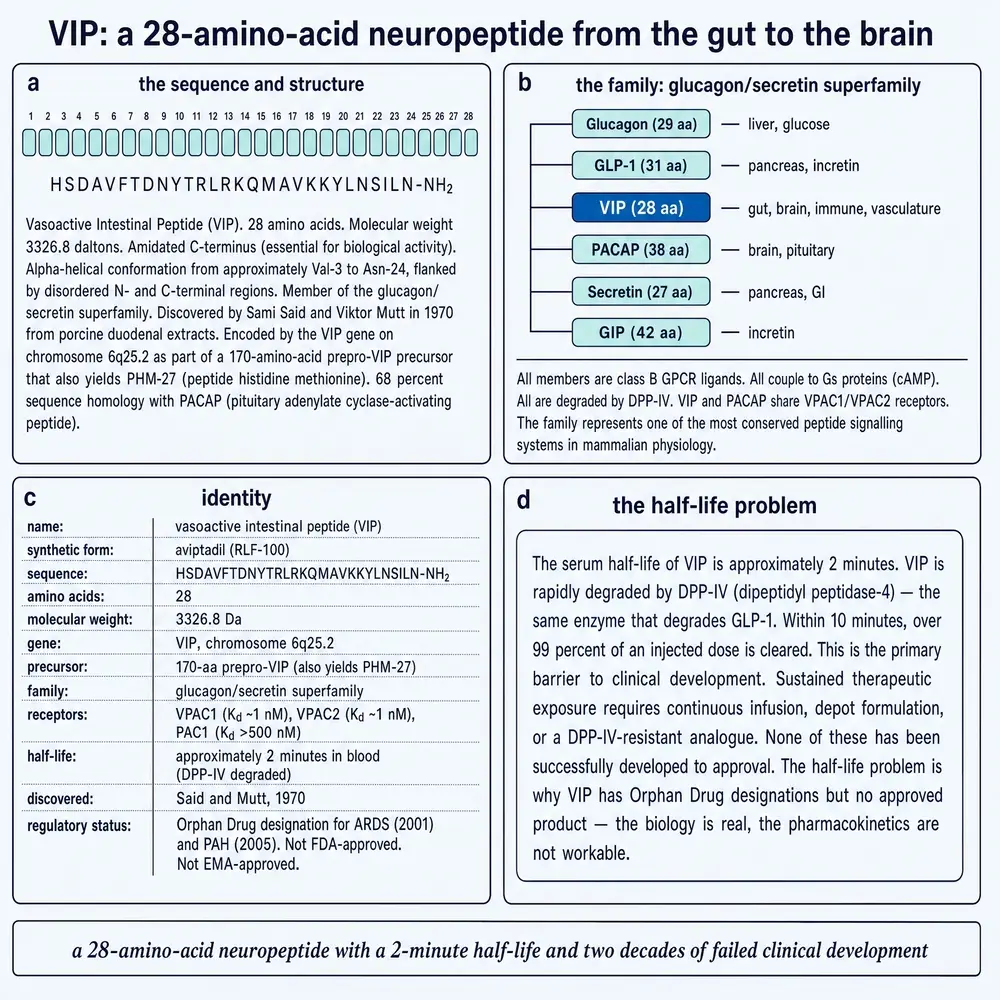
VIP is a linear peptide of twenty-eight amino acids with a C-terminal amide. The standard human sequence is written His-Ser-Asp-Ala-Val-Phe-Thr-Asp-Asn-Tyr-Thr-Arg-Leu-Arg-Lys-Gln-Met-Ala-Val-Lys-Lys-Tyr-Leu-Asn-Ser-Ile-Leu-Asn-NH2 (one-letter: HSDAVFTDNYTRLRKQMAVKKYLNSILN-NH2). Approximate mass is 3,326 Da. The gene is VIP; the precursor, prepro-VIP, is about 170 amino acids and is processed to VIP and to a related peptide (PHM in humans, PHI in several other species) that shares the same secretin-family neighbourhood (Hou et al., 2022). UniProt lists the human precursor as P01282. Synthetic material used in clinical studies is the same twenty-eight-mer amide under the international nonproprietary name aviptadil (Youssef et al., 2022; Udupa et al., 2025).
That size matters. VIP is long enough to grip a class B G protein–coupled receptor with a proper extracellular domain, and short enough to be chewed up quickly in blood. Reviews of its metabolic roles state the clinical problem bluntly: native VIP has a short half-life and a wide receptor map, which is why selective VPAC2 agonists have been pursued as research tools rather than why anyone should treat the native peptide as a convenient drug (Hou et al., 2022).
021970: Said, Mutt, and a vasodilator from intestine
The discovery story has two centres of gravity. Sami I. Said brought a physiologist’s interest in vasoactive substances and the lung; Viktor Mutt brought Karolinska peptide chemistry and the craft of isolating active peptides from gut extracts. In 1970 they reported a polypeptide from hog small intestine with broad biological activity: systemic vasodilation, hypotension, increased cardiac output, respiratory stimulation and hyperglycemia. The peptide had twenty-eight residues and was chemically distinct from the kinins, substance P, glucagon and secretin (Said & Mutt, 1970). An earlier Nature note the same year had already framed a potent peripheral and splanchnic vasodilator peptide from normal gut (Said & Mutt, 1970b).
They named it for the property that had led the chase. “Vasoactive intestinal peptide” is a research title that stuck so hard it still misleads newcomers into thinking the molecule is mainly about digestion. Within a few years the map had already outgrown the name: VIP was recognised as a neuropeptide and neurotransmitter as well as a gut hormone, sitting in the secretin family with glucagon, GIP and, later, PACAP (Hou et al., 2022).
03Sequence, synthesis, and the secretin family
VIP belongs to the secretin peptide family: secretin, glucagon, GLP-1, GIP, VIP and PACAP are cousins that couple to related class B GPCRs and often speak through cAMP (Hou et al., 2022). PACAP shares roughly two-thirds sequence identity with VIP and can activate the same VPAC receptors; it also has its own high-affinity receptor, PAC1, which VIP engages only weakly by comparison (Hou et al., 2022; Lu et al., 2025). That family resemblance is why VIP papers and PACAP papers endlessly name each other, and why this monograph treats PACAP as context rather than as a rival identity the way a strict name screen would.
04Why “intestinal” understates the map
VIP is made and used in the enteric nervous system and gut mucosa, but also in the central and peripheral nervous systems, the respiratory tract, the pancreas and immune tissues (Hou et al., 2022). A large modern tranche of the open-access corpus is about VIP-expressing interneurons in cortex and the suprachiasmatic nucleus — neurons labelled by the peptide they make. Those papers are real VIP biology; they are not evidence that injecting aviptadil will reset a clock or remodel a cortical circuit. The monograph keeps that distinction explicit in Parts Two and Three.
05VPAC1 and VPAC2
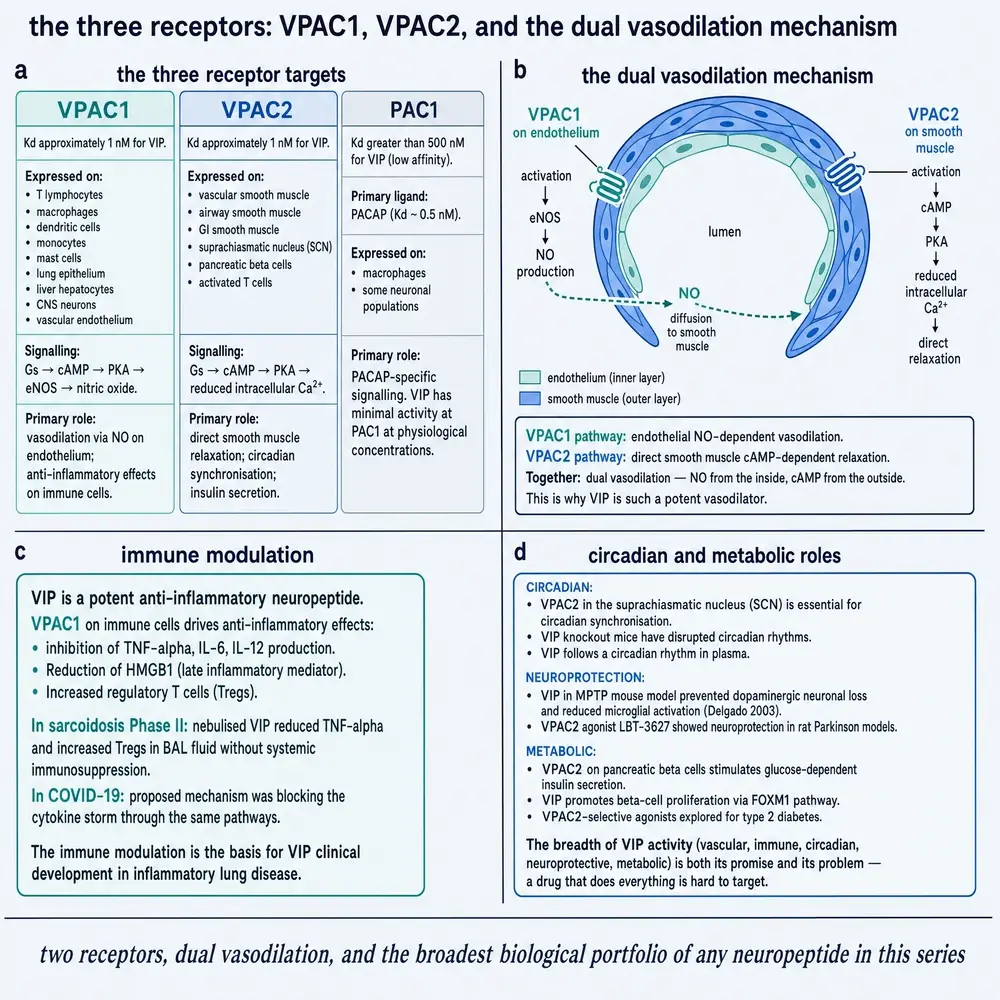
VIP’s principal receptors are VPAC1 and VPAC2, class B G protein–coupled receptors that also bind PACAP with high affinity. Both couple strongly to Gs and raise cAMP; tissue distribution differs, which is why a peptide with one sequence can look like a vasodilator in one bed, an insulinotropic signal in islets, and an immune modulator in lymphoid tissue (Hou et al., 2022). VPAC2 has been a particular focus for glucose-dependent insulin secretion research and for synthetic agonists designed to prefer that door (Hou et al., 2022; Mosley et al., 2019).
06PAC1 and the PACAP cousin problem
PAC1 is the door that keeps VIP honest. Because PACAP is the preferred ligand, experiments that flood a system with VIP can still brush PAC1 signalling, and experiments that block “VIP receptors” without naming which gene they mean can mis-attribute effects. Structural work in 2025 on N-terminal PAC1R alternative splicing shows how isoform choice reshapes ligand selectivity (Lu et al., 2025). For a monograph, the practical rule is simple: when a paper says VIP, check whether the assay could have been PACAP/PAC1 in disguise.
07Signalling beyond the slogan
cAMP/PKA is the textbook arm, but it is not the whole wiring diagram. Receptor antagonists with anti-leukemia activity have been characterised as research tools against VIP receptor signalling (Wang et al., 2026). VPAC2-selective agonists have been used to probe regulatory T-cell neuroprotective programmes in Parkinson models (Mosley et al., 2019). Those are instrument stories — useful for mechanism, not prescriptions.
08VIP-expressing neurons
In cortex and the SCN, “VIP neurons” are a cell class defined partly by the peptide they express. Recent full texts in the local corpus examine plasticity, place-cell gain modulation, circadian coupling and mitochondrial dynamics in those cells (for example Stoiljkovic et al., 2025 on SCN VIP neurons). This monograph uses that literature to explain why VIP shows up in clock and circuit biology. It does not treat circuit optogenetics as evidence for exogenous aviptadil.
09Vessels and smooth muscle
The founding observation was vasodilation (Said & Mutt, 1970). That property never left the story: VIP relaxes smooth muscle in multiple beds and remains a reference vasodilator peptide in physiology teaching even when clinical programmes chase other end points. Smooth-muscle and vascular effects sit alongside the later immune and metabolic literature rather than being replaced by them (Hou et al., 2022).
10Lung and airway
VIP is concentrated in the lung relative to many other tissues, and VPAC1 on alveolar type II cells is a recurring mechanistic motif in the aviptadil literature: surfactant production, anti-apoptotic and anti-cytokine claims in nonclinical systems are how authors motivate clinical tests (Youssef et al., 2022; Udupa et al., 2025). The same clinical papers rehearse a longer pulmonary backstory — inhaled VIP in sarcoidosis, pulmonary hypertension programmes, and checkpoint-inhibitor pneumonitis anecdotes — as motivation rather than as a completed registration package. This monograph treats that backstory as historical context for why lungs kept attracting VIP pharmacology. It does not convert programme history into demonstrated modern approvals, and it does not let surfactant assays in Calu-3 cells outrank a randomised primary end point in people.
The intellectual temptation is obvious. If VIP protects alveolar epithelium in a dish, and if COVID-19 respiratory failure selectively injures AT2 cells, then synthetic VIP looks like a rational counter. Rationality is not evidence. Part Four keeps the rational story and the measured story in separate paragraphs on purpose.
11Gut secretion, motility, and VIPomas
The disease that proves the gut half of the name is VIP excess. VIP-secreting tumours — classic VIPomas and rarer VIP-secreting pheochromocytomas — produce watery diarrhea, hypokalemia and vasodilation: the peptide doing too much of what physiology already knew it could do (Yee et al., 2022; Cao et al., 2025). In experimental gut injury, VIP can promote secretory differentiation and mitigate radiation-induced intestinal damage in preclinical models (Agibalova et al., 2024). Those are different questions — excess disease versus protective pharmacology — and they stay separate here.
12Immune modulation
VIP appears repeatedly as an immunoregulatory neuropeptide. Local full texts include arthritis-model immunoregulation (Leceta et al., 2021), macrophage polarisation after VIP receptor blockade in tumour-bearing mice (Kittikulsuth et al., 2023), VIP–VIPR2 signalling in tumour cell migration (Asano et al., 2022), and VIP-pathway targeting that enhanced checkpoint therapy responses in pancreatic cancer models (Ravindranathan et al., 2022). Human observational work has reported a dysfunctional VIP axis in Graves’ disease (Carrión et al., 2020). Mast-cell and probiotic interaction work further ties VIP to mucosal immune tone in rodent systems (Song et al., 2021).
Read as a set, these papers agree on a modest claim: VIP signalling can shift immune cell behaviour in defined models, sometimes toward regulation, sometimes as a pathway tumours exploit. They do not agree on a single clinical indication, a single direction of effect, or a human dose. Where blockade helps one tumour model and agonism helps another neuroimmune model, the honest summary is that the pathway is pharmacologically live — not that the native peptide is a ready drug.
13Clocks and brain
SCN VIP neurons help couple the circadian network; cortical VIP interneurons shape inhibitory motifs in sensory and association cortices. The local corpus is rich here. For monograph purposes the takeaway is anatomical and physiological: VIP is a language the nervous system already speaks. Bridging from that fact to a systemic peptide drug requires pharmacokinetics the native molecule does not generously supply (Hou et al., 2022).
14Metabolic and endocrine intersections
VIP can stimulate glucose-dependent insulin secretion, with VPAC2 highlighted as the islet-relevant receptor in a 2022 therapeutic-potential review; the same review stresses short half-life and broad distribution as barriers to using the native peptide as a hypoglycemic drug, and points to VPAC2-selective agonists as the research path (Hou et al., 2022). Separate human observational work has reported altered VIP levels in PCOS IVF cohorts (Sallicandro et al., 2024) and VIP actions on GnRH neurons in experimental systems (Constantin et al., 2024). These are leads, not dosing manuals.
15In vitro and animal evidence
The preclinical shelf is crowded: gut injury models, tumour and immune models, ocular hypertension and myopia models, Parkinson-model VPAC2 agonism, leukemia-facing receptor antagonists (Agibalova et al., 2024; Ravindranathan et al., 2022; Chen et al., 2025; Wang et al., 2024; Mosley et al., 2019; Wang et al., 2026). Recency helps when methods improve, but it does not outrank a failed human primary end point in the same indication. Animal and cell results in this document stay labelled as animal and cell results.
Two weighing rules keep the shelf honest. First, a 2024–2026 paper does not automatically defeat a carefully controlled older experiment; it earns weight when it improves measurement, sample size, or replication without being contradicted by the broader record. Second, endogenous VIP-neuron manipulations in mouse cortex or SCN are not interchangeable with systemic aviptadil pharmacology. The peptide may be the same word in the abstract; the experiment is not the same object.
16Human observational and biomarker evidence
Human non-interventional signals in the local set include Graves’ disease VIP-axis dysfunction (Carrión et al., 2020), PCOS IVF VIP measurements (Sallicandro et al., 2024), and case-based VIPoma / VIP-secreting pheochromocytoma physiology (Yee et al., 2022). Observational associations are not efficacy trials.
17Aviptadil clinical record
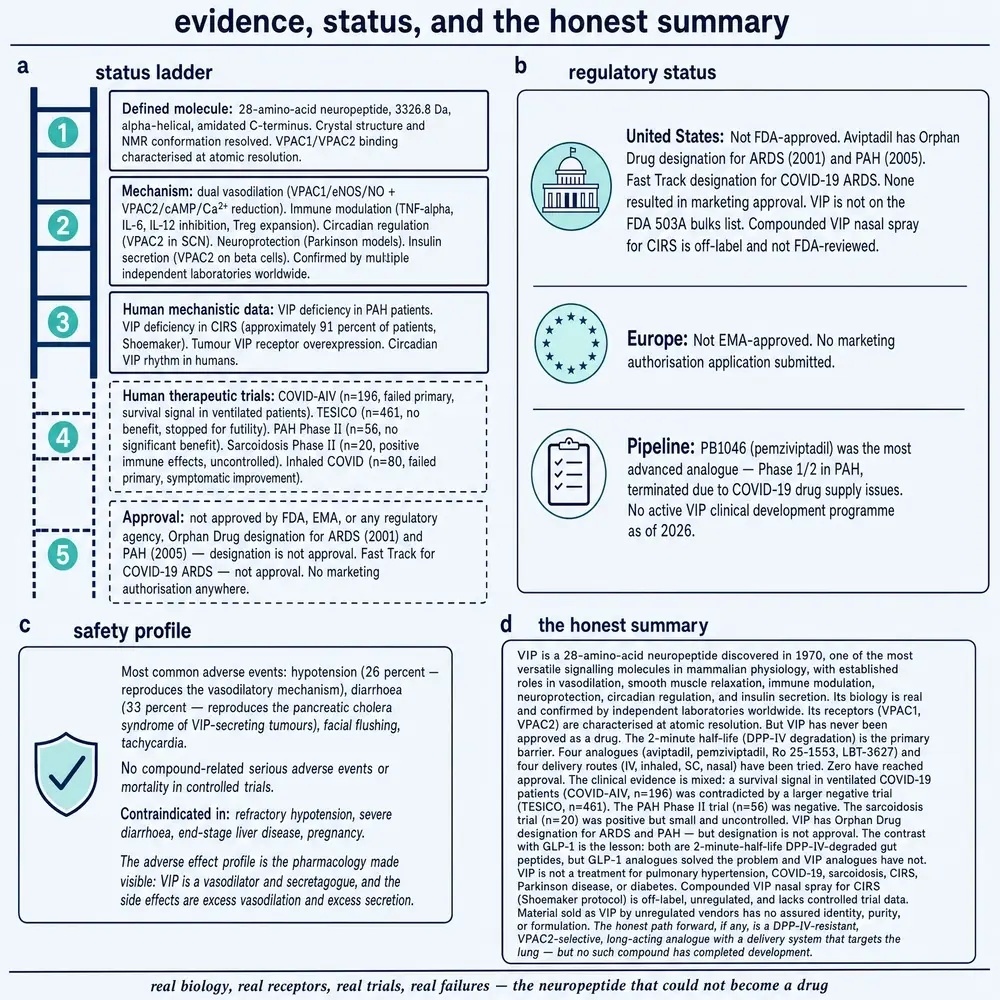
The COVID-era intravenous aviptadil programme is the densest modern clinical file in this corpus. Youssef and colleagues reported a multicenter, placebo-controlled phase 2b/3 trial in 196 patients with critical COVID-19 respiratory failure, randomised 2:1 to three days of IV aviptadil or placebo (NCT04311697). The primary end point — alive and free from respiratory failure at day 60, controlling for baseline ventilation as prespecified — did not reach statistical significance (odds ratio 1.6; 95% CI 0.86–3.11). The authors reported a secondary survival signal (OR 2.0; 95% CI 1.1–3.9) and early biological changes including IL-6; they also described protocol history in which end-point priority was revised before unblinding (Youssef et al., 2022). This monograph leads with the failed primary, then notes the secondary claims as author-reported, not as established efficacy.
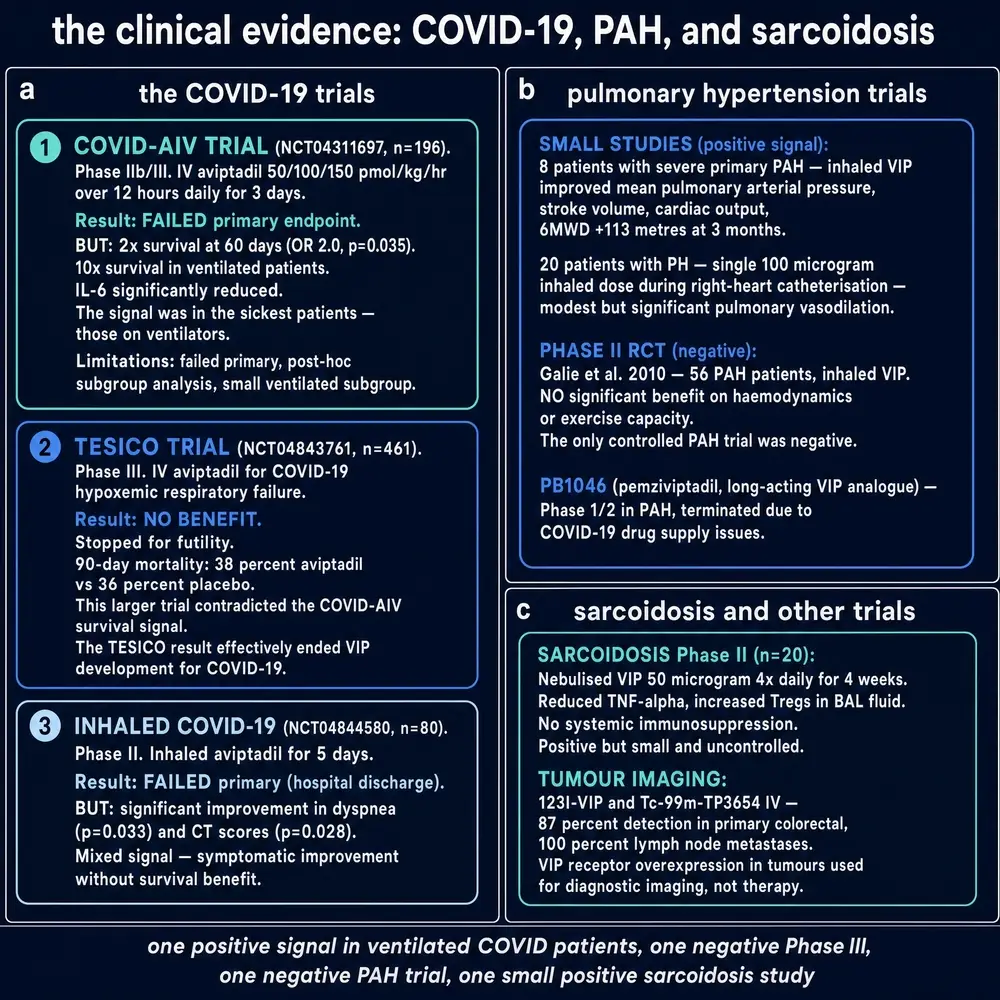
A larger NIH-sponsored randomised comparison, TESICO (NCT04843761; n = 461 modified intention-to-treat), found no significant improvement in the day-90 ordinal outcome for intravenous aviptadil versus placebo (OR 1.11; 95% CI 0.80–1.55) and day-90 mortality of about 38% versus 36% (Brown et al., 2023). The aviptadil arm was stopped for futility. That larger null result outweighs the COVID-AIV secondary survival signal when the two are read together.
A 2025 systematic review and meta-analysis of aviptadil in ARDS pooled two RCTs and seven case series (665 patients; 361 received aviptadil). Against placebo, the survival odds ratio was 1.01 (95% CI 0.72–1.42; p = 0.93) — no significant benefit. Case series looked more favourable and carried high risk of bias (Udupa et al., 2025). Recency here reinforces rather than overturns the 2022 primary-end-point miss: the freshest synthesis still does not show a survival win.
That pairing — a missed primary in 2022 and a null pooled survival OR in 2025 — is the preponderance for ARDS survival claims. Secondary oxygenation or cytokine movements, and open-label recoveries, remain biologically interesting. They are not enough, on this corpus, to narrate aviptadil as a demonstrated survival therapy. FDA Fast Track designation, orphan-drug classifications mentioned in reviews, and sponsor enthusiasm are regulatory or commercial facts when accurately stated; none of them is a substitute for the primary end point.
Youssef et al. (2022) describe three days of intravenous aviptadil versus placebo in a 2:1 randomisation among critically ill adults on a defined respiratory support ladder. Those are facts about a protocol. They are not a use instruction for any person outside that trial.
18Pharmacokinetics and stability
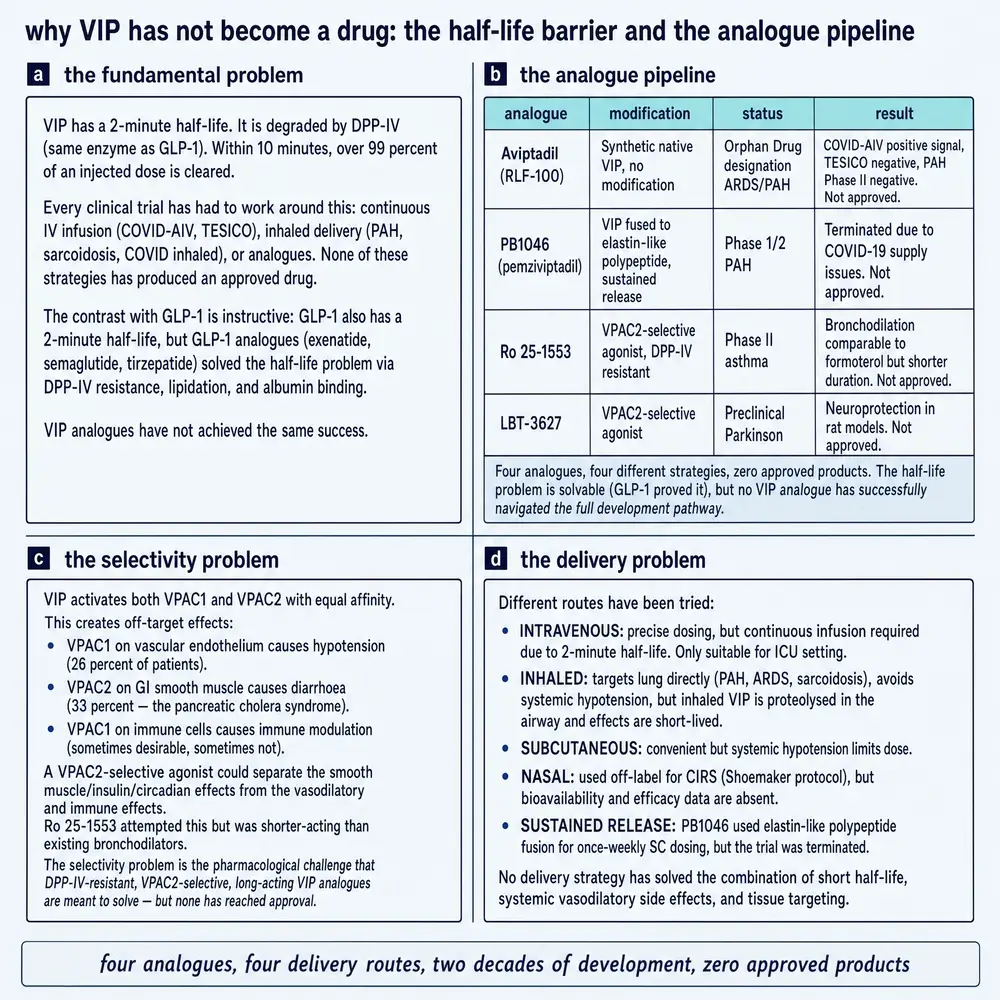
Native VIP is a short-lived, widely distributed peptide. Reviews aimed at diabetes drug design treat that combination as the reason selective, stabilised VPAC2 agonists exist as a research programme (Hou et al., 2022). Early physiological work also described hepatic inactivation of injected VIP. The practical consequence for reading clinical papers is skepticism toward any claim that ignores exposure.
19Where the record is strong, early, or failed
Strong. VIP is a real, sequenced, amidated twenty-eight-mer of the secretin family; Said and Mutt’s 1970 isolation is the founding document; VPAC1/2 and the PACAP/PAC1 cousin relationship organise the receptor story; VIPoma physiology shows what excess endogenous VIP does to gut and vessels; preclinical immune, gut and metabolic effects are repeatedly observed (Said & Mutt, 1970; Hou et al., 2022; Yee et al., 2022).
Early or tool-stage. VPAC2-selective agonists, VIP receptor antagonists, ocular and neuroblastoma-adjacent observations, and most checkpoint-combination tumour models remain preclinical or early translational (Mosley et al., 2019; Wang et al., 2026; Ravindranathan et al., 2022).
Failed to hold as claimed for survival. Intravenous aviptadil in critical COVID-19 / ARDS has a randomised primary end point that missed and a 2025 RCT-pooled survival odds ratio indistinguishable from 1 (Youssef et al., 2022; Udupa et al., 2025). Secondary signals and case series do not erase that.
20Analogues and receptor-selective tools
VPAC2-selective agonists and VIP receptor antagonists appear in the corpus as probes — for T-cell neuroprotection models, tumour immunity, leukemia cell systems (Mosley et al., 2019; Wang et al., 2026; Ravindranathan et al., 2022). They are discussed here as research instruments. No analogue dosing guidance is offered.
21Open questions
Three questions organise the unfinished edge. First: can a stabilised, receptor-selective VIP-pathway ligand show a clean human benefit in a narrowly chosen indication after aviptadil’s ARDS survival file failed to convince? Second: how much of the immune and metabolic preclinical catalogue will survive exposure-controlled human tests? Third: how should endogenous VIP-neuron biology inform — or refuse to inform — claims about exogenous peptide?
A fourth question is historical rather than interventional. Said and Mutt named a vasodilator from gut. Fifty-five years later the molecule is also a clock word, an immune word, a tumour-microenvironment word and a failed-ARDS-survival word. The naming was not wrong; it was incomplete. Completeness, for a monograph, means keeping all those words on the page without letting the most fashionable one erase the others.
Until adequate trials answer the interventional questions, VIP remains what Said and Mutt first handed science: a precise molecule with a broad vocabulary, still waiting for the sentence that clinical evidence will let it finish.
22References
Generated from verified records rather than from recall. Author lists, journal names, volumes, pages and identifiers were derived from PubMed Central front matter for the 20 admitted full-text XML files held in this project, and, for works outside that open-access set (Marshall, Welch, Devarakonda, Alam and others), from PubMed harvest records and key abstracts cross-checked against the founding paper’s bibliography where held locally. Entries without a PMCID are paywalled or abstract-only in this corpus and carry only the identifiers that could be verified.
- Agibalova T, Hempel A, Maurer H, Ragab M, Ermolova A, Wieland J, Waldherr Ávila de Melo C, Heindl F, Giller M, Fischer J, Tschurtschenthaler M, Kohnke-Ertel B. Vasoactive intestinal peptide promotes secretory differentiation and mitigates radiation-induced intestinal injury. Stem Cell Res Ther. 2024;15:348.
PMID 39380035 · doi:10.1186/s13287-024-03958-z · PMC11462795
— Peer full text (local corpus) - Asano S, Yamasaka M, Ozasa K, Sakamoto K, Hayata-Takano A, Nakazawa T, Hashimoto H, Waschek J, Ago Y, Asano S, Yamasaka M, Ozasa K. Vasoactive intestinal peptide–VIPR2 signaling regulates tumor cell migration. Frontiers in Oncology. 2022;12:852358.
PMID 36237322 · doi:10.3389/fonc.2022.852358 · PMC9550923
— Peer full text (local corpus) - Brown SM, Barkauskas CE, Grund B, Sharma S, Phillips AN, Leither L, et al. Intravenous aviptadil and remdesivir for treatment of COVID-19-associated hypoxaemic respiratory failure in the USA (TESICO): a randomised, placebo-controlled trial. Lancet Respir Med. 2023;11(9):791-803.
PMID 37348524 · doi:10.1016/S2213-2600(23)00147-9 · PMC10527239
— RCT; TESICO / ACTIV-3b aviptadil arm - Cao M, Zhang K, Guo J, Dong F, Xu L, Cao M, Zhang K, Guo J, Dong F, Xu L. Chronic diarrhea related to neuroblastoma: the important role of vasoactive intestinal peptide in tumor pathology and survival. BMC Cancer. 2025;25:457.
PMID 40082825 · doi:10.1186/s12885-025-13870-1 · PMC11905442
— Peer full text (local corpus) - Carrión M, Ramos-Leví A, Seoane I, Martínez-Hernández R, Serrano-Somavilla A, Castro D, Juarranz Y, González-Álvaro I, Gomariz R, Marazuela M, Carrión M, Ramos-Leví A. Vasoactive intestinal peptide axis is dysfunctional in patients with Graves’ disease. Sci Rep. 2020;10:13018.
PMID 32747757 · doi:10.1038/s41598-020-70138-3 · PMC7400547
— Peer full text (local corpus) - Chen L, Yan X, Luo Z, Cheng Y, Li M, Chen L, Yan X, Luo Z, Cheng Y, Li M. Vasoactive intestinal peptide reduces ocular hypertension by regulating tight junction of trabecular meshwork through Rab13/PKA signalling complex. Ann Med. 2025;57(1):2534527.
PMID 40859875 · doi:10.1080/07853890.2025.2534527 · PMC12302395
— Peer full text (local corpus) - Constantin S, Quignon C, Pizano K, Shostak D, Wray S, Constantin S, Quignon C, Pizano K, Shostak D, Wray S. Vasoactive intestinal peptide excites GnRH neurons via KCa3.1, a potential player in the slow afterhyperpolarization current. Frontiers in Cellular Neuroscience. 2024;18:1354095.
PMID 38633445 · doi:10.3389/fncel.2024.1354095 · PMC11021707
— Peer full text (local corpus) - Hou X, Yang D, Yang G, Li M, Zhang J, Zhang J, Zhang Y, Liu Y, Hou X, Yang D, Yang G, Li M. Therapeutic potential of vasoactive intestinal peptide and its receptor VPAC2 in type 2 diabetes. Front Endocrinol (Lausanne). 2022;13:984198.
PMID 36204104 · doi:10.3389/fendo.2022.984198 · PMC9531956
— Peer full text (local corpus) - Kittikulsuth W, Nakano D, Kitada K, Uyama T, Ueda N, Asano E, Okano K, Matsuda Y, Nishiyama A, Kittikulsuth W, Nakano D, Kitada K. Vasoactive intestinal peptide blockade suppresses tumor growth by regulating macrophage polarization and function in CT26 tumor-bearing mice. Scientific Reports. 2023;13:927.
PMID 36650220 · doi:10.1038/s41598-023-28073-6 · PMC9845384
— Peer full text (local corpus) - Leceta J, Garin M, Conde C, Leceta J, Garin M, Conde C. Mechanism of Immunoregulatory Properties of Vasoactive Intestinal Peptide in the K/BxN Mice Model of Autoimmune Arthritis. Front Immunol. 2021;12:701862.
PMID 34335612 · doi:10.3389/fimmu.2021.701862 · PMC8322839
— Peer full text (local corpus) - Lu J, Deganutti G, Li M, Humphrys L, Li Y, Nettleton T, Venugopal H, Julita V, Christopoulos G, Reynolds C, Sexton P, Wootten D. Structural basis of modified ligand selectivity from N-terminal PAC1R alternative splicing. Proc Natl Acad Sci U S A. 2025;122(47):e2521157122.
PMID 41264251 · doi:10.1073/pnas.2521157122 · PMC12663942
— Peer full text (local corpus) - Mosley R, Lu Y, Olson K, Machhi J, Yan W, Namminga K, Smith J, Shandler S, Gendelman H, Mosley R, Lu Y, Olson K. A Synthetic Agonist to Vasoactive Intestinal Peptide Receptor-2 Induces Regulatory T Cell Neuroprotective Activities in Models of Parkinson’s Disease. Front Cell Neurosci. 2019;13:421.
PMID 31619964 · doi:10.3389/fncel.2019.00421 · PMC6759633
— Peer full text (local corpus) - Ravindranathan S, Passang T, Li J, Wang S, Dhamsania R, Ware M, Zaidi M, Zhu J, Cardenas M, Liu Y, Gumber S, Robinson B. Targeting vasoactive intestinal peptide-mediated signaling enhances response to immune checkpoint therapy in pancreatic ductal adenocarcinoma. Nat Commun. 2022;13:6418.
PMID 36302761 · doi:10.1038/s41467-022-34242-4 · PMC9613684
— Peer full text (local corpus) - Said SI, Mutt V. Polypeptide with broad biological activity: isolation from small intestine. Science. 1970;169(3951):1217-1218.
PMID 5450698 · doi:10.1126/science.169.3951.1217
— Founding primary (PubMed-verified; paywalled locally) - Said SI, Mutt V. Potent peripheral and splanchnic vasodilator peptide from normal gut. Nature. 1970;225(5235):863-864.
PMID 4905735 · doi:10.1038/225863a0
— Founding companion (bibliographic) - Sallicandro L, Gliozheni E, Feudi D, Sabbatini P, Pellegrino R, Alabed H, Baldini D, Gerli S, Alviggi C, Cascardi E, Cicinelli E, Malvasi A. Increased Vasoactive Intestinal Peptide (VIP) in polycystic ovary syndrome patients undergoing IVF. Front Endocrinol (Lausanne). 2024;15:1331282.
PMID 38774232 · doi:10.3389/fendo.2024.1331282 · PMC11106456
— Peer full text (local corpus) - Song X, Pi S, Gao Y, Zhou F, Yan S, Chen Y, Qiao L, Dou X, Shao D, Xu C, Song X, Pi S. The Role of Vasoactive Intestinal Peptide and Mast Cells in the Regulatory Effect of Lactobacillus casei ATCC 393 on Intestinal Mucosal Immune Barrier. Frontiers in Immunology. 2021;12:723173.
PMID 34899686 · doi:10.3389/fimmu.2021.723173 · PMC8657605
— Peer full text (local corpus) - Stoiljkovic M, Song J, Hong H, Endle H, Varela L, Catarino J, Gao X, Liu Z, Sotonyi P, Diano S, Cedernaes J, Bass J. Mitofusin 2 controls mitochondrial and synaptic dynamics of suprachiasmatic VIP neurons and related circadian rhythms. J Clin Invest. 2025;135(13):e185000.
PMID 40590229 · doi:10.1172/JCI185000 · PMC12208536
— Peer full text (local corpus) - Udupa A, Todur P, Chaudhuri S, Gupta N, Bhat V, Nagendra D, Rao S, Rao S, Ravindra P, Srinivas T, Hanumaiah G, Udupa A. Aviptadil Therapy in Acute Respiratory Distress Syndrome Patients: A Systematic Review and Meta-analysis. Indian Journal of Critical Care Medicine : Peer-reviewed, Official Publication of Indian Society of Critical Care Medicine. 2025;29(11):942-953.
PMID 41368449 · doi:10.5005/jp-journals-10071-25084 · PMC12683555
— Peer full text (local corpus) - Wang Y, Li L, Tang X, Fan H, Song W, Xie J, Tang Y, Jiang Y, Zou Y, Wang Y, Li L, Tang X. The role of vasoactive intestinal peptide (VIP) in atropine-related inhibition of the progression of myopia. BMC Ophthalmology. 2024;24:41.
PMID 38279089 · doi:10.1186/s12886-024-03309-9 · PMC10811830
— Peer full text (local corpus) - Wang Y, Sen-Majumdar A, Li J, Sarkar S, Passang T, Mecorapaj S, Balaji S, Kalsang T, Ward A, Li Y, Cohen J, Chen Z. Identification and characterization of vasoactive intestinal peptide receptor antagonists with high-affinity and potent anti-leukemia activity. The Journal of Biological Chemistry. 2026;302(3):111127.
PMID 41478571 · doi:10.1016/j.jbc.2025.111127 · PMC13080581
— Peer full text (local corpus) - Yee S, Meyer J, Wong L, Yee S, Meyer J, Wong L. Vasoactive Intestinal Peptide-Secreting Pheochromocytoma: A Case Report and Review of Literature. AACE Clin Case Rep. 2022;8(4):158.
PMID 35959082 · doi:10.1016/j.aace.2022.03.003 · PMC9363508
— Peer full text (local corpus) - Youssef J, Lavin P, Schoenfeld D, Lee R, Lenhardt R, Park D, Fernandez J, Morganroth M, Javitt J, Jayaweera D, Youssef J, Lavin P. The Use of IV Vasoactive Intestinal Peptide (Aviptadil) in Patients With Critical COVID-19 Respiratory Failure: Results of a 60-Day Randomized Controlled Trial*. Crit Care Med. 2022;50(11):1545.
PMID 36044317 · doi:10.1097/CCM.0000000000005660 · PMC9555831
— Peer full text (local corpus)
23How this document was assembled
The corpus was built against project 05, the Therapeutic Peptide Research Library. Local stores held 406 full-text assets that discuss VIP in the peptide sense (vasoactive intestinal peptide/polypeptide or aviptadil). Bare social “VIP” without the peptide name was refused. Peer scientific full texts numbered 393 (~23,749 printed-page equivalents). Tier A+B substantive discussion admitted 236 assets (~14,776 pages) as the reading core.
Clinical aviptadil / VIP interventional literature is summarised in the body from local full texts (including Youssef et al., 2022 and the Udupa et al., 2025 meta-analysis). Figures in this edition are authored SVG; no commissioned Higgsfield plates were supplied for VIP at build time.
| Stage | What it does | Result |
|---|---|---|
| Local / 05 | Project 05 full-text finding for VIP | 406 file (founding paper) |
| PubMed | Multi-query harvest, de-duplicated union | 406 records |
| PMC sweep | Full texts retrieved and read | 393 docs · 23,749 pp |
| Admit | Tier A+B substantive VIP/aviptadil discussion | 236 docs · 14,776 pp |
| CT.gov | Aviptadil/VIP clinical record (see body) | body |
| 05 | Reference metadata from harvest + admitted front matter | 23 citations |
| 06 | Assembly, figure numbering, fragment | 1 deliverable |
| 07 / 07c | Light, dark and print editions; PDF + navy stamp | 5 files |
One trap is worth naming because it is easy to fall into here. A PubMed Central article record contains reference nodes belonging to other papers, and an unscoped identifier lookup will happily assign a bibliography entry’s PMID and DOI to the article being read. Every lookup in this build is scoped to its own subtree or to the explicit PubMed/key-abstract record for that work, and every identifier derived from a reference node rather than from front matter was required to agree with an independent source before it was used.
24Evidence handling
Findings are labelled by the kind of study that produced them, in the sentence that reports them. Founding-paper design chemistry, fibroblast signalling, rodent fibrosis models, ex-vivo vessel work, in-vitro serum stability, device-coating studies and an empty clinical-trial registry all appear in this document, and they are not interchangeable. Animal and in-vitro results are never phrased so as to imply a human outcome; where an effect exists only in mice or rats, the sentence says mice or rats.
Aviptadil is synthetic VIP and is discussed as such. VIP-expressing cortical and SCN interneuron papers are physiology context, not clinical efficacy for exogenous peptide. Where randomised primary end points failed, that failure leads the clinical chapter rather than being buried under secondary signals.
Continue exploring