
Thymulin The zinc-locked nonapeptide of the thymus — discovered as a serum factor in Paris, renamed when a metal proved indispensable, and still searching for a modern human trial
In the 1970s, immunologists in Paris chased a circulating signal that made T cells behave as if a thymus were present. They found a nine-residue peptide so small it almost looked like a joke against the complexity of adaptive immunity. Then they found that the joke had a condition: without one zinc ion, the peptide was quiet. That zinc-bearing form is thymulin. Half a century later the molecule still has one of the cleanest origin stories in the thymic-peptide catalogue — and one of the thinnest modern clinical programmes. This monograph holds both facts in view.
Every finding is labelled by the kind of study that produced it in the sentence that reports it. A result in a mouse is a result in a mouse. A volunteer zinc-restriction study is labelled as human experimental work on zinc status, not as a trial of thymulin as a drug. Homeopathic high-dilution preparations are kept in their own tier and never pooled with pharmacological peptide experiments.
A note on names. Thymulin is not Thymalin. One letter separates a French nonapeptide hormone from a Russian thymic polypeptide preparation. Thymosin alpha-1 and thymosin beta-4 are neighbours from the same organ story and different molecules. This document refuses those merges.
A note on doses. Amounts appear only as reported research parameters. Nothing here is guidance for use by any person.
Section 01The Paris discovery
The setting matters. By the mid-1970s the thymus had been dragged out of the category of evolutionary leftover and into the centre of cellular immunology. T cells needed an education; that education needed signals; and some of those signals appeared to travel in blood. Jean-François Bach, Mireille Dardenne, Jean-Marie Pleau and colleagues at Necker / INSERM pursued one such signal with a stubborn bioassay: the appearance of T-cell markers on immature cells, classically read as rosette formation. From serum they isolated a factor small enough to sequence. In 1977 Nature carried the biochemical characterisation of that serum thymic factor — facteur thymique sérique, FTS (Bach et al., 1977).
The discovery sits in a particular historical pocket. It is not the story of a company hunting a product. It is the story of academic immunology trying to turn a circulating activity into a molecule you could write down. The peptide they wrote down was a nonapeptide with an N-terminal pyroglutamate: <Glu-Ala-Lys-Ser-Gln-Gly-Gly-Ser-Asn. That sequence is still the identity anchor for the compound sold and discussed today as thymulin.
Context for a non-specialist reader: the 1970s thymus was a place where surgery, neonatology, and cell-marker chemistry met. Removing the thymus early in life wrecked cellular immunity in animals; reconstituting thymic function, even partially, became a research obsession. A circulating peptide that restored marker expression in vitro looked like a missing telegram from the organ. Whether that telegram would later become a medicine is a different question, and this document does not pretend the first half of the story answers the second.
Section 02What the molecule is
Thymulin, in the sense used throughout the modern literature, is not the bare peptide alone. It is the peptide bound to zinc. The free nonapeptide can be synthesised; the biologically active hormone, in the classical assays, is the metallopeptide. PubChem records the compound under CID 71300623 among other identifiers; synonym lists still carry serum thymic factor and FTS because the field renamed the active form without discarding the older labels.
The commissioned identity plate that follows restates the same chemical and historical anchors in a four‑panel layout: sequence, zinc requirement, the Thymulin‑versus‑Thymalin trap, and an identity card. Every printed value on it was checked against this document’s chemical record before admission (assets/higgsfield/MAPPING.md).
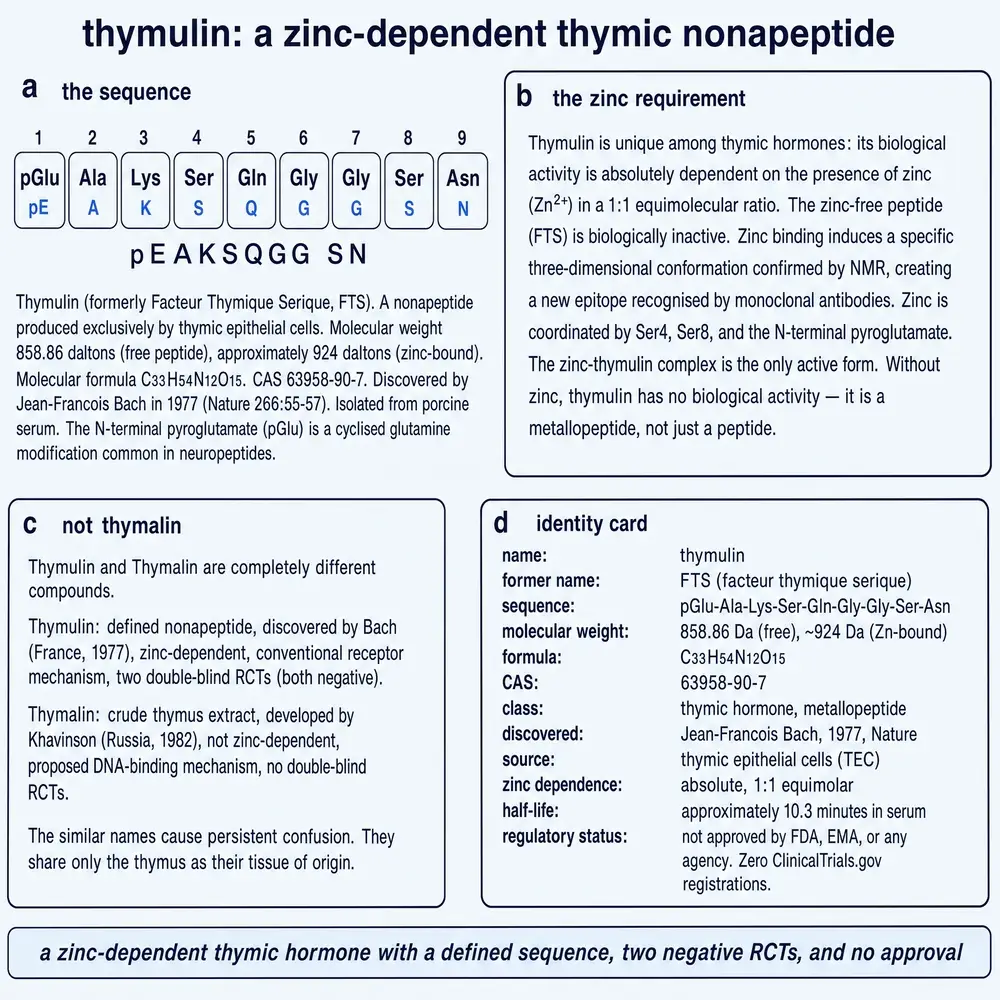
Two practical consequences follow. First, any discussion of “thymulin levels” in serum is really a discussion of bioactivity that depends on both peptide and available zinc. Second, catalogue language that treats the apo-peptide and the zinc complex as interchangeable is chemically careless. The next section is where that carelessness was formally retired.
Section 03Why zinc is not a footnote
In 1982 Dardenne, Nabarra, Lefrancier, Pleau and Bach reported that stripping metal ions from natural or synthetic FTS with a chelating resin abolished activity in the rosette assay, and that zinc salts — and to a lesser extent some other metals — restored it. A one-to-one metal-to-peptide ratio gave the best reactivation. They proposed that the inactive metal-free form and the active zinc-bearing form should be distinguished, and they named the active form thymulin (FTS-Zn) (Dardenne et al., 1982).
That paper is not a decorative origin myth. It is the load-bearing fact of the molecule. Later NMR and monoclonal-antibody work, synthesised in Dardenne and Pleau’s 1994 review of zinc–thymulin interactions, tied the metal to a conformational epitope: zinc does not merely “help” the peptide in some vague nutritional sense; it participates in the shape the immune assay recognises (Dardenne & Pleau, 1994). When later authors measure “serum thymulin activity,” they are measuring something downstream of that shape.
Section 04Neighbours that are not this molecule
Before any biology is weighed, the catalogue has to be policed. Thymalin is a different thymic preparation associated with the Khavinson bioregulator programme. Thymosin alpha-1 (thymalfasin) and thymosin beta-4 are different peptides with different sequences, different clinical histories, and their own monograph numbers in this series. Sharing an organ of origin is not sharing an identity. A reader who collapses those names will invent a literature that does not exist.
This monograph’s identity gate therefore requires an explicit thymulin / serum thymic factor / FTS-Zn designation. Bare “FTS” without corroborating context is refused, because the abbreviation collides with unrelated expansions in full-text search. That pedantry is what keeps the evidence base from being quietly replaced by its neighbours.
Section 05T-cell differentiation and the old assays
The classical claim is straightforward enough to state without romance. Thymulin, produced by thymic epithelial cells, promotes aspects of T-cell differentiation inside and outside the thymus. Early work leaned on marker induction and rosette assays because those were the tools that could see a change. Later reviews restated the same core: a metallopeptide hormone with a measurable serum footprint and a role in T-lineage maturation (Dardenne & Pleau, 1994; Reggiani et al., 2014).
The same dual character — immune education on one side, neuroendocrine conversation on the other — is the subject of the next commissioned plate. Its preclinical anti‑inflammatory panel is labelled as animal work there and is weighed that way later in this document.
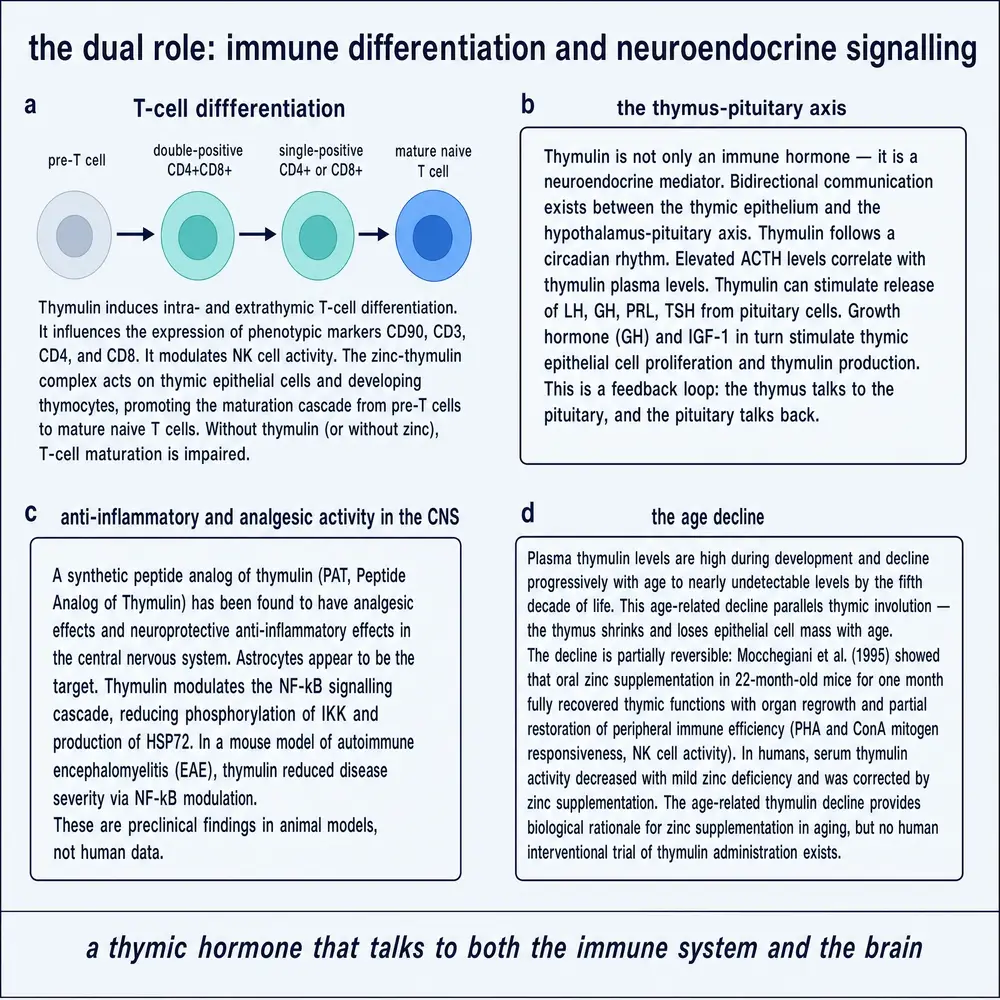
What a non-specialist should take from that sentence is not a promise of immune rejuvenation. It is a description of a research object that made sense in the language of its decade: if the thymus educates T cells, and if a peptide from thymic epithelium circulates, then altering that peptide’s availability should alter marker programmes. The assays of the time rewarded exactly that kind of change. They did not, by themselves, establish clinical utility in people living with modern disease definitions.
Section 06Serum levels, involution, and ageing
Thymulin is unusual among thymic peptides in having been treated as a true endocrine variable: something you can attempt to measure in serum, watch fall with age, and relate to zinc status. Thymic involution — the organ’s slow structural retreat after puberty — supplies the anatomical backdrop. If epithelial production declines and zinc handling shifts, bioactive thymulin should decline with them. That prediction is one reason ageing immunologists kept the molecule on the desk long after the first characterisation papers yellowed.
Mocchegiani and colleagues, writing in 2004, placed impaired thymulin production inside a larger story about zinc-bound metallothionein isoforms and thymic involution during ageing. The paper is not a simple “thymulin falls with age” slogan; it is an argument that zinc trafficking proteins and thymic endocrine output are tangled (Mocchegiani et al., 2004). For this monograph the usable residue is modest and important: ageing research treats thymulin activity as a readout coupled to zinc biology, not as an isolated youth serum.
Section 07Zinc deficiency in people — biomarker, not a drug trial
The strongest human bridge in this corpus does not come from injecting thymulin into volunteers. It comes from restricting zinc. Prasad’s 2020 synthesis of experimental human zinc-deficiency models revisits work in which young volunteers ate zinc-restricted diets and were followed with immune and endocrine readouts. Among those readouts, active serum thymulin fell with restriction and recovered with repletion — a pattern that made thymulin activity look like a sensitive marker of marginal zinc deficiency (Prasad, 2020).
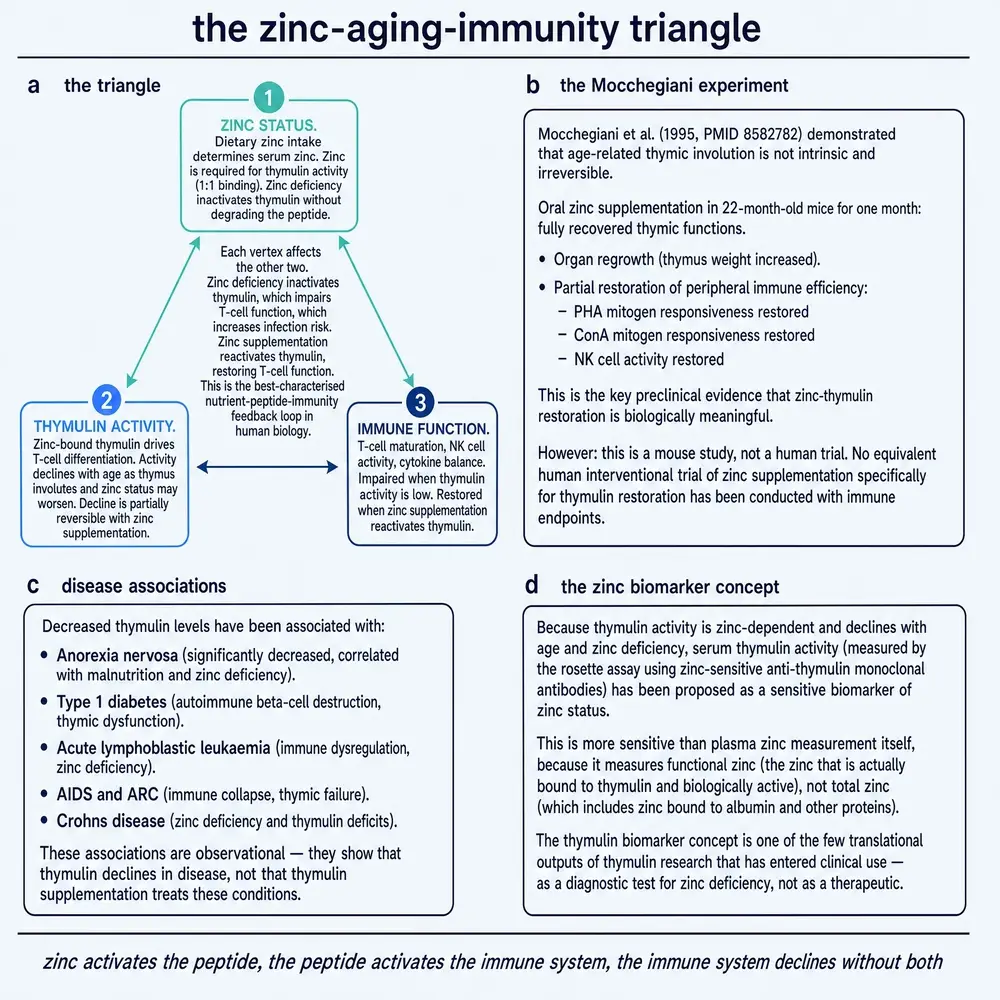
Drawn as a triangle rather than a timeline, the commissioned plate above makes the same point geometrically: zinc status, thymulin activity, and immune function sit in a feedback loop. Disease‑association panels on that plate are observational; they are not treatment claims.
Read that finding at the correct altitude. It supports a claim about zinc status and endogenous thymulin activity. It does not, by itself, support a claim that giving synthetic thymulin to a person is beneficial, safe, or indicated for anything. The experiment changes the mineral environment and watches a hormone activity move. That is valuable physiology. It is not a substitute for a randomised peptide trial, and this document will not pretend otherwise.
The same section is also where recency earns its keep without bullying older facts. Prasad’s 2020 review is newer than the 1980s assay papers, but it does not contradict them; it depends on them. The zinc lock of 1982 is still the reason a zinc-restriction experiment can move a thymulin titer in the first place.
Section 08Extrathymic production under stress
The classical story says thymic epithelial cells make thymulin. Lunin and colleagues complicated that picture in 2017 by asking whether non-thymic cells could produce thymulin-related signals when stressed. In macrophage and fibroblast systems exposed to oxidative stress, heat shock, apoptotic or necrotic conditions, they reported extrathymic thymulin production alongside stress-marker changes (Lunin et al., 2017). They also discussed a ~60 kDa thymulin-reactive band and its possible relationship to SPATS2L — a molecular identification that remains, on the paper’s own terms, a hypothesis with sequence discrepancies still noted.
Why it matters for a general reader: if a “thymic hormone” can be induced outside the thymus under lethal or near-lethal cell stress, then serum or tissue signals attributed to thymulin may sometimes be stress biology rather than tidy endocrine tone. That does not erase the TEC account. It adds a second source term that later inflammation papers implicitly rely on when they treat thymulin as an anti-inflammatory peptide rather than only as a developmental hormone.
Section 09Inflammation programmes in mice
From 2014 onward, the Novoselova / Lunin group’s open-access papers form the densest local full-text cluster on pharmacological thymulin. In LPS-treated mice, thymulin was tested alongside an IKK inhibitor and fat-soluble antioxidants as a modulator of inflammatory signalling (Novoselova et al., 2014). In a chronic septic-inflammation model, free thymulin and polybutylcyanoacrylate (PBCA) nanoparticle-bound thymulin were compared for effects on NF-κB / MAPK pathway activity, heat-shock proteins, TLR4, apoptosis, cytokines, and monoamine readouts (Novoselova et al., 2018).
These are animal experiments with the virtues and limits of their design. They show that, under the conditions reported, thymulin preparations can shift inflammatory and stress pathways in mice, and that nanoparticle binding can alter the magnitude or durability of those shifts. They do not show that a person with sepsis, autoimmunity, or chronic inflammation would benefit from the peptide. The honest translation sentence is shorter than the abstracts: preclinical anti-inflammatory activity is repeatedly observed in this research network; human outcome trials of the peptide are not in this corpus.
Section 10Autoimmunity and gene therapy
Two delivery-forward programmes deserve separate mention because they are where the recent literature is most inventive.
PBCA nanoparticles in relapsing-remitting EAE. Lunin and colleagues loaded thymulin onto PBCA nanoparticles and tested the construct in a murine relapsing-remitting experimental autoimmune encephalomyelitis model, reporting protective effects relative to controls under the conditions studied (Lunin et al., 2019). The interest is dual: disease-model biology and delivery chemistry. EAE is not multiple sclerosis, and a nanoparticle that helps a mouse score better on EAE metrics is still a research object.
DNA nanoparticle gene therapy in experimental asthma. da Silva and colleagues pursued a different idea: not injecting the peptide, but delivering DNA nanoparticles that express thymulin. An earlier 2014 study reported prevention of airway remodelling in experimental allergic asthma (da Silva et al., 2014). The 2020 Science Advances paper extended the programme, reporting that nanoparticle-based thymulin gene therapy therapeutically reversed key pathology of experimental allergic asthma (da Silva et al., 2020). For a general reader, the striking move is conceptual: the field briefly stops asking whether a bolus of peptide is enough and starts asking whether sustained local expression can remodel a disease phenotype in animals.
Recency weighting applies here with a guardrail. The 2014–2020 gene-therapy and nanoparticle papers are fresher than the rosette-era literature and show where experimental energy has gone. They do not outrank the zinc-activity biochemistry, and they do not fill the human-trial gap.
Section 11Metabolic injury models
Novoselova and colleagues (2021) examined thymulin and peroxiredoxin 6 in streptozotocin-induced type 1 diabetes in mice, reporting protective effects on physiological status and inflammatory readouts under the conditions described (Novoselova et al., 2021). The paper sits with the same group’s LPS and sepsis work: a coherent preclinical programme exploring thymulin as a mitigator of inflammatory injury, sometimes in combination with redox enzymes or nanoparticle carriers.
Weighing rule for this whole Part: animal consistency inside one research network is real information about what that network can reproduce. It is weaker information about what the wider world has independently confirmed, and it is not information about human benefit. The next Part makes those separations explicit.
Section 12Homeopathic 5CH — a separate shelf
Bonamin and colleagues (2013) studied a homeopathic thymulin 5CH preparation in a BCG-induced granuloma model in mice, reporting immunomodulatory effects on phagocyte and lymphocyte populations (Bonamin et al., 2013). The paper is in the local full-text corpus and therefore cannot be ignored if the inventory claim is to be honest. It also cannot be poured into the same evidence beaker as nanomolar-to-micromolar peptide pharmacology.
This monograph’s rule is simple. High-dilution / homeopathic thymulin is cited as a distinct experimental tradition. It does not update the pharmacological peptide tier, does not repair the absence of modern human RCTs of synthetic thymulin, and does not inherit the zinc-lock biochemistry as if 5CH were FTS-Zn in solution. Readers who want that literature can find it; readers who want peptide pharmacology should not be silently redirected into it.
Section 13Recency versus preponderance
Owner instruction for this series: prefer fresher data when they are not contradicted by a preponderance of evidence. Applied here, that rule has a clear shape.
- The 1982 zinc dependence result is older and stronger than any later marketing sentence that forgets the metal. Fresher papers still assume it.
- The 2014–2021 inflammation and delivery papers are the freshest primary full texts in the local library. They deserve narrative space as the current research frontier.
- They do not overturn the thinness of human peptide outcome data. A new mouse sepsis paper cannot outvote the absence of a modern pivotal trial.
- Prasad’s 2020 human zinc synthesis is recent and human. It strengthens the biomarker story, not a dosing story.
Preponderance, in this corpus, still belongs to classical endocrinology plus a coherent but concentrated preclinical inflammation programme. Recency relocates attention toward nanoparticles and gene therapy without relocating the burden of proof for human use.
Section 14What animal programmes do and do not license
Animal data license three kinds of statement in a careful monograph. They license statements about what happened in the model. They license statements about mechanisms the authors measured. They license statements about why a human study might be worth designing. They do not license statements that a person should take the compound, at any amount, for any purpose.
Thymulin’s recent animal literature is unusually clear about its own ambition: dampen pathological inflammation, sometimes by changing how the peptide is delivered or expressed. That ambition is scientifically legible. It is also unfinished business. Until controlled human studies of the peptide itself exist in sufficient quality to weigh, the translational sentence stays conditional.
Section 15Established, suggested, not established
The following separation is by evidence design, not by how attractive the molecule looks in a catalogue.
What is established in this corpus is mostly classical and chemical. A circulating thymic factor was biochemically characterised as a nonapeptide (Bach et al., 1977). Biological activity in the defining assays requires zinc in roughly equimolar ratio; the active metallopeptide is thymulin (Dardenne et al., 1982; Dardenne & Pleau, 1994). Thymic epithelial cells are the classical endocrine source. Serum activity is a measurable variable that participates in zinc and ageing biology (Mocchegiani et al., 2004; Prasad, 2020).
What is suggested but model-bound is the anti-inflammatory and delivery programme of the last decade: free and nanoparticle thymulin in LPS and chronic sepsis mice (Novoselova et al., 2014, 2018); PBCA-thymulin in RR-EAE (Lunin et al., 2019); DNA-nanoparticle thymulin gene therapy in experimental asthma (da Silva et al., 2014, 2020); thymulin with peroxiredoxin 6 in STZ diabetes mice (Novoselova et al., 2021); extrathymic stress-associated production (Lunin et al., 2017). These findings are coherent inside their models. They are not human efficacy results.
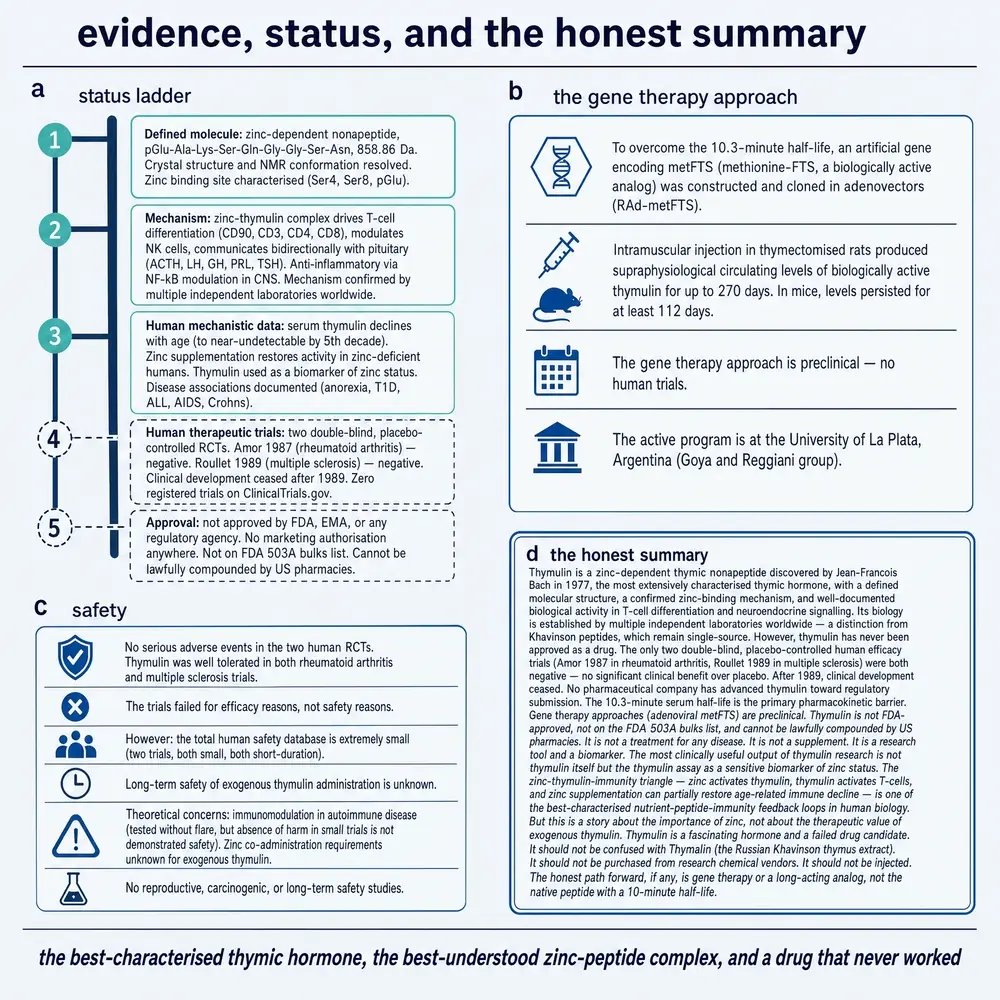
What is not established here needs the negative form — and it must include the trials that actually ran. Two late‑1980s European double‑blind, placebo‑controlled studies of nonathymulin (a synthetic thymulin analog) reported no significant clinical benefit over placebo: Amor et al., 1987 in rheumatoid arthritis, and Roullet et al., 1989 in multiple sclerosis. Short‑term tolerability was favourable in both; efficacy was not. Clinical development in that European programme effectively stopped afterward. Those results do not establish native‑thymulin efficacy either, and they do not establish any safe use, dose, route, or schedule for any person today. This corpus also does not establish that Thymalin clinical observations can be borrowed under a one‑letter spelling change, or that homeopathic 5CH results inform pharmacological peptide biology.
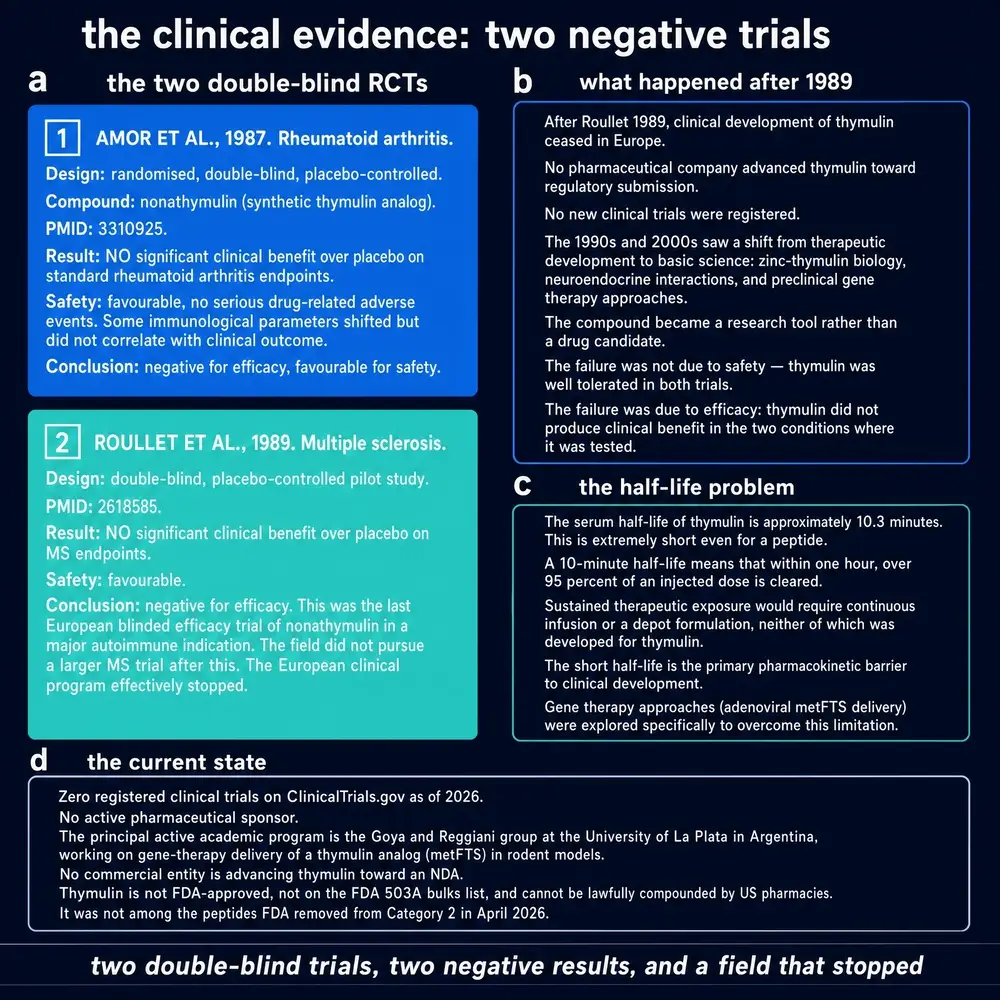
Those historical analog trials belong in the negative column of any honest tier diagram. The authored figure that follows separates what is established from what remains suggested or absent; the commissioned status plate after it states the same ladder in programme language, including the preclinical gene‑therapy path and the Standing constraint.
The final commissioned plate is a status summary, not a recommendation. Its dashed rungs for therapeutic efficacy and approval are the point of the document’s weighing, not a defect in the artwork.
Section 16Open questions
Several questions would change the picture if answered well.
First, independent replication of the nanoparticle and gene-therapy animal findings outside the originating networks would raise confidence that the effects are not laboratory-specific.
Second, human studies that measure pharmacology of synthetic thymulin itself — exposure, durability of zinc-dependent bioactivity, and prespecified clinical endpoints — would move the compound out of the biomarker-and-animal bracket. No such programme is documented in the reference set used here.
Third, cleaner molecular accounting for extrathymic “thymulin” immunoreactivity (the SPATS2L hypothesis and its mismatches) would tell readers whether stress-induced signals are the same hormone as TEC-secreted FTS-Zn or a related cross-reactive species (Lunin et al., 2017).
Fourth, head-to-head clarity in secondary literature between thymulin and its one-letter neighbour Thymalin would reduce catalogue contamination. That is an editorial problem as much as a scientific one, and it is why this series keeps a hard identity gate.
Section 17Standing constraint
This document describes published research on thymulin (serum thymic factor, FTS-Zn). It does not recommend human use of thymulin or any related preparation. It specifies no dose, route, schedule, or stacking pattern for any person. Amounts mentioned anywhere above are study parameters reported by investigators, not instructions. The document is not medical advice.
Thymulin began as a Paris serum factor small enough to sequence, became a named hormone when zinc proved indispensable, and earned a rare thing among thymic peptides: a true endocrine footprint tied to ageing and zinc status. The recent open literature has tried to recruit that hormone into anti-inflammatory nanomedicine and gene therapy in animals. The classical chemistry remains solid. The animal inflammation programme is active and inventive. The human drug question remains largely unanswered. Until that changes, the honest position is interest without prescription.
Section 18References
- Amor B, Dougados M, Mery C, Dardenne M, Bach JF. Nonathymulin in rheumatoid arthritis: two double blind, placebo controlled trials Ann Rheum Dis 1987;46(7):549-54. PMID 3310925 · doi · PMC1002191
- Bach J, Bardenne M, Pleau J, Rosa J. Biochemical characterisation of a serum thymic factor Nature 1977;266(5597):55-7. PMID 300146 · doi
- Bonamin LV, Sato C, Zalla Neto R, Morante G, Cardoso TN, de Santana FR et al.. Immunomodulation of Homeopathic Thymulin 5CH in a BCG-Induced Granuloma Model Evid Based Complement Alternat Med 2013;2013:686018. PMID 23431344 · doi · PMC3569925
- da Silva AL, de Oliveira GP, Kim N, Cruz FF, Kitoko JZ, Blanco NG et al.. Nanoparticle-based thymulin gene therapy therapeutically reverses key pathology of experimental allergic asthma Sci Adv 2020;6(24):eaay7973. PMID 32577505 · doi · PMC7286682
- da Silva AL, Martini SV, Abreu SC, Samary Cdos S, Diaz BL, Fernezlian S et al.. DNA nanoparticle-mediated thymulin gene therapy prevents airway remodeling in experimental allergic asthma J Control Release 2014;180:125-33. PMID 24556417 · doi · PMC3992277
- Dardenne M, Pléau JM, Nabarra B, Lefrancier P, Derrien M, Choay J et al.. Contribution of zinc and other metals to the biological activity of the serum thymic factor Proc Natl Acad Sci U S A 1982;79(17):5370-3. PMID 6957870 · doi · PMC346898
- Dardenne M, Pleau JM. Interactions between zinc and thymulin Met Based Drugs 1994;1(2-3):233-9. PMID 18476235 · doi · PMC2364880
- Lunin SM, Khrenov MO, Glushkova OV, Vinogradova EV, Yashin VA, Fesenko EE et al.. Extrathymic production of thymulin induced by oxidative stress, heat shock, apoptosis, or necrosis Int J Immunopathol Pharmacol 2017;30(1):58-69. PMID 28281875 · doi · PMC5806779
- Lunin SM, Khrenov MO, Glushkova OV, Parfenyuk SB, Novoselova TV, Novoselova EG. Protective Effect of PBCA Nanoparticles Loaded with Thymulin Against the Relapsing-Remitting Form of Experimental Autoimmune Encephalomyelitis in Mice Int J Mol Sci 2019;20(21). PMID 31671728 · doi · PMC6862195
- Mocchegiani E, Giacconi R, Cipriano C, Muti E, Gasparini N, Malavolta M. Are zinc-bound metallothionein isoforms (I+II and III) involved in impaired thymulin production and thymic involution during ageing? Immun Ageing 2004;1(1):5. PMID 15679929 · doi · PMC544958
- Mocchegiani E, Santarelli L, Muzzioli M, Fabris N. Reversibility of the thymic involution and of age-related peripheral immune dysfunctions by zinc supplementation in old mice Int J Immunopharmacol 1995;17(9):703-18. PMID 8582782 · doi
- Novoselova EG, Khrenov MO, Glushkova OV, Lunin SM, Parfenyuk SB, Novoselova TV et al.. Anti-inflammatory effects of IKK inhibitor XII, thymulin, and fat-soluble antioxidants in LPS-treated mice Mediators Inflamm 2014;2014:724838. PMID 25045213 · doi · PMC4089567
- Novoselova EG, Lunin SM, Glushkova OV, Khrenov MO, Parfenyuk SB, Zakharova NM et al.. Thymulin, free or bound to PBCA nanoparticles, protects mice against chronic septic inflammation PLoS One 2018;13(5):e0197601. PMID 29795607 · doi · PMC5967805
- Novoselova EG, Glushkova OV, Lunin SM, Khrenov MO, Parfenyuk SB, Novoselova TV et al.. Thymulin and peroxiredoxin 6 have protective effects against streptozotocin-induced type 1 diabetes in mice Int J Immunopathol Pharmacol 2021;35:20587384211005645. PMID 33779346 · doi · PMC8010817
- Prasad AS. Lessons Learned from Experimental Human Model of Zinc Deficiency J Immunol Res 2020;2020:9207279. PMID 32411807 · doi · PMC7199614
- Reggiani PC, Schwerdt JI, Console GM, Roggero EA, Dardenne M, Goya RG. Physiology and therapeutic potential of the thymic peptide thymulin Curr Pharm Des 2014;20(29):4690-6. PMID 24588820 · doi
- Roullet E, Cesaro P, Simon-Lavoine N, Degos JD, Marteau R. Nonathymulin treatment of multiple sclerosis: double-blind pilot study Acta Neurol Scand 1989;80(6):575-8. PMID 2618585 · doi
- PubChem, National Library of Medicine. Thymulin, compound summary, CID 71300623. Identifier and synonym set consulted during preparation of this document; chemical values in the identity panel were checked against this record.. link
- South Beach Longevity / Project 05 Therapeutic Peptide Research Library. P230 Thymulin dossier and research-intake evidence map. Internal retrieval draft (20 pp dossier) and intake map (26 pp) used only as navigation aids; claims in this monograph rest on the primary literature cited above..
Section 19How this document was assembled
This monograph was built inside Project 05 (Therapeutic Peptide Research Library) as compound monograph work for Science-DB key P230. Local document stores under the Peptide Science workspace were searched for full texts naming thymulin / serum thymic factor / facteur thymique sérique / corroborated FTS-Zn. Eight title-primary open-access JATS records were read in full. Internal dossier and intake-map PDFs were used only as navigation aids. Sibling hits for Thymalin, thymosin alpha-1, and thymosin beta-4 were excluded by an identity gate in pipeline/compound.py (12/12 break-tests passing at scaffold).
PubMed identifiers cited in the prose were resolved against NCBI E-utilities by stage 05 before build; the build refuses unresolved identifiers. Figures are authored SVG using theme colour tokens only, so light and dark editions render from one source. No third-party published figure was reproduced. Dual PDF editions are produced through the house pipeline (assemble → Chrome print → running-head/foot stamp with dark navy underlay).
| Stage | Output |
|---|---|
| Identity / inventory | compound.py; INVENTORY_REPORT.md; EVIDENCE_DOSSIER.md |
| 05 reference verify | manifest/05_references.json (NCBI-resolved) |
| 06a / 06b | figure numbering; body fragment HTML |
| 07 / 07c | light + dark A4 PDFs; dark underlay #010C2A |
| 14 / 15 | release manifest; format verification across save locations |
Section 20Evidence handling
Study types are labelled in prose at the point of claim: classical biochemistry, human experimental zinc restriction, animal in-vivo inflammation or autoimmunity models, cell-stress systems, reviews, and homeopathic high-dilution experiments. Conflicting or weaker designs are not averaged into stronger ones. Recency is preferred when it does not contradict a stronger older finding; the zinc-activity result of 1982 is treated as such a finding. Homeopathic 5CH evidence is shelved separately. Absence of modern human RCTs of synthetic thymulin is reported as a gap.
Nothing in the Apparatus modifies the Standing constraint in Section 17.
Continue exploring