
SLU-PP-332 An estrogen-related-receptor agonist, and the biology of an “exercise mimetic”
For a century the benefits of endurance exercise looked impossible to bottle. SLU-PP-332 is the small molecule that came closest: designed to switch on a receptor most chemists had written off as undruggable, it makes a resting mouse’s muscles behave as though the animal had just finished a long run. This is the story of how it was made, what it actually does, and the wide gap between the laboratory result and the headline.
Every finding below is labelled by the kind of study that produced it, in the sentence that reports it. Cell and animal results are never phrased so as to imply a human outcome — and for this compound the distinction is not a formality, because there is no human data of any kind. Where a number is quoted, the species, the route of administration and the duration are attached to it.
Adverse signals, reversibility and gaps in the evidence appear beside the efficacy figures rather than in a late section of their own. Where the weight of evidence is thin, or rests on a single laboratory, that is stated plainly. Newer results are given more weight than older ones only when they are not contradicted by the larger body of work.
No human use, dose, route or schedule is recommended anywhere in this document. Doses appear only as the parameters of published experiments, almost all of them in mice. SLU-PP-332 is not an approved drug, is not in human clinical trials, and is sold only as a laboratory research chemical.
Section 01What an “exercise mimetic” is, and what it is not
Endurance exercise is the closest thing medicine has to a universal drug. It lowers the risk of premature death from nearly every common cause, and it does so by remodelling the body from the inside: muscles build more mitochondria, burn more fat, switch toward fatigue-resistant fibre types, and become more sensitive to insulin. The obvious, and very old, question is whether a molecule could trigger some of that remodelling without the exercise — not to replace training, but to reach the many people who cannot train, or cannot train enough, because of obesity, heart failure, injury or age.
The phrase for such a molecule is exercise mimetic, and it is worth being precise about it, because the term invites misunderstanding. An exercise mimetic does not make a body move. It reproduces some of the molecular signals that movement generates, in the hope of capturing some of the downstream adaptations. It will never reproduce all of them, because exercise acts on the brain, the vasculature, the skeleton and the immune system at once. SLU-PP-332 is an exercise mimetic in this narrow, mechanistic sense: in mice it turns on a genetic program that a bout of aerobic exercise also turns on, and some of the physical consequences follow (Billon et al., 2023).
Section 02Orphans in the receptor family
To understand the molecule you first have to meet its target. Inside almost every cell is a family of proteins called nuclear receptors: molecular switches that sit on the DNA and turn sets of genes up or down. Most are controlled by a small signalling molecule — a hormone, a vitamin, a fatty acid — that docks into the receptor and flips the switch. The estrogen receptor, controlled by estrogen, is the famous example.
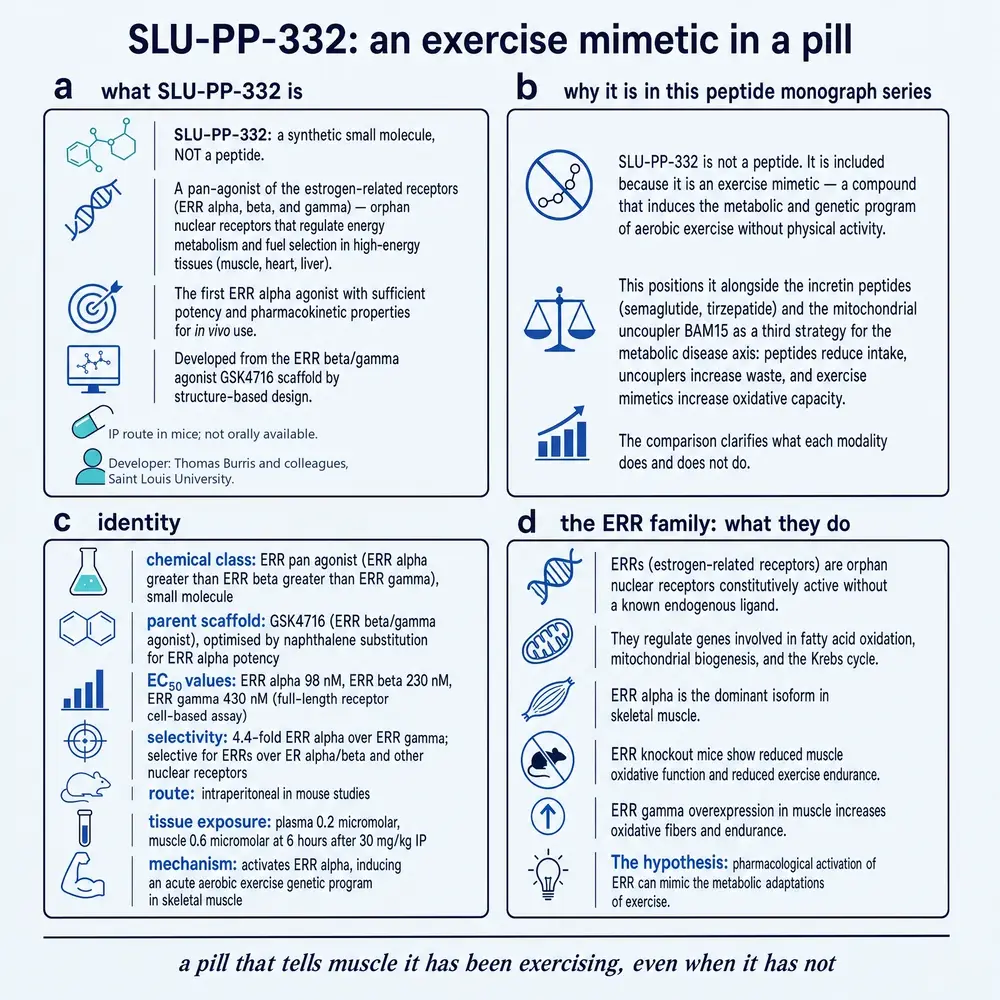
The estrogen-related receptors are its close cousins, and they are strange ones. There are three of them — ERRα, ERRβ and ERRγ — and they were among the very first nuclear receptors ever found for which no natural controlling molecule could be identified. ERRα and ERRβ were discovered in 1988 by Vincent Giguère and colleagues precisely because they resembled the estrogen receptor; ERRγ followed in 1999 (reviewed in Okda et al., 2026). Decades of searching have turned up no endogenous ligand, which is why they are still called orphan receptors. They do not wait for a signal. They are constitutively active, holding a set of genes switched on all the time — and the genes they hold on are, tellingly, the machinery of energy metabolism.
That is why the ERRs matter here. They are expressed most heavily in the body’s most energy-hungry tissues — skeletal muscle, heart, liver, brown fat and brain — and they act as master regulators of how those tissues make and spend energy. They do this in partnership with a coactivator protein called PGC-1α, which is itself switched on by exercise and cold. PGC-1α is often described as the master regulator of mitochondrial biogenesis; ERRα is the receptor it works through to get much of that job done (Okda et al., 2026).
Section 03Why ERRα was considered undruggable
If ERRα is such an attractive switch, why did it take until the 2020s to make a drug that flips it on? The answer is a matter of physical space. A nuclear receptor is drugged by slipping a small molecule into a pocket in its structure. ERRα’s pocket is the smallest of any nuclear receptor, and in the resting protein it is essentially collapsed — a bulky phenylalanine side chain, Phe328, sits partway into the space where a drug would need to go (Okda et al., 2026). For an orphan receptor with no natural key to copy, and a keyhole that is both tiny and blocked, agonist design had failed for so long that many considered the target intractable.
Chemists had partial success with the two easier siblings. In 2005 a compound called GSK4716 was found to activate ERRβ and ERRγ — but not ERRα, the one that matters most for the exercise program (reviewed in Okda et al., 2026). Cracking ERRα specifically was the prize that had eluded the field, and it is the prize that SLU-PP-332 claimed.
Exercise remodels metabolism through a partnership between the coactivator PGC-1α and the orphan nuclear receptor ERRα. ERRα had resisted drug design for decades because it has the smallest, most collapsed binding pocket of any nuclear receptor and no natural ligand to imitate. A molecule that could switch it on would, in principle, engage the metabolic side of exercise directly. SLU-PP-332 was built to be that molecule.
Section 04A compound with its birthplace in its name
SLU-PP-332 wears its origin in its label. The prefix is Saint Louis University, where the pharmacologist Thomas P. Burris ran a laboratory built around nuclear receptors, and where the medicinal chemists Bahaa Elgendy and John K. Walker did the synthetic work. “PP-332” marks it as a numbered entry in that group’s in-house compound series. The molecule is, in the most literal sense, an academic invention — the product of a university drug-design program rather than a pharmaceutical company’s pipeline.
Getting there took roughly a decade. By the group’s own account, the effort to build an ERRα agonist ran for years before a workable compound emerged, and the payoff was the first class of synthetic molecules that could switch on all three ERRs, including the stubborn ERRα (Elgendy, in University of Florida / ScienceDaily, 2023). Burris later moved his laboratory to the University of Florida and Elgendy to Washington University in St. Louis, which is why press coverage attaches the discovery to more than one institution; the compound itself, and its name, belong to the Saint Louis University years.
Section 05From a scaffold that half-worked to one that fit
The design did not start from nothing. It started from GSK4716, the 2005 compound that could switch on ERRβ and ERRγ but not ERRα. The Burris–Elgendy team reasoned that the failure at ERRα was a problem of shape, and set about reshaping the molecule to fit the difficult pocket. The decisive change was to replace a small, greasy isopropyl group with a flat, two-ringed naphthalene (Okda et al., 2026).
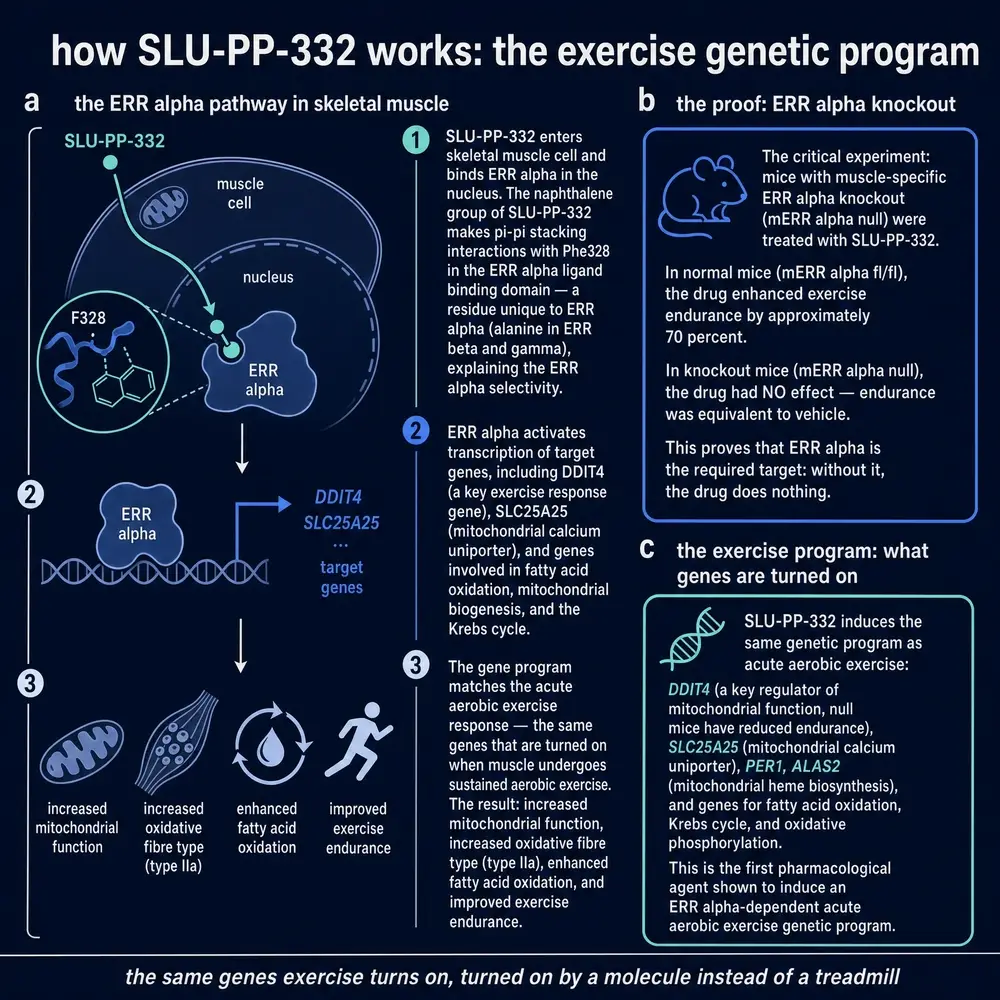
The reason that worked is a small piece of structural biology worth pausing on. The naphthalene is large and flat enough to stack, face-to-face, against the very phenylalanine (Phe328) that had been blocking the pocket — a favourable “π-π” interaction that nudges the side chain aside and opens just enough room for the drug to bind. Because that particular phenylalanine exists in ERRα but is swapped for a smaller amino acid in ERRβ and ERRγ, the naphthalene also explains why SLU-PP-332 prefers ERRα (Okda et al., 2026). The obstacle became the anchor.
Section 06What it is, in numbers
Chemically, SLU-PP-332 is (E)-4-hydroxy-N′-(naphthalen-2-ylmethylene) benzohydrazide — a small organic molecule of about 290 daltons, far below the size of the peptides that make up most of this monograph series, and closer in spirit to a conventional oral drug candidate. In cell-based assays it activates ERRα with a half-maximal concentration (EC₅₀) of roughly 0.2 µM, with a four- to five-fold preference for ERRα over ERRγ (Billon et al., 2023; Okda et al., 2026). It is a genuine pan-agonist — it touches all three receptors — but ERRα is where its highest potency, and its biology, live.
SLU-PP-332 is an academic small molecule from Thomas Burris’s laboratory at Saint Louis University, built by the chemists Elgendy and Walker over roughly a decade. Starting from the 2005 compound GSK4716, they added a flat naphthalene ring that stacks against the side chain blocking ERRα’s pocket — simultaneously opening the pocket and making the molecule prefer ERRα. The result is a ~290-dalton pan-ERR agonist, most potent at ERRα (EC₅₀ ≈ 0.2 µM).
Section 07The signal it sends
Switching on ERRα has a specific and legible consequence. In cultured skeletal-muscle cells, SLU-PP-332 raises mitochondrial function and cellular respiration — the cells literally burn more fuel — and it does so by turning on the same genes that a short bout of aerobic exercise turns on (Billon et al., 2023). The team traced the effect to a particular gene, DDIT4, which they showed to be a direct ERRα target and which is known to be induced by brief aerobic exercise; mice engineered to lack it have reduced endurance. SLU-PP-332 induces DDIT4, and with it a cascade of downstream genes — PDK4, PGC-1α and the enzymes of the TCA cycle, oxidative phosphorylation and fatty-acid breakdown (Billon et al., 2023; Okda et al., 2026). This is what “an acute aerobic exercise genetic program” means in practice: not a vague metaphor, but a defined set of genes with a defined switch.
Two features of this mechanism deserve emphasis because they distinguish SLU-PP-332 from other proposed exercise mimetics. First, the endurance effect in mice depends specifically on ERRα: when that receptor is removed, the benefit disappears, which is strong evidence that the drug is working through its intended target rather than by some side effect (Billon et al., 2023). Second, in head-to-head comparison the compound induced the acute exercise response more effectively than ligands for the two other receptors previously linked to exercise mimicry, PPARδ and REV-ERB (Okda et al., 2026).
Section 08The 2023 result that made the name
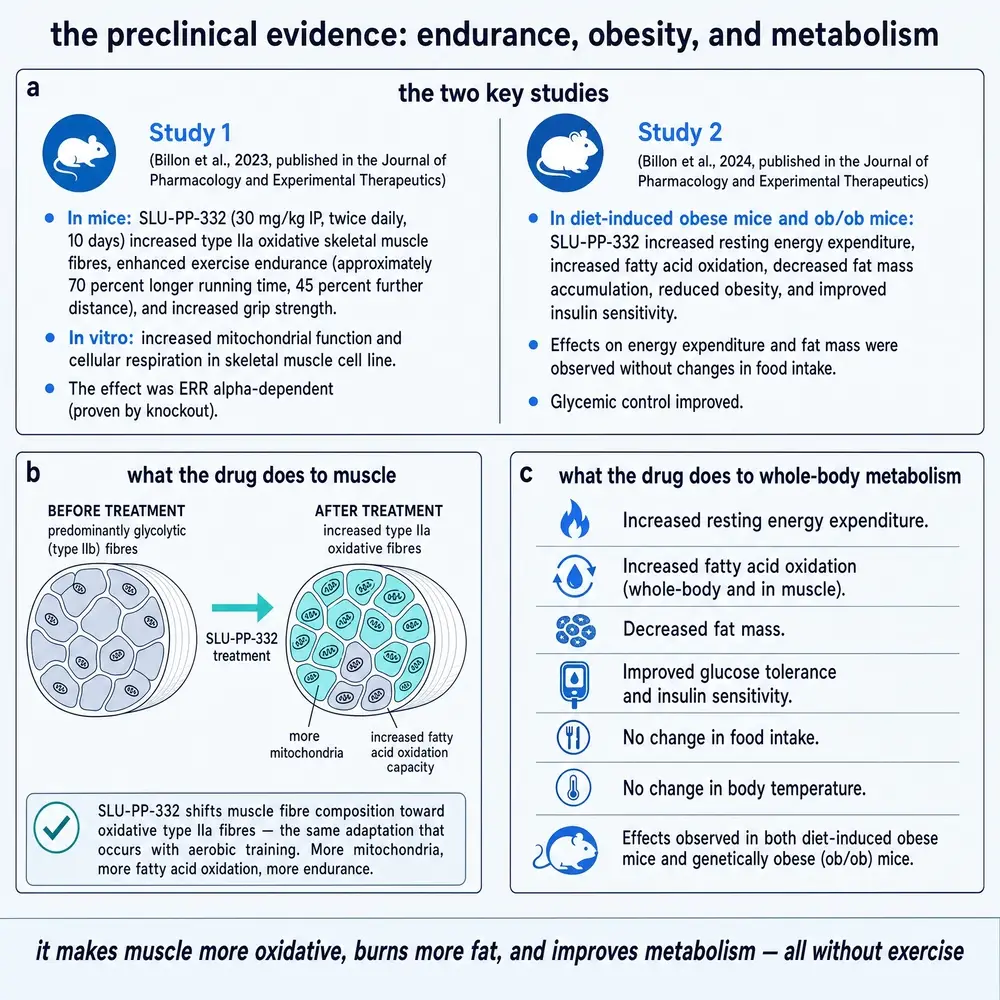
The landmark study appeared in ACS Chemical Biology in early 2023 (Billon et al., 2023). Its findings, all in mice, are the empirical core of everything that has been claimed about SLU-PP-332 since. In cell and tissue work the compound increased the proportion of type IIa oxidative muscle fibres — the fatigue-resistant kind that endurance training builds. Then the behavioural test: sedentary mice were given SLU-PP-332 by intraperitoneal injection (that is, into the abdominal cavity) at 50 mg/kg twice daily for one week, and run to exhaustion on a treadmill. The treated mice ran about 70 per cent longer and roughly 45 per cent farther than mice given vehicle alone (Billon et al., 2023). In a separate two-week experiment the animals also gained grip strength.
Section 09Losing fat without moving: the metabolic-syndrome study
If the compound mimics endurance exercise, it should help in the diseases that exercise helps. The follow-up study, in the Journal of Pharmacology and Experimental Therapeutics (Billon et al., 2024), tested exactly that in two mouse models of obesity: mice made obese by a high-fat diet, and genetically obese ob/ob mice. Again the route was injection, 50 mg/kg twice daily, over about a month, with the animals kept at thermoneutral temperature so that changes in fat-burning could be read cleanly.
The results were striking on their own terms. SLU-PP-332 raised whole-body energy expenditure and shifted fuel use toward fat, and the obese mice accumulated far less fat than untreated controls — over the four-week window, vehicle-treated animals gained roughly 5 grams of fat mass while drug-treated animals gained less than half a gram (Billon et al., 2024). Body weight fell and insulin sensitivity improved. Crucially, the mice did not eat less and did not move more; the effect came from changing how the body spent energy, not from suppressing appetite (Billon et al., 2024). That mechanism is the opposite of the GLP-1 weight-loss drugs, which work largely by reducing food intake — and it is the source of the compound’s appeal and its hype alike.
Section 10Beyond muscle: heart, kidney and the aging body
Because the ERRs govern energy metabolism everywhere it is demanding, the same laboratory and its collaborators asked whether an exercise-like signal might help failing organs whose problem is, at root, an energy problem. Three lines of animal work followed, and they broaden the story from “weight-loss compound” to “metabolic tool.”
In the heart, a family of pan-ERR agonists including SLU-PP-332 improved outcomes in a mouse model of heart failure created by surgically constricting the aorta. Treatment enhanced cardiac fatty-acid metabolism and mitochondrial function, improved the ejection fraction and contractile performance, and reduced cardiac stress and fibrosis (Xu et al., 2024). In the kidney, ERR agonism reversed markers of mitochondrial dysfunction and inflammation in the aging mouse kidney, pointing to the same pathways as a target in age-related kidney disease (Wang et al., 2023). And in a 2025 pilot study of age-related muscle wasting, researchers independent of the originating group used SLU-PP-332 as a tool to probe whether ERR activation could counter the muscle atrophy of physical inactivity (Bonanni et al., 2025) — a sign that the compound has become a standard chemical probe for ERR biology well beyond the lab that made it.
By switching on ERRα and its target gene DDIT4, SLU-PP-332 turns on the acute-aerobic-exercise gene program in muscle. In mice this raised mitochondrial activity and oxidative fibre content, let sedentary animals run ~70 per cent longer, and — by injection over about a month — blocked almost all fat gain in obese animals and improved insulin sensitivity, all without changing appetite. Related animal work reports benefits in heart failure and the aging kidney. Every one of these results is preclinical.
Section 11Reading the evidence pyramid honestly
It is easy to list SLU-PP-332’s reported effects and come away impressed. It is more useful to ask how much weight the evidence can bear. Three facts should temper any enthusiasm, and none of them is hidden in the literature — they are stated in the papers themselves.
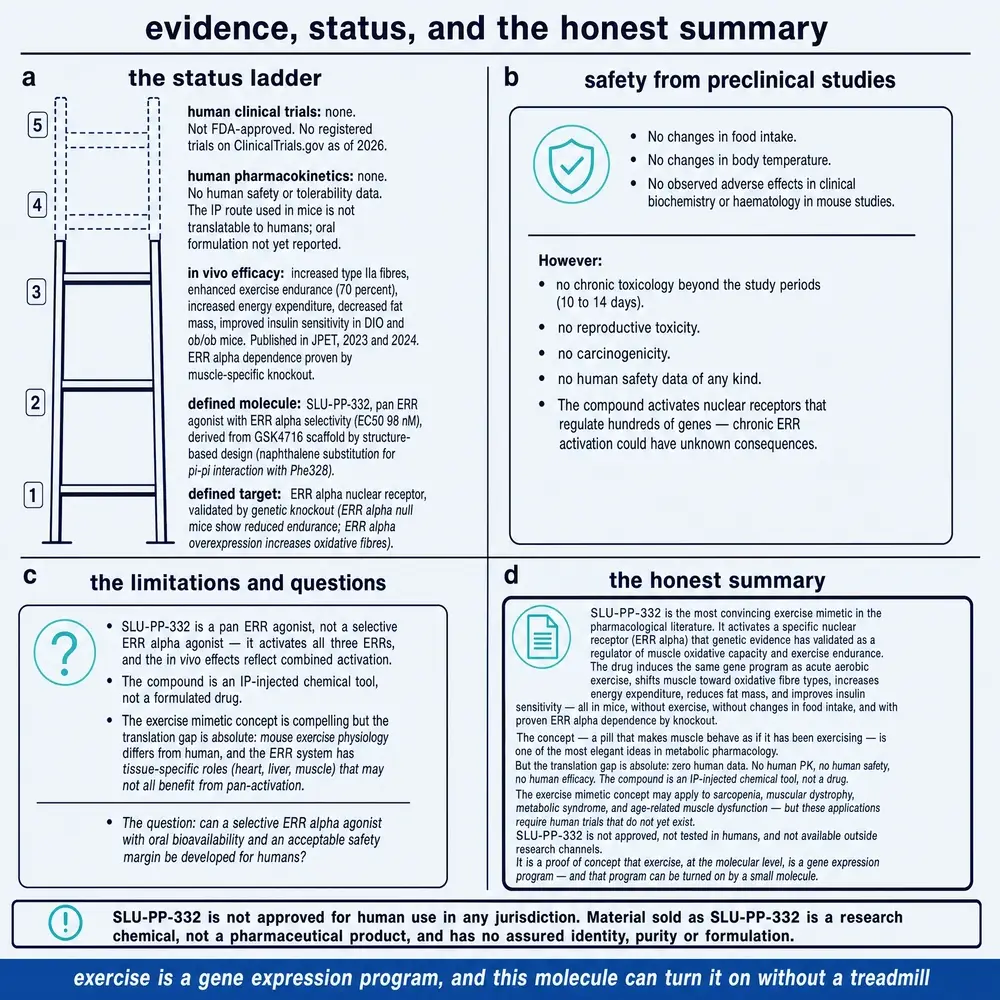
The first is that every efficacy result is preclinical. The endurance, fat-loss, cardiac and renal findings come from mice and from cells; there are no human trials, no human pharmacokinetics and no human safety data as of 2026. The second is that every in-vivo result was obtained by injection, generally at 50 mg/kg twice daily — a route and intensity of dosing used to interrogate biology, not a model of how a person might ever take a drug. The third is that the foundational efficacy work comes largely from a single research group and its collaborators. That is normal for an early-stage compound, and the 2025 muscle-atrophy pilot from an independent team is a healthy sign of external uptake (Bonanni et al., 2025), but independent replication of the headline metabolic effects is still limited.
Section 12The bottleneck is the molecule itself
The most consequential caveat is pharmacokinetic, and the chemistry paper is candid about it (Okda et al., 2026). SLU-PP-332 is greasy and barely soluble in water — its measured kinetic solubility is about 0.2 µM, extraordinarily low — and it is cleared fairly quickly by liver enzymes. Those properties are exactly why the experiments use repeated high-dose injection rather than a pill. A compound that must be injected twice a day at high doses to overcome poor solubility and rapid clearance is a superb research tool and a poor drug candidate. The single most important thing to understand about SLU-PP-332 is that it is the former, not yet the latter.
SLU-PP-332’s own developers built it primarily as a chemical probe with just enough pharmacokinetic quality to work in mice by injection. Its poor solubility and short metabolic half-life mean that an effective oral human product would require a substantially reworked molecule — which is precisely why the same team has pursued next-generation compounds. The research chemical sold online as “SLU-PP-332” is this probe, not a tested oral therapeutic.
Section 13The next generation, which is the real tell
The clearest evidence that the first molecule was a starting point, not a destination, is what its inventors did next. In 2026 the group described SLU-PP-915, a related pan-ERR agonist engineered to be orally active while retaining the aerobic-capacity benefit in animals (Billon et al., 2026) — a direct answer to SLU-PP-332’s delivery problem. In parallel, a systematic medicinal-chemistry study mapped how each piece of the SLU-PP-332 scaffold controls potency, receptor selectivity and drug-like behaviour, and produced analogues — among them compounds designated BE5112 and BE5049 — that match or exceed the original’s potency while improving solubility or metabolic stability (Okda et al., 2026). Read together, these papers say something plainly: the field regards SLU-PP-332 as the proof of concept, and the drug, if there is to be one, as its successor.
Section 14Recency, conflict, and an unexpected reader: anti-doping
Weighing the evidence also means giving newer, well-conducted work its due — provided it is not overturned by the larger body of results. On that test, the 2024–2026 literature is consistent rather than contradictory: the metabolic, cardiac and renal papers extend the 2023 finding into new tissues without reversing it, and the 2026 chemistry deepens rather than undermines the mechanism. No published study to date reports that SLU-PP-332 fails to engage ERRα or fails to induce the exercise program; the open questions are about human translation and safety, not about the basic biology.
One newer strand is worth flagging because it says something about the compound’s trajectory in the real world. In 2026 two analytical-chemistry groups published methods for detecting SLU-PP-332 and SLU-PP-915 and their breakdown products, explicitly for doping control (Avliyakulov et al., 2026; Möller et al., 2026). Anti-doping laboratories do not build assays for molecules nobody is using. That these tools exist is indirect evidence that an exercise-mimetic ERR agonist is already of interest to people seeking performance enhancement — and a reminder that the gap between “research chemical” and “substance being taken by humans” is, in practice, already being crossed outside any clinical framework.
The biology is real and internally consistent, but the evidence is early: all efficacy data are preclinical, obtained by injection, and largely from one group. The molecule’s poor solubility and quick clearance make it a research probe rather than a ready drug — a judgement confirmed by its own inventors’ move to an orally active successor (SLU-PP-915) and more drug-like analogues. Newer work extends the story without contradicting it, and anti-doping assays now exist, implying real-world use is already occurring.
Section 15How “exercise in a pill” went around the world
In March 2023, at a national meeting of the American Chemical Society, Bahaa Elgendy presented the SLU-PP-332 work to the press, and the coverage that followed did what coverage does: it compressed a careful mouse study into an irresistible phrase. Headlines announced a drug that mimics exercise, that lets you get fit without moving, that could one day replace the gym. The underlying facts — that treated mice ran farther and, in the obesity follow-up, gained ten times less fat than controls while eating the same amount — were reported accurately enough (University of Florida / ScienceDaily, 2023). What the headlines could not convey was everything in Part Four: the injections, the mice, the solubility problem, the absence of any human data.
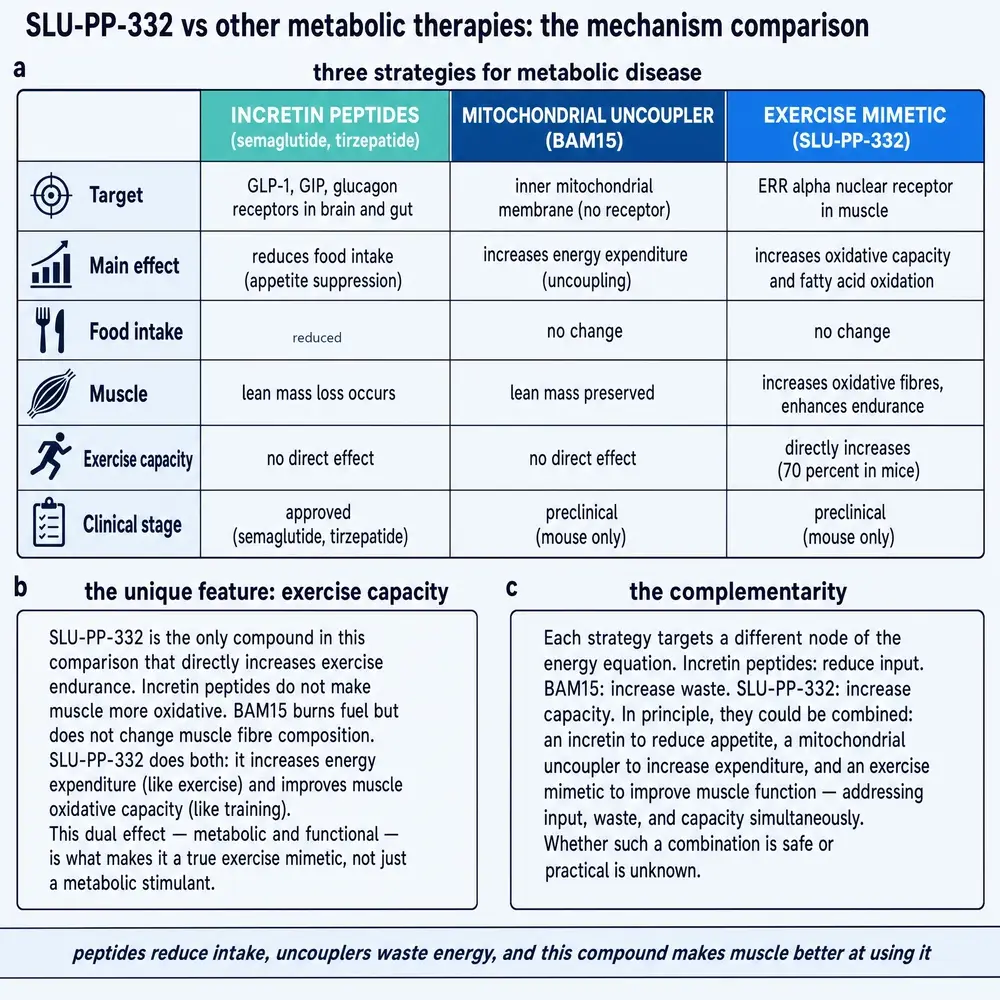
This is the recurring hazard of exercise-mimetic research. The idea is so appealing, and the animal results often so clean, that the distance to a usable human medicine gets erased in the retelling. SLU-PP-332 is a genuine scientific achievement — the drugging of a target long thought undruggable, and a real demonstration that the metabolic signature of exercise can be switched on pharmacologically. It is not, and its careful authors have never claimed it to be, a finished pill you could take instead of a run.
Section 16The grey market and the certificate that proves nothing you need
Because SLU-PP-332 is a small molecule, is not a controlled substance, and became famous quickly, it appeared for sale as a “research chemical” from online peptide and research-compound vendors, in powder and capsule form, accompanied by certificates of analysis. It is worth being clear about what such a certificate is and is not. A certificate of analysis, at best, documents that the material in the vial is what the label says and is reasonably pure. It says nothing whatever about whether the compound is safe to take, effective in humans, or appropriate at any dose — questions that, for SLU-PP-332, have no published answer at all. Purity is not safety, and an analytical result is not a clinical one.
Section 17What the road to a real medicine would require
To describe — not to recommend — the path a compound like this would have to travel: formal toxicology across species; pharmacokinetic studies establishing how a workable formulation is absorbed, distributed and cleared; a solution to the oral-delivery problem, most likely through a redesigned successor molecule; investigational-new-drug authorisation from a regulator; and then human trials proceeding from small safety studies to large efficacy trials, each of which many promising compounds fail. Against that ladder, SLU-PP-332 stands on the first rung: a validated target, a proof-of-concept molecule, and a body of preclinical evidence that justifies the next experiments and settles nothing about human use.
This monograph describes published research on SLU-PP-332. It does not recommend that any person take this compound, and it specifies no dose, route or schedule for human use. Every dose and route quoted above is a parameter of an animal or cell experiment, reported with its species and duration attached. SLU-PP-332 is not approved by any regulatory agency, is not in human clinical trials, and has no established human safety profile.
Section 18References
- American Chemical Society. Mimicking exercise with a pill. EurekAlert!. 2023. eurekalert.org
- Avliyakulov NK, Sobolevsky T, Ahrens E. Analysis and Identification of In Vitro Metabolites of Exercise Mimetic SLU-PP-332 ERRα/β/γ Agonist for Doping-Control Purposes. Drug Test Anal. 2026. PMID 41688415 · doi:10.1002/dta.70035
- Billon C, Sitaula S, Banerjee S, Welch R, Elgendy B, Hegazy L, et al. A Synthetic ERRα Agonist Induces an Acute Aerobic Exercise Response and Enhances Exercise Capacity [preprint]. bioRxiv. 2022. doi:10.1101/2022.10.05.510974
- Billon C, Sitaula S, Banerjee S, Welch R, Elgendy B, Hegazy L, et al. Synthetic ERRα/β/γ Agonist Induces an ERRα-Dependent Acute Aerobic Exercise Response and Enhances Exercise Capacity. ACS Chem Biol. 2023. PMID 36988910 · doi:10.1021/acschembio.2c00720 · PMC11584170
- Billon C, Schoepke E, Avdagic A, Chatterjee A, Butler AA, Elgendy B, et al. A Synthetic ERR Agonist Alleviates Metabolic Syndrome. J Pharmacol Exp Ther. 2024;388(2):232-240. PMID 37739806 · doi:10.1124/jpet.123.001733 · PMC10801787
- Billon C, Appourchaux K, Côté I, Burris TP. An orally active estrogen receptor-related receptor agonist, SLU-PP-915, enhances aerobic exercise capacity. J Pharmacol Exp Ther. 2026. PMID 41421047 · doi:10.1016/j.jpet.2025.103787
- Bonanni R, Falvino A, Matticari A, Rinaldi AM, D'Arcangelo G, Cifelli P, et al. Targeting ERRs to counteract age-related muscle atrophy associated with physical inactivity: a pilot study. Front Physiol. 2025. PMID 40692696 · doi:10.3389/fphys.2025.1616693 · PMC12277287
- de Souza-Lima J, Astrosa-Martin BD, Galaz-Rodríguez CA, Silva-Bernal JE, Orellana-Pizarro LI, Mena-Díaz CA. [Pharmacological Activation of ERRα/β/γ as an Exercise Mimetic: Potential Therapeutic Applications]. Rev Med Chil. 2026. PMID 42024694 · doi:10.4067/s0034-98872026000200237
- Möller T, Krug O, Thevis M. In Vitro Metabolism and Analytical Characterization of SLU-PP-332 and SLU-PP-915: Novel Pan-ERR Agonists With Doping Potential. Rapid Commun Mass Spectrom. 2026. PMID 41588687 · doi:10.1002/rcm.70039 · PMC12835572
- Okda HE, Zhao P, Hayes M, Duvall C, Quillin E, Fang H, et al. Chemical optimization of the exercise mimetic SLU-PP-332 enables insight into estrogen-related receptor signaling. Int J Biol Macromol. 2026. PMID 41850449 · doi:10.1016/j.ijbiomac.2026.151450 · PMC13112601
- University of Florida. Exercise-mimicking drug sheds weight, boosts muscle activity in mice. ScienceDaily. 2 October 2023. sciencedaily.com
- Wang XX, Myakala K, Libby AE, Krawczyk E, Panov J, Jones BA, et al. Estrogen-Related Receptor Agonism Reverses Mitochondrial Dysfunction and Inflammation in the Aging Kidney. Am J Pathol. 2023. PMID 37717940 · doi:10.1016/j.ajpath.2023.07.008 · PMC10734281
- Xu W, Billon C, Li H, Hayes M, Yu K, Losby M, et al. Novel ERR pan-agonists ameliorate heart failure through boosting cardiac fatty acid metabolism and mitochondrial function [preprint]. bioRxiv. 2022. doi:10.1101/2022.02.14.480431
- Xu W, Billon C, Li H, Wilderman A, Qi L, Graves A, et al. Novel Pan-ERR Agonists Ameliorate Heart Failure Through Enhancing Cardiac Fatty Acid Metabolism and Mitochondrial Function. Circulation. 2024. PMID 37961903 · doi:10.1161/circulationaha.123.066542 · PMC10842599
Section 19How this document was assembled
The compound was resolved to controlled record P024 in the Therapeutic Peptide Research Library (Source project 05). Candidate literature was drawn from the library’s EuropePMC compound cache and the P024 dossier intake package, which together indexed twelve candidate studies linking SLU-PP-332 to the estrogen-related receptors. Three of these were held locally as open-access full text under Creative-Commons licences and were read in full; the remainder were read as verified abstracts and metadata, supplemented by publisher and press full text retrieved for the discovery-history and quantitative claims. Every quantitative statement in the body is traceable to one of the cited sources.
| Stage | Input | Count |
|---|---|---|
| Candidate studies indexed (EuropePMC / P024 intake) | compound-study links | 12 |
| Local scientific full texts read | open-access JATS / PMC | 3 |
| Seminal papers read via publisher / preprint / press | 2023–2024 primary + coverage | 4 |
| Figures, all original works | 7 authored SVG + 2 original plates | 9 |
| References, verified records | numbered list | 14 |
Section 20Evidence handling
Findings are labelled in the sentence that reports them by the study type that produced them: cell, animal, or (where none exists) a note that no human data are available. Doses and routes are given only as experimental parameters, with species and duration. Because SLU-PP-332’s entire efficacy record is preclinical and mostly single-source, the monograph foregrounds that limitation rather than deferring it, and treats independent replication (Bonanni et al., 2025) and the developers’ own move to a successor molecule (Billon et al., 2026) as the most informative recent signals. Newer results were given weight where they extended, and did not contradict, the established body of work. No third-party figure has been reproduced; the two raster plates are original illustrations and are captioned as artistic, not as data.
Continue exploring