
Tesofensine A neurodegeneration drug that found its purpose in the wrong organ
Tesofensine began life with a different ambition. In the late 1990s a Danish biotechnology company named NeuroSearch built a small molecule, coded NS2330, meant to raise dopamine, norepinephrine and serotonin in brains that were losing the ability to move or to remember. In Parkinson’s and Alzheimer’s trials the primary endpoints did not move enough. Body weight did. That unintended signal — dose-dependent weight loss in people who had not been asked to diet — redirected the entire programme toward obesity. This monograph follows that redirection: what the compound is, who made it, what the animal and human records actually show, and where the evidence thins out. It recommends no human use and no dose pattern for any person.
01The company that bet on three transmitters
NeuroSearch A/S, based in Ballerup outside Copenhagen, spent the turn of the millennium building ion-channel and monoamine programmes aimed at the central nervous system. One of those molecules was NS2330 — later given the international nonproprietary name tesofensine. A 2002 pipeline profile described it as a compound that increases the activity of dopamine, norepinephrine and acetylcholine, then in Phase II for Alzheimer’s disease and in a tolerability programme in Parkinson’s disease, with Phase III plans discussed if financing held (Thatte, 2002). Contemporaneous notes also place early development in a collaboration climate with Boehringer Ingelheim before NeuroSearch continued the asset in-house (Thatte, 2002; Bello and Zahner, 2010).
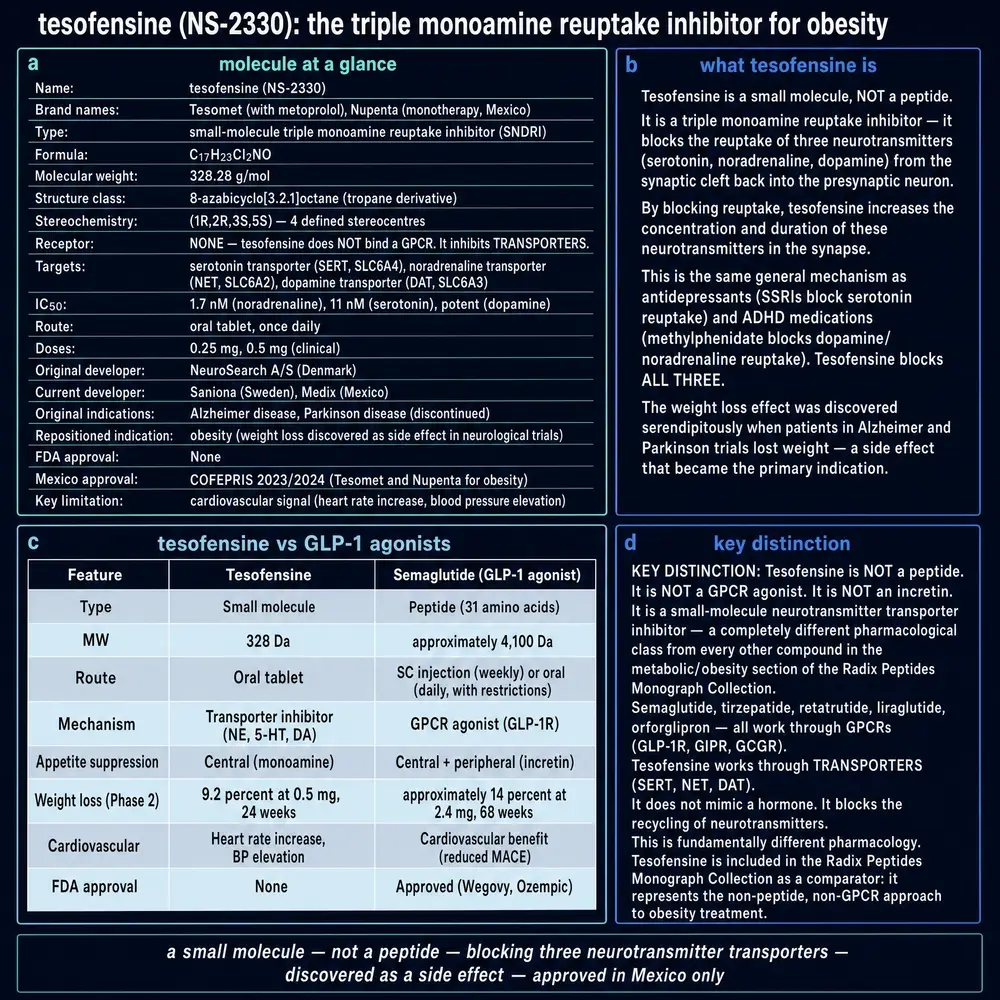
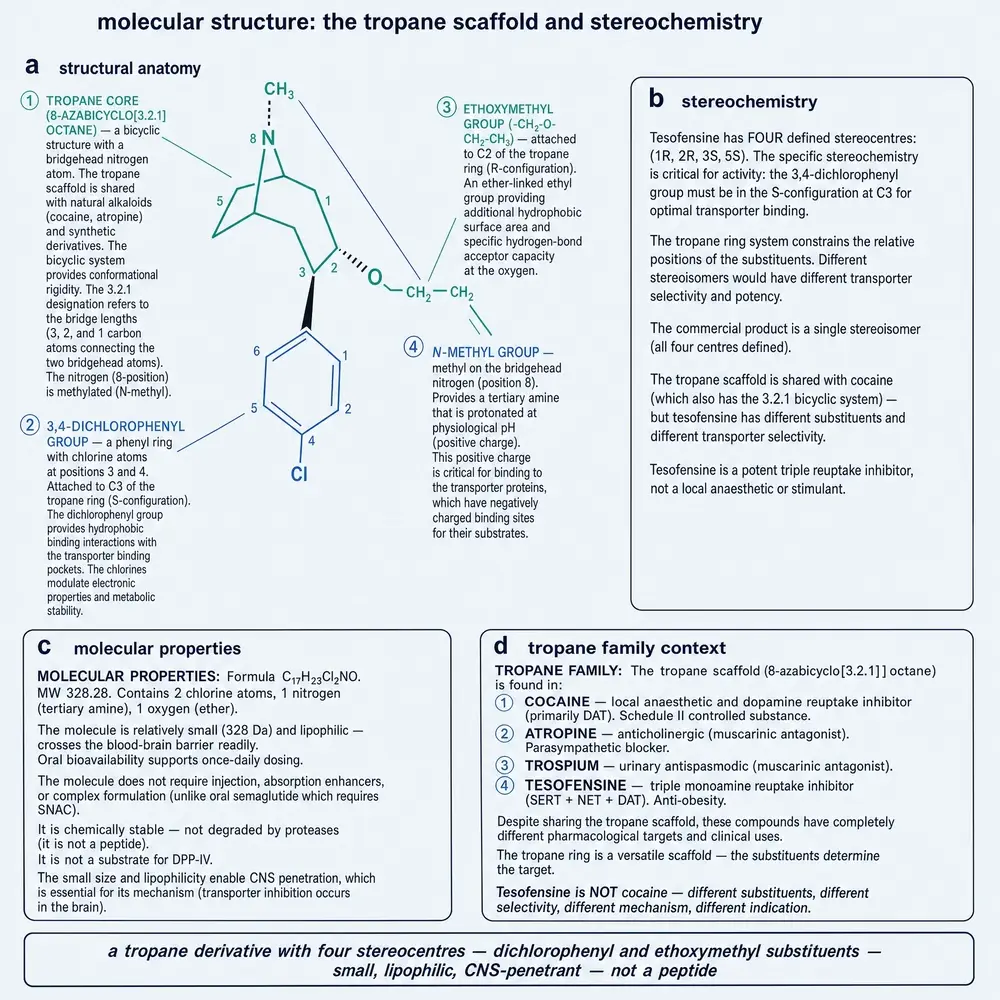
Chemically, tesofensine sits in the phenyltropane family: a compact, lipophilic structure built to engage the monoamine transporters rather than a peptide receptor. The local Radix catalog lists it under compound key P019 as a monoamine reuptake inhibitor in the Metabolic/weight group, with PubChem CID 11370864 — a non-peptide neighbour in a peptide series, kept here because the therapeutic-peptide library already treats it as part of that evidence world, and because its clinical arc is one of the cleanest modern examples of indication capture by an adverse finding that turned out to be the finding.
There is no single celebrity “eureka” paper in which a lone chemist announces the first gram. What the indexed record preserves is corporate medicinal chemistry: a Danish CNS shop, a development code, a class logic (block three reuptake pumps at once), and a clinical plan aimed at neurodegeneration. The discoverers, in the practical sense that matters for this story, are the NeuroSearch team that advanced NS2330 into patients, and the academic clinicians — notably Arne Astrup and colleagues in Denmark — who later insisted that the weight signal was not noise.
02What a triple reuptake inhibitor actually does
Neurons that release dopamine, norepinephrine or serotonin also vacuum those transmitters back up through dedicated membrane proteins: DAT, NET and SERT. Block the vacuum and the cleft stays “louder” for longer. Selective serotonin reuptake inhibitors do this for SERT alone; SNRIs add NET; tesofensine was built to hit all three (Marks et al., 2008; Bello and Zahner, 2010).
In vitro pharmacology summarised in development reviews describes potent blockade across the three transporters, with the exact rank-order of potency depending on assay system — a detail that matters less for a general reader than the design intent: include dopamine, do not leave the programme as another serotonin–norepinephrine story (Bello and Zahner, 2010). A 2026 structural study later caught tesofensine bound to DAT in an outward-facing conformation, grouped with dasotraline among inhibitors that stabilise that pose, while other triple reuptake inhibitors favour inward-facing states (Li et al., 2026). That is recent, high-resolution chemistry; it does not by itself explain clinical weight loss, but it anchors the claim that the molecule really does what the class name says.
Pharmacokinetically, tesofensine is a long-stay guest. Population modelling in Alzheimer’s trial plasma described parent and major metabolite M1 with apparent half-lives on the order of roughly ten days for the parent and longer still for M1, with weight, sex, creatinine clearance, BMI and age among covariates influencing exposure (Lehr et al., 2007). Separate PK/PD work in mice argued that M1 contributes meaningfully to dopamine-transporter inhibition in vivo (Lehr et al., 2008). A 2026 anti-doping metabolism study in human urine extends the elimination map beyond the earlier parent-plus-M1 sketch (Krug, Thomas and Thevis, 2026). Long half-life is double-edged: steady exposure can support once-daily trial regimens, and it also means adverse effects do not vanish overnight when a capsule is stopped.
03Parkinson’s and Alzheimer’s: the primary endpoints that did not move
Before obesity, there was movement disorder. In nine relatively advanced Parkinson patients, an acute randomised comparison of NS 2330 against placebo found no change in parkinsonian scores at the dose tested, alone or with levodopa, though levodopa’s pharmacokinetic profile shifted (Bara-Jimenez et al., 2005). A much larger early-Parkinson monotherapy trial randomised 261 patients to 0.25, 0.5 or 1.0 mg NS 2330 daily or placebo for fourteen weeks; adjusted UPDRS differences from placebo were not significant, and the authors concluded the compound was not effective as monotherapy for early PD at those doses (Hauser et al., 2007).
ADVANS, in advanced PD with motor fluctuations, tested 0.125 to 1 mg daily for fourteen weeks against placebo on UPDRS II+III and off-time. The study did not establish a clear, dose-ordered clinical win on its coprimary endpoints; tesofensine’s future would not be written as a Parkinson drug (Rascol et al., 2008). Alzheimer programmes likewise failed to convert into a registered cognitive therapy, a fact development reviews state without embroidery (Bello and Zahner, 2010).
Failure on the intended endpoints is part of the discovery story, not a footnote. The molecule was competent enough to change physiology — especially body weight — and not competent enough, in those protocols, to change the scores regulators care about for PD and AD. That asymmetry is what opened the door to the second career.
04Weight loss nobody protocolled for
While PD and AD protocols chased motor and cognitive scores, scales recorded something else. Astrup and colleagues pooled four randomised, double-blind multicentre trials of tesofensine versus placebo in Parkinson’s or Alzheimer’s disease — 740 participants on drug, 228 on placebo — each treated orally once daily for fourteen weeks without a weight-loss programme. In the total cohort, placebo-adjusted weight drifted downward with dose: roughly +0.5% on placebo versus −0.5%, −0.9%, −1.8% and −2.8% at 0.125, 0.25, 0.5 and 1.0 mg (dose effect P = 0.015). Among participants who were already obese, the 1 mg arm lost about 3.7% and roughly a third of that obese subgroup lost more than 5% of body weight (Astrup et al., 2008, meta-analysis).
That paper is the hinge. It does not claim tesofensine cures Parkinson’s. It claims that a drug given for other reasons moves body weight in a dose-ordered way, including in people living with obesity, without lifestyle coaching baked into the protocol. NeuroSearch’s obesity bet follows directly from that observation (Bello and Zahner, 2010).
05TIPO-1: twenty-four weeks in five Danish centres
The Phase II study that made tesofensine famous randomised 203 adults with obesity (BMI 30 to ≤40 kg/m²) at five Danish obesity-management centres. After a two-week run-in, participants received an energy-restricted diet and once-daily tesofensine at 0.25, 0.5 or 1.0 mg or placebo for twenty-four weeks. The primary outcome was percentage change in body weight (Astrup et al., 2008; ClinicalTrials.gov NCT00394667).
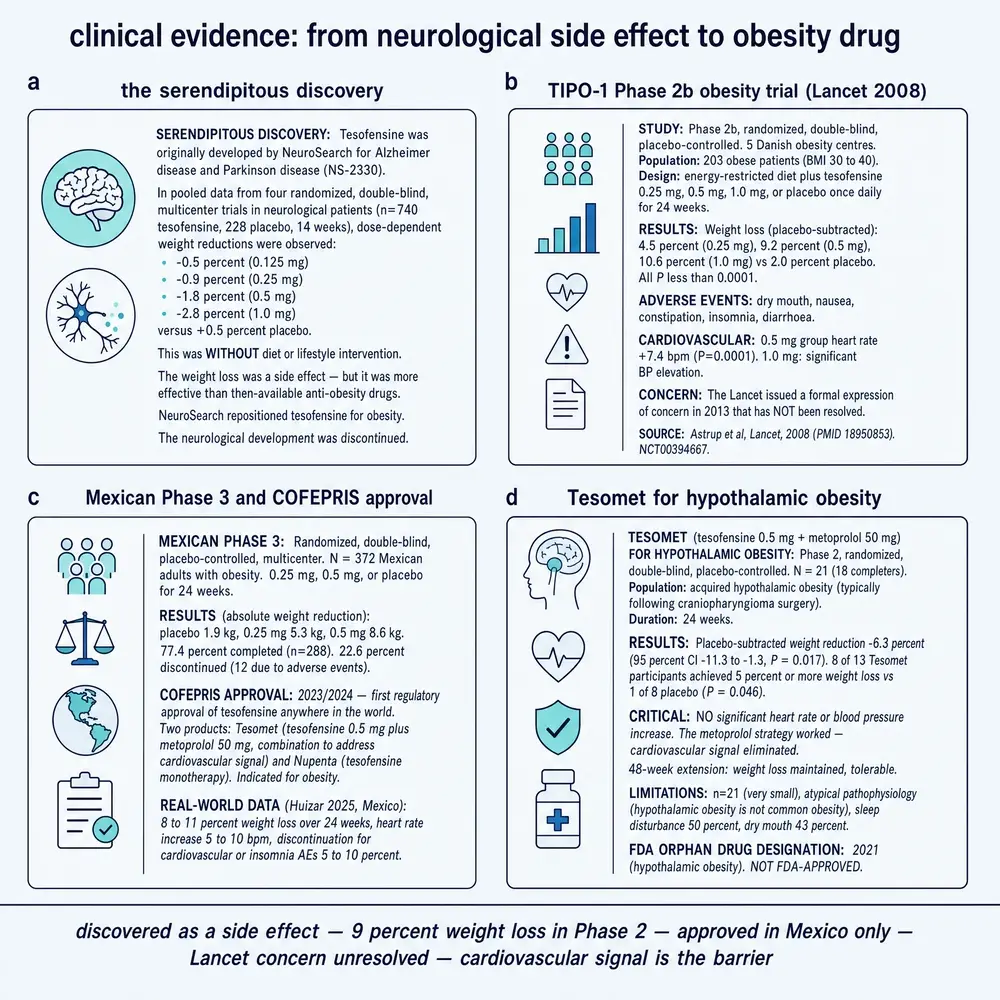
Mean weight losses were approximately 6.7, 11.3 and 12.8 kg on the three active arms versus 2.2 kg on placebo — figures that secondary literature repeated as roughly 6.5–12% dose-dependent loss over twenty-four weeks (Bello and Zahner, 2010; Coulter, Rebello and Greenway, 2019). Body composition and quality-of-life measures moved with weight in the trial report. For a field accustomed to average drug effects of a few kilograms above diet alone, the 0.5 and 1.0 mg arms looked unusually large on paper (Astrup et al., 2008).
Two reading constraints belong beside that excitement. First, the full Lancet PDF is not in the local open-access corpus; numbers here follow the PubMed abstract and corroborating reviews. Second, larger weight effects arrived with more autonomic noise — the subject of the next section. The trial is strong Phase II evidence, not a finished regulatory argument.
06The cardiovascular bill
Triple reuptake blockade that includes norepinephrine does not only quiet appetite. Development and review sources describe elevations in heart rate and, at higher exposures, blood-pressure signals that shaped which daily amounts remained discussable after TIPO-1 (Bello and Zahner, 2010; Coulter et al., 2019). Parkinson-era safety narratives had already noted heart-rate increases and occasional sustained blood-pressure rises on NS 2330 relative to placebo (summarised in Bello and Zahner, 2010).
In rats instrumented for simultaneous feeding and cardiovascular telemetry, acute tesofensine produced dose-dependent hypophagia together with sympathomimetic heart-rate and blood-pressure effects; combining an anti-hypertensive strategy could blunt the cardiovascular excursion while leaving appetite suppression measurable in that model (Bentzen et al., 2014). That animal experiment is not a human regimen — it is mechanistic evidence that the anorexia and the autonomic bill share noradrenergic/dopaminergic roots and can be partly dissociated under laboratory conditions.
Secondary clinical commentary often treats 0.5 mg as the practical discussion dose after balancing TIPO-1 efficacy against tolerability at 1.0 mg (Bello and Zahner, 2010). This monograph records that discussion; it does not convert it into advice.
07Appetite, not magic
Weight fell in TIPO-1 partly because people ate less under the drug, not because the laws of thermodynamics were repealed. Human work on appetite sensations after tesofensine reported changes in hunger and satiety ratings consistent with a centrally acting anorectic profile (Gilbert et al., 2012). In diet-induced obese rats, tesofensine produced a longer-lasting hypophagic effect than comparator doses of sibutramine or rimonabant in head-to-head feeding studies, with sustained weight reduction where some comparators only transiently reduced weight (Axel et al., 2010; Hansen et al. line, PMID 20385125).
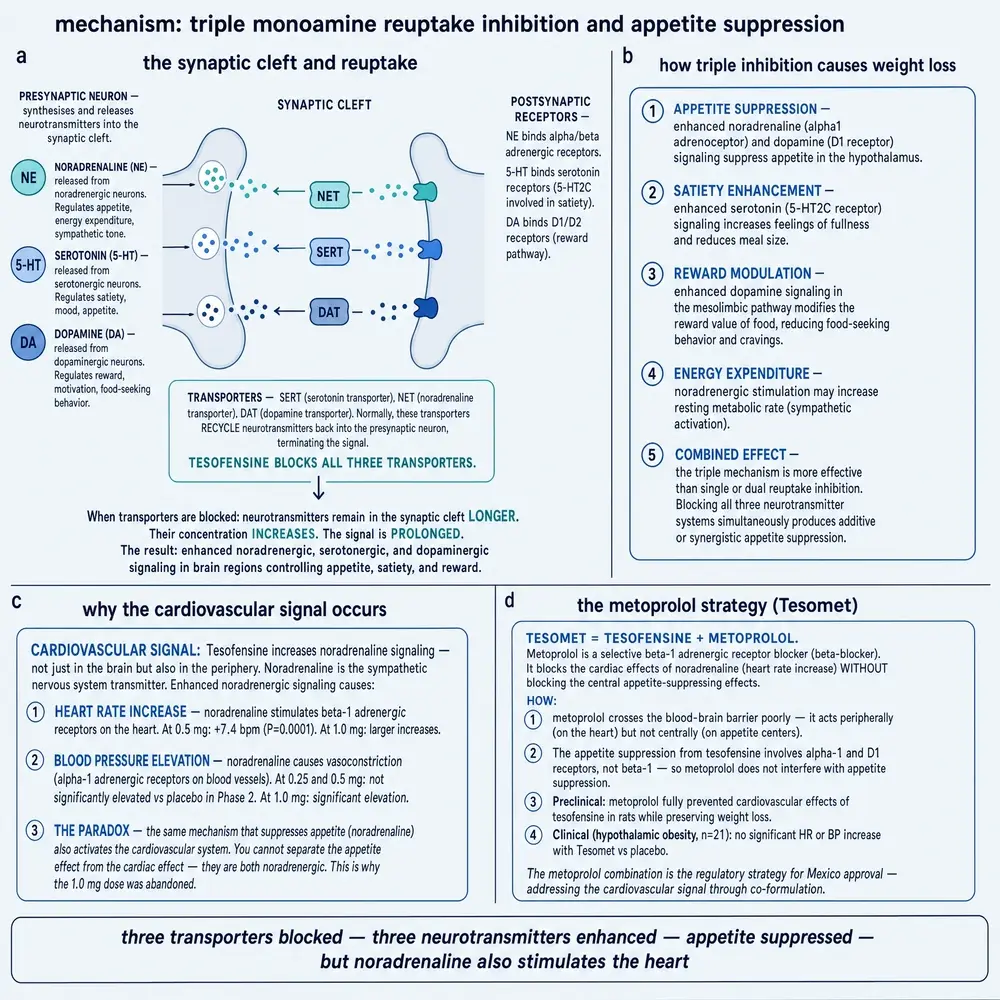
Mechanism papers from the same Danish pharmacology community argue that appetite suppression depends on indirect stimulation of central noradrenergic and dopaminergic transmission after transporter blockade — not on a mysterious peripheral fat-melting effect (Axel et al., 2010). That framing matters for how a common reader should picture the drug: it turns down the drive to eat by changing brain chemistry that already runs hunger and reward, with the autonomic system listening on the same line.
08Diet-induced obese rats and forebrain dopamine
Obesity research has a recurring observation: striatal dopamine D2-like receptor availability tends to run low in heavy animals and people, a state sometimes narrated as a drive toward compensatory overeating. Tesofensine sits exactly on that story because it blocks DAT. In diet-induced obese rats, twenty-eight days of tesofensine (2.0 mg/kg in the published regimen) reduced caloric intake and weight gain more than vehicle, and altered striatal dopamine D2/D3 receptor availability measured by radiotracer methods; a pair-fed control arm helped separate drug effects from weight loss alone (van de Giessen et al., 2012).
Hansen and colleagues, working in the same experimental neighbourhood, showed that fourteen days of tesofensine in DIO rats produced a pronounced anorexigenic and weight-reducing response together with reversal of low forebrain dopamine markers associated with the obese state (Hansen et al., 2013). Read together, the rodent record says the drug does not merely nauseate animals into thinness; it engages the catecholamine systems that obesity itself dysregulates. Animal doses and schedules are experimental parameters, not human instructions.
09Silencing the lateral hypothalamus
In 2024, Perez and colleagues brought modern circuit tools to tesofensine: behavioural tasks, DeepLabCut video analysis, ensemble recordings, optogenetic activation and chemogenetic silencing of Vgat-defined GABAergic neurons in the lateral hypothalamus (LH) of mice and rats. Tesofensine induced greater weight loss in obese rats than in lean rats and differentially modulated LH neuronal ensembles. Manipulating LH GABA cells altered the drug’s feeding effects, supporting a model in which the compound’s anorectic action depends on silencing a hypothalamic brake on satiety — or, more carefully, on suppressing GABAergic LH activity that otherwise promotes intake (Perez et al., 2024).
This is the kind of paper recency should promote. It does not replace TIPO-1; it explains, in animals, a route from a 1990s transporter inhibitor to a 2020s hypothalamic map. GLP-1 receptor agonists dominate today’s obesity conversation by another anatomy entirely; Perez et al. remind the reader that tesofensine’s bet was always monoaminergic and hypothalamic-adjacent, not incretin-mimetic.
10A transporter caught in the act
Structure caught up in 2026. Li and co-authors determined an ensemble of DAT structures bound to five distinct triple reuptake inhibitors. Tesofensine and dasotraline stabilised an outward-facing conformation; centanafadine, ansofaxine and nefazodone captured inward-facing states. The structures resolve binding poses and interaction chemistries that medicinal chemists had inferred from mutagenesis and SAR for years (Li et al., 2026).
For this monograph the point is sober: the drug’s name is not marketing poetry. It occupies the dopamine transporter in a defined pose. Whether that pose predicts clinical superiority over other TRIs is a separate, unanswered therapeutic question — and not one this document tries to settle.
11The metabolite that outlasts the parent
Lehr’s population models already insisted that M1 is not a decorative metabolite: low clearances and large volumes of distribution stretch both parent and M1 into multi-day half-lives in Alzheimer trial patients (Lehr et al., 2007). Mouse PK/PD work assigned M1 a slightly higher in-vitro activity and a real share of dopamine-transporter inhibition after dosing (Lehr et al., 2008). In 2026, investigations into metabolism and elimination in human urine expanded the map of products relevant to anti-doping laboratories, noting that tesofensine has appeared in grey-market “supplement” channels even while regulatory review stories remain unfinished (Krug, Thomas and Thevis, 2026). WADA classifies it under stimulants prohibited in-competition; that fact is forensic context, not an invitation.
12Does it feel like a stimulant?
Any drug that raises synaptic dopamine invites an abuse-liability question. Schoedel and colleagues compared subjective and objective effects of tesofensine with those of known recreational stimulants in experienced users. The study’s importance is directional: it asks whether the compound behaves like a classic stimulant of abuse under controlled laboratory conditions, rather than assuming the answer from the transporter profile alone (Schoedel et al., 2010). Readers should take the existence of that study as evidence that developers and regulators treated the question seriously; the detailed rating-scale outcomes belong in the paper, not flattened into a slogan here.
Separately, sub-chronic and chronic tesofensine in rats increased markers linked to hippocampal plasticity — BDNF and Arc mRNA, and measures of adult hippocampal neurogenesis — a pattern familiar from some monoamine antidepressants (Larsen et al., 2007). That is neuroscience context for a TRI, not a claim that tesofensine is an approved antidepressant.
13An expression of concern, and what it did not erase
In 2013 The Lancet published an expression of concern related to the 2008 TIPO-1 report (Lancet editors, 2013). The same period saw correspondence on under-reporting of adverse effects, with Astrup and co-authors responding in the journal’s letter pages (Astrup et al., 2013). An expression of concern is not a retraction. It is a public flag that readers and the journal must hold the paper more carefully — exactly the posture this monograph takes.
What remains after that flag is still a randomised, multicentre, placebo-controlled Phase II signal replicated in direction by animal pharmacology and by the earlier unintended weight loss in neurodegeneration trials. What does not remain is naive certainty. Efficacy magnitude, adverse-effect completeness and the path from Phase II to a clean monotherapy approval all sit under a brighter light because of 2013. Weighing evidence means keeping both the size of the weight effect and the unsettled governance of that paper in the same hand.
14After NeuroSearch
NeuroSearch did not remain the long-term home of the asset. Secondary histories record a transfer of rights to Saniona in 2014, after which development attention increasingly moved toward combination approaches — notably tesofensine paired with metoprolol (Tesomet) in programmes aimed at hypothalamic obesity, Prader-Willi syndrome and related indications, several of which appear among the thirteen ClinicalTrials.gov records linked from the local P019 compound page. Those combination trials are not interchangeable with tesofensine monotherapy evidence. Metoprolol is in the capsule because the cardiovascular bill is real; analysing Tesomet as if it were “just tesofensine” would erase the design.
Obesity pharmacotherapy around the molecule also changed. Reviews from 2019 to 2023 place tesofensine among centrally acting agents in a market being rewritten by GLP-1 receptor agonists and dual agonists (Coulter et al., 2019; Chakhtoura et al. / OA pharmacotherapy updates in the local corpus, PMC10041469, 2023). Recency here means context: the competitive field moved. It does not erase TIPO-1; it explains why a strong Phase II signal can still look historically stranded.
15Where the evidence is thin
Honest gaps, stated without padding:
- No clean, widely cited published Phase III monotherapy success narrative sits in the PubMed title set the way TIPO-1 does for Phase II.
- The local OA full-text library is review-heavy; primary trial PDFs for TIPO-1 and most PD studies were read as abstracts plus secondary reports.
- Discovery chemistry lacks a single canonical first-synthesis paper in the harvested set; corporate NeuroSearch attribution is the grounded story.
- Grey-market capsules and sports anti-doping interest (Krug et al., 2026) are evidence of diffusion, not of quality, dosing wisdom or medical use.
- Head-to-head human trials against modern incretin drugs do not define this corpus.
Thinness is itself a finding. A molecule can be pharmacologically vivid and still under-finished as a public evidence object.
16What the weighed record supports
After reading the local open-access full texts, the harvested short OA notes, and the PubMed-indexed abstract set for the subject-focused trials and reviews, the balanced account looks like this:
Discovery and intent. Tesofensine (NS2330) was created at NeuroSearch as a triple monoamine reuptake inhibitor for Alzheimer’s and Parkinson’s disease, in a phenyltropane chemical logic, with early pipeline visibility by 2001–2002 (Thatte, 2002). Named individual bench chemists are not preserved as a public folk story; the grounded discoverer is the company programme and the clinicians who later redirected it.
Failed first indications. Adequately sized PD trials did not show clinically persuasive motor benefits at the doses and durations tested (Hauser et al., 2007; Rascol et al., 2008; Bara-Jimenez et al., 2005). That failure is load-bearing: without it, the weight signal might have stayed a nuisance adverse effect.
Metabolic efficacy signal. Unintended weight loss in neurodegeneration trials was dose-related (Astrup et al., 2008 meta-analysis). In obesity, TIPO-1 produced substantial mean weight loss over twenty-four weeks on an energy-restricted diet, greater at 0.5 and 1.0 mg than at 0.25 mg or placebo (Astrup et al., 2008). Animal DIO studies support a primary appetite mechanism with catecholamine dependence (Axel et al., 2010; Hansen et al., 2013; van de Giessen et al., 2012).
Mechanism freshness. Lateral hypothalamic GABAergic silencing (Perez et al., 2024) and outward-facing DAT engagement (Li et al., 2026) are recent and mutually consistent with the older pharmacological story. They earn weight on mechanism. They do not mint a new human efficacy trial.
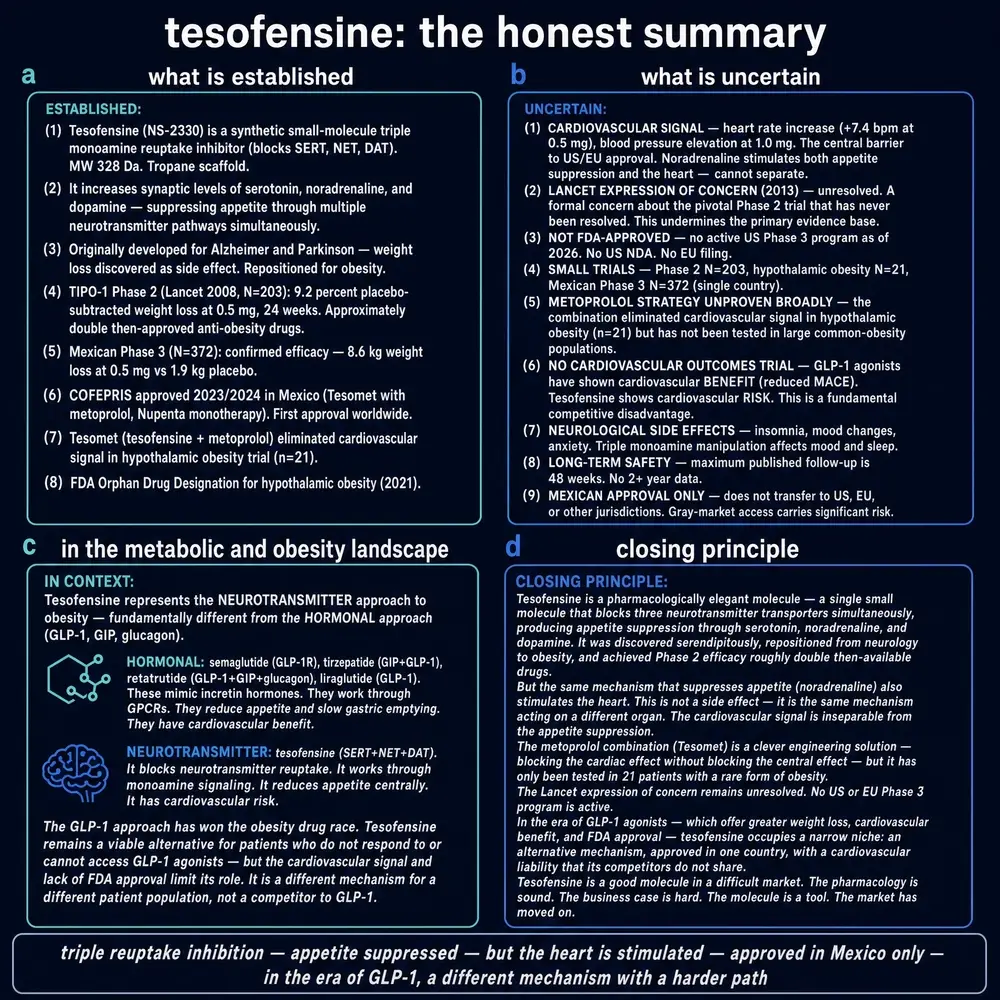
Safety and governance. Heart-rate and blood-pressure effects are part of the clinical narrative, not optional colour (Bello and Zahner, 2010; Bentzen et al., 2014). The 2013 Lancet expression of concern requires ongoing caution about how TIPO-1 is cited. Combination programmes (Tesomet) are a different evidentiary object.
What the record does not support. It does not support presenting tesofensine as an approved, routine obesity medicine in the incretin era. It does not support casual human use from research-chemical channels. It does not support equating marketing capsules with trial material.
17Standing constraint
This monograph is an evidence narrative for laboratory and scholarly contexts. It is not medical advice, not a prescribing guide, and not a protocol. No dose, route, schedule or combination discussed above is recommended for any person. Where trial regimens appear, they are historical parameters of published research. Tesofensine remains a research compound in the sense that governs this series: interesting because of what careful experiments and trials have already shown — and constrained by everything they have not.
The interesting story is not that a stimulant-ish appetite drug exists. The interesting story is that a neurodegeneration programme failed forward into one of the clearer Phase II weight-loss signals of its decade, acquired a cardiovascular bill and a journal caution in the same motion, and still draws new hypothalamic and structural papers twenty years after its code name first appeared in pipeline digests. That is a scientific biography, not a lifestyle tip. It should be read as one.
AMethods of evidence assembly
Source project: 05 therapeutic-peptide research library
(C:\Apps\therapeutic-peptide-library and the Peptide Science
workspace corpus). Compound key P019.
Local stores searched for tesofensine / NS2330 /
NS-2330 / NS 2330:
fulltext/open_access_jats, fulltext/peptide_sciences,
acquisition/corpus/scale_sources/pmc_fulltext, dossiers, knowledge
base articles, Radix library compound pages, and P05 paths. Peer-reviewed
scientific full texts were separated from vendor COAs, catalog SKUs and giant
JSON manifests. Page equivalents use 500 words per printed page for XML/HTML.
Inventory headline (scientific OA, deduplicated): 9 unique local full texts discuss the compound (~160,000 words, ~320 page-equivalents); 5 are substantive (≥3 body mentions; ~141 pages). PubMed subject surface: 62 records. PMC body-text hits: 167. Twenty-three subject-focused PMIDs were resolved against NCBI for the reference list; four non-PubMed provenance sources were added (PubChem, ClinicalTrials.gov inventory, Radix intake map, NeuroSearch 2007 TIPO-1 announcement as historical context only).
Identity gate: tesamorelin documents without tesofensine/NS2330 are refused; Tesomet-dominated documents without clear parent-compound discussion are refused. Figure artwork is authored SVG using theme tokens only (no raw hex in presentation attributes).
Full inventory tables: INVENTORY_REPORT.md in this project.
Outline and controlling idea: OUTLINE.md.
BReferences
- Astrup A, Meier DH, Mikkelsen BO, Villumsen JS, Larsen TM. Weight loss produced by tesofensine in patients with Parkinson's or Alzheimer's disease. Obesity (Silver Spring). 2008;16(6):1363-9.
PMID 18356831 · doi:10.1038/oby.2008.56 - Astrup A, Madsbad S, Breum L, Jensen TJ, Kroustrup JP, Larsen TM. Effect of tesofensine on bodyweight loss, body composition, and quality of life in obese patients: a randomised, double-blind, placebo-controlled trial. Lancet. 2008;372(9653):1906-1913.
PMID 18950853 · doi:10.1016/S0140-6736(08)61525-1 - Astrup A, Madsbad S, Breum L, Jensen TJ, Kroustrup JP, Larsen TM. Under-reporting of adverse effects of tesofensine. Lancet. 2013;382(9887):127.
PMID 23849924 · doi:10.1016/S0140-6736(13)61563-9 - Axel AM, Mikkelsen JD, Hansen HH. Tesofensine, a novel triple monoamine reuptake inhibitor, induces appetite suppression by indirect stimulation of alpha1 adrenoceptor and dopamine D1 receptor pathways in the diet-induced obese rat. Neuropsychopharmacology. 2010;35(7):1464-76.
PMID 20200509 · doi:10.1038/npp.2010.16 · PMC3055463 - Bara-Jimenez W, Dimitrova T, Sherzai A, Favit A, Mouradian MM, Chase TN. Effect of monoamine reuptake inhibitor NS 2330 in advanced Parkinson's disease. Mov Disord. 2004;19(10):1183-6.
PMID 15390018 · doi:10.1002/mds.20124 - Bello NT, Zahner MR. Tesofensine, a monoamine reuptake inhibitor for the treatment of obesity. Curr Opin Investig Drugs. 2009;10(10):1105-16.
PMID 19777399 - Bentzen BH, Grunnet M, Hyveled-Nielsen L, Sundgreen C, Lassen JB, Hansen HH. Anti-hypertensive treatment preserves appetite suppression while preventing cardiovascular adverse effects of tesofensine in rats. Obesity (Silver Spring). 2013;21(5):985-92.
PMID 23784901 · doi:10.1002/oby.20122 - Coulter AA, Rebello CJ, Greenway FL. Centrally Acting Agents for Obesity: Past, Present, and Future. Drugs. 2018;78(11):1113-1132.
PMID 30014268 · doi:10.1007/s40265-018-0946-y · PMC6095132 - Gilbert JA, Gasteyger C, Raben A, Meier DH, Astrup A, Sjödin A. The effect of tesofensine on appetite sensations. Obesity (Silver Spring). 2012;20(3):553-61.
PMID 21720440 · doi:10.1038/oby.2011.197 - Hansen HH, Hansen G, Tang-Christensen M, Larsen PJ, Axel AM, Raben A, et al.. The novel triple monoamine reuptake inhibitor tesofensine induces sustained weight loss and improves glycemic control in the diet-induced obese rat: comparison to sibutramine and rimonabant. Eur J Pharmacol. 2010;636(1-3):88-95.
PMID 20385125 · doi:10.1016/j.ejphar.2010.03.026 - Hansen HH, Jensen MM, Overgaard A, Weikop P, Mikkelsen JD. Tesofensine induces appetite suppression and weight loss with reversal of low forebrain dopamine levels in the diet-induced obese rat. Pharmacol Biochem Behav. 2013;110:265-71.
PMID 23932919 · doi:10.1016/j.pbb.2013.07.018 - Hauser RA, Salin L, Juhel N, Konyago VL. Randomized trial of the triple monoamine reuptake inhibitor NS 2330 (tesofensine) in early Parkinson's disease. Mov Disord. 2007;22(3):359-65.
PMID 17149725 · doi:10.1002/mds.21258 - Krug O, Thomas A, Thevis M. Investigations Into the Metabolism and Elimination of Tesofensine in Human Urine. Drug Test Anal. 2026.
PMID 42320973 · doi:10.1002/dta.70104 - Larsen MH, Rosenbrock H, Sams-Dodd F, Mikkelsen JD. Expression of brain derived neurotrophic factor, activity-regulated cytoskeleton protein mRNA, and enhancement of adult hippocampal neurogenesis in rats after sub-chronic and chronic treatment with the triple monoamine re-uptake inhibitor tesofensine. Eur J Pharmacol. 2007;555(2-3):115-21.
PMID 17112503 · doi:10.1016/j.ejphar.2006.10.029 - Lehr T, Staab A, Tillmann C, Trommeshauser D, Raschig A, Schaefer HG, et al.. Population pharmacokinetic modelling of NS2330 (tesofensine) and its major metabolite in patients with Alzheimer's disease. Br J Clin Pharmacol. 2007;64(1):36-48.
PMID 17324246 · doi:10.1111/j.1365-2125.2007.02855.x · PMC2000606 - Lehr T, Staab A, Tillmann C, Nielsen EØ, Trommeshauser D, Schaefer HG, et al.. Contribution of the active metabolite M1 to the pharmacological activity of tesofensine in vivo: a pharmacokinetic-pharmacodynamic modelling approach. Br J Pharmacol. 2008;153(1):164-74.
PMID 17982477 · doi:10.1038/sj.bjp.0707539 · PMC2199391 - Li Y, Meng Y, Li N, Zhao J, Li R, Bai Q, et al.. Structural basis for pharmacotherapeutic action of triple reuptake inhibitors. Nat Commun. 2025;17(1):61.
PMID 41392177 · doi:10.1038/s41467-025-66670-3 · PMC12769732 - Perez CI, Luis-Islas J, Lopez A, Diaz X, Molina O, Arroyo B, et al.. Tesofensine, a novel antiobesity drug, silences GABAergic hypothalamic neurons. PLoS One. 2024;19(4):e0300544.
PMID 38656972 · doi:10.1371/journal.pone.0300544 · PMC11042726 - Rascol O, Poewe W, Lees A, Aristin M, Salin L, Juhel N, et al.. Tesofensine (NS 2330), a monoamine reuptake inhibitor, in patients with advanced Parkinson disease and motor fluctuations: the ADVANS Study. Arch Neurol. 2008;65(5):577-83.
PMID 18474731 · doi:10.1001/archneur.65.5.577 - Schoedel KA, Meier D, Chakraborty B, Manniche PM, Sellers EM. Subjective and objective effects of the novel triple reuptake inhibitor tesofensine in recreational stimulant users. Clin Pharmacol Ther. 2010;88(1):69-78.
PMID 20520602 · doi:10.1038/clpt.2010.67 - Thatte U. NS-2330 (Neurosearch). Curr Opin Investig Drugs. 2001;2(11):1592-4.
PMID 11763162 - van de Giessen E, de Bruin K, la Fleur SE, van den Brink W, Booij J. Triple monoamine inhibitor tesofensine decreases food intake, body weight, and striatal dopamine D2/D3 receptor availability in diet-induced obese rats. Eur Neuropsychopharmacol. 2012;22(4):290-9.
PMID 21889317 · doi:10.1016/j.euroneuro.2011.07.015 - [No authors listed]. Expression of concern--effect of tesofensine on bodyweight loss, body composition, and quality of life in obese patients: a randomised, double-blind, placebo-controlled trial. Lancet. 2013;381(9873):1167.
PMID 23561987 · doi:10.1016/S0140-6736(13)60778-3 - PubChem, National Center for Biotechnology Information. Compound summary for CID 11370864, Tesofensine. Source of molecular formula C17H23Cl2NO, average mass and synonym list (NS2330 / NS 2330) used in identity sections.
https://pubchem.ncbi.nlm.nih.gov/compound/11370864 - ClinicalTrials.gov. Aggregate registry records linked from the local Radix compound page for P019 (thirteen studies spanning Alzheimer’s, Parkinson’s, obesity, energy balance, and later tesofensine/metoprolol programmes). Inventory of registered protocols, not results.
https://clinicaltrials.gov/ - South Beach Longevity. Research Intake & Evidence Map P019 — Tesofensine (library edition). Local identity and provenance record for the therapeutic-peptide research library compound key P019. Not a released evidence dossier.
- NeuroSearch A/S. Company announcement: breakthrough tesofensine results from clinical Phase IIb study in obesity (TIPO-1), 17 September 2007. Contemporaneous sponsor communication of top-line TIPO-1 findings; cited only as historical context alongside the peer-reviewed Astrup et al. 2008 Lancet report.
https://www.globenewswire.com/news-release/2007/09/17/85025/0/en/NeuroSearch-announces-bre
CFigure list
- The programme did not begin as an obesity drug. The arrow runs from a neurodegeneration code (NS2330...
- Commissioned plate (dark mat): what tesofensine is. Panel a is the identity card — NS‑2330...
- A triple reuptake inhibitor is not three drugs in a blister pack. It is one ligand engaging the dopa...
- Commissioned plate: structural anatomy. The tropane core, 3,4‑dichlorophenyl, ethoxymethyl and N̴...
- TIPO-1 mean absolute weight change at twenty-four weeks by assigned daily amount, as reported in the...
- Commissioned plate: the clinical arc. Panels a–b match the Astrup meta-analysis and TIPO‑1...
- For tesofensine, appetite suppression and cardiovascular stimulation are not unrelated side plots. T...
- Commissioned plate: how triple reuptake inhibition is drawn to suppress appetite — and why noradrenal...
- A compressed causal sketch used in this document: transporter blockade raises catecholamine tone; re...
- Among five TRIs crystallised or otherwise structurally resolved with DAT, tesofensine joins the outw...
- Editorial posture used in this monograph: retain the Phase II efficacy signal, qualify its gove...
- How this document stacks evidence. Newer mechanistic layers are welcomed; they decorate and explain ...
- Commissioned plate (dark mat): the weighing in one frame. Established rungs (triple reuptake identity, sere...
No commissioned photographic plates were admitted for this build; all eight figures are vector diagrams generated for the monograph. Internet and library raster assets were reviewed; none were required once the SVG set covered the narrative beats.
Continue exploring