
Survodutide A glucagon-receptor / GLP-1-receptor dual agonist (BI 456906) — discovery, mechanism, and the human record
Survodutide is an investigational once-weekly injectable that fuses two gut-hormone signals in one engineered peptide: it is built on the glucagon backbone, the hormone that raises blood sugar, with GLP-1-receptor activity grafted in. This monograph traces how that design was discovered, what its animal and human studies actually show across obesity, type 2 diabetes and metabolic liver disease, and where the evidence is still missing.
01What survodutide is
Survodutide is an investigational once-weekly injectable peptide, known during its development by the code BI 456906, that activates two different receptors at once: the receptor for glucagon and the receptor for glucagon-like peptide-1, usually shortened to GLP-1. In the shorthand of the field it is a glucagon-receptor / GLP-1-receptor dual agonist. It is being developed by Boehringer Ingelheim, under licence from the Danish company Zealand Pharma, for three overlapping conditions: obesity, type 2 diabetes, and the fatty-liver disease now called MASH.
The research record on survodutide is young and lopsided. The most detailed document in it is a single 2022 laboratory paper describing how the molecule was found and what it did to mice; the human record consists of a handful of phase-2 trials, none longer than about a year, and the large phase-3 trials that will decide the drug's fate were still running as this monograph was compiled. There is, as yet, no completed trial measuring whether survodutide prevents heart attacks, strokes or deaths — the outcome that ultimately matters for a chronic metabolic drug. This document is therefore a portrait of a compound caught mid-development: enough is known to explain clearly what it is and why it was built, and it is worth being equally clear about what is not yet known.
What makes survodutide worth a monograph of its own, rather than a paragraph in a survey of weight-loss drugs, is its design. Almost every successful metabolic drug of the past decade has worked by amplifying GLP-1, the hormone that makes you feel full. Survodutide keeps that mechanism but adds a second one that sounds, at first, like a mistake: it also switches on the receptor for glucagon, the hormone whose textbook job is to raise blood sugar. The bet behind the molecule is that glucagon's other effects — burning energy and clearing fat out of the liver — can be harnessed while its sugar-raising downside is cancelled by the GLP-1 half of the same molecule. Whether that bet pays off, and at what cost, is the story of the rest of this document.
02Glucagon, from foe to friend
To see why survodutide is put together the way it is, it helps to start with the two hormones it imitates. When you eat, the gut releases a set of signals that prepare the body for incoming food. Two of them matter here. GLP-1 is released from the lower gut; it tells the pancreas to release insulin when glucose is present, slows the stomach's emptying, and acts on the brain to produce the feeling of fullness. It is the mechanism behind semaglutide and the other blockbuster weight-loss and diabetes drugs. Glucagon is, in a sense, its opposite number: released from the pancreas when blood sugar falls, it tells the liver to release stored glucose. For most of the twentieth century that made glucagon a hormone to be suppressed, not imitated — in diabetes, too much glucagon is part of the problem.
Before the design logic is drawn as a chart, the commissioned overview restates the dual-agonist identity as a four-panel plate.
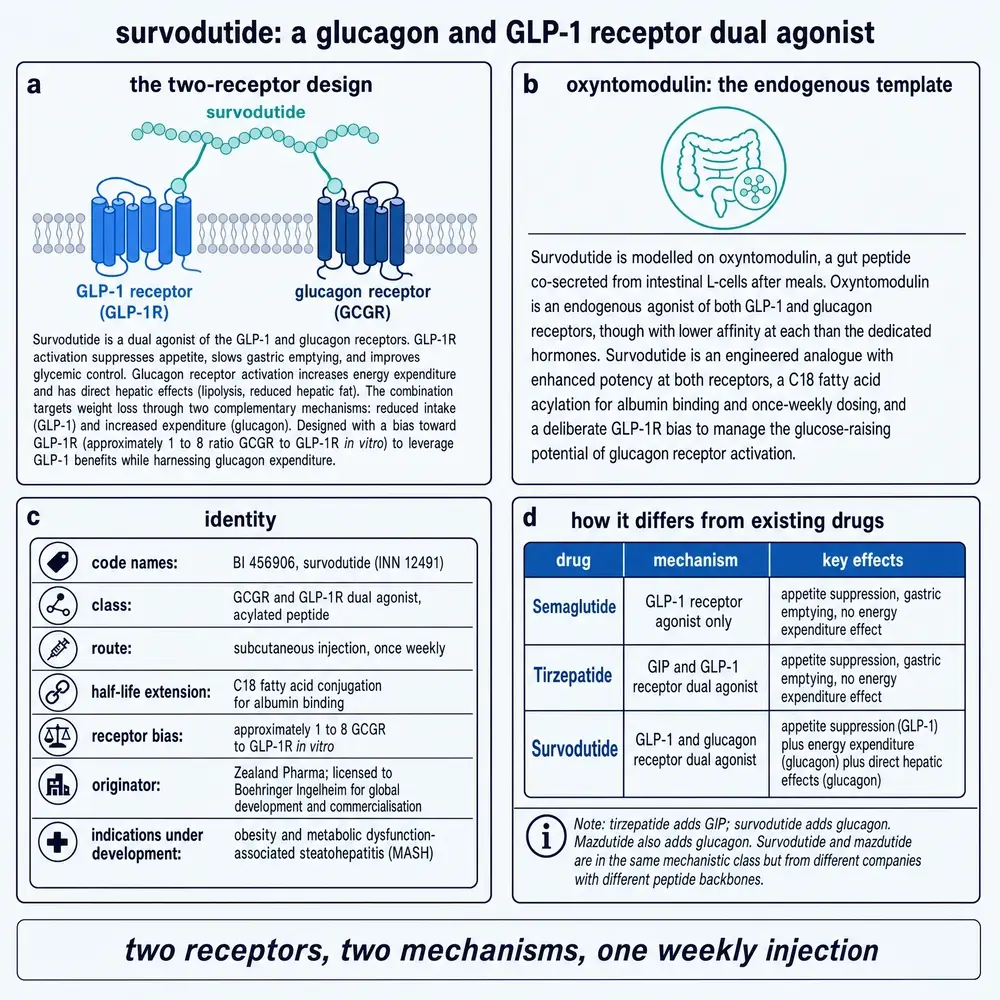
But glucagon does more than raise blood sugar. It also increases the rate at which the body burns energy, and it acts directly on liver cells to promote the breakdown of fat and cholesterol. A 2026 review in Pharmacological Research from an International Union of Basic and Clinical Pharmacology working group summarised this reappraisal in its title: glucagon has gone "from foe to friend." The insight that made survodutide possible is old and natural: the gut already makes a hormone, oxyntomodulin, that is a weak agonist of both the GLP-1 and glucagon receptors, and in people oxyntomodulin reduces body weight by cutting appetite and raising energy expenditure at the same time, without the sugar spike that pure glucagon would cause. The GLP-1 arm holds the glucose in check while the glucagon arm burns energy. Survodutide is, in effect, an attempt to turn that natural balancing act into a drug potent and long-lasting enough to inject once a week.
03Building the molecule
The chemistry of survodutide, described in detail in its 2022 discovery paper in Molecular Metabolism, is a case study in turning a natural hormone into a durable drug. The starting point is the 29-amino-acid sequence of glucagon. Left alone, that sequence would be useless as a once-weekly medicine for two reasons: it is destroyed within minutes by an enzyme called DPP-4, and it activates only the glucagon receptor. The molecule's designers made three deliberate changes. First, they replaced the amino acid at position 2 — the exact spot DPP-4 attacks — with an unnatural building block (1-aminocyclobutane-1-carboxylic acid) and capped the tail of the peptide, so the enzyme can no longer cut it. Second, they edited the sequence to introduce GLP-1-receptor activity into what had been a glucagon-only peptide, so the single chain now speaks to both receptors. Third, they attached a long fatty acid — a C18 di-acid on a short flexible linker at position 24 — which makes the peptide cling to albumin, the most abundant protein in blood. Bound to albumin, the drug is released slowly, stretching its stay in the body from minutes to about a week.
The most consequential design choice is one that is invisible in the structure: the balance between the two receptors. A dual agonist can lean toward GLP-1 or toward glucagon, and the ratio changes what the drug does. In laboratory assays reported in the discovery paper, survodutide is roughly tenfold weaker than the natural hormones at each receptor individually, and in whole human plasma it engages the two receptors in a ratio of about one to eight, weighted toward GLP-1. That places it near cotadutide, an earlier dual agonist, and away from "balanced" molecules such as ALT-801 that hit both receptors equally. The reason this matters is that the field has learned, mostly the hard way, that too much glucagon activity brings side effects — a faster heart rate, rising liver enzymes — while too little wastes the mechanism's advantage. Survodutide's ratio is a wager about where that sweet spot lies, and the human trials in Parts Three, Four and Five are, in effect, the test of that wager.
04Who made it, and the question to carry forward
Survodutide is not the product of a single celebrated discoverer but of a corporate collaboration, and its paper trail says so plainly. The molecule was co-invented with Zealand Pharma, a Copenhagen biotechnology company that specialises in peptide hormones, and licensed to Boehringer Ingelheim, the large German pharmaceutical firm that funds and runs all of its development and commercialization worldwide; Zealand kept a right to co-promote the drug in the Nordic countries. The founding scientific document is the 2022 discovery and preclinical paper in Molecular Metabolism, authored by the Boehringer–Zealand team, which both names the compound and lays out the laboratory evidence that justified taking it into people. A companion 2024 paper in Diabetes, Obesity and Metabolism described the biomarkers used to pick this particular molecule out of its chemical relatives as the clinical candidate.
That origin explains a feature of the literature worth flagging at the outset: a large share of the survodutide record is written or funded by its developer. This is normal for a drug at this stage — the company runs the trials — but it is a reason to lean, wherever possible, on the independent reviews and meta-analyses that have begun to pool the data, and to keep the company-sponsored preclinical narrative labelled as such. It is also the reason this monograph carries an open question from Part One into Part Two. The developer's central claim is that the glucagon arm earns its place by adding something GLP-1 alone cannot provide. The next Part is where that claim is tested — first in mice, and then, in a 2026 study that could only have been done recently, in the brain itself.
05The mouse result that started it
The case for survodutide begins with a single, striking animal experiment. In the 2022 discovery paper, obese mice were given the drug daily for a month alongside semaglutide, the most effective GLP-1 drug then available, at doses chosen to be maximally effective. Survodutide reduced the animals' body weight by about 32% over 28 days — more than semaglutide, which achieved 25–27%. For a drug whose GLP-1 arm is, molecule for molecule, weaker than semaglutide's, beating it outright demanded an explanation.
The explanation is the whole point of the compound, and it turns on a detail that is easy to miss. If survodutide had simply suppressed appetite harder than semaglutide, the extra weight loss would be unremarkable. It did the opposite. In the same experiment, survodutide's immediate effect on food intake was less pronounced than semaglutide's, despite equal doses — yet the animals lost more weight over the month. Something other than eating less was removing the difference. The paper's answer, confirmed in a separate metabolic study, is that survodutide raised the rate at which the mice burned energy: energy expenditure rose dose-dependently, without the animals becoming more active or running a fever. The glucagon arm, in other words, was paying for weight loss out of a different account than appetite. This is the observation the rest of the drug's rationale is built on, and it is worth holding onto its provenance: it is a mouse result, reported by the developer, and the human evidence for a metabolic-rate effect specific to survodutide remains thinner.
06Proving there are really two receptors
A dual agonist is only interesting if both of its arms are actually working in a living animal, and the discovery paper spends most of its length proving they are. The GLP-1 arm was demonstrated the classic way: in mice engineered to lack the GLP-1 receptor, survodutide's effects on appetite, glucose tolerance and stomach emptying vanished, showing those effects run through that receptor. The glucagon arm was harder to pin down and required a battery of indirect markers, because glucagon's fingerprints are metabolic rather than behavioural. Survodutide — but not semaglutide — raised blood levels of a liver hormone called FGF-21, lowered circulating glucagon and drove down a specific set of amino acids in the blood, all recognised signs of glucagon-receptor activity in the liver. A particularly elegant confirmation used reporter mice whose tissues light up when a receptor is switched on: semaglutide lit up the pancreas only, a long-acting glucagon-only molecule lit up the liver only, and survodutide lit up both. Crucially, the glucagon arm did this while improving rather than worsening blood-sugar control in the obese, insulin-resistant animals — the outcome the whole design depends on, and one the paper notes was not seen with some competing dual agonists.
These same biomarkers later carried over into people, which is part of why they matter. In the human type 2 diabetes trial discussed in Part Three, survodutide lowered blood glucagon and the amino acid alanine in patients, just as it had in mice, while semaglutide and placebo did not — direct evidence that the glucagon arm engages its target in humans, even if the downstream metabolic-rate effect is harder to measure in a clinic than in a metabolic cage.
06bThe brain answer
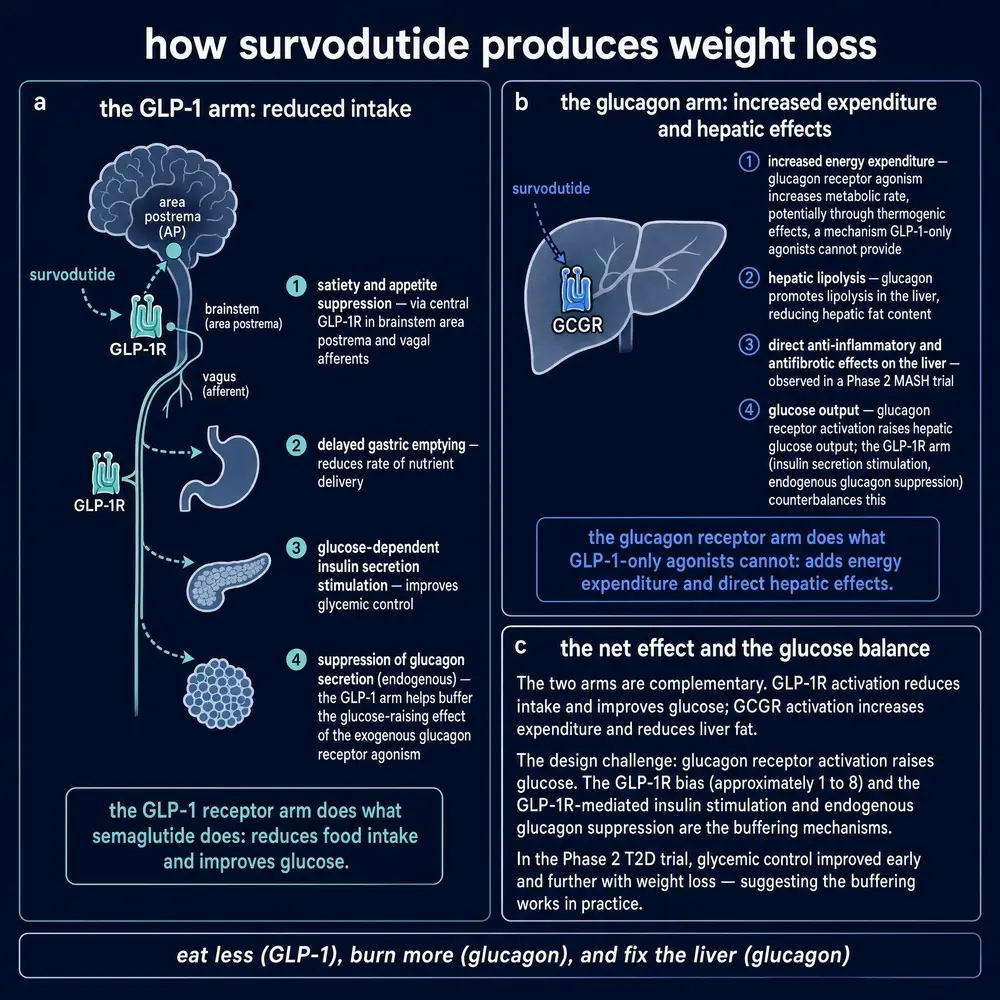
For years the division of labour in Figure 2 was a plausible hypothesis rather than a demonstrated fact. Where, exactly, does each arm act? A 2026 study in Molecular Metabolism answered the question with a directness the earlier work could not. The researchers tagged survodutide with a fluorescent dye and tracked where it went in the mouse brain. The drug did not penetrate deep into brain tissue; it reached only the circumventricular organs — a handful of specialised structures at the brain's borders where the protective blood–brain barrier is deliberately leaky, including the arcuate nucleus and the area postrema. Then, using single-cell sequencing on both mouse and human tissue, they asked which receptors those accessible regions actually carry. The GLP-1 receptor was present. The glucagon receptor was barely expressed there at all.
The consequence is clean. When the team gave mice a long-acting molecule that activates only the glucagon receptor, it did not trigger the pattern of brain activity that signals reduced appetite, and it did not lower food intake — whereas survodutide and semaglutide both did, lighting up the same appetite-related regions. The appetite-suppressing effect of survodutide, in other words, cannot be the glucagon arm's work, because the glucagon receptor is essentially absent from the brain regions the drug can reach. The glucagon arm earns its keep in the body — in energy expenditure and in the liver — while the brain half of the drug's effect is carried by GLP-1. The question planted in Part One is, at least in mice, answered.
The same division of labour, drawn as a dark-ground commissioned plate, is the visual that belongs with the brain finding: GLP-1 in the intake arm, glucagon in the body and liver.
07The liver, and why the glucagon arm points there
If the glucagon arm does little in the brain, the obvious question is where its benefit lands, and the discovery paper's most forward-looking experiments point to the liver. Liver cells are studded with glucagon receptors — and, importantly, they carry essentially no GLP-1 receptors, so any direct hepatic action of survodutide must come from its glucagon half. When the researchers read out the full pattern of gene activity in the livers of treated mice, they found a set of genes changed specifically by survodutide and not by semaglutide, touching energy metabolism, cholesterol handling and the machinery that governs fat storage. They then overlaid that pattern on gene-activity data from the livers of people with fatty-liver disease at different stages of scarring. The genes that worsen as human liver disease progresses were pushed in the opposite direction by survodutide, and vice versa. It is an indirect, cross-species argument, but a pointed one: it says the glucagon arm may act directly on the diseased liver in a way GLP-1 drugs cannot, and it is the scientific seed of the MASH programme that Part Four describes.
08Combinations
The most recent preclinical work suggests survodutide may end up as a partner as much as a solo drug. A 2025 paper in Molecular Metabolism paired it with an experimental molecule that activates a different appetite pathway, the neuropeptide-Y receptor NPY2R, and found that the combination produced synergistic — greater than additive — weight loss in obese mice. This is early, single-species, developer-run work, and no human combination data exist. But it fits a clear direction of travel in the field, in which the first generation of single-target drugs gives way to deliberately assembled combinations, and it hints that survodutide's particular mechanism may stack usefully with others. With the mechanism established as far as the animal and laboratory record allows, the monograph now turns to the question that decides a drug's future: what happens in people.
09Type 2 diabetes: the first look in patients
The first substantial human test of survodutide was a phase-2 trial in people with type 2 diabetes, published in Diabetologia in 2023 by Matthias Blüher, Julio Rosenstock and colleagues. It was a proof-of-concept study: 413 adults on metformin were randomly assigned, in a double-blind design, to one of six escalating survodutide dose schedules, to a placebo, or to an open-label group receiving semaglutide up to 1.0 mg as a reference. Treatment lasted only 16 weeks — short by the standards of diabetes drugs — which forced a fast dose build-up whose consequences show up later in the safety record.
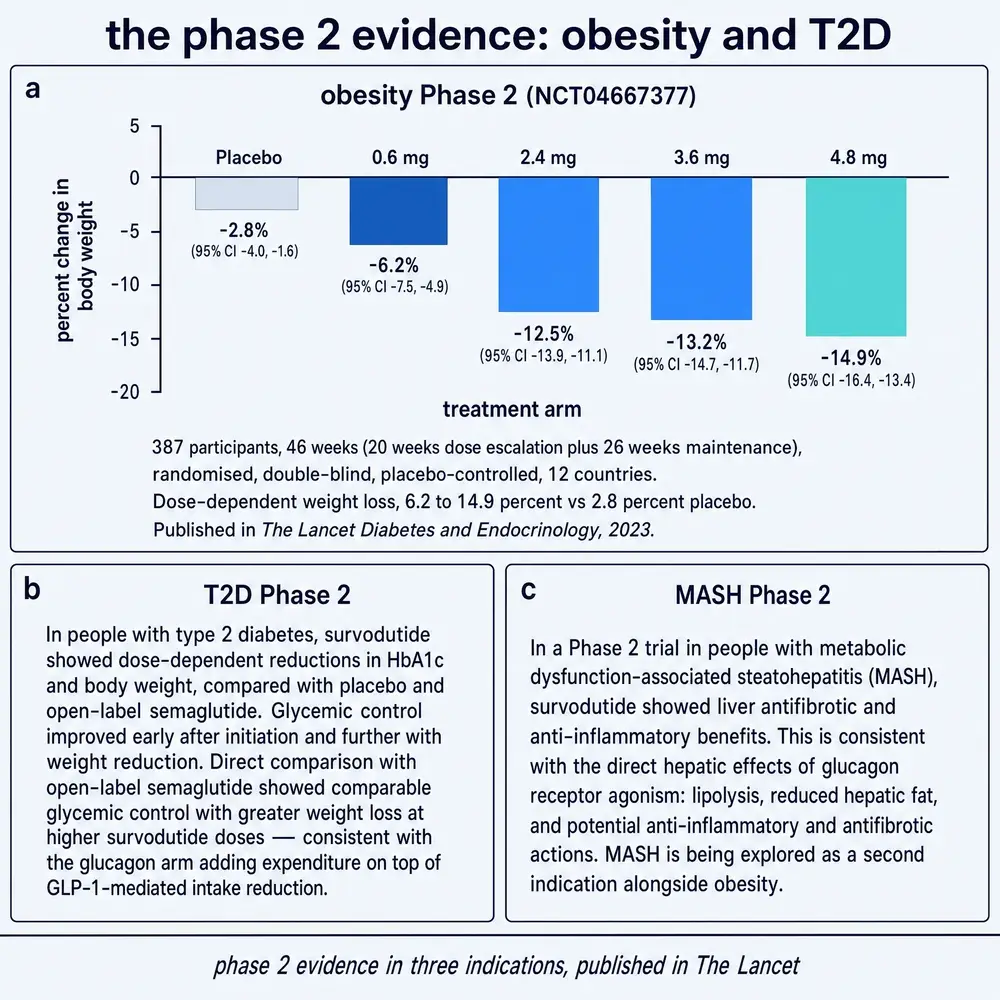
Two results defined the trial. The first was that survodutide lowered long-term blood sugar, measured as HbA1c, by up to 1.71 percentage points at its more effective doses, comparable at low doses to semaglutide (a 1.46-point fall at 0.9 mg survodutide versus 1.47 for semaglutide). The second, and more telling, was the shape of the two dose–response curves. The blood-sugar effect flattened out at about 1.8 mg per week — giving more drug did not lower HbA1c further — but the weight-loss effect kept climbing across the whole dose range, reaching 8.7% of body weight (about 8.4 kg) at the top dose, clearly more than the 5.3% seen with semaglutide. The two jobs of the molecule were coming apart in the data: modest, plateauing glucose control from the GLP-1 arm, and larger, still-rising weight loss driven by the combination. And the human biomarkers matched the mouse story — blood glucagon and alanine fell with survodutide but not with semaglutide or placebo, confirming the glucagon arm was engaged in patients.
Responder rates told the same story in a way patients would recognise. At the highest dose, 57% of participants lost at least 5% of their body weight and 35% lost at least 10%, against 7% and essentially none on placebo, and against 38% and 16% for semaglutide. The trial's own authors were candid that its 16-week length and rapid dose escalation exaggerated side effects and cut some participants' exposure short; they argued that a slower build-up over a longer trial would show the drug in a fairer light. That argument became the design brief for the phase-3 programme.
10Obesity: the headline number
The trial most people mean when they talk about survodutide is the phase-2 obesity study led by Carel le Roux and published in Lancet Diabetes & Endocrinology in 2024. It enrolled 387 adults who were overweight or had obesity but did not have diabetes, and it ran for 46 weeks — long enough, and with a slower dose build-up, to answer the question the diabetes trial could not: how much weight can this drug take off? The answer was a mean of 14.9% of body weight at the highest dose (4.8 mg), against 2.8% on placebo, with roughly 40% of participants on the top doses losing at least a fifth of their body weight. A later analysis of the same trial reported that survodutide also lowered blood pressure. These are figures in the territory that, a decade ago, belonged only to bariatric surgery.
Two cautions travel with that headline, and this monograph states both. The first is provenance: like the MASH trial in Part Four, the obesity trial sits behind a journal paywall and was not in the open-access store read for this document; its numbers are reported here as they are carried, consistently, by the independent reviews and meta-analyses that have cited it, and checked against the trial registry. The second is that the impressive average came with a cost — nearly a quarter of participants stopped the drug because of side effects — which is the subject of Part Five.
11Pooling the trials
Because each individual survodutide trial is small, independent groups have begun to pool them, and the pooled picture is consistent with the individual studies. A 2024 meta-analysis in Diabetology & Metabolic Syndrome combined 18 treatment arms across 1,029 participants and found an average weight reduction of 8.33 kg (with a wide confidence interval of roughly 5.9 to 10.8 kg), along with reductions in body-mass index and waist circumference; the effect was larger at higher doses and longer durations. A 2025 systematic review in the Indian Journal of Endocrinology and Metabolism, pooling three randomized trials in 1,088 patients, put the weight reduction at about 7.8% at 2.4 mg and 9.1% at 3.6 mg. Both analyses carried a heavy caveat that is really a strength of the reporting: the statistical heterogeneity between trials was very high, meaning the pooled averages paper over real differences in trial length, population and dose. The same reviews also quantified the drug's central problem — that the odds of stopping treatment for side effects rose steeply and dose-dependently — which is where the honest accounting of Part Five begins.
The commissioned clinical plate consolidates the three phase-2 programmes just summarised — obesity, type 2 diabetes and MASH — as a single visual record.
12MASH: where survodutide is most distinctive
If survodutide has a claim to being more than another entry in a crowded weight-loss field, it rests on the liver. The disease in question has recently been renamed metabolic dysfunction-associated steatohepatitis, or MASH: a condition in which fat, inflammation and progressive scarring build up in the liver, driven by the same metabolic problems as obesity and diabetes, and capable of ending in cirrhosis or liver cancer. It affects roughly a third of people with obesity and diabetes, and until very recently there was almost nothing to treat it with. The rationale laid out in Part Two — that liver cells carry glucagon receptors but not GLP-1 receptors, so the glucagon arm can act on the diseased organ directly — makes survodutide one of the more mechanistically interesting candidates.
The clinical test was a phase-2 trial led by Arun Sanyal, published in the New England Journal of Medicine in 2024. It enrolled 293 adults who had MASH with established but pre-cirrhotic liver scarring (fibrosis stages F1 to F3), about 39% of whom also had type 2 diabetes, and treated them for 48 weeks with one of three survodutide doses or placebo. The primary result was clear-cut: MASH improved without the scarring getting worse in 47%, 62% and 43% of participants across the three doses, against 22% on placebo. A separate measure of scar reversal — fibrosis improving by at least one stage without the disease worsening — occurred in 34% to 36% of treated participants against 22% on placebo. For a condition with so few options, a doubling to near-tripling of the response rate is a genuinely important signal, and it is the kind of result GLP-1-only drugs have struggled to match on the scarring endpoint specifically.
Two honest wrinkles belong with that result. First, the dose–response was not orderly: the middle dose (4.8 mg) outperformed the highest (6.0 mg) on the primary endpoint, a non-monotonic pattern this monograph reports as found rather than smoothing into a tidy line, and one that phase-3 will need to resolve. Second, this is again a paywalled trial read through the open-access review layer, and its numbers are reported here on that basis. A phase-3 MASH trial, LIVERAGE, is now enrolling patients with the F2–F3 scarring most likely to benefit.
13Where it sits among the liver drugs
Survodutide is not alone in the MASH race, and placing it honestly means naming the field. Semaglutide, the pure GLP-1 drug, now has the most robust evidence for reversing MASH and was approved for it. Resmetirom, a liver-directed thyroid-hormone-receptor drug, is the first agent approved specifically for the disease. Tirzepatide showed a benefit in its own MASH trial. Among the dual and triple agonists, pemvidutide, the triagonist retatrutide, and mazdutide are all in contention, and network meta-analyses that rank these therapies against one another consistently place survodutide among the effective options, with its distinctive strength on the fibrosis endpoint.
The unresolved scientific question — visible across the 2025–2026 review literature — is how much of the liver benefit comes from weight loss shared by all these drugs, and how much is the glucagon arm's direct action on the hepatocyte. The efinopegdutide precedent, in which a dual agonist cleared far more liver fat than semaglutide despite similar weight loss, suggests the direct effect is real; survodutide's phase-3 programme should help settle how large it is.
14The glucagon tax
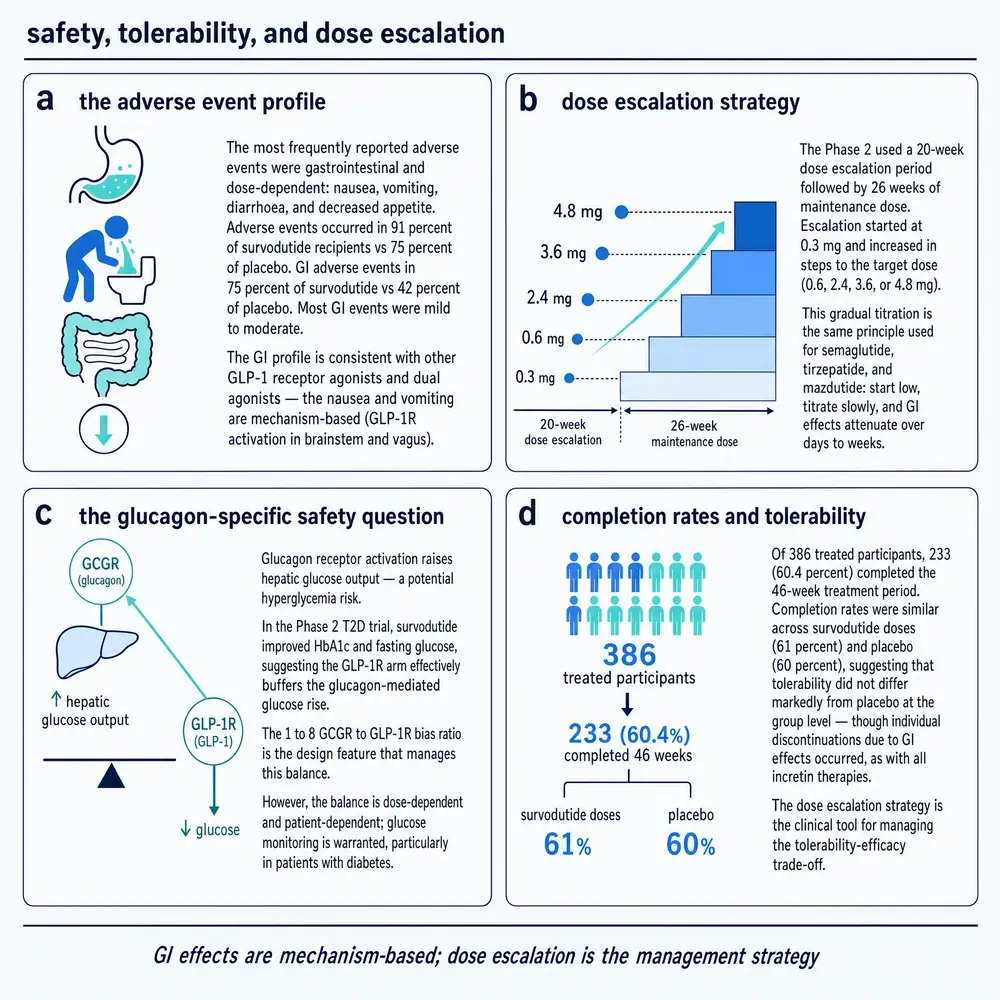
Every mechanism has a price, and survodutide's is paid mostly at the start. Its dominant side effects are gastrointestinal — nausea, vomiting and diarrhoea — the familiar signature of GLP-1-based drugs, but here more pronounced and concentrated in the weeks when the dose is being escalated. In the 16-week diabetes trial, about 16% of survodutide-treated participants stopped for side effects overall, rising to 30% at the fastest-escalated high dose, against 4% on semaglutide and 5% on placebo. In the longer obesity trial, 24.6% discontinued for adverse events. The pooled analyses turned this into odds: the chance of stopping treatment rose steeply and dose-dependently, with the odds of discontinuation several-fold higher than placebo and climbing with dose. The trials' own authors read this not as a fatal flaw but as an artefact of forcing the dose up too fast in short studies, and the phase-3 programme was explicitly redesigned around slower escalation to test that reading.
A second cost comes from the glucagon arm specifically. Because glucagon stimulates the heart, dual agonists tend to raise heart rate more than pure GLP-1 drugs; in the diabetes trial the mean rise was a modest few beats per minute, with no signal of dangerous rhythm changes, but rare cardiac or vascular events had prompted discontinuations in earlier dose-ranging work. The review literature also flags a theoretical concern that too much glucagon-receptor activation could raise liver enzymes or strain the cardiovascular system, and it is precisely to convert these theoretical concerns into measured facts that a dedicated cardiovascular-outcomes trial is required. As of this compilation, none has reported.
The same tolerability story, drawn as a four-panel plate, sits beside those discontinuation bars.
15The class it competes in
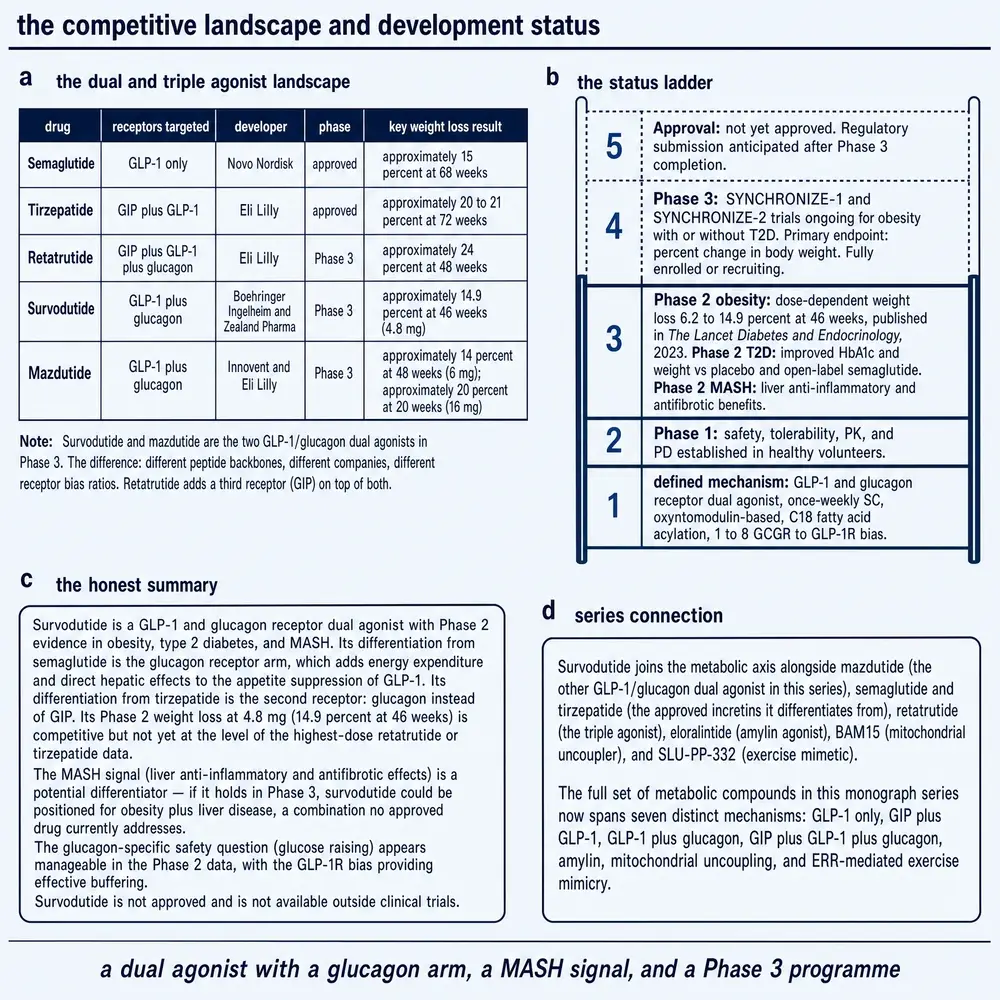
Survodutide entered a field that is now crowded with incretin-based drugs, and its prospects depend on where it sits among them. The approved benchmark is tirzepatide, which combines GLP-1 with a third hormone, GIP, and delivers roughly 15–20% weight loss. The most potent experimental agent, retatrutide, adds glucagon to that pair as a triple agonist and has reached around 24%. Among the dual GLP-1/glucagon agonists that share survodutide's exact mechanism, mazdutide is the nearest peer and is furthest along in China, while cotadutide and pemvidutide occupy adjacent positions. On the single axis of weight loss, survodutide is strong but not the leader; its distinctive argument is not that it takes off the most weight, but that its particular receptor balance points its benefit at the liver and at energy expenditure. Whether that specialisation translates into a durable clinical niche — MASH, in particular — or is overtaken by more potent triagonists is the strategic question the phase-3 data will answer.
The commissioned landscape plate places those approximate positions on a single status ladder and names the open rung — approval — that survodutide has not reached.
16Phase 3, and what is not known
Survodutide's future now rests on a set of large trials that were still running as this monograph was compiled. The obesity programme, SYNCHRONIZE, comprises a trial in obesity (SYNCHRONIZE-1) and one in obesity with type 2 diabetes (SYNCHRONIZE-2), whose designs were published in 2025 and refined with the slower dose-escalation the phase-2 authors called for; a separate cardiovascular-outcomes trial, SYNCHRONIZE-CVOT, was designed to measure whether the drug affects heart attacks, strokes and deaths. The liver programme, LIVERAGE, is testing the MASH signal in patients with F2–F3 fibrosis. Together these will convert most of what this document reports from promising phase-2 findings into either confirmed effects or disappointments.
Until they report, the honest inventory of what is not known is substantial, and it defines the boundary of any responsible reading of survodutide. There is no completed cardiovascular-outcomes trial, so nothing can be said about whether the drug prevents the events that ultimately matter. There is no long-term efficacy or safety data beyond about a year, and nothing on what happens when the drug is stopped. The optimal balance between the two receptors remains genuinely unsettled, as the non-monotonic MASH dose–response shows. The drug's effect on muscle versus fat, a live concern for the whole class, has not been characterised for survodutide specifically. And the tolerability cost — the quarter of obesity-trial participants who stopped — is a real number that slower escalation may reduce but has not yet been shown to fix. The mechanism is elegant and the phase-2 signals are strong; the case is not yet closed.
Apparatus 1References
Generated from verified NCBI records rather than from recall. Author lists, journal names, volumes, pages and identifiers are taken from the PubMed record for each citation, resolved through NCBI E-utilities; the two pivotal phase-2 trials that are not open access locally (the obesity trial in Lancet Diabetes & Endocrinology and the MASH trial in the New England Journal of Medicine) were resolved the same way and are cited from their registry and abstract records, not from full text.
- Abdelrahman RM, Musa TH, Arbab IA, Suliman MH, Ahmed EO, Mohamed AN, et al.. Harnessing GLP-1 Receptor Agonists for Obesity Treatment: Prospects and Obstacles on the Horizon. Journal of obesity. 2025;2025:9919810.
PMID 41333115 · doi:10.1155/jobe/9919810 · PMC12668848 - Anderson SL. Review: Special Issue: Real-world evidence on the use of GLP1 receptor agonists: Emerging concepts in obesity management: focus on glucagon receptor agonist combinations. Drugs in context. 2025;14.
PMID 40734920 · doi:10.7573/dic.2025-4-8 · PMC12306892 - Augustin R, Oldenburger A, Baader-Pagler T, Zimmermann T, Borghardt J, Hecksher-Sørensen J, et al.. Novel NPY2R agonist BI 1820237 provides synergistic anti-obesity efficacy when combined with the GCGR/GLP-1R dual agonist survodutide. Molecular metabolism. 2025;99:102205.
PMID 40619099 · doi:10.1016/j.molmet.2025.102205 · PMC12311552 - Bays HE, Fitch A, Christensen S, Burridge K, Tondt J. Anti-Obesity Medications and Investigational Agents: An Obesity Medicine Association (OMA) Clinical Practice Statement (CPS) 2022. Obesity pillars. 2022;2:100018.
PMID 37990711 · doi:10.1016/j.obpill.2022.100018 · PMC10662004 - Bhat S, Fernandez CJ, Lakshmi V, Pappachan JM. Efficacy and safety of incretin co-agonists: Transformative advances in cardiometabolic healthcare. World journal of cardiology. 2025;17(8):107991.
PMID 40949933 · doi:10.4330/wjc.v17.i8.107991 · PMC12426997 - Blüher M, Rosenstock J, Hoefler J, Manuel R, Hennige AM. Dose-response effects on HbA(1c) and bodyweight reduction of survodutide, a dual glucagon/GLP-1 receptor agonist, compared with placebo and open-label semaglutide in people with type 2 diabetes: a randomised clinical trial. Diabetologia. 2024;67(3):470-482.
PMID 38095657 · doi:10.1007/s00125-023-06053-9 · PMC10844353 - Blüher M, Rosenstock J, Hoefler J, Manuel R, Hennige AM. Correction to: Dose-response effects on HbA(1c) and bodyweight reduction of survodutide, a dual glucagon/GLP-1 receptor agonist, compared with placebo and open-label semaglutide in people with type 2 diabetes: a randomised clinical trial. Diabetologia. 2024;67(4):758.
PMID 38349400 · doi:10.1007/s00125-024-06095-7 · PMC10904490 - Chakhtoura M, Haber R, Ghezzawi M, Rhayem C, Tcheroyan R, Mantzoros CS. Pharmacotherapy of obesity: an update on the available medications and drugs under investigation. EClinicalMedicine. 2023;58:101882.
PMID 36992862 · doi:10.1016/j.eclinm.2023.101882 · PMC10041469 - Dutta D, Kamrul-Hasan ABM, Joshi A, Dhall A, Nagendra L, Sharma M. Efficacy and Safety of Twincretin Survodutide, a Dual Glucagon-Like Peptide-1 and Glucagon Receptor Agonist as an Anti-Obesity and Anti-Diabetes Medication: A Systematic Review and Meta-Analysis. Indian journal of endocrinology and metabolism. 2025;29(3):253-259.
PMID 40688625 · doi:10.4103/ijem.ijem_366_24 · PMC12274044 - El-Sheikh M, Sillassen CDB, Wisborg FD, Hove JD, Dirksen C, Lee MMY, et al.. Cardiovascular effects of incretin-based drugs in patients with and without a history of heart failure: a protocol for a systematic review, meta-analysis and trial sequential analysis of randomised controlled trials. BMJ open. 2025;15(9):e103668.
PMID 40976663 · doi:10.1136/bmjopen-2025-103668 · PMC12458674 - Elmendorf AJ, Yousefian M, Kim IM, Hardaway JA, Habegger K, Flak JN. IUPHAR review: From foe to friend: Repurposing glucagon to treat obesity and type 2 diabetes. Pharmacological research. 2026;223:108077.
PMID 41478576 · doi:10.1016/j.phrs.2025.108077 · PMC12910462 - Gogineni P, Melson E, Papamargaritis D, Davies M. Oral glucagon-like peptide-1 receptor agonists and combinations of entero-pancreatic hormones as treatments for adults with type 2 diabetes: where are we now?. Expert opinion on pharmacotherapy. 2024;25(7):801-818.
PMID 38753454 · doi:10.1080/14656566.2024.2356254 · PMC11195668 - Goldney J, Hamza M, Surti F, Davies MJ, Papamargaritis D. Triple Agonism Based Therapies for Obesity. Current cardiovascular risk reports. 2025;19(1):18.
PMID 40741227 · doi:10.1007/s12170-025-00770-z · PMC12304053 - Goodman J, Schain M, Di Stefano G, Lupson V, Horn T, Hill M, et al.. Exenatide and glucagon co-infusion increases myocardial glucose uptake and improves markers of diastolic dysfunction in adults with type 2 diabetes. Scientific reports. 2025;15(1):21404.
PMID 40593987 · doi:10.1038/s41598-025-04559-3 · PMC12217732 - Guo H, Yang J, Huang J, Xu L, Lv Y, Wang Y, et al.. Comparative efficacy and safety of GLP-1 receptor agonists for weight reduction: A model-based meta-analysis of placebo-controlled trials. Obesity pillars. 2025;13:100162.
PMID 39980735 · doi:10.1016/j.obpill.2025.100162 · PMC11840199 - Ji L, Jiang H, Cheng Z, Qiu W, Liao L, Zhang Y, et al.. A phase 2 randomised controlled trial of mazdutide in Chinese overweight adults or adults with obesity. Nature communications. 2023;14(1):8289.
PMID 38092790 · doi:10.1038/s41467-023-44067-4 · PMC10719339 - Ko D, Kim DH, Tan FXN, Ho GJK, Chandra R, Xuan ZZ, et al.. Suboptimal therapeutic responses associated with semaglutide in type 2 diabetes and obesity: A meta-analysis of randomized controlled trials. Cell reports. Medicine. 2026;7(3):102614.
PMID 41850241 · doi:10.1016/j.xcrm.2026.102614 · PMC13006432 - Kosiborod MN, Platz E, Wharton S, le Roux CW, Brueckmann M, Ajaz Hussain S, et al.. Survodutide for the Treatment of Obesity: Rationale and Design of the SYNCHRONIZE Cardiovascular Outcomes Trial. JACC. Heart failure. 2024;12(12):2101-2109.
PMID 39453356 · doi:10.1016/j.jchf.2024.09.004 - le Roux CW, Steen O, Lucas KJ, Startseva E, Unseld A, Hennige AM. Glucagon and GLP-1 receptor dual agonist survodutide for obesity: a randomised, double-blind, placebo-controlled, dose-finding phase 2 trial. The lancet. Diabetes & endocrinology. 2024;12(3):162-173.
PMID 38330987 · doi:10.1016/S2213-8587(23)00356-X - le Roux CW, Steen O, Lucas KJ, Ekinci EI, Startseva E, Unseld A, et al.. Survodutide, a glucagon receptor/glucagon-like peptide-1 receptor dual agonist, improves blood pressure in adults with obesity: A post hoc analysis from a randomized, placebo-controlled, dose-finding, phase 2 trial. Diabetes, obesity & metabolism. 2025;27(2):993-996.
PMID 39582349 · doi:10.1111/dom.16052 · PMC11701180 - Lempesis IG, Dalamaga M. Obesity pharmacotherapy reimagined: The era of multi-receptor agonists and next-generation metabolic modulators, perspectives and controversies. Metabolism open. 2026;30:100463.
PMID 41948476 · doi:10.1016/j.metop.2026.100463 · PMC13051938 - Liu S, Hu J, Zhao C, Liu H, He C. Comparative efficacy of incretin drugs on glycemic control, body weight, and blood pressure in adults with overweight or obesity and with/without type 2 diabetes: a systematic review and network meta-analysis. Frontiers in endocrinology. 2025;16:1513641.
PMID 39968298 · doi:10.3389/fendo.2025.1513641 · PMC11832366 - Malandris K, Charalampidis K, Loomba R, Sinakos E. Pharmacologic Treatment of Metabolic Dysfunction-Associated Steatotic Liver Disease in the Context of Type 2 Diabetes. Current diabetes reports. 2026;26(1).
PMID 41831086 · doi:10.1007/s11892-026-01621-w · PMC12989002 - Manoria PC. The Obesity Drug Revolution: New Frontiers in Pharmacotherapy. Cureus. 2025;17(11):e96713.
PMID 41393538 · doi:10.7759/cureus.96713 · PMC12700842 - Melson E, Ashraf U, Papamargaritis D, Davies MJ. What is the pipeline for future medications for obesity?. International journal of obesity (2005). 2025;49(3):433-451.
PMID 38302593 · doi:10.1038/s41366-024-01473-y · PMC11971045 - Nestor JJ, Parkes D, Feigh M, Suschak JJ, Harris MS. Effects of ALT-801, a GLP-1 and glucagon receptor dual agonist, in a translational mouse model of non-alcoholic steatohepatitis. Scientific reports. 2022;12(1):6666.
PMID 35461369 · doi:10.1038/s41598-022-10577-2 · PMC9035150 - Newsome PN, Loomba R. Therapeutic horizons in metabolic dysfunction-associated steatohepatitis. The Journal of clinical investigation. 2025;135(13).
PMID 40590228 · doi:10.1172/JCI186425 · PMC12208534 - Rubino DM, Mooney V, van de Walle V, Baanstra D, Daniëls W, Recaldin C, et al.. Optimization of patient and site engagement in the SYNCHRONIZE™ phase 3 clinical trial program for survodutide in obesity through clinical trial simulation. Contemporary clinical trials communications. 2026;49:101611.
PMID 41704810 · doi:10.1016/j.conctc.2026.101611 · PMC12907877 - Ryan DH. New drugs for the treatment of obesity: do we need approaches to preserve muscle mass?. Reviews in endocrine & metabolic disorders. 2025;26(5):805-813.
PMID 40320499 · doi:10.1007/s11154-025-09967-4 · PMC12534358 - Sanyal AJ, Bedossa P, Fraessdorf M, Neff GW, Lawitz E, Bugianesi E, et al.. A Phase 2 Randomized Trial of Survodutide in MASH and Fibrosis. The New England journal of medicine. 2024;391(4):311-319.
PMID 38847460 · doi:10.1056/NEJMoa2401755 - Schnell O, Agarwal A, Azizi M, Ballwieser D, Barnard-Kelly K, Battelino T, et al.. CVOT Summit Report 2025: advances along the cardiovascular-kidney-metabolic disease continuum. Cardiovascular diabetology. 2026;25(1).
PMID 42092956 · doi:10.1186/s12933-026-03140-0 · PMC13147710 - Sidrak WR, Kalra S, Kalhan A. Approved and Emerging Hormone-Based Anti-Obesity Medications: A Review Article. Indian journal of endocrinology and metabolism. 2024;28(5):445-460.
PMID 39676791 · doi:10.4103/ijem.ijem_442_23 · PMC11642516 - Singh A, Sohal A, Batta A. GLP-1, GIP/GLP-1, and GCGR/GLP-1 receptor agonists: Novel therapeutic agents for metabolic dysfunction-associated steatohepatitis. World journal of gastroenterology. 2024;30(48):5205-5211.
PMID 39735270 · doi:10.3748/wjg.v30.i48.5205 · PMC11612699 - Souza M, Al-Sharif L, Antunes VLJ, Huang DQ, Loomba R. Comparison of pharmacological therapies in metabolic dysfunction-associated steatohepatitis for fibrosis regression and MASH resolution: Systematic review and network meta-analysis. Hepatology (Baltimore, Md.). 2025;82(6):1523-1533.
PMID 39903735 · doi:10.1097/HEP.0000000000001254 · PMC12614381 - Stachteas P, Nasoufidou A, Karakasis P, Koiliari M, Karagiannidis E, Koufakis T, et al.. Efficacy of Dual Glucagon and Glucagon-like Peptide-1 Receptor Agonists Across the Cardiometabolic Continuum: A Review of Current Clinical Evidence. Reviews in cardiovascular medicine. 2025;26(7):39691.
PMID 40776973 · doi:10.31083/RCM39691 · PMC12326405 - Tantoush M, Almaghrabi Y, Abusbaeh A, Ahmed N, Tantush A, Ben Hamida B, et al.. Comparative Efficacy and Safety of Different Orforglipron Doses in Patients With Type 2 Diabetes Mellitus and Obesity: A Systematic Review and Network Meta-Analysis. Cureus. 2026;18(1):e102018.
PMID 41728423 · doi:10.7759/cureus.102018 · PMC12923295 - Thomas L, Martel E, Rist W, Uphues I, Hamprecht D, Neubauer H, et al.. The dual GCGR/GLP-1R agonist survodutide: Biomarkers and pharmacological profiling for clinical candidate selection. Diabetes, obesity & metabolism. 2024;26(6):2368-2378.
PMID 38560764 · doi:10.1111/dom.15551 - Wan H, Xu N, Wang L, Liu Y, Fatahi S, Sohouli MH, et al.. Effect of survodutide, a glucagon and GLP-1 receptor dual agonist, on weight loss: a meta-analysis of randomized controlled trials. Diabetology & metabolic syndrome. 2024;16(1):264.
PMID 39508238 · doi:10.1186/s13098-024-01501-x · PMC11542446 - Wharton S, le Roux CW, Kosiborod MN, Platz E, Brueckmann M, Jastreboff AM, et al.. Survodutide for treatment of obesity: rationale and design of two randomized phase 3 clinical trials (SYNCHRONIZE™-1 and -2). Obesity (Silver Spring, Md.). 2025;33(1):67-77.
PMID 39495965 · doi:10.1002/oby.24184 · PMC11664303 - Yan K, Yu H, Blaise B. Beyond GLP-1: efficacy and safety of dual and triple incretin agonists in personalized type 2 diabetes care-a systematic review and network meta-analysis. Acta diabetologica. 2025;62(9):1359-1370.
PMID 40471293 · doi:10.1007/s00592-025-02534-y · PMC12433336 - Zimmermann T, Bleymehl K, Haebel P, Perens J, Roostalu U, Hecksher-Sørensen J, et al.. Survodutide acts through circumventricular organs in the brain and activates neuronal regions associated with appetite regulation. Molecular metabolism. 2026;105:102326.
PMID 41638399 · doi:10.1016/j.molmet.2026.102326 · PMC12925197 - Zimmermann T, Thomas L, Baader-Pagler T, Haebel P, Simon E, Reindl W, et al.. BI 456906: Discovery and preclinical pharmacology of a novel GCGR/GLP-1R dual agonist with robust anti-obesity efficacy. Molecular metabolism. 2022;66:101633.
PMID 36356832 · doi:10.1016/j.molmet.2022.101633 · PMC9679702
Apparatus 2How this document was assembled
The library was swept for every open-access scientific full text that mentions survodutide by name or by its development code BI 456906. That sweep returned 36 full texts totalling roughly 390,550 words, or about 781 printed-page equivalents at the series convention of 500 words to a page. Twenty-one of the 36 are survodutide-primary. Five commissioned Higgsfield plates from the series drop-folder were encoded as WebP data URIs (1900 px, quality 88) and interleaved with the authored SVG charts in one continuous Figure series. The printed-value audit for every number on those plates is in assets/higgsfield/MAPPING.md.
| Step | What it does | Result |
|---|---|---|
| Local sweep | Open-access full-text store searched for survodutide / BI 456906 | 36 full texts |
| Extent | Markup-stripped word count ÷ 500 | ≈781 pages |
| Primary | Drug named in title or ≥8 in-text mentions | 21 of 36 |
| Plates | Commissioned Higgsfield art, A8-audited | 5 plates |
| References | Verified NCBI E-utilities records | 42 citations |
Apparatus 3Evidence handling
Findings are labelled by the kind of study that produced them. Animal and in-vitro findings are named as such and are never phrased so as to imply a human outcome. Where the evidence conflicts — most visibly in the non-monotonic MASH dose–response — both readings are given and neither is smoothed away. Numbers printed on commissioned plates were checked against the evidence dossier; discrepancies and artist imperatives are named in the plate captions.
The largest single limitation of this document is that survodutide has no completed cardiovascular-outcome trial and no long-term primary data, and that its two pivotal phase-2 trials are cited from the secondary literature rather than read in full.
Continue exploring