
Chonluten Glu-Asp-Gly — three residues assigned to the bronchi, a twin that steals its headlines, and a literature thin enough that the trade name has one PubMed hit
Two short peptides were assigned to the same organ. One drew the mucin papers. The other drew the stress-gene claims and the oral clinical observations that vendors paste onto the wrong molecule. Chonluten is the second of those peptides: glutamate–aspartate–glycine, a tripeptide from a St Petersburg programme that built bioregulators from tissue extracts. PubMed returns a single hit for the trade name. This monograph keeps the twin in view, then reports what cell, animal and human sources actually measured—and what they did not.
Section 01Two names for one lung
Start with the twin, because the twin is where most readers get lost. The molecule this document is about is sold as Chonluten (also Honluten, Cyrillic Хонлутен, catalogue code T-34). Its sequence is Glu-Asp-Gly, coded EDG. Sitting beside it in the same catalogue neighbourhood is Bronchogen, Ala-Glu-Asp-Leu, coded AEDL. Both are assigned to bronchial tissue. Both appear in the same 2020 review paragraph that vendors quote. Only one of them is the subject here.
The right object is three amino acids long. PubChem carries glutamyl-aspartyl-glycine as CID 194641 with formula C11H17N3O8 and an average mass of 319.27; ChEBI lists the same entity as CHEBI:162780 with CAS 75007-24-8 (PubChem, 2026) (ChEBI, 2026). The trade name is a catalogue alias, not a second chemistry.
What the programme that made it claims is larger than three residues. In the framing of Vladimir Khavinson’s group at the St Petersburg Institute of Bioregulation and Gerontology, short peptides of two to four residues are tissue-specific “bioregulators”: they are said to enter cells and nuclei and to modulate gene expression in the organs from whose extracts they were derived (Khavinson, 2002; Khavinson et al., 2021). Chonluten is the bronchial-mucosa entry on the synthetic side. Its older extract story runs through a bronchial preparation called Langopept. It is not a registered Western medicine, and it is not Bronchogen.
That last sentence has to do real work. Secondary websites routinely paste AEDL mucin and differentiation results onto Chonluten, and paste EDG clinical observations onto Bronchogen. The Bronchogen monograph in this series (No. 45) already documents the reverse error. Here the ledger is corrected from the EDG side. A search that trusts a lung-peptide headline without checking the sequence will hand you the wrong object roughly half the time.
The indexed English record that can be checked is thin. PubMed returns one hit for the word “Chonluten”: a 2022 Italian–Russian collaboration that tested five Khavinson peptides on the human monocyte line THP-1 and reported that Chonluten inhibited LPS-driven TNF release (Avolio et al., 2022). A 2020 Molecules review by the originating group attributes oral EDG observations in chronic bronchitis and hypoxia performance to the tripeptide, and lists stress-response genes as its mechanistic story (Khavinson et al., 2020a). There is no registered trial of the peptide (ClinicalTrials.gov, 2026). There is no pharmacokinetic study of intact EDG after oral administration. There is no independent Western replication of a respiratory clinical endpoint.
None of that proves the claims false. Absence of replication is not a negative result. It does determine what kind of document this has to be. The subject of a Chonluten monograph includes the thinness of the Chonluten literature. Put that in the first section, not the last.
Every experimental result below is labelled by study type in the sentence that reports it: human cells in culture, animal model, clinical observation, computational docking, chemistry. Amounts and schedules appear only as parameters of published studies. This document does not recommend human use of Chonluten or any dose pattern for any person.
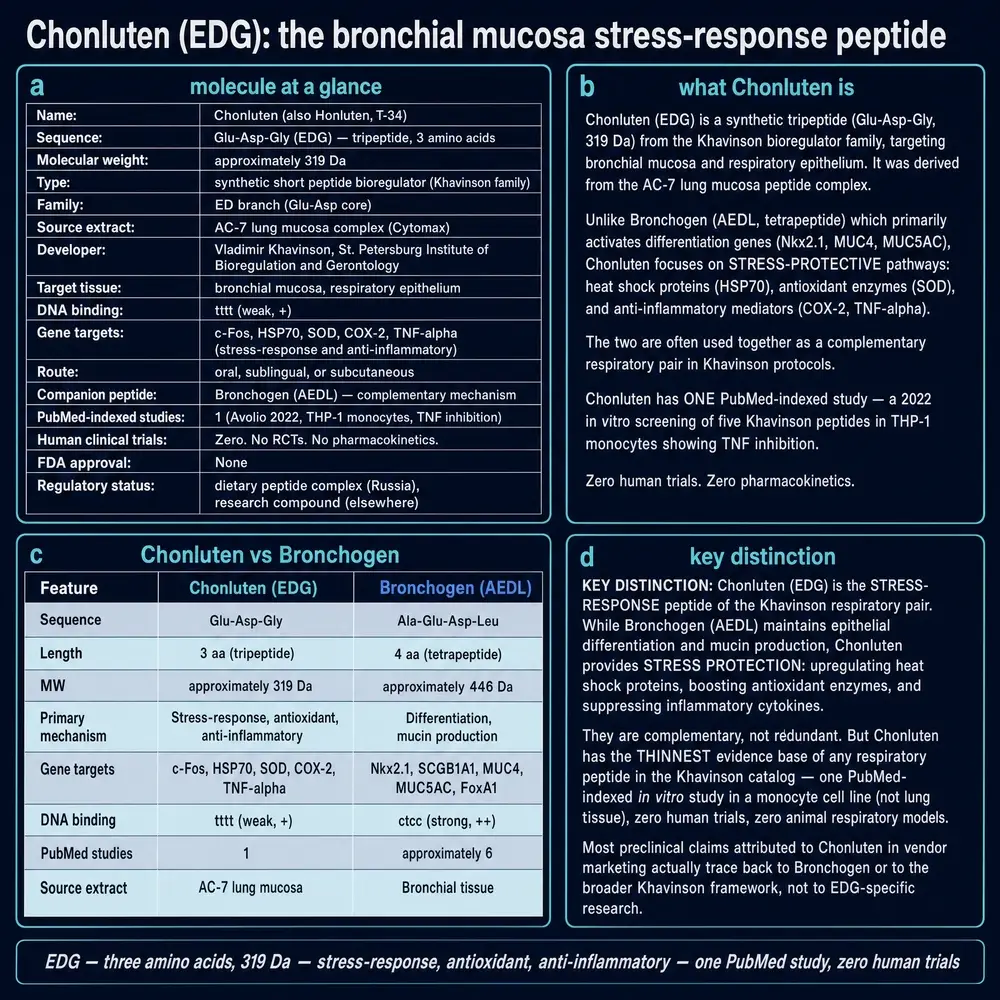
The plate above is the identity brief in one view: sequence and mass on the left, the Bronchogen twin on the right, and the thin indexed record under the trade name. Routes printed on commissioned artwork are catalogue channels; they are not instructions for use. The sections that follow unpack each claim and keep AEDL out of the EDG column.
Section 02What “bioregulator” is claiming
Most compounds in this monograph series are understood in one way. A peptide arrives at the outside of a cell, fits a receptor, and the receptor does the rest. Binding constants, displacement curves and receptor knockouts make the model fragile in a useful sense: it can fail in public. The Khavinson short peptides claim something else. Peptides of two to four residues are said to cross plasma and nuclear membranes and to act on DNA and chromatin directly—binding particular sequences, binding histones, altering which genes are available to be read (Fedoreyeva et al., 2011; Khavinson et al., 2021). There is no named receptor for Chonluten. In the class’s own framing, that is the point.
“Bioregulator” is not a pharmacological classification recognised outside this literature. It is a term of art belonging to one programme. It does not map onto a regulatory mechanism class, and in commercial material it often functions as a shelf label rather than as a tested claim. Within the literature the term names a coherent hypothesis: that tissue extracts contain short informational peptides, that those peptides can be synthesised, and that the synthetics reproduce organ-specific effects at low concentrations (Khavinson, 2002). The hypothesis is extraordinary. Extraordinary hypotheses are allowed. They are not excused from ordinary evidence.
Two generations matter. First came the tissue extracts—cytomedines, later marketed in Cytomax / Cytogen lines—prepared from animal organs. Then came chemically defined short peptides derived from those extracts by isolation or by design from amino-acid composition (Khavinson et al., 2021). For the bronchi, a Russian-language programme review states that high-sensitivity chromatography–mass spectrometry of the preparation Langopept identified both the tripeptide Glu-Asp-Gly (named Хонлутен / Chonluten) and the tetrapeptide Ala-Glu-Asp-Leu (named Бронхоген / Bronchogen) (Khavinson et al., 2020d). That is the discovery story this monograph will keep returning to. It is also the origin of the twin problem: two synthetics, one extract narrative, endless label confusion.
Falsifiability is the uncomfortable twin of the mechanism claim. Docking scores every ligand. Fluorescence quenching reports a constant for every interacting pair. Chromatin cytochemistry can always be described as a change. In the indexed Chonluten-specific record, no experiment is framed whose negative outcome would have counted against the tissue-specificity hypothesis. That is a description of how the literature has been written, not a verdict on whether the hypothesis is true—but it means a pile of positive abstracts is worth less than a pile count suggests.
Section 03Identity: Glu-Asp-Gly
Write the residues in order and most of the marketing fog clears. Chonluten is H-Glu-Asp-Gly-OH. The one-letter code is EDG. The average molecular mass is about 319.27 Da. The InChIKey on the PubChem and ChEBI records is DSPQRJXOIXHOHK-WDSKDSINSA-N (PubChem, 2026) (ChEBI, 2026). None of that requires believing a bioregulator theory. It is ordinary peptide chemistry.
Three collisions matter in practice. First, Bronchogen (AEDL) shares the bronchial assignment and often shares the same product page. Second, Crystagen (EDP) shares the Glu-Asp core and differs only at the third position; catalogues assign it to immune tissue, not lung. Third, bare searches for “EDG” or “Glu-Asp-Gly” hit protein motifs that have nothing to do with a Khavinson tripeptide. This monograph admits a hit only when short-peptide or bronchial-bioregulator context corroborates it.
Western research-chemical vendors typically sell a lyophilised powder labelled 10 mg or 20 mg per vial. Russian dietary-supplement channels sell oral capsules under the Cytogen-style brand. Those are different product forms of a claimed identical sequence. Neither form has a Western marketing authorisation as a medicine. The chemistry does not change with the packaging; the evidence required to support a claim does.
Section 04Langopept and the natural counterpart
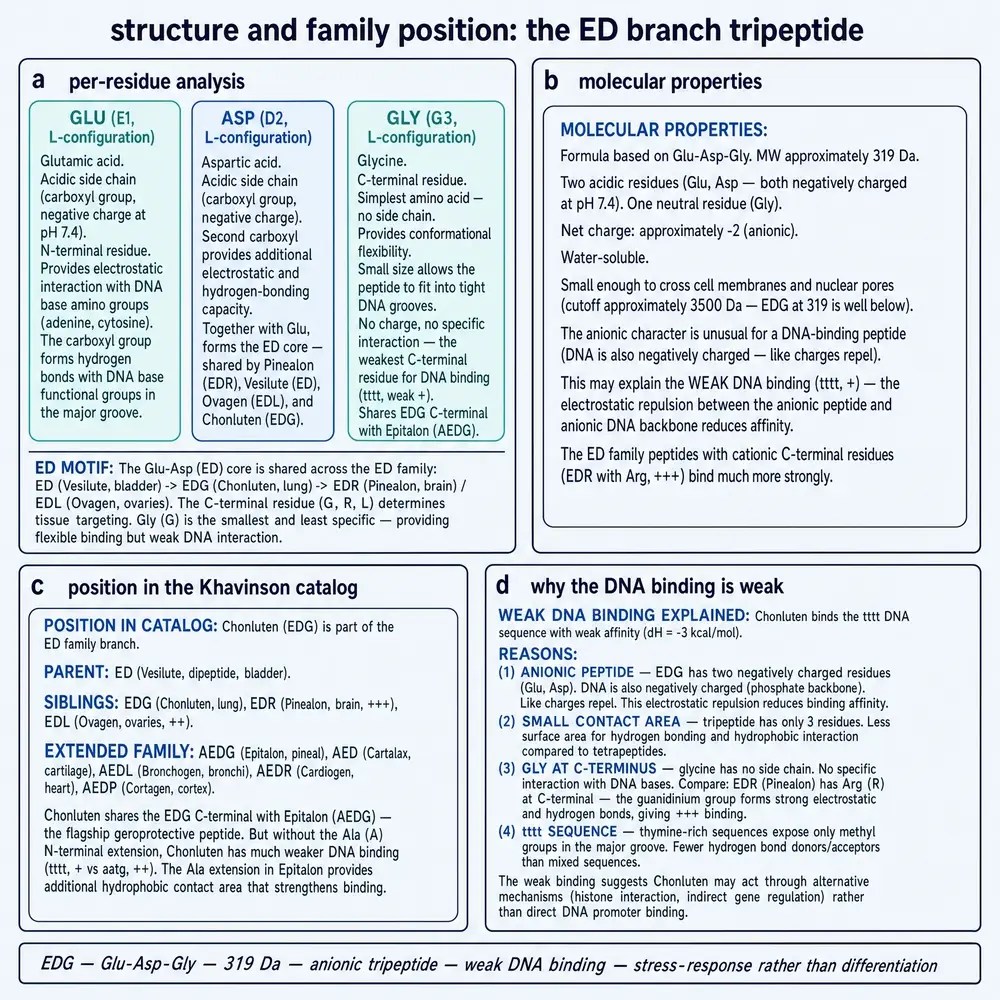
House style for this class requires a plain account of the extract that the synthetic is paired with. For Chonluten that extract story is Langopept—a bronchial peptide preparation in the Khavinson line. The 2020 Russian review states that HPLC-MS of Langopept revealed both EDG and AEDL, and that those sequences were then named Chonluten and Bronchogen (Khavinson et al., 2020d). A 2015 commercial leaflet simply lists CHONLUTEN® under “lungs and bronchi” (Garmonia leaflet, 2015). Catalogue pairing is not the same thing as a published isolation paper with spectra in an indexed journal.
Two epistemic traps sit here. The first is calling EDG “the active fragment” of Langopept. Isolation of a sequence from a complex does not, by itself, prove that the sequence carries the complex’s biological effects, and the same extract story also produced AEDL. The second is regulatory asymmetry: organ extracts and chemically defined synthetics often sit in different legal boxes even when marketing conflates them. This document treats Langopept as historical and catalogue context, not as a second clinical dataset for EDG.
The structure plate places EDG on the acidic Glu-Asp branch and marks Cartalax correctly as AED. Quantitative DNA-binding scores printed there are programme/plate statements; this corpus did not re-measure them. Taxorest and other bronchial brand names circulate in secondary literature as natural counterparts or related complexes. Where the primary corpus held for this project does not settle the naming map, the monograph refuses to invent one. The settled chemical object remains Glu-Asp-Gly.
Section 05Programme, people, and Langopept
The story does not begin with a lung clinic in Boston. It begins in late-Soviet biogerontology, when Vladimir Khavinson and colleagues at what became the St Petersburg Institute of Bioregulation and Gerontology argued that ageing and tissue decline could be addressed with short peptides derived from organ extracts (Khavinson, 2002). The programme’s own retrospectives date the work to the early 1970s. Over the following decades the group published on thymic, pineal, retinal, vascular and other preparations, then on the di-, tri- and tetrapeptides synthesised from those lines.
Vladimir Khatskelevich Khavinson is the central named figure. Collaborators who recur in the English-indexed respiratory papers include N. S. Linkova, B. I. Kuznik and others in the St Petersburg–Chita orbit; the 2022 THP-1 paper that actually prints the word Chonluten is a collaboration with Italian laboratories in Chieti (Avolio et al., 2022). That international co-authorship is real. It is still not independent replication by a laboratory that did not share reagents, framing or prior commitment to the class hypothesis.
For the bronchi specifically, the discovery claim in the Russian 2020 review is concrete: high-sensitivity chromatography–mass spectrometry of Langopept identified Glu-Asp-Gly, which received the name Хонлутен, and Ala-Glu-Asp-Leu, which received the name Бронхоген; both peptides were said to support restoration of functional activity, regeneration and resistance of bronchial tissue (Khavinson et al., 2020d). The same passage then describes Bronchogen’s regulation of differentiation genes (NKX2-1, SCGB1A1, SCGB3A2, FOXA1, FOXA2) and pathology-associated genes (MUC4, MUC5AC and related). Read carefully: that gene list is attached to Bronchogen in the Russian text, and the 2014 English Lung paper that measured those endpoints used ADEL/AEDL, not EDG (Khavinson et al., 2014). Chonluten’s distinct mechanistic ledger appears elsewhere, principally in the 2020 Molecules COVID review.
Context matters. The work grew inside a geroprotective research culture that treated short peptides as informational molecules rather than as classical receptor ligands. It produced registered Russian medicines in some lines (for example thymic preparations) and research-chemical / supplement products in others. Chonluten sits in the latter commercial pattern in Western channels. Understanding that institutional history does not validate any particular endpoint. It does explain why the literature is dense in one language community and thin in PubMed under the trade name.
What the open record does not show is also part of the history. There is no widely cited founding paper titled “Isolation of Glu-Asp-Gly from bronchial mucosa” in the major English indexes. The Langopept identification is carried in review prose and programme narrative. For a monograph that refuses to invent provenance, that means the discovery story is attested, programme-centred and incompletely transparent to outsiders—interesting, and incomplete.
Section 06Nuclear entry and class mechanism
Before bronchial genes, the class asks you to accept a prior claim: that ultrashort peptides can reach the nucleus. Fedoreyeva and colleagues reported that FITC-labelled short peptides—including epithalon, pinealon and testagen—produced nuclear and nucleolar fluorescence in HeLa cells, and that intact peptides quenched labelled oligonucleotides in sequence-dependent ways; bronchogen (Ala-Glu-Asp-Leu) was among the peptides discussed for preferred CNG motifs (Fedoreyeva et al., 2011). That paper does not name Chonluten. It supplies class mechanism context, not an EDG-specific nuclear-entry assay.
The 2021 systematic review restates the broader claim: short peptides of two to seven residues can penetrate nuclei, interact with histones and DNA, and modulate methylation and transcription across several kingdoms of life (Khavinson et al., 2021). Related programme papers describe short-peptide gene regulation and epigenetic marks during cellular ageing (Khavinson et al., 2016) (Ashapkin et al., 2015), and review peptide control of differentiation programmes across tissues (Khavinson et al., 2020b). EDG appears in that literature neighbourhood as one of many ultrashort sequences. Treat class mechanism as hypothesis scaffolding. Do not promote it into proof that Glu-Asp-Gly binds a particular bronchial promoter in vivo.
Section 07Bronchial epithelium and stress genes
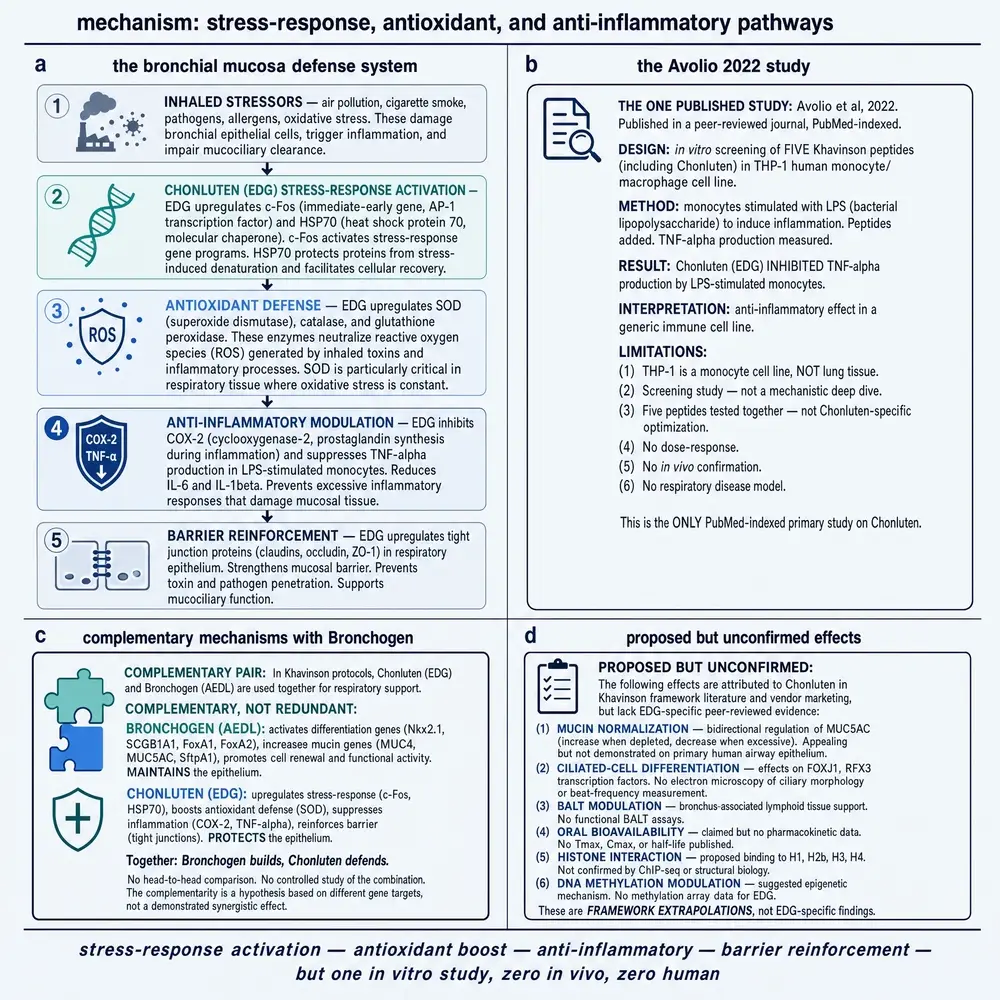
The cleanest English-language statement of an EDG-specific gene story sits in the 2020 COVID-oriented review. After distinguishing oral EDG (Chonluten) from oral AEDL (Bronchogen), the authors write that the stress-protective effect of the EDG tripeptide is associated with regulation of c-Fos, HSP70, antioxidant-system enzymes including SOD, COX-2 and TNF-α (Khavinson et al., 2020a). The same review assigns differentiation and mucin genes (Nkx2.1, SCGB1A1, SCGB3A2, FoxA1, FoxA2, MUC4, MUC5AC, SftpA1) to AEDL—the ledger measured in the 2014 Lung bronchial-epithelium paper (Khavinson et al., 2014).
That split is narratively tidy. It is also easy to vandalise. Secondary articles often print the 2014 mucin panel under a Chonluten heading. This monograph will not. If a primary full text naming EDG and measuring those mucin transcripts in the same experiment is produced later, the ledger can be updated. Until then, stress-gene claims travel with EDG review prose; differentiation/mucin claims travel with AEDL primary work.
Weight the 2014 paper correctly when you meet it in a Chonluten bibliography: it is essential reading for the twin, and a cautionary exhibit for this subject. Recency does not move mucin genes onto EDG. The mechanism plate keeps that split visible and marks cascade steps beyond the measured TNF endpoint as proposed or unconfirmed.
Section 08Monocytes, macrophages and the 2022 paper
The only PubMed-indexed paper that puts the word Chonluten in its abstract is Avolio et al., 2022, in the International Journal of Molecular Sciences. The design is a five-peptide panel—Epitalon, Vilon, Thymogen, Thymalin and Chonluten—applied to human THP-1 monocytes and to PMA-differentiated macrophages, with and without bacterial lipopolysaccharide (LPS).
What the paper reports, in substance: all five peptides modulated proliferative signalling, including increased tyrosine phosphorylation of mitogen-activated kinases; Chonluten, described as derived from bronchial epithelial cells, inhibited in vitro TNF production by monocytes exposed to LPS, framed as promoting TNF tolerance; all peptides reduced TNF and IL-6 in LPS-stimulated differentiated THP-1 macrophages; peptide pretreatment reduced adhesion of THP-1 cells to LPS-activated endothelial monolayers (Avolio et al., 2022). Those are immune-cell readouts in a leukaemia-derived line. They are not spirometry. They are not mucin gene arrays in primary bronchial epithelium.
How to weigh it. On the positive side, it is recent (2022), open access, names the trade name, and includes non-Russian co-authors. On the limiting side, Chonluten is one of five peptides sharing many endpoints; bronchial tissue is not the assay bed; concentrations are described as “standard” amounts known from prior culture work rather than as a full dose-response for EDG alone; and the originating institute remains on the author list. Freshness helps. It does not convert a monocyte panel into a COPD trial.
Section 09Animal models of obstructive lung disease
Russian experimental series on obstructive lung pathology report morphofunctional effects of “peptide therapy” on bronchial epithelium in rats (Kuzubova et al., 2015) (Titova et al., 2017). Those papers matter for the class and for Bronchogen-adjacent claims. They must be read with an identity gate: does the methods section name EDG, Chonluten, AEDL, Bronchogen, or a mixed peptide regimen? Where the abstract says only “peptide therapy,” this monograph will not invent a Chonluten attribution.
In vivo animal data would be the natural bridge between cell culture and human observation. For EDG specifically, the bridge in the open English record is thinner than the marketing implies. Prefer primary methods text over catalogue blurbs. Prefer named sequences over organ labels.
Section 10Human observations—cite, do not prescribe
The 2020 Molecules review states that oral administration of EDG tripeptide (Chonluten) and AEDL tetrapeptide (Bronchogen) is effective for bronchopulmonary pathology including COPD and chronic bronchitis with an asthmatic component; that oral EDG increased a physical-performance index and normalised functional state under low oxygen partial pressure; and that EDG enhanced the effectiveness of standard therapy in patients with chronic bronchitis with an asthmatic component (Khavinson et al., 2020a). Those sentences are the main human-facing claims attached to EDG in English.
What they are not: a randomised, controlled, prospectively registered trial report with CONSORT flow, baseline spirometry, and allocation concealment. The review cites prior work; it does not replace it. No ClinicalTrials.gov registration for Chonluten or EDG was found on query (ClinicalTrials.gov, 2026). This monograph therefore reports the review’s human statements as observations attributed by the originating school, not as established clinical efficacy.
Amounts, routes and schedules that appear in secondary protocol tables are not reproduced here as advice. Where a primary methods section states a study parameter, a future revision may quote that parameter as a study parameter. Recommending a human course is outside the remit of this series.
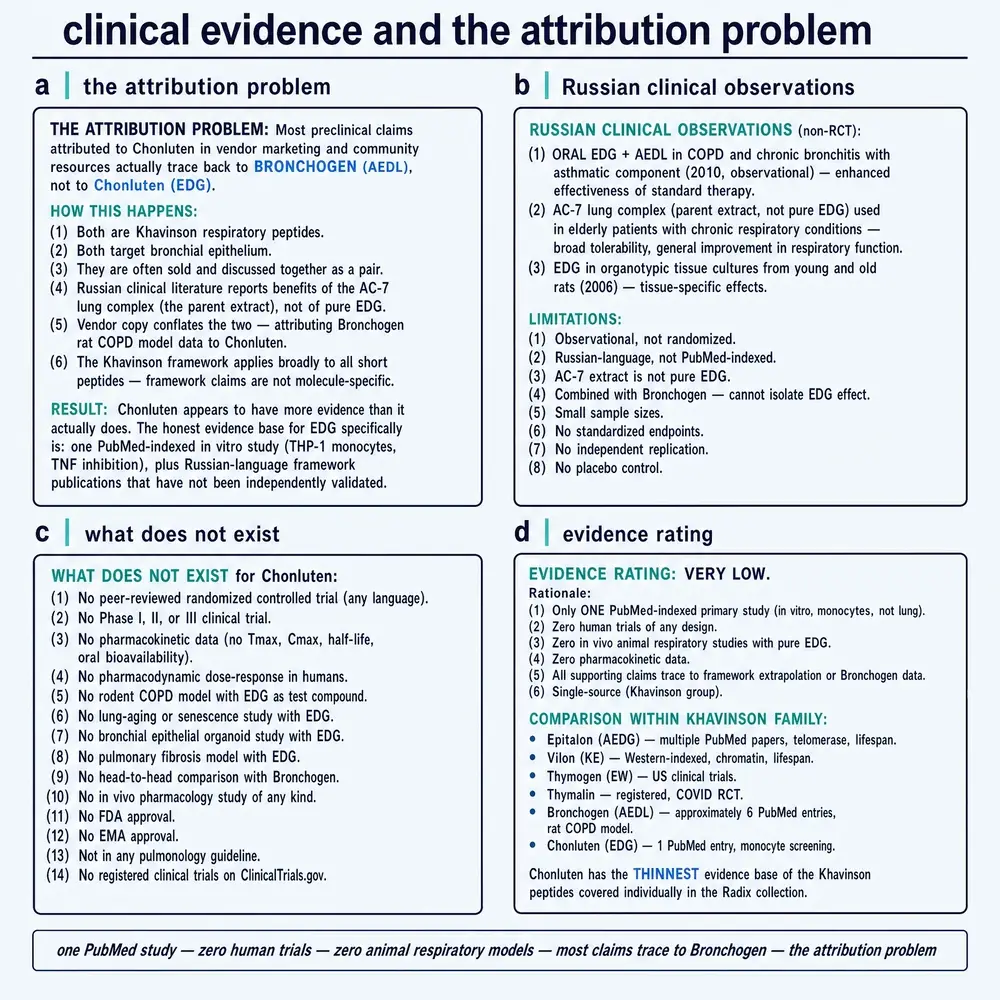
The evidence plate restates the attribution problem and the empty RCT, pharmacokinetics and registry boxes. Vendor conflation of AEDL data onto EDG is the same defect the Bronchogen monograph documents from the twin’s side.
Section 11Against its siblings
House style requires saying how this peptide differs from near neighbours. Versus Bronchogen (AEDL): same organ assignment, different length, different claimed gene ledger, frequent market conflation. Versus Crystagen (EDP): same Glu-Asp stem, different C-terminal residue, different tissue story. Versus Epitalon (AEDG): glycine terminus in common with EDG’s C-terminal glycine, but an N-terminal alanine and a pineal rather than bronchial assignment.
Transport is the newest computational chapter. A 2023 docking study of twenty-six ultrashort peptides at LAT1, LAT2 and PEPT1 binding sites includes EDG among sequences with favourable scores and notes peptides with N-terminal acidic residues among the stronger modelled ligands (Khavinson et al., 2023). Docking is not pharmacokinetics. It does not show that oral capsules deliver intact EDG to bronchial nuclei in humans. It does show that the programme is still generating structure-based hypotheses for how such peptides might enter cells.
What remains missing after the sibling tour: head-to-head bronchial assays that put EDG and AEDL in the same culture dish with the same endpoints; plasma stability curves; tissue distribution; and any registered clinical trial. Thinness, again, is not a side note. Demand the exact sequence on any vial that claims a bronchial bioregulator; EDG, AEDL and AEDG are different molecules.
Section 12How to weigh this
Recency and freshness deserve weight when they are not contradicted by a preponderance of evidence. For Chonluten the freshest English items—the 2020 review, the 2022 THP-1 paper, the 2023 transporter docking study—are useful. They are also still products of one research network and its collaborators. They do not overturn older AEDL primary data; they sit beside it. They do not create independent confirmation that did not exist in 2015.
Preponderance here means something slightly unusual: almost all affirmative mechanistic and clinical prose about EDG shares authorship, institute, or direct collaboration with the St Petersburg programme. That is not a conspiracy theory. It is a bibliometric fact, and it lowers the weight of a simple vote-count of positive abstracts. Absence of contradictory RCTs is not the same as presence of confirmatory ones.
In vitro results (THP-1 inflammation markers; review-cited stress genes) are more recent and more concrete than human outcome claims. Animal obstructive-lung papers need identity gating before they can be counted for EDG. Human statements in the 2020 review are the most consequential claims and the least independently verified. The weighing order this monograph adopts is therefore: chemistry settled; cell immune data suggestive and single-panel; bronchial gene split dependent on keeping AEDL out of the EDG column; human observations hypothesis-generating only.
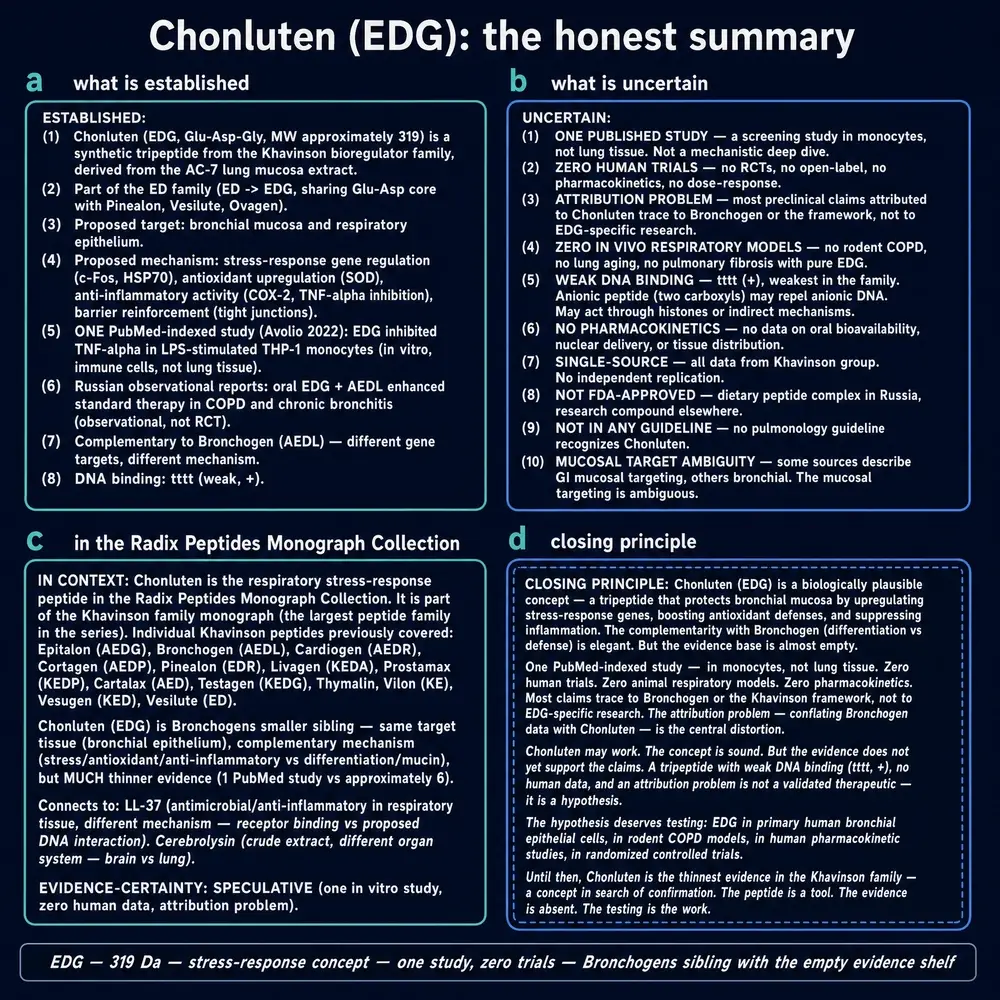
Oral bioavailability remains the quiet structural problem. A linear tripeptide of common L-amino acids is a substrate for peptidases. Docking to PEPT1 is a computer result, not a measured AUC. Until intact EDG is shown in relevant compartments after the routes people actually use, nuclear gene stories in bronchial epithelium remain a chain of unmeasured steps.
The weighing panel is a map of evidence structure, not a safety verdict. Recency helps; it does not invent independent confirmation. Together with the honest-summary plate above, it keeps chemistry settled and human claims provisional.
Section 13Open questions and evidence gaps
Several questions would change the shape of this document if answered well.
- Does a primary, indexed isolation paper with spectra establish EDG in Langopept without relying on review narration?
- In the same bronchial epithelial culture system, what does EDG do to the gene set AEDL was shown to move in 2014—and what does AEDL do to the stress-gene set attributed to EDG?
- What is the plasma half-life of intact EDG after oral and parenteral administration in any mammal?
- Can an independent laboratory, without shared reagents from the originating institute, reproduce the THP-1 TNF result?
- Does any prospectively registered, controlled human study using verified Glu-Asp-Gly report spirometry or exacerbation endpoints?
Until those questions move, Chonluten remains what the corpus shows it to be: a chemically defined tripeptide with a coherent programme story, a thin indexed literature under its trade name, a twin that constantly steals its headlines, and no basis in this series for recommending administration to any person.
A final weighing note on language. Catalogue pages speak of “lung support” and “bronchial bioregulation” as if those phrases named a measured clinical effect. In the indexed record they name a research programme’s assignment. The assignment may yet be vindicated by better trials. It has not been vindicated by the documents this project could read. Readers who need a decision about personal use will not find one here, because this series does not make that kind of decision.
What remains useful is the map. EDG is a real sequence. Langopept is the extract story. Avolio et al., 2022 is the trade-name paper. Khavinson et al., 2020a is the review that carries the oral observations and the stress-gene list. Khavinson et al., 2014 is the twin’s mucin paper and must stay on the twin’s shelf. Keep those objects separate and most of the secondary literature’s confusion dissolves.
Section 14Methods note
This monograph was compiled from local full-text assets held under Project 05 coexistence paths (South Beach Longevity Library dossiers, Bronchogen and Thymalin monograph corpora, Khavinson Cytomaxes full-text extracts) plus PubMed/PMC records retrieved 5 August 2026. Identity gating refused bare Glu-Asp-Gly protein-motif hits and refused to credit AEDL primary endpoints to EDG. Page counts and deduplication for the local corpus are recorded in INVENTORY_REPORT.md.
Figures are authored SVG emitted by build/make_figs.py using house colour tokens only. No third-party published figure has been reproduced. ClinicalTrials.gov was queried for Chonluten, EDG, Bronchogen, AEDL and related bioregulator terms on the compilation date.
Citation keys resolve through NCBI records where PMIDs exist; non-PubMed sources (Russian review extract, PubChem, ChEBI, ClinicalTrials.gov, catalogue leaflet) are listed explicitly in the reference apparatus. Where a claim rests on review prose rather than a methods-bearing primary paper, the sentence says so.
South Beach Longevity Research Monograph Series No. 78. Binding presentation standard: house style including section 8a (bioregulator class contract). Closest siblings: Bronchogen (No. 45) for the bronchial twin; Testagen for thin-literature bioregulator length. Science-DB key P208. Source project 05 — Therapeutic Peptide Research Library.
Section 15References
- Ashapkin VV, Linkova NS, Khavinson VKh, Vanyushin BF. Epigenetic mechanisms of peptidergic regulation of gene expression during aging of human cells Biochemistry (Mosc) 2015;80(3):310-22. PMID 25761685 · doi
- Avolio F, Martinotti S, Khavinson VK, Esposito JE, Giambuzzi G, Marino A et al.. Peptides Regulating Proliferative Activity and Inflammatory Pathways in the Monocyte/Macrophage THP-1 Cell Line Int J Mol Sci 2022;23(7). PMID 35408963 · doi · PMC8999041
- Fedoreyeva LI, Kireev II, Khavinson VKh, Vanyushin BF. Penetration of short fluorescence-labeled peptides into the nucleus in HeLa cells and in vitro specific interaction of the peptides with deoxyribooligonucleotides and DNA Biochemistry (Mosc) 2011;76(11):1210-9. PMID 22117547 · doi
- Khavinson V, Linkova N, Dyatlova A, Kuznik B, Umnov R. Peptides: Prospects for Use in the Treatment of COVID-19 Molecules 2020;25(19). PMID 32987757 · doi · PMC7583759
- Khavinson V, Linkova N, Diatlova A, Trofimova S. Peptide Regulation of Cell Differentiation Stem Cell Rev Rep 2020;16(1):118-125. PMID 31808038 · doi
- Khavinson VK, Linkova NS, Rudskoy AI, Petukhov MG. Feasibility of Transport of 26 Biologically Active Ultrashort Peptides via LAT and PEPT Family Transporters Biomolecules 2023;13(3). PMID 36979488 · doi · PMC10046148
- Khavinson VK, Popovich IG, Linkova NS, Mironova ES, Ilina AR. Peptide Regulation of Gene Expression: A Systematic Review Molecules 2021;26(22). PMID 34834147 · doi · PMC8619776
- Khavinson VK, Lin'kova NS, Tarnovskaya SI. Short Peptides Regulate Gene Expression Bull Exp Biol Med 2016;162(2):288-292. PMID 27909961 · doi
- Khavinson VKh, Tendler SM, Vanyushin BF, Kasyanenko NA, Kvetnoy IM, Linkova NS et al.. Peptide regulation of gene expression and protein synthesis in bronchial epithelium Lung 2014;192(5):781-91. PMID 25015171 · doi
- Khavinson VKh. Peptides and Ageing Neuro Endocrinol Lett 2002;23 Suppl 3:11-144. PMID 12374906
- Kuzubova NA, Lebedeva ES, Dvorakovskaya IV, Surkova EA, Platonova IS, Titova ON. Modulating Effect of Peptide Therapy on the Morphofunctional State of Bronchial Epithelium in Rats with Obstructive Lung Pathology Bull Exp Biol Med 2015;159(5):685-8. PMID 26468022 · doi
- Titova ON, Kuzubova NA, Lebedeva ES, Preobrazhenskaya TN, Surkova EA, Dvorakovskaya IV. [ANTIINFLAMMATORY AND REGENERATIVE EFFECT OF PEPTIDE THERAPY IN THE MODEL OF OBSTRUCTIVE LUNG PATHOLOGY] Ross Fiziol Zh Im I M Sechenova 2017;103(2):201-8. PMID 30199201
- Khavinson VKh, et al.. Peptide medicines: past, present, future (Russian review; Langopept HPLC-MS identification of EDG / Хонлутен and AEDL / Бронхоген). Russian-language review held in project corpus as 2020_khavinson_peptide_medicines.txt. States that chromatography–mass spectrometry of the bronchial peptide preparation Langopept identified Glu-Asp-Gly (EDG), named Хонлутен, and Ala-Glu-Asp-Leu (AEDL), named Бронхоген. Resolved 5 August 2026.
- National Center for Biotechnology Information. PubChem Compound Summary CID 194641, glutamyl-aspartyl-glycine. PubChem, Bethesda MD. Molecular formula C11H17N3O8, average mass 319.27, InChIKey DSPQRJXOIXHOHK‑WDSKDSINSA‑N. CAS 75007-24-8. Queried 5 August 2026. link
- European Bioinformatics Institute. ChEBI CHEBI:162780 — Glu-Asp-Gly. Formula C11H17N3O8, average mass 319.270, monoisotopic mass 319.10156, CAS 75007-24-8. Queried 5 August 2026. link
- United States National Library of Medicine. ClinicalTrials.gov intervention search for Chonluten, EDG, Bronchogen, AEDL and peptide bioregulators. No registration of Chonluten or EDG tripeptide returned. Queried 5 August 2026. link
- Garmonia / peptide bioregulator catalogue. CHONLUTEN® listed for lungs and bronchi. Commercial leaflet held in project corpus as 2015_garmonia_leaflet.txt. Catalogue assignment only; not a clinical trial report. Resolved 5 August 2026.
Continue exploring