
Pancragen Lys-Glu-Asp-Trp — four residues assigned to the pancreas, a DNA-test namesake that is not a peptide, and one of the denser files in the Khavinson cytogen line
Most short peptides in this family arrive with a thin English file and a thick catalogue page. Pancragen is different in degree, not in kind. Indexed abstracts describe streptozotocin-diabetic rats, aged rhesus monkeys on glucose-tolerance tests, elderly people with type 2 diabetes, and pancreatic cells in culture whose transcription-factor panels shift when the tetrapeptide is present. What the local research library still does not hold are most of those primary PDFs. This monograph reads what can be verified, weighs recency against a single-school literature, and refuses to turn study parameters into advice.
Section 01A pancreas peptide with a DNA-test shadow
Start with the wrong object, because search engines will hand it to you first. PancraGEN and similar spellings brand hereditary pancreatic-cancer gene panels. They have nothing to do with a four-amino-acid research peptide. The right object is sold and discussed as Pancragen: lysine–glutamate–aspartate–tryptophan, coded KEDW, often written in the Russian experimental literature as the C-terminal amide Lys-Glu-Asp-Trp-NH2 (Khavinson et al., 2007; Khavinson et al., 2010). Science-DB key P214. In the Cytogen naming convention it is the pancreas entry—the sibling of Bronchogen for lung, Cartalax for cartilage, Testagen for testis, Vesugen for vessels.
What makes Pancragen worth a full monograph is not marketing density. It is that, among Khavinson short peptides, this one has a comparatively thick trail in PubMed: morphology and glucose work in diabetic rats (Kvetnoi et al., 2007; Khavinson et al., 2007), signalling and differentiation work in ageing human pancreatic cultures (Khavinson et al., 2012; Khavinson et al., 2013), endocrine-pancreas work in old rhesus monkeys including a glimepiride comparator arm (Goncharova et al., 2014; Goncharova et al., 2015), and a Kiev gerontology paper in elderly people with type 2 diabetes that reports carbohydrate-metabolism indices alongside a melatonin observation (Korkushko et al., 2011). A 2015 biophysical paper—not in PubMed, but heavily cited by later open reviews—argues that KEDW binds DNA near sequences found in pancreatic gene promoters (Khavinson et al., 2015; recapitulated in Khavinson et al., 2021).
Every experimental result below is labelled by study type in the sentence that reports it: human cells in culture, rat in vivo, non-human primate, clinical observation, computational model, biophysical assay. Amounts and schedules appear only as parameters of published studies. This document does not recommend human use of Pancragen, Suprefort, Pankrapept, or any dose pattern for any person.
That denser file still has a hard edge. Almost none of those primary articles are retained as full text in the Project 05 library. The standard dossier for P214 is an empty template that even links the wrong melatonin paper. ClinicalTrials.gov returns no interventional trial under these names (ClinicalTrials.gov, 2026). No major Western regulator has authorised Pancragen as a medicine. Independent laboratories outside the originating network have not published confirmatory randomised trials. Density of abstracts is not the same thing as density of settled evidence.
So the subject of this monograph includes both facts at once: Pancragen is one of the better-documented cytogens in English indexes, and its documentation is still a single-school, partly paywalled, partly abstract-only record that must not be narrated as clinical proof. Put that in the first section, not the last.
Section 02What “bioregulator” is claiming
Most compounds in this monograph series are understood in one way. A peptide arrives at the outside of a cell, fits a receptor, and the receptor does the rest. Binding constants, displacement curves and receptor knockouts make the model fragile in a useful sense: it can fail in public. The Khavinson short peptides claim something else. Peptides of two to four residues are said to cross plasma and nuclear membranes and to act on DNA and chromatin directly—binding particular sequences, binding histones, altering which genes are available to be read (Fedoreyeva et al., 2011; Fedoreyeva et al., 2013; Khavinson et al., 2021). There is no named cell-surface receptor for Pancragen. In the class’s own framing, that is the point.
“Bioregulator” is not a pharmacological classification recognised outside this literature. It is a term of art belonging to one programme. It does not map onto a regulatory mechanism class, and in commercial material it often functions as a shelf label rather than as a tested claim. Within the literature the term names a coherent hypothesis: that tissue extracts contain short informational peptides, that those peptides can be synthesised, and that the synthetics reproduce organ-specific effects at nanomolar and lower concentrations (Khavinson, 2002; Khavinson et al., 2021). The hypothesis is extraordinary. Extraordinary hypotheses are allowed. They are not excused from ordinary evidence.
Two generations matter. First came the tissue extracts—cytomedines, later marketed in Cytomax / Cytogen lines—prepared from animal organs. Then came chemically defined short peptides derived from those extracts by isolation or by design from amino-acid composition. Thymogen was isolated by HPLC from Thymalin; Epitalon was designed from Epithalamin’s bulk composition rather than sequenced out of it. Those are different epistemic objects. For Pancragen, a 2020 Russian narrative states that KEDW was identified in the pancreatic preparation Pankrapept by sensitive chromatography–mass spectrometry and then named Панкраген (Khavinson et al., 2020). That is an isolation claim. The local library does not hold the primary isolation paper that would let a second laboratory repeat the chromatography. Section 04 returns to that gap and refuses to close it with a supplier’s phrase.
Falsifiability is the uncomfortable twin of the mechanism claim. Docking scores every ligand. Fluorescence quenching reports a constant for every interacting pair. Gene-panel immunocytochemistry can always be described as a change. In the indexed Pancragen-specific record, negative outcomes that would have counted cleanly against the pancreas-assignment hypothesis are scarce. That is a description of how the literature has been written, not a verdict on whether the hypothesis is true—but it means a pile of positive abstracts is worth less than a pile count suggests.
Section 03Identity: Lys-Glu-Asp-Trp
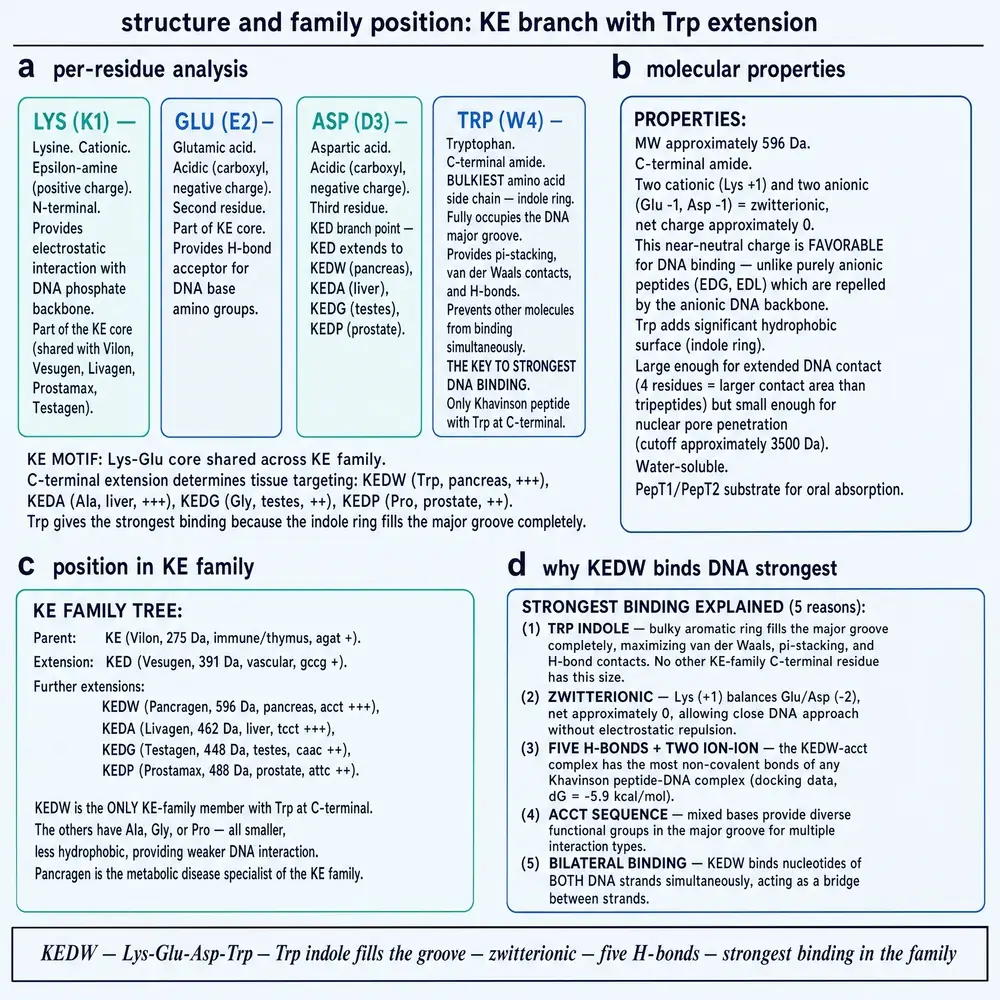
Write the molecule without the brand first. Four L-amino acids in order: lysine, glutamic acid, aspartic acid, tryptophan. One-letter code KEDW. Systematic free-acid name H-Lys-Glu-Asp-Trp-OH. PubChem carries a matching free-acid record as CID 68452887 with formula C26H36N6O9 and an approximate relative molecular mass of 576.6 (PubChem, 2026). Several experimental abstracts instead specify the C-terminal amide Lys-Glu-Asp-Trp-NH2 (Khavinson et al., 2007; Khavinson et al., 2010). Free acid and amide are not the same chemical object. This monograph treats “Pancragen / KEDW” as the programme name covering both writings in the literature, and flags the amide explicitly when a cited abstract does.
The KE-family neighbourhood matters for identity hygiene. Strip one residue and you have Vesugen (KED). Change the C-terminus from tryptophan to glycine and you have Testagen (KEDG). Change the N-terminus from lysine to alanine and you have Epitalon (AEDG). Those near-neighbours appear in the same review tables that list KEDW among histone-binding and differentiation-modulating ultrashort peptides (Khavinson et al., 2021). A hit on “Lys-Glu-Asp” alone is not a Pancragen hit. A hit on Pinealon’s EDR is not a Pancragen hit. The admission rules in this project’s identity module enforce that strip before any inventory count is trusted.
Catalogue chemistry is messier than PubChem. Vendor pages circulate CAS strings and “Pancreas K” synonyms that the local PubChem cache for P214 historically returned as not-found under the trade name. Structure-readiness audits in the Radix library have flagged sequence confirmation as needing primary reconciliation before exact-structure artwork is treated as settled. This monograph therefore uses the residue string and the programme name; it does not pretend a single registry record has closed every catalogue discrepancy.
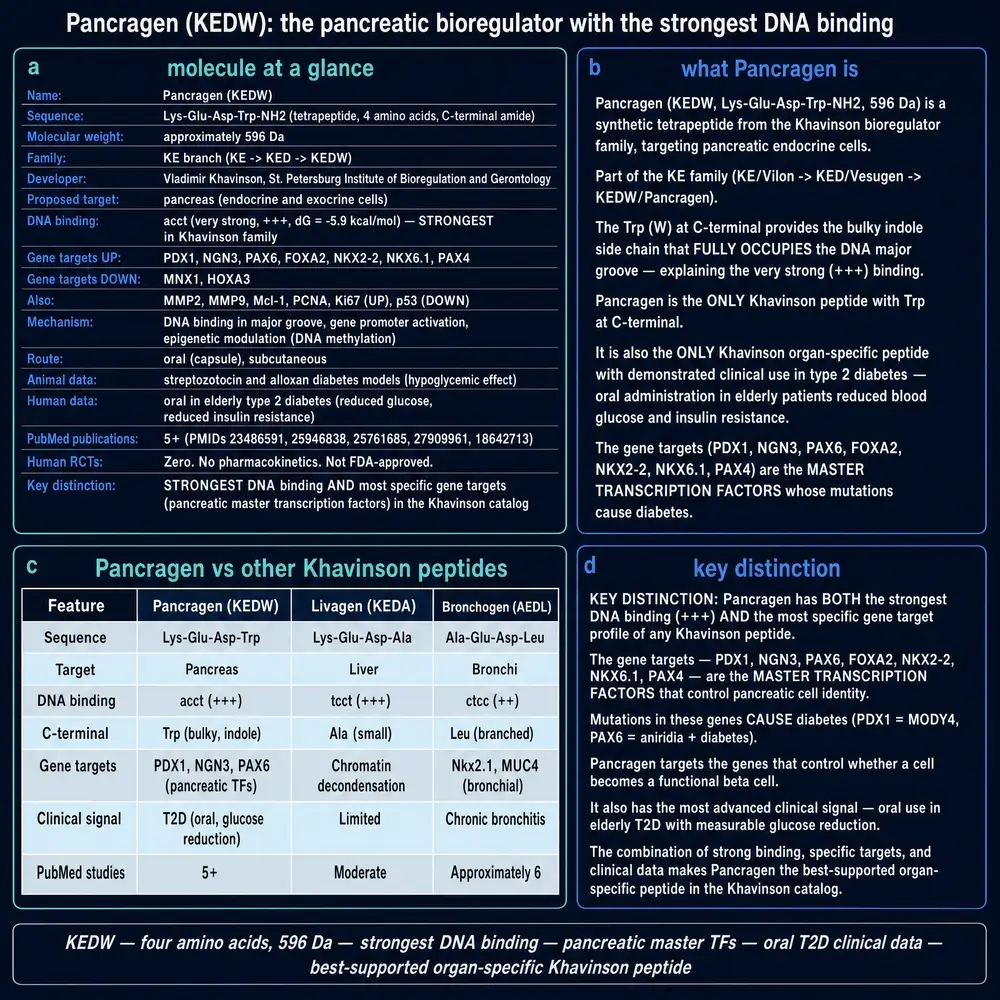
PancraGEN gene panels are not peptides. KED is Vesugen. EDR is Pinealon. KEDG is Testagen. Free-acid KEDW and amidated KEDW-NH2 are written interchangeably in secondary sources—check the primary abstract before treating mass or formula as locked.
Section 04Pankrapept, Suprefort, and the parent-extract problem
House style section 8a.2 requires every bioregulator monograph to name the natural peptide-complex counterpart and to say what is settled about the relationship. For Pancragen the extract side of the ledger is usually given as a bovine (or cattle) pancreas polypeptide preparation. The 2020 Russian narrative names that preparation Pankrapept and states that sensitive chromatography–mass spectrometry identified Lys-Glu-Asp-Trp inside it, after which the tetrapeptide received the name Pancragen (Khavinson et al., 2020). In Cytomax commercial pairing, the pancreatic complex is often sold as Suprefort, with Pancragen positioned as the defined Cytogen. Those two names—Pankrapept in the scientific narrative, Suprefort on the extract shelf—should not be silently fused into one object without a primary paper that says they are the same manufacturing lineage.
Even if the isolation story is taken at face value, isolation is not the same as proving that the tetrapeptide is “the” active principle of the extract. Extracts are mixtures. A detected tetrapeptide may be abundant, scarce, artifactual, or one of several active species. The programme’s later move—synthesising KEDW and testing the synthetic in diabetes models and ageing cell cultures—is the right experimental response to that ambiguity. It still leaves open whether oral capsules of a complex and vials of a synthetic tetrapeptide are pharmacologically interchangeable. This monograph does not call KEDW “the active fragment of Suprefort.” It calls KEDW a chemically defined peptide that the programme associates with a pancreatic extract lineage, and it keeps the association labelled as programme-claimed until a second laboratory’s isolation note exists in the file.
Regulatory asymmetry follows the same split. In Russian commercial channels the cytogen peptides have been sold as biologically active supplements. In Western research-chemical channels Pancragen appears as lyophilised powder labelled for laboratory use. Neither channel is a substitute for a marketing authorisation, and neither converts an abstract into a label claim this document will repeat as advice.
Section 05Programme, people, and the open literature
The discoverer story is not a lone-garage invention. It belongs to a late-Soviet and post-Soviet research programme associated above all with Vladimir Kh. Khavinson at what became the St Petersburg Institute of Bioregulation and Gerontology, Northwestern Branch of the Russian Academy of Medical Sciences. From the 1970s the group worked with organ extracts they called cytomedines—tissue-specific peptide complexes prepared from animal organs and tested for restorative effects in ageing and pathology (Khavinson, 2002; Khavinson et al., 2020). The intellectual climate mattered: peptide regulation was a live Soviet physiological theme; gerontology was institutionally supported; and the practical aim was often a preparation that could be given to people, not only a mechanism paper for other laboratories.
Context for a common reader: the pancreas is both an enzyme factory and a hormone factory. Its islets release insulin and glucagon; its acinar tissue releases digestive enzymes. Type 2 diabetes and impaired glucose tolerance become common with age partly because islet function and insulin sensitivity drift. A research group that believed every organ broadcasts short informational peptides would eventually make a pancreas entry. Pancragen is that entry. The claim is not that the peptide is insulin. The claim is that a tetrapeptide can nudge the gene programmes that keep pancreatic cells looking and acting like pancreatic cells.
The English-indexed experimental trail begins in earnest in 2007. Two Bulletin of Experimental Biology and Medicine papers introduce tetrapeptide pancragen / pancragene in rats with experimental diabetes: one emphasises functional morphology of pancreatic tissue (Kvetnoi et al., 2007); the other reports effects on blood glucose and mesenteric capillary adhesion and permeability after streptozotocin (Khavinson et al., 2007). A 2010 note evaluates Lys-Glu-Asp-Trp-NH2 across ontogeny and streptozotocin diabetes using apoptosis-related metabolic parameters (Khavinson et al., 2010). Parallel Russian patent and registration activity in the mid-2000s is cited in later programme narratives; the local library does not treat those patents as biological evidence.
The early 2010s widen the species and the endpoints. In Kiev, Korkushko and colleagues report carbohydrate-metabolism indices in older adults with type 2 diabetes in a paper that also measures nocturnal melatonin and frames pineal–metabolic coupling (Korkushko et al., 2011). In St Petersburg culture work, ageing human pancreatic cells show shifts in differentiation markers and in a panel of functional and apoptotic signals after the tetrapeptide (Khavinson et al., 2012; Khavinson et al., 2013). In Sochi primatology, Goncharova and colleagues study old female rhesus monkeys: first documenting recovery of glucose disappearance and insulin/C-peptide dynamics (Goncharova et al., 2014), then comparing Pancragen with the sulfonylurea glimepiride on impaired glucose tolerance (Goncharova et al., 2015). Those primate abstracts are among the strongest preclinical cards in the cytogen deck—small n, same collaborative network, but a real comparator and a relevant species.
Mechanism catches up in print in 2015. Khavinson, Tendler, Kasyanenko and colleagues report that KEDW interacts with DNA and regulates gene expression, associating the peptide with the sequence motif ACCT in promoters of genes tied to pancreatic cell function (Khavinson et al., 2015). That paper is not in PubMed; it is the hinge on which the 2021 Molecules systematic review hangs its KEDW paragraphs (Khavinson et al., 2021). The 2020 Russian medicines narrative then folds discovery, alloxan-diabetes lethality reduction, and the PDX1/NGN3/PAX4 gene list into one programme history (Khavinson et al., 2020). Open reviews in 2022–2023 keep repeating the islet gene panel and add class facts about ultrashort-peptide stability and transporter docking (PMID 35457077; PMID 35887081; PMID 36979488; PMID 37435573).
What this history is not: a Western drug-discovery arc with IND-enabling toxicology, multi-centre RCTs, and a label. What it is: a coherent institutional story in which a pancreas extract suggested a tetrapeptide, the tetrapeptide was synthesised, and a collaborating network tested it in the models that network already knew how to run. Understanding that institutional shape is part of reading the evidence, not an ad hominem dismissal of it.
Section 06DNA, histones, and the islet gene set
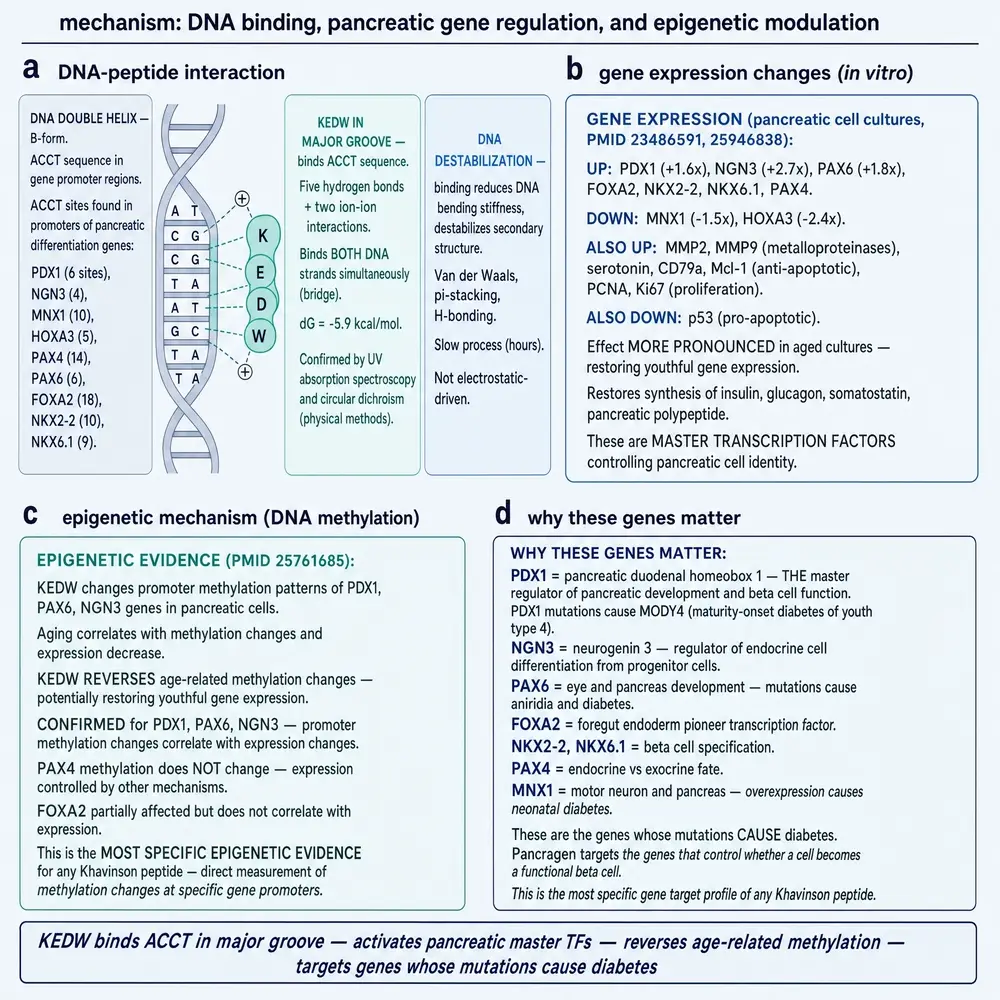
If Pancragen has a signature mechanism claim, it is this: the tetrapeptide reaches the nucleus, engages DNA and histones, and shifts expression of genes that maintain pancreatic endocrine—and in some reports acinar—identity. The 2021 Molecules systematic review is the best open full text for that claim. It places KEDW among peptides (EDR, AEDG, AEDL, AEDR, KEDG) that bind histone proteins H1, H2B, H3 and H4 and thereby alter transcription availability at promoter zones (Khavinson et al., 2021). Separately it reports that KEDW increases expression of PDX1, NGN3, MNX1, PAX6, FOXA2, NKX2-2, NKX6.1, HOXA3 and PAX4—genes a pancreas biologist recognises as part of the islet developmental and maintenance toolkit (Khavinson et al., 2021, citing the 2015 Am J Biomed Sci DNA paper).
For a non-specialist: PDX1 is a master transcription factor for pancreatic development and beta-cell identity; PAX4 and PAX6 help specify islet lineages; FOXA2 and NKX-family factors sit in the same regulatory neighbourhood. If a tiny peptide really raised that panel in aged cells, the biological story would be “restore the writing programme,” not “inject insulin.” That is an interesting story. It is also a story whose keystone 2015 biophysical paper is still missing from the local full-text shelf. This monograph therefore credits the gene list as programme-reported and review-recapitulated, not as independently re-measured here.
Class-adjacent papers add supporting texture without proving pancreas specificity. Ultrashort-peptide reviews note hydrolysis resistance for KEDW relative to some siblings in saline and related media—longer than a naive protease panic suggests (PMID 35887081). Transporter-docking work includes KEDW-NH2 among ultrashort peptides scored against LAT and PEPT systems (PMID 36979488). Docking is not pharmacokinetics. Fluorescence and modelling are not the same as measuring intact peptide in pancreatic interstitial fluid after oral or intramuscular administration. Section 11 returns to that hole.
Section 07Rats with experimental diabetes
The first English experimental layer is rodent diabetes. In Wistar rats with streptozotocin-induced diabetes, oral pancragen was reported to produce a pronounced hypoglycaemic effect during treatment, while intramuscular pancragen normalised adhesion of mesenteric capillary endothelium without changing capillary permeability (Khavinson et al., 2007, PMID 18642713). A companion morphology paper on tetrapeptide “pancragene” reported regulatory effects on pancreatic tissue structure and function in diabetic rats (Kvetnoi et al., 2007, PMID 18225766). A 2010 note framed Lys-Glu-Asp-Trp-NH2 as an endogenous tetrapeptide and evaluated apoptotic metabolic parameters across ontogeny and streptozotocin diabetes as a rapid-ageing model (Khavinson et al., 2010, PMID 21246099). The 2020 Russian narrative adds an alloxan-diabetes detail: tetrapeptide administration nearly halved lethality and normalised blood glucose in that model (Khavinson et al., 2020).
Read those sentences as study reports, not as a dosing manual. Streptozotocin and alloxan destroy beta cells by design; they are useful, ugly models. Route mattered in the 2007 capillary paper: oral and intramuscular arms did different jobs in the abstract’s telling. Sample sizes, blinding, and full glucose curves are not reconstructable from the abstracts alone. The consistent directional claim across this tier is homeostatic—lower glucose, quieter endothelial adhesion, preserved morphology—inside the originating network’s rodent programme.
Section 08Human pancreatic cells in culture
Culture work is where the differentiation story becomes specific. In ageing pancreatic cell cultures, pancragen was reported to stimulate expression of acinar differentiation factors (Pdx1, Ptf1a) and islet factors (Pdx1, Pax6, Pax4, Foxa2, Nkx2.2) in both “young” and “aged” cultures (Khavinson et al., 2013, PMID 23486591). A related Advances in Gerontology paper on H-Lys-Glu-Asp-Trp-NH2 in aged human pancreatic cells reported increased MMP2, MMP9, serotonin, CD79α, anti-apoptotic Mcl1, and proliferation markers PCNA and Ki67, with decreased pro-apoptotic p53 (Khavinson et al., 2012, PMID 23734516). The authors explicitly link that signalling pattern to clinical observations in elderly patients with type 2 diabetes—a bridge the clinical section must not over-walk.
In-vitro human cells are a real evidence tier. They are also the tier most vulnerable to concentration artifacts, medium effects, and antibody-panel tourism. Nanogram-per-millilitre claims appear in secondary summaries; the primary abstracts retained here do not always print those concentrations. Treat the culture tier as mechanism-consistent with the DNA/gene story, not as proof that a swallowed capsule will rewrite islets in an elderly person.
Section 09Against its siblings
House style section 8a.4b asks what is specific to this peptide versus the class. KEDW shares histone-binding company with AEDG, EDR, AEDL, KEDG and AEDR (Khavinson et al., 2021). Nuclear entry is a class motif (Fedoreyeva et al., 2011). Transport docking is a class motif (PMID 36979488). What is more Pancragen-specific in the indexed file is the endpoint choice: pancreatic transcription-factor panels, diabetic rodent glucose and morphology, primate glucose tolerance, and elderly carbohydrate indices. Sibling peptides have their own organ scripts—Testagen’s bird thyroid work, Livagen’s lymphocyte chromatin work, Vesugen’s vascular framing. Head-to-head assays in which KEDW, KEDG and AEDG are run on the same islet preparation with the same readout remain scarce in PubMed. Organ assignment is therefore still partly a matter of which experiments the programme chose to publish, not only of which residue nature dictated.
Section 10Aged monkeys and elderly humans
Non-human primates close a gap rodents cannot. In old female rhesus monkeys, baseline glucose tolerance already differed from young animals: slower glucose disappearance and higher early insulin and C-peptide peaks after a standard glucose load (Goncharova et al., 2014, PMID 25946840). After intramuscular Pancragen at 50 µg per animal per day for ten days—a study parameter, not a recommendation—old monkeys showed faster glucose disappearance and normalised insulin and C-peptide dynamics; the recovering effect partially persisted three weeks after discontinuation (Goncharova et al., 2014). A follow-up compared five old females on Pancragen (0.05 mg per animal per day intramuscularly for ten days) with four on oral glimepiride (4 mg per animal per day for ten days) (Goncharova et al., 2015, PMID 28509500). Both lowered basal glucose; Pancragen normalised insulin and C-peptide in a pattern the authors read as restored tolerance, while glimepiride produced a stronger, more delayed hypoglycaemia and stimulated C-peptide without a significant insulin effect. Small numbers. Same network. Still one of the most informative preclinical designs in the cytogen literature because it uses aged primates and a licensed comparator.
The elderly and primate papers report study outcomes inside a research programme. They do not authorise this monograph to recommend that any person take Pancragen for diabetes, pancreatitis, insulin resistance, or longevity. Standard diabetes care is outside this document’s remit and is not displaced by a tetrapeptide abstract.
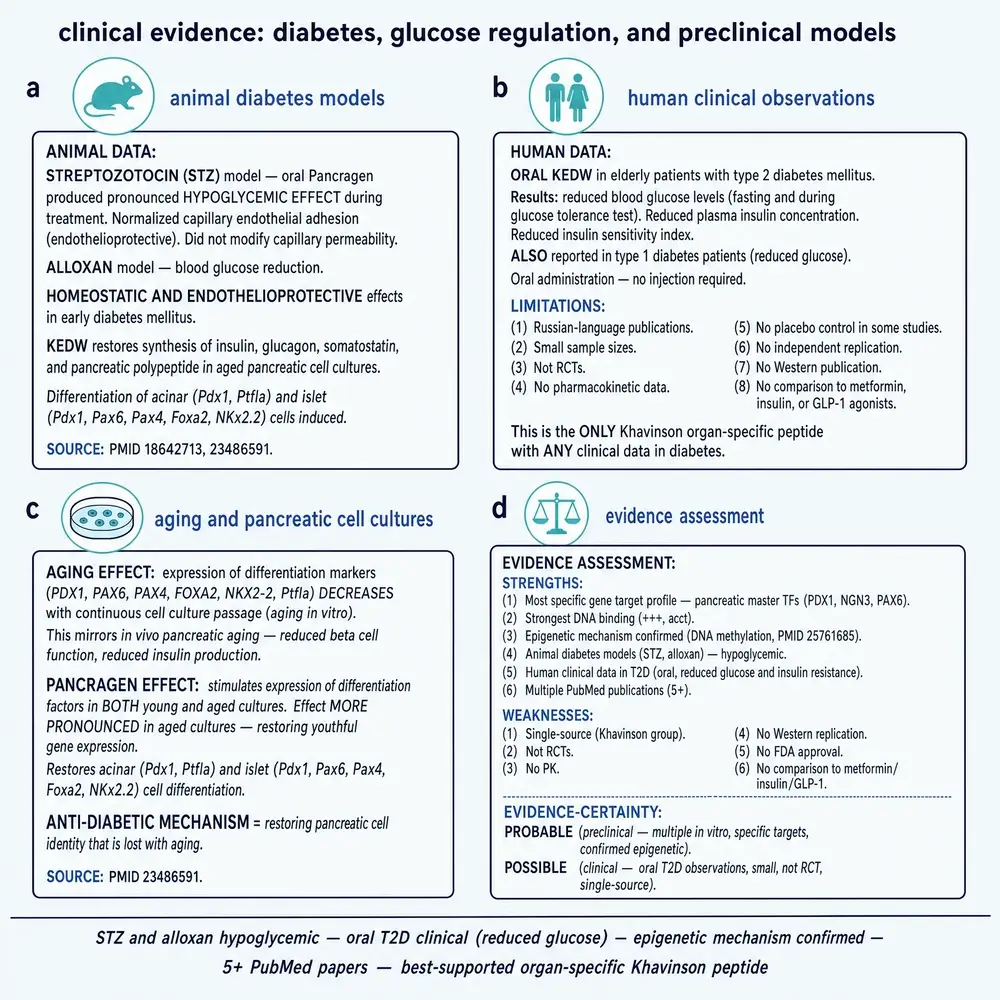
Human evidence exists and must be weighed without ceremony. Korkushko et al. (2011, PMID 22448364) examined thirty healthy older persons and thirty-three patients with type 2 diabetes. Nocturnal melatonin production was reported as markedly reduced in the diabetes group. In patients receiving pancragen, the paper reports decreased fasting glucose, improved standard glucose-tolerance values, and reduced plasma insulin and insulin-resistance index; patients not receiving pancragen showed no such carbohydrate-metabolism changes. The authors interpret pineal dysfunction as a contributor to insulin resistance and describe pancragen as a promising approach to correction in the elderly. That is their conclusion in a gerontology journal from the collaborating network. It is not a randomised, double-blind, multi-centre trial; allocation and concomitant therapy details are not fully recoverable from the abstract; and melatonin is a confounder the paper itself puts in the foreground.
A non-PubMed 2010 paper indexed on the compound page claims efficacy of Pancragen peptide in elderly patients with type 2 diabetes (Ivko et al., 2010). Until that full text sits in the library, this monograph treats it as a bibliographic lead, not as a second independent clinical pillar. ClinicalTrials.gov lists no peptide trial under Pancragen or KEDW (ClinicalTrials.gov, 2026).
Section 11Transport, pharmacokinetics, and what is missing
Between a culture dish and a human pancreas lies everything pharmacology usually demands: absorption, distribution, intact-peptide half-life, metabolites, tissue exposure, dose–response, and safety in adequate numbers. For Pancragen those layers are largely absent from major indexes. Transporter docking suggests possible LAT/PEPT engagement for KEDW-NH2 (PMID 36979488). Hydrolysis-resistance notes suggest the peptide is not instantly shredded in buffer (PMC9323678). Neither substitutes for measured plasma or pancreatic concentrations after a defined route. Oral cytogen capsules and research lyophilisates are different pharmaceutical objects; bridging data are not in the open file assembled here.
Also missing: independent Western replication of the islet gene panel; a modern randomised human trial with pre-specified glycaemic endpoints; carcinogenicity and long-term safety packages recognisable to ICH standards; and a clear public reconciliation of free-acid versus amide drug substance. Those absences do not erase the abstracts. They cap how far a careful reader can carry them.
Section 12How to weigh this
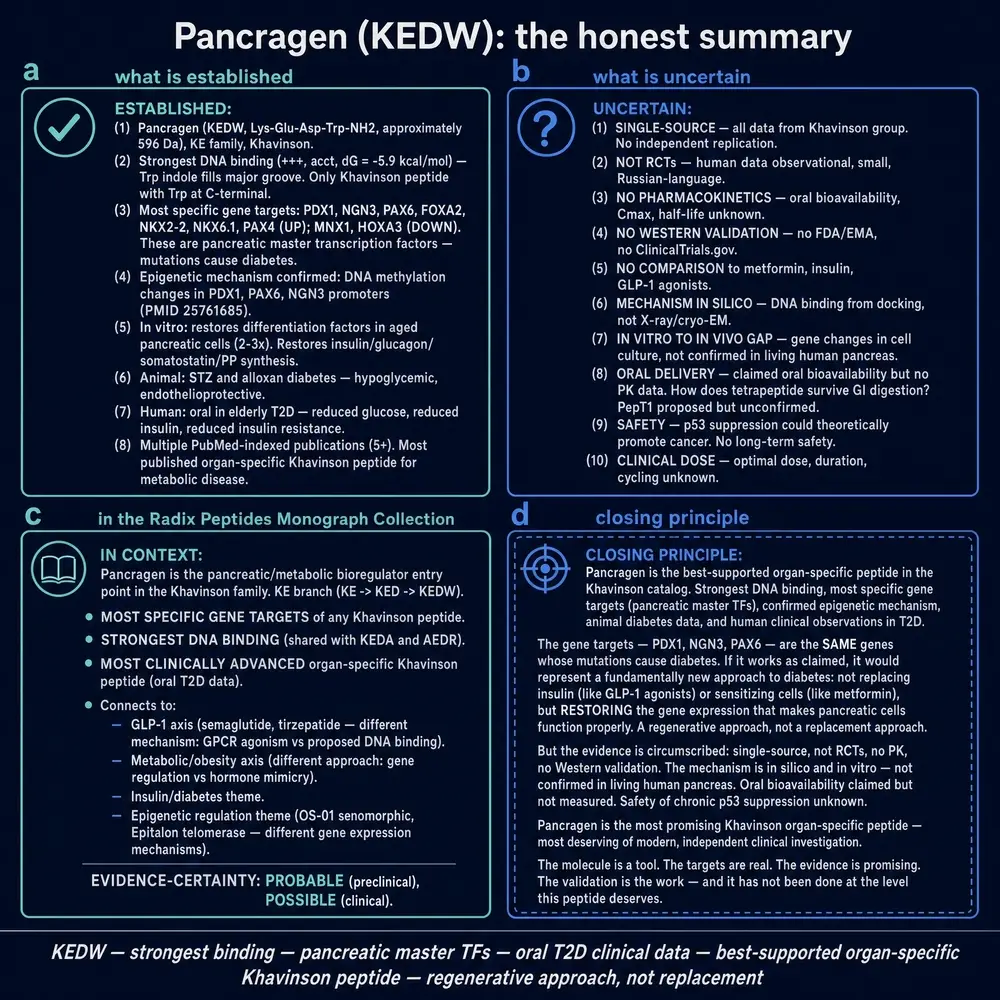
Recency is a legitimate weight when fresh data are not contradicted by a thicker older record. The 2021 Molecules systematic review and the 2022–2023 open reviews are the right places to read the DNA/histone/gene-panel synthesis and the class facts about stability and transport (Khavinson et al., 2021; PMID 35457077; PMID 35887081; PMID 36979488; PMID 37435573). They do not overturn the 2007–2015 primary abstracts; they recapitulate and organise them. Preferring a 2026 vendor page over that stack would be cargo-cult novelty. Preferring the reviews while ignoring that nearly all primary PDFs are still missing locally would be cargo-cult open-access.
Preponderance still governs the biological claim. Across in-vitro, animal and human tiers, the pattern is consistent and uneven: mechanism evidence is strongest as a programme-internal gene-and-chromatin story aimed at pancreatic transcription factors; rodent diabetes work is directionally coherent but abstract-thin; primate glucose-tolerance work is the preclinical high-water mark; human evidence is real, small, non-randomised in the indexed record, and entangled with a melatonin narrative. Independent replication outside the St Petersburg–Kiev–Sochi collaborative world is absent. That asymmetry is the evidence. Reporting it as if it were a balanced multi-continent literature would be false balance.
Compare Pancragen with what a reader might confuse it for. Insulin replaces a missing hormone. Metformin and GLP-1 receptor agonists act through characterised pathways with large outcome trials. Pancragen, on the published record assembled here, is a short peptide with a programme assignment to the pancreas and a mid-sized, single-school experimental file that is denser than Testagen’s and still far short of a medicine dossier. Conflating those categories is the central commercial error this monograph exists to block.
Section 13Open questions
The gaps are specific enough to list.
- Was KEDW isolated from Pankrapept (and is Suprefort the same lineage) under a protocol a second laboratory can repeat? Unsettled in the local file.
- Is the circulating research substance the free acid, the amide, or both? Unreconciled.
- Does intact KEDW reach pancreatic islets after oral or parenteral administration in any species at a measured concentration? Unmeasured in major indexes.
- In a randomised, controlled human study with pre-specified glycaemic endpoints and balanced concomitant therapy, does Pancragen outperform placebo? Not done in ClinicalTrials.gov.
- Will an independent laboratory reproduce the PDX1/NGN3/PAX4 culture panel and the aged-rhesus glucose-tolerance result? Unknown.
- What is the long-term safety profile in people at risk for hypoglycaemia or pancreatic disease? Unknown at regulatory standard.
Those are not rhetorical questions. They are the experimental programme a second laboratory would write if the first laboratory’s hypothesis is to be tested rather than repeated.
Pancragen is a real tetrapeptide idea with a real institutional biography. Vladimir Khavinson’s St Petersburg programme moved from pancreatic extracts to a defined KEDW sequence, then ran that sequence through diabetic rats, ageing human pancreatic cultures, old rhesus monkeys, and elderly metabolic observation. Open reviews now give the DNA-and-islet-gene story a clear English spine. The local research library’s full-text shelf for the primary papers remains thin; Western regulatory authorisation is absent; and a DNA-test brand still pollutes casual search.
This monograph does not recommend that any person take Pancragen, Suprefort, Pankrapept, or any dose of any of them. It reports what the published record contains, weighs freshness against a single-school preponderance, and stops where that record stops.
Section 14Methods note
Project 05 — Therapeutic Peptide Research Library denotes the workspace research corpus, not a single folder. Local stores scanned for Pancragen / KEDW / Lys-Glu-Asp-Trp hits included fulltext/, dossiers/, output/, literature/, South Beach Longevity Library/, Radix_Peptides_Global_Project/library/, sibling bioregulator fulltext_txt/ folders, and vendor PDF replicas. After identity gating and deduplication, twelve unique full-text assets named the subject (~156 pp): seven scientific Tier A works (~121 pp), three Radix scaffolds (~28 pp), and two vendor/commercial items (~7 pp). Primary Bull Exp Biol Med and Adv Gerontol PDFs were not retained locally; PubMed abstracts for eight subject-primary PMIDs were fetched on 5 August 2026 into fulltext_txt/subject_abstracts.txt.
Identity gating excluded PancraGEN-style DNA-test materials, Vesugen (KED), Pinealon (EDR), and the false-positive melatonin full text wrongly linked to P214. Open-access reviews already held as text extracts (including PMID 34834147 and shared PMC extracts) were read in full for KEDW passages. Chemical constants for the free-acid tetrapeptide were taken from PubChem CID 68452887; amidated Lys-Glu-Asp-Trp-NH2 is reported where abstracts specify it. Series number assignment follows house style A38 and must be re-checked immediately before filing.
Figures are authored SVG using house colour tokens only. No third-party published scientific figure has been reproduced. Product-pack imagery from the library was inventoried but not used as evidence art. No human use, dose, route or schedule is recommended in this document; study parameters appear only as published.
Section 15References
- Fedoreyeva LI, Kireev II, Khavinson VKh, Vanyushin BF. Penetration of short fluorescence-labeled peptides into the nucleus in HeLa cells and in vitro specific interaction of the peptides with deoxyribooligonucleotides and DNA Biochemistry (Mosc) 2011;76(11):1210-9. PMID 22117547 · doi
- Fedoreyeva LI, Smirnova TA, Kolomijtseva GY, Khavinson VKh, Vanyushin BF. Interaction of short peptides with FITC-labeled wheat histones and their complexes with deoxyribooligonucleotides Biochemistry (Mosc) 2013;78(2):166-75. PMID 23581987 · doi
- Goncharova ND, Ivanova LG, Oganian TÉ, Vengerin AA, Khavinson VKh. [Impact of tetrapeptide pancragen on endocrine function of the pancreas in old monkeys] Adv Gerontol 2014;27(4):662-7. PMID 25946840
- Goncharova ND, Ivanova LG, Oganyan TE, Vengerin AA, Khavinson VK. [Correction of impaired glucose tolerance using tetrapeptide (Pancragen) in old female rhesus monkeys] Adv Gerontol 2015;28(3):579-585. PMID 28509500
- Heaton ES, Hu M, Liu T, Hui H, Tan Y, Ye K et al.. Extracellular matrix-derived peptide stimulates the generation of endocrine progenitors and islet organoids from iPSCs J Tissue Eng 2023;14:20417314231185858. PMID 37435573 · doi · PMC10331343
- Ilina A, Khavinson V, Linkova N, Petukhov M. Neuroepigenetic Mechanisms of Action of Ultrashort Peptides in Alzheimer's Disease Int J Mol Sci 2022;23(8). PMID 35457077 · doi · PMC9032300
- Khavinson V, Linkova N, Kozhevnikova E, Dyatlova A, Petukhov M. Transport of Biologically Active Ultrashort Peptides Using POT and LAT Carriers Int J Mol Sci 2022;23(14). PMID 35887081 · doi · PMC9323678
- Khavinson V, Diomede F, Mironova E, Linkova N, Trofimova S, Trubiani O et al.. AEDG Peptide (Epitalon) Stimulates Gene Expression and Protein Synthesis during Neurogenesis: Possible Epigenetic Mechanism Molecules 2020;25(3). PMID 32019204 · doi · PMC7037223
- Khavinson VK, Popovich IG, Linkova NS, Mironova ES, Ilina AR. Peptide Regulation of Gene Expression: A Systematic Review Molecules 2021;26(22). PMID 34834147 · doi · PMC8619776
- Khavinson VK, Linkova NS, Rudskoy AI, Petukhov MG. Feasibility of Transport of 26 Biologically Active Ultrashort Peptides via LAT and PEPT Family Transporters Biomolecules 2023;13(3). PMID 36979488 · doi · PMC10046148
- Khavinson VKh, Gavrisheva NA, Malinin VV, Chefu SG, Trofimov EL. Effect of pancragen on blood glucose level, capillary permeability and adhesion in rats with experimental diabetes mellitus Bull Exp Biol Med 2007;144(4):559-62. PMID 18642713 · doi
- Khavinson VKh, Gapparov MM, Sharanova NE, Vasilyev AV, Ryzhak GA. Study of biological activity of Lys-Glu-Asp-Trp-NH2 endogenous tetrapeptide Bull Exp Biol Med 2010;149(3):351-3. PMID 21246099 · doi
- Khavinson VKh, Durnova AO, Polyakova VO, Tolibova GH, Linkova NS, Kvetnoy IM et al.. Effects of pancragen on the differentiation of pancreatic cells during their ageing Bull Exp Biol Med 2013;154(4):501-4. PMID 23486591 · doi
- Khavinson VKh, Sevost'ianova NN, Durnova AO, Lin'kova NS, Tarnovskaia SI, Dudkov AV et al.. [Tetrapeptide stimulates functional activity of the pancreatic cells in aging] Adv Gerontol 2012;25(4):680-4. PMID 23734516
- Khavinson VKh. Peptides and Ageing Neuro Endocrinol Lett 2002;23 Suppl 3:11-144. PMID 12374906
- Khavinson VKh, Anisimov VN. [35-year experience in research of peptide regulation of aging] Adv Gerontol 2009;22(1):11-23. PMID 19827673
- Korkushko OV, Khavinson VKh, Shatilo VB, Antonyk-Sheglova IA, Bondarenko EV. Prospects of using pancragen for correction of metabolic disorders in elderly people Bull Exp Biol Med 2011;151(4):454-6. PMID 22448364 · doi
- Kvetnoi IM, Ryzhak AP, Kostyuchek IN, Tafeev YA. Effect of tetrapeptide pancragene on functional morphology of the pancreas in rats with experimental diabetes mellitus Bull Exp Biol Med 2007;143(3):368-71. PMID 18225766 · doi
- Khavinson VK, Tendler SM, Kasyanenko NA, Tarnovskaya SI, Linkova NS, Ashapkin VV, Yakutseni PP, Vanyushin BF. Tetrapeptide KEDW Interacts with DNA and Regulates Gene Expression. Am J Biomed Sci. 2015;7(3):156-169. Not indexed in PubMed. Cited by Khavinson et al., 2021 (PMID 34834147). Local full text not retained. Resolved 5 August 2026.
- Khavinson VKh et al.. Peptide medicines: past, present, future (Russian open narrative; names Панкраген / KEDW from Pankrapept). Russian open-access narrative review, 2020. Local extract:
fulltext/russian_open/2020-khavinson-peptide-medicines-past-present-future.pdf. Resolved 5 August 2026. - Ivko OM et al.. Efficacy of Pancragen peptide in elderly patients with type 2 diabetes mellitus. Probl Endocrine Pathol / journal-of-peptides series. doi:10.21856/j-pep.2010.3.01. Not indexed in PubMed. Indexed on compound page P214. Local full text not retained. Resolved 5 August 2026. link
- National Center for Biotechnology Information. PubChem Compound Summary CID 68452887, Lys-Glu-Asp-Trp (free acid). PubChem, Bethesda MD. Molecular formula C26H36N6O9, approximate relative molecular mass 576.6. Amidated form Lys-Glu-Asp-Trp-NH2 is the form named in several Bull Exp Biol Med abstracts. Queried 5 August 2026. link
- United States National Library of Medicine. ClinicalTrials.gov search for Pancragen / KEDW peptide. Zero registered interventional trials returned for the tetrapeptide under these names. Queried 5 August 2026. link
Continue exploring