
Vesugen Lys-Glu-Asp — a three-residue vascular bioregulator, a second life in Alzheimer models, and a literature that almost never leaves one research network
Take endothelial cells that have been driven into an atherosclerotic or restenotic state, add a peptide three amino acids long, and—according to the papers that have looked—the molecular signature of a stressed vessel wall begins to quiet: endothelin-1 falls toward normal, cell–cell contacts reappear, a longevity-linked deacetylase rises. In a parallel literature the same tripeptide is reported to protect dendritic spines in Alzheimer models. Both stories are vivid. Both come almost entirely from one school. Neither has a registered clinical trial behind it. This monograph holds the biology and the thinness in the same frame, because neither makes sense alone.
Section 01Three residues and a vessel wall
The molecule is small enough to write without abbreviation: lysine, glutamate, aspartate. In the literature that owns it, those three residues are Vesugen—also spelled Vezugen in transliteration—and they are said to belong to blood vessels the way a key belongs to a lock it was cut for. The central in vitro claim is not mystical. Cultured vascular endothelium that has been pushed into atherosclerotic or restenotic phenotypes overexpresses endothelin-1, loses orderly connexin-mediated contacts, and shows the molecular wear of aging. Add Lys-Glu-Asp, and the same papers report those markers moving back toward a quieter baseline, with sirtuin-1 among the proteins that rise (Kozlov et al., 2016). A related line of work places the peptide at the promoter of MKI67, the gene for the proliferation marker Ki-67, and reports that aging endothelial cultures make more Ki-67 when the peptide is present (Khavinson et al., 2014).
That would already be enough to make Vesugen interesting. Then the file opens a second drawer. In Alzheimer models—amyloid synaptotoxicity in culture, and the aggressive 5xFAD mouse—the same tripeptide is reported to preserve dendritic spines and to lean on a gene panel that mixes cell-aging brakes (p16, p21) with neuronal differentiation markers and Alzheimer-associated names (Khavinson et al., 2021b; Khavinson et al., 2021a). A three-residue peptide that is asked to calm a vessel wall and protect a synapse is either a deep generalist of chromatin biology or a reminder that one research programme can ask the same molecule to do too many jobs. Sorting which is which is most of what follows.
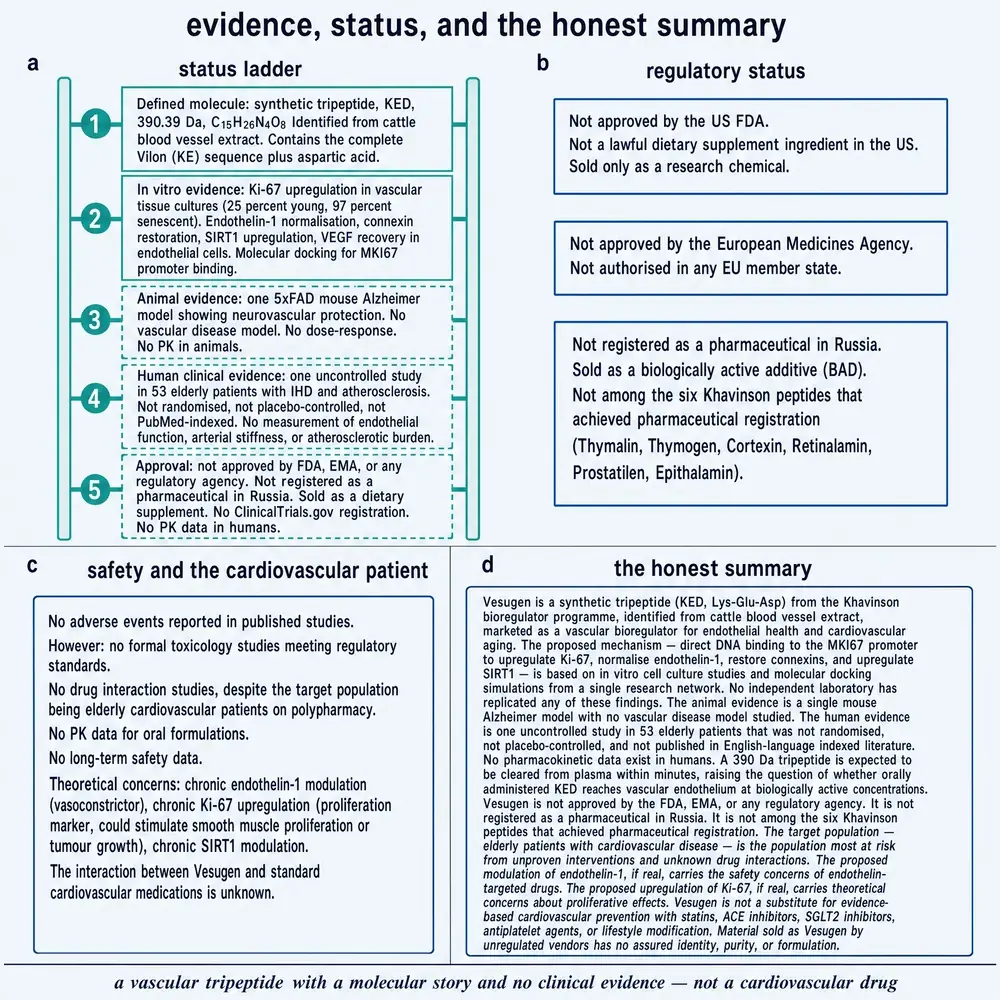
The turn belongs in the opening, not the appendix. Nearly every experimental paper that names Vesugen, Vezugen or peptide KED in a vascular or neuroprotective sense comes from Vladimir Khavinson’s network at the St Petersburg Institute of Bioregulation and Gerontology and its collaborators. The local research library that houses this series holds a single peer-reviewed scientific full text that discusses the compound as a named class member: the 2021 Molecules systematic review, twenty pages, in which Table 5 lists “KED, Vesugen” among the short peptides (Khavinson et al., 2021c). PubMed returns on the order of thirty records for the trade name and its transliteration. ClinicalTrials.gov returned none for Vesugen, Vezugen, or Lys-Glu-Asp paired with bioregulator terms when queried for this document (ClinicalTrials.gov, 2026). There is no independent pharmacokinetic package in the indexed record, and no formal toxicology dossier of the kind Western drug development treats as table stakes.
None of that proves the findings false. Absence of a second laboratory is not a disconfirmation; it is an absence. But it sets the epistemic temperature. What the reader has is an internally coherent, repeatedly self-consistent body of work from one school, with human observations that are small and non-randomised, and with mechanistic stories that are more often docked and immunostained than knocked out. Reading it well means refusing to let the elegance of a three-letter sequence pay for a trial that was never run.
Every experimental result below is labelled by study type in the sentence that reports it: human cells in culture, mouse in vivo, human observational series, computational docking. In this literature the distance between a dish and a person is often covered inside a single abstract sentence. The label is what makes the jump visible.
Section 02What “bioregulator” is claiming
Most peptides in this monograph series are intelligible as receptor ligands. They arrive at the outside of a cell, occupy a binding pocket evolution built for them or for a relative, and leave the interesting chemistry to a cascade on the far side of a membrane they never cross. That model is productive because it is brittle: a labelled ligand is displaced or it is not; a receptor knockout abolishes the effect or it does not.
The Khavinson short peptides claim a different kind of object. Peptides of two to four residues are said to cross membranes, enter nuclei, bind DNA and histones, and alter which genes are available for transcription—at concentrations the class describes as nanomolar and below (Khavinson et al., 2012b; Khavinson et al., 2021c). There is no named receptor for Vesugen in the indexed literature. In the programme’s own framing that is not a gap to be filled later; it is the point. These molecules are offered as epigenetic instructions, not as hormones with shorter names.
Two consequences follow before any Vesugen-specific number appears. First, “bioregulator” is not a pharmacological classification recognised outside this literature. It is a term of art. Inside the programme it names a coherent hypothesis; in commercial material it often functions as a shelf label that excuses the absence of receptor pharmacology. Second, the usual falsifiers are scarce. Docking scores every ligand. Immunostain finds what antibodies find. Across the Vesugen file, decisive negative designs—experiments that could have counted against the hypothesis and were allowed to—are rare. Positive accumulation therefore weighs less than a naive count of papers suggests. That is a description of the literature’s structure, not a verdict that every claim inside it is empty.
Section 03Identity: Lys-Glu-Asp
Chemically, the subject is unambiguous once the sequence is fixed. Lys-Glu-Asp resolves in PubChem as CID 87571363, formula C15H26N4O8, molecular weight 390.39 g·mol−1, InChIKey LLSUNJYOSCOOEB-GUBZILKMSA-N (PubChem CID 87571363, 2026). The trade name Vesugen does not itself resolve as a PubChem synonym; the structure record is the sequence. Russian-language and transliterated sources also use Vezugen. In the 2021 class review the row is printed without drama: “KED, Vesugen—regulation of cardiovascular system function, neuroprotector…” (Khavinson et al., 2021c).
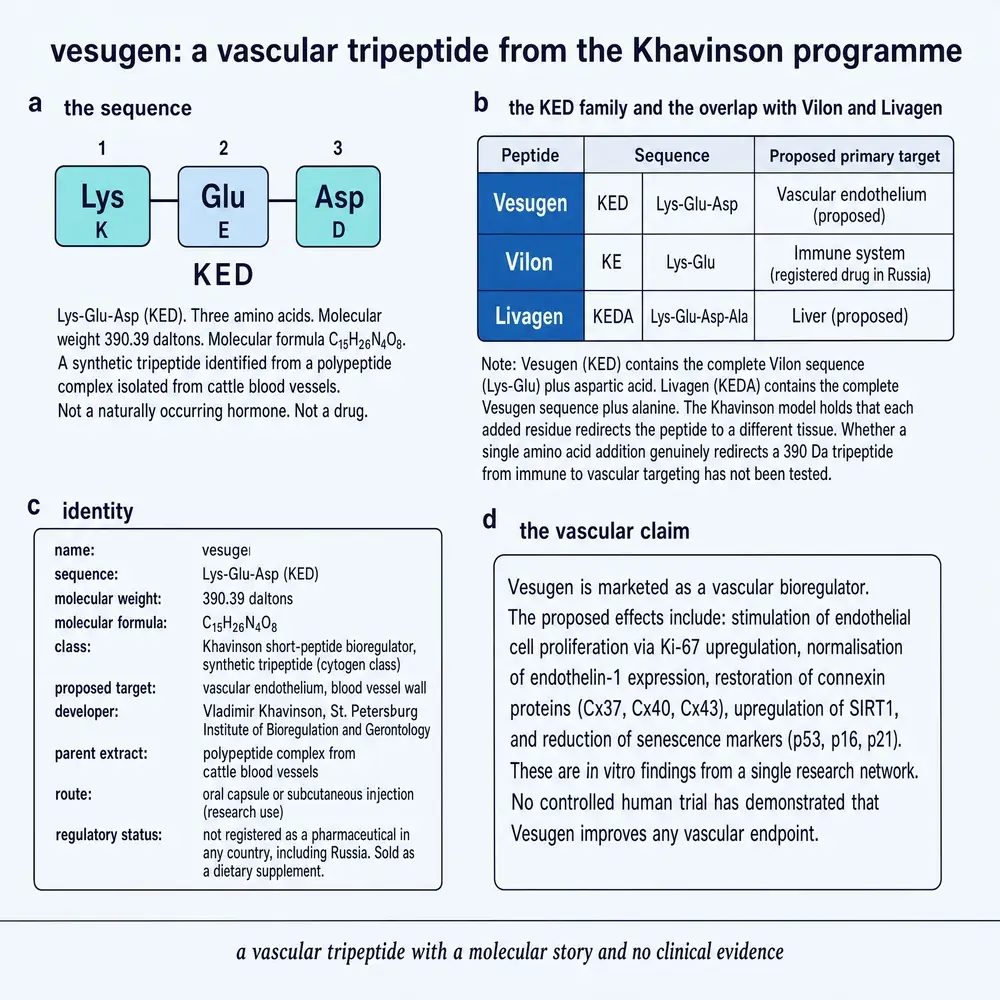
The identity hazard is structural and it runs toward the neighbours. Add one alanine and the sequence is Livagen (KEDA), a liver-associated tetrapeptide with its own chromatin literature. Add tryptophan and it is Pancragen (KEDW); add glycine and Testagen (KEDG); add proline and Prostamax (KEDP). A careless substring search on “Lys-Glu-Asp” harvests all of them. This monograph’s build refuses those extensions: PMID 23221144, which studies Lys-Glu-Asp-Pro, is Prostamax work and is excluded from the Vesugen subject corpus even though the first three residues match. Likewise, a 2014 vasoprotective paper on tripeptide “T-38” and dipeptide “RR-1” (PMID 25408528) does not name KED and is not treated as Vesugen evidence. The sibling trap is not pedantry. It is how this family contaminates its own retrieval.
Section 04Ventfort: name it, pair it, compare it
House style for this class requires the natural counterpart to be named and compared, not waved at. For Vesugen the paired extract is Ventfort, the vessel-tissue cytomedin in the Khavinson extract→peptide mapping: a peptide complex prepared from animal vascular tissue, positioned as the older, multi-component parent of the defined tripeptide (HOUSE_STYLE §8a.2, 2026). Ventfort and Vesugen are therefore not two brandings of one molecule. One is a mixture with no single published sequence; the other is a synthetic trimer with a PubChem structure record.
The load-bearing distinction the class contract demands—whether KED was isolated from Ventfort by fractionation or designed from the extract’s bulk amino-acid composition—is not settled in the indexed sources assembled for this document. That unsettledness is the finding. Supplier language that calls Vesugen “the active fragment” of Ventfort asserts a conclusion the primary literature, as read here, has not demonstrated. Where long-horizon human use narratives attach to the vascular bioregulator story at all, they attach more readily to the extract tradition than to a well-documented synthetic-peptide trial programme—and even then, the extract’s own Western-grade evidence is thin. Regulatory asymmetry is the usual pattern in this class: the cytomedin may circulate as a regional supplement or medicine while the cytogen is sold as a research chemical elsewhere. This monograph does not map every jurisdiction; it records that the two objects must not be argued as if they were interchangeable.
Section 05The programme and the people
Vesugen does not have a lone-inventor eureka story of the kind popular science prefers. It has a programme. In the early 1970s, working in what became the St Petersburg Institute of Bioregulation and Gerontology, Vladimir Khatskelevich Khavinson and colleagues developed the idea that organs contain small peptide signals—later called cytomedines—that help the same tissues maintain differentiation and resist age-related decline (Anisimov et al., 1994; Khavinson & Anisimov, 2009). The first generation of products were extracts: thymus, pineal, vessels, cartilage, prostate. The second generation were synthetic short peptides inferred or refined from those extracts—cytogens—with lengths of two to four residues and names ending in “-gen” that vendors still use as a catalogue grammar.
Vesugen is the vascular entry in that second generation: Lys-Glu-Asp as the defined sequence paired with the vessel extract Ventfort. The intellectual context matters. The Soviet and then Russian gerontology programmes that produced these compounds were interested in population-scale aging, military and occupational health, and peptide drugs that could be manufactured cheaply. That history explains both the breadth of claimed indications and the shape of the evidence: many small physiological studies, much Russian-language publication, limited early deposition in Western open-access full text, and a lasting concentration of authorship. Teimuraz Lezhava’s Tbilisi cytogenetics group, which looms large in the Livagen chromatin file, appears less as the centre of gravity for Vesugen; the vascular and Alzheimer-model papers are more tightly held inside the St Petersburg biogerontology circle (Kozlov, Linkova, Khavinson and co-authors).
Two origin myths deserve a brief quarantine. One is the vendor habit of describing every bioregulator as a declassified military secret. The programme has real institutional history; dressing it as a spy novel does not add a citation. The other is the claim that each short peptide is simply “what was found” inside the matching organ. Sometimes a peptide was isolated; sometimes it was designed from composition data; sometimes the paper trail does not say. For Vesugen, as Section 04 recorded, the isolation-versus-design question remains open in the sources used here—and an open question is more honest than a tidy myth.
Section 06Endothelium under stress
The vascular in vitro file is the clearest subject-specific experimental arm. In cultures of normal, atherosclerotic and restenotic endothelium, peptide KED was reported to normalise elevated endothelin-1 expression, restore connexin-mediated cell interactions, and raise sirtuin-1—framed by the authors as an epigenetic and geroprotective endothelial effect (Kozlov et al., 2016). That is a dish result about protein markers, not a clinical outcome. It is also one of the few places where the literature talks about Vesugen in the language of a diseased vessel rather than a general “bioregulator” halo.
A second endothelial line links vesugen to proliferation competence. In tissue-specific and dissociated vascular endothelial cultures from young and old animals, vesugen (with a comparator peptide D-7) was reported to stimulate Ki-67, a protein that had declined with aging in those systems. Molecular docking placed both peptides against a core promoter interval of MKI67, contacting a CATC motif near the transcription start (Khavinson et al., 2014). Docking is not occupancy; immunostain is not lineage tracing. Still, the paper is valuable because it ties a named gene to a named peptide in a vascular cell system, which is more than many catalogue entries ever offer.
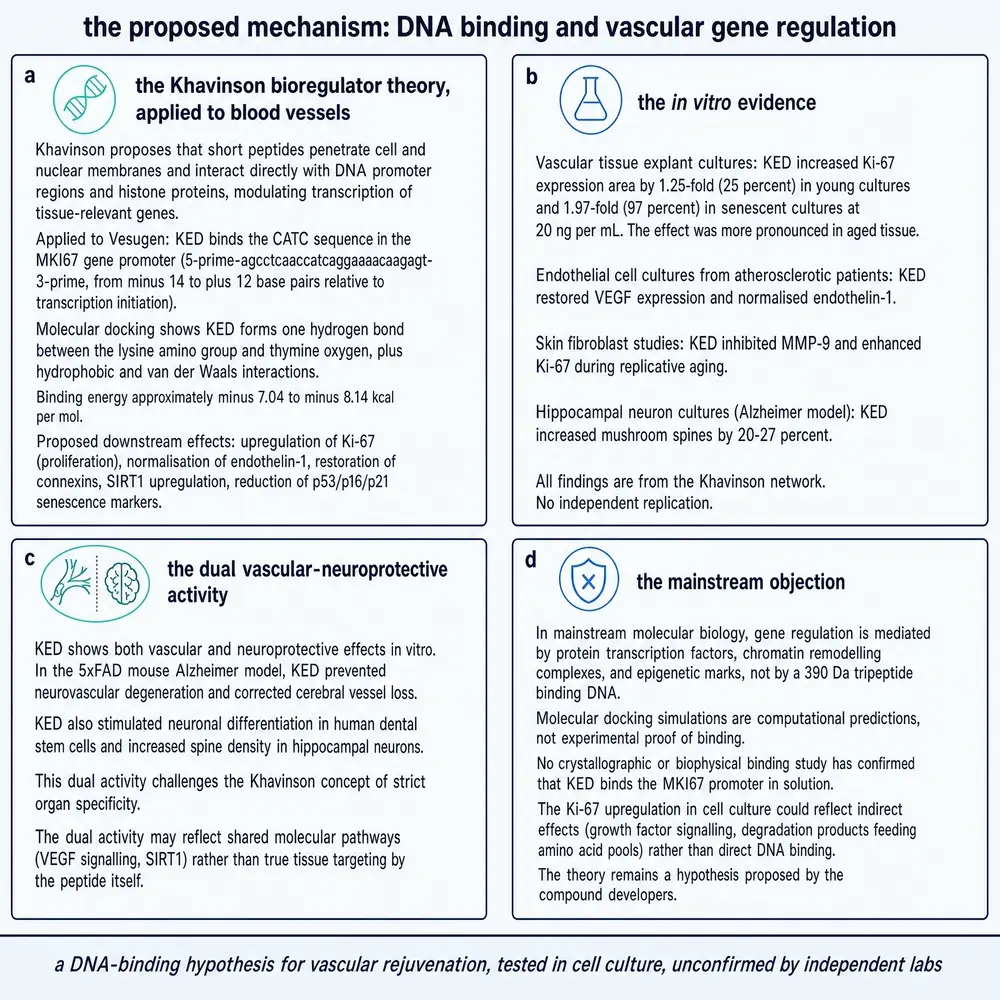
Class-level reviews fold these observations into a broader claim that KED regulates cardiovascular function and binds DNA (Khavinson et al., 2021c). The weighing rule applied here is simple: the culture papers are primary for endothelium; the review is secondary synthesis from the same school; neither substitutes for an in vivo vascular outcome study with blinded endpoints, which the admitted corpus does not provide under the Vesugen name.
Section 07Human observations—reported, not recommended
Human data exist in the file as observational reports. They are summarised because the record contains them. They are not translated into advice.
In one series, forty-one patients with vasculogenic erectile dysfunction framed as a manifestation of atherosclerosis received Vezugen monotherapy; the authors reported clinical and instrumental improvement in penile arterial flow after treatment (Kitachev et al., 2014). Design details available from the indexed abstract are limited: it is not described there as a randomised, placebo-controlled trial. A separate review states that oral application of KED improved memory and attention in elderly individuals with functional CNS disorders, and that KED restores synaptic plasticity in an in vitro Alzheimer model (Khavinson et al., 2021a). The human clause in that review is an author-reported observation, not a protocol this monograph can audit from a full clinical study report.
Amounts, schedules and routes appear in those sources as study parameters. They are not repeated here as instructions. The governing constraint of this series forbids recommending human use; the evidentiary constraint forbids dressing an uncontrolled series as confirmatory medicine. Limb-ischemia and related vasoactive-peptide notes in the wider Russian gerontology literature (for example PMID 28976154) are adjacent context and were not treated as clean Vesugen randomised evidence.
Section 08Synapses, spines and Alzheimer models
If the endothelial story is about quieting a loud vessel wall, the neuro story is about keeping a spine on a dendrite. In an in vitro amyloid synaptotoxicity model, KED (with the related tripeptide EDR) was reported to prevent dendritic-spine loss. In 5xFAD mice, daily intraperitoneal KED from two to four months of age at a concentration of 400 μg/kg—reported here strictly as a study parameter—tended to increase neuroplasticity measures and, with EDR, prevented spine loss; docking explorations were offered as a mechanistic hypothesis for DNA interaction (Khavinson et al., 2021b). Earlier culture work found Lys-Glu-Asp stimulating proliferation and suppressing apoptosis markers in organotypic neuroimmunoendocrine tissues, with age-dependent nuance across pineal, immune and neural explants, and with a honey-bee memory assay as a behavioural adjunct (Chalisova et al., 2012). Separate in vitro work reported tripeptides restoring neuronal spine numbers under modelled Alzheimer conditions (Kraskovskaya et al., 2017).
The 2021 KED review gathers gene-level claims: regulation of cell-aging and apoptosis genes (p16, p21), neuronal differentiation genes and proteins (nestin, GAP43), and Alzheimer-associated names (SUMO, APOE, IGF1) (Khavinson et al., 2021a). Recency earns weight here because the mouse study extends the system beyond dishes. It does not earn a free upgrade to human efficacy. No independent laboratory replication of the 5xFAD KED result was found in the harvest for this monograph, and the authorship remains inside the originating network.
Section 09Aging cells, and what the class mechanism papers actually tested
Around the two main arms sits a penumbra of cell-aging and differentiation papers in which short peptides including KED appear among panels that modulate skin fibroblasts, stem-cell neuronal differentiation, oral stem-cell aging and mesenchymal stem-cell gene expression (Voicekhovskaya et al., 2012; Khavinson et al., 2012a; Lin’kova et al., 2016; Caputi et al., 2019; Sinjari et al., 2020; Ashapkin et al., 2020; Khavinson et al., 2020). These results matter as context for a peptide the class treats as multifunctional. They do not, by themselves, establish tissue specificity. In fact the multifunctional pattern is a mild challenge to the marketing story that each -gen peptide is a precision organ key: Vesugen is asked to be vascular, neural, fibroblast-active and geroprotective in the same table (Khavinson et al., 2021c).
Mechanistic papers on nuclear entry, histone binding and DNA docking often test siblings—AEDG, EDR, KEDW, KEDG—and only sometimes KED. Fedoreyeva’s histone-binding work, for example, is cited in this series for the class claim that short peptides contact H1/H2B/H3/H4; readers should not infer that every peptide in the family was on every blot (Fedoreyeva et al., 2013). Where this monograph borrows class mechanism, it says so. Where a paper did not include Lys-Glu-Asp, Vesugen does not inherit the result by family resemblance alone.
Section 10How the arms weigh against each other
Put the file on one table and the pattern is uneven. Endothelial marker work and the MKI67 story give Vesugen a coherent vascular hypothesis in culture. The Alzheimer-model arm gives it a second, newer experimental life with at least one mouse study. Human observations exist and are directionally positive in their authors’ telling, but they are small, non-registry, and unaudited by Western trial standards. The extract counterpart Ventfort explains the marketing lineage and does not redeem the synthetic peptide’s evidence gaps. Independent replication is the dog that does not bark.
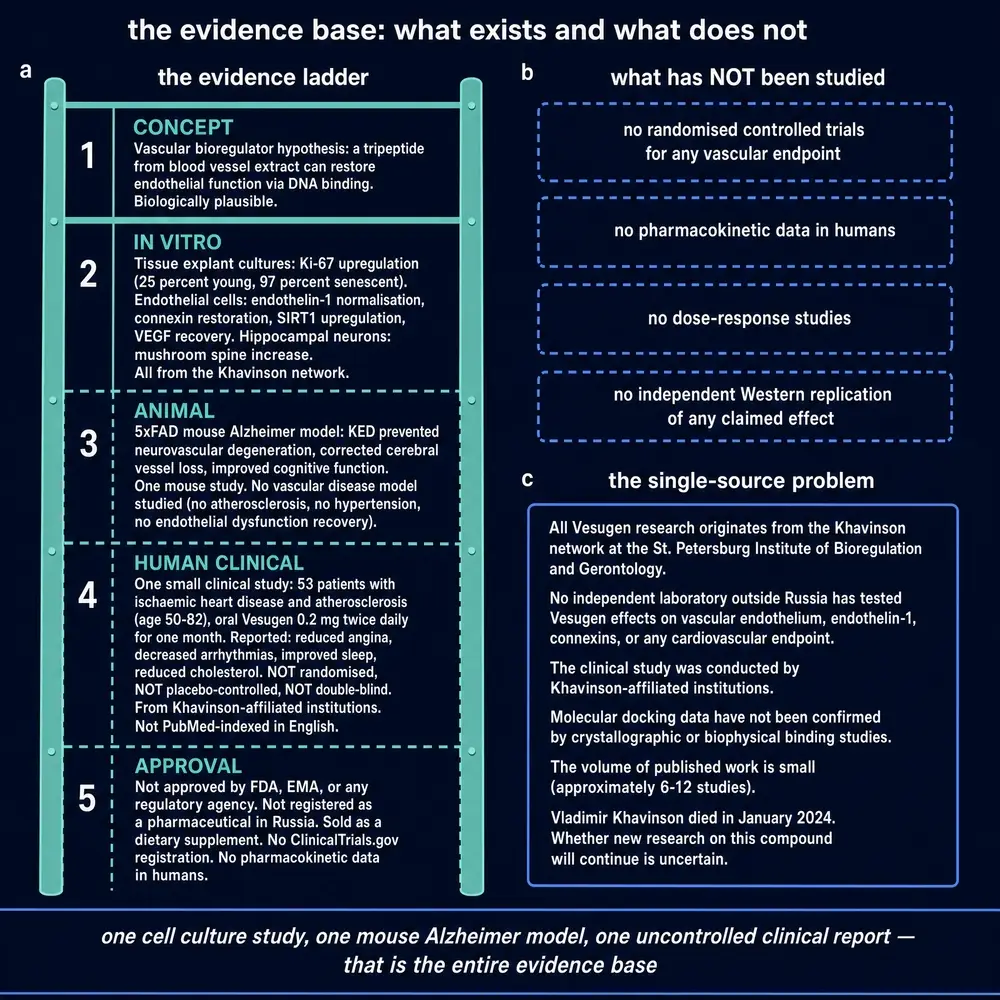
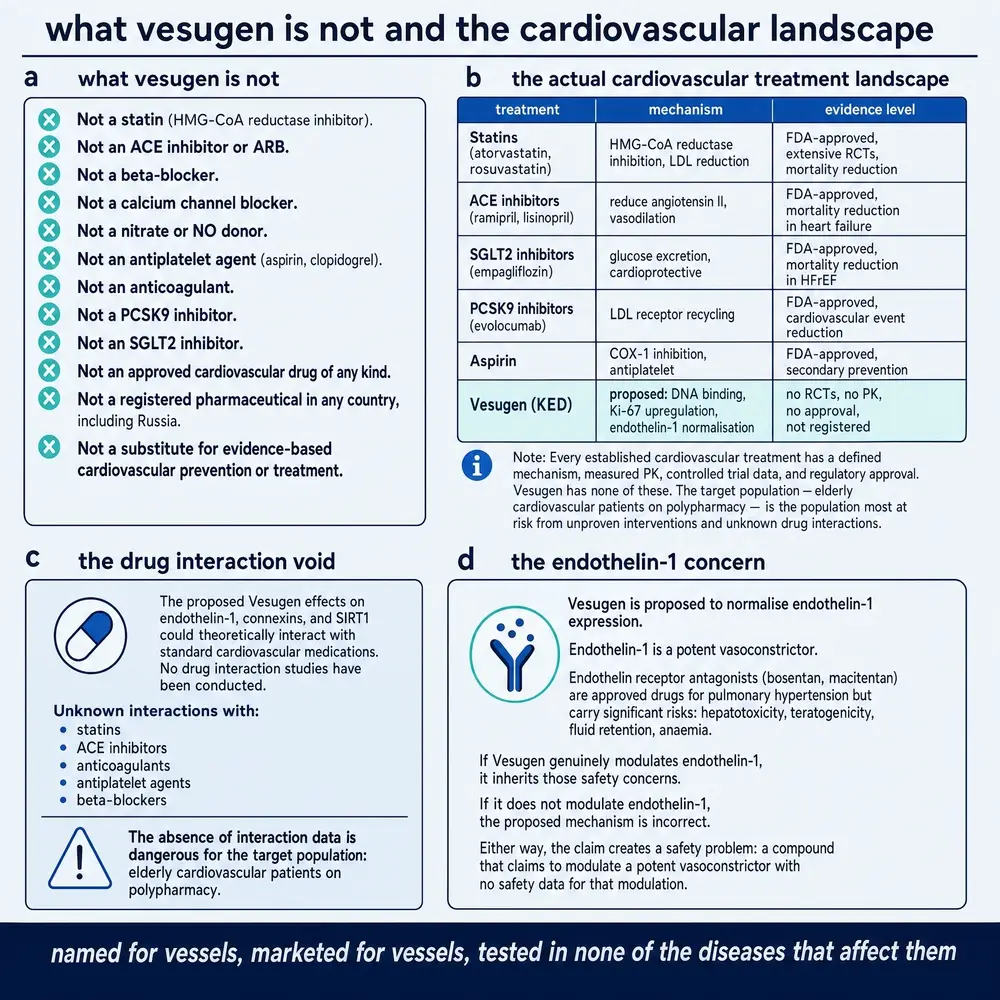
Recency was weighed for freshness of design, not for calendar ink. The 2021 mouse and review papers earn attention because they extend neuro endpoints and synthesise gene claims; they do not erase the older limitation that vascular in vivo outcome data under the Vesugen name remain thin in the international index. Preponderance inside the school is real—markers move the same way more than once—but preponderance inside one school is not the same quantity as preponderance across science. When a claim appears only inside that network, this document treats it as a hypothesis with internal support, not as established biomedical fact.
Section 11Absences that are part of the subject
No named receptor. No binding constant. No ClinicalTrials.gov registration. No PubChem synonym for the trade name. One local peer-reviewed full text that discusses the peptide as Vesugen among many. Sibling sequences that contaminate naive search. An unsettled isolation-versus-design link to Ventfort. These are not editorial complaints; they are properties of the object as it exists in the record.
Section 12Closing
Vesugen is a chemically small, conceptually large claim: that three amino acids can retune aging endothelium and shield synapses through epigenetic routes ordinary pharmacology does not use. The experiments that exist are not nothing. Cultured vessels and Alzheimer models are serious systems, and the programme that produced this peptide has been publishing on short peptides for decades. What they have not produced—at least not in a form this monograph could verify—is the ordinary machinery of confirmation: outsiders repeating the work, pharmacokinetics, and registered trials. Until that machinery appears, Vesugen remains what the best reading of its file allows: a defined tripeptide with a coherent in vitro vascular story, a developing preclinical neuro story, human observations that must not be mistaken for confirmatory trials, and a natural extract twin whose relationship to the trimer is still more tradition than demonstrated sequence archaeology. That is enough to take it seriously as research. It is not enough to mistake it for settled medicine.
This monograph is a research document. It describes published experiments and it does not recommend that any person use this compound. No dose, route, schedule, formulation or duration is specified for any person anywhere in it. Concentrations, administration routes and durations appear only as parameters of the studies that reported them, always with the study type and the species or cell system named in the same sentence. Nothing here is medical advice.
Section 13References
- Anisimov VN, Khavinson VKh, Morozov VG. Twenty years of study on effects of pineal peptide preparation: epithalamin in experimental gerontology and oncology Ann N Y Acad Sci 1994;719:483-93. PMID 8010617 · doi
- Ashapkin V, Khavinson V, Shilovsky G, Linkova N, Vanuyshin B. Gene expression in human mesenchymal stem cell aging cultures: modulation by short peptides Mol Biol Rep 2020;47(6):4323-4329. PMID 32399807 · doi
- Caputi S, Trubiani O, Sinjari B, Trofimova S, Diomede F, Linkova N et al.. Effect of short peptides on neuronal differentiation of stem cells Int J Immunopathol Pharmacol 2019;33:2058738419828613. PMID 30791821 · doi · PMC6376556
- Chalisova NI, Lopatina NG, Kamishev NG, Linkova NS, Koncevaya EA, Dudkov AV et al.. Effect of tripeptide Lys-Glu-Asp on physiological activity of neuroimmunoendocrine system cells Bull Exp Biol Med 2012;153(4):569-72. PMID 22977872 · doi
- Fedoreyeva LI, Smirnova TA, Kolomijtseva GY, Khavinson VKh, Vanyushin BF. Interaction of short peptides with FITC-labeled wheat histones and their complexes with deoxyribooligonucleotides Biochemistry (Mosc) 2013;78(2):166-75. PMID 23581987 · doi
- Fedoreyeva LI, Kireev II, Khavinson VKh, Vanyushin BF. Penetration of short fluorescence-labeled peptides into the nucleus in HeLa cells and in vitro specific interaction of the peptides with deoxyribooligonucleotides and DNA Biochemistry (Mosc) 2011;76(11):1210-9. PMID 22117547 · doi
- Khavinson V, Ilina A, Kraskovskaya N, Linkova N, Kolchina N, Mironova E et al.. Neuroprotective Effects of Tripeptides-Epigenetic Regulators in Mouse Model of Alzheimer's Disease Pharmaceuticals (Basel) 2021;14(6). PMID 34071923 · doi · PMC8227791
- Khavinson V, Linkova N, Diatlova A, Trofimova S. Peptide Regulation of Cell Differentiation Stem Cell Rev Rep 2020;16(1):118-125. PMID 31808038 · doi
- Khavinson V, Linkova N, Dyatlova A, Kantemirova R, Kozlov K. Senescence-Associated Secretory Phenotype of Cardiovascular System Cells and Inflammaging: Perspectives of Peptide Regulation Cells 2022;12(1). PMID 36611900 · doi · PMC9818427
- Khavinson VK, Lin'kova NS, Umnov RS. Peptide KED: Molecular-Genetic Aspects of Neurogenesis Regulation in Alzheimer's Disease Bull Exp Biol Med 2021;171(2):190-193. PMID 34173097 · doi
- Khavinson VK, Linkova NS, Rudskoy AI, Petukhov MG. Feasibility of Transport of 26 Biologically Active Ultrashort Peptides via LAT and PEPT Family Transporters Biomolecules 2023;13(3). PMID 36979488 · doi · PMC10046148
- Khavinson VK, Lin'kova NS, Tarnovskaya SI. Short Peptides Regulate Gene Expression Bull Exp Biol Med 2016;162(2):288-292. PMID 27909961 · doi
- Khavinson VK, Popovich IG, Linkova NS, Mironova ES, Ilina AR. Peptide Regulation of Gene Expression: A Systematic Review Molecules 2021;26(22). PMID 34834147 · doi · PMC8619776
- Khavinson VKh, Tarnovskaia SI, Lin'kova NS, Guton EO, Elashkina EV. [Epigenetic aspects of peptidergic regulation of vascular endothelial cell proliferation during aging] Adv Gerontol 2014;27(1):108-14. PMID 25051766
- Khavinson VKh, Linkova NS, Polyakova VO, Kheifets OV, Tarnovskaya SI, Kvetnoy IM. Peptides tissue-specifically stimulate cell differentiation during their aging Bull Exp Biol Med 2012;153(1):148-51. PMID 22808515 · doi
- Khavinson VKh, Solov'ev AIu, Zhilinskiĭ DV, Shataeva LK, Vaniushin BF. [Epigenetic aspects of peptide regulation of aging] Adv Gerontol 2012;25(1):11-22. PMID 22708439
- Khavinson VKh, Anisimov VN. [35-year experience in research of peptide regulation of aging] Adv Gerontol 2009;22(1):11-23. PMID 19827673
- Kitachev KV, Sazonov AB, Kozlov KL, Petrov KIu, Sliusarev AS, Khavinson VKh. [The efficacy of peptide bioregulators of vessels in lower limbs chronic arterial insufficiency treatment in old and elderly people] Adv Gerontol 2014;27(1):156-9. PMID 25051774
- Kitachov KV, Sazonov AD, Kozlov KL, Petrov KY, Slusarev AS, Sedova EV. [The role of vasoactive peptid in lower limbs chronic arterial insufficiency treatment] Adv Gerontol 2013;26(2):292-296. PMID 28976154
- Kozlov KL, Bolotov II, Linkova NS, Drobintseva AO, Khavinson VK, Dyakonov MM et al.. [Molecular aspects of vasoprotective peptide KED activity during atherosclerosis and restenosis] Adv Gerontol 2016;29(4):646-650. PMID 28539025
- Kraskovskaya N, Linkova N, Sakhenberg E, Krieger D, Polyakova V, Medvedev D et al.. Short Peptides Protect Fibroblast-Derived Induced Neurons from Age-Related Changes Int J Mol Sci 2024;25(21). PMID 39518916 · doi · PMC11546785
- Kraskovskaya NA, Kukanova EO, Lin'kova NS, Popugaeva EA, Khavinson VK. Tripeptides Restore the Number of Neuronal Spines under Conditions of In Vitro Modeled Alzheimer's Disease Bull Exp Biol Med 2017;163(4):550-553. PMID 28853087 · doi
- Lezhava T, Jokhadze T, Monaselidze J, Buadze T, Gaiozishvili M, Sigua T et al.. EPIGENETIC MODIFICATION UNDER THE INFLUENCE OF PEPTIDE BIOREGULATORS ON THE "OLD" CHROMATIN Georgian Med News 2023;(335):79-83. PMID 37042594
- Lin'kova NS, Drobintseva AO, Orlova OA, Kuznetsova EP, Polyakova VO, Kvetnoy IM et al.. Peptide Regulation of Skin Fibroblast Functions during Their Aging In Vitro Bull Exp Biol Med 2016;161(1):175-8. PMID 27259496 · doi
- Sinjari B, Diomede F, Khavinson V, Mironova E, Linkova N, Trofimova S et al.. Short Peptides Protect Oral Stem Cells from Ageing Stem Cell Rev Rep 2020;16(1):159-166. PMID 31677028 · doi
- Voicekhovskaya MA, Chalisova NI, Kontsevaya EA, Ryzhak GA. Effect of bioregulatory tripeptides on the culture of skin cells from young and old rats Bull Exp Biol Med 2012;152(3):357-9. PMID 22803085 · doi
- ClinicalTrials.gov. Search for Vesugen, Vezugen, Lys-Glu-Asp, and KED bioregulator. U.S. National Library of Medicine trial registry. Queried 4 August 2026; zero interventional registrations returned for the compound name, transliteration, or sequence paired with bioregulator terms. link
- National Center for Biotechnology Information. PubChem Compound Summary for CID 87571363, Lys-Glu-Asp. Structure record resolved 4 August 2026: C15H26N4O8, 390.39 g·mol−1, InChIKey LLSUNJYOSCOOEB-GUBZILKMSA-N. No PubChem name record for the trade name Vesugen. link
- South Beach Longevity. Bioregulator class contract — extract→peptide mapping. House style table pairs Ventfort (vessels) with Vesugen (Lys-Glu-Asp). Treated as a claim to re-verify, not as independent experimental evidence. Compiled 2026.
Section 14How this document was assembled
The research library behind this series holds one peer-reviewed scientific full text that discusses Vesugen/KED as a named class member: Khavinson et al., Molecules 2021 (20 pages), already on disk under the Khavinson full-text store. A nine-page marketing leaflet mentions the name once. The library’s own P040 dossier is a thirty-page empty template. Vendor product pages were excluded as science. The reading corpus was therefore built by merging PubMed harvests for Vesugen/Vezugen, KED and Lys-Glu-Asp under school terms, applying a mechanical identity gate that rejects Livagen (KEDA), Prostamax (KEDP) and other siblings, fetching available PMC full texts, and reading subject abstracts against live NCBI records. ClinicalTrials.gov and PubChem were queried for absences as well as hits.
Every PubMed identifier in the reference list was resolved by the build pipeline against NCBI; authors, titles, journals and years are fetched, not recalled. Figure values are taken from the same sources named in their captions. No published figure has been reproduced.
Section 15How the evidence was weighed
Study type is named in the reporting sentence. Class mechanism is not silently attributed to KED. Negative identity exclusions (wrong peptide, wrong T-code) are enforced before citation. Recency earns weight when it adds a system or endpoint; restatement does not. Single-school clustering reduces confirmatory weight without licensing dismissal of primary data. Human observations are reported as observations. No result is translated into a recommendation for human use.
Continue exploring