
Retatrutide One peptide, three hormone receptors, and the furthest that drug-induced weight loss has yet been taken
Retatrutide is a single engineered peptide that switches on the receptors for three different gut and pancreatic hormones at once. In its phase 2 obesity trial the curve of body weight against time had still not flattened when the study stopped at forty-eight weeks. This monograph traces the compound from a chemistry department in Indiana to a phase 3 programme of more than twenty thousand people, and sets out, with equal weight, what the evidence establishes, what it does not, and what it costs.
Every finding below is labelled by the kind of study that produced it, in the sentence that reports it. Cell and animal results are never phrased so as to imply a human outcome, because on this compound they repeatedly diverge from one. Human results are marked by phase, and a distinction is drawn throughout between a prespecified endpoint, a substudy, a post-hoc analysis and a sponsor announcement that has not yet been peer reviewed — four very different grades of evidence that press coverage tends to flatten into one.
Adverse effects, reversibility and gaps in the evidence appear beside the efficacy figures rather than in a late section of their own. Where two sources disagree, the disagreement is shown rather than resolved.
No human use, dose, route or schedule is recommended anywhere in this document. Doses appear only as the parameters of studies that have been published, always with the population and duration attached. Retatrutide is not approved by any regulatory agency anywhere in the world.
Section 01A problem that would not yield to one hormone
For most of the twentieth century, the pharmacological treatment of obesity was a record of retreat. Drugs arrived, produced modest weight loss, and were withdrawn when the cost of that weight loss became clear. The pattern was consistent enough that by the 2010s a serious researcher could reasonably believe the problem was not tractable by drugs at all — that body weight was defended by so many overlapping systems that blocking any one of them would simply be routed around.
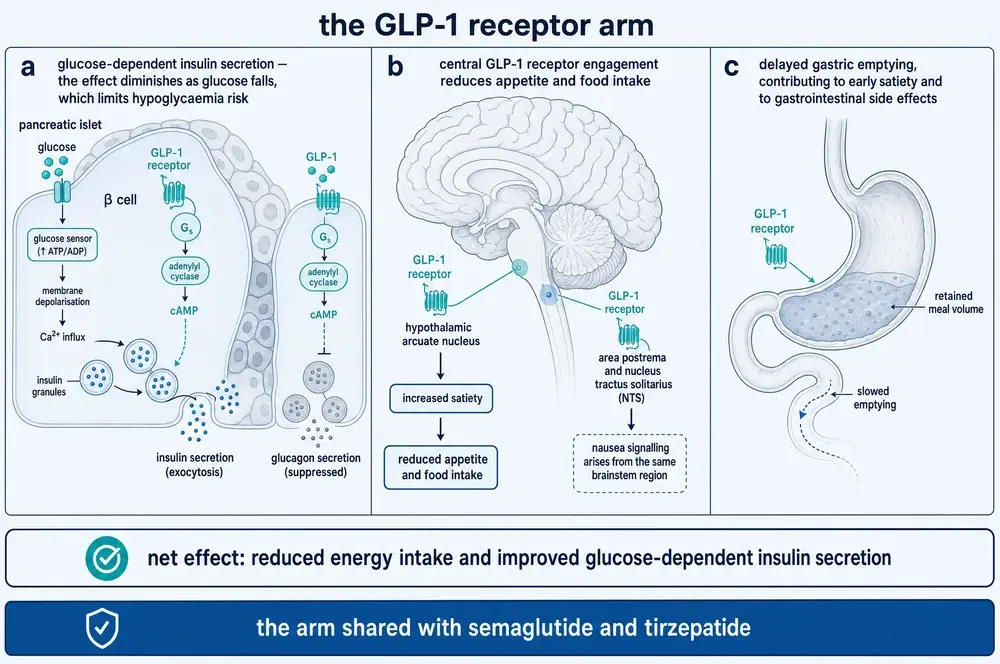
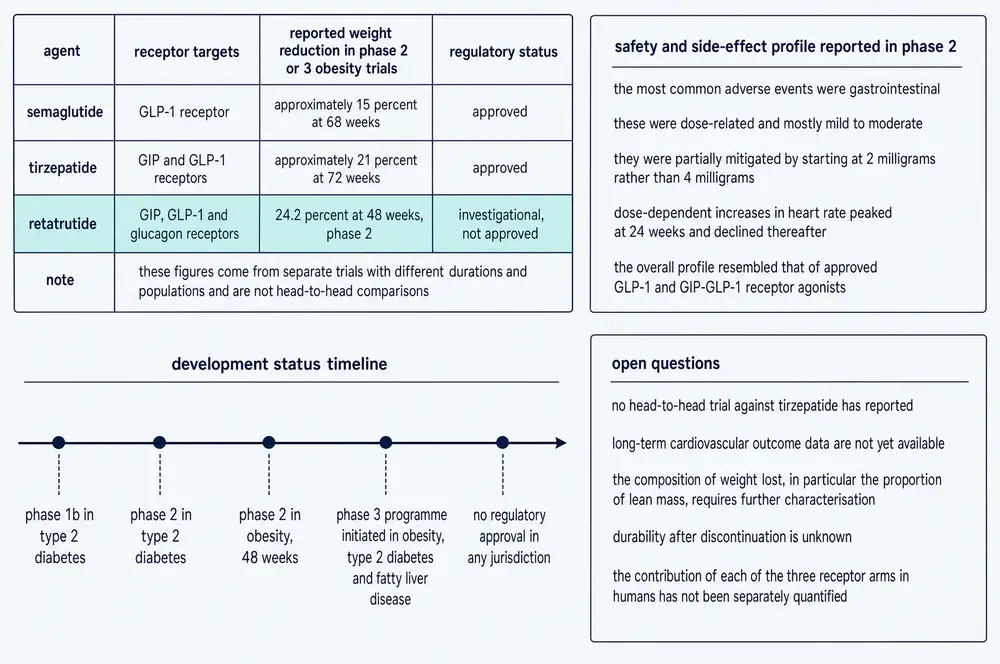
What broke the pattern was not a new idea about appetite. It was a decision to stop treating the gut hormones as curiosities of digestive physiology and start treating them as a pharmacological toolkit. Glucagon-like peptide-1 (GLP-1) is released from the small intestine after a meal; it stimulates insulin release in proportion to how much glucose is actually present, slows the stomach, and signals satiety to the brain. Drugs that mimicked it worked. In the STEP-1 trial, 1,961 adults with obesity and without diabetes lost a mean of 14.9 per cent of body weight over 68 weeks on once-weekly semaglutide, against 2.4 per cent on placebo (Wilding et al., 2021). That was roughly double what any previous drug had managed.
Then the arithmetic changed again. Tirzepatide added agonism at a second receptor, for glucose-dependent insulinotropic polypeptide (GIP), the other major incretin hormone. In SURMOUNT-1, tirzepatide 15 mg produced a mean weight reduction of 20.9 per cent at 72 weeks (Jastreboff et al., 2022). Two receptors beat one. The obvious question — whether three would beat two — had by then already been asked and answered in rodents, nearly a decade earlier, by people who had been thinking about the problem from a different direction entirely.
Section 02The rehabilitation of glucagon
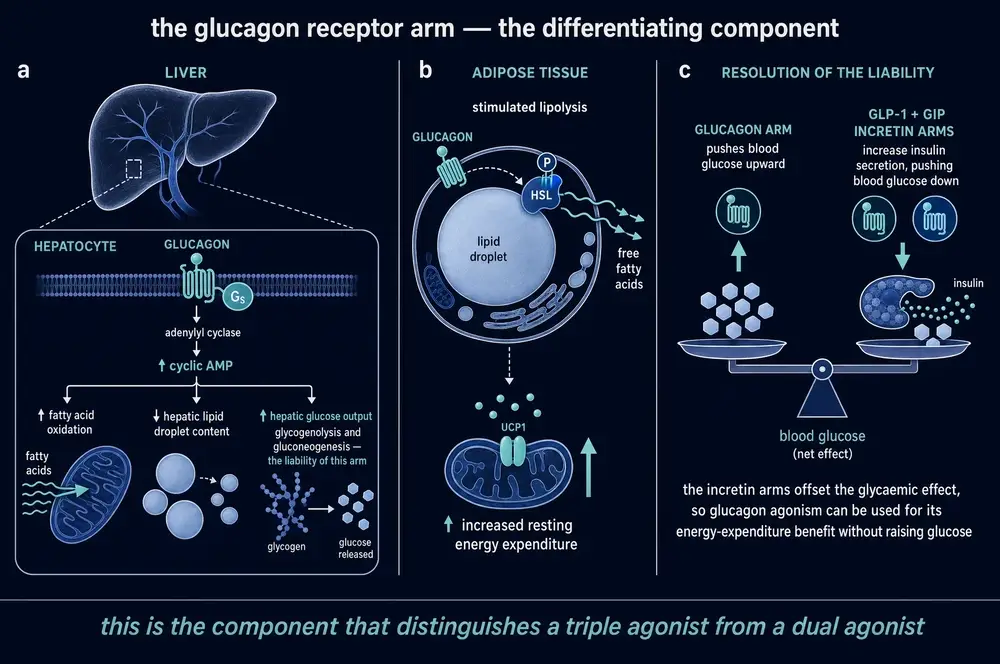
The third receptor is the strange one. Glucagon is insulin's opposite number: released by the pancreas when blood sugar falls, it instructs the liver to break down its glycogen stores and manufacture new glucose. It is the hormone in the emergency injection kit carried by people with type 1 diabetes. Adding a glucagon receptor agonist to a diabetes drug sounds less like a design decision than a mistake.
But glucagon has a second life. Alongside raising blood sugar it increases resting energy expenditure, drives fatty-acid oxidation in the liver, and stimulates the breakdown of stored fat. Müller and colleagues traced this double identity across two decades of work in a 2017 review in Physiological Reviews that reads, in retrospect, like a manifesto: the paradox they describe is a hormone historically defined by its glucose-raising liability being recruited, deliberately, as a weight-lowering agent (Müller et al., 2017). The obstacle had always been chemical as much as conceptual. Glucagon is poorly soluble in water at neutral pH and tends to aggregate; making stable, soluble analogues was a prerequisite for studying it at all.
A drug that activates the glucagon receptor pushes blood glucose up. A drug that activates the GLP-1 and GIP receptors pushes it down. Retatrutide does all three at once, and the design bet is that the incretin arms will more than cover the glucagon arm's glycaemic cost, leaving the energy-expenditure benefit behind. Whether that bet pays is not a matter of theory; it is measured in every trial, and the answer so far is that it does — glycated haemoglobin falls rather than rises. Hold on to the structure of the bargain, because most of this document is an account of what it buys and what it charges.
Section 03How a chemistry department became a drug pipeline
The intellectual line that produced retatrutide can be followed through the author lists of five papers, and it begins in a university chemistry department.
In 2009, Day and colleagues, working out of the Department of Chemistry at Indiana University in Bloomington, reported a peptide that was an agonist at both the glucagon and the GLP-1 receptors at the same time (Day et al., 2009). Their approach was to take glucagon and make selective chemical modifications that lost its specificity while preserving its activity — deliberately blurring a molecule that evolution had sharpened. Given weekly to diet-induced obese mice, the resulting co-agonist normalised both adiposity and glucose tolerance, with the weight loss coming from reduced food intake and increased energy expenditure. The paper's title was not modest: it claimed the compound eliminated obesity in rodents.
Four years later the same collaboration — now spanning the Institute for Diabetes and Obesity at Helmholtz Zentrum München in Germany and the Indiana chemistry group — published a peptide with balanced co-agonism at the two incretin receptors, GLP-1 and GIP, assembled from an intermixed sequence of the two native hormones (Finan et al., 2013). This is the concept that became tirzepatide. Notably, the authors reported that the dual incretin's reduced reliance on GLP-1 signalling helped it avoid the gastrointestinal side effects that characterise selective GLP-1 drugs — a mechanistic argument for polypharmacy that was about tolerability, not just potency.
Then, in 2015, the same group put all three together. Finan and colleagues described a single monomeric peptide with agonist activity at the GLP-1, GIP and glucagon receptors, with what they called "supraphysiological potency and equally aligned constituent activities at each receptor" (Finan et al., 2015). Using genetic knockouts, pharmacological blockade and selective chemical knockout, they dissected which arm did what, and the answer they reported is the mechanistic thesis retatrutide inherited: glucagon action increases energy expenditure, GLP-1 action reduces caloric intake and improves glucose control, and GIP action potentiates the incretin effect while buffering against the diabetogenic effect of the glucagon activity that has been deliberately built in. The triagonist outperformed every dual co-agonist and every best-in-class single agonist they compared it against, in rodents.
A year later the collaboration set out the general principle under a name: unimolecular polypharmacy (Tschöp et al., 2016). The argument was regulatory as much as scientific. Combination therapy had transformed the treatment of hypertension and tuberculosis, but a fixed combination of two or three separate drugs is markedly harder to advance through approval than a single molecule. Build the combination into one peptide and the regulatory problem disappears.
There is a geography to this that is difficult to ignore. Indiana University's chemistry department is in Bloomington. Marcadia Biotech, which appears in the 2015 affiliations, was in Carmel, Indiana. The 2020 paper that reviewed how these unimolecular agonists were selected and progressed as drug candidates carries affiliations at the Novo Nordisk Research Center in Indianapolis (Knerr et al., 2020). And retatrutide itself was described from Lilly Corporate Center, Indianapolis (Coskun et al., 2022). The city that first manufactured insulin at scale in the 1920s turns out to be where the hormone's counter-regulatory partner was rehabilitated a century later.
Section 04What "better than surgery" would mean
To understand why the retatrutide results landed the way they did, it helps to know what the field was measuring itself against. For decades the benchmark for substantial, durable weight loss was not a drug but an operation. Reviews in this corpus put bariatric surgery at roughly 25 to 30 per cent weight loss in the first postoperative year and around 20 to 25 per cent in the long term (Goldney et al., 2025), with one meta-analysis of Roux-en-Y gastric bypass cited at an average net loss near 35 per cent across the first few years (Pasqualotto et al., 2024).
Against that, semaglutide's 14.9 per cent was a pharmacological breakthrough that remained clearly short of surgery, and tirzepatide's 20.9 per cent brought a drug into the lower part of the surgical range for the first time. The interesting threshold was never a round number; it was the point at which a weekly injection stopped being a different kind of intervention from an operation and started being a comparable one.
One further caution belongs here, before any of the numbers that follow. Retatrutide's headline phase 2 results are efficacy-estimand figures: they estimate the effect of the drug taken as intended, and they exclude data collected after a participant permanently stopped the study drug (Heerspink et al., 2025). Between 6 and 16 per cent of participants stopped because of adverse effects. A treatment-policy analysis — which keeps everyone in regardless — gives a smaller number. Both are legitimate; they answer different questions. The phase 3 announcements report both, and the gap between them is instructive: in TRIUMPH-1 at 80 weeks, the same 12 mg arm reads 28.3 per cent under the efficacy estimand and 25.0 per cent under the treatment-regimen estimand.
Section 05Thirty-nine residues and two amino acids that do not occur in nature
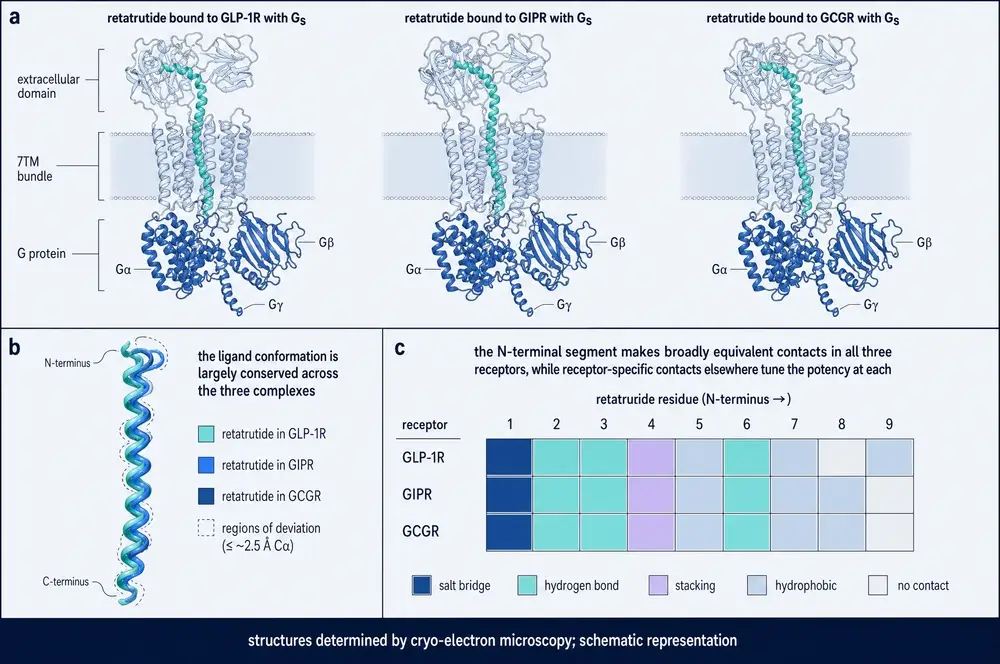
Retatrutide is a chain of thirty-nine amino acids. That is a small molecule by the standards of a protein and a large one by the standards of a drug. Its backbone is derived from GIP — not, as one might guess from its behaviour, from glucagon. Li and colleagues, reporting the compound's structures, state that retatrutide was "developed from the GIP backbone" while a rival triple agonist was built from the glucagon backbone instead (Li et al., 2024). Retatrutide is a GIP molecule taught to do two other jobs.
Three engineered features do most of the work.
The first is a residue called α-aminoisobutyric acid, or Aib, at position 2. It is not one of the twenty amino acids the genetic code specifies; it cannot be made by a ribosome, only by a chemist. It sits at position 2 because that is where the enzyme dipeptidyl peptidase-4 cuts. Native GLP-1 survives in the bloodstream for roughly two minutes because DPP-4 finds it almost immediately. Putting an unnatural residue at the cleavage site makes the enzyme's job impossible. Tirzepatide uses the same trick at the same position.
The second is α-methyl-leucine at position 13, a second non-proteinogenic residue. The third, and the one that changes the drug from a laboratory reagent into a weekly injection, is a twenty-carbon fatty diacid attached through a linker to the side chain of the lysine at position 17.
Section 06How a fatty tail buys a week
A peptide in the bloodstream has two enemies: enzymes that cut it up, and kidneys that filter it out. The Aib residue handles the first. The fatty diacid handles the second, by a trick that is now standard across this entire drug class and is worth understanding, because it explains why these drugs are injected weekly rather than daily.
Human serum albumin is the most abundant protein in blood, and it exists in part to ferry fatty acids around the body. It therefore carries hydrophobic pockets shaped to hold long fatty chains. Hang such a chain off a peptide and the peptide will spend most of its time tucked into albumin — reversibly, so there is always a small free fraction available to act on receptors, but the bulk of the dose is parked. The albumin complex is far too large to pass through the kidney's filtration barrier, and while bound the peptide is shielded from circulating peptidases. The result is a molecule whose native half-life would be measured in minutes behaving like one measured in days.
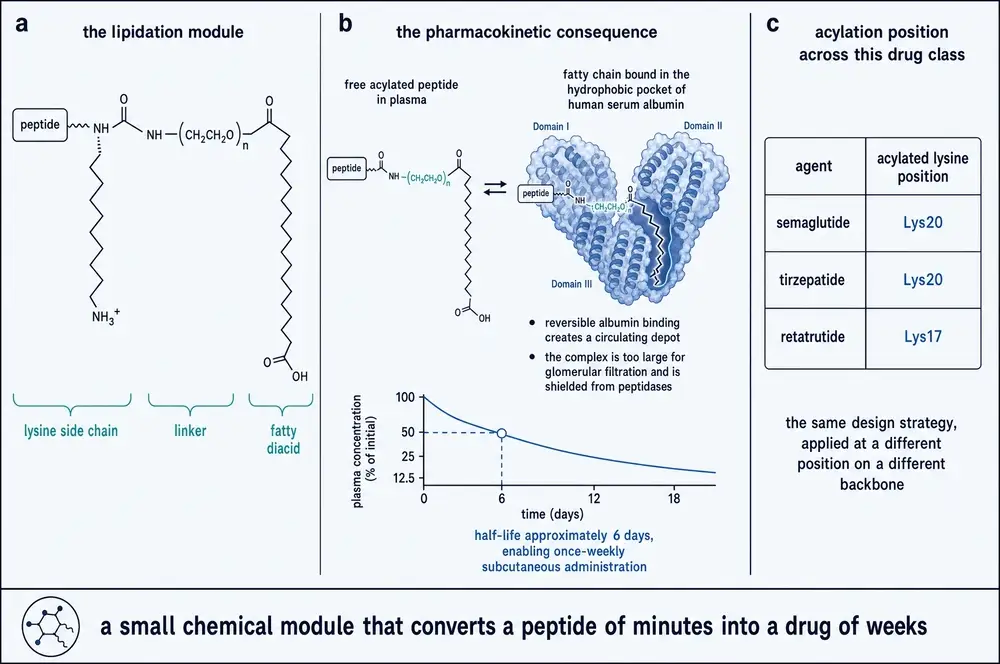
The half-life has a consequence the trials had to design around, and it is one of the more human details in the pharmacology. A drug that takes six days to fall by half takes roughly a month to reach steady state. Every dose escalation therefore has a month-long shadow, which is why the phase 2 trials stepped the dose every four weeks and why the highest-dose arms spent the longest climbing. The investigators of the eating-behaviour analyses noticed the consequence directly: the 12 mg group showed a lagged treatment effect, which they attributed to the length of its titration (Kanu et al., 2025b). The highest dose arrives last.
Section 07One ligand, three receptors that are not the same shape
The GLP-1, GIP and glucagon receptors all belong to class B1 of the G-protein-coupled receptor family, the secretin-like group. They share an architecture: a large extracellular domain sitting above the membrane, a bundle of seven membrane-spanning helices below it, and a heterotrimeric G protein coupled underneath. Binding proceeds in two steps — the peptide's C-terminal helix is captured by the extracellular domain, which then positions the N-terminus to insert into the transmembrane core and trigger activation. This family resemblance is the whole reason a triple agonist is chemically possible. Three unrelated receptors could not be engaged by one peptide; three cousins can.
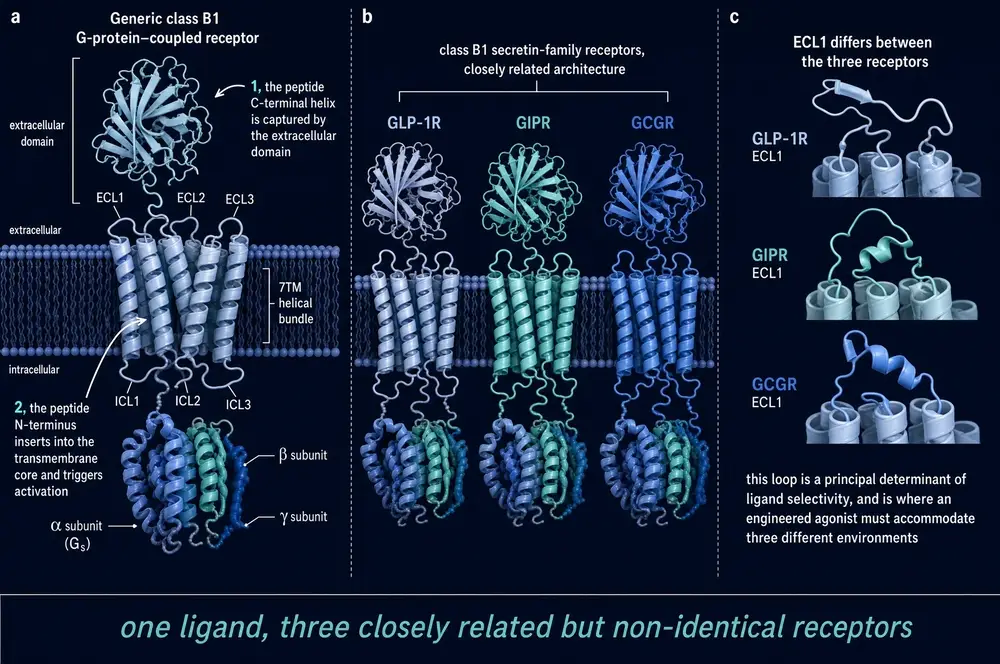
What makes ECL1 the interesting loop is that the three receptors solve it differently. In GLP-1R and GCGR it forms a short, rigid α-helix. In GIPR it is an unwound, flexible loop containing three prolines. A flexible loop can accommodate sequence variation that a rigid helix cannot — which is a plausible part of the answer to why the GIP receptor is the one at which retatrutide is most potent, and why the molecule was built on a GIP backbone rather than another.
Section 08The ratio is the design
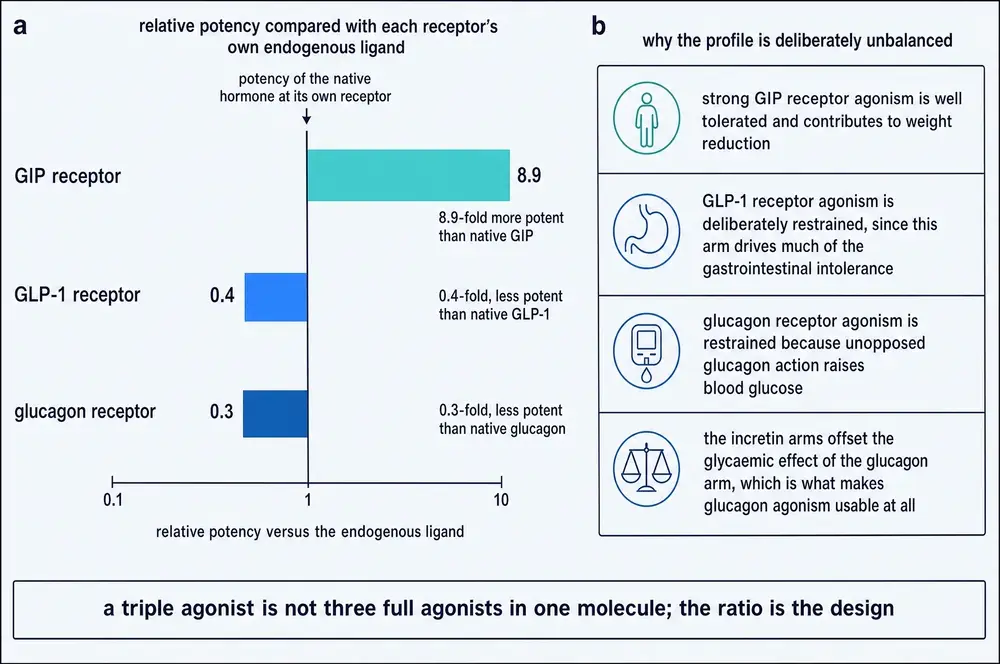
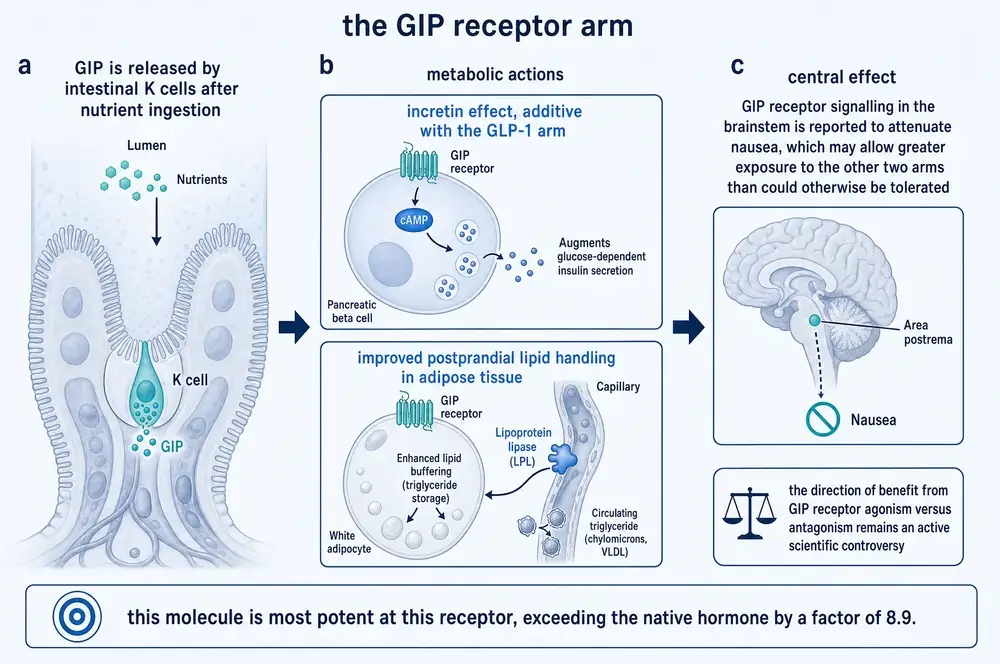
The most common misunderstanding about retatrutide is in its name. "Triple agonist" suggests three full agonists bolted together. It is not that. Measured against each receptor's own natural hormone, retatrutide is 8.9 times more potent than GIP at the GIP receptor, but only 0.4 times as potent as GLP-1 at the GLP-1 receptor and 0.3 times as potent as glucagon at the glucagon receptor (Li et al., 2024). In absolute terms the half-maximal concentrations run 0.064 nM at GIPR, 0.775 nM at GLP-1R and 5.79 nM at GCGR — a roughly ninety-fold span from the most to the least potent arm (Katsi et al., 2025).
The deliberate weakness at two of three receptors is not a compromise forced by chemistry. It is the product. Finan and colleagues had already shown, in rodents in 2015, that the value of the GIP arm was partly that it buffered the diabetogenic effect of the glucagon activity the designers had chosen to include (Finan et al., 2015). Each arm restrains the others. Turn any of them up and the molecule stops working.
Retatrutide and tirzepatide both activate the GIP receptor. Several serious groups are developing drugs that block it — and those drugs also produce weight loss. Campbell and Drucker set out the puzzle plainly in a 2025 point–counterpoint pair with Samms and Sloop: two opposite pharmacological strategies at the same receptor produce similar clinical effects, and the field does not yet agree on why (Samms & Sloop, 2025; Campbell & Drucker, 2025). Any confident statement about what the GIP arm of retatrutide is doing should be read against that unresolved argument.
One more piece of the molecule's pharmacology deserves mention because it is the only place in this corpus where retatrutide's potency is measured in a human cell doing a job. Regmi and Roell published the assay protocol used to support the original discovery paper: primary human subcutaneous fat cells, differentiated over fourteen days, then challenged with GIP or with retatrutide across eleven concentrations, with released glycerol as the readout for fat breakdown (Regmi & Roell, 2023). Both compounds stimulate lipolysis. The protocol reports no potency constant, but its raw interpolation tables show retatrutide producing a clear response at around 0.003 to 0.03 nM, while GIP requires roughly 10 to 100 nM to reach comparable glycerol output — two to three orders of magnitude apart, with similar maxima. The caveat is unusually specific: the adipocytes came from a single twenty-five-year-old female donor.
Section 09What each receptor contributes
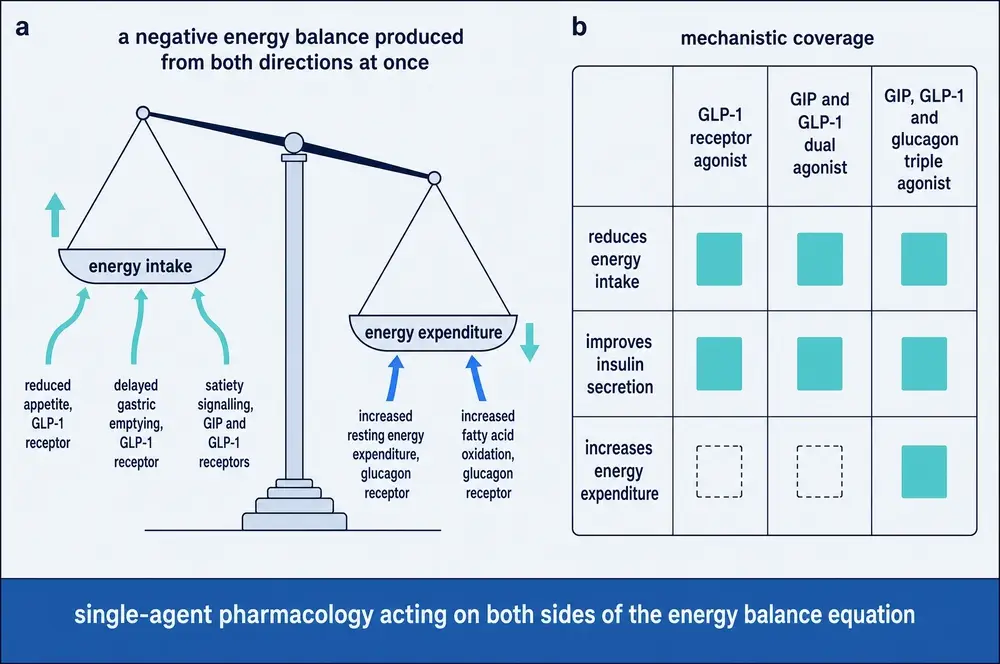
The three arms are not three versions of the same effect. They act on different organs, through different routes, and — critically — on different sides of the energy-balance equation.
Section 10First in human
Forty-five healthy volunteers received a single subcutaneous dose in the first-in-human study, which ran from March to July 2019 (NCT03841630). Coskun and colleagues reported it alongside the discovery chemistry and the mouse work in a single 2022 paper in Cell Metabolism whose subtitle — from discovery to clinical proof of concept — is an accurate description of its span (Coskun et al., 2022).
One observation from that study is worth pausing on. After a single dose, reduced body weight persisted to day 43. Six weeks of measurable effect from one injection is a consequence of the albumin depot, and it is the sort of finding that tells a development team they have a weekly drug rather than a daily one.
The phase 1b study followed in people with type 2 diabetes: 72 participants at four US centres, twelve weeks of weekly dosing, with placebo and dulaglutide 1.5 mg as comparators (Urva et al., 2022). Pharmacokinetics were dose-proportional and the half-life was approximately six days. Treatment-emergent adverse events were reported by 63 per cent of those on retatrutide against 54 per cent on placebo, mostly gastrointestinal. Twenty-nine of the 72 discontinued early. In the highest-dose escalation arm, glycated haemoglobin fell by about 1.6 per cent and weight by nearly nine kilograms in twelve weeks.
Section 11The trial that made the compound famous
The phase 2 obesity trial enrolled 338 adults with a body-mass index of 30 or above, or 27 or above with a weight-related condition, and randomised them to one of six retatrutide regimens or placebo for 48 weeks (Jastreboff et al., 2023). Slightly more than half the participants were men — unusual for an obesity trial, and a point to hold on to.
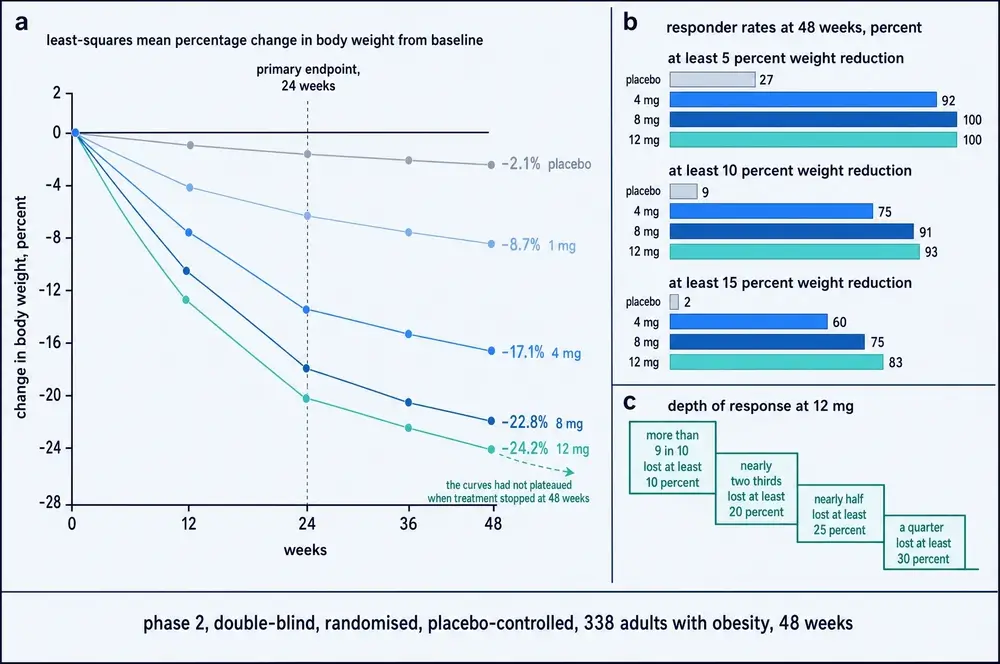
At 24 weeks, the primary endpoint, mean weight change ran from −7.2 per cent at 1 mg to −17.5 per cent at 12 mg, against −1.6 per cent on placebo. At 48 weeks the corresponding figures were −8.7 and −24.2 per cent against −2.1. Broken out by arm rather than by pooled dose, the highest values were −23.9 per cent in the 8 mg group that started at 4 mg and −24.2 per cent at 12 mg. Waist circumference fell by 19.6 cm at 12 mg against 2.6 cm on placebo.
The responder figures are what made the trial an event. At 48 weeks, in the 12 mg group, every participant had lost at least 5 per cent of their body weight; 93 per cent had lost at least 10; 83 per cent at least 15; 64 per cent at least 20; 48 per cent at least 25; and 26 per cent at least 30. Placebo produced 27, 9 and 2 per cent at the first three thresholds and essentially nothing beyond. A quarter of people on the highest dose lost close to a third of themselves in under a year.
Every review in this corpus makes the same observation about Figure 12, and it is the single most important thing about the phase 2 result: the weight curve had not flattened when the study ended. Pasqualotto and colleagues put it plainly — a plateau was not reached, so greater weight loss might be seen with longer follow-up (Pasqualotto et al., 2024). The same was true in the type 2 diabetes trial at 36 weeks (Goldney et al., 2025).
A pharmacometric model fitted across twelve incretin drugs put retatrutide's modelled maximum weight reduction at 22.6 kg, the highest of any agent modelled, and calculated that the 12 mg dose reaches only about 61 per cent of that maximum — the least-saturated dose in the entire comparison (Guo et al., 2025). That is a model, not a measurement, and it is built on only two retatrutide trials. But it formalises what the curves show: 24.2 per cent was where the trial stopped, not where the drug stops.
One subgroup finding deserves attention because it cuts against the way these drugs are usually compared. Women lost more weight than men on retatrutide — roughly 28.5 against 21.9 per cent at the higher doses — and participants with a baseline body-mass index of 35 or above lost more than those below it (Goldney et al., 2025). Since the retatrutide phase 2 trial was about half male, against 32.5 per cent male in SURMOUNT-1 and 25.9 per cent in STEP-1, retatrutide's headline number was produced in a sex mix less favourable to it than its competitors' were.
Section 12Type 2 diabetes, and the hormone that should have raised blood sugar
The parallel phase 2 trial randomised 281 adults with type 2 diabetes to retatrutide, placebo, or dulaglutide 1.5 mg, for 36 weeks (Rosenstock et al., 2023). This is the trial that tested the central bargain, because it is where a drug with glucagon activity had the most to lose. It did not lose it.
A drug carrying glucagon receptor agonism into a population with diabetes lowered glycated haemoglobin by 2.16 percentage points, put four in five participants at or below 6.5 per cent, and did so while taking 17 per cent of their body weight off. Severe hypoglycaemia was not a feature: rates of clinically significant low blood sugar ran from zero to 4 per cent across the retatrutide arms in a population treated with lifestyle measures or metformin. The bargain held.
Two honest qualifications. First, the average HbA1c reduction was probably understated by a floor effect, because so many participants approached normal glycaemia that there was little room left to fall (Goldney et al., 2025). Second, hypoglycaemia has not been tested where it matters most. No participant in these trials was taking insulin or a sulfonylurea. The trial designed to answer that question — in people with type 2 diabetes, renal impairment and background basal insulin — is registered as NCT06297603 and has not reported.
Section 13What the weight was made of
For most of retatrutide's public life the honest answer to "how much of that is muscle?" was that nobody knew. Reviews said so bluntly: the drug produced the greatest mean weight loss to date and there were no published body-composition data (Ryan, 2025). The concern was not idle. Glucagon lowers circulating amino acids and increases protein breakdown, and the extreme natural experiment — glucagonoma, a tumour that floods the body with glucagon — is characterised by muscle wasting.
That gap has now partly closed, and it closed in a way the review literature in this corpus has not caught up with. A prespecified substudy of the type 2 diabetes trial measured body composition by dual-energy X-ray absorptiometry in 189 participants, and reported at 36 weeks (Coskun et al., 2025).
Two caveats keep this from being the end of the argument. The substudy sits in the diabetes trial, where weight loss was smaller than in the obesity trial, and 103 completers is a modest base. And the wider debate over whether the lean mass lost with any of these drugs actually matters is unsettled: some authors treat it as a serious concern in older people, where muscle and bone are already being lost (Ryan, 2025), while a 2026 consensus report argues the reductions generally fall within the range seen with other weight-loss methods and are not accompanied by impaired strength or function (Schnell et al., 2026). Both positions are in this corpus and neither has been settled by a retatrutide-specific measurement of muscle function.
Section 14Phase 3: what has been announced, and what that is worth
Between December 2025 and July 2026 the phase 3 programme reported. Every figure in this section comes from the sponsor's own topline announcements. They are not peer-reviewed publications, they have not been through independent statistical review, and they are labelled as such throughout. The single exception is TRANSCEND-T2D-1, which has been published in The Lancet (Bajaj et al., 2026).
The phase 3 numbers largely confirm phase 2 and extend it. In TRIUMPH-1, at 80 weeks, 62.5 per cent of the 12 mg group lost at least a quarter of their body weight, 45.3 per cent lost at least 30 per cent, and 27.2 per cent lost at least 35 per cent — against 2.2, 0.5 and 0.3 per cent on placebo. In a 104-week extension among participants with a baseline body-mass index of 35 or more, the 12 mg arm reached 30.3 per cent. Sixty-five per cent of TRIUMPH-1 participants reached a body-mass index below 30 — that is, were no longer, by the conventional definition, obese.
In type 2 diabetes, the published TRANSCEND-T2D-1 trial randomised 537 people whose diabetes was inadequately controlled by diet and exercise alone and followed them for 40 weeks. Glycated haemoglobin fell by 1.94 percentage points at 12 mg against 0.81 on placebo, and weight by 15.3 per cent against 2.6 (Bajaj et al., 2026). Ninety-one per cent of participants completed the treatment period on study drug. Two deaths occurred, both in the 4 mg group, both adjudicated as unrelated to the study drug. No severe hypoglycaemia was reported.
Section 15The liver empties first
Ninety-eight participants in the phase 2 obesity trial had at least 10 per cent liver fat on magnetic resonance imaging, which qualified them for a prespecified substudy of metabolic dysfunction-associated steatotic liver disease (Sanyal et al., 2024). Its primary endpoint was the relative change in liver fat at 24 weeks.
The most interesting result in the substudy is not the size of the effect but its order. Almost all the liver-fat reduction happened in the first 24 weeks and then approached a floor, while visceral and subcutaneous abdominal fat continued falling through week 48 in parallel with body weight. Sanyal and colleagues draw the inference directly: under conditions that favour fat mobilisation, hepatic fat is preferentially mobilised ahead of fat from adipose depots. The liver is emptied first, and the belly takes longer.
Two biochemical findings from the same substudy are worth recording because they identify the mechanism as glucagon's. Beta-hydroxybutyrate — the ketone body produced when the liver oxidises fatty acids in bulk — rose by 181 per cent at 24 weeks on 12 mg, and was not associated with ketoacidosis in any individual. And FGF21, a hormone whose analogues are themselves being developed as liver drugs, fell by roughly half. The authors use that to rule FGF21 out as the explanation. A drug that empties the liver more thoroughly than any FGF21 analogue in their comparison table does so while lowering FGF21.
Section 16A kidney result nobody has reported before
Both phase 2 trials excluded anyone with an estimated glomerular filtration rate below 45, so neither was designed to say anything about kidney disease. A post-hoc analysis looked anyway, and found something the authors say has no precedent (Heerspink et al., 2025).
The honest reading of this is that something real is happening and nobody yet knows whether it is good. A rising filtration rate can mean a healthier kidney or it can mean hyperfiltration — individual nephrons being driven harder, a pattern that damages kidneys over years. The investigators of the dedicated mechanistic trial name that worry explicitly, while noting that hyperfiltration would normally raise albuminuria, and albuminuria instead fell (Heerspink et al., 2026).
That trial, TRANSCEND-CKD, randomised 146 people with chronic kidney disease and a measured filtration rate averaging 49 mL/min/1.73 m², and measures glomerular filtration directly by iohexol clearance rather than estimating it from creatinine. Its choice of method is itself informative: in its own baseline data, the creatinine-based estimate ran about 15 mL/min higher than the measured value. The post-hoc analysis reached a related conclusion from the other direction — that cystatin C should be the preferred way to monitor kidney function during retatrutide treatment, because creatinine-based estimates track body-weight change and cystatin C-based ones do not. When a drug removes a quarter of a person's body mass, the muscle-derived marker used to estimate kidney function stops meaning what it meant.
Section 17Sleep, knees, and a trial design borrowed from oncology
The phase 3 programme did something unusual. Rather than run separate trials for obesity and for each of its complications, TRIUMPH nested complication studies inside the weight-management trials as baskets — a design imported from oncology, where it is used to test one drug against several tumour types sharing a marker. Here the shared feature is obesity itself. The authors believe it is the first use of a basket trial in the cardiometabolic field (Giblin et al., 2026).
In TRIUMPH-1 and TRIUMPH-2 the overall false-positive rate is held at 0.05 and split: 0.025 to the overarching weight-management question, and 0.025 to each nested basket, with each basket separately powered and separately analysed. The justification is that the basket populations overlap the weight-management population but not each other — a participant in TRIUMPH-1 could enrol in the sleep-apnoea basket or the osteoarthritis basket, but not both.
The design also engineers its own demography. Female enrolment was capped at about 70 per cent across the programme, because obesity trials otherwise recruit disproportionately few men; the osteoarthritis basket pulls in older participants than obesity trials usually reach; and the authors point out that sleep-apnoea trials have historically been male-dominated, so even 40 per cent female participation there would be an advance.
The results, again as sponsor announcements: in the TRIUMPH-1 sleep-apnoea basket, the apnoea–hypopnoea index fell by up to 36.1 events per hour — a 60.6 per cent reduction from a baseline of 58.6, which is severe disease — at 12 mg over 80 weeks. In the osteoarthritis basket the WOMAC pain score fell by up to 4.3 points from a baseline of 6.0. The standalone osteoarthritis trial, TRIUMPH-4, reported pain reductions of 4.5 and 4.4 points at 9 and 12 mg against 2.4 on placebo, alongside weight reductions of 26.4 and 28.7 per cent against 2.1.
The placebo column in that last sentence deserves a moment. A 2.4-point drop in knee pain on placebo is not nothing; it is roughly 40 per cent of baseline. Pain is among the most placebo-responsive outcomes in medicine, which is exactly why the trials are blinded and placebo-controlled, and why the comparison rather than the raw improvement is the finding.
Section 18The heart, where the evidence is thinnest and the stakes are highest
Every drug in this class raises heart rate. Retatrutide raises it more than most. In the phase 2 obesity trial the increase at 48 weeks was 6.7 beats per minute at 12 mg against 0.9 on placebo, and it was dose-related (Goldney et al., 2025). A network meta-analysis of non-diabetic populations put retatrutide at +3.46 beats per minute overall against placebo, with the effect significant at 8 mg (+4.35) and 12 mg (+5.52) but not at lower doses (Zhang et al., 2026). A different meta-analysis found no significant pulse difference at all, pooling across doses (Pasqualotto et al., 2024) — a disagreement that comes down to whether doses are pooled or resolved, and which should be reported rather than reconciled. Reviews consistently note that the rise peaks around 24 weeks and declines thereafter (Bhat et al., 2025).
Why it happens has been studied in a way that is unusually direct, and the answer is complicated by a species difference that is worth setting out in full.
Neumann and colleagues put retatrutide onto isolated strips of heart muscle in an organ bath — first from mice, then from people undergoing cardiac surgery. In mouse tissue, retatrutide did not increase the force of contraction at all, but did increase beating rate; and that rate effect was blocked only by a glucagon-receptor antagonist, not by blockers of the other two receptors (Neumann et al., 2025). In human right atrial tissue, retatrutide did increase the force of contraction, from 10 nM upward, and that effect was reduced by antagonists of all three receptors (Neumann et al., 2026).
Neither effect was abolished by propranolol, so this is not the drug provoking an adrenaline surge; it appears to be direct action on the heart. The authors anchor the concentrations to human exposure: an 8 mg dose gives peak plasma levels of about 182 nM, above the range in which they saw the effect. Their own conclusion is the appropriate one to carry forward: it is uncertain whether these findings are detrimental or beneficial for the patient. They were unable to test human sinus-node tissue — the heart's pacemaker — so the mechanism of the clinical heart-rate rise remains, in humans, undetermined.
What this means for hard cardiovascular outcomes is not yet known. TRIUMPH-3 enrolled 1,949 people with severe obesity and established cardiovascular disease, and the sponsor reported in-study event counts: for the five-component composite, 44 events on retatrutide against 52 on placebo, a hazard ratio of 0.82 with a confidence interval from 0.55 to 1.22; for the three-component composite, 27 against 23, a hazard ratio of 1.12 from 0.64 to 1.96. Neither is statistically significant, neither was the trial's primary endpoint, and the two point in opposite directions. They should be read as what they are: not reassuring, not alarming, and not informative. The trial built to answer the question is TRIUMPH-Outcomes, which has enrolled 10,000 participants across 743 sites and has a primary completion date of February 2029.
The most thorough review in this corpus reaches a conclusion that is easy to lose behind the weight-loss numbers: until cardiovascular and kidney outcome evidence exists for retatrutide, therapies with established outcome benefit — semaglutide, supported by dedicated cardiovascular and kidney outcome trials — should be prioritised in people who already have cardio-renal disease (Goldney et al., 2025).
The drug with the largest effect on the scale is not automatically the drug with the best evidence for the outcomes that matter.
Section 19What the animals show, and what they refuse to show
The preclinical record is larger than the clinical one and considerably less tidy. Three findings from it complicate the human story rather than supporting it, and they belong here rather than in a footnote.
Liver fibrosis got worse in one mouse model. Briand and colleagues gave retatrutide to male diet-induced obese mice with established steatohepatitis for five weeks. Body weight fell by about a quarter, hepatic triglyceride by three-quarters, and the steatosis score improved markedly. But the fibrosis score rose significantly, with some individual animals reaching bridging fibrosis, and collagen staining increased — while the profibrotic genes measured in the same livers went down (Briand et al., 2026). The authors' suggested explanation is that very rapid fat mobilisation may itself provoke oxidative stress, and they call for longer studies. This is a mouse finding in one model at one duration, it is contradicted by the transcriptional data in the same animals, and there is no human histology for retatrutide at all. It is nonetheless the single most important unresolved preclinical signal for a drug now in a 4,500-participant liver-outcomes trial.
The molecule works without its most famous receptor. In mice genetically lacking the GLP-1 receptor entirely, retatrutide still reduced body weight, food intake and blood glucose dose-dependently — it simply needed roughly eight times the dose (Perez-Tilve et al., 2026). The same group reports that retatrutide's suppression of food intake waned over their study while a GLP-1-free comparator's did not, and argues that retatrutide's GLP-1 potency may actually limit how much of its glucagon and GIP pharmacology can be delivered. That is an argument advanced by a group with a competing molecule, and should be read with that in mind; it is also a well-controlled experiment.
In a genetic obesity model, tirzepatide beat it. In mice lacking the melanocortin-4 receptor, three weeks of daily dosing at the same milligram-per- kilogram dose produced 31.6 per cent weight loss with tirzepatide against 24.1 with retatrutide, and the authors concluded tirzepatide seemed superior in their model (Hitaka et al., 2026). All three drugs tested reduced energy expenditure, and retatrutide alone significantly reduced the mass of one individual muscle. The dose was chosen for tirzepatide and then applied to retatrutide, so this is not an equipotent comparison, and the tirzepatide group fell to three animals by the end.
Set against those, the animal literature also contains findings that are striking in the other direction. In diet-induced obese mice, retatrutide reduced pancreatic tumour engraftment, delayed onset, and cut tumour volume fourteen-fold against a four-fold reduction with semaglutide; in a lung-cancer model, engraftment halved (Marathe et al., 2025). When the drug was withdrawn, protection against tumour establishment vanished completely — every withdrawn animal grew a tumour — yet the slowing of growth persisted. In obese mice bearing triple-negative breast tumours, retatrutide combined with chemotherapy overcame resistance that the chemotherapy alone could not (Cui et al., 2025). And in a fructose-driven steatohepatitis model, retatrutide improved liver injury in female mice — a study in which the sex difference was the point, because females proved markedly more susceptible to the liver injury than males, and the drug arm was therefore run in females only (Viebahn et al., 2025).
None of these are human findings, and the doses are not translatable. Mouse studies here used 10 to 30 nmol/kg every two to three days against a once-weekly human regimen, and one used intraperitoneal injection, a route never used clinically. Retatrutide's half-life in mice is about 21 hours against six days in people.
Where an animal result and a human result point the same way, the animal result adds mechanism, not confirmation. Where they point different ways — as with energy expenditure, and with the tirzepatide comparison — the human data govern the human question, and the animal data mark where the mechanistic account is incomplete.
Section 20The trade-off that runs through every dose decision
Retatrutide's adverse-effect profile is, in its shape, the profile of the whole incretin class: nausea, vomiting, diarrhoea and constipation, dose-related, mostly mild to moderate, concentrated during dose escalation. What is specific to retatrutide is how sharply the tolerability depends on the speed of escalation rather than the final dose, and how directly that speed trades against effect.
Discontinuation because of adverse effects tracked the same gradient. In the phase 2 obesity trial it ran from zero on placebo to 16 per cent at 12 mg; in the diabetes trial, up to 17 per cent against 2 per cent on dulaglutide. The phase 3 announcements report comparable figures at scale: 4.1, 6.9 and 11.3 per cent at 4, 9 and 12 mg in TRIUMPH-1 against 4.9 on placebo, and 18.2 per cent at 12 mg in the smaller osteoarthritis trial against 4.0.
One meta-analysis complicates this picture in a way worth flagging rather than smoothing. A model-based analysis across twelve incretin drugs found retatrutide had the lowest dropout risk relative to placebo of any of them — a relative risk of 0.57 (Guo et al., 2025). That is compatible with the trial-level figures only if participants on placebo were leaving faster still, which the MASLD substudy independently supports: 58 per cent of the placebo group completed it against 77 to 90 per cent across the retatrutide arms. People tolerate a great deal when something is working.
Section 21The signals that are specific enough to name
Altered skin sensation. In the phase 2 obesity trial, cutaneous hyperaesthesia and skin-sensitivity events were reported by 7 per cent of retatrutide participants against 1 per cent on placebo, dose-dependently, mild to moderate, and not causing discontinuation (Laroche et al., 2026). The phase 3 announcements put dysesthesia at 12.5 per cent at 12 mg against 0.9 per cent on placebo in TRIUMPH-1. The mechanism is unknown. The pharmacovigilance review that assembled these figures argues it is unlikely to be a consequence of fat loss, because the events begin within days to weeks and resolve rapidly on stopping, and because in a semaglutide trial they rose immediately after a dose step-up. Sensory neurons carry both GLP-1 and GIP receptors, which is the leading hypothesis. That review's recommendation is specific: for future agents such as retatrutide, this should be in the product information from the time of marketing authorisation.
Urinary tract infection. The phase 3 announcements report urinary tract infections at 7.5 to 8.8 per cent across retatrutide arms against 5.3 per cent on placebo in TRIUMPH-1, and 3.8 to 8.0 per cent against 6.6 in TRIUMPH-2 — a signal in one trial and not the other. A 2026 letter in the European Journal of Internal Medicine asks whether the answer lies in the timing of the events (Koufakis et al., 2026). It is an open question, not an established harm.
Hypoglycaemia was rare — zero to 4 per cent across retatrutide arms in the diabetes trial, and no severe hypoglycaemia in the published phase 3 diabetes trial. But the populations studied were not on insulin or sulfonylureas. Notably, TRIUMPH-3 reported hyperglycaemia as an adverse event in 13.4 per cent of the placebo group against 3 to 4 per cent on retatrutide, which is the glucagon paradox resolving in the drug's favour: the untreated arm's diabetes was getting worse.
Pancreatitis and gallbladder disease show no significant excess in pooled analysis, though the pooled numbers are small: a relative risk of 0.99 for pancreatitis and 1.38 for hepatobiliary disorders, neither significant (Pasqualotto et al., 2024). Amylase rose significantly; lipase did not. Hypersensitivity reactions were significantly more common, with a relative risk of 3.79. Pancreatitis is centrally adjudicated across the phase 3 programme, which is the right design for a rare event.
Section 22What happens when you stop
The four-week washout built into the phase 2 trials is one of the more informative parts of the dataset, because it shows which effects are the drug and which are the weight loss.
Weight came back at 2.5 per cent in the 8 mg group and 3.2 per cent in the 12 mg group within four weeks. Blood pressure, which had fallen by 10 to 12 mmHg systolic, moved back toward baseline. The rise in filtration rate measured by cystatin C reversed entirely. Some participants in the qualitative exit-interview study named this directly: asked what concerned them, two of the twenty-three on higher doses said their main worry was not the side effects but what would happen when the drug stopped (Goetz et al., 2025).
That is the question TRIUMPH-6 was built to answer — 643 participants randomised, after 80 weeks of retatrutide, to continue at a high dose, continue at a low dose, or switch to placebo for the final 36 weeks (NCT06859268, primary completion April 2028). Until it reports, the honest position is that retatrutide is a treatment for a chronic condition and the evidence on stopping it is four weeks long.
Section 23The market that did not wait
Retatrutide is not approved anywhere in the world. On 23 July 2026 its sponsor stated that it is completing the manufacturing data package required for a Biologics License Application and plans to submit for United States approval in the first quarter of 2027. The company's own public statement is that the compound is legally available only through its clinical trials, and it warns that illicit retatrutide products may contain unknown ingredients, contaminants and impurities.
It is nonetheless being sold. In a cross-sectional audit of businesses advertising compounded GLP-1 products in a single US state in spring 2024 — two years before any phase 3 result — researchers identified 93 websites covering 188 physical locations. Ninety-nine per cent advertised compounded semaglutide, 43 per cent tirzepatide, and one advertised compounded retatrutide, which the authors noted plainly is "not FDA approved for any medical indication and is therefore not commercially available" (DiStefano et al., 2024).
The same audit found that 44 per cent of the businesses referenced FDA approval while describing compounded products, and that a small number sold them as tablets or sublingual troches. It found products co-compounded with substances the FDA has separately determined to be unsuitable for compounding. It documented multi-dose vials dispensed with insulin syringes, an arrangement that invites the confusion between units and milligrams that has driven a rise in accidental overdoses of this drug class. And it is explicit about its own limits: it sampled advertising, not product. No vial was assayed.
In 2026 the BMJ published a fact-check asking whether a man had died after taking what it described as the unapproved weight-loss jab (Mahase, 2026). The article's text was not available to this compilation, and nothing in this document should be read as establishing that such a death occurred, that it did not, or that any product was implicated. What the record does establish is that the question was serious enough to be asked in a major general medical journal, about a drug that no regulator has yet assessed.
Everything in Parts Three and Four came from people enrolled in trials with screening, dose escalation supervised by clinicians, scheduled laboratory monitoring, central adjudication of serious events, and a defined product of known concentration made to pharmaceutical manufacturing standards. Remove those and the numbers in this document do not transfer. The 16 per cent discontinuation rate at 12 mg exists because people had somewhere to report to. The absence of severe hypoglycaemia exists partly because nobody on insulin was enrolled. The escalation schedule that cut nausea threefold exists because it was designed, tested and supervised.
Section 24What is not known
A monograph of this kind is more useful for the gaps it names than for the findings it repeats. As of August 2026:
- Cardiovascular outcomes. No completed outcome trial. The in-study event counts from TRIUMPH-3 point in opposite directions depending on which composite is used. TRIUMPH-Outcomes reports in 2029.
- Liver histology. Not one biopsy has been taken in a retatrutide trial. The liver-fat results are imaging results. The mouse fibrosis signal in Section 19 has no human counterpart in either direction.
- Muscle. Fat mass has now been measured; lean mass and, more importantly, muscle function have not been reported for retatrutide.
- Energy expenditure in humans. The mechanistic claim that distinguishes a triple agonist from a dual one has been demonstrated in rodents and not in people. A dedicated study has completed and not reported.
- Durability. Four weeks of washout data.
- Hypoglycaemia on background insulin or sulfonylureas. Untested; a trial is registered.
- Head-to-head comparison. Every claim that retatrutide outperforms tirzepatide or semaglutide currently rests on indirect comparison across trials that differ in duration, population and sex mix. The head-to-head trials — against tirzepatide in obesity, against semaglutide in diabetes — are running and have not reported.
- Populations excluded throughout. Advanced fibrosis and cirrhosis; severe renal impairment until TRANSCEND-CKD; pregnancy and lactation; under-18s; and, in the MASLD substudy, a sample that was 98 per cent white and entirely American.
- Which arm does what, in a person. The contribution of each of the three receptors to the human effect has never been separately quantified.
Set against that list, what the evidence does establish is substantial and should not be diminished by the caveats. A single weekly injection has produced, in trials of thousands of people, weight reductions that reach into the range previously achieved only by surgery; has driven glycated haemoglobin toward normal in people with type 2 diabetes while carrying a glucose-raising hormone's activity; has cleared liver fat in the large majority of those with fatty liver disease; and has more than halved the severity of moderate-to-severe sleep apnoea. Whether it does those things safely enough, for long enough, and for whom, is the question the next three years of trials exist to answer.
This document reports published research. It does not recommend human use of retatrutide and specifies no dose, route or schedule for any person. Every dose named above is a parameter of a study that has been published or announced, reported with its population and duration attached. Retatrutide is an investigational compound that has not been approved by any regulatory agency in any jurisdiction, and outside a clinical trial there is no supply of it whose identity, purity or concentration has been verified by anyone accountable for the result. This document is not medical advice.
ApparatusWorks cited
- Abdrabou Abouelmagd A, Abdelrehim AM, Bashir MN, Abdelsalam F, Marey A, Tanas Y, et al.. Efficacy and safety of retatrutide, a novel GLP-1, GIP, and glucagon receptor agonist for obesity treatment: a systematic review and meta-analysis of randomized controlled trials. Proc (Bayl Univ Med Cent). 2025;38(3):291-303.
PMID 40291085 · doi:10.1080/08998280.2025.2456441 · PMC12026077 - Anderson SL. Review: Special Issue: Real-world evidence on the use of GLP1 receptor agonists: Emerging concepts in obesity management: focus on glucagon receptor agonist combinations. Drugs Context. 2025;14.
PMID 40734920 · doi:10.7573/dic.2025-4-8 · PMC12306892 - Bajaj HS, Welch M, Shah P, Luna E, Jaouimaa FZ, Liu B, et al.. Efficacy and safety of retatrutide, a GIP, GLP-1, and glucagon receptor agonist, in people with type 2 diabetes and inadequate glycaemic control with diet and exercise (TRANSCEND-T2D-1): a double-blind, randomised, phase 3 trial. Lancet. 2026;407(10546):2402-2413.
PMID 42250575 · doi:10.1016/S0140-6736(26)00967-0 - Bhat S, Fernandez CJ, Lakshmi V, Pappachan JM. Efficacy and safety of incretin co-agonists: Transformative advances in cardiometabolic healthcare. World J Cardiol. 2025;17(8):107991.
PMID 40949933 · doi:10.4330/wjc.v17.i8.107991 · PMC12426997 - Briand F, Le Cudennec C, Grasset E, Breyner N, Bigot C, Dillard P, et al.. Retatrutide Shows Multiple Metabolic Benefits in Diet-Induced Obese MASH Mouse and Hamster Models. Obesity (Silver Spring). 2026;34 Suppl 1(Suppl 1):43-53.
PMID 41741376 · doi:10.1002/oby.70155 · PMC13250738 - Campbell JE, Drucker DJ. Therapeutic Targeting of the GIP Receptor-Revisiting the Controversies. Diabetes. 2025;74(8):1320-1325.
PMID 40521880 · doi:10.2337/db25-0393 · PMC12278791 - Cigrovski Berkovic M, Ruzic L, Cigrovski V, Strollo F. Saving muscle while losing weight: A vital strategy for sustainable results while on glucagon-like peptide-1 related drugs. World J Diabetes. 2025;16(9):109123.
PMID 40980310 · doi:10.4239/wjd.v16.i9.109123 · PMC12444289 - Concepción-Zavaleta MJ, Fuentes-Mendoza JM, Gonzáles-Yovera JG, Ruvalcaba-Barbosa GY, Cura-Rodríguez LD, González-Rodríguez JS, et al.. Efficacy and safety of anti-obesity drugs in metabolic dysfunction-associated steatotic liver disease: An updated review. World J Gastroenterol. 2025;31(37):111435.
PMID 41025003 · doi:10.3748/wjg.v31.i37.111435 · PMC12476660 - Coskun T, Urva S, Roell WC, Qu H, Loghin C, Moyers JS, et al.. LY3437943, a novel triple glucagon, GIP, and GLP-1 receptor agonist for glycemic control and weight loss: From discovery to clinical proof of concept. Cell Metab. 2022;34(9):1234-1247.e9.
PMID 35985340 · doi:10.1016/j.cmet.2022.07.013 - Coskun T, Wu Q, Schloot NC, Haupt A, Milicevic Z, Khouli C, et al.. Effects of retatrutide on body composition in people with type 2 diabetes: a substudy of a phase 2, double-blind, parallel-group, placebo-controlled, randomised trial. Lancet Diabetes Endocrinol. 2025;13(8):674-684.
PMID 40609566 · doi:10.1016/S2213-8587(25)00092-0 - Cui X, Zhu Y, Zeng L, Zhang M, Uddin A, Gillespie TW, et al.. Pharmacological Dissection Identifies Retatrutide Overcomes the Therapeutic Barrier of Obese TNBC Treatments through Suppressing the Interplay between Glycosylation and Ubiquitylation of YAP. Adv Sci (Weinh). 2025;12(11):e2407494.
PMID 39868848 · doi:10.1002/advs.202407494 · PMC11923992 - Day JW, Ottaway N, Patterson JT, Gelfanov V, Smiley D, Gidda J, et al.. A new glucagon and GLP-1 co-agonist eliminates obesity in rodents. Nat Chem Biol. 2009;5(10):749-57.
PMID 19597507 · doi:10.1038/nchembio.209 - DiStefano MJ, Dardouri M, Moore GD, Saseen JJ, Nair KV. Compounded glucagon-like peptide-1 receptor agonists for weight loss: the direct-to-consumer market in Colorado. J Pharm Policy Pract. 2025;18(1):2441220.
PMID 39776466 · doi:10.1080/20523211.2024.2441220 · PMC11703442 - Elmendorf AJ, Yousefian M, Kim IM, Hardaway JA, Habegger K, Flak JN. IUPHAR review: From foe to friend: Repurposing glucagon to treat obesity and type 2 diabetes. Pharmacol Res. 2026;223:108077.
PMID 41478576 · doi:10.1016/j.phrs.2025.108077 · PMC12910462 - Finan B, Ma T, Ottaway N, Müller TD, Habegger KM, Heppner KM, et al.. Unimolecular dual incretins maximize metabolic benefits in rodents, monkeys, and humans. Sci Transl Med. 2013;5(209):209ra151.
PMID 24174327 · doi:10.1126/scitranslmed.3007218 - Finan B, Yang B, Ottaway N, Smiley DL, Ma T, Clemmensen C, et al.. A rationally designed monomeric peptide triagonist corrects obesity and diabetes in rodents. Nat Med. 2015;21(1):27-36.
PMID 25485909 · doi:10.1038/nm.3761 - Giblin K, Kaplan LM, Somers VK, Le Roux CW, Hunter DJ, Wu Q, et al.. Retatrutide for the treatment of obesity, obstructive sleep apnea and knee osteoarthritis: Rationale and design of the TRIUMPH registrational clinical trials. Diabetes Obes Metab. 2026;28(1):83-93.
PMID 41090431 · doi:10.1111/dom.70209 · PMC12673447 - Goetz IA, Kanu C, Hoover A, Jimenez-Moreno C, Karn H, Kimel M, et al.. Perceived benefits of treatment for obesity with retatrutide: A qualitative study of patients in a phase 2 clinical trial. Obes Pillars. 2025;16:100220.
PMID 41216380 · doi:10.1016/j.obpill.2025.100220 · PMC12596213 - Gogineni P, Melson E, Papamargaritis D, Davies M. Oral glucagon-like peptide-1 receptor agonists and combinations of entero-pancreatic hormones as treatments for adults with type 2 diabetes: where are we now?. Expert Opin Pharmacother. 2024;25(7):801-818.
PMID 38753454 · doi:10.1080/14656566.2024.2356254 · PMC11195668 - Goldney J, Hamza M, Surti F, Davies MJ, Papamargaritis D. Triple Agonism Based Therapies for Obesity. Curr Cardiovasc Risk Rep. 2025;19(1):18.
PMID 40741227 · doi:10.1007/s12170-025-00770-z · PMC12304053 - Guo H, Yang J, Huang J, Xu L, Lv Y, Wang Y, et al.. Comparative efficacy and safety of GLP-1 receptor agonists for weight reduction: A model-based meta-analysis of placebo-controlled trials. Obes Pillars. 2025;13:100162.
PMID 39980735 · doi:10.1016/j.obpill.2025.100162 · PMC11840199 - Heerspink HJL, Lu Z, Du Y, Duffin KL, Coskun T, Haupt A, et al.. The Effect of Retatrutide on Kidney Parameters in Participants With Type 2 Diabetes Mellitus and/or Obesity. Kidney Int Rep. 2025;10(6):1980-1992.
PMID 40630318 · doi:10.1016/j.ekir.2025.03.049 · PMC12231004 - Heerspink HJL, van Raalte DH, Bjornstad P, Bunck MC, Wu P, Tunali I, et al.. Rationale, design and baseline characteristics of the TRANSCEND-CKD trial of retatrutide in patients with chronic kidney disease. Nephrol Dial Transplant. 2026;41(6):1058-1068.
PMID 41160422 · doi:10.1093/ndt/gfaf230 · PMC13218929 - Hitaka K, Sugawara T, Matsumoto M, Nio Y. Efficacy of GLP-1 analog peptides, semaglutide, tirzepatide, and retatrutide on MC4R deficient obesity and their comparison. Int J Obes (Lond). 2026;50(4):928-937.
PMID 41723268 · doi:10.1038/s41366-026-02025-2 · PMC13056526 - Jastreboff AM, Aronne LJ, Ahmad NN, Wharton S, Connery L, Alves B, et al.. Tirzepatide Once Weekly for the Treatment of Obesity. N Engl J Med. 2022;387(3):205-216.
PMID 35658024 · doi:10.1056/NEJMoa2206038 - Jastreboff AM, Kaplan LM, Frías JP, Wu Q, Du Y, Gurbuz S, et al.. Triple-Hormone-Receptor Agonist Retatrutide for Obesity - A Phase 2 Trial. N Engl J Med. 2023;389(6):514-526.
PMID 37366315 · doi:10.1056/NEJMoa2301972 - Kanu C, Boye KS, Poon JL, Goetz I, Williamson S, Lou J, et al.. Appetite, eating attitudes, and eating behaviours during treatment with retatrutide in adults with type 2 diabetes: Results of a phase 2 study. Diabetes Obes Metab. 2025;27(12):6988-6998.
PMID 40916752 · doi:10.1111/dom.70097 · PMC12587234 - Kanu C, Wu Q, Poon JL, Goetz I, Perez-Nieves M, Boye K, et al.. Association between patient-reported eating behaviours and weight change: Secondary analyses of a randomized, double-blind trial comparing retatrutide and placebo in people with obesity or overweight. Diabetes Obes Metab. 2025;27(10):6088-6091.
PMID 40735804 · doi:10.1111/dom.16662 · PMC12409224 - Kanu C, Clucas C, Skalicky A, Samuelson A, Goetz I, Neff LM, et al.. Development and Content Evaluation of the Eating Behavior and Appetite Questionnaire (EBAQ) for Individuals with Obesity. Adv Ther. 2026;43(1):150-164.
PMID 41201783 · doi:10.1007/s12325-025-03386-2 · PMC12858465 - Katsi V, Koutsopoulos G, Fragoulis C, Dimitriadis K, Tsioufis K. Retatrutide-A Game Changer in Obesity Pharmacotherapy. Biomolecules. 2025;15(6).
PMID 40563436 · doi:10.3390/biom15060796 · PMC12190491 - Keskin U, Altın E, Kara MK, Tekin B, Çakırçoban KN, Özatik FY, et al.. Effects of retatrutide on learning and memory in streptozotocin-induced male diabetic rats. Behav Brain Res. 2026;514:116343.
PMID 42385950 · doi:10.1016/j.bbr.2026.116343 - Knerr PJ, Mowery SA, Finan B, Perez-Tilve D, Tschöp MH, DiMarchi RD. Selection and progression of unimolecular agonists at the GIP, GLP-1, and glucagon receptors as drug candidates. Peptides. 2020;125:170225.
PMID 31786282 · doi:10.1016/j.peptides.2019.170225 - Koufakis T, Argyrakopoulou G, Kokkinos A, le Roux CW. Retatrutide and the urinary tract infection signal: Is the answer hidden in timing?. Eur J Intern Med. 2026:107099.
PMID 42493254 · doi:10.1016/j.ejim.2026.107099 - Lang K. Retatrutide: Triple acting jab for type 2 diabetes lowers blood sugar and boosts weight loss, trial reports. BMJ. 2026;393:e102036.
PMID 42264536 · doi:10.1136/bmj-2026-102036 - Laroche ML, Géniaux H, Jardou M. Dysesthesia associated with GLP-1 agonist therapies: data-mining analysis and literature review. Eur J Clin Pharmacol. 2026;82(6).
PMID 42168638 · doi:10.1007/s00228-026-04079-7 · PMC13194321 - Lempesis IG, Dalamaga M. Obesity pharmacotherapy reimagined: The era of multi-receptor agonists and next-generation metabolic modulators, perspectives and controversies. Metabol Open. 2026;30:100463.
PMID 41948476 · doi:10.1016/j.metop.2026.100463 · PMC13051938 - Li Q, Cheng W, Zhang J, Ran S, Yu H, Zhou W, et al.. Multi-omic profiling reveals Retatrutide alleviates adipose tissue fibrosis via metabolic reprogramming and tissue repair. Diabetol Metab Syndr. 2026;18(1).
PMID 41964043 · doi:10.1186/s13098-026-02116-0 · PMC13214175 - Li W, Zhou Q, Cong Z, Yuan Q, Li W, Zhao F, et al.. Structural insights into the triple agonism at GLP-1R, GIPR and GCGR manifested by retatrutide. Cell Discov. 2024;10(1):77.
PMID 39019866 · doi:10.1038/s41421-024-00700-0 · PMC11255275 - Liu S, Hu J, Zhao C, Liu H, He C. Comparative efficacy of incretin drugs on glycemic control, body weight, and blood pressure in adults with overweight or obesity and with/without type 2 diabetes: a systematic review and network meta-analysis. Front Endocrinol (Lausanne). 2025;16:1513641.
PMID 39968298 · doi:10.3389/fendo.2025.1513641 · PMC11832366 - Ma J, Hu X, Zhang W, Tao M, Wang M, Lu W. Comparison of the effects of Liraglutide, Tirzepatide, and Retatrutide on diabetic kidney disease in db/db mice. Endocrine. 2025;87(1):159-169.
PMID 39212900 · doi:10.1007/s12020-024-03998-8 - Mahase E. Retatrutide fact check: Has a man died after taking the unapproved weight loss jab?. BMJ. 2026;394:e100245.
PMID 42425580 · doi:10.1136/bmj-2026-100245 - Mao CY, Pang ZJ, Qiao GY, Dong L. A Hydrophobic Tag-Assisted Liquid-Phase Strategy for the Synthesis of Retatrutide. Org Lett. 2026;28(23):7486-7490.
PMID 42224238 · doi:10.1021/acs.orglett.6c02001 - Marathe SJ, Grey EW, Bohm MS, Joseph SC, Ramesh AV, Cottam MA, et al.. Incretin triple agonist retatrutide (LY3437943) alleviates obesity-associated cancer progression. NPJ Metab Health Dis. 2025;3(1):10.
PMID 40094000 · doi:10.1038/s44324-025-00054-5 · PMC11908972 - Melson E, Ashraf U, Papamargaritis D, Davies MJ. What is the pipeline for future medications for obesity?. Int J Obes (Lond). 2025;49(3):433-451.
PMID 38302593 · doi:10.1038/s41366-024-01473-y · PMC11971045 - Müller TD, Finan B, Clemmensen C, DiMarchi RD, Tschöp MH. The New Biology and Pharmacology of Glucagon. Physiol Rev. 2017;97(2):721-766.
PMID 28275047 · doi:10.1152/physrev.00025.2016 - Nauck MA. The rollercoaster history of using physiological and pharmacological properties of incretin hormones to develop diabetes medications with a convincing benefit-risk relationship. Metabolism. 2020;103:154031.
PMID 31785258 · doi:10.1016/j.metabol.2019.154031 - Neumann J, Ahlrep U, Hofmann B, Gergs U. Contractile effects of retatrutide in isolated mouse atrial preparations. Naunyn Schmiedebergs Arch Pharmacol. 2025;398(12):17147-17160.
PMID 40464942 · doi:10.1007/s00210-025-04335-0 · PMC12678479 - Neumann J, Ahlrep U, Hofmann B, Gergs U. Inotropic effects of retatrutide in isolated human atrial preparations. Naunyn Schmiedebergs Arch Pharmacol. 2026;399(1):317-327.
PMID 40613938 · doi:10.1007/s00210-025-04421-3 · PMC12894140 - Novikoff A, Müller TD. The molecular pharmacology of glucagon agonists in diabetes and obesity. Peptides. 2023;165:171003.
PMID 36997003 · doi:10.1016/j.peptides.2023.171003 · PMC10265134 - Panou T, Gouveri E, Popovic DS, Papanas N. Retatrutide in type 2 diabetes mellitus and obesity: an overview. Expert Rev Clin Pharmacol. 2026;19(4):313-339.
PMID 41785010 · doi:10.1080/17512433.2026.2642415 - Pasqualotto E, Ferreira ROM, Chavez MP, Hohl A, Ronsoni MF, Pasqualotto T, et al.. Effects of once-weekly subcutaneous retatrutide on weight and metabolic markers: A systematic review and meta-analysis of randomized controlled trials. Metabol Open. 2024;24:100321.
PMID 39318607 · doi:10.1016/j.metop.2024.100321 · PMC11420505 - Pearson MJ, Willency JA, Lin Y, Abadi A, Hartman ML, Coskun T, et al.. Retatrutide And Lipid And Metabolite Profiles In Participants With Obesity With Or Without Type 2 Diabetes. J Clin Endocrinol Metab. 2026.
PMID 42135195 · doi:10.1210/clinem/dgag201 - Perez-Tilve D, Zhang F, Zhang Y, Lohman K, Sorrell J, Vick A, et al.. GIPR:GCGR co-agonism restores normal weight in obese rodents. Mol Metab. 2026;108:102365.
PMID 41997446 · doi:10.1016/j.molmet.2026.102365 · PMC13141540 - Pillai AA, Godin SL, Frishman WH, Aronow WS. Triple Hormone Receptor Agonism: The Role of Retatrutide in Addressing Cardiovascular-Kidney-Metabolic (CKM) Syndrome: A Comprehensive Review. Cardiol Rev. 2026.
PMID 42108533 · doi:10.1097/CRD.0000000000001310 - Regmi A, Roell W. Differentiation of human subcutaneous adipocytes and measurement of lipolytic function induced by GIP or LY3437943. STAR Protoc. 2023;4(2):102304.
PMID 37178114 · doi:10.1016/j.xpro.2023.102304 · PMC10200971 - Rosenstock J, Frias J, Jastreboff AM, Du Y, Lou J, Gurbuz S, et al.. Retatrutide, a GIP, GLP-1 and glucagon receptor agonist, for people with type 2 diabetes: a randomised, double-blind, placebo and active-controlled, parallel-group, phase 2 trial conducted in the USA. Lancet. 2023;402(10401):529-544.
PMID 37385280 · doi:10.1016/S0140-6736(23)01053-X - Ryan DH. New drugs for the treatment of obesity: do we need approaches to preserve muscle mass?. Rev Endocr Metab Disord. 2025;26(5):805-813.
PMID 40320499 · doi:10.1007/s11154-025-09967-4 · PMC12534358 - Samms RJ, Sloop KW. A Contemporary Rationale for Agonism of the GIP Receptor in the Treatment of Obesity. Diabetes. 2025;74(8):1326-1333.
PMID 40521890 · doi:10.2337/dbi24-0026 · PMC12278790 - Sanyal AJ, Kaplan LM, Frias JP, Brouwers B, Wu Q, Thomas MK, et al.. Triple hormone receptor agonist retatrutide for metabolic dysfunction-associated steatotic liver disease: a randomized phase 2a trial. Nat Med. 2024;30(7):2037-2048.
PMID 38858523 · doi:10.1038/s41591-024-03018-2 · PMC11271400 - Schnell O, Agarwal A, Azizi M, Ballwieser D, Barnard-Kelly K, Battelino T, et al.. CVOT Summit Report 2025: advances along the cardiovascular-kidney-metabolic disease continuum. Cardiovasc Diabetol. 2026;25(1).
PMID 42092956 · doi:10.1186/s12933-026-03140-0 · PMC13147710 - Sidrak WR, Kalra S, Kalhan A. Approved and Emerging Hormone-Based Anti-Obesity Medications: A Review Article. Indian J Endocrinol Metab. 2024;28(5):445-460.
PMID 39676791 · doi:10.4103/ijem.ijem_442_23 · PMC11642516 - Simental-Mendía LE, Barragán-Zúñiga LJ, Reyes-Avitia V. Effect of Retatrutide, a Novel Triple Receptor Agonist, on Blood Pressure and Lipid Levels: A Systematic Review and Meta-analysis of Randomized Controlled Trials. High Blood Press Cardiovasc Prev. 2026.
PMID 42371360 · doi:10.1007/s40292-026-00812-6 - Sinha B, Ghosal S. Efficacy and Safety of GLP-1 Receptor Agonists, Dual Agonists, and Retatrutide for Weight Loss in Adults With Overweight or Obesity: A Bayesian NMA. Obesity (Silver Spring). 2025;33(11):2046-2054.
PMID 40685589 · doi:10.1002/oby.24360 - Tschöp MH, Finan B, Clemmensen C, Gelfanov V, Perez-Tilve D, Müller TD, et al.. Unimolecular Polypharmacy for Treatment of Diabetes and Obesity. Cell Metab. 2016;24(1):51-62.
PMID 27411008 · doi:10.1016/j.cmet.2016.06.021 - Urva S, Coskun T, Loh MT, Du Y, Thomas MK, Gurbuz S, et al.. LY3437943, a novel triple GIP, GLP-1, and glucagon receptor agonist in people with type 2 diabetes: a phase 1b, multicentre, double-blind, placebo-controlled, randomised, multiple-ascending dose trial. Lancet. 2022;400(10366):1869-1881.
PMID 36354040 · doi:10.1016/S0140-6736(22)02033-5 - Urva S, O'Farrell L, Du Y, Loh MT, Hemmingway A, Qu H, et al.. The novel GIP, GLP-1 and glucagon receptor agonist retatrutide delays gastric emptying. Diabetes Obes Metab. 2023;25(9):2784-2788.
PMID 37311727 · doi:10.1111/dom.15167 - Viebahn GK, Khurana A, Freund L, Chilin-Fuentes D, Jepsen K, Rosenthal SB, et al.. Retatrutide improves steatohepatitis in an accelerated mouse model of diet-induced steatohepatitis with a fructose binge. Am J Physiol Gastrointest Liver Physiol. 2025;329(6):G680-G695.
PMID 41056349 · doi:10.1152/ajpgi.00164.2025 · PMC12643026 - Wen Y, Lemen D, Lin Y, Chen YQ, Regmi A, Roell WC, et al.. Decreases in circulating ANGPTL3/8 concentrations following retatrutide treatment parallel reductions in serum lipids. Diabetes Obes Metab. 2025;27(10):5985-5995.
PMID 40726454 · doi:10.1111/dom.16661 · PMC12409240 - Wilding JPH, Batterham RL, Calanna S, Davies M, Van Gaal LF, Lingvay I, et al.. Once-Weekly Semaglutide in Adults with Overweight or Obesity. N Engl J Med. 2021;384(11):989-1002.
PMID 33567185 · doi:10.1056/NEJMoa2032183 - Windram M, Lovelock DF, Carew JM, Krieman CG, Hendershot CS, Besheer J. Semaglutide, tirzepatide, and retatrutide attenuate the interoceptive effects of alcohol in male and female rats. Psychopharmacology (Berl). 2026;243(5):1185-1197.
PMID 40699363 · doi:10.1007/s00213-025-06854-3 · PMC13242451 - Yan K, Yu H, Blaise B. Beyond GLP-1: efficacy and safety of dual and triple incretin agonists in personalized type 2 diabetes care-a systematic review and network meta-analysis. Acta Diabetol. 2025;62(9):1359-1370.
PMID 40471293 · doi:10.1007/s00592-025-02534-y · PMC12433336 - Yao H, Zhang A, Li D, Wu Y, Wang CZ, Wan JY, et al.. Comparative effectiveness of GLP-1 receptor agonists on glycaemic control, body weight, and lipid profile for type 2 diabetes: systematic review and network meta-analysis. BMJ. 2024;384:e076410.
PMID 38286487 · doi:10.1136/bmj-2023-076410 · PMC10823535 - Zhang Y, Zhang C, Gong X, Cheng P, Fu H, Diao L, et al.. Effect of glucagon-like peptide-1 receptor agonists on heart rate in non-diabetic individuals with overweight or obesity: a systematic review and pairwise and network meta-analysis of randomized controlled trials. Eur J Med Res. 2026;31(1):318.
PMID 41582189 · doi:10.1186/s40001-026-03933-9 · PMC12918571 - Eli Lilly and Company. Lilly's triple agonist, retatrutide, delivered weight loss of up to an average of 71.2 lbs along with substantial relief from osteoarthritis pain in first successful Phase 3 trial (TRIUMPH-4). Topline results announcement, 11 December 2025.
https://www.prnewswire.com/news-releases/lillys-triple-agonist-retatrutide-d… - Eli Lilly and Company. Lilly's triple agonist, retatrutide, delivered powerful weight loss in pivotal Phase 3 obesity trial (TRIUMPH-1). Topline results announcement, 21 May 2026.
https://www.prnewswire.com/news-releases/lillys-triple-agonist-retatrutide-d… - Eli Lilly and Company. Lilly's triple agonist, retatrutide, drove substantial improvements in weight, A1C, knee osteoarthritis pain, and obstructive sleep apnea. American Diabetes Association 86th Scientific Sessions; announcement of 6 June 2026.
https://www.prnewswire.com/news-releases/lillys-triple-agonist-retatrutide-d… - Eli Lilly and Company. Lilly's triple agonist, retatrutide, successful in two additional Phase 3 obesity trials, delivering significant improvements in weight and A1C (TRIUMPH-2 and TRIUMPH-3). Topline results announcement, 23 July 2026.
https://www.prnewswire.com/news-releases/lillys-triple-agonist-retatrutide-s… - Eli Lilly and Company. What to know about retatrutide. Company statement; accessed 2 August 2026.
https://www.lilly.com/news/stories/what-to-know-about-retatrutide… - US National Library of Medicine. ClinicalTrials.gov registry records for retatrutide / LY3437943. Thirty-four studies retrieved and individually resolved, 2 August 2026. TRIUMPH-1 NCT05929066; TRIUMPH-2 NCT05929079; TRIUMPH-3 NCT05882045; TRIUMPH-4 NCT05931367; TRIUMPH-Outcomes NCT06383390; TRIUMPH-6 NCT06859268; TRANSCEND-T2D-1 NCT06354660; TRANSCEND-T2D-3 NCT06297603; TRANSCEND-CKD NCT05936151; first-in-human NCT03841630; energy expenditure NCT06313528.
https://clinicaltrials.gov/… - European Bioinformatics Institute. ChEMBL database, compound record CHEMBL5095485 (retatrutide; USAN 2022; WHO INN list 128; structure type SEQ). Accessed 2 August 2026.
https://www.ebi.ac.uk/chembl/compound_report_card/CHEMBL5095485/…
ApparatusHow this document was assembled
Discovery ran over the project 05 Therapeutic Peptide Research Library
and was XML-driven rather than PDF-driven, because that store shares a directory
tree with a separate general biomedical corpus and a union across both admits
the wrong project's documents. Matching was case-sensitive and boundaried on
retatrutide and the development code LY3437943.
| Stage | What it did | Output |
|---|---|---|
| 02 | PubMed and PubMed Central harvest | 165 indexed records; 933 full-text hits |
| 03 | Local corpus extraction and substantive-use screen | 76 hits, 60 admitted |
| 03b | PMC fetch for title-named papers absent locally | 14 recovered |
| 05 | Reference generation from verified NCBI records | 73 resolved, 0 unresolved |
| 06 | Assembly, gates, figure numbering | 20 figures, 80 references |
| 09 | Commissioned plate encoding and identity audit | 10 carried, 2 withheld |
The corpus read for this monograph was 76 local full texts plus 14 recovered from PubMed Central — approximately 648,000 words of body text, or something over 1295 printed pages. Of the local hits, 16 were screened out as passing mentions: papers naming retatrutide once or twice in a table of comparator agents, which is evidence of the field's attention rather than evidence about the compound. A corpus figure that silently included them would report coverage this document does not have.
Registry and regulatory claims were resolved individually against ClinicalTrials.gov rather than against any summary of it. That was not a formality. An identifier encountered for TRIUMPH-4 during secondary sourcing resolved, on checking, to a phase 3 trial of a different Lilly compound altogether. Every trial identifier printed in this document was verified against the registry.
ApparatusTwo failures worth recording
A citation-integrity bug. The harvest stage originally read each paper's identifiers by walking every identifier element in its PubMed record. That walk also traverses the reference list, so each record ended up holding the PubMed Central identifier and DOI of the last work it cited. Nothing looked wrong: the fields were populated, well-formed and entirely plausible. The full-text fetch then downloaded the wrong articles under the right headers, and three independent reading passes had to flag the mismatch before it was traced. Identifiers are now read only from the record's own identifier list and the affected texts were re-fetched. The general lesson is worth more than the fix: a citation field that is populated is not a citation field that is correct.
Two commissioned plates were withheld. Twelve original plates were supplied for this monograph and ten are carried. The two withheld are the two that printed peptide sequences. One drew a glucagon N-terminus on a molecule the structural literature states was built from the GIP backbone, and placed a lysine at a position that literature names as an aspartate; the other padded five aligned hormones to a common length none of them has and gave each a cysteine none of them contains. The two also disagreed with each other. Their conceptual content is sound and is carried in the running text and in authored figures instead. Where a compound is a defined sequence, the sequence is the most checkable thing on any piece of artwork and the most damaging to get wrong. The audit of every value printed on every supplied plate — verified, qualified or unverifiable — is filed with the artwork.
ApparatusEvidence handling
Study type is stated in the sentence that reports each finding. Cell and animal results are never phrased so as to imply a human outcome, because on this compound they repeatedly diverge from one. Within the human data, four grades are distinguished and labelled wherever they appear: prespecified primary endpoints; prespecified substudies; post-hoc and exploratory analyses; and sponsor topline announcements that have not been peer reviewed. That last category carries most of the phase 3 figures in this document.
Where sources conflict, the conflict is shown rather than resolved. Recency was weighted but not placed above weight of evidence: a 2026 review restating a 2023 trial is not newer evidence than the trial. Two disagreements were left standing — whether retatrutide significantly raises heart rate when doses are pooled rather than resolved, and whether its discontinuation rate is higher or lower than placebo — because in both cases the answer depends on how the analysis is constructed, and that dependence is itself the finding.
Reversibility, adverse signals and evidence gaps appear beside the efficacy figures rather than in a quarantined late section. Section 24 lists what is not known, and of everything in this document it is the part most likely to be out of date first.

Continue exploring